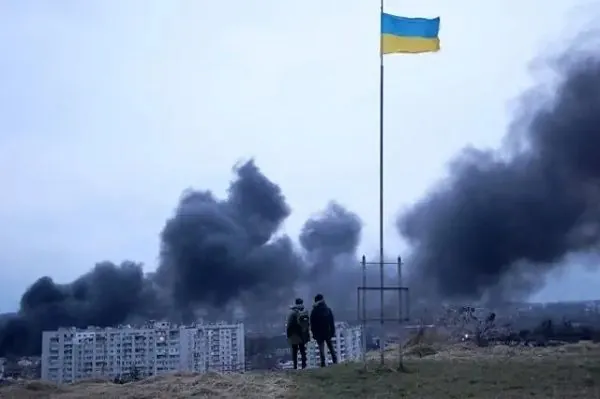
Russia is considering launching an Oreshnik nuclear-capable intermediate-range ballistic missile (IRBM) once again at Ukraine this weekend, the Financial Times (FT) reported on Dec. 13, citing an unnamed representative of the U.S. National Security Council.
Russia launched an Oreshnik missile without a nuclear warhead at the city of Dnipro in Ukraine on Nov. 21. Russian President Vladimir Putin claimed the strike was in response to Ukraine's use of U.S. and British long-range missiles to attack Russian territory.
The unnamed official said that Russia wanted to use the weapon to intimidate Ukraine and its supporters, but the Oreshnik "does not change the rules of the game on the battlefield."
"As (Vladimir) Putin has said publicly, Russia intends to launch another experimental Oreshnik missile at Ukraine, and it is possible that Russia could do so in the coming days," the source told FT.
The Oreshnik is likely not a new Russian development but a modification of the RS-26 missile, also known as the Rubezh, Fabian Hoffmann, a defense expert and doctoral research fellow at the University of Oslo, told the Kyiv Independent.
"I think basically they (Russians) just took apart the RS-26 or just cannibalized it and then put together this new missile with a couple of upgrades and a new paint job."
First produced in 2011, and successfully tested in 2012, the Rubezh is a 36,000 kilogram, nuclear-capable, intermediate-range ballistic missile with a known range of 5,800 kilometers.
The Ukrainian president will meet with the leaders of key European countries, NATO and the EU to discuss support for Ukraine. The meeting will take place against the background of possible changes in US policy after Trump's return.
Ukrainian President Volodymyr Zelensky will attend a meeting with the leaders of Britain, France, Germany, Italy, Poland, NATO and the EU in Brussels on Wednesday to discuss his country's support in the war with Russia. Sources familiar with the plan told Reuters, reports UNN.
The meeting comes as European countries face the possibility that the United States, Ukraine's biggest source of support, will change its approach to the conflict when Donald Trump returns to the White House in January.
Zelensky and some of his European allies have called for the deployment of European troops in Ukraine as a deterrent to further military action by russia after the cease-fire.
Tusk makes important statement on sending Polish troops to UkraineDec 12 2024, 02:58 PM • 17559 views
“It will not be a meeting with concrete decisions, but rather a political meeting to discuss the weeks and months ahead,” said a source familiar with the meeting.
The meeting, organized by NATO Secretary General Mark Rutte, will take place on a day when the leaders were already scheduled to meet at the EU-Western Balkans summit in Brussels, and will include a joint meeting and several bilateral meetings with Zielenski.
Negotiations on holding “Ramstein” at the level of state leaders are underway – MPDec 13 2024, 02:05 PM • 13667 views
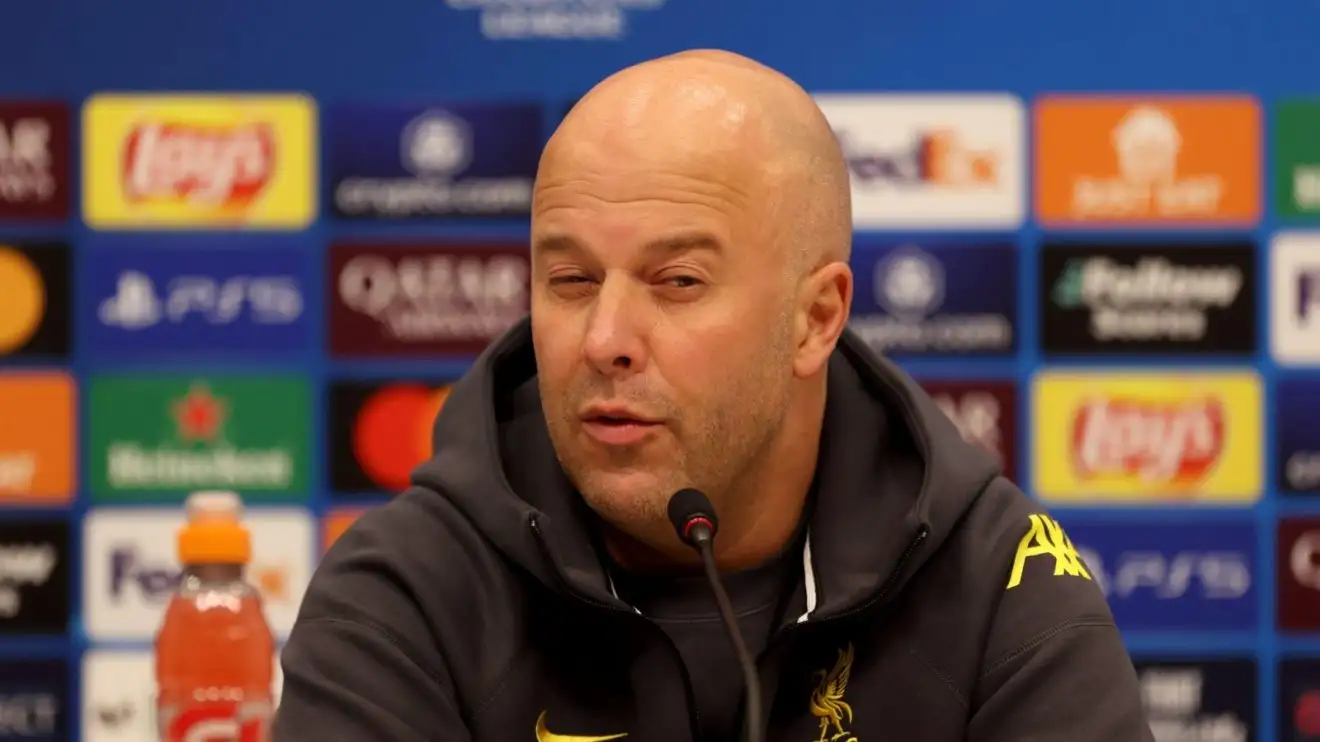
Slot could hardly have wished for a better start after leaving Feyenoord to succeed legendary manager Jurgen Klopp at Anfield in the summer.
Slot’s side are currently four points ahead of second-placed Chelsea and eight points in front of defending champions Manchester City with a game in hand on both sides, as well as third-placed Arsenal,
Liverpool only made one signing for the current squad with Federico Chiesa arriving from Juventus, while Giorgi Mamardashvili signed from Valencia before heading back to the Spanish side on loan for the season.
But they are reportedly keen to strengthen in the winter transfer window and beyond with reports in Spain claiming that the Premier League side are ‘moving ahead’ of Barcelona and Real Madrid in the race to sign River Plate midfielder Mastantuono.
The 17-year-old has played 33 times for the Argentina giants over the last year with numerous clubs tracking his progress at the Primera Division side.
It is claimed that Slot ‘makes a splash’ in the transfer market with Liverpool making an ‘offer’ for the Argentinian that ‘not only represents a record for such a young player, but also the opportunity for Mastantuono to continue his development in one of the most competitive leagues in the world’.
River Plate ‘know that keeping Mastantuono will be difficult, especially with the Reds willing to speed up negotiations’ and Liverpool boss Slot is ‘confident that the Argentine will not only be a key piece in the future of the team, but will also be able to quickly adapt to the demanding pace of the Premier League’.
Another player who Liverpool have been linked with is Bournemouth left-back Milos Kerkez and ex-Reds defender Stephen Warnock reckons the Premier League star could be a long-term replacement for Andy Robertson.
“I think Liverpool will be looking at a new left-back regardless because of Andy Robertson’s age. I thought he was superb against Girona and will no doubt want to fight for his place, but I still believe the club will try and add another player in that position.
“Konstantinos Tsimikas has been a good backup, but if you want to look long term then they should bring someone else in with more quality.
“I know Milos Kerkez from Bournemouth is someone that’s been looked at and I really like him. He’s an exciting player who’s performed well in this high-flying Bournemouth team.
“It depends what Arne Slot is looking for in his left-back and whether he wants someone more defensive-minded for that balance, but Kerkez is someone that knows the Premier League and has already performed at a decent level. He’s someone who should be on Liverpool’s radar.”
READ NEXT: Big Weekend: Man City v Man United, Nottingham Forest, Russell Martin, Eberechi Eze
Ukraine's national team was placed in Group D with France/Croatia, Iceland, and Azerbaijan in the 2026 FIFA World Cup qualifiers. During the draw, FIFA showed a map of Ukraine without Crimea.
On Friday, December 13, the draw for the group stage of the 2026 UEFA World Cup qualifiers took place in Zurich, and the national team of Ukraine learned its rivals.
This is reported by the Ukrainian Football Association, reports UNN.
Details
According to the UAF, Ukraine's national team will play in a group with Iceland, Azerbaijan and the winner of the France vs. Croatia match in the League of Nations at the 2026 World Cup qualifiers.
addition
A total of 54 teams will take part in the 2026 FIFA World Cup qualifiers, which will be held from June 11 to July 19, 2026 in Canada, Mexico and the United States. The national teams were divided into six baskets based on their performance in the 2024/25 Nations League season and their positions in the FIFA rankings.
The qualifiers in the European zone will last from March 2025 to March 2026 and will consist of two rounds. The teams will compete for 16 tickets to the World Cup. The 2026 World Cup is the first ever World Cup to feature 48 national teams in the final round (previously there were 36 teams).
There will be 12 groups of four teams. The top two teams from each group and the top eight third teams will advance to the 1/16 finals.
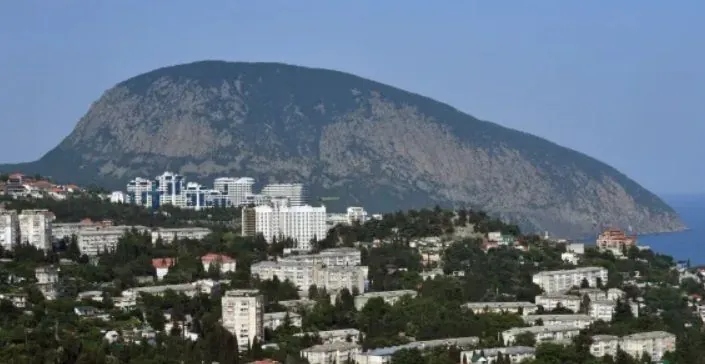
During the draw, FIFA got into another scandal. By demonstrating countries that cannot meet each other in qualifying, FIFA has shown the contours of Ukraine without Crimea.
Recall
In 2022, the Argentine national team became the World Cup champion for the first time since 1986, defeating France.
From December 13 to December 16, Diya will temporarily suspend its residence declaration services due to the upgrade of the SMS data center. The service is scheduled to resume on December 16 at 18:00.
From December 13 to December 16, the services for declaring the place of residence and obtaining an extract of the declared place of residence will not work in the application and on the Diia portal. This is reported by the press service of Diia, according to UNN.
“Starting December 13, two services on the portal and in the Diia app will not work: declaring a place of residence and obtaining an extract of the declared place of residence. Also, information about the declared place of residence will be temporarily unavailable when sharing passports and residence permits through Diia,” Diia said.
The reason for the service outage is that the State Migration Service is updating the data center.
“On such days, access to the SMS data is restricted so as not to damage or lose it during the changes. We remind you that Diia does not store data, but only displays it from electronic registers and systems. Therefore, while the data center is unavailable, the services related to it will temporarily be unavailable. We plan to resume services on Monday, December 16, at 18:00,” Diia added.
Recall
The Cabinet of Ministers is launching a pilot project that will allow current and former military personnel and their families to receive a number of services through Diia. In particular, they will be able to apply for the status of a person with a disability due to war, financial assistance, etc.
Ukraine’s Foreign Minister Andrii Sybiha has said that even if Ukraine is not invited to join NATO, it must continue to work towards future membership.
Source: LB.ua citing Sybiha speaking during a public discussion, as reported by European Pravda
Details: Sybiha had been asked what Ukraine should do if it does not receive an invitation to join NATO, which it is insisting on to guarantee its security.
The minister answered that it was necessary "to do our job to ensure that Ukraine becomes a member of NATO".
Quote: "You know, when I went to the NATO foreign ministerial meeting, my team and I brought the text of the Budapest Memorandum with us… It failed to fulfil its purpose as a security guarantee for our country and a means of protecting our territorial integrity and sovereignty. Such mistakes will no longer be allowed to happen. As a result, the sole effective guarantee for Ukraine is NATO membership," he asserted.
Sybiha stressed that the allies have not taken Ukraine's invitation off the agenda.
In this context, the minister also emphasised the importance of the security agreements signed with 27 countries and the growth of Ukraine's defence sector, "so that we become more self-sufficient, less dependent on our partners".
Background:
As of November 2024, about 70% of Ukrainians were supportive of the idea of Ukraine joining NATO in stages, as a divided Germany did.
Unofficially, it has been reported that this idea has been discussed for a long time in the West when considering possible formats for ending the current phase of the Russo-Ukrainian war and preventing renewed Russian aggression.
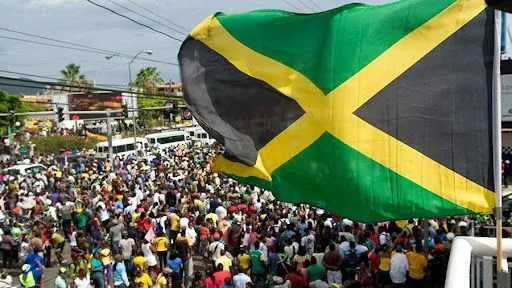
The Jamaican government has submitted a bill to remove King Charles from the post of head of state. The country plans to move to a republican form of government through a referendum.
Jamaica's government has begun the process of transition to a republic by submitting a bill to remove King Charles from the post of head of state. Writes UNN with reference to The Guardian.
Jamaica has begun the process of abandoning the constitutional monarchy by submitting a bill to the parliament to remove King Charles from the post of head of state and transition to a republic.
After gaining independence in 1962, Jamaica, like many former British colonies, retained the British monarch as a symbolic head of state. His functions are performed by the Governor General, but the position is largely ceremonial and is perceived as a legacy of the colonial past. If the new legislation is adopted, the President of Jamaica with the same symbolic powers will become the head of state.
The Minister of Justice and Constitutional Affairs, Marlene Malahoo Forte, who presented the draft law, noted that the initiative is a response to numerous calls from citizens to amend the country's constitution.
“Every year, when we celebrate independence on August 6, the nation is invited to reflect on its achievements since independence and what remains to be done, and every year the question is asked when we will abolish the monarchy and have a Jamaican head of state,” she said in an interview with the Guardian.
The bill will also affect the definition of Jamaican citizenship and change the country's political structure, in particular by expanding the Senate to include senators independent of political parties.
The draft law needs to go through several stages, including consideration by joint committees, a vote in parliament, and a national referendum. However, the initiative may face obstacles. Opposition parties have already expressed concern about the timing of the bill ahead of next year's national elections and the lack of provisions to replace the British Privy Council with the Caribbean Court of Justice as Jamaica's highest court of appeal.
“We don't think you can say that you are fully decolonized if you still have the Privy Council as the highest court. You can't get away from the king, but you still have to go to him when you want justice done for your people – and in that context, the Privy Council as the highest court is an anachronism,” said Senator Donna Scott-Mottley, justice spokesperson for the main opposition People's National Party.
She also noted that the opposition is ready to work on the bill in cooperation with the government. “This is not about political parties, it is about our nation, our people and the completion of the path to full independence for Jamaica,” she emphasized.
Malahoo Forte noted that the government of Prime Minister Andrew Holness is taking a step-by-step approach to reforms, and the next step will be issues related to the judiciary.
“Over the years, a lot of work has been done, but we have not been able to submit the draft law to the parliament. Adoption of the amendments requires the adoption of a draft law on judicial reform,” she explained.
In Kingston itself, the news of the bill caused a mixed reaction among local residents.
“The British don't really do anything significant for our country, so there's no point in having them as the head of state. Besides, it's harder for us to travel to England than to any other country… so by all means, end the monarchy,” said Maureen Brammer.
To recap
Indigenous senator Lydia Thorpe expressed her anger over the visit of the British monarch to the Australian parliament.
For a decade, the world has seen how Russia has scarred Ukraine’s landscape with tens of thousands of bombs and missiles. The spiritual wounds — and awakenings — experienced by millions of Ukrainians are less visible.
Almost a third of Ukrainians say their religious faith has grown since the war broke out, according to a survey conducted last year by the Razumkov Center, a public policy think tank based in Kyiv. Others say their belief has never been more tested.
To better understand how the Russian invasion has changed Ukrainians’ relationship with their faith, the Kyiv Independent spoke with dozens of Ukrainians from various regions and creeds.
Among them are a Greek-Catholic Chaplain performs who confessions at the frontlines; an Orthodox woman who was branded a “traitor” by her pro-Russian priest for renouncing the Moscow church; and a Muslim Mufti who put on a uniform to “practice what he preaches.”
Here are six stories of faith, questioning, and transformation.
Editor’s Note: These first-person narratives have been adapted from transcripts of interviews by the Kyiv Independent. They have been edited for length and clarity and translated into English from Ukrainian, but all of the words are from those we interviewed.
Yaroslav Buno, 39, Lviv Oblast,
‘Every chaplain is a psychologist’
Yaroslav Buno grew up in a Greek Catholic household in western Ukraine, where Christianity has traditionally been stronger than in the east. Inspired by his local priest’s work with youth, he entered seminary school at age 17. When the full-scale invasion began, his village’s church welcomed refugees from the east and started collecting military aid. Though priests have been embedded with units since 2014, Ukraine created the chaplaincy service as an official division of the military in 2023. After volunteer visits to the frontline, Buno joined a military unit as a chaplain in April of this year.
It was the funerals. The funerals of our boys. I still see their mothers.
Everything changed for me, my system of values changed. The more I saw the consequences of the war, the more I wanted to do more. I realized I had to be in the east, at the front. I couldn’t just sit home and watch. I called my wife and said, I want to become a military chaplain. God was calling.
I had to get the commander’s consent, take an oath, and then it was official.
When I went to the front for the first time, I was afraid. It’s war, after all.
Yaroslav Buno, 39, in Lviv Oblast, Ukraine on Sep. 27, 2024. (Chris Jones / The Kyiv Independent)
But I was also afraid because it was a new ministry for me. They weren’t my parishioners back in the village. They’re soldiers who have lived and seen a lot, who have wounds of war, their own ethical codes.
I’d never been in such an environment. I asked my commanders what I should do. They didn’t know either.
Another priest told me, Don't be afraid, be yourself. Talk about God's word. Do what you have always done.
I’m not a robot. Every day I experience disappointment, fear, doubt. This is inherent in every person. And a priest is not immune either. What matters is how you handle it.
I remind myself of what Christ lived through. How Christ suffered. How he got up when he couldn’t go on. His example gives me solace.
I remember the first time I was with the soldiers. Spring of this year. They laughed a little bit when I ducked from the explosions. For them it was so normal, familiar. But, as they say, everyone gets used to it.
I celebrated the liturgy. Later some of the guys thanked me. I said I hadn't done anything. They said, For being here. Even my presence could be some kind of support. I became even more convinced that a priest should be with soldiers at the front.
The Greek Catholic church has been closely intertwined with liberation in the history of the Ukrainian people. When families gather for holidays, there are songs dedicated to those events. In every village and parish, there are symbolic graves dedicated to the liberation movement. National memory, patriotic education, and religious education go hand in hand.
In the chaplaincy ministry, there are priests and monks who were imprisoned, exiled to Siberia (during Soviet times), and so on for their pro-Ukrainian views.
I try to hold services for all major Christian holidays. It's not easy, because the unit is often scattered over different territories. And we try not to make a crowd. All is done secretly.
The chaplain’s task isn’t just religious rites. Every chaplain is a psychologist. He listens, tries to be a friend, shows compassion.
Not everyone is ready to talk about God. Guys just want to relieve stress with a simple conversation. To joke, talk about the weather, everyday life, delicious food.
Of course, part of what falls to the priest is confessions. The most intimate conversation the guys have.
To kill a person, even in war, is not good. But the enemy who comes to our land has made a choice.
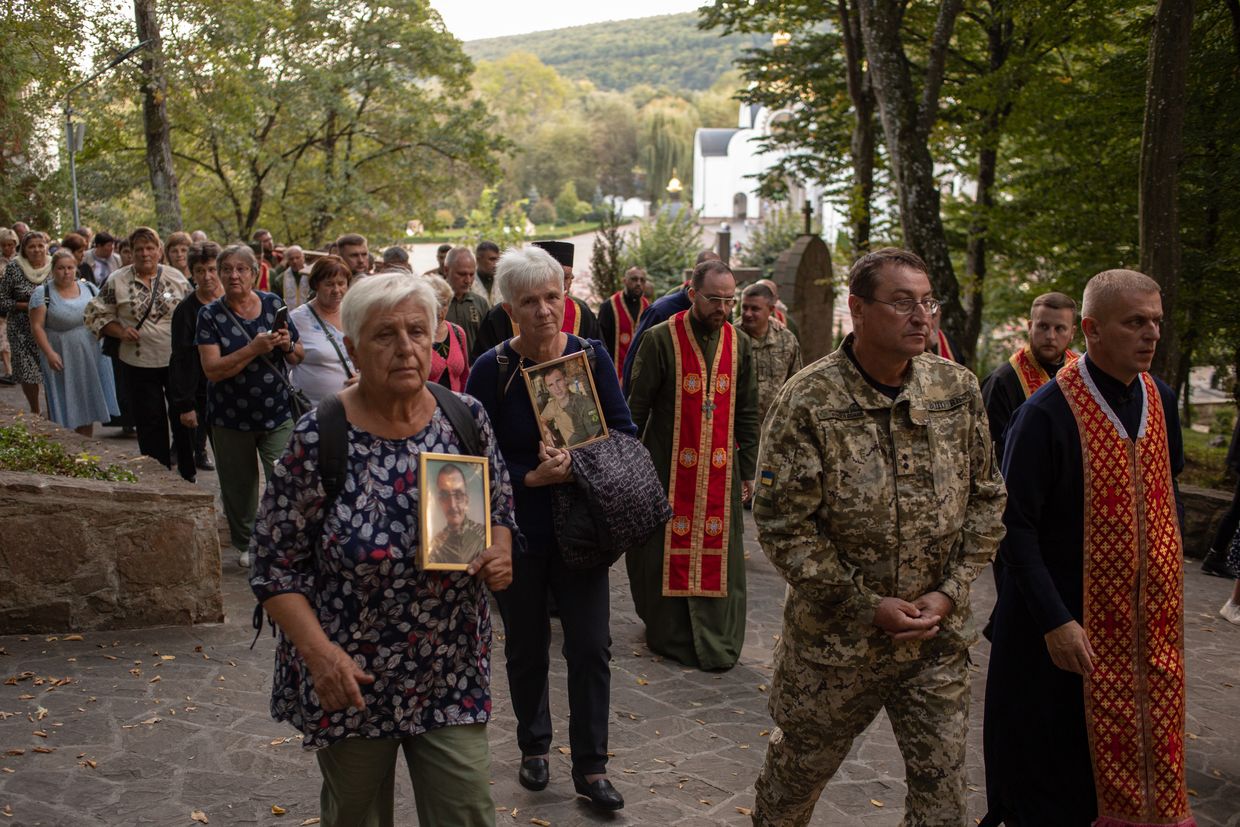
Yaroslav Buno sits on the bench in Lviv Oblast, Ukraine on Sep. 27, 2024. (Chris Jones / The Kyiv Independent)People participate in the religious walk in Zarvanytsia, Lviv Oblast, Ukraine on Sep. 27, 2024. (Chris Jones / The Kyiv Independent)
What our guys are doing is not a sin or immoral. They realize that if they don’t stop the enemy in the east, he’ll be in the west, in the center, in the north, and in the south the day after tomorrow.
They know they can die. Each of them has lost comrades. They know they could be next. Everyone has a family, has children. Everyone wants to live. But there is no other way out.
The cross that every warrior bears is self-sacrifice. But the chaplain sometimes carries the soldier’s cross, his feelings, depression, emotions. It becomes easier for the warrior after a conversation with his chaplain. Even when he hears no answers to his questions.
Nadia Kaminska, 48, Dnipropetrovsk Oblast: ‘What kind of church do you have here? Is it under Moscow?’
Orthodox Christians are the largest religious group in Ukraine — more than 70% of Ukrainians identified as Orthodox Christian according to one 2022 survey.
When the full-scale invasion broke out in 2022, Nadia Kaminska stopped attending the only church in her village in central Ukraine because of its ties to Moscow. Her congregation has since voted to transfer their parish from the Russian-linked Ukrainian Orthodox Church (UOC) to the Orthodox Church of Ukraine (OCU), which was granted self-governance from the Moscow Patriarchate in 2019 by the spiritual leadership that oversees both branches.
More than a thousand other congregations have made the same transition since 2022, while over 8,000 were still under Moscow’s influence as of May. At some Moscow-affiliated churches, the Ukrainian government has uncovered ties to the Russian state and security services.
But for the past year, Nadia and her fellow parishioners have been praying in a room in a community center. UOC leadership has barred them from holding OCU services in their village’s church. The community is waiting for the local government authorities to recognize their vote and let them gather there.
I have been a parishioner of this church since 2018. I live next door.
When I came to my first Sunday sermon, I was surprised. Father Serhei Frolov was a Ukrainophobe. For him, Russia is Russia, a great power. And Ukraine? No such country. There is only Russia.
Nadia Kaminska, 48, Dnipropetrovsk Oblast, Ukraine on Dec. 3, 2024. (Chris Jones / The Kyiv Independent)
I realized I would not have a connection with him. I was born in Russia but have lived here since I was three. To me, Russia was an aggressor that attacked my country and took away Crimea.
But I was going through a difficult time. I needed a church, I needed the sacraments.
Before 2014, the church was full. People poured their hearts into it. By the time I started coming, it was empty. There were about fifteen of us.
People with different views than Father Serhei had left. They built this church. And they had to leave it. It was difficult for people whose loved ones are fighting for us, to hear during a sermon that Russia isn’t at war with us. That the enemy is the West.
When the full-scale invasion began in February, I went to church in the morning with my husband and my hope. Hope that this priest would see the light, realize none of what he said was true, and say, Forgive me, we are at war, yes, Russia is an enemy.
But we didn’t hear that. We heard, Don’t watch, don’t listen to anything, just pray and wait.
Wait for the Russians? I couldn’t stay. I left and couldn’t return.
People were scared, disoriented. At such moments, people need the presence of God. And the people in this village, who built that church and wanted to go to that church? They were deprived.
I talked to internally displaced people who needed a church. They asked, What kind of church do you have here? Is it under Moscow?
I would say, I’m sorry, it’s a Moscow church.
Two weeks later, I got a call from our priest, Serhei. He said that, even if they put a machine gun to his temple, he would never renounce Kirill, the Patriarch of the Moscow Church. He hoped I’d take his side. I told him Kirill is not my patriarch.
Nadia and her fellow parishioners in a community center in Dnipropetrovsk Oblast, Ukraine on Dec. 3, 2024. (Chris Jones / The Kyiv Independent)A person is praying in the church in Dnipropetrovsk Oblast, Ukraine on Dec. 3, 2024. (Chris Jones / The Kyiv Independent)
Six months after the invasion, Father Serhei left. I was at the last service. He talked about traitors. He looked me in the eye, saying I’d renounced the church. I didn’t feel like a traitor. I didn’t renounce Christ.
Then a new priest came. I came to vespers and when we — five people and the priest — gathered, I said Let’s transfer to the Orthodox Church of Ukraine.
The priest said “We will do what the church leadership tells us to.” The church is not governed by parishioners, but by pro-Russian leaders.
We asked people, How would you feel about a Ukrainian church in our village, a church that has never cooperated with Russia? People said, We’re for it.
We have a law that allows parishioners to vote on transferring.
On May 14 last year, we invited everyone to a meeting in the center of the village. I got a phone call from another priest who, let’s say, threatened me. It didn’t stop us.
Ninety people voted in favor of transferring. Unanimous vote.
But the Russian church doesn’t accept the Orthodox Church of Ukraine. They say we’re schismatics and won’t let us hold services in the church. The local authorities won’t force them to leave.
So we organized a little space here in the cultural building.
We started services again. We didn’t have icons, anything.
My husband came to the first service. It was held in Ukrainian. In my village, liturgies in our beautiful language! I cried.
My former friends cut us off. For me, they aren’t enemies. They just got a little confused. They don’t study history. But what does God teach? People change.
I would like our village church to become Ukrainian. I want to return. But only when it has a different atmosphere.
Editor’s note: After this interview, Natalia’s church was told the community room was no longer available and they would need to hold services in the corridor.
Said Ismagilov, 46, Donetsk Oblast:
‘When you find yourself at war, you understand the scriptures’
Muslims make up around 1% of Ukraine’s population. Exact figures are hard to come by as the largest group is in Crimea, where around 13% of residents were estimated to be Muslim prior to its annexation by Russia in 2014.
Under Stalin’s rule in the 1940s, ethnic Crimean Tatars — around half of Ukraine’s Muslims — were deported en masse from their home in Crimea to remote areas of Central Asia and Siberia, in what Ukraine and Tatars deem a genocide. Many returned decades later, only to flee religious persecution and Russia’s rule after the country annexed the peninsula.
Said Ismahilov was one of the top Muslim spiritual leaders in Ukraine before the war began. He moved from his home in occupied Donetsk to Bucha after the 2014 invasion. When Russian troops invaded Bucha in 2022, he moved again, this time to Kyiv. He left his position as Mufti to serve as a volunteer on the front, then joined the Ukrainian military and continues to serve today. When the war ends, he dreams of building a memorial engraved with the names of all the Muslim men and women who died defending Ukraine.
I came to the mosque (in Kyiv) on the second day of the full-scale war. There was no one there. Only an elderly guard, a non-Muslim. They had all fled. It was such a disappointment.
When I was elected Mufti on Jan. 25, 2009, I set the goal of creating a Muslim community in Ukraine.
The majority of Muslims here moved from elsewhere. Even Crimean Tatars, about half of Ukraine’s Muslims, returned from deportation.
My goal was to educate the Muslim immigrants, so they feel Ukrainian. To fight together with other Ukrainians.
Said Ismagilov, 46, in Kharkiv Oblast, Ukraine on Nov. 27, 2024. (Ivan Samoilov / The Kyiv Independent)
But the people I worked with ran to Europe, the United States, Canada, anywhere. This shocked me in the first months of the war — damn it, I taught you to love Ukraine! And when it got bad for this country where you lived, got married, had children, ran your business — it turns out you don’t need the country.
Okay, if you’re not ready to fight, it’s on your conscience. But I cannot sit and pray in an empty mosque. I had to put on a uniform and practice what I preach. If I have taught that to people for 20 years, I have to go, even if I am alone. Either I lied when I called people to do something I didn’t believe in, or I have to defend my homeland.
I volunteered and became a paramedic. We evacuated the wounded under fire. I stopped being a Mufti, I’m now just an ordinary Muslim like anyone else. But if there was no one to pray for the dead, I had to do it.
Most of the Muslims who went to defend Ukraine were Crimean Tatars and Ukrainian-born. I met them at the front often.
Religious and military service are different — like earth and sky. It’s good to teach people in a warm, safe mosque. But when you’re being shot at, carrying the wounded, when it’s cold, muddy, or too hot — then it’s harder to live up to your ideals.
I discovered I’m not afraid. They can shoot at me, kill someone nearby. I am not afraid.
In Islam, a man’s duty is to be a soldier. It’s a sin if he doesn’t protect his family. We believe we die on the day and time chosen by God. No earlier, no later. Even if a hundred people shoot at me, if I’m not destined to die today, I won’t.
I didn’t hear such questions at the front, but I heard it in the rear: How did God allow this? I have a simple answer. Do not blame your sins on God, you allowed the war to begin.
God will not take up a Kalashnikov and fight in your place. It isn’t his task. God created you, gave you land to live here, freedom of choice, commanded you to be honest, righteous, and to protect yourself from the enemy.
When someone shifts responsibility to God, I say we are adults, responsible for ourselves. What does God have to do with it?
Said Ismagilov, 46, in Kharkiv Oblast, Ukraine on Nov. 27, 2024. (Ivan Samoilov / The Kyiv Independent)
When I was a Mufti, everyone pestered me. Journalists, visitors, students. Why in the world does the Koran always talk about war? Because they didn’t know what war was.
And when people found themselves in war, they understood why the Koran had verses about taking up weapons.
When you find yourself at war, you understand the scriptures.
In Islam, there are special prayers against the enemy. For the enemy to weaken, to perish. Prayers that are read when someone is afraid they will die or be taken prisoner.
Before, I didn’t read them. I had no reason. Now there’s a need for those prayers.
Now, my prayers are less about civilian life, which I don’t remember at all.
Natalia Dubchak, 62, Kyiv Oblast:
‘I went to confession for the first time right after my son died’
Natalia Dubchak returned to her family in Ukraine from Russia after the Soviet Union collapsed. She raised her children as a single mother, serving in the military until 2012. Her son was killed in 2015 fighting to defend against Russia’s 2014 invasion of Crimea and Donbas. She has organized and led church-backed support groups for other women whose sons have died in the fighting. She continues her work from her home in Bucha, which she fled for three months to escape the massacres under Russian occupation.
Around 4,400 Ukrainian fighters died during the eight years of war in eastern Ukraine before Russia launched its full-scale invasion in 2022. As of December 2024, at least 43,000 more Ukrainian soldiers have been killed, according to President Volodymyr Zelenksy, though many estimate the true total to be much higher.
“I went to confession for the first time right after my son died. I was already an adult, about 52, and I realized that we all have sins. We don’t always consider them sins. I have a lot of them — abortion, adultery in the eyes of the church — but I was very surprised by the church’s tolerant attitude. No one shamed me. No one said, Oh, how could you do that? It was shocking, in a good way. When I left the confessional, I cried for a half hour. I felt as if I’d been cleansed from the inside.
When a son or daughter dies, parents — and mothers especially — often think, God punished me. We look for the reason for our child’s death. Others are back to living their lives, surviving the war, but my child died. Maybe it was something I said, or something I thought…
But confession made me understand, in simple, ordinary words, that it wasn’t my fault.
My son Sasha was an ardent atheist. He didn’t want to read about God. He didn’t believe — that was it.
Natalia holds a photo of her deceased son in the church of the Nativity of the Blessed Virgin Mary of the UGCC in Irpin, Ukraine, on Nov. 30, 2024. (Anna Donets / The Kyiv Independent)
But when he came back on his first military leave, I asked him how he felt about God now. He said, Mom, when you’re in a trench under fire, you pray with any words you can think of. There are no non-believers in the trenches, he said.
He went to serve when the war started in 2014. I was planning to return to the service because I was only 50 and a career soldier. But he said, It’s enough for one of us to serve.
Sashko died in 2015. In 2014, many families began losing loved ones, and the question of how to care for them became an issue.
There weren't many NGOs to help us back then, and the state didn't know what to do with us. No one needed us.
The church was the first institution to lend a shoulder.
And so, when church leaders said, We would like you to help us take care of the families, to gather them so we could support them, I agreed.
Now we have 28 support groups in Ukraine. When we started seven years ago, we were the first.
We have monthly meetings, first for liturgy, then for informal communication with a psychologist, with a confessor, one another. Tea, coffee.
We celebrate birthdays and the anniversary of the death of loved ones.
I can't say that I'm a 100% religious person. I don't follow all the rules in the faith but I try to live as a decent person. The commandments, you know: thou shalt not steal, thou shalt not kill. I follow them.
But I'm not 100% a believer. The word "spirituality" is what keeps me near the church. I feel this support from within.
When everything is good, when nothing happens in your life, you don't think about the fact that faith exists. When something happens and we need support, we remember the Lord, ask him for advice, make promises.
Support group conversation for people who have lost loved ones in the war with a psychologist in Irpin, Ukraine on Nov. 30, 2024. (Anna Donets / The Kyiv Independent)Pictures of the deceased servicemen in the church of the Nativity of the Blessed Virgin Mary of the UGCC in Irpin, Ukraine on Nov. 30, 2024. (Anna Donets / The Kyiv Independent)
The families of the fallen are in this situation.
We are their role models. Families now come to our group and wonder, Is this how I will be in 10 years?
It turns out that life goes on. It’s possible not just to exist, but also to live.
We aren’t eternal. We die. That's why you have to live, be happy about small things, which is what I try to do. I have the opportunity to work a little more, I have enough money for bread and butter. What more can I ask for?
When I thought about death, I used to get shivers down my spine and immediately drove the thoughts away. They scared me. Now I understand how long the average life in Ukraine really is.
I’ll be 62 in a week. I hope I have 10 more years.
I can't say whether I believe in an afterlife.
No one has been. No one knows.
I hope it’s true that only the body dies, but the soul doesn’t. My son died, my father died.
For me, death is a meeting with my family.
Valentyn Postrelko, 75, Kyiv Oblast:
‘We pray for my boys every time’
The history of Ukraine’s Jewish community stretches back more than a thousand years. Ukraine is the birthplace of the Hasidic Jewish movement, played a key role in the development of Yiddish modern literature, and is home to more than a thousand Jewish heritage sites. Ukrainian Jews both flourished and experienced persecution during different periods up until the Holocaust, before which Ukraine was one of the largest Jewish centers in Europe. Many researchers estimate the death toll of Ukrainian Jews during the Holocaust to be over a million, with some estimates as high as 1.6 million.
Jews continued to emigrate in the decades that followed. Today, Ukraine still only has a fraction of the Jewish population it had at its peak, but since the collapse of the Soviet Union, Ukraine’s Jewish community has been rebuilding and rejuvenating. Estimates vary, but experts believe the number of Jews who still call Ukraine their home is now in the tens of thousands.
Valentyn Postrelko, like many in Ukraine’s Jewish community, is returning to a faith that has deep familial roots but was diminished in recent times.
I was born in Kyiv, I will be 75 years old in December. I was brought up in Soviet times, when religion was disregarded. Now it’s important.
When there is such a big war and your family has two sons at the front, you turn to God. And God is the same for Jews, Muslims, and for Christians.
Professor Valentyn Postrelko at the Institute of Surface Chemistry, Kyiv, Ukraine on Dec. 12, 2024. (Anna Donets / The Kyiv Independent)
Everyone has their own Golgotha, when they come to God. My time has come.
How did I get to be religious? Three or four years ago, I set myself a goal of making a memorial sign for the victims of the Holocaust.
The Association of Jewish Communities helped me finance it. We reconstructed an old Jewish cemetery. My grandmother and uncle were shot there.
And then I slowly began to visit the rabbi. I came to the synagogue. I like it there. People treat me well, and I treat them well. In any religion, a person should treat another humanely.
Every Saturday when we gather, we pray for my boys to come back alive and healthy. I talk to them almost every evening. One is 34 and the other 45. They volunteered to defend Ukraine in the first days of the war.
Earlier, many Jews left the country because there were negative attitudes towards them. They left for countries with better treatment.
I’ve seen these attitudes improve in Ukraine. Many Jews are coming back. The Ukrainian people elected a Jewish president, so what issues can there be?
To be a Jew in Ukraine today, I believe you are a citizen of this country, so this is your country.
There is a Russian translation of the Torah, but there has never been a Ukrainian translation. The Jewish community in Dnipro initiated a translation. This is very important for our country, especially now.
There is a group of translators and reviewers. I was tasked to help with editing because I speak exclusively Ukrainian. We are in Ukraine. We should have the Torah in Ukrainian.
Now in the synagogue, our rabbi reads the Torah in Hebrew, and I read (draft translations in) Ukrainian.
Professor Valentyn Postrelko's office at the Institute of Surface Chemistry, Kyiv, Ukraine on Dec. 12, 2024. (Anna Donets / The Kyiv Independent)
I have been working in psychiatry for 40 years. I studied in Russia. And I still ask the question, Why did this happen? How? For people to be turned into such beasts, that they did what they did in Bucha and Irpin.
I had a client practice in Bucha before the war, I treated soldiers after 2014. So I went there in the first days after its liberation. I saw it. The hospital was ruined. By April 2022, I was treating soldiers there again.
The air raid alarm sounded all night last night. You understand that this is a war. I could go abroad. But my boys are at war, and I will not go anywhere.
Vladyslav Makhovskyi, 50, Zaporizhzhia Oblast:
‘I prayed hardest when I was in captivity’
Baptists are one of the oldest and largest Evangelical Christian groups in Ukraine, and have been in the country since the 1800s. They once formed the largest Baptist community outside of the United States, though their numbers have since declined. Ukraine’s Head of the Presidential Office Andriy Yermak wrote in an op-ed for the Hill that there are an estimated 800,000 to 1 million evangelical Christians in Ukraine.
Vladyslav Makhovskyi grew up non-religious, like many who were born during the Soviet Union when religion was suppressed and discouraged by Soviet authorities. He converted to evangelicalism at age 25. Six years ago, he became a pastor.
Since 2014, I’ve been volunteering, evacuating, helping people in the war zone. I've been going once or twice a week. Sometimes I’m scared, but I have to go.
The main goal was to support churches and help people form new churches. We started forming churches near Avdiivka, but the Russians destroyed them.
The first time I entered the territory controlled by the occupiers, I evacuated people and got out. The second time, I was detained by one of the Russian militant groups fighting Ukraine. This was 2014. They interrogated me for six days. Took my car, documents, everything. But they let me go.
Vladyslav Makhovskyi, 50, Zaporizhzhia Oblast, Ukraine on Dec. 1, 2024. (Kate Klochko / The Kyiv Independent)
I prayed hardest when I was in captivity. Every day, every night, because they were torturing me. Relying on God gave me strength. And when I got out, I thanked God for guiding me through this.
At the beginning of the full-scale war, I was in Zaporizhzhia. I chose to stay. Those were difficult days; the Russians were close. So we started to take our church members and families with children to western Ukraine. And also to help people who were even nearer to the approaching Russians.
We drove three or four buses to Vasylivka, to bring aid and evacuate children. We were asked to. When we were getting closer, we saw military equipment. When we got even closer, we saw the letter ‘Z.' They stopped us, searched us, held us, but then turned us around and let us go. They had other tasks.
I went to occupied territories several times to evacuate children until they closed everything.
This February in Avdiivka, I came under fire. A first-person-view drone hit me. It was 800 meters from the Russians. I got shrapnel wounds on my right leg. My car wouldn’t start. I walked about a kilometer in a state of shock and was evacuated to the city.
Vladyslav Makhovskyi, 50, with his congregation in Zaporizhzhia Oblast, Ukraine on Dec. 1, 2024. (Kate Klochko / The Kyiv Independent)
I don’t think I’d be doing this if I were not a believer. Faith changed me. Gave me a vocation to help people.
Now we’re helping displaced people. Many of them come to our church. This year, several were baptized. When things get difficult, people turn to God and the church grows.
Many of the ministers I know weren’t believers as children. I was raised a non-believer. I was involved in drugs, have a criminal record. The first time I came to the Baptist church, in 1999, the service was already going on. I stood in the doorway and watched. And then one lady invited me in, offered me a seat, so I listened to the sermons. I felt such love, such acceptance.
When I was captured for the first time in 2014, they had such a negative attitude toward the Baptists. There was a soldier who came wearing a cross. I started saying I was a believer, a Christian. He came at me with a knife. He showed me the cross and said, This is the true God. Your faith is an enemy faith, the faith of American spies.
Note from the authors:
Hi there from Natalia and Andrea, the co-authors of this piece. Thank you for reading our article! As we traveled across Ukrainian communities to talk about religion, we saw that it was more important than ever to highlight a deep, unnoticed impact of almost three years of Russia's war on Ukraine. If you'd like to see more stories like this one, please consider supporting our work with a monthly or one-time donation. By becoming a member or donating, you can help us continue telling the world the truth about this war.
The New York Times predicts that the war in Ukraine will end by 2025 due to the depletion of resources on both sides. The outcome of the conflict will depend on international support and future peace talks.
The war in Ukraine may end in 2025, but its outcome will depend on international support and future peace talks, UNN reports citing The New York Times.
Regardless of the outcome of the U.S. presidential election, the war in Ukraine is likely to end in 2025. Human resources are dwindling in both countries, and active mobilization continues. This creates conditions for the start of peace talks.
Donald Trump's victory may accelerate this process. During his campaign, he promised to end the war before his inauguration. While this seems like an exaggeration, his desire to start negotiations as soon as possible is clear.
However, this is bad news for Ukraine. Russia is advancing in the east and is regaining territory lost last summer. Ukraine continues to defend itself, but its troops are scattered and facing a shortage of soldiers. Without more aid, especially from the United States, Kyiv risks losing its ability to effectively counter the aggression.
Europe, although it developed a plan to provide logistical support to Ukraine at the NATO summit, is unlikely to be able to compensate for the loss of American aid. Europe's economic and industrial resources are severely limited, and without U.S. support, securing weapons and funding for Ukraine will be a serious problem.
President of Ukraine Volodymyr Zelenskyy admits that the return of lost territories through diplomatic means may become an inevitable scenario.
WSJ: Zelensky signals readiness for peace talks to end the warDec 3 2024, 09:04 AM • 64285 views
The Biden administration is trying to put Ukraine in a favorable position in negotiations by providing weapons, including long-range missiles. However, even such measures are unlikely to allow Ukraine to regain most of its territory.
For Ukraine, the outcome of the war depends not only on military achievements, but also on agreements with Europe and the United States that will guarantee long-term security and economic integration with the West. At the same time, NATO membership remains unlikely, especially under a Trump presidency, which is unlikely to provide such a guarantee.
The proposals for Ukraine's neutrality, which are supported by some Republicans, meet Russia's demands. Trump may seek to show concessions from Putin, such as Ukraine's economic integration with Europe, but this is no substitute for security guarantees. Kyiv fears that such a deal would give Putin time to recuperate for new attacks.
Protecting Kyiv will be the most difficult and critical aspect of any negotiations. While Trump will not want to appear weak, the possibility of a deal that suits both sides remains highly uncertain.
Recall
US President-elect Donald Trump saidthat resolving the war in Ukraine is his top priority, although the situation in the Middle East is no less important to him.
The Ministry of Agrarian Policy of Ukraine, the Canadian non-governmental organisation SOCODEVI, and the Dnipropetrovsk Oblast NGO Agricultural Advisory Service will cooperate to develop the entrepreneurship of the rural population affected by the hostilities.
Source: Ministry of Agrarian Policy and Food of Ukraine
Details: The parties agreed to potential cooperation in agriculture and to implement the Entrepreneurship Development for the Conflict-Affected Rural Population in Ukraine (WeProsper) project.
This project aims to increase agricultural producers' involvement in business activities in Poltava, Dnipro, Zaporizhzhia and Mykolaiv oblasts.
It is also planned to ensure the economic empowerment of women in the agricultural sector by creating opportunities for the development of individual production activities, the establishment of agricultural cooperatives and more active participation in the socio-economic development of the region.
This project will be implemented with the financial support of the Government of Canada through a non-refundable grant.
The Entrepreneurship Development for the Conflict-Affected Rural Population in Ukraine (WeProsper) project focuses on three main value chains: dairy, vegetable/berry, and grain. As part of the project, more than 700 people (75% of whom are women) have been trained in climate-smart agriculture, and 492 cooperative members are benefiting from new services. 144 board members and employees of cooperatives have been trained.
Background: The Canadian Parliament approved CA$764 million (US$587 million) for military aid to Ukraine.


 The Kyiv IndependentFrancis Farrell