The U.S. House of Representatives passes the 2025 defense budget without extending the Ukraine lend-lease. The document contains other important provisions regarding Ukraine, including a ban on recognizing the occupied territories.
The National Defense Authorization Act for 2025 (NDAA) approved by the US House of Representatives does not contain a provision to extend the term of the Ukraine Democracy Protection Act, Ukraine's Ambassador to the US Oksana Markarova said on Facebook on Monday, UNN reports.
Details
Markarova noted that the U.S. House of Representatives passed the National Defense Authorization Act for 2025 (NDAA). The decision was supported by 281 congressmen, while 140 lawmakers (16 Republicans and 124 Democrats) voted against it. The next step is the approval of the NDAA by the US Senate, which is expected next week.
US House of Representatives passes defense funding billDec 12 2024, 01:20 AM • 11648 views
According to the ambassador, the document contains the following main provisions regarding Ukraine:
– Article 1303 extends the ban on the use of any funds for actions that could lead to the recognition of Russia's sovereignty over the occupied regions of Ukraine;
– Article 1534 instructs the Secretary of Defense to explore the possibility of establishing a center of excellence to support the development and improvement of artificial intelligence-based weapon systems. Among the functions of such a center is to facilitate the Pentagon's cooperation with foreign partners, including Ukraine, to identify best practices, guidelines, standards, and benchmarks;
– Section 6411 instructs the Director of National Intelligence, the Secretary of State, and the Secretary of the Treasury to submit a report to the Senate and House Committees on Intelligence, Foreign Affairs, Armed Services, Judiciary, Finance, and Appropriations on the financing of acts of international terrorism by the Russian Federation. This report is unclassified, but may contain classified annexes.
"It is worth noting that funding for the Ukraine Security Assistance Initiative (USAI) for fiscal year 2025 was provided in last year's NDAA in the amount of $300 million," the ambassador emphasized.
"It should also be noted that this year's NDAA bill approved by the Senate contained a provision to extend the term of the Ukraine Democracy Assistance Act, and the Ukrainian Embassy in the United States actively advocated for it, but the bill approved by the House of Representatives did not contain such a provision. The consolidated text of the bill does not include this provision. The Embassy continues to work actively to preserve this mechanism, which is, in particular, provided for in the bipartisan and bicameral "Stand with Ukraine Act", Markarova said.
The US says it will provide Ukraine with $20 billion using frozen assets of the Russian FederationDec 10 2024, 06:31 PM • 33586 views
Russia has lost 758,730 troops in Ukraine since the beginning of its full-scale invasion on Feb. 24, 2022, the General Staff of Ukraine's Armed Forces reported on Dec. 12.
This number includes 1,390 casualties Russian forces suffered just over the past day.
According to the report, Russia has also lost 9,532 tanks, 19,644 armored fighting vehicles, 31,127 vehicles and fuel tanks, 21,072 artillery systems, 1,253 multiple launch rocket systems, 1,023 air defense systems, 369 airplanes, 329 helicopters, 20,111 drones, 28 ships and boats, and one submarine.
There were 203 combat engagements in the frontline, with the largest number of attacks in the Kurakhove sector – 49. The enemy launched 2 missile and 15 air strikes, firing 3,500 times.
203 combat engagements took place on the frontline over the last day, the most intense – in the Kurakhove sector, the General Staff of the Armed Forces of Ukraine reported in its morning report, UNN writes.
The situation at the front remains difficult. The enemy, using its superiority in manpower and equipment, continues to attack our positions. Ukrainian defenders are steadfastly holding back the onslaught of the occupiers and inflicting significant losses on the enemy. In total, 203 combat engagements were registered over the last day
– reported the General Staff.
Yesterday, the enemy launched two missile and 15 air strikes at the positions of Ukrainian units and localities, using two missiles and dropping 24 drones. In addition, it fired three and a half thousand times at localities and positions of our troops, 134 of them from multiple launch rocket systems, and used over a thousand kamikaze drones to attack.
Over the past day, the missile forces and artillery of the Defense Forces, as indicated, hit four control points and four areas of concentration of enemy personnel.
The situation is reportedly as follows:
In the Kharkiv sector, Russian terrorists stormed the positions of Ukrainian troops six times without success near Hlyboke, Lyptsi, Starytsia and Vovchansk.
In the Kupyansk sector, 14 militants' attacks took place over the last day. Defense forces repelled enemy assaults near Zakhidne, Pishchane, Lozova and Zahryzove.
On the Lyman direction, the invaders attacked the positions of Ukrainian defenders 30 times. They tried to break into our defense near Tverdokhlibove, Druzhelyubivka, Novoyehorivka, Hrekivka, Makiivka, Terny, Torske, Hryhorivka, Kopanka and in the Serebryansky forest.
In the Siverskiy sector, Ukrainian defenders repelled one attack by Russian invaders near Verkhnekamianske.
In the Kramatorsk sector, the enemy made two attempts to advance near Chasiv Yar and Stupochky yesterday.
Using guided aerial bombs actively in the Toretsk sector, the occupants stormed the positions of our defenders in the Toretsk area five times yesterday.
In the Pokrovsk sector, our defenders stopped 40 enemy offensives. The enemy was actively using aviation. He stormed Ukrainian positions near the settlements of Shevchenko, Pishchane, Novotroyitske, Novooleksiyivka, Novyi Trud, Dachanske, Lysivka, Myrolyubivka, Promin and Pokrovsk.
In the Kurakhove direction, the defense forces repelled 49 attacks. Most actively, the invaders tried to move forward near Solntsevka, Starye Ternovi, Dachensky, Zarya, Kurakhovo, Dachny, Katerinovka, Elizavetovka, Ganovka, Antonovka and Uspenovka.
On the Vremivsky direction, the enemy made 29 assaults on our positions in the areas of Trudove, Kostiantynopolske, Sukhi Yaliv, Blahodatne and Novodarivka. He actively used bomber aircraft to carry out attacks in the area.
The enemy did not conduct any offensive actions in the Gulyaypilsky sector yesterday.
Yesterday, in the Orikhivsky sector, the enemy attacked our positions once near Novoandriivka.
Five times, the invaders tried to force the units of the Defense Forces out of their positions on the Prydniprovsky direction without success.
No signs of enemy offensive groups were detected in the Volyn and Polissia directions.
On the border with Chernihiv and Sumy regions, the enemy from the territory of the Russian Federation is actively using artillery and aviation in the areas of Ukrainian settlements.
"In the operational zone in Kursk region, units of the Ukrainian Defense Forces repelled 22 attacks by Russian invaders over the past day," the report says.
According to the General Staff, our soldiers are inflicting significant losses in manpower and equipment on the occupation forces and are actively undermining the enemy's offensive potential in the rear.
Plus 1390 occupants, 6 tanks and 28 armored vehicles: General Staff updates data on enemy lossesDec 12 2024, 05:48 AM • 7101 view
Russia lost another 1,390 soldiers killed and wounded, 28 armoured fighting vehicles, six tanks, and five artillery systems over the past day.
Source: General Staff of the Armed Forces of Ukraine on Facebook
Details: The total combat losses of the Russian forces between 24 February 2022 and 12 December 2024 are estimated to be as follows [figures in parentheses represent the latest losses – ed.]:
approximately 758,730 (+1,390) military personnel;
PoliticsWar Hungary’s “peacekeeping mission” continues as Orban speaks with Putin for an hour about his US visit on his way to visit Erdogan in Turkey. Thursday, December 12, 2024
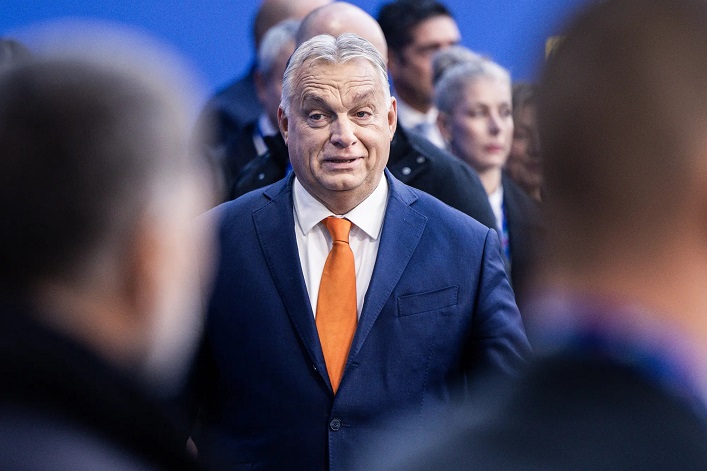
Hungarian Prime Minister Viktor Orban, who recently flew to the US to discuss Ukraine with Donald Trump and his team, spoke for an hour with Russian dictator Putin on December 11. “We are taking all possible diplomatic steps in favor of a ceasefire and peace talks,” he noted. The Kremlin reported that the parties discussed the countries’ economic cooperation and the war in Ukraine. Orban said he was interested “in promoting a joint search for ways to resolve the crisis politically and diplomatically.” In turn, Putin complained about Kyiv’s “destructive line” that allegedly excludes the possibility of a peaceful conflict settlement. President Zelensky once again emphasized that achieving real peace “requires the determination of the US, the unity of Europe, and the determination of all partners to adhere to the goals and principles of the UN Charter.” Orban will continue his diplomatic junket with a visit to Turkey to discuss current international affairs, the war in Ukraine, and the conflict in the Middle East with Erdogan.
Ruben Dias has caught a severe case of the Manchester Citys. Pep Guardiola’s got it worse than anyone. The defending was criminal in defeat to Juventus.
December Champions League games involving Manchester City have rarely been hugely watchable affairs. They’re typically routine victories for Pep Guardiola’s side, often routs of vastly inferior teams with a fraction of their financial might and quality.
They were dull by dint of their predictability, worth watching in the absence of more competitive clashes thanks to the moments of genius City’s wonderful individuals would frequently produce and the mesmerising football they played as a whole, with the side-to-side search for cracks in opposition defences a soporific comfort on wintery evenings.
City are now undoubtedly the Premier League team to watch in the Champions League thanks to an enthralling and rapid fall from grace that means they’re now in very serious danger of failing to qualify for the knockout stages. They’re now 22nd and need a win over either PSG (A) or Club Brugge (H) to ensure they make it into the play-offs.
“You get confidence when you make a thousand, millions passes and it helps us to be who we are,” Pep Guardiola said in his pre-match press conference, as he – like the rest of us – searches for a reason for their extraordinary slump other than Not Having The Best Footballer In The World.
The players followed his advice, making 355 passes to Juventus’ 187 in the first half, but there wasn’t any sense that they were probing for weaknesses in the opposition, rather passing for passing’s sake, as one might do if their manager instructs them to “make a thousand, million passes”.
There was one good pass, from Kevin De Bruyne, who took the ball on the half-turn in front of the Juventus defence and in one smooth action slipped it in behind for Erling Haaland, whose attempted dink was well saved by Michele Di Gregorio.
But that was it as Juventus sat in and manager Thiago Motta played a waiting game in the Champions League that has so often ended in defeat for Guardiola’s opponents, as the pressure has invariably paid in the past, but all too easily from City’s perspective now yields results as their ageing team tires when previously they would either be seeing a game out or peppering the opposition goal.
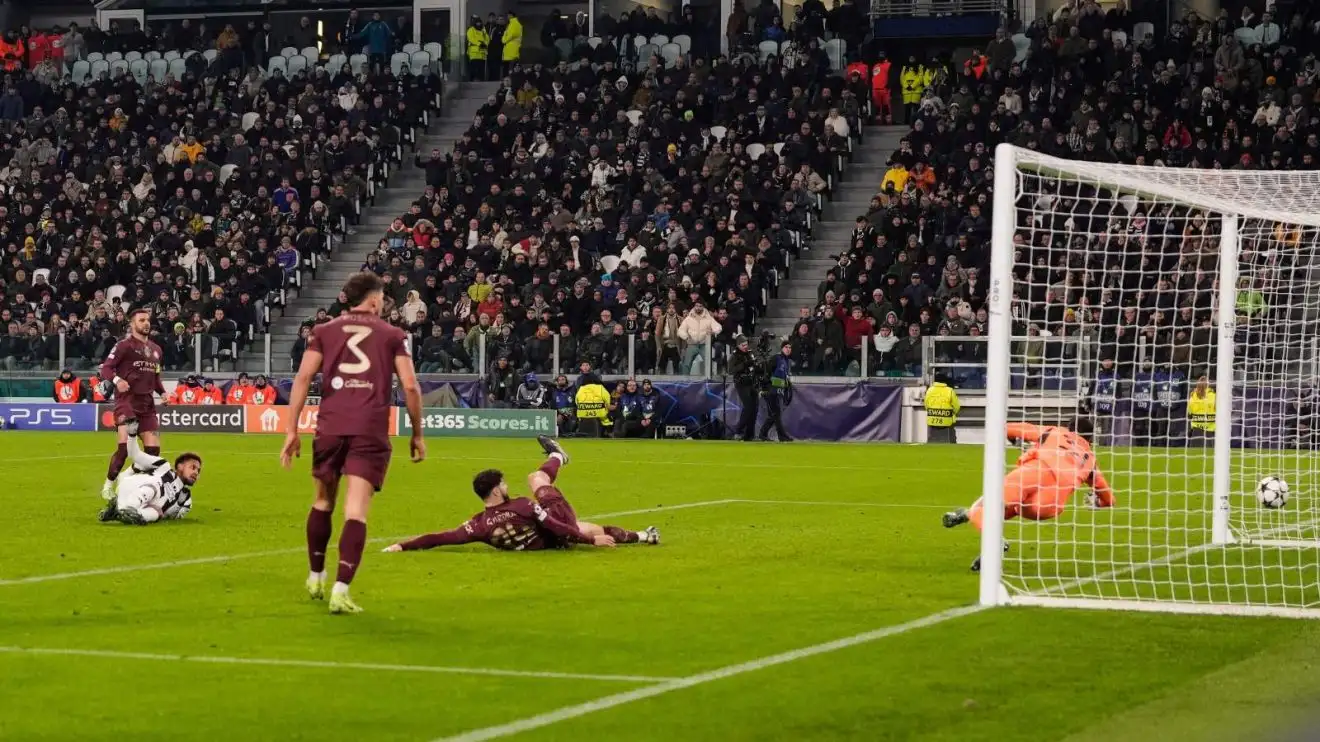
There was a lot of noise during Ruben Dias’ absence over his importance to the team, and he’s been one of the best defenders about in the last five years, but he was ropey here, giving Federico Gatti far too much space for his acrobatic effort in the build-up to Dusan Vlahovic’s header, as the striker leapt above centre-back partner Josko Gvardiol to squeeze the ball over the line.
City did respond; there were at least nods to a better time as they started to build pressure, with bits of intricate play in the box, overlaps and overloads. For around 20 minutes or so they looked something like their old selves.
But this is where no Rodri really hurts them. There’s no danger in transition when he’s on the pitch. He sniffs out counter-attacks to the point where you don’t even really notice there was a chance of one.
There’s no way Weston McKennie has that much space in the middle of the park if the Ballon d’Or winner is playing. The ball probably wouldn’t even have reached him.
The American played a ball out wide for Timothy Weah and then volleyed home his compatriot’s return ball with no Manchester City player anywhere near him. A well-worked move but ludicrously, embarrassingly simple.
MORE MAN CITY COVERAGE ON F365 👉 Man Utd pair on top five Premier League ‘pure profit’ PSR list 👉 Man City ‘choose’ to replace ‘liability’ in ‘desperate trouble’ with £25m ‘top-class’ signing 👉 F36Skive: Recall the Man City team beaten by Juventus in the Champions League…
The chance arrives because there’s no Rodri, but the defending after that was appalling, with Dias playing Weah onside by being two yards deeper than his fellow defenders and Gvardiol pointing out players to mark and marking no-one himself. They’re a ragtag bunch back there these days.
“We run like a desperate team when we don’t have the ball,” Guardiola said before the game. He’s absolutely right but his solution to that being to never give the ball away when they don’t have the best metronomic passer and possession hogger in world football available is naive in the extreme and suggests he’s a man with no knowledge of football rather than one of the best tactician’s the game has ever seen.
And it’s not just his apparent inability to get his defenders to defend properly that was the issue in this game. While Motta’s two substitutes combined to score their second, Guardiola watched his team huff and puff to no avail for 79 minutes before his first change and then made his second and last on 87 minutes while Phil Foden remained on the bench.
A global outage of OpenAI services resulted in the inaccessibility of ChatGPT and Sora. The company identified the problem and partially restored the services after the incident.
The popular chatbot based on artificial intelligence ChatGPT has stopped working due to a global failure. This was reported by the developer company OpenAI, according to UNN.
Details
It is noted that around 2 a.m. on December 12, users from all over the world began to complain about the failure of the ChatGPT and Sora services. Later, the company published a post confirming the problem.
ChatGPT, Sora, and the API are not working. We have identified the problem and are implementing a fix. We're working as fast as we can to bring the service back to normal,
– the statement said.
The company later reported that API and ChatGPT traffic was partially restored.
Recall
In November of this year, more than 18 thousand users in the United States reported problems with ChatGPT over the past day. Failures have also been reported in the UK, Germany, and Canada, with most complaints related to the service itself.
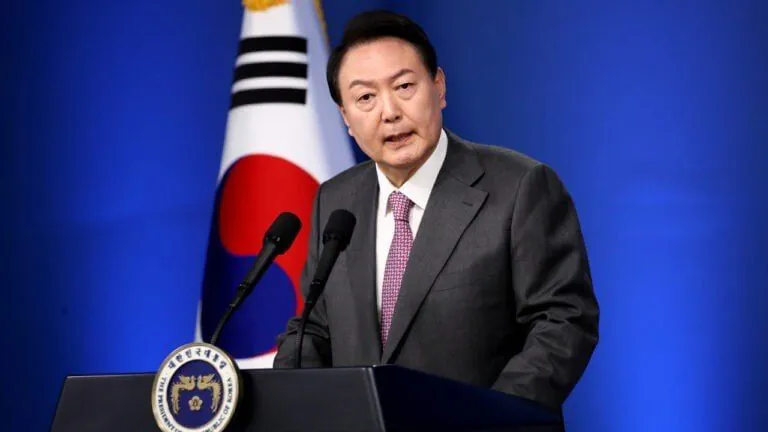
Yun Seok-yol said he would not resign voluntarily and was ready to face impeachment proceedings. The president accused the opposition of obstructing the government's work and called the parliament a “monster.
In his address to the country, South Korean President Yun Sook-yol actually refused to resign voluntarily and said he was ready to undergo impeachment or investigation against him. This was reported by the South Korean agency Yonhap, according to UNN.
Details
It is noted that in a televised public address, Yun said that sending troops to the National Assembly during martial law cannot be tantamount to rebellion, while ignoring calls for his resignation.
Yoon said he used his presidential powers to declare martial law “to protect the nation and normalize state affairs” against the opposition that had paralyzed the government, calling it “a sound political judgment.
Regardless of whether I am impeached or investigated, I will honestly oppose it
– said Yoon Seok-yeol.
Yoon accused the opposition of obstructing the government's work by attempting to impeach it and cutting necessary budgets planned for next year, saying it was “performing a crazy sword dance.
The National Assembly, which is dominated by a major opposition party, has turned into a monster that destroys the constitutional order of a free democracy
– said the President of South Korea.
“I will fight with you until the very last moment,” Yoon said, apologizing once again for the inconvenience caused by the short-term imposition of martial law.
Recall
South Korean President Yun Seok-yeol has canceled the martial law imposed on December 3. The decision was made after a request from the National Assembly and a vote by the Cabinet of Ministers.
Ukraine is exhausted. Low on manpower, ammunition, and, most importantly, morale, the country is slowly reckoning with the fact that the ongoing war may be unwinnable on the battlefield — at least for now. According to a Gallup survey published on Nov. 19, 52% of Ukrainians now say they want their country to negotiate an end to the war “as soon as possible.” However, the terms of such a settlement would depend on Washington as much, if not more, than on Kyiv.
U.S. President-elect Donald Trump has been vocal about Russia’s all-out war against Ukraine, often making remarks in support of Moscow rather than Kyiv. He has promised to end the war within “24 hours,” without providing details, and called Ukrainian President Volodymyr Zelensky “the greatest salesman.” Trump and his allies have blocked a $61 billion aid package critical to Kyiv’s war effort for over six months.
Trump’s son, Donald Trump Jr., has vocally opposed outgoing U.S. President Joe Biden’s decision to allow Ukraine to strike targets deep inside Russia with Western-provided long-range missiles. These developments have unsettled Kyiv.
Another concerning development is Trump’s nominations for key positions, including individuals with controversial views on Ukraine. Among the most contentious are Tulsi Gabbard, his pick for director of national intelligence, and Pete Hegseth, a candidate for defense secretary. The stance of Keith Kellogg, nominated as a potential special envoy for Ukrainian peace, remains to be seen.
In March 2022, Gabbard echoed Russian propaganda by promoting false claims that Ukraine was hosting “U.S.-funded biolabs.” She also warned that U.S. sanctions against Russia could trigger nuclear war. Meanwhile, Kellogg co-authored a peace plan proposing to freeze the front line in Ukraine, delay NATO accession indefinitely, and partially lift sanctions on Russia.
These statements and nominations have fueled concerns in Kyiv and Moscow that the new administration will push to freeze the war along current front lines. But both sides are likely to reject such a proposal.
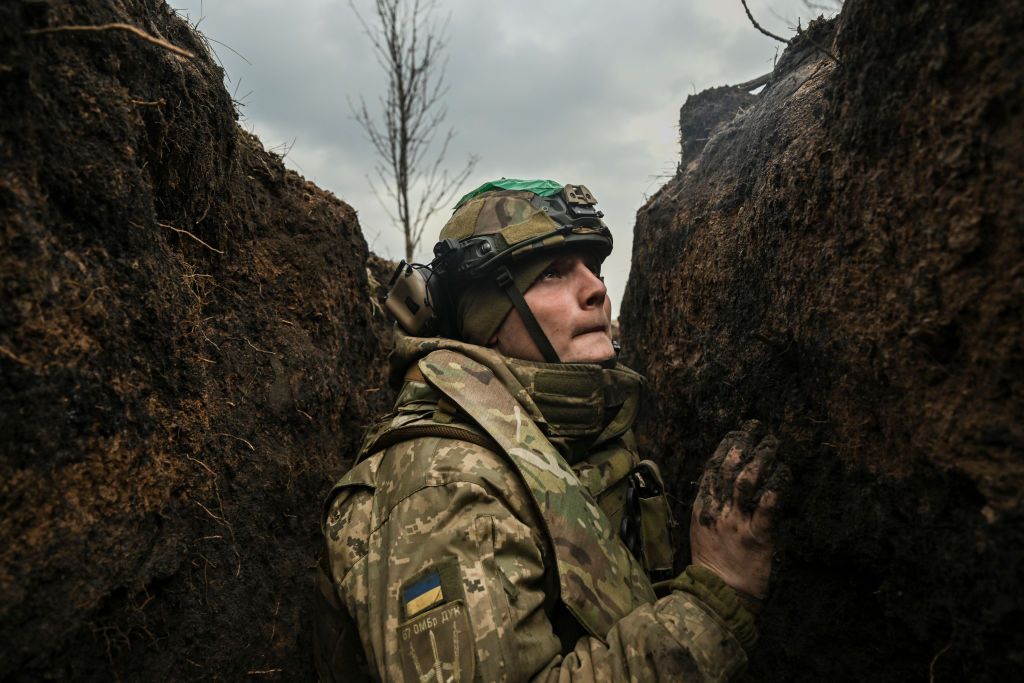
A Ukrainian soldier looks out from a trench at an artillery position near Kharkiv, Ukraine, on Dec. 6, 2024. (Photo by Nikoletta Stoyanova/Getty Images)
“The (Russian) president has repeatedly said that any option of freezing the conflict won’t work for us,” Kremlin spokesperson Dmitry Peskov told reporters on Nov. 20. “It’s important for us to achieve our goals.”
Russia’s goals include occupying more territory in Ukraine’s Donetsk Oblast and pushing Ukrainian forces out of Russia’s Kursk Oblast. Moscow may also aim to retake northeastern Kharkiv Oblast, with Russian forces currently threatening Kupiansk, a city liberated by Ukraine in September 2022.
Russia’s steady advances in eastern Ukraine, combined with its attacks on Ukraine’s energy infrastructure, give Moscow leverage in potential peace talks. Ukrainian lawmaker Oleksandr Merezhko has warned that Russia’s demands far exceed what Ukraine can offer. Moscow has already declared the annexation of four Ukrainian oblasts — Donetsk, Luhansk, Zaporizhzhia, and Kherson — despite not fully controlling them.
"Russia’s steady advances in eastern Ukraine, combined with its attacks on Ukraine’s energy infrastructure, give Moscow leverage in potential peace talks."
“(Russian President Vladimir) Putin cannot backtrack on annexations,” Merezhko told the Kyiv Independent.
Russia is also expected to demand that Ukraine abandon its NATO aspirations.
Caught in this dire situation, Ukraine faces a difficult balancing act. A source in Zelensky’s office, speaking anonymously, said Kyiv will not agree to freeze the war along the current front lines. Such an arrangement would leave Ukraine vulnerable, allowing Russia to regroup and rearm.
“Many of our fellow citizens will be hurt by these words, but the defense of Kursk Oblast is a higher priority than the Kurakhiv bridgehead, Donetsk, and Luhansk oblasts,” said Dmytro Zhmailo, a military expert and executive director of the Ukrainian Security and Cooperation Center.
Holding Russian territory could prevent peace talks on Moscow’s terms, as the Kremlin has stated it will not negotiate while Ukraine controls any part of Russia. Meanwhile, Ukraine must maintain morale while engaging with Trump’s incoming administration to promote the idea that supporting Kyiv serves U.S. interests.
In September, Zelensky presented Biden with a “victory plan,” outlining steps needed for Ukraine to continue its fight. While the plan received little enthusiasm, two proposals reportedly caught Trump’s attention: Ukrainian troops replacing U.S. forces in Europe and sharing Ukraine’s critical natural resources with the U.S. and its allies.
Ukrainian President Volodymyr Zelensky (R), French President Emmanuel Macron (C), and U.S. President-elect Donald Trump (R) pose for photos at the Elysee Presidential Palace in Paris, France, on Dec. 7, 2024. (Chesnot/Getty Images)
Over the past few months, Ukrainian leadership has shown greater openness to peace talks, even with limited leverage. Kyiv hopes to push the U.S. toward stricter sanctions on Russia and a stronger negotiating position for peace talks expected next year.
However, whether these talks will yield results remains uncertain. Ukrainian officials insist that any agreement must provide security guarantees, ensure Ukraine’s independence, and restore at least some territories occupied by Russia.
The potential shift in U.S. policy under Trump has alarmed not just Kyiv but also its allies in Europe. Countries like Poland, which share a direct stake in Ukraine’s survival and regional stability, are already bracing for the impact of a reduced American commitment.
Poland, in particular, has emerged as a key player in rallying European support for Ukraine. Polish Prime Minister Donald Tusk, drawing from his experience in the European Council, has expressed concerns about Trump’s unpredictability and its implications for Ukraine. He warned that we must expect the worst, and that a forced ceasefire on Putin’s terms could lead to renewed conflict and greater instability in Eastern Europe.
Poland is leveraging its defense spending — nearly 5% of GDP — and its strategic purchases of American weapons to assert its commitment to NATO and transatlantic security. Warsaw hopes to use this position to persuade Trump to maintain U.S. support for Ukraine. At the same time, Poland and its regional partners are preparing contingency plans, including potentially forming a coalition of willing nations to continue military aid if U.S. support falters.
Yet, even with such efforts, Europe faces significant challenges in maintaining the flow of military supplies to Ukraine. Production levels have not yet scaled up to meet demand, and some Western European leaders remain hesitant about deeper involvement.
Ukrainians are exhausted, and for now, a military solution seems out of reach. The trajectory of peace talks, however, will largely depend on Washington. There is a golden opportunity to persuade the new administration to take decisive action.
Ending the war for good is within reach, but it will require granting Ukraine NATO membership and reclaiming territories currently occupied by Russia. The U.S. has the leverage to compel the Kremlin to negotiate and to force meaningful concessions. Key economic tools include lowering global oil prices, tightening sanctions enforcement, and cutting off Moscow’s ability to sustain its war effort financially.
To support Ukraine, the U.S. could also tap into frozen Russian assets to fund the military hardware Ukraine still needs. A critical window of opportunity is on the horizon, and the U.S. has the tools to seize it. Now, it’s up to Kyiv to convince Trump that this is the path forward.
Editor’s Note: The opinions expressed in the op-ed section are those of the authors and do not necessarily reflect the views of the Kyiv Independent. This article was created as part of the Thematic Networks of PULSE, a European initiative promoting transnational journalistic collaborations.
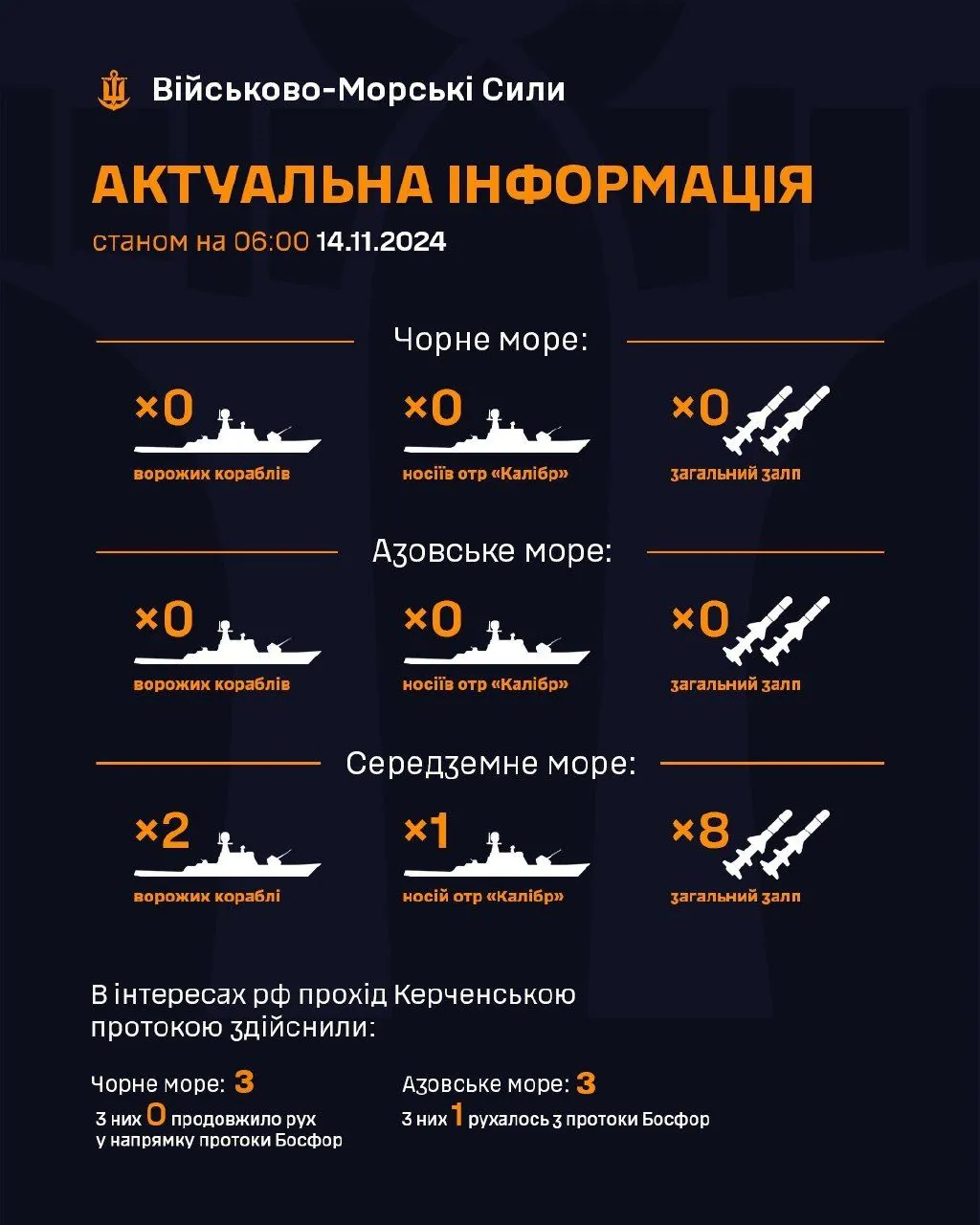
No Russian ships have been spotted in the Black Sea or the Sea of Azov. There are two Russian vessels in the Mediterranean Sea, one of which is equipped with Kalibr missiles.
As of November 14, 2024, no enemy ships have been spotted in the Black and Azov Seas. This is reported by the Naval Forces of the Armed Forces of Ukraine, UNN reports.
Details
However, according to reports, there are two Russian vessels in the Mediterranean, one of which is equipped with Kalibr cruise missiles and is capable of firing up to eight missiles.
Three vessels crossed the Kerch Strait to the Black Sea over the past 24 hours, none of which continued on to the Bosphorus. Three vessels also arrived in the Sea of Azov, one of which was heading from the Bosphorus.
No enemy ships in the Black and Azov SeasNov 10 2024, 05:01 AM • 47323 views



 The Kyiv IndependentThe Kyiv Independent news desk