Kylian Mbappe, Vinicius Junior and Jude Bellingham all scored in the same game for the first time to lift Real Madrid away from Champions League elimination.
The beautiful dream is over. Real Madrid are clear of the Champions League elimination places and normality has been restored insofar as normality puts Aston Villa and Brest among European football’s five best teams.
It was touch and go for a tantalising period of time as Real stumbled through increasingly damaging defeats to Lille, AC Milan and Liverpool to flirt with an early exit from a format designed specifically to prevent such elite embarrassment. And they barely merited this rejuvenating victory over Atalanta. But surely from here Real cannot fail.
It might not be a widespread problem but it has become difficult to watch this team without hearing Rio Ferdinand providing a two-word backing track throughout.
Kylian Mbappe follows a sumptuous first touch with a wonderful finish to open the scoring. Ballon d’Or.
Sead Kolasinac randomly rampages through and is vaguely clipped by Aurelien Tchouameni in the area, with Charles De Ketelaere despatching the penalty into the top corner. Ballon d’Or.
Vinicius Junior capitalises on a lucky break with a ruthless strike. Ballon d’Or.
Jude Bellingham opens up a fraction of space with a feint and sweeps his effort past the keeper. Ballon d’Or.
Ademola Lookman reprises his match-winning role from the Europa League final of Man Who Hits Football Really Sodding Hard. Ballon d’Or.
Atalanta contrive to barely give Lookman another meaningful touch in the ensuing half an hour spent searching for an equaliser, until suddenly his skill and cross creates a chance Mateo Retegui misses from about three yards out. Maybe not Ballon d’Or.
It is always fairly weird to see Real engaging in anything resembling backs-to-the-wall defending but that is how this curious and absorbing game reached a pulsating climax. Atalanta had twice as many shots as their visitors, including seven without reply from the 72nd minute to full-time.
Lazar Samardzic’s introduction on the hour shifted momentum inexorably in their favour and Lookman was the game’s best player but Real eventually did what they always do in the Champions League: just enough.
The BMV initialism has performed appropriately below market value since being formed in the summer but this was the first match in which every member of that triptych scored. It rather summed up Real’s defence of this European crown that such a moment was soured by an injury to at least one of them: Mbappe was substituted at half-time and Vinicius looked barely half-fit.
Bellingham continued his personal run of scintillating form, that collective Liverpool no-show being the only one of his last seven Real appearances in which he has neither scored nor assisted after a stunted start to the season.
But after those three freak minutes in which he and Vinicius maximised their opportunities, Real were made to look decidedly ordinary once more. It came down to individual brilliance: Atalanta’s openings fell to Kolasinac, Retegui and Matteo Ruggeri and it ultimately showed as things became more frantic.
This is not a vintage Real side. Not yet. Even here when Mbappe, Vinicius and Bellingham underlined their excellence it was never really as a team. Things have still not clicked and mounting injury problems have exposed some uncomfortable weaknesses.
But this is a phenomenal Atalanta side, victory over whom is a mightily impressive feat which should not be understated. If this is Real still nothing close to their full potential then it is a foreboding sign ahead of their usual stride into imperious form.
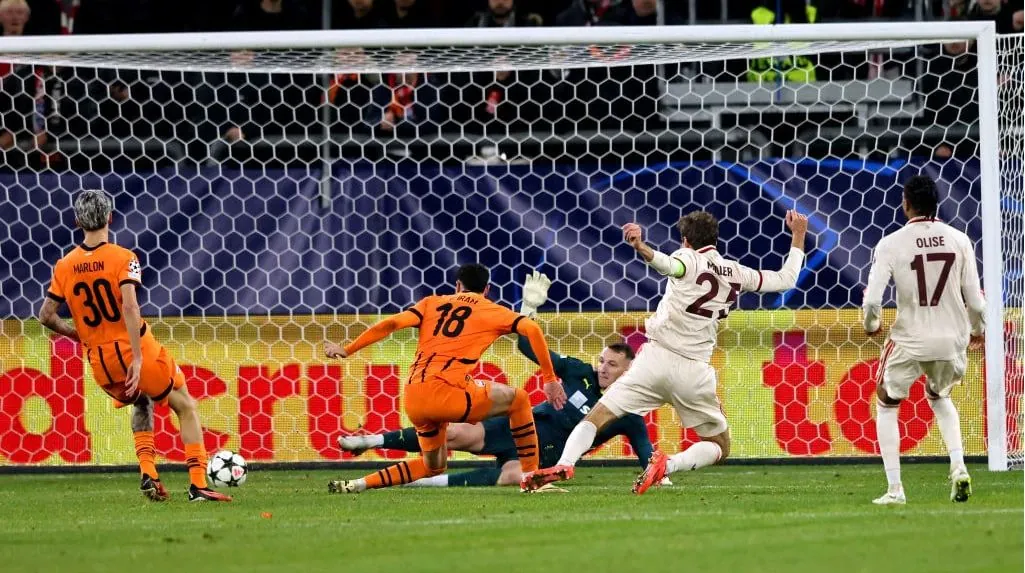
Shakhtar opened the scoring in the 5th minute of the match against Bayern Munich in the Champions League. However, the German club scored five goals in response and won 5-1.
In the 6th round of the main stage of the Champions League, Shakhtar Donetsk lost to Bayern Munich. This is reported by the official website of UEFA, writes UNN.
Details
It is noted that the Ukrainian team quickly took the lead. In the 5th minute, Alexander Zubkov intercepted the ball on the right flank in the center of the field, gave a diagonal pass forward to Kevin, who beat the defender and hit the corner of the goal with a roundabout shot.
Bayern responded in the 11th minute with Konrad Laimer scoring. And at the end of the first half, the Germans took the lead, this time Thomas Muller scored.
The turning point occurred in the 70th minute. Mikael Olesya converted a penalty, which was awarded due to a foul by Alla Grama.
In the 87th minute, Jamal Musiala made the score 4:1. already in stoppage time, Mikael Alisa confidently passed the Shakhtar defense and scored a double.
For the first time without Messi and Ronaldo: the symbolic team of the best football players of 2024 is namedDec 9 2024, 05:24 PM • 18686 views
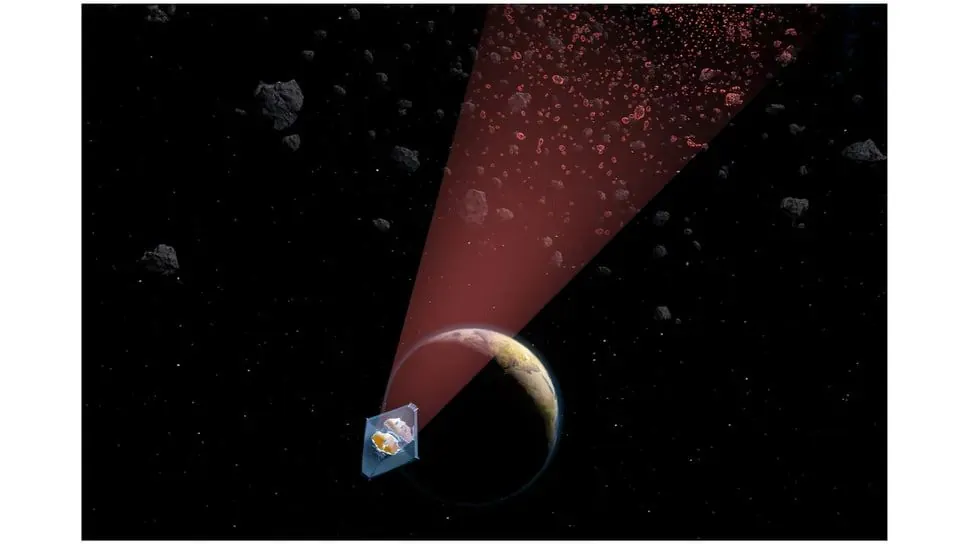
The James Webb Space Telescope has discovered a 10-meter asteroid in the belt between Mars and Jupiter. This is the smallest object found at such a distance, which opens up new opportunities for protecting the Earth.
The James Webb Space Telescope accidentally discovered a small asteroid drifting between Mars and Jupiter. Previously, it was unknown. This is reported by Space.com, writes UNN.
We were able to detect near-Earth asteroids up to 10 meters in size when they were very close to Earth,
– said planetary scientist Artem Burdanov from the Massachusetts Institute of technology in the United States.
Details
It is noted that before that "in the asteroid belt" between Mars and Jupiter, at a distance of 180 million kilometers (the place where most small asteroids begin their path to Earth), the smallest object that astronomers were able to notice was about a kilometer wide.
Now Burdanov and his colleagues have discovered "only" a 10-meter asteroid in the area.
Now we have a way to detect these small asteroids when they are much further away (from Planet Earth – Ed.), and we can conduct more accurate orbital tracking, which is key to protecting the planet
– noted planetary scientist.
James Webb Telescope reveals hidden galaxies in the Spiderweb protoclusterDec 4 2024, 02:39 PM • 16414 views
Dmytro Lubinets, Ukrainian Parliament Commissioner for Human Rights, stated that 109 executions of Ukrainian prisoners of war by the Russians were officially confirmed in 2024.
Source: Lubinets during the national joint 24/7 newscast
Quote: "We are increasingly able to officially document violations of the rights of Ukrainian prisoners of war, including executions – cynical, close-range executions, unfortunately. In 2024 alone, we managed to officially confirm that the Russians executed 109 Ukrainian prisoners of war."
Details: Lubinets revealed that during the previous years of the full-scale war, 177 cases were recorded in total.
He also emphasised that intelligence and law enforcement agencies have repeatedly provided information about frequent violations of POWs’ rights by the Russians.
"Unfortunately, I couldn’t go public with these blatant violations of international humanitarian law and the Geneva Conventions when we managed to document them – but we are doing so," the ombudsman noted.
Background:
On 24 November, Russian forces executed five captured soldiers of the Ukrainian Armed Forces near the village of Novodarivka in the Polohy district of Zaporizhzhia Oblast. A criminal investigation has been launched.
The Office of the Prosecutor General reports a monthly increase in executions of Ukrainian prisoners of war. In October-November, the prosecutor's office opened 13 cases regarding the execution of 54 Ukrainian prisoners of war, accounting for a third of all such investigations in 2024.
Politics Ukrainians have started trusting Trump more, but overall trust in Western leaders is generally declining. Wednesday, December 11, 2024
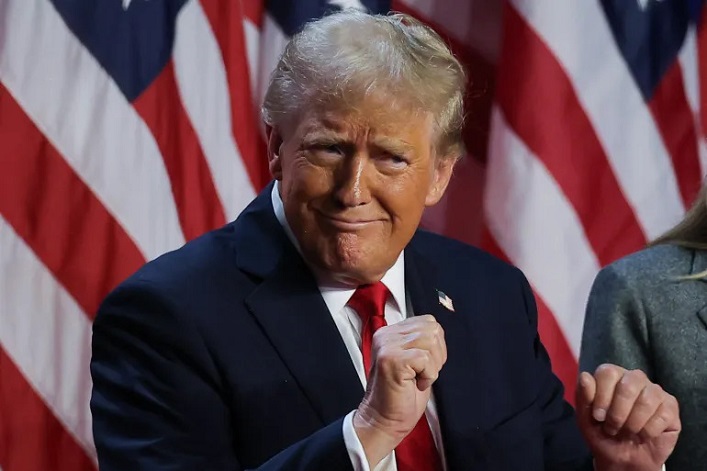
The popularity of future White House President Donald Trump among Ukrainians has increased to 44.6%, according to the results of an Info Sapiens poll. For comparison, 16% trust Trump in France, 30% in Britain, and 37% in Hungary, and these figures all trail the Ukrainian indicator. Analysts suggest this is due to expectations that the new US administration will provide a clearer and more decisive policy towards Ukraine. Some respondents are likely associating individual hopes with the restoration of peace in Ukraine. Trump’s high trust level could also be affected by Ukrainian disappointment in the current US president, for whom a significant drop in the trust indicator was recorded. In general, Ukrainians’ trust in Western leaders has fallen. Most Ukrainians (57.2%) believe their partners must do more to help Ukraine win. The leaders in public trust among Ukrainians are EC President Ursula von der Leyen and Polish President Andrzej Duda – they have virtually identical figures (65%). Canadian Prime Minister Justin Trudeau is in third place (almost 60%).
The US State Department is ready to use sanctions tools against the Georgian authorities. Matthew Miller announced the possibility of personal restrictions, but specific details have not yet been disclosed.
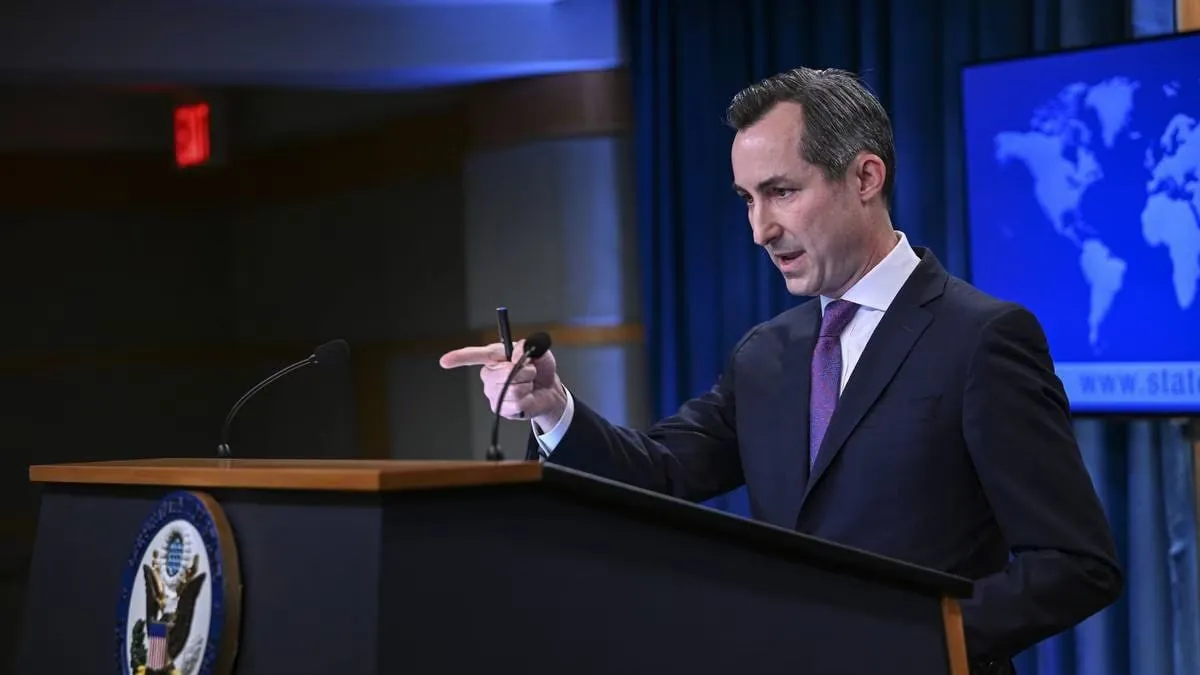
The United States is ready to use "any tools", including sanctions, against the Georgian authorities, who are trying to suppress protests in the country. This was announced on Tuesday, December 10, by the press secretary of the US State Department Matthew Miller, writes UNN.
Details
In particular, during a briefing for journalists, he was asked whether the Office of the current president will have time to "punish Georgian officials, as Ukraine did."
We will use all the tools we have to hold Georgia accountable for these steps, including by imposing personal sanctions.",
Miller said.
However, the representative of the state Department declined to name what specific sanctions and against whom they will be imposed.
Miller noted that any sanctions restrictions fall within the scope of the US Treasury's powers. Accordingly, they will make official statements on this issue.
recall
The United States condemns the Georgian Dream party's violence against protesters and is preparing additional sanctions. Earlier, the United States has already imposed visa restrictions on about a hundred Georgian officials. Ukraine has also imposed sanctions against the Georgian authorities.
Some 25 miles south of the Russian border, explosions rumble off in the distance more or less continuously.
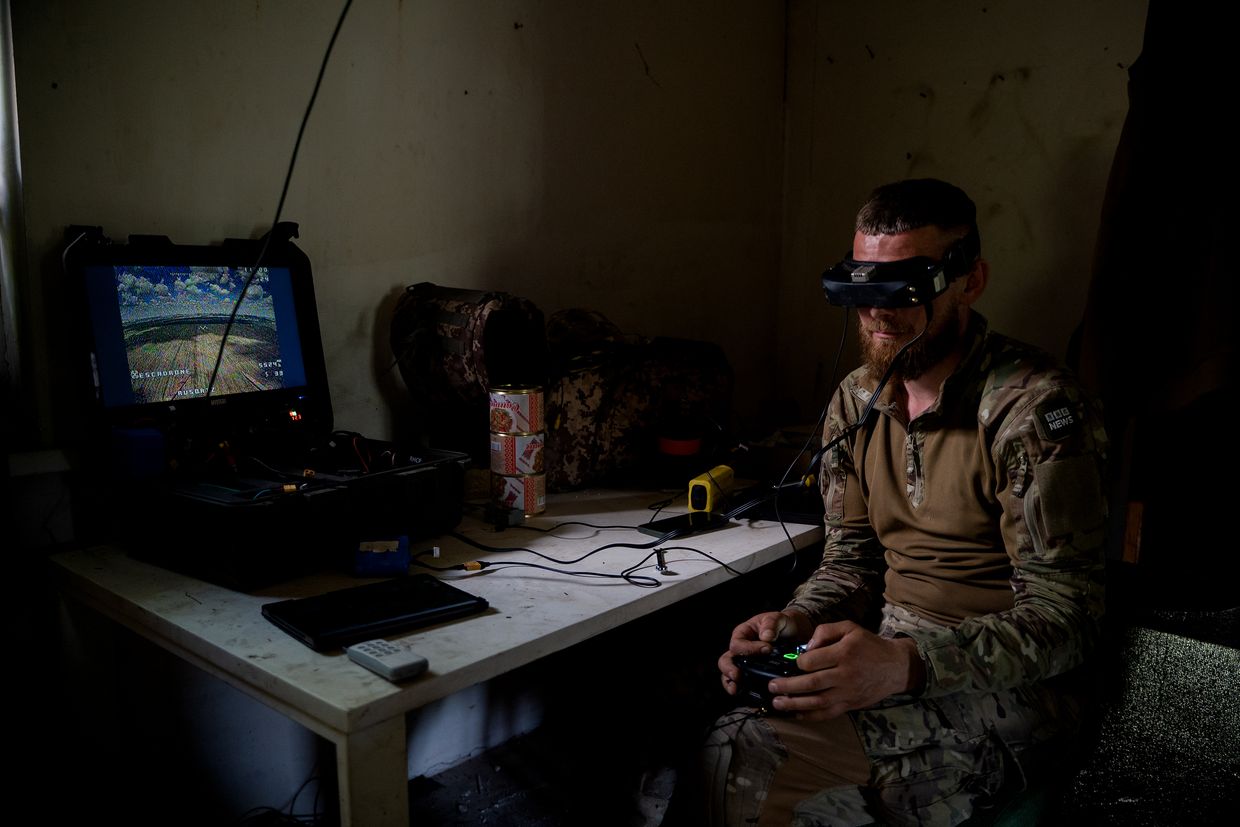
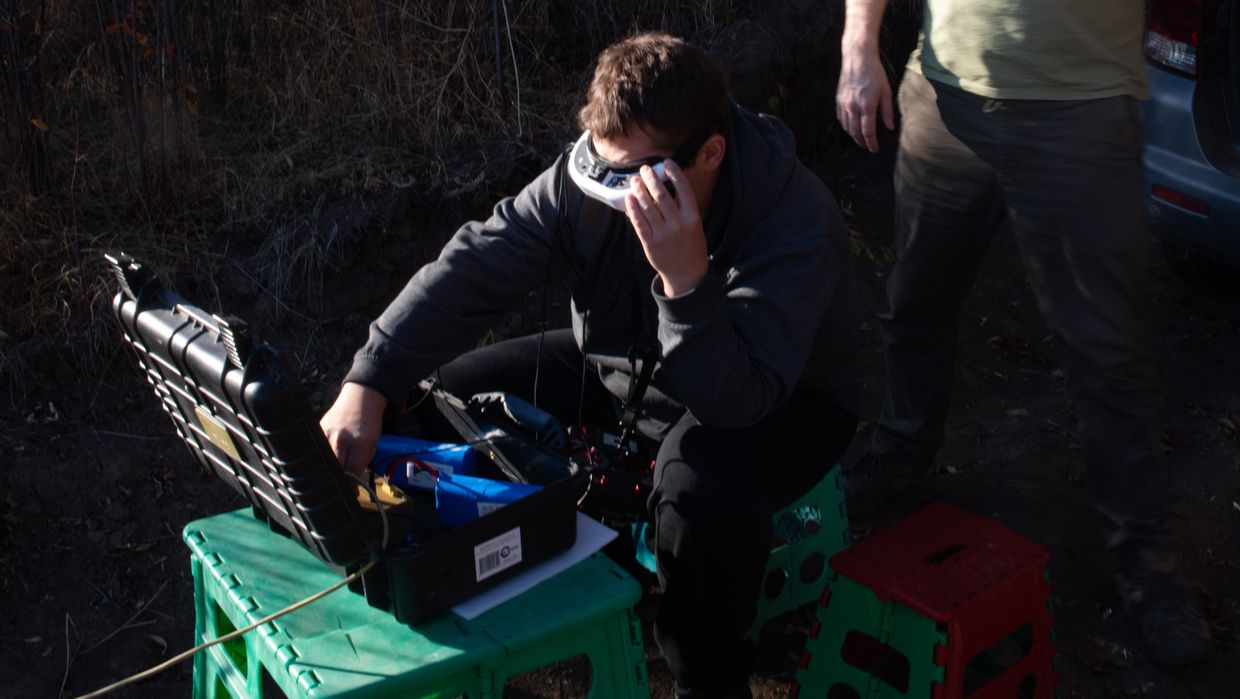
“We don’t even hear them anymore,” Zhenya chuckles from under first-person-view (FPV) goggles branded with the U.S. company “Fat Shark.”
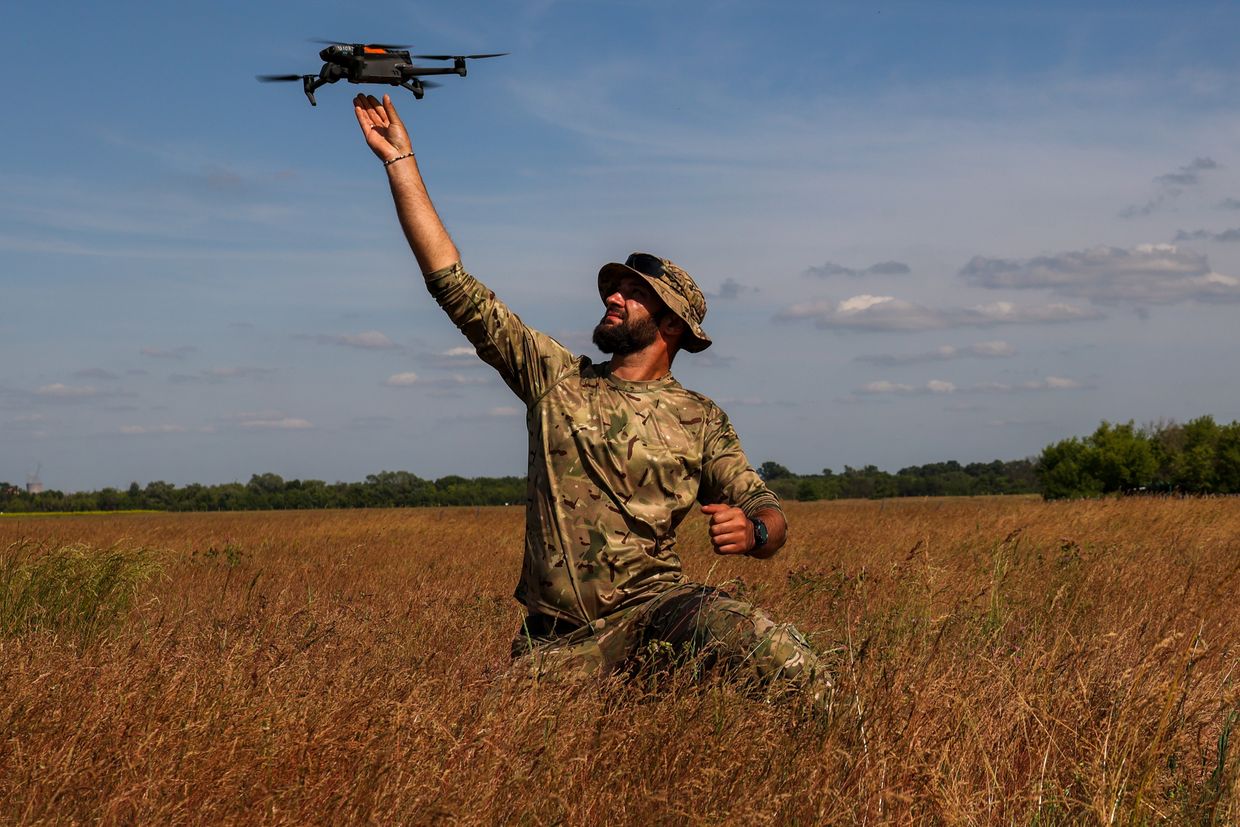
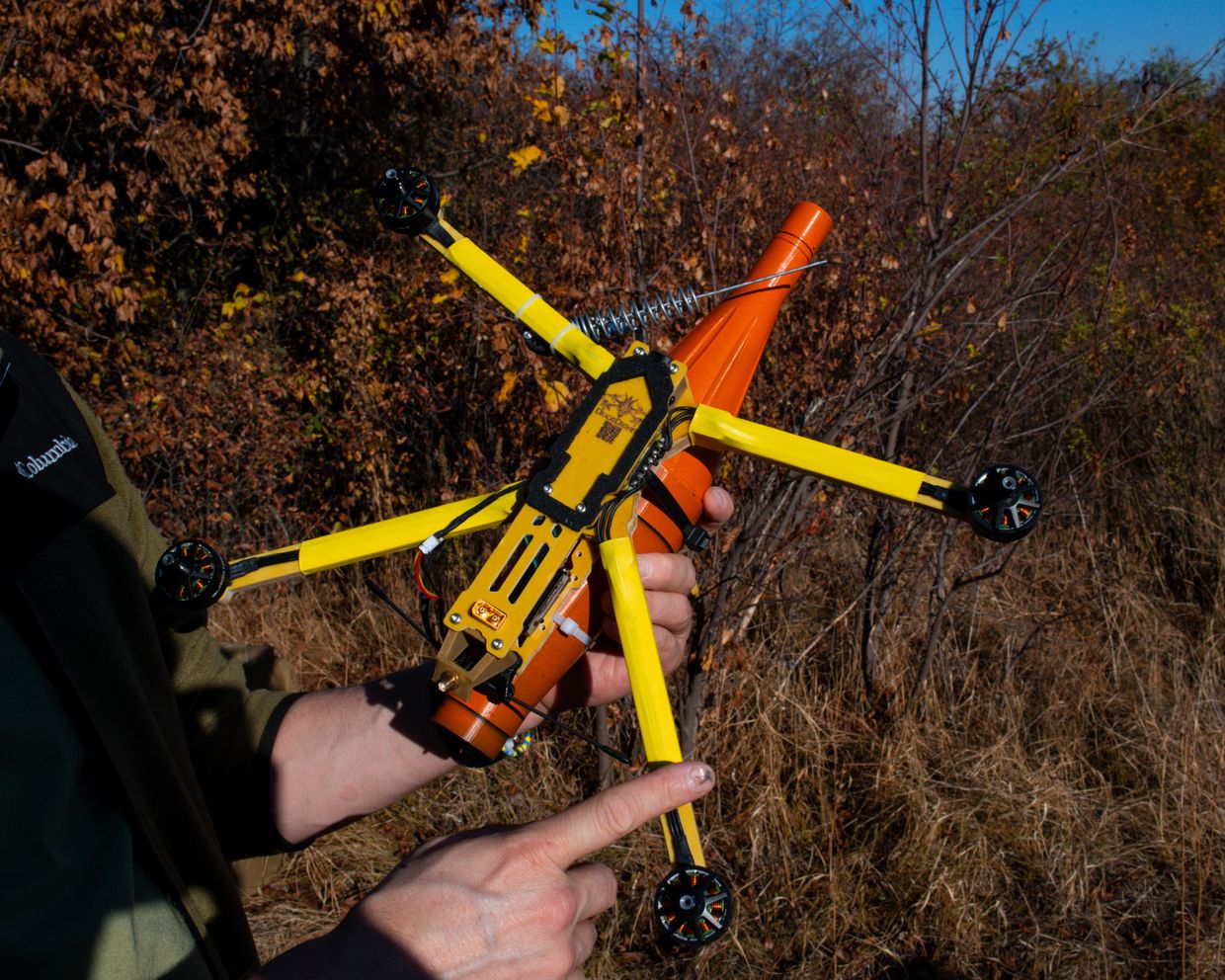
Zhenya and his co-developer for DragoDrones, or DCU, Maksym, are testing a stack of small FPV drones in a field in Kharkiv Oblast. They asked not to be identified by last name, due to the proximity of their workshops to Russian air power.
Most of the drones they made themselves. One is of ambiguous Chinese provenance — unmarked, maker unknown, and most importantly, not working.
Zhenya launches the drone into a couple of neat somersaults before sending it off into the distance. Around three kilometers away, Maksym gestures to a screen. The video is clipping out.
Maksym shows off DragoDrones' newest bomber model in an undisclosed location on Oct. 22, 2024 (Kollen Post / The Kyiv Independent).Zhenya puts on his FPV goggles and starts testing in an undisclosed location on Oct. 22, 2024. (Kollen Post / The Kyiv Independent).
It’s the bug that a brigade holding thousands of these drones has asked them to fix, explains Maksym: A faulty video transmitter, a cheap under-tested gadget that they're now replacing.
It’s a persistent problem with the drone supply to Ukrainian troops: Imported Chinese drones are often laden with defective parts. And while they have typically been cheap enough to merit replacing, China is actively cutting off its exports of components and materials critical to drone building.
In the face of these threats, Ukraine’s drone industry is increasingly onshoring the production of more ambitious components. And they’re getting better than anyone expected at building even the trickier gadgets needed to keep Ukraine’s army of drones in flight.
"We cannot rely on a Chinese supply chain," says Denys Nikolayenko, who makes high-end thermal cameras for drones, from an office in Kyiv.
Native drone
The first drones to see mass use in Ukraine following Russia’s invasion in February 2022 were cheap, off-the-shelf Chinese imports.
As the country realized the importance of these new weapons, Ukraine began building out its local drone manufacturing in the early months of the war. Thanks to heavy investment in the industry, a major proportion of drones on the front today are Ukrainian-made.
The components of those drones are a different matter. China’s chokehold on the supply chain has been a source of persistent alarm. Nataliia Kushnerska, head of Ukrainian defense tech hub Brave1, identified the “particular dependence on China” as one of the three biggest problems in Ukraine’s drone industry, speaking to Forbes Ukraine last November.
China made headlines in Ukraine for restricting drone components at the outset of September. Recent reports show China has already begun curbing sales to American and European drone makers and is readying more sanctions.
Zelensky addressed the nation referring to the Chinese controls announced in September, alluding to Ukraine’s new self-reliance: "Some of the largest state exporters of drone components are instituting export controls. We know what to do so that these controls don't become a critical threat to us."
"Some of the largest state exporters of drone components are instituting export controls. We know what to do so that these controls don't become a critical threat to us."
China sanctioned U.S. drone company Skydio in late October, barring Chinese manufacturers from selling to the firm. Skydio’s dependence on Chinese components, particularly motors, has led to backups at the firm. It has also exposed China’s readiness to weaponize its dominance in unmanned weapons.
“This is a clarifying moment for the drone industry,” Skydio CEO Adam Bry wrote to customers. “If there was ever any doubt, this action makes clear that the Chinese government will use supply chains as a weapon to advance their interests over ours.”
Ukraine’s manufacturers have gotten remarkably adept at replicating Chinese drone functionality at home, both out of concern for cost and concerns about China’s loyalties to Russia.
Herman Smetanin, minister of Strategic Industries, announced early in November that Ukraine had developed a “Shmavic,” a local copy of the DJI Mavics that were the first drones to see wide use following Russia’s full-scale invasion.
But the focus on the more minute elements within the supply chain for drone production is a newer phenomenon.
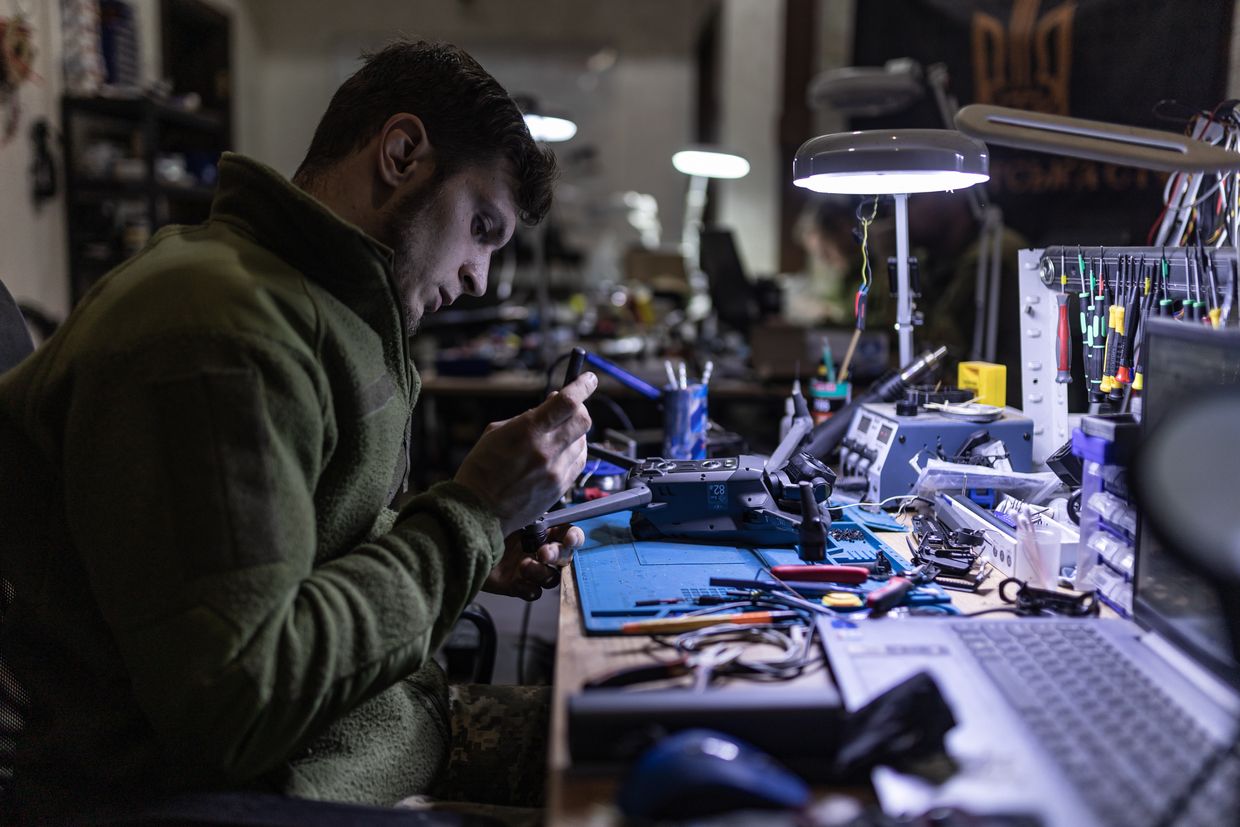
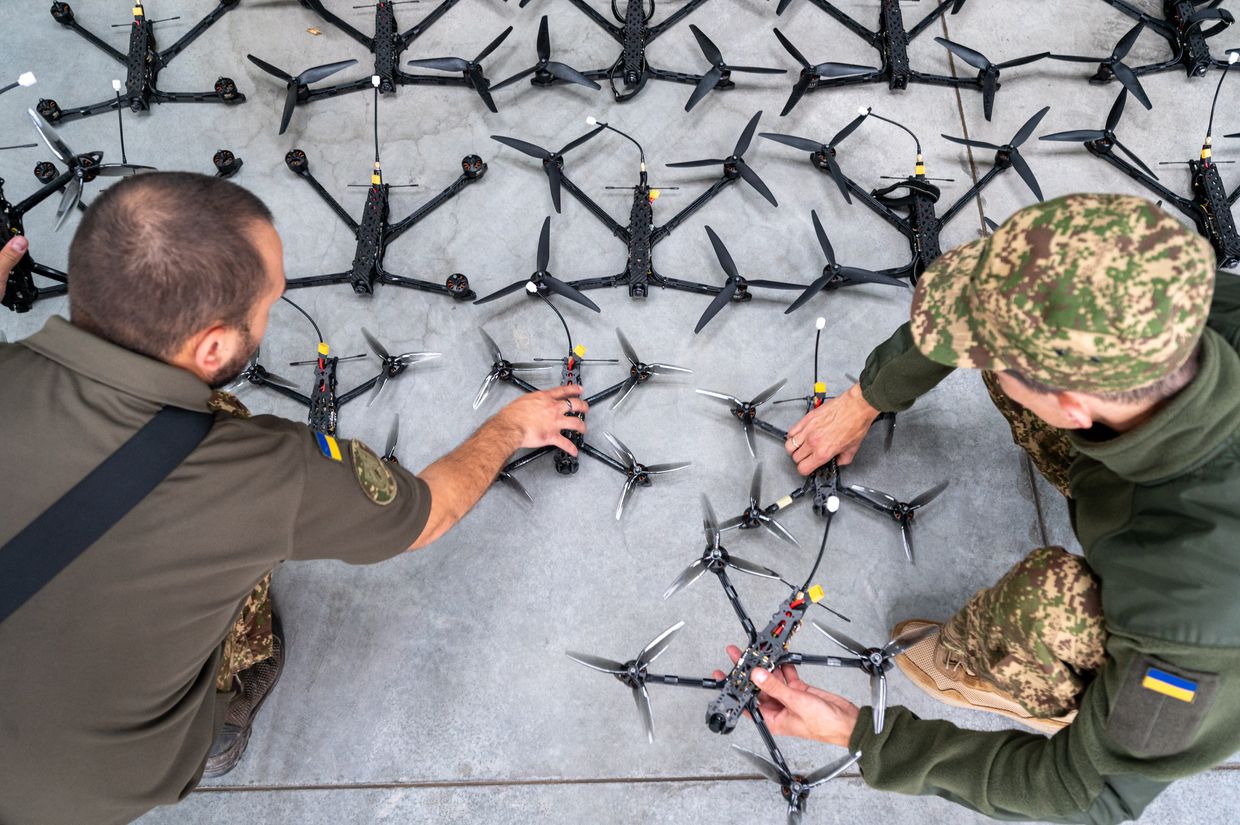
Ukrainian soldiers repair drones in a laboratory at an undetermined location in Donetsk Oblast, Ukraine, on Nov. 24, 2024. (Diego Herrera Carcedo/Anadolu via Getty Images)Soldiers of the Armed Forces inspect FPV drones during the handover from the volunteer organization in Lviv, Ukraine, on Sep. 13, 2024. (Stanislav Ivanov/Global Images Ukraine via Getty Images)
Producers like Zhenya and Maksym are increasingly equipping their own drones with parts made at home. Beyond their own frames routed out of Kharkiv-sourced foam plastic and 3D-printed fasteners, they recently got a Ukrainian computer numerical control machine — essential for precise tooling — and have begun buying motors from a new Ukrainian supplier.
The pair's drones run between $300 and $600, making them cheaper than off-the-shelf FPVs or Mavics with which they compete on function. Maksym and Zhenya have a lot more at stake in keeping those explosions from coming any closer than DJI or Autel do.
Beyond drone-specific components, China is also tightening controls on key raw materials, especially rare-earth metals key to certain higher-end gadgets on a drone.
"Before 2023 you could just buy germanium from China without any export controls or whatever procedures on Alibaba, two weeks later you got your germanium bricks here in Kyiv," reminisces Nikolayenko. "But in 2023 they started to control it."
NIkolayenko’s company, Oko Camera, needs germanium to make thermal lenses for drones. Despite being the Ukrainian word for “eye,” Oko is cautious about being overly visible as a company. Russian airstrikes remain a threat to local manufacturers, even those based in the Kyiv region. Oko lenses are maybe most famous for being the visual guidance of Ukraine's famous "Baba Yaga" drones, so dubbed by Russian soldiers after a mythical witch due to their ability to strike on the gloomiest of nights.
Displaying a trio of their lenses on a desk. Nikolayenko and his business manager, Nazariy Nikolaychuk, note that they’ve built many of their own machining tools, and specifically worked out an independent calibration process.
“The benefit is that actually you ensure the quality of the image of each camera that you produce, and this is not the case for some Chinese cameras. This makes us different,” says Nikolayenko.
The images are undoubtedly crisp, showing the twigs on trees and soldiers behind them, and even the thermal differential between hair and skin.
Long-term, Ukrainian drone makers are keen to sell to Western buyers, particularly after a ceasefire allows them to export. With increasing volleys of sanctions, many are betting that NATO will increasingly see Chinese parts, particularly the higher-tech ones, as a disqualifying feature for would-be suppliers.
Stay warm with Ukrainian traditions this winter. Shop our seasonal merch collection.
Nonetheless, there remain enduring concerns that many “Ukrainian-made” drones are Chinese imports barely modified and sent out to the front.
“They say the government bought a bunch of drones. The fact is, they bought them from China and stuck on some stickers of their own. And then they don’t work,” says Maksym.
And while local producers are trying their hands at new links in the supply chain, the most and least complicated elements still depend heavily on imports.
For Oko, the sensors remain strictly European. Though Nikolayenko says they’ve built some of their own machining tools, most manufacturers of everything within Ukraine remain dependent on imported machining tools — traditionally Chinese, but increasingly Indian and, for those who can afford it, European.
But for the cheapest components, simple base-line products like transistors, circuit boards, wiring, or solar cells, nobody can yet step up to the scale of China’s mass production.
While DragoDrones 3D-prints some of the components, and are prototyping more, the problem is not cost so much as speed. They lament that despite their clever workarounds, localized mass production within Ukraine was a pre-war casualty of bad policy.
“Production capacity is much bigger in Russia, plus China. In Ukraine, over the last fifteen years, they closed down the production of all the little electronics — at the hands of both our government and the Russians doing the financing,” says Zhenya.
“(The Russians) copy what we make, for the most part,” says Maksym. “We were the ones who started using drones because we had nothing else.”
The Biden administration is considering tougher sanctions against Russia's oil trade and shadow tanker fleet. The new restrictions may be similar to sanctions against Iran.
US President Joe Biden is looking for ways to blow up the Kremlin's War Machine. The restrictions will also affect the Russian shadow tanker fleet. This is reported by Bloomberg, reports UNN.
Details
The Biden administration is considering imposing new, tougher sanctions on Russia's lucrative oil trade, seeking to increase pressure on Russia's military apparatus weeks before Donald Trump returns to the White House.
Details of possible new measures are being worked out, but President Joe Biden's team is considering restrictions that may affect some types of Russian oil exports, Bloomberg reports, citing its own anonymous sources.
Biden has long resisted the move out of fear that it could trigger a jump in energy prices, especially in the run-up to last month's presidential election. But with falling oil prices amid global surpluses and growing fears that Trump could try to force Ukraine to make a quick deal with Russia to end its nearly three-year war, the Biden administration is now open to more aggressive action
– says a Bloomberg Post .
One of the models of tougher US sanctions may be the introduction of restrictions similar to those on Iranian oil.
The administration is also considering new sanctions aimed at the tanker fleet that Russia uses to transport its oil. New restrictions on the so-called shadow fleet may be made public in the coming weeks
– writes Bloomberg.
Such restrictions can lead to a sharp increase in oil prices in the shortest possible time, which will lead to tension in the global economy.
It will also increase tensions with both adversaries and partners through whom the US wants to restrict exports of sensitive goods such as chips and other technologies that fuel Russia's War Machine.
While these steps will be aimed at capitalizing on a weaker oil market, they will also be aimed at increasing pressure on Russia before Trump takes office. The president-elect has insisted on negotiations to end the war in Ukraine, and current officials say they want to give President Volodymyr Zelensky's government as much leverage as possible before any negotiations.
recall
The United Kingdom imposed sanctions on 18 Russian oil tankers and 4 LNG tankers. These are" the biggest sanctions against Putin's shadow fleet", which are aimed at undermining Russia's energy revenues.
Belarusian opposition leader Sviatlana Tsikhanouskaya has stated that she strives to maintain relations with Ukrainian authorities without forcing them.
Source: Tsikhanouskaya in an interview with Sergiy Sydorenko, editor of European Pravda
Details: Tsikhanouskaya noted that the Belarusian opposition has successfully established strong relations with the Ukrainian public and the authorities, particularly through the parliamentary group For a Democratic Belarus.
She acknowledged that the relationship with Ukraine’s authorities is not as ambitious as she would like it to be.
Quote: "Since the start of the war, I’ve adhered to one principle: under no circumstances should we harm Ukraine. And if I understand that there are obstacles to establishing more formal relations between Ukraine’s authorities and the democratic forces of Belarus – so be it. There’s no need to force things."
Tsikhanouskaya added that representatives of Belarusian democratic forces meet with officials from Ukraine’s Foreign Ministry and advisers to President Zelenskyy, and "that is sufficient".
Quote: "What we aim to do is explain that Lukashenko cannot be trusted, as he will always deceive. If anyone believes that Lukashenko might one day side with Ukraine – that will never happen."
Background:
In 2022, Tsikhanouskaya proposed establishing official relations with Ukraine after the United Transitional Cabinet, a formal body of transitional power, was founded.
Her proposal received support from certain members of the expert community.
PoliticsWar Ukraine is assembling a new Contact Group to end the war. Wednesday, December 11, 2024
Ukraine is forming a list of partners who will join a Contact Group in order to create a common position on ending the war, said Serhiy Nikiforov, Press Secretary of the President of Ukraine. Nikiforov specified that authorities are working on a list of partners who, together with the US, “are capable of ensuring the maximum strengthening of our state. The final list of participants is still being formed, but these are countries that have long-range capabilities, countries that make the largest investments in Ukrainian weapons production, and on which our future in NATO depends,” Nikiforov said. He reported that the Contact Group’s first meeting is scheduled for December. During negotiations, the allies must develop a common position that will guarantee Ukraine’s strength “in any development of events – both in negotiations and on the battlefield.” President Zelenskyy announced the creation of the group during a meeting with German Chancellor candidate Friedrich Merz. According to him, it already includes Germany, France, Poland, and the UK and there are plans to include Denmark.








 shop now
 The Kyiv IndependentKollen Post