PoliticsWar The $6.5B allocated by the Biden administration for Ukrainian military aid will pass to the Trump administration: What will he do with it? Tuesday, December 3, 2024
On the first day of his presidency, Donald Trump will have billions of dollars at his disposal to arm Ukraine. More than $6.5B remains within the presidential drawdown authority, which allows the US president to transfer weapons and equipment from US defense stocks directly to Ukraine. According to The Times, the Pentagon has now reached a critical limit in terms of the weapons that it can transfer to Ukraine each month without harming its own combat capability. There are also logistical problems with weapon deliveries. So Trump will soon control how the remaining money will be spent. One possible scenario is that Trump could threaten Putin by giving him a choice: sit down at the negotiating table or face an accelerated supply of lethal weapons to Ukraine. “If peace talks fail, Trump could provide Ukraine with weapons that would enable it to expel Moscow’s troops from the country and declare victory,” analysts suggest. But it’s more likely that Ukraine will only receive enough weapons to maintain a frozen conflict and prevent Russian troops from advancing further.
Manchester United head coach Ruben Amorim says summer signing Leny Yoro “could be in the squad” to face Arsenal in the Premier League on Wednesday.
Yoro is yet to make his competitive debut for Man Utd after injuring his metatarsal against Arsenal in a pre-season friendly.
He could make his Red Devils nod against the same opponent on Wednesday evening.
Indeed, Amorim confirmed Yoro “could be in the squad”. He also said the fitness of other players will be assessed in training on Tuesday.
“He (Yoro) is a special talent,” Amorim told reports on Monday. “We have to be careful in the first moments.
“We have not had a lot of training together, he has been training in a small group.
“He is really fast, a modern defender, which is really good when you want to press high. He can manage one one-on-one with strikers and he is good with the ball so I am really excited to see him play.”
One defender who has played consistently since joining Man Utd in the summer is Noussair Mazraoui.
Mazraoui joined the club alongside Matthijs de Ligt from Bayern Munich and has been very impressive in his early months at Old Trafford.
“In games, he is a top player,” Amorim said of the Moroccan. “He understands games, knows how to attack, is very technical, very good defensively [and] in one on ones.
“He is a modern player – he is the future of our team. You need more players like him who can control the the play, are comfortable with the ball and understand the game.”
MORE ON MAN UTD FROM F365 👉 FA Cup third round draw: Arsenal v holders Man Utd, Spurs at Tamworth, Man City host Salford… 👉 Robbie Savage’s Winners & Losers: ‘Give Liverpool the title now’ 👉 Andre Onana is Premier League goalkeeper of the season so far
Amorim also confirmed that captain Bruno Fernandes will feature despite having ice on his ankle after being substituted in Sunday’s 4-0 win over Everton.
Facing the Gunners will be his “biggest” test since replacing Erik ten Hag as head coach, Amorim says.
“It is important to be brave (against big teams),” he said. “Not in pressing all the time high, we have to understand the game and moments of the game.
“We need to have the ball – we also want to dominate some moments of the game because in these matches it is hard to control all of the game. We have to be brave and to play the game.”
Finally, Amorim says he feels “a bit embarrassed” to hear chants about him from the crowd, “because I am the coach. They have to chant for players and the club”.
“Not a good thing for me,” he added. “I appreciate the connection with supporters but I want them to support the players because they are on the pitch.
“But I am honoured, I feel the connection with supporters but we need results to maintain that.”
👉 READ NEXT: Every Premier League club’s worst player in 24/25: Walker, Jesus, Ugarte, Ferguson…
The Oxford Dictionary chose the term "brain rot" as the word of 2024 after a vote of 37 thousand people. The term describes the deterioration of the mental state due to excessive consumption of online content.
The Oxford Dictionary chose the term "brain rot" as the word of the year. This phrase is defined as a predictable deterioration in mental and mental health due to excessive consumption of trivial online content.
More than 37 thousand people voted for this term.
This is stated on the website of the Oxford University Publishing House, reports UNN.
Details
"Brain rot" became extremely popular in 2024. It began to be used 230% more often than last year, although it was first used back in 1854 in Henry David Thoreau's book "Walden" (Walden, or life in the woods). And in the digital age, especially among the Z and Alpha generations, "brain rot" has taken on a new meaning.
The term has become a symbol of concern about the impact of low-quality content on the internet on mental health, especially among young people. From memes to serious discussions about the consequences of excessive consumption of online content, "brain rot" has become part of a broader discussion about how digital technologies affect our lives.
Casper Gratwol, president of Oxford Languages, said the choice of the term reflects society's general concern about technology and its impact on everyday life.
Interestingly, the term "brain rot"was adopted by exactly the generations that create this very content. This is a conscious recognition of the harm that they themselves can cause through social media
– he summed it up.
Add
Entertainment content has become more popular than news in the Ukrainian information space.
According to the survey, 79% of respondents prefer feature films and TV shows that occupy the first place among content categories. News and socio — political programs are in second place (68%), followed by music shows (63%).
These changes reflect the mood of Ukrainians for the third year of a full-scale war, when people are less hopeful about the rapid end of hostilities, and accumulated fatigue from news leads to a decrease in interest in real-time events.
News is mostly consumed via instant messengers.
Does Instagram hurt teenagers?
Danish scientists claim that Instagram actively promotes the distribution of self-harm content, without removing shocking images and even encouraging users to communicate with the authors of such publications.
The US Department of Commerce is introducing new rules for controlling the export of semiconductor technologies to China. The restrictions apply to 24 types of hardware, 3 types of software, and 140 Chinese companies.
The U.S. Department of commerce, through the Bureau of industry and Security, announced new regulations aimed at limiting China's ability to produce semiconductors with advanced nodes that are used to build modern weapons systems, artificial intelligence, and high-performance computing. This is reported by the Office of congressional and public affairs of the United States, reports UNN.
Details
These measures are part of a broader US strategy to make it harder for Chinese authorities to access critical technologies needed for military modernization.
The new rules include expanding control over 24 types of equipment for the production of semiconductors, as well as over 3 types of software that are used in the processes of creating such chips. In addition, 140 new companies have been added to the list of organizations that are prohibited from receiving American technology, including Chinese semiconductor manufacturers and investment companies working to strengthen China's military capabilities.
These changes are aimed at limiting the development of technologies that have dual uses — both for civilian and military purposes. In particular, advanced semiconductors are critical for the creation of modern military systems, such as artificial intelligence, used for Strategic and intelligence purposes, as well as for the development of weapons of mass destruction.
The new rules also tighten controls on foreign goods of American origin to prevent them from being used by China in the production of high-end semiconductors. The United States intends to continue working with its allies to ensure that advanced technologies do not fall into the hands of potential adversaries.
Xi Jinping: China is committed to being a partner and friend of the United StatesOct 16 2024, 02:44 AM • 16528 views
Scholz arrives in Kyiv first time since June 2022, pledges $680 million in military support
'We need to move faster,' Zelensky announces personnel changes in Ukrainian Armed Forces
Russia trained 300,000 reserve soldiers for war in Ukraine, Russian defense official claims
Some North Korean troops fighting on Russia's side killed, Zelensky says
Ukraine's military lacks strength to retake some occupied territories, diplomacy needed, Zelensky says
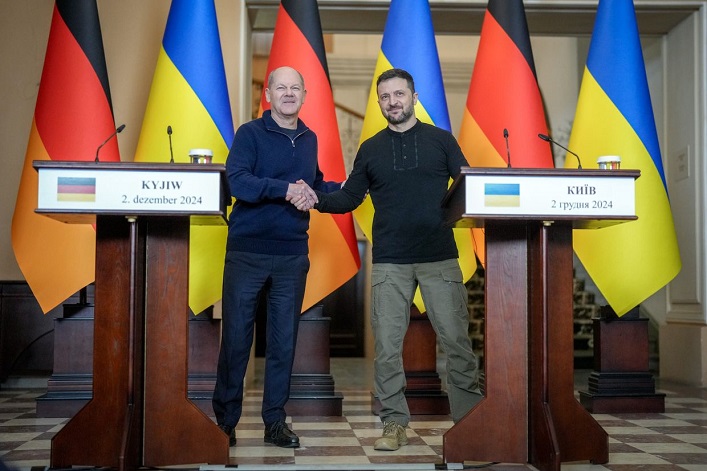
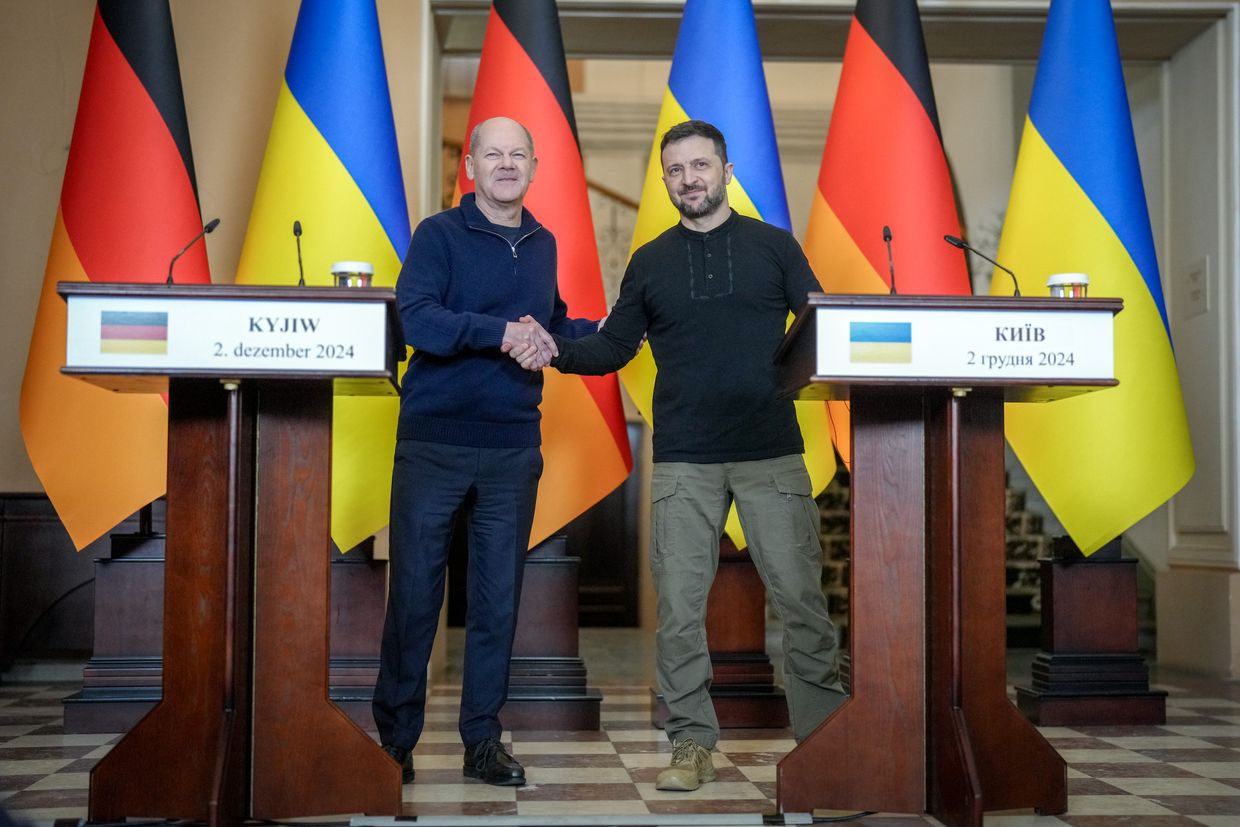
German Chancellor Olaf Scholz arrived in Kyiv on Dec. 2 to meet President Volodymyr Zelensky and reaffirm his country's support for Ukraine in the face of Russian aggression.
"I would like to make it clear here on the ground that Germany will remain Ukraine's strongest supporter in Europe," Scholz said upon his arrival, promising additional arms supplies worth 650 million euros ($680 million) in December, N-TV reported.
This marks Scholz's first visit to Ukraine's capital in two and a half years. The chancellor's arrival comes shortly after his controversial phone call with Russian President Vladimir Putin, which drew criticism from Kyiv.
Scholz previously visited Kyiv in June 2022 alongside French President Emmanuel Macron and then-Italian Prime Minister Mario Draghi, marking the first visit by the three European leaders since the outbreak of the full-scale war.
Under Scholz's leadership, Germany has become Ukraine's second-largest military donor after the U.S. The chancellor was nevertheless often criticized for cautious approach on some key issues, such as his refusal to provide Taurus long-range cruise missiles to Ukraine.
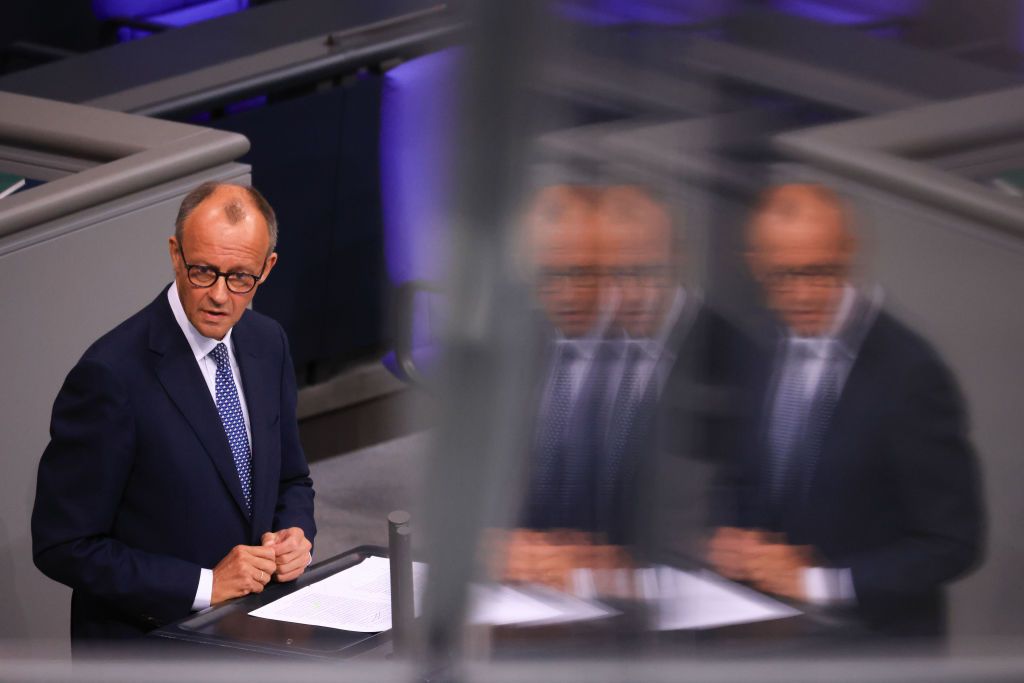
Recently, Scholz criticized Friedrich Merz, the CDU/CSU party leader who will seek to unseat the chancellor in the February snap elections, for the latter's willingness to provide Taurus missiles to Ukraine.
"All I can say is: be careful! You don't play Russian roulette with Germany's security," Scholz said at his party conference in Berlin.
Merz, whose party is currently leading in the polls, previously proposed issuing an ultimatum to Putin to end his aggression. Should the Russian leader refuse, Kyiv's partners would lift all restrictions on already provided weapons, and only then would Berlin approve the delivery of Taurus missiles.
'We need to move faster,' Zelensky announces personnel changes in Ukrainian Armed Forces
President Volodymyr Zelensky announced on Dec. 2 new reshuffles in the Ukrainian Armed Forces.
Zelensky's statement follows General Mykhailo Drapatyi's appointment as Ukraine's Ground Forces commander.
When asked why Drapatyi has replaced Oleksandr Pavliuk, who has held the position since Feb. 11, 2024, Zelensky said the change is related to the recently presented resilience plan.
Zelenksy's resilience plan, unveiled on Nov. 19, contains several reform proposals, including those in the defense sector.
According to Zelensky, the decisions outlined in the plan are designed for "particular individuals," so changes in the Ukrainian forces will continue.
"This is not the last (personnel) reshuffle. There will be more because we need to move faster," Zelensky said during a press conference in Kyiv.
Russian losses at the front increased significantly in the fall, while Russia continued to advance in the Donetsk sector, aiming to capture the towns of Pokrovsk and Kurakhove.
In November, 45,720 Russian soldiers were wounded, killed, or captured and thus unable to continue participating in combat operations. This number is equivalent to more than three motorized rifle divisions of the Russian army, according to the Defense Ministry.
Despite that, Russian forces have taken over 600 square kilometers (232 square miles) in November alone, which is more than in the entire October, setting a new record since early 2022, Russian news outlet Agentstvo wrote on Nov. 25.
Russia trained 300,000 reserve soldiers for war in Ukraine, Russian defense official claims
Russia has trained 300,000 contract soldiers as reserves for the currently fighting regiments, a Russian official said in an article for the propaganda outlet Krasnaya Zvezda on Dec. 2.
"Seven companies of instructors and eight training companies for specialists… have trained over 300,000 service members," said Ivan Buvaltsev, the head of the training department of Russia's Armed Forces.
The claim comes as Russia's advance in Ukraine's east is picking up pace despite allegedly suffering record losses.
Buvaltsev did not specify when the 300,000 reservists were supposedly trained, but the article's context suggests he refers to the year 2024.
Former Defense Minister Sergei Shoigu set up nine reserve battalions to train and prepare contract soldiers to offset Russia's casualties in Ukraine at the end of 2023.
According to Shoigu, 335,000 people signed up voluntarily to fight in 2023. In 2024, this number was 200,000, according to former President Dmitry Medvedev.
Russia reportedly suffered record losses in military equipment and personnel in the war against Ukraine in November. Moscow's losses steadily grew since the beginning of the fall as Russia continued to advance in the Donetsk sector, aiming to capture the towns of Pokrovsk and Kurakhove.
Only in November, 45,720 Russian soldiers were wounded, killed, or captured and thus unable to continue participating in operations, Kyiv said. This number is equivalent to more than three motorized rifle divisions of the Russian army.
November also saw the record for enemy personnel losses in one day broken: 2,030, the highest figure since Feb. 24, 2022, according to Ukraine's military. As of Dec. 2, Russia lost 743,920 troops, 9,478 tanks, and 19,397 armored fighting vehicles, the General Staff of Ukraine's Armed Forces said.
Some North Korean troops fighting on Russia's side killed, Zelensky says
Some of the North Korean soldiers deployed to fight for Russia have already been killed, President Volodymyr Zelensky said in an interview with Kyodo News on Dec. 1 without revealing their numbers.
Pyongyang is said to have dispatched between 10,000-12,000 troops to aid Moscow's war, with the first clashes with Ukrainian forces reported in Russia's western Kursk Oblast.
Speaking to the Japanese news agency, Zelensky said that Russia is treating the first batch of North Korean soldiers well to attract tens of thousands more.
Ukraine's head of state predicted that Pyongyang's forces would eventually be used as "cannon fodder" to decrease losses among the Russian military. He also warned of negative security impacts for Asia as Russia is teaching North Korean troops the methods of modern warfare, including drone use.
Separately, a Ukrainian military intelligence spokesperson told the media that 2,000 North Korean troops have been assigned to Russia's marine and airborne units fighting on the front.
"If they (North Korean troops) have joined units engaged in active hostilities, then we can confidently say that they have joined the fight," spokesperson Andrii Cherniak told Radio Free Europe/Radio Liberty, adding that this might not necessarily mean deployment on front-line positions.
"Maybe they are not in advanced positions, but they enable aggression against Ukraine, ensure the killing of Ukrainian service members."
North Korea is Russia's leading ally in its war against Ukraine, reportedly providing Moscow with over 100 ballistic missiles and 5 million artillery shells. In exchange, Pyongyang is believed to receive economic support and assistance for its nuclear weapons program.
Ukraine's military lacks strength to retake some occupied territories, diplomacy needed, Zelensky says
Ukraine might have to liberate some Russian-held territories through diplomatic means after the country's NATO membership becomes certain, Zelensky said in an interview with Kyodo News on Dec. 1.
"Our army lacks the strength to do that. That is true," Zelensky told the Japanese news agency regarding the liberation of territories held by Russia since 2014, including Crimea.
"We do have to find diplomatic solutions," he said, adding that liberation by force could be considered when Ukraine is strong enough to prevent new aggression by Russia.
The statement aligns with a recent rhetoric shift in Kyiv as Moscow's forces keep advancing in the east, and the future of Western support is uncertain under Donald Trump's upcoming presidency.
Zelensky had long been adamant about Ukraine's full territorial integrity as a key cornerstone of any peace deal. His more recent comments show a willingness to defer the status of occupied territories in exchange for entry into NATO while not recognizing Russian occupation as legitimate.
"We understand that Article 5, when you're a member of NATO, cannot apply to the entire territory of Ukraine during wartime, as countries are against the risks of being drawn into the war," Zelensky told Sky News last week.
The comments came as Ukraine has been urging NATO allies to invite Ukraine to join the alliance as early as next week during the NATO Foreign Ministerial Meeting on Dec. 3-4.
Speaking to Kyodo News, Zelensky said that the war has entered a "complicated period" and that the current level of international support is not sufficient. He reiterated his calls on NATO to launch talks with Kyiv as soon as possible.
Ukraine's head of state also commented on Trump's imminent return to the White House, saying that the president-elect's team is studying Ukraine's five-step victory plan.
"But there will be no capitulation from the side of Ukraine," Zelensky added.
Trump's presidency has sparked fears that Washington would pull the plug on Ukraine as the president-elect has criticized military aid for Kyiv. He has also pledged to bring both sides to the negotiating table, with some reports suggesting this plan could entail freezing the war along the current front lines and postponing Ukraine's NATO aspirations.
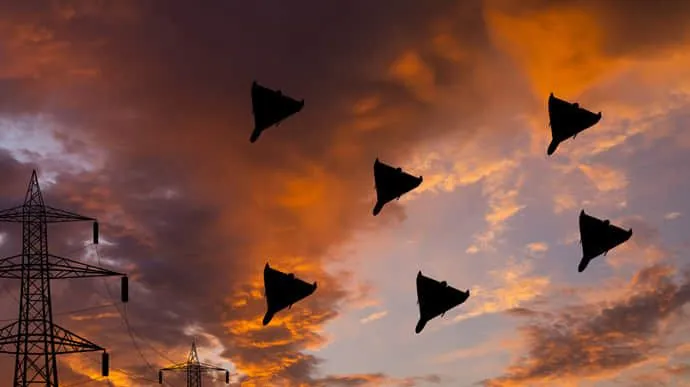
In the northern, central and southern regions of Ukraine, the movement of attack drones was recorded. UAVs have been spotted in Chernihiv, Kyiv, Zhytomyr, Ternopil, Vinnytsia, Cherkasy and Sumy regions.
The movement of attack unmanned aerial vehicles was recorded in several regions of the country. This is reported by the Air Forces of the Armed Forces of Ukraine, reports UNN.
Details
According to operational information, UAVs were seen in the northern, central and southern parts of the Chernihiv region, as well as in the north of the Kiev region. In Zhytomyr, Ternopil, Vinnytsia, Cherkasy and Sumy regions, the activity of enemy UAVs was also noted, which moved in different directions, in particular in the West and South-West.
The Air Force continues to monitor the situation and takes appropriate measures to neutralize the threat.
UAVs spotted in Kiev region: Air Defense Forces started workingDec 1 2024, 08:00 PM • 55748 views
Ukraine is prepared to invite Russia to the second Peace Summit, but Moscow will do all it can to undermine the Peace Formula and the summit itself.
Source: Zelenskyy in an interview with Kyodo News
Quote: "Russia will do everything [it can], and there will be lots of different recommendations from various groups and countries to put an end to the existence of the Peace Formula and the Peace Summit. They're currently working on it. The important thing for us is that the document [outlining the Peace Formula – ed.] is ready, and we are awaiting the united position of all countries, as well as President Trump's response to this document following his inauguration. We will distribute this document to every country, both those who have backed the Formula and those who have not."
Details: Kyiv "will be ready for next steps" only after it hears the response of other countries to the document.
Quote: "We will not give up our position. Russia should be at the second summit, as all of the leaders wanted. We will invite them, but… you will see that Russia will do everything it can to undermine the formula, to undermine the holding of the summit, and then to undermine its own ability to attend the second summit. It [Russia – ed.] is not interested in ending the war; Putin is not interested in peace."
PoliticsWar While in Kyiv, Olaf Scholz promised Ukraine a €650M military aid package. Tuesday, December 3, 2024
The defense equipment will arrive by the end of this year, said the German chancellor, who arrived in Kyiv on December 2. Kyiv will receive IRIS-T air defense systems, Patriot launchers, 10 Leopard 1A5 main battle tanks, 60 infantry fighting vehicles, and M84 and M80 armored vehicles. In addition, the package includes 6,000 unguided and 500 guided missiles, as well as 4,000 Helsing drones. It also contains winter equipment, small arms, and heating equipment. According to Scholz, his visit to Kyiv sends a message to Russian President Vladimir Putin that “We will not stop supporting Ukraine. We will support Ukrainians as long as it is necessary.” President Zelenskyy noted that additional strengthening of the Ukrainian air shield was also discussed during the negotiations with Chancellor Scholz. However, Scholz is still against supplying Taurus long-range missiles despite Ukraine’s other allies deciding to lift all restrictions on Ukraine’s use of their munitions in Russian territory.
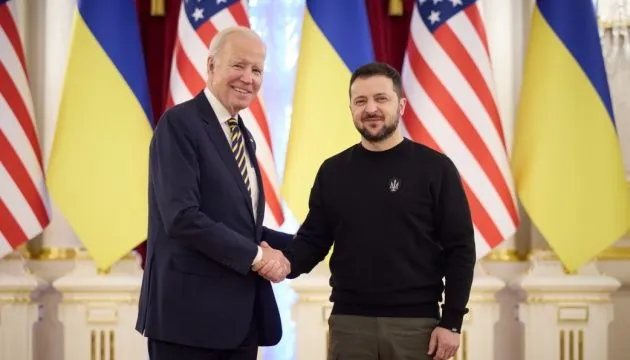
The Pentagon has released data on security assistance provided to Ukraine in the amount of more than.62 billion since the beginning of the Biden administration. Assistance includes air defense systems, artillery, armored vehicles, and other weapons.
The United States of America has announced that more than.62 billion has been allocated to Ukraine's security assistance since the beginning of the Joe Biden administration. this is reported by the Pentagon, reports UNN.
Details
Of this amount, about 6 61.4 billion was allocated after the start of the terrorist country's invasion of Ukraine on February 24, 2022.
The weapons and equipment provided by the United States cover all key aspects of Defense. In particular, the support is focused on air defense: three Patriot systems, 12 NASAMS systems, AIM-7, RIM-7, AIM-9m missiles, more than 3,000 Stinger anti-aircraft missiles, messenger systems and equipment for the integration of Ukrainian and Western air defenses were transferred.
For artillery support, Ukraine received more than 40 HIMARS, 200 155 mm howitzers, millions of artillery shells of various calibers, mortars and radar systems for combating artillery.
Ground support includes deliveries of modern Abrams tanks, Bradley infantry fighting vehicles, Stryker armored personnel carriers, MRAP Mine Action vehicles, trucks, and tactical vehicles.
In the field of aviation, Ukraine is provided with Mi-17 helicopters, switchblade, Phoenix Ghost, ScanEagle Unmanned Systems, HARM and Hydra-70 ammunition, as well as other aviation equipment.
In addition, significant assistance was provided in the field of anti-tank weapons: more than 10,000 Javelin complexes, more than 120,000 other anti-tank systems, grenade launchers, small arms and millions of rounds of ammunition.
Ukraine's naval capabilities have been strengthened by the transfer of Harpoon coastal defense systems, patrol boats, and port protection equipment.
The United States also provided Ukraine with protective equipment, communications equipment, mine clearance equipment, medical supplies, field equipment, and training services.
The United States has allocated a new package of military assistance to Ukraine: what is included in $725 millionDec 2 2024, 08:40 PM • 4355 views
Romania's presidential and parliamentary elections saw a strong showing for far-right politicians critical of military support for Ukraine.
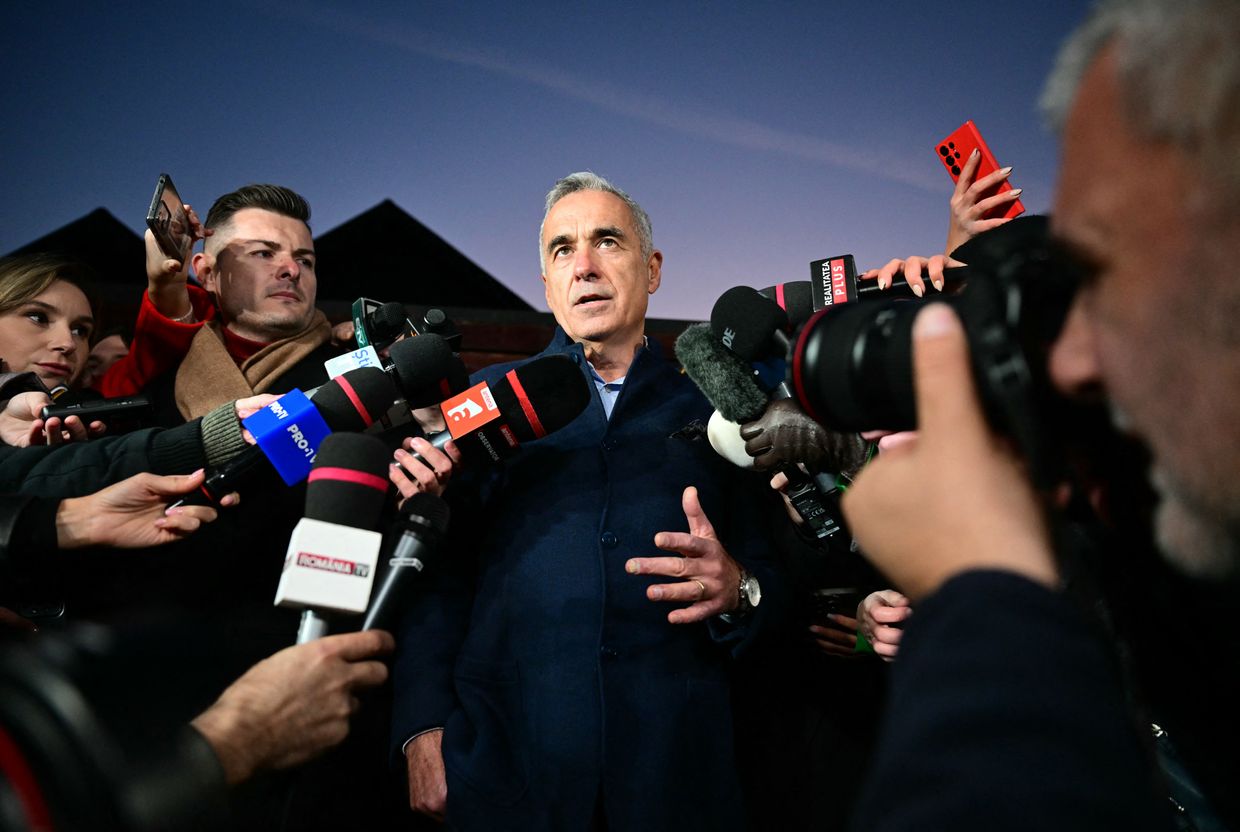
Anti-NATO and Russia-admiring independent candidate Calin Georgescu came in first during the initial round of the presidential vote on Nov. 24, with nearly 23%, a shock result that contradicted previous polling. Nationalist parties failed to win a majority in the Dec. 1 parliamentary elections but more than tripled the far-right presence in Romania's legislature.
Though far from a full victory, such a political shift in a country whose government staunchly supported its Ukrainian neighbors underscores the growing fatigue across Europe. It also reveals how European voices critical of support for Ukraine are steadily leaving the fringe of political discourse.
Georgescu, a conspiracy theory-loving politician who has praised Russian President Vladimir Putin and Romania's World War II-era pro-Nazi dictator Ion Antonescu, is expected to face pro-EU Elena Lasconi in the presidential runoff on Dec. 8.
Initially considered a marginal candidate, conservative ultranationalist Georgescu owed his success to a strong social media presence that helped him capitalize on the anti-establishment votes.
The first round, accompanied by accusations of TikTok's pro-Georgescu bias and Russian-linked cyberattacks, was even subjected to a recount and had to be validated by the Constitutional Court.
In the parliamentary elections, the Alliance for the Union of Romanians (AUR), whose leader George Simion has been banned from entering Ukraine, came second with more than 18% of the vote, trailing only the incumbent Social Democrats with 22.6%.
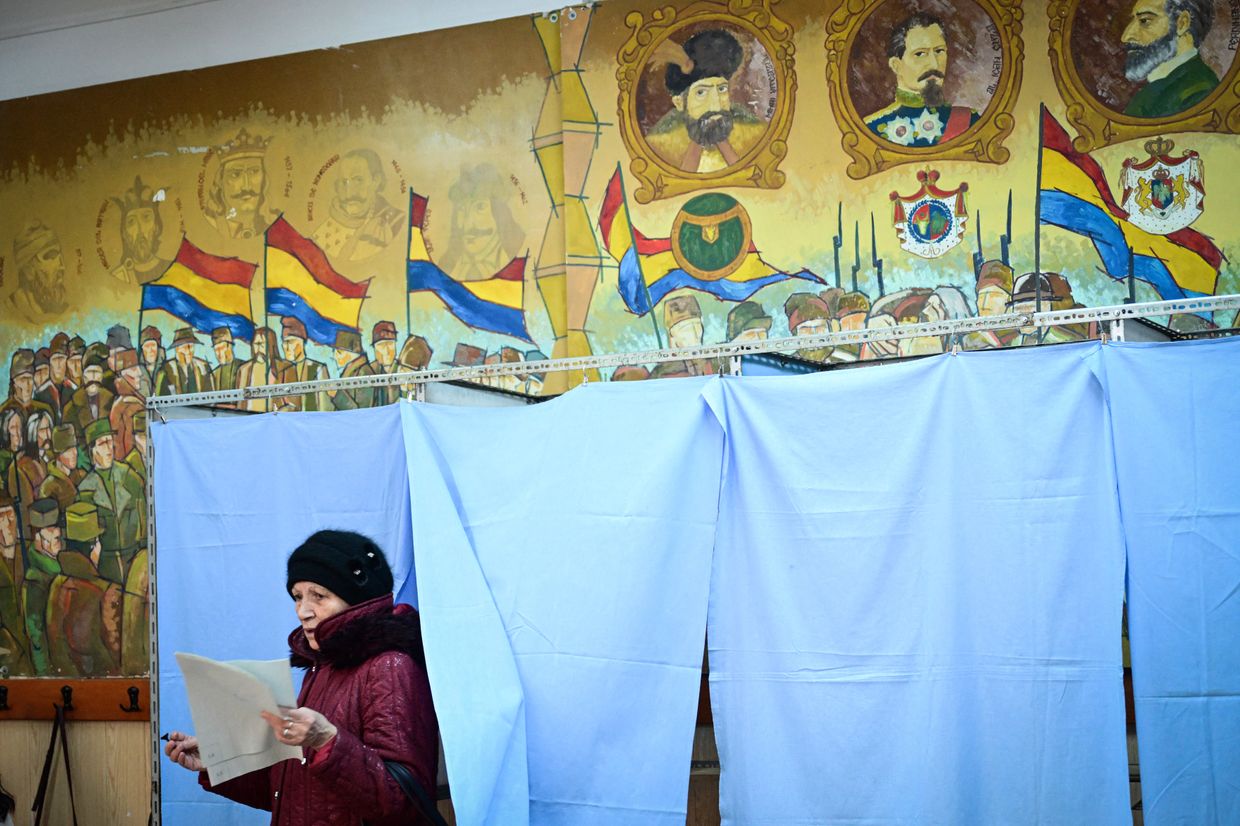
A woman casts her vote in the parliamentary elections at a polling station in Buzau city Dec. 1, 2024. Romanians returned to the polls on Dec. 1 to elect their parliament. (Daniel Mihailescu / AFP via Getty Images)
Two other far-right parties — SOS Romania of pro-Russian MEP Diana Sosoaca and the Party of Young People (POT) associated with Georgescu — won roughly 7.5% and 6.2%, respectively.
While the pro-Western moderate parties gathered more votes in the parliamentary elections, the strong showing of nationalist parties and Georgescu's real chances of winning the presidency added another brick to the growing pro-Russian sentiment in Europe.
Why does Romanian support matter for Ukraine?
Romania has proven itself to be a staunch ally to Ukraine, providing important military, economic, and humanitarian support. Sharing a 613-kilometer (380-mile) border with Ukraine, Romania has been threatened by Russian drones crashing on its territory during night raids on Ukraine.
The country has been one of the few partners to provide Ukraine with a full Patriot air defense battery, atop a mostly classified list of materiel that reportedly includes APRA-40 multiple-launch rocket systems or TAB-71 armored vehicles.
Ukrainian pilots are learning to fly F-16s at the allied training hub in the Fetesti Air Base in southeastern Romania, while another base is scheduled to host training for Ukrainian Marines.
As Ukraine's neighbor, Romania became crucial for the transit of Ukrainian agricultural exports heading to global markets amid Russia's attempts at blocking the Black Sea trade routes.
Though the importance of the Romanian route has decreased thanks to Ukraine reopening a new maritime corridor, Romania's Constanta Black Sea port still accounted for one-quarter of Ukrainian agricultural exports as of late 2024.
As part of humanitarian assistance to the besieged country, Romania has hosted over 170,000 refugees and supported international demining efforts.
Bucharest has also been a vocal advocate for Kyiv and its accession to NATO and the EU on the international stage. The cooperation between the two neighbors was solidified in a 10-year security treaty penned on July 11.
"We must stand by Ukraine and its people," outgoing Romanian President Klaus Iohannis told the European Parliament in February, saying that defending democracy, territorial integrity, and sovereignty cannot be subjected to "solidarity fatigue."
How can the far-right disrupt it?
Despite a surge, the Russian-friendly nationalist parties failed to win a majority in the parliament. However, Romania's political system gives the president ample opportunities to disrupt the country's pro-Ukraine course.
Romania's head of state is the commander-in-chief of the Armed Forces, chairs the Defense Council, and represents the country internationally, including in the European Council and at NATO summits.
Georgescu has often weighed in on foreign and defense issues, calling a NATO base in the country a source of national "shame" and speaking out against military assistance for Kyiv.
During the electoral campaign, the far-right candidate suggested there is no war in Ukraine, asking the moderator, "Have you been there? Did you see it with your own eyes?" He also praised Putin as a man who "loves his country."
If Georgescu wins the second sound of the presidential vote, "he will have a popular legitimacy as a president… (and) all the necessary discursive coverage," Sergiu Miscoiu, a political science professor at the Babeș-Bolyai University in Cluj-Napoca, told the Kyiv Independent.
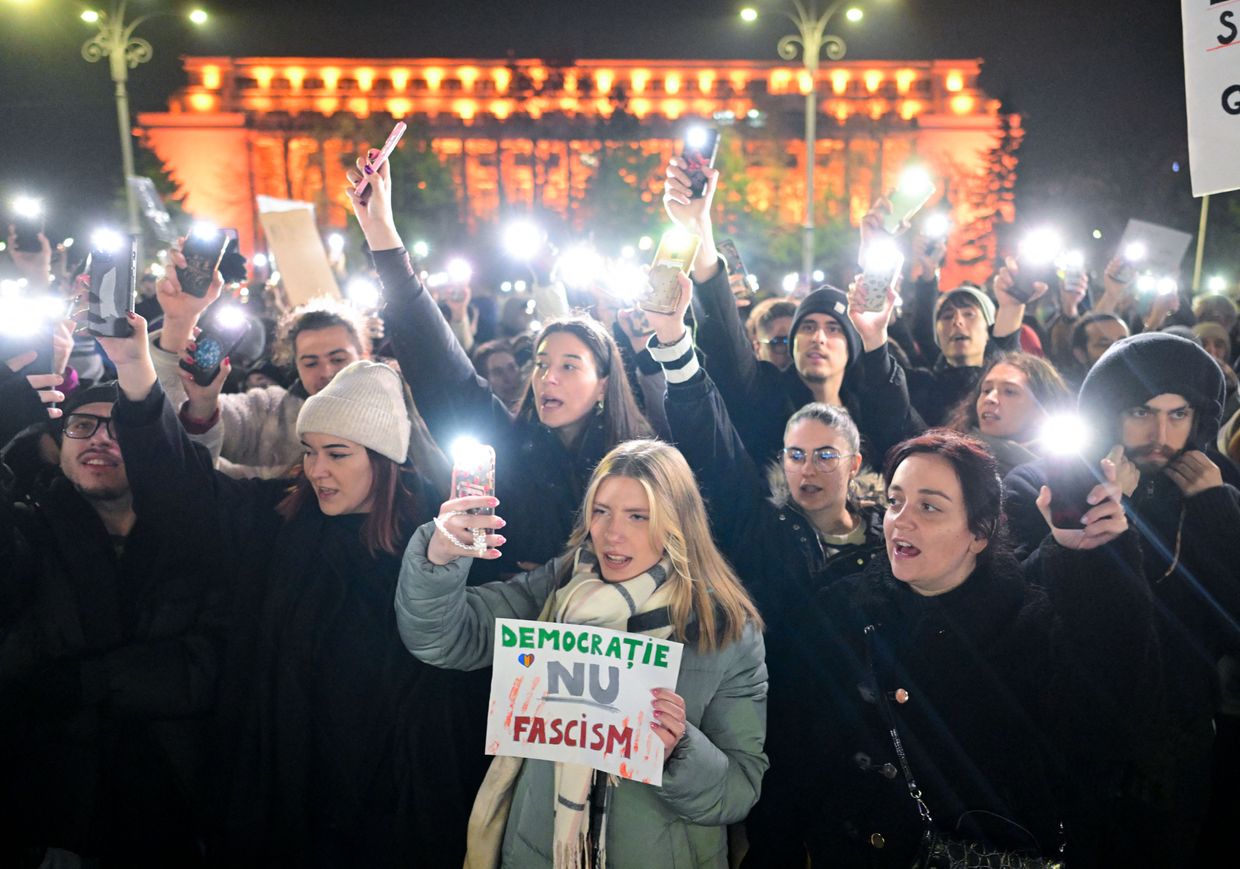
People protest in the front of the Palace of the Parliament at the Victory square in Bucharest, Romania, on Nov. 27, 2024, with banners reading "democracy rather than fascism," after the surprise win of a far-right candidate in the first round of the country's presidential elections. (Daniel Mihailescu / AFP via Getty Images)
"He will be able to be everywhere, and he will change the mood of the country," he added.
Nevertheless, presidential powers are constrained by parliamentary checks and balances, preventing the head of state from unilaterally shifting Bucharest's geopolitical orientation, Romanian foreign policy journalist Mihai Isac told the Kyiv Independent.
However, the timing of the elections would give Georgescu one powerful tool to influence foreign policy — appointing a preferred candidate as prime minister. If the parliament rejects the president's nominee twice in a row, the legislature can be dissolved, leading to snap elections, says Vlad Adamescu, co-founder of the Politica La Minut publication.
Georgescu could, therefore, coerce the parties to shape a cabinet closer to his image or prompt snap elections that could potentially give the far right a chance to mobilize more support amid political instability.
Combining his presidential authority and the visible far-right success in the elections, Georgescu "could very well reorient Romania," Miscoiu concluded.
"We can reasonably believe that if elected, then there will be a change in Romania's position toward a much more neutral stance than today."
Ukraine fatigue in Romania
The election results come amid the growing Kremlin-friendly sentiment in Europe, with Romania following the recent example of Slovakia that turned from being actively supportive of Ukraine to now being vastly pro-Russian.
Yet, the growing support for radical groups is mainly attributed to Romania's economic challenges and dissatisfaction with the "establishment" parties rather than foreign policy issues.
A part of Georgescu's appeal rested on his heavily spiritual and religion-laden messaging, gathering support among the predominantly Orthodox Christian population.
"In the last few years, there is a stable increase in Russian-inspired propaganda, which puts the Orthodox relation between Romania and Russia in the first place," Isac said.
However, Georgescu and other far-right candidates also tapped into the growing fatigue with the war in Ukraine and the fears of being dragged into the conflict, mirroring the messaging of Kremlin-friendly politicians in Moldova or Georgia.
A Globsec 2024 poll showed that the percentage of Romanians who blame Russia for the war dropped by 10 points to 55%, a development attributed by the researchers to the rise of anti-Ukrainian narratives online.
"The Romanian government and the Romanian president did not talk about what we are sending to Ukraine… All the arms shipments that are happening — and it's very good that they are happening — are state secret," Adamescu said.
"And no one has explained why we need to do this, why this is in our national interest."
Though Georgescu's voters may not be "profoundly anti-Ukraine," they "voted for an anti-Ukraine candidate because the (political) establishment is pro-Ukraine," said Razvan Petri, Adamescu's colleague at Politica La Minut.
If Georgescu enters the presidential palace, he will join the small but budding coalition of Ukraine-skeptic voices in NATO and the EU, such as Hungary's Viktor Orban or Slovakia's Robert Fico.
With Donald Trump's imminent return to the White House in January, the idea of disengaging from Ukraine may no longer be considered fringe at a time when Kyiv needs support from its partners the most.
"It's reasonable to believe that if Romania switches position, then there will be some sort of a domino effect in the region and maybe also in the European Union," Miscoiu warned, naming neighboring Moldova as one of the countries that might feel the impact the most.








 The Kyiv IndependentMartin Fornusek