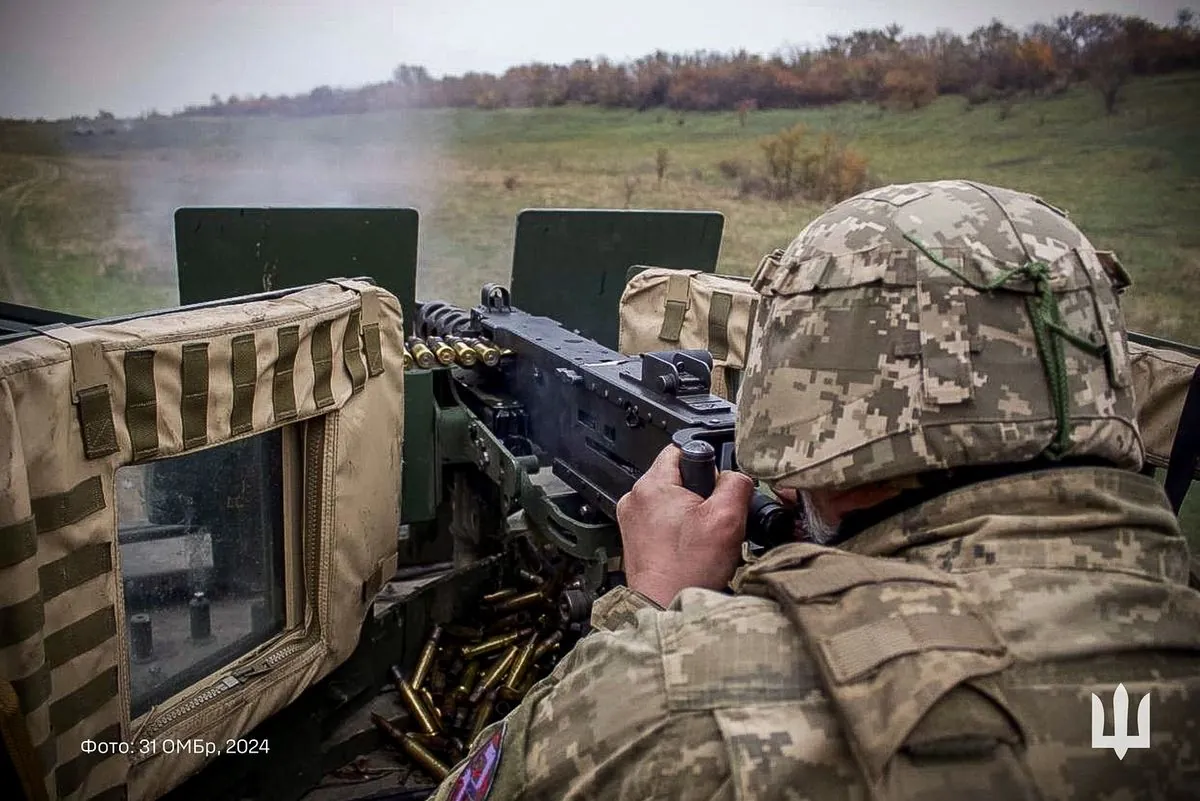
Ukraine has lost over 40 per cent of the territory it previously gained in Russia's Kursk Oblast due to Russian counterattacks, Reuters reported on Nov. 23, citing a source in Ukraine's General Staff.
"At most, we controlled about 1,376 square kilometres, now of course this territory is smaller. The enemy is increasing its counterattacks," the source told Reuters. "Now we control approximately 800 square kilometres. We will hold this territory for as long as is militarily appropriate."
Ukraine first gained a foothold in Kursk Oblast during a surprise incursion into the Russian region in early August. Since then, Russia has launched extensive counterattacks in an effort to take back the region.
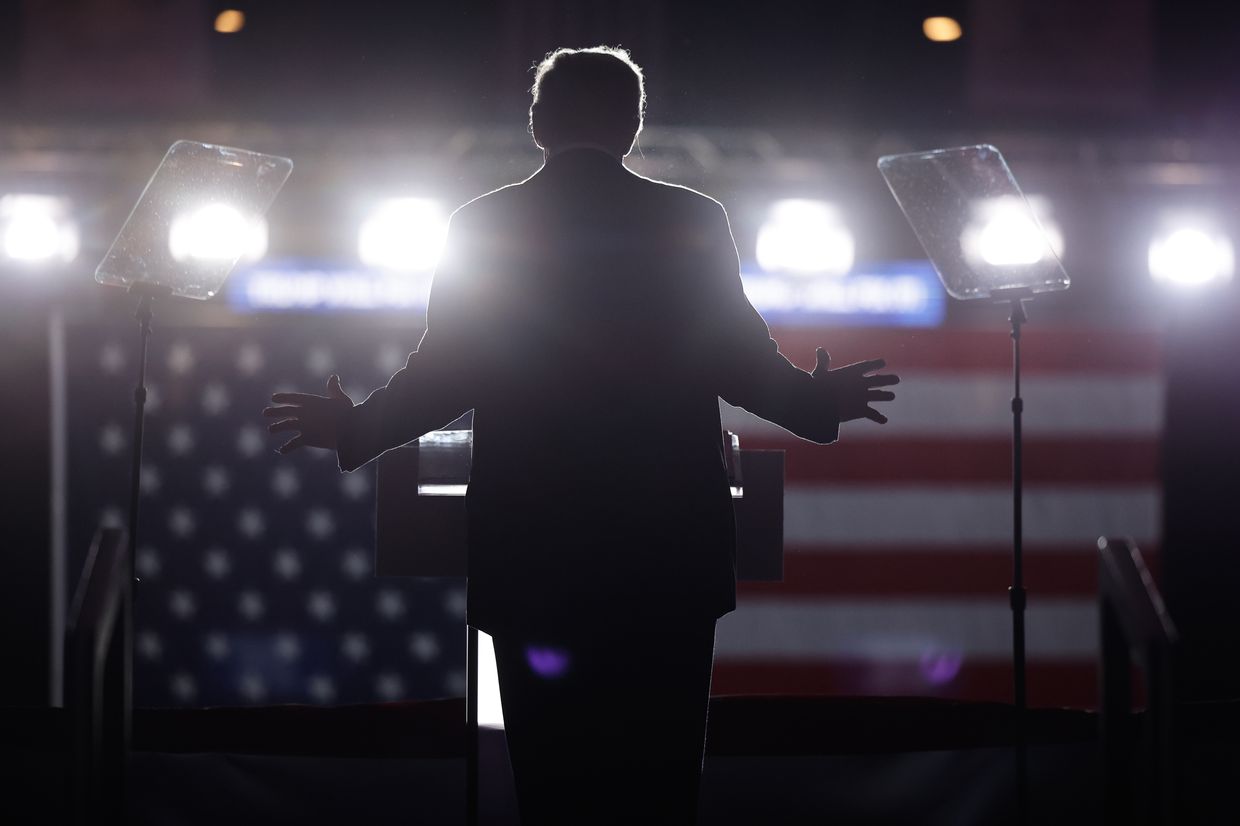
NATO allies believe that Russian President Vladimir Putin is aiming to recapture territory lost in Kursk Oblast before U.S. President-elect Donald Trump’s inauguration on Jan. 20, The Telegraph reported, hoping to gain leverage in future peace negotiations.
The source added that nearly 60,000 Russian army personnel are currently stationed in Kursk Oblast, planning to reach the border with Sumy Oblast to create a "buffer zone" there, as Ukraine looked to do with its incursion into Kursk Oblast.
Kyiv has previously said that about 11,000 North Korean soldiers have joined the counteroffensive in Kursk, with the General Staff source noting that the majority of North Korean soldiers was finalizing training along Russian forces.
The Kyiv Independent has not been able to verify the information provided by the General Staff source.
As Russia's attempt to take back Kursk continues to progress, Russia has also intensified its attacks along the eastern front in recent weeks, putting Ukrainian forces under mounting pressure as they struggle to defend key positions.
In total, almost 580,000 Russian soldiers are participating in combat against Ukraine, Vadym Skibitskyi, the deputy head of Ukraine's military intelligence agency (HUR), told Interfax Ukraine on Nov. 21.
Over the last day, 125 combat engagements took place, most of them in the Pokrovske and Kurakhove sectors. Occupants are actively using aviation and anti-aircraft guns, Ukrainian defenders repelled most of the attacks.
Since the beginning of the day, the total number of combat engagements along the entire frontline has increased to 125. The occupants continue to use aviation, in particular, UAVs, and carry out attacks in all directions of the east and south of our country, especially actively in the Pokrovske and Kurakhove directions, UNN reports with reference to the General Staff's report as of 16:00.
According to the General Staff, the Russians fired 110 times at the territory of the Kursk region of the Russian Federation, including 9 times with multiple launch rocket systems.
Four combat engagements took place in the Kharkiv sector today. Ukrainian troops repelled two Russian attacks in the area of Vovchansk, two more combat engagements are still ongoing in the area of Tykhy.
Our troops repelled eight invaders' attacks near Hlushkivka, Synkivka, Zahryzove, Novoplatonivka and Zelenyi Hai in the Kupyansk sector, and another firefight is still ongoing. The enemy conducted an air strike in the area of Lozova.
In the Liman sector, the enemy attacked seven times without result in the areas of Druzhelyubivka, Tverdokhlibove, Novoyehorivka, Hrekivka and Terny.
With the support of aviation in the Northern sector near Bilohorivka, our defenders repelled one enemy attack.
In the Kramatorsk sector, the enemy unsuccessfully attacked Ukrainian positions in the vicinity of Stupochky once today. The enemy also launched an air strike with unguided aerial missiles in the area of Chasovyi Yar.
In the Toretsk sector, the enemy attacked our troops' positions in the Toretsk area twice in vain, while launching air strikes with guided aerial bombs near the settlements of Toretsk, Nelipivka, Katerynivka, Ivanopillia and Zorya, dropping ten bombs in total.
In the Pokrovsk sector, the enemy has attacked 28 times since the beginning of the day in the areas of Promin, Lysivka, Krutyi Yar, Myrnohrad, Hryhorivka, Dachanske, Zhovte, Pushkine, Petrivka and Pustynka, 23 attacks were repelled, and fierce fighting is ongoing. The enemy also bombed Yablunivka, Zorya, Oleksandropil, Hrodivka, Myroliubivka and Yelyzavetivka, dropping a total of 16 guided aerial bombs.
In the Kurakhove sector, five firefights continue in the areas of Berestky, Dalne and Romanivka. Seventeen enemy attacks have already been repelled by our defenders in the areas of Sontsivka, Zorya, Novodmitrivka, Kurakhove, Katerynivka and Antonivka.
In the Vremivsk sector, seven enemy attacks continue near Velyka Novosilka and Novodarivka, 18 enemy attacks in the area of Trudove, Sukhi Yaliv and Rivne have already been repelled.
The enemy did not conduct any active operations in the Orikhivske and Huliaypillia directions.
In the Prydniprovsky sector, our defenders repelled three enemy attacks.
Ukrainian Armed Forces engage in 194 combat engagements in the frontline: most of them in the Kurakhove, Pokrovske and Vremivske sectors – General StaffNov 23 2024, 06:58 AM • 66988 views
Enzo Maresca insisted after Chelsea’s win over Leicester on Saturday that he’s “not thinking about Harry Kane”. Fair enough.
Nicolas Jackson and Enzo Fernandez scored for the Blues as Didier Drogba and Cesc Fabregas regens as Maresca’s side moved to within a point of Manchester City in second place ahead of their clash with Tottenham.
Cole Palmer started having failed to show up for England duty and after the game Maresca was asked about Kane’s criticism of his countrymen who pulled out of the recent Nations League clashes through injury.
“My reaction is that we finished the game ten minutes ago, we won 2-1,” Maresca said, when asked about Kane’s comments. “There is not any reaction, there is not any comments.
“We finished the game 10 minutes ago. I am not thinking about Harry Kane. I don’t have any comments about that.”
Asked whether the club put pressure on Palmer to skip England’s Nations League games against Republic of Ireland and Greece ahead of the busy festive period, Maresca said: “Absolutely not.”
READ MORE: Didier Drogba, Cesc Fabregas regens shine as Chelsea enjoy *actual* coaching from Enzo Maresca
Palmer was a doubt for the clash with Arsenal ahead of the international break following a poor tackle by Lisandro Martinez in the previous game against Manchester United.
And the playmaker was on the end of another rough challenge against Leicester, with Wilfred Ndidi fortunate not to be shown a red card for going in studs up on Palmer’s Achilles.
Maresca managed Ndidi during Leicester’s Championship-winning campaign last term and defended the midfielder before calling for more protection from referees.
“I don’t think the target is Cole,” he added. “What I think, and what I said after Man United, is that when there is bad intention, it has to be a different kind of punishment from the referee.
“Man United, I think, was bad intention. I’m not saying Wilf was bad intention because I love Wild. But overall, when there is [bad intention] the punishment has to be different.”
Jackson took his Premier League tally to seven for the season with his fine finish in the first half and his excellent form has meant that Christopher Nkunku has been limited to appearances from the bench.
That’s led Manchester United to be linked with a move for the Frenchman – who’s impressed in Chelsea’s games in the cups and in Europe – but Joe Cole insists Nkunku’s apparent frustration is a good sign for the Blues.
“If the biggest problem Chelsea have is a couple of player being unhappy and not getting enough game time, then you know the club’s in a healthy position,” Joe Cole told TNT Sports.
“Nkunku gives you something different to Jackson. Jackson’s a spinner who’ll run in behind, he’s aggressive, he’ll do a lot. Nkunku is clean and is a good finisher, he can play in a No.10 and can play off either side.
“I think they can complement each other and they will both get game time.
“I don’t mind it when players let it know when they’re not happy. It’s about how he conducts himself.
“When I look at Enzo Maresca, he’ll be dealing with that situation and Nkunku’s standards won’t be allowed to slip. He’s playing European football. He keeps scoring goals and he will get his opportunity to play.”
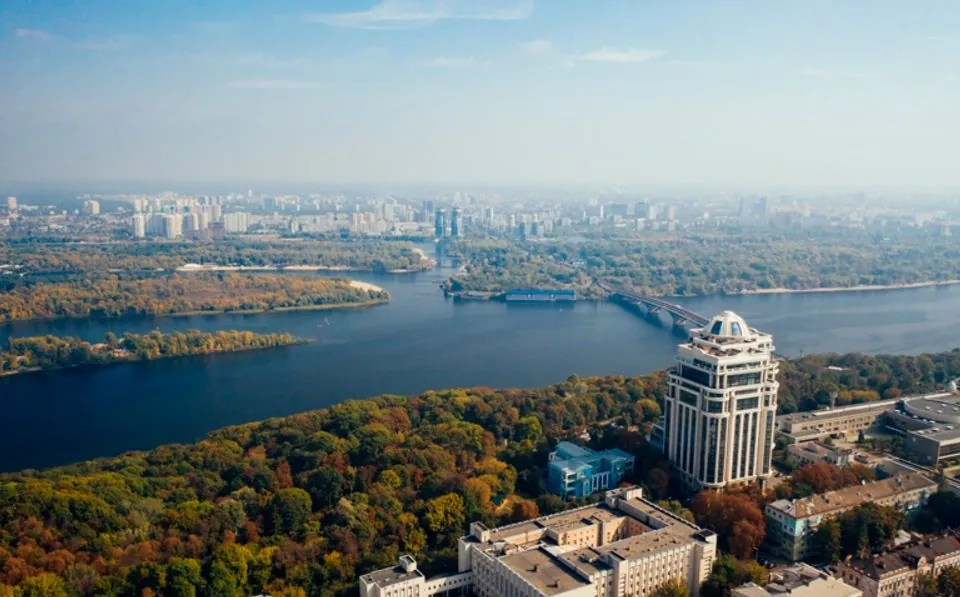
The low-frequency hum in Kyiv is related to the operation of large thermal equipment on the right bank of the city. KCSA assures that this is a controlled process with no threats to the public.
The Kyiv city administration noted that this is a large-scale equipment, so city residents continue to hear a certain level of technological noise.
Transmitted by UNN with reference to the press service of the Kyiv City State Administration (KCSA).
Technological noise in Kyiv is associated with the operation of a large heat source on the right bank of the city. This is an integral part of the production process, as it involves large-scale equipment.
– the post reads.
The capital's administration also explained that the situation poses no threat or risk.
This is a controlled production process
– reports the KCSA TV channel.
The agency also emphasized that more detailed information is not provided for security reasons.
Recall
In the Podil district of Kyiv , drone fragments damaged a car and the windows of a non-residential building. In Obolon district, the debris fell on an open area, with no casualties.
More checkpoints in Kyiv today: what's the reasonNov 20 2024, 06:55 AM • 15140 views
President Volodymyr Zelenskyy has said that Ukraine is ready to share with African countries, among other things, the experience of combating Wagnerites, fighters who are part of the Russian Wagner Group.
Source: Zelenskyy during the 3rd International Grain from Ukraine Conference on Saturday, reported by Interfax-Ukraine
Quote: "We know who the Wagnerites are. We know how to fight them. We know how to destroy them. This shows that we have relevant experience."
Details: Zelenskyy reiterated that Ukraine's military was represented in various missions in African countries and that, given the experience of today's Ukrainian forces, it "can invest in terms of contingent".
The President added that African countries should be interested in security technologies developed and used in Ukraine today, such as UAVs and USVs.
Zelenskyy said that Ukraine could also help in the fight against disinformation and cyber defence, as it has been the target of thousands of cyber attacks, including on the banking system and communications.
The Ukrainian leader added that African countries would have many problems due to Russian influence both on the continent and in the markets. Drawing on Ukraine's experience, he called for putting security and independence first, rather than the benefits of cheaper resources, even in the face of economic problems.
He mentioned food security, education, mining, digitalisation, and the Diia government app as other areas of cooperation.
"We can gladly offer all these things," Zelenskyy said.
Background:
In July of this year, the Malian army and its Russian allies suffered losses from Tuareg rebels. The Tuareg from the CSP-PSD movement showed photos and videos of a broken Wagner Group convoy. The battle took place in the town of Tinzaouaten near Mali's border with Algeria on Thursday and Friday, 25 and 26 July. At least 20 Wagner fighters were killed, while others were captured.
In addition to the dozens of the Russians from the Wagner Group killed or captured in Mali’s north, a mercenary propagandist and author of the Grey Zone channel was killed.
After the Mali operation, the Tuareg rebels were photographed with the Ukrainian flag.
In August, UK intelligence analysed the situation with the Wagner Group and its leaders a year after the death of its owner, Yevgeny Prigozhin. Intelligence notes that the group is becoming increasingly fragmented, and many of the survivors are leaving.
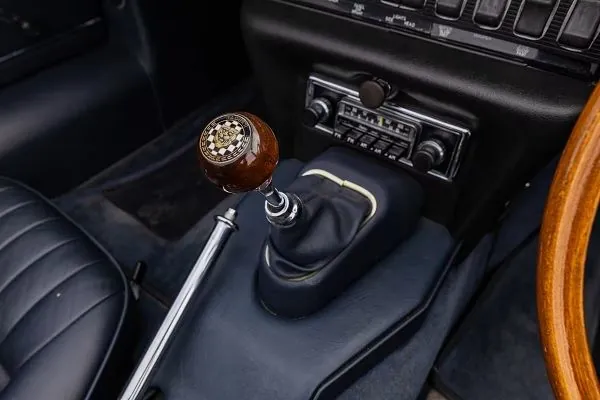
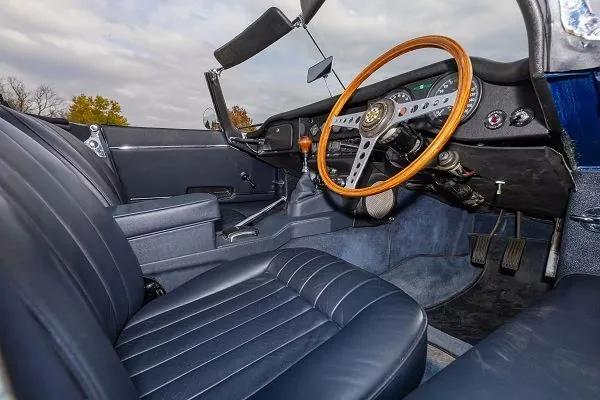
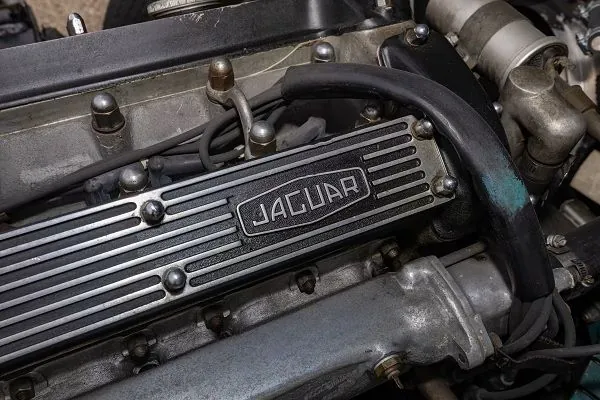
A 1967 Jaguar E-Type convertible that appeared in all three Austin Powers movies is being sold at Mecum. The car has a 4.2-liter engine, 103,000 kilometers and has recently undergone a restoration.
The legendary Jaguar E-Type, which became the star of all three Austin Powers movies, has been put up for auction in the United States, UNN reports with reference to the Mecum auction site.
A 1967 Jaguar E-Type convertible was put up for sale at Mecum in the United States. The car, which became a movie hero, is planned to be sold for a significant sum.
This particular Jaguar E-Type Series 1 in the colors of the British flag was used in the comedy trilogy about the spy Austin Powers. It is noteworthy that only one car was used for filming in all three parts – there were no understudies.
In addition, this Jaguar E-Type (or Shaguar, as Austin Powers called it) appeared in Madonna's video for the song Beautiful Stranger, which became the soundtrack to the second part of the trilogy.
After filming, the Jaguar E-Type sports car was purchased by a private collector. From time to time, the car was used in Jaguar promotions. It has recently been restored, and its mileage is 103,000 km.
The 1967 Jaguar E-Type Convertible is powered by a 4.2-liter six-cylinder engine with 265 hp paired to a 4-speed manual transmission. It accelerates to 100 km/h in 7 seconds and can reach a top speed of 240 km/h.
Recall
Maurizio Cattelan's provocative work of art, a banana taped to a wall, was sold for $6.2 million at Sotheby's in New York, four times the previous estimate.
The recent hike in Russia’s key interest rate to 21% by the Central Bank in late October has stirred renewed debate among media and economists about the Russian economy’s outlook and how economic trends could influence Kremlin policies. Today, few predict an "imminent collapse" of the Russian economy. However, signs of deteriorating trends and economic challenges confront Russian President Vladimir Putin's regime with a dilemma: continuing the aggressive war or quickly ending it are both likely to lead to an economic crisis.
Observers point out several unique features of the Russian economy that cast doubt on claims of its "sustainable development" and "prosperity."
First, the current key rate is more than double the official annual inflation rate, resulting in a double-digit real interest rate — an unusual scenario. This could suggest that actual inflation is much higher than official reports indicate and that inflation expectations among the public and businesses exceed the Russian Central Bank's estimates (over 13%). Even if official inflation figures aren’t distorted, the calculation methods don’t account for changes in the consumer basket due to sanctions, such as the replacement of Western goods with cheaper Chinese alternatives.
Second, despite the high interest rate, loan volume continues to grow, as noted by Elvira Nabiullina, governor of the Bank of Russia — a concern for the central bank. Credit growth is currently driven by increased business lending, while consumer lending has declined in response to high rates and the end of the subsidized “preferential” mortgage program in summer 2024. Commercial lending rates have risen to 25–30% and above, signaling heightened inflation expectations, a shortage of working capital due to increased sanctions-related costs, and labor shortages. These factors create significant risks of defaults and bankruptcies.
Third, the planned increase in budget spending for 2025 significantly exceeds even optimistic GDP growth projections. The Russian government has forecast real GDP growth at 2.5% for 2025. However, even Russian analysts suggest growth will likely not exceed 2%, and the International Monetary Fund recently lowered its 2025 forecast to 1.3%. Meanwhile, planned federal expenditures are set to rise by nearly 12% (from 37.2 trillion rubles in 2024 to 41.5 trillion in 2025).
Direct military spending for 2025 is expected to reach an unprecedented 13.5 trillion rubles (about $140 billion). Even within Russia, economists doubt that the government’s projected budget deficit of under 1% of GDP is realistic. This is reflected in declining liquid assets in the so-called "National Wealth Fund," which, as of summer 2024, stood at just over $55 billion — less than half of what it was at the start of the full scale war in 2022.
The revival of the Russian economy in 2023–24 is attributed to two main factors: stable oil and gas revenues and significant growth in war-related government spending. Despite sanctions, Russia has found new markets (mainly China and India), and has employed a “shadow fleet” and other strategies to evade sanctions.
"The revival of the Russian economy in 2023–24 is attributed to two main factors: stable oil and gas revenues and significant growth in war-related government spending."
However, both the Russian Central Bank and the Russian parliament are now warning of stagflation (recession combined with high inflation). Resources are dwindling, fiscal stimuli are no longer effective, supply-side constraints (labor shortages and lack of access to technology and modern equipment) are intensifying, and production cannot keep up with demand, driving inflation. This trajectory will likely lead to a severe economic crisis; the only question is when.
Ending the war also carries significant risks for the Russian economy. Exiting the "Keynesian trap" of increased budget expenditures will be painful, as a decrease in aggregate demand could worsen stagflation tendencies and trigger a major downturn and crisis.
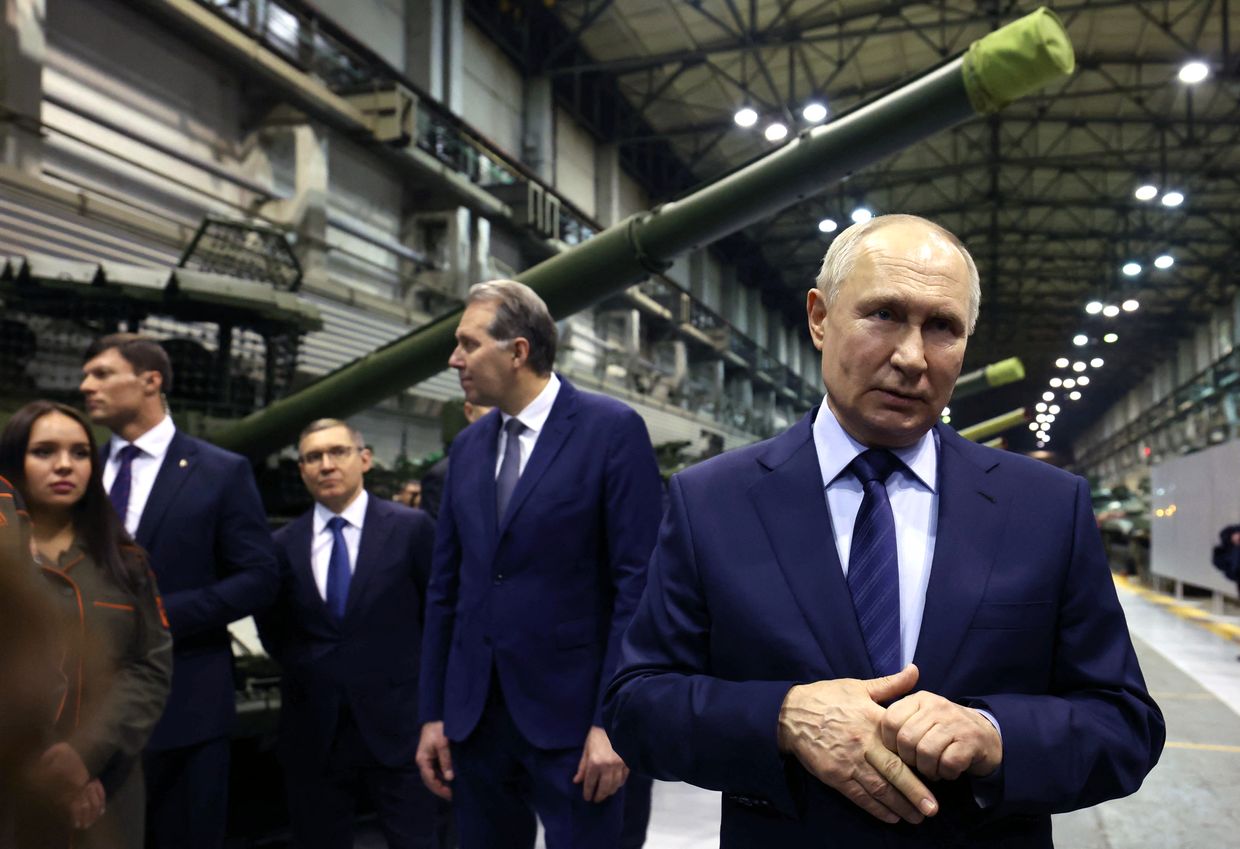
Russian President Vladimir Putin visits Uralvagonzavod, a Russian tank factory, in Nizhny Tagil, Russia on Feb. 15, 2024. (Alexander Kazakov / POOL / AFP via Getty Images)
Over the course of the war, a significant “war party” has formed in Russia, involving both elites and ordinary citizens. Officials have gained new avenues for corrupt enrichment through sanctions circumvention schemes, while businesses have filled market gaps left by Western companies. Families of soldiers or those working directly or indirectly for the military-industrial complex are earning incomes they couldn’t have imagined pre-war.
By various estimates, direct war beneficiaries include 15 million people or more, comprising over 10% of the Russian population. Additionally, increased payouts in the contract army and military-adjacent sectors, coupled with an obvious labor shortage, have driven up wages in other parts of the economy.
"By various estimates, direct war beneficiaries include 15 million people or more, comprising over 10% of the Russian population."
Though public opinion polls indicate broad support for the war, it’s evident that the conflict has allowed a sizable portion of the population to escape the "poverty trap." A return to pre-war conditions and the end of war-related expenditures will inevitably trigger an economic crisis and heightened social tension.
By launching the invasion of Ukraine, the Russian regime set itself up for a dilemma in which both continuing and ending the war will almost certainly lead to an economic — and possibly political — crisis. Given this, it seems prudent for Ukraine’s allies to make Russia’s continued aggression significantly more painful. Enhancing sanctions to meaningfully reduce Russia’s export revenues and restricting imports of critical technologies and equipment would serve this goal.
The problem is not that sanctions “don’t work” but that they’ve been applied slowly and inconsistently, with enforcement often lacking. Sometimes, sanctions inadvertently benefit Russia; for example, capital outflow restrictions have consolidated capital domestically, providing Putin’s regime with additional resources.
A better approach would be to encourage the maximum outflow of capital — including financial and human resources — by avoiding restrictions on emigration opportunities for Russians opposing the regime. By intensifying sanctions and closing enforcement loopholes, the prospects for Russia’s “celebration” of a prolonged, low-cost war will be sharply reduced, far below the five years or more predicted by a recent analysis in The Economist.
Author's Note: "With special thanks to Oleksiy Zagorodnyuk for his help with data research."
Editor’s Note: The opinions expressed in the op-ed section are those of the authors and do not necessarily reflect the views of the Kyiv Independent.
Submit an Opinion Introducing official merch from the Kyiv Independent Shop now
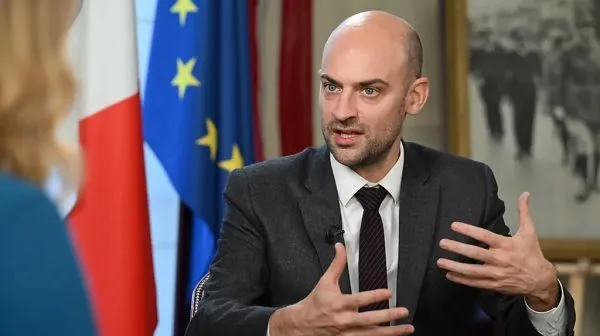
The French foreign minister said that there were no “red lines” in supporting Ukraine and allowing the use of French missiles for self-defense. Barro also did not rule out the possibility of French troops' participation in the conflict.
French Foreign Minister Jean-Noel Barrot said that Ukraine could launch French long-range missiles at Russia “in self-defense,” reports UNN citing the BBC.
Details
Barro told the media that there are no “red lines” in supporting Ukraine.
He said Ukraine could launch French long-range missiles at Russia “in self-defense,” but did not confirm whether French weapons had already been used.
“The principle has been established … our messages to President Zelensky were well received,” Barro said.
Add
The publication recalls that French President Macron indicated France's willingness to allow its missiles to be launched at Russia earlier this year. But Barro's comments are significant because they came days after the first use of long-range missiles by the United States and Britain.
Barro, who held talks with Foreign Secretary David Lammy in London on Friday, said Western allies should not limit support for Ukraine against russia and “not set or express red lines.
Asked whether this could mean French troops taking part in the fighting at all, he said, “We are not ruling out any options.
“We will support Ukraine as intensively and for as long as necessary. Why? Because our security is at stake. Every time the Russian army advances one square kilometer, the threat becomes one square kilometer closer to Europe,” he said.
Barro hinted at Ukraine's invitation to join NATO, as requested by President Zelensky. “We are open to an invitation, and so in our discussions with friends and allies and friends and allies of Ukraine, we are working to bring them closer to our positions,” Barro said.
And he suggested that Western countries will have to increase the amount they spend on defense, noting, “Of course we're going to have to spend more if we want to do more, and I think we're going to have to face these new challenges.
Barro's comments come after a week of significant escalation in Ukraine – Britain and the U.S. launching long-range missiles at russia for the first time, russia launching an intercontinental ballistic missile and Vladimir Putin suggesting the possibility of global war.
One UK government source describes the moment as a “critical moment” before winter and before Donald Trump returns to the White House.
Roberta Metsola, the President of the European Parliament, has called on the German government to finally decide on the transfer of long-range Taurus missiles to Ukraine.
Source: German newspaper Der Spiegel; European Pravda; Roberta Metsola in an interview with a group of German media
Details: Roberta Metsola stressed that "time matters" for Ukraine and that Russia is increasing its pressure, with more air targets striking Ukrainian cities.
Roberta Metsola stressed that Ukraine "cannot wait forever" and that the European Parliament has broad support for Germany's decision.
Background:
The Taurus debate has resumed after the US lifted restrictions on the use of long-range weapons by Ukraine to strike Russian territory, and Germany is approaching early elections. The leader of the largest opposition party, the Christian Democratic Union of Germany, Friedrich Merz, who has a good chance of becoming the next chancellor, is in favour of the Taurus transfer, while the Social Democratic Party of Germany partners are also in favour of the decision, but Chancellor Olaf Scholz insists that he will not do so.
Recently, Spiegel published an editorial harshly criticising Scholz for delaying the decision.
More than 60% of Germans oppose providing Ukraine with Taurus missiles.
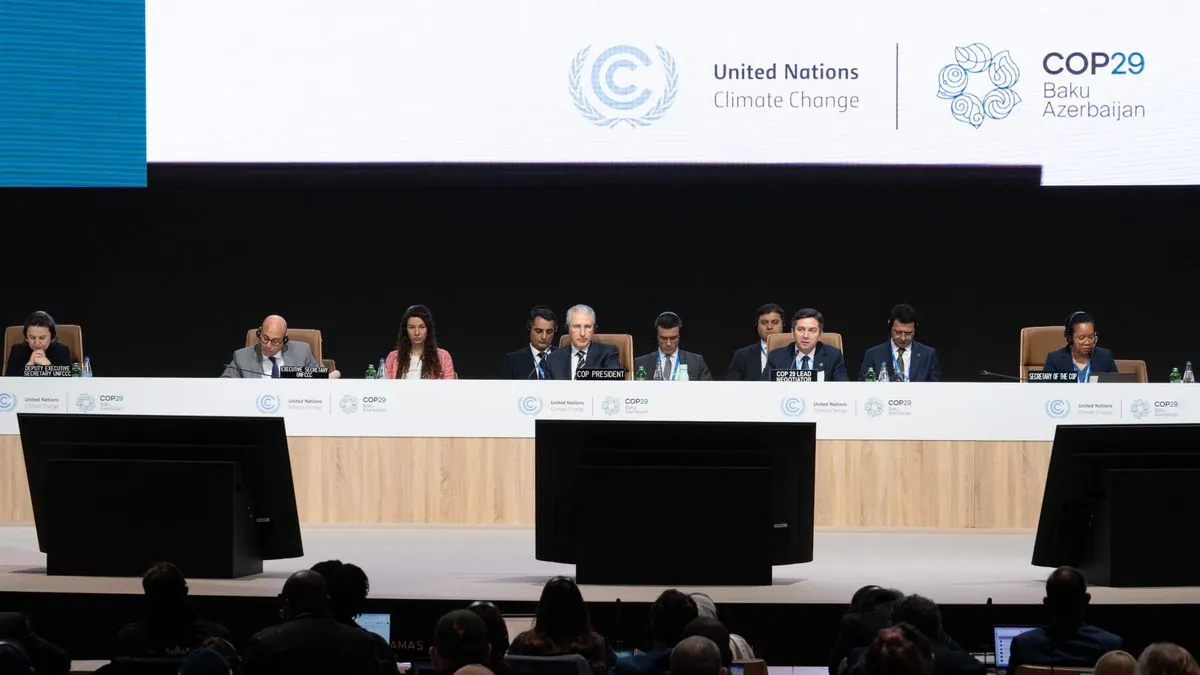
At the COP29 summit, the EU, the US, and other developed countries agreed to increase climate finance to $300 billion annually by 2035. The previous proposal of $250 billion was rejected as insufficient.
The European Union, the United States and other rich countries at the COP29 summit agreed to increase their climate finance offer to $300 billion a year by 2035 to help developing countries fight climate change, sources said Saturday, after a previous proposal was rejected as insultingly low, Reuters reported, UNN wrote.
Details
The summit was supposed to end on Friday, but was delayed as negotiators from nearly 200 countries, who must adopt a consensus agreement, struggled to reach a deal on a plan to finance climate change measures for the next decade.
The $250 billion deal proposal prepared by Azerbaijan's COP29 presidency on Friday was perceived by developing countries as grossly insufficient.
It is unclear whether the revised position of rich countries was officially communicated to developing countries at the meeting in the Azerbaijani capital Baku, and whether this will be enough to gain their support.
The COP29 talks exposed the differences between wealthy governments constrained by tight domestic budgets and developing countries hit by the skyrocketing costs of storms, floods and droughts caused by climate change, the newspaper notes.
Ukraine presented an ambitious climate plan at COP29: what was promised to the worldNov 19 2024, 01:54 PM • 14228 views

 The Kyiv IndependentThe Kyiv Independent news desk