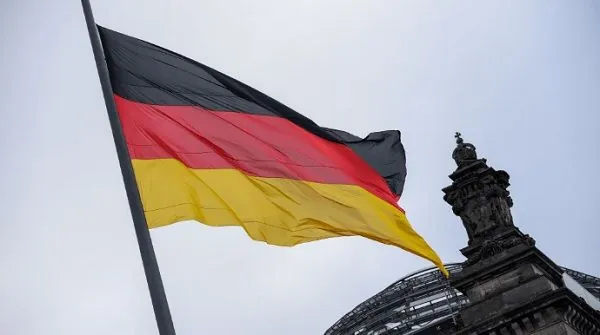
Germany will transfer a large batch of military equipment to Ukraine, including 47 MRAP vehicles and various types of weapons. The aid package contains howitzers, drones, ammunition, and other military equipment.
Germany will hand over a new batch of military aid to Ukraine, which includes mine-protected vehicles, amphibious vehicles, BIBER bridge-laying machines, mine clearance tanks, drones and other necessary equipment. The corresponding statement was published by the German government, reports UNN.
The Ukrainian military will receive a significant batch of military equipment and weapons from Germany. The deliveries will include 47 vehicles with MRAP mine protection, 8 tactical amphibious vehicles Caracal, 2 bridge-laying BIBER with spare parts and 3 tanks for mine clearance.
In addition, Germany will transfer:
* TRML-4D radar station;
* 4 self-propelled howitzers Panzerhaubitzen 2000 together with more than 40 thousand ammunition;
* 20 armored vehicles for the border guard service;
* ammunition for Marder infantry fighting vehicles;
* 8 thousand shells of 40 mm caliber;
* 100 thousand HLR 338 rifles and more than 300 thousand rounds of ammunition for them;
* ammunition for other small arms;
* 20 vector drones with spare parts;
* 12 HORNET XR drones;
* 120 songbird reconnaissance drones and 100 RQ-35 Heidrun Scouts;
* 60 Golden Eagle drones.
Recall
Earlier it was reportedthat Germany is starting to supply Ukraine with 4 thousand Mini-Taurus UAVs with artificial intelligence.
After Putin signed a decree on expanding the use of nuclear weapons, China called for calm. The Chinese Foreign Ministry stressed the need for de-escalation and a political settlement of the crisis in Ukraine.
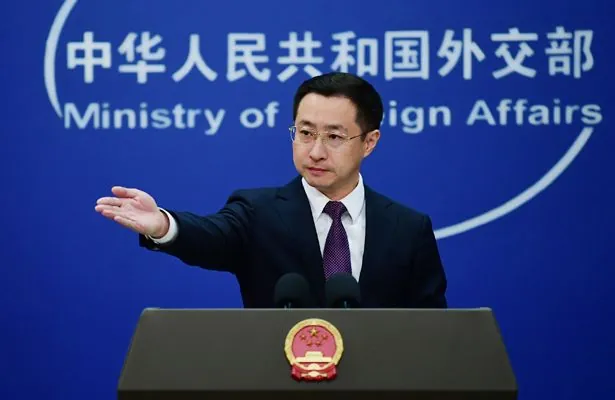
The day after Russian dictator Vladimir Putin signed a decree expanding the use of nuclear weapons, China called for calm, writes UNN with reference to a statement by Chinese Foreign Ministry spokesman Lin Jian.
Details
"We have taken these reports into account. In the current situation, all relevant parties should remain calm and restrained and jointly strive to de-escalate and reduce strategic risks through dialogue and consultation. On the Ukrainian issue, China's position is consistent and clear. Let me emphasize that China calls on all parties to de-escalate the situation and seek a political solution to the crisis in Ukraine. This position remains unchanged. China will continue to play a constructive role in this," Chinese Foreign Ministry spokesman Lin Jian said at a news conference on November 20.
Putin approves russia's new nuclear doctrine: what has changedNov 19 2024, 08:43 AM • 12726 views
With Donald Trump back in office, Europe faces a new era of uncertainty. The once-reliable comfort of American support — a cornerstone of European security — is now more in question than ever. For decades, Europe has assumed the U.S. would always be there to pick up the slack. But those days are over. Trump's administration openly questions NATO’s role and views American involvement in European security with skepticism.
Europe must now confront a new reality: it can no longer sit back, assuming the U.S. will handle its defense. Now is the time to act. Some in Europe may feel isolated in the challenge of supporting Ukraine, but this view underestimates Europe’s own strength. The European Union is the world’s largest trading bloc, one of the top three global economies, and home to four of the 10 largest economies on the planet.
Russia, by comparison, ranks as the world’s 11th largest economy — its size comparable to Italy, with Spain not far behind. Europe’s challenge is not a lack of resources, but the will to use them. Supporting Ukraine is not a cost; it’s an investment in Europe’s security and stability.
The 2% GDP goal for NATO members was once a practical way to measure commitment to the alliance. But today, with threats evolving and new challenges emerging, that target is outdated. True security isn’t about budget percentages; it’s about capabilities — about building a Europe that can defend itself and respond swiftly to crises. Russia’s brutal assault on Ukraine has shown us that a spending target doesn’t protect us — actionable resources, modern defense systems, and readiness to act do.
True security isn’t about budget percentages; it’s about capabilities
Europe has already seen this firsthand. Financial pledges to Ukraine are important, but on the ground, specific resources like anti-air systems, secure communications, and logistical support have made the difference. Europe now faces this same reality: leaders must move beyond symbolic spending goals and prioritize real capabilities to meet today’s urgent security needs.
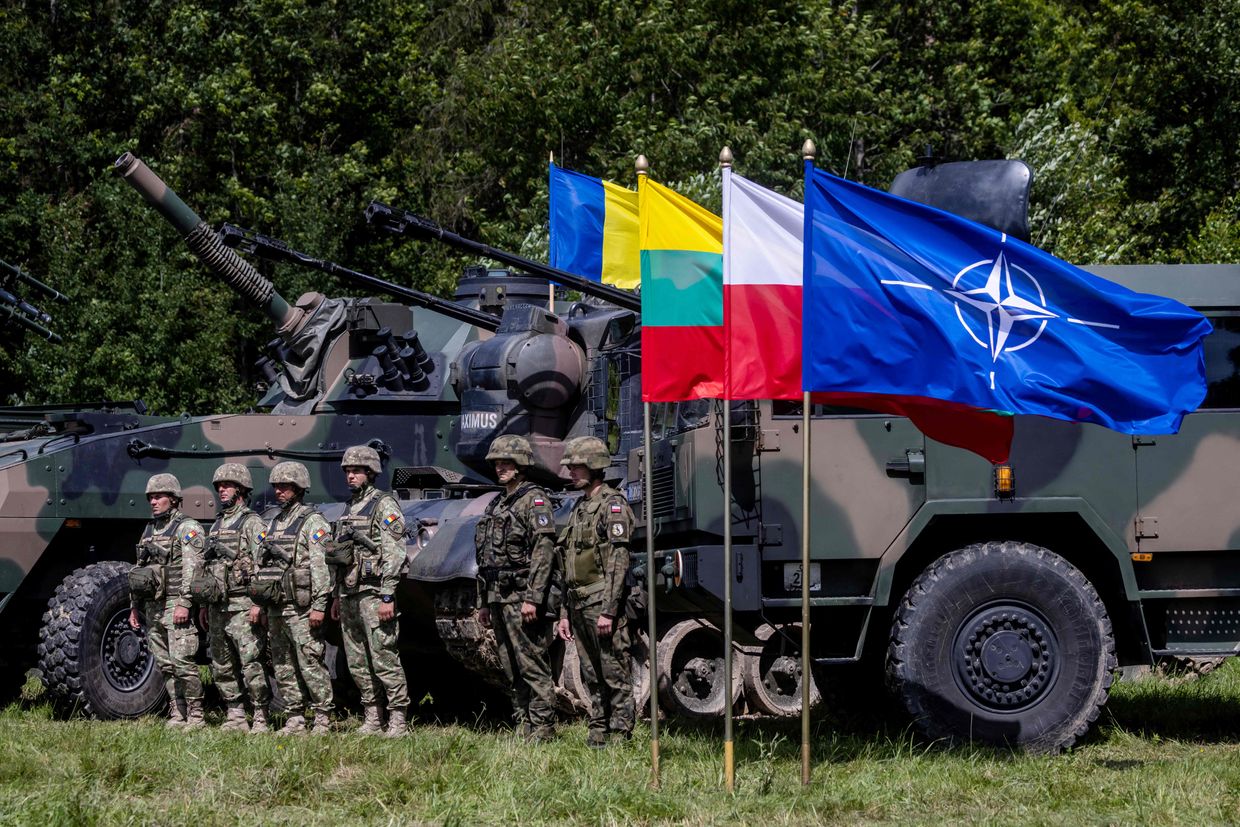
Polish and Romanian military personnel stand next to military vehicles and a NATO flag on the sidelines of a press conference near the Suwalki Gap in Poland on July 7, 2022. (Wojtek Radwanski/AFP via Getty Images)
Trump’s return to office is Europe’s wake-up call. The idea of “strategic autonomy” has circulated in policy circles for years, but Europe can no longer afford to keep it theoretical. Europe already has what it takes. It boasts a tier-one defense industry with advanced R&D that rivals the capabilities of the U.S., China, and Russia. The talent, resources, and infrastructure are all in place. With the right focus, Europe’s defense industry can deliver the advanced technologies and autonomous capabilities required to protect the continent. If Europe accelerates its initiatives, strategic autonomy can shift from a policy concept to a concrete reality.
Ukraine’s resistance to Russian aggression makes Europe’s role in its defense indispensable, especially as American support becomes uncertain. Ukraine is not only defending its sovereignty but also the stability of Europe. This moment tests Europe’s resolve — not just in its support for Ukraine, but in its commitment to its own values and regional stability. Europe must act independently. The stakes are high: a retreat would hand Putin a critical advantage in his obsessive quest to redraw borders by force.
The implications extend beyond Ukraine. With Trump’s administration setting new precedents, other authoritarian states may be emboldened to challenge Europe. China, Iran, and others may interpret diminished U.S. involvement as an invitation to advance their interests in ways that threaten European stability. Europe’s leaders must confront these growing risks, prepared to act decisively with or without U.S. backing.
The lesson from Ukraine is stark: alliances are powerful, but self-reliance is essential for survival. Europe’s defense future cannot be outsourced. This is a test of political will and unity. As Europe faces its greatest threat in a generation, it’s time to rise to the occasion. The era of dependency is over — our sovereignty demands it, our future depends on it.
Europe has the talent, the resources, and the drive to make this vision a reality. The time has come for European leaders to adopt a security strategy that reflects the gravity of the moment. This isn’t just about adapting to an unpredictable U.S. stance; it’s about establishing a Europe that can defend itself, stand with Ukraine, and lead in a world of shifting alliances. Security isn’t a budget line item; it’s the bedrock of our shared European future and a free Ukraine. It’s time to make it a priority.
Editor’s Note: The opinions expressed in the op-ed section are those of the authors and do not necessarily reflect the views of the Kyiv Independent.
Submit an Opinion Introducing official merch from the Kyiv Independent Shop now
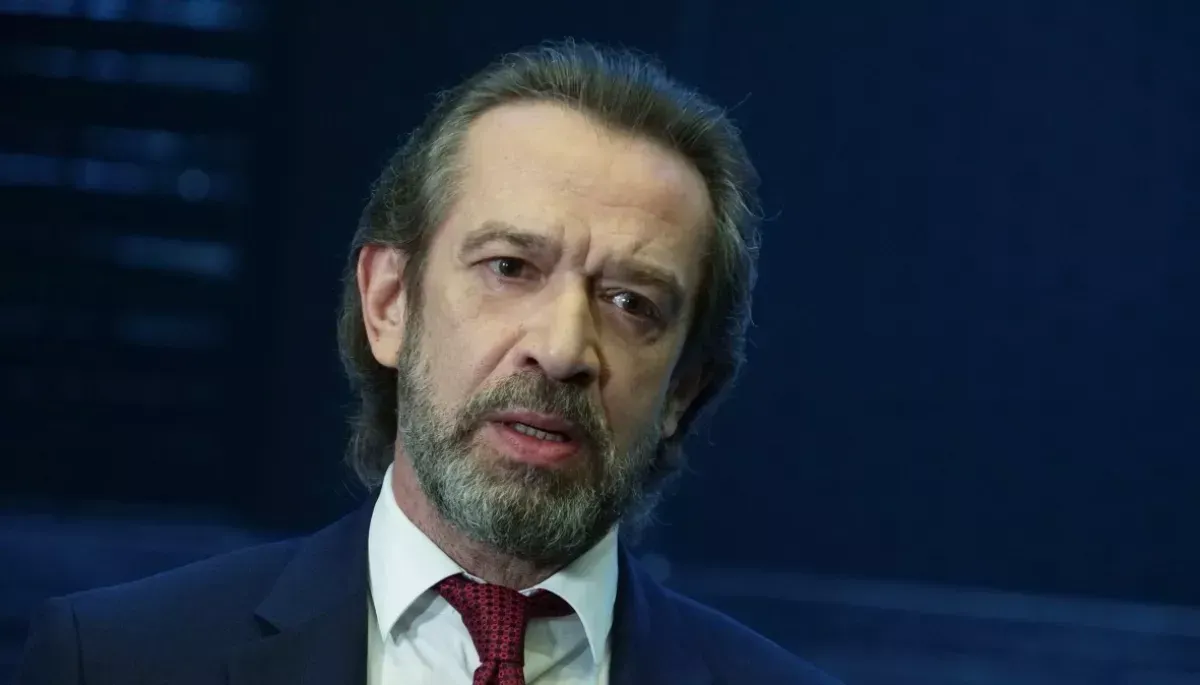
The court sentenced Russian actor Vladimir Mashkov to 10 years in prison in absentia for propaganda of war and encroachment on the territorial integrity of Ukraine. The propagandist's elite apartment in Odesa was confiscated.
Russian actor Vladimir Mashkov, who praised Russia's war against Ukraine, was sentenced in absentia to 10 years in prison. His 100 m² apartment in an upscale neighborhood on the coast of Odesa was also confiscated. UNN reports this with reference to the SBU.
Details
Since the actor is hiding in Russia, the trial took place in a special court proceeding in absentia (in the absence of the accused).
According to the SBU, Mashkov is part of the Kremlin's pool of propagandists and often speaks at mass rallies in support of a full-scale war against Ukraine.
In December 2023, he was appointed co-chairman of Putin's "election headquarters" in the so-called presidential elections in Russia. At that time, Mashkov traveled around Russia and the temporarily occupied regions of Ukraine, where he reportedly promoted racism and glorified the occupation groups of the aggressor country.
In particular, during pro-Kremlin "concerts and rallies" he called for the continuation of missile and bomb attacks on civilian infrastructure in Ukraine.
The court found Mashkov guilty under two articles of the Criminal Code of Ukraine:
part 2, Article 210 (encroachment on the territorial integrity and inviolability of Ukraine);
Article 436 (propaganda of war).
Comprehensive measures are currently being taken to bring the convict to justice, the SBU said.
Singer and actor Jared Leto is planning a tour of the cities of the aggressor country and UkraineOct 13 2024, 09:58 AM • 73164 views
The death toll from Russia's strike on Odesa on 18 November has risen to 11. An injured man passed away in hospital.
Source: Hennadii Trukhanov, Mayor of Odesa
Quote: "Unfortunately, the number of people killed in the attack on Odesa on 18 November has increased to 11. A man died in the city hospital. Doctors desperately fought to save his life, but his injuries were critical. My sincere condolences to his family and friends."
Background:
The Russian military launched a missile attack on Odesa on 18 November in the afternoon. Early reports said 10 people were killed. Among them were seven police officers, a medic worker and two local residents.
The French Foreign Minister called Putin's decision to lower the threshold for a nuclear strike "just rhetoric." The change in the doctrine occurred after Ukraine used ATACMS missiles.
French Foreign Minister Jean-Noel Bara on Wednesday called Russian dictator Vladimir Putin's decision to lower the threshold for a nuclear strike simply "rhetoric," Reuters reports, UNN writes.
Details
"We are not intimidated," he said in an interview with France 2 TV channel.
Putin approved a change in the nuclear doctrine, as Ukraine used American ATACMS missiles to launch deeper strikes on Russian territory, using a recently issued permit from the administration of US President Joe Biden, the newspaper notes.
EU reacts to Russia's new nuclear doctrine: what Borrell saidNov 19 2024, 03:29 PM • 39864 views
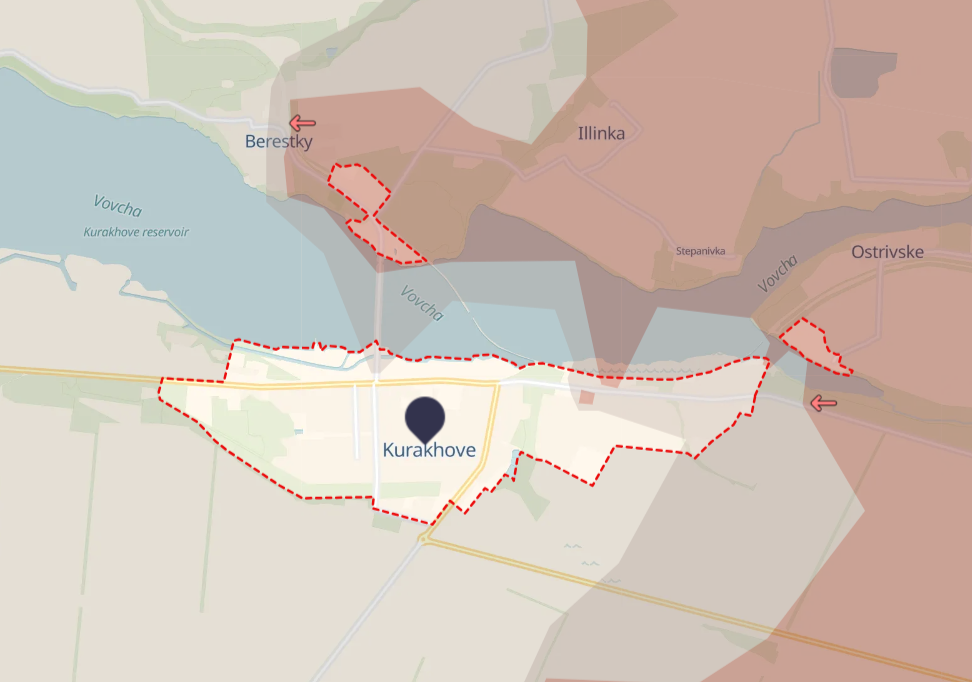
The Russian military conducts up to 10 assaults daily in an attempt to approach the town of Kurakhove in Donetsk Oblast, Oleksandr Nevidomyi, spokesperson of the 46th Airmobile Brigade, told Suspilne on Nov. 20.
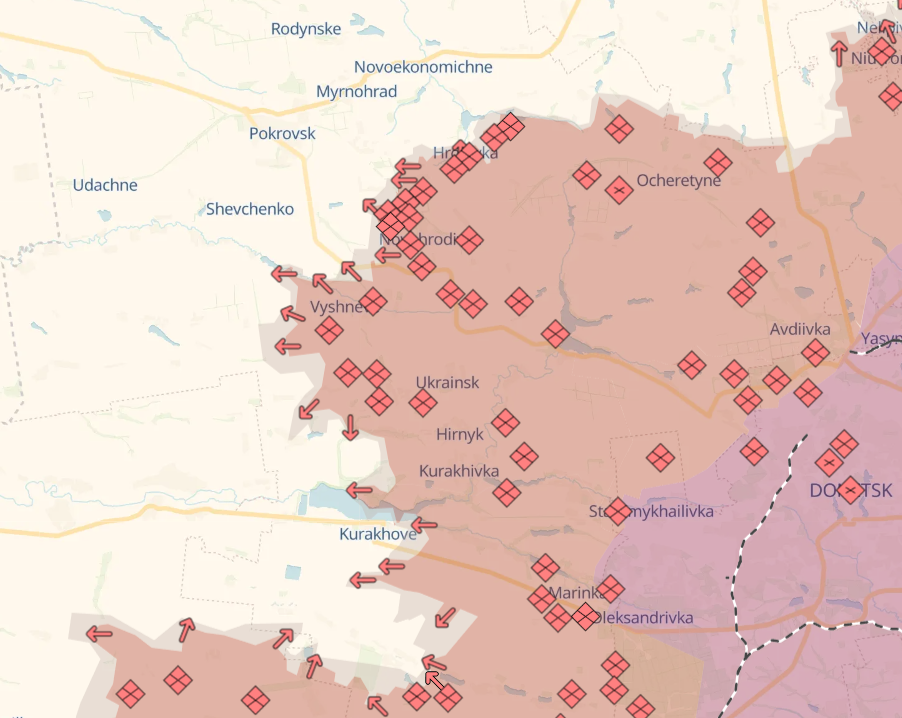
Russia is carrying out intense attacks in multiple sections of the eastern front, with attempts to break through Ukraine's defenses in Donetsk Oblast toward the towns of Kurakhove and Pokrovsk.
"Every day, there can be up to 10 assaults, both by infantry groups and armored vehicles. There are also attempts to cross the river (Vovcha) on rubber boats," Nevidomyi said.
The Ukrainian serviceman added that Russian forces are actively using kamikaze drones, particularly to drop ammunition from a height.
The estimated Russian advance near Kurakhove, Donetsk Oblast, Ukraine, as of Nov. 19, 2024, according to the DeepState monitoring group. (DeepState/OpenStreetMaps)
According to Nevidomyi, the Russian military is based north of Kurakhove at a high altitude, from where they launch drones to attack Ukrainian positions and logistics.
"And, of course, Russian artillery does not stop working," he added.
"They (the Russian military) are recovering. They are getting new troops who are training at the training ground. They have no problems with people, they have a lot of them."
Russian forces damaged the dam holding the Kurakhove Reservoir in Donetsk Oblast on Nov. 11, Governor Vadym Filashkin reported.
Russian forces also claimed to have taken the front-line village of Novoselydivka, which lies some 7 kilometers (4 miles) north of Kurakhove, on Nov. 19.
Ukraine has not commented on the claims, which could not be independently verified.
The Russian advance in Ukraine's east has picked up a long-unseen pace in the past few months, with outgunned and outmanned Ukrainian defenders steadily forced to retreat.
The U.S. election victory of Donald Trump adds to the uncertainties, casting a shadow on Ukraine's ability to hold back Russian forces.
Putin's spokesman denied the possibility of freezing the conflict in Ukraine, despite his willingness to discuss it with Trump. Putin demands that Ukraine abandon NATO and is not ready for territorial concessions.
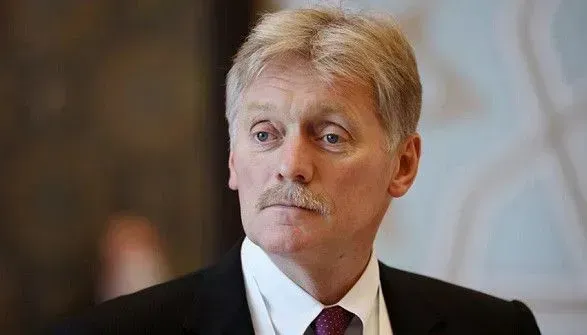
the press secretary of the Russian dictator Dmitry Peskov, commenting on the information about the readiness of Vladimir Putin to discuss with Donald Trump a ceasefire agreement in Ukraine, said that freezing the "conflict" is unacceptable for Russia. This is reported by the Russian media, reports UNN.
The president has indeed repeatedly, or rather constantly, stated that he is ready for contacts and negotiations, this is the first thing. The president has also already said that any option of freezing this conflict will not suit us, it is important for us to achieve our goals, which are well known to everyone
– Peskov said.
Earlier, Reuters reported, citing sources, that Russian dictator Vladimir Putin is ready to discuss with US President-elect Donald Trump a ceasefire agreement in Ukraine, but does not want to make serious territorial concessions and demands that Kiev abandon its ambitions to join NATO.
Peskov also commented on the message of the US embassy about a possible powerful airstrike on Kiev. He said that this issue is related to the course of "Svoi belongs to the exclusive prerogative of the Russian Defense Ministry.
France reacted to the change in the nuclear doctrine of the Russian Federation: what the foreign minister saidNov 20 2024, 11:59 AM • 5525 views
A football finance expert has predicted when the public will “hear” an update regarding Manchester City’s ongoing Financial Fair Play case.
At the start of 2023, the Premier League holders were charged with breaching over 100 FFP rules. They were referred to an independent commission following a four-year probe into their conduct between 2009 and 2018.
Man City have insisted on their innocence. However, if they are found guilty they could be given a huge fine, transfer ban, points deduction or expulsion from the Premier League.
Pep Guardiola‘s side have consistently butted heads with the Premier League while this situation has been ongoing and fought back earlier this year.
If Man City were successful, this had the potential to dramatically alter their FFP situation.
READ: Ruben Amorim already above Mikel Arteta in Premier League manager rankings
City’s APT hearing has already concluded. While the verdict has not forced the rules to be removed, it was deemed that a couple of components of the regulations were unlawful.
‘Aston Villa have rallied behind Manchester City in the intensifying associated-party transaction (APT) row by writing to Premier League clubs “strongly recommending” Friday’s vote is postponed.
‘Telegraph Sport has previously reported how Villa’s ownership has grown increasingly sympathetic towards the Abu Dhabi-owned club’s cause, but a written intervention ahead of the crunch vote is seen by rivals as significant.
‘Three arguments are understood to have been raised by Villa as the club suggest a postponement: fresh potential legal challenges, ongoing uncertainties around the tribunal’s findings and also further changes to the rule book after the introduction of the independent regulator.’
In an interview with Football Insider, former Everton chairman Keith Wyness provided a ‘major update’ on Man City, claiming ‘the public may not hear anything about the 115 charges case until Easter in 2025’.
Wyness said: “I’ve looked in my diary and we’re coming into the 10th week of the hearing now.
“They’d always thought it could take around 12 weeks, so we’re looking at the end of the month or the start of December for it to finish.
“There is then Christmas, deliberations, examining witness statements, etc. So I don’t think we’ll get anywhere close to hearing anything until Easter.
“That will be around March, and that’s when I expect to hear about some movement.
“It certainly seems to be dragging on forever. It’s a lot of evidence, a lot of examination – but we’re getting towards the end.”




 The Kyiv IndependentTom Keatinge