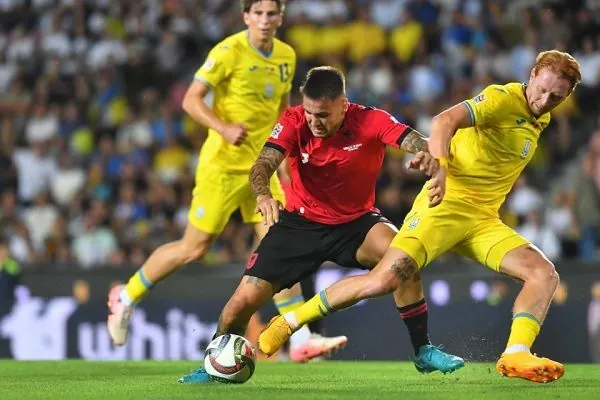
Today at 21:45, the Ukrainian national team will play Albania in the last match of the Nations League. A victory could put the team in second place in the group and give them a chance to be promoted to League A.
Today, at 21:45 Kyiv time, the Ukrainian national team will play its final Nations League match of the year against Albania in Tirana at the Air Albania Stadium. UNN decided to tell you where to watch the match, the starting lineups, and who is the bookmakers' favorite.
Ukraine has never played in this arena, but back in 2005, at the Kemal Stafa Stadium, where Air Albania was built, the Ukrainian national team played its only match on Albanian soil, defeating the hosts in the qualifiers for the historic 2006 World Cup 2-0.
The match can be watched live on the Megogo platform, and the Ukrainian national team will be broadcast live on T2 digital broadcasting by regional Suspilne TV channels. It is already known that Ukraine will play the match in a yellow kit. The Albanians will play in red.
For the match against the Albanians, the head coach of the national team made 4 substitutions: Anatoliy Trubin in goal, Ilya Zabarny and Mykola Matvienko in the center of defense, Vitaliy Mykolenko and Yukhym Konoplya on the flanks of defense. Ivan Kalyuzhnyi will play in the support area instead of Volodymyr Brazhko, Heorhiy Sudakov and Oleksandr Zinchenko, who replaces Mykola Shaparenko, will start in the center of midfield. Mykhailo Mudryk and Oleksiy Hutsulyak, who replaces Oleksandr Zubkov, will start on the attacking flanks. Roman Yaremchuk will play at the center of the attack instead of Artem Dovbyk.
Forward Vladyslav Vanat, who missed the previous match against Georgia due to injury, was not included in the squad.
The day before, the national team coach Serhiy Rebrov said that Vanat was recovering, but did not say for sure whether he would be able to take part in the match.
"Vanat is recovering. We will see. There are still 24 hours. Vlad came to the national team with a desire to play. We did not understand how long it would take him to recover from the injury. He wants to play for our country. There is still time, and I hope he will be ready," Rebrov said.
Ukraine, at the very least, needs to beat the Albanians to overtake them in the standings, which will allow it to take third place, which will allow it to play a match for retaining its League B registration with the team that took second place in League C.
Also, if the Czech Republic defeats Georgia and Ukraine defeats Albania, our team will take the second place, which will allow us to play in the butt matches for the A League against the team that took third place in the A League.
In the previous match, the Albanian national team narrowly defeated Ukraine (2:1). This victory was the first in the history of Albania in a confrontation with the Ukrainians. In total, Ukraine and Albania played 7 games, in which, as already mentioned, the Albanians won once, one was a draw, and Ukraine won the rest.
In this confrontation, bookmakers give a slight advantage to Ukraine – 2.3 odds. Albania's odds are 3.2, and the draw is 3.25.
The day before, the national team's forward Roman Yaremchuk emphasized that the Albanian national team is a pretty powerful team, but the players will focus on winning.
"We are playing away from home, and such matches are always different from home matches. Albania is a pretty powerful team. They have a good striker, a good defense line, and discipline in defense. We also have enough skilled players who can decide the fate of the match. We will focus on the fact that we need to win. We hope that we will have scoring chances to realize them. We want it to have a good psychological impact on us, so that each player relieves a little stress, feels confident and shows his best game," Yaremchuk said.
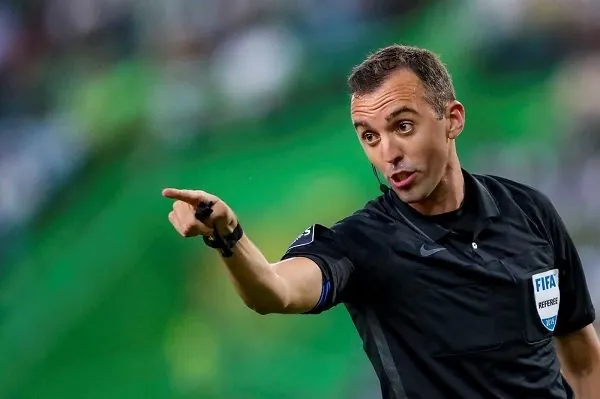
Portuguese João Pinheiro, who has already worked with Ukraine and Ukrainian teams, has been appointed as the main referee for the match. In particular, in September 2022, he officiated at the Armenia-Ukraine Nations League match, in which Ukraine recorded a 5-0 victory.
In early October of this year, the Portuguese refereed the Champions League group stage match between Shakhtar Donetsk and Italian side Atalanta, in which the Donetsk team suffered a crushing 0-3 defeat. In total, the Portuguese has already refereed six matches involving Ukrainian teams.
Recall
Ukraine's national team drew with Georgia in the fifth round of the UEFA Nations League group stage match. The match took place at the Adjarabet Arena in Batumi.
The President confirmed that Ukraine has long-range drones of its own production and ATACMS. In 2025, it is planned to produce 3,000 cruise missiles and 30,000 long-range drones.
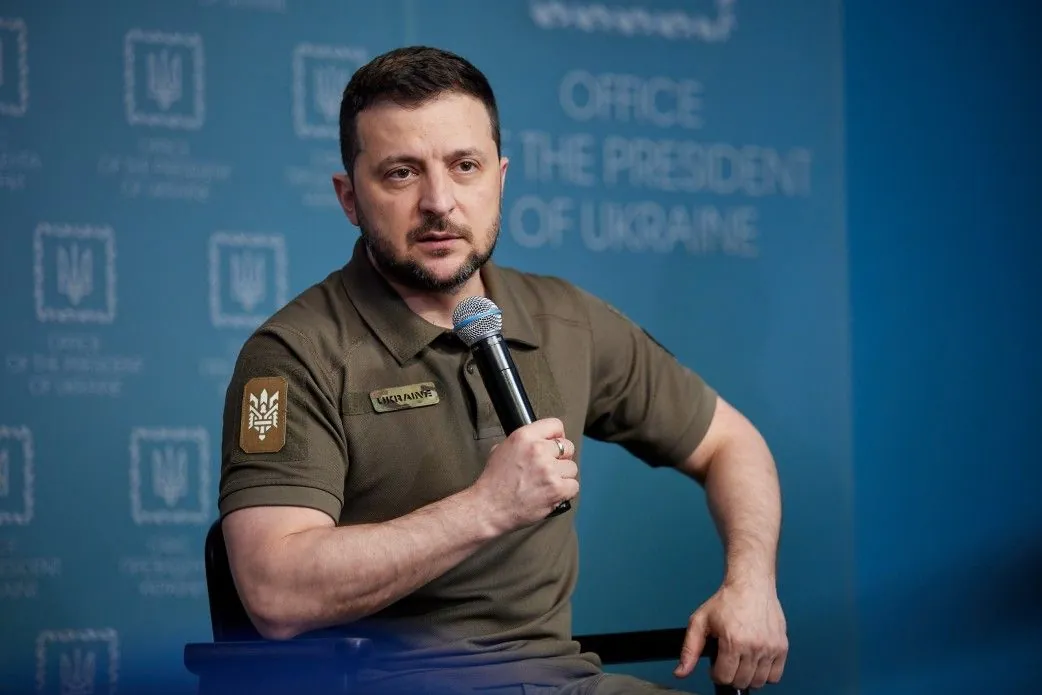
Ukraine has long-range drones of its own production, the Long Neptune, and now the Atacams – all of which will be used. This was stated by President of Ukraine Volodymyr Zelenskyy during a joint press conference with Prime Minister of Denmark Mette Frederiksen, UNN reports.
"Ukraine has long-range capabilities, we have long-range drones of our own production, we have Long Neptune and more than one. Now we have Atacams, and we will use all of this," Zelensky said.
Addendum
Zelenskyy set a task to produce 3,000 cruise missiles and 30,000 long-range drones next year.
US and Ukrainian officials told The New York Times that two days after US President Joe Biden authorized Ukraine to use US-made long-range weapons to strike targets in Russia, the first strikes were carried out.
On November 19, the 67th arsenal of the Russian Armed Forces in the Bryansk region was hit. The warehouse stored military weapons, including artillery ammunition from the DPRK, CABs, anti-aircraft missiles and MLRS ammunition. The damage was confirmed by the General Staff of the Armed Forces of Ukraine. There were 12 secondary explosions and detonations in the target area.
The Russian Defense Ministry announced an attack by US-made ATACMS missiles on a military facility in the Bryansk region and the alleged downing of five missiles.
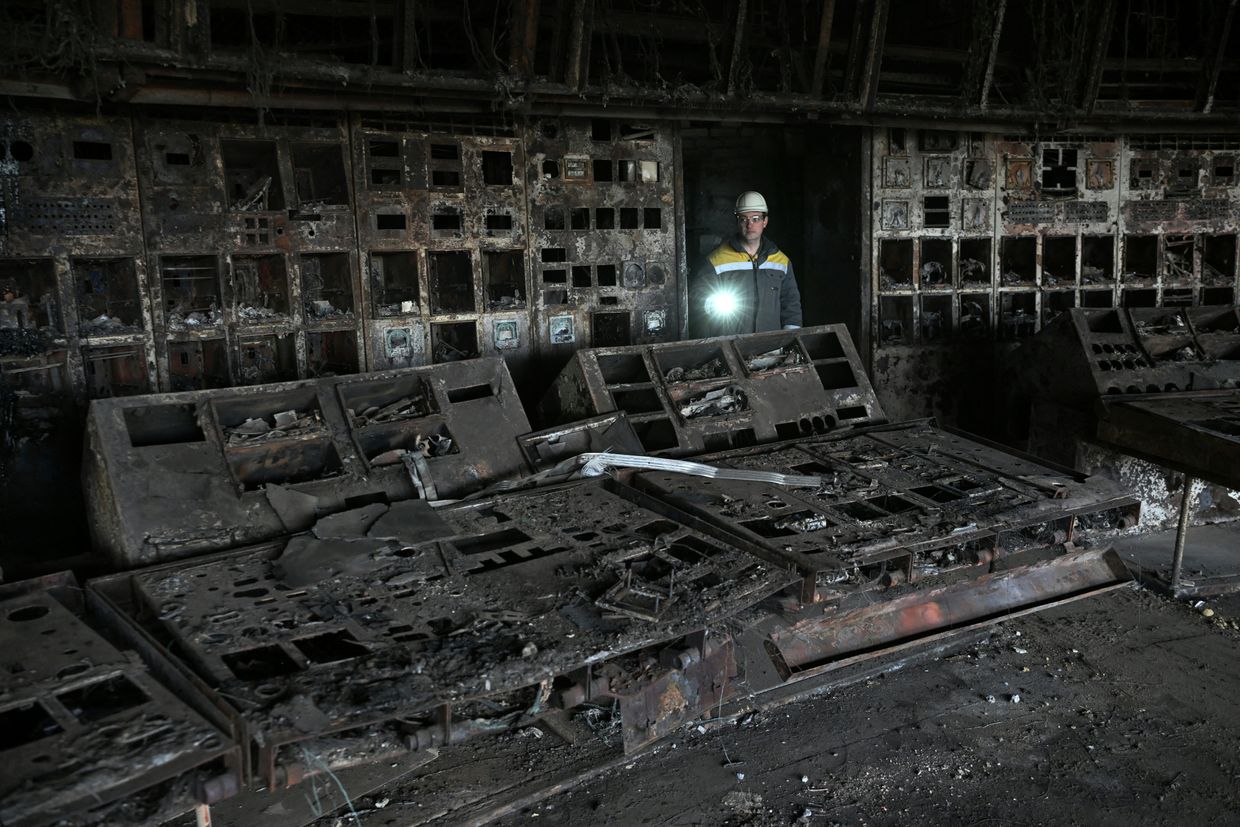
Over nearly 1,000 days of full-scale war, Russia has attacked Ukraine’s energy system more than 1,000 times. Despite this relentless onslaught, Ukrainian power engineers have achieved a historic feat: maintaining energy supply stability by repeatedly repairing equipment, sometimes three or four times after consecutive strikes.
This remarkable effort has not only ensured light and heat for Ukrainian homes but has also created a model of resilience and expertise that will be studied by future generations and international energy experts alike.
The energy system is stable and prepared for the heating season under normal conditions. However, one constant risk looms: massive Russian attacks on energy infrastructure. The only effective defense remains bolstering Ukraine’s air defenses.
Russia’s primary goal in targeting Ukraine’s energy infrastructure is to create social unrest and destabilize the nation’s rear by cutting off electricity and heating — critical for household comfort and economic stability.
Since 2022, the nature of these attacks has evolved. Early strikes reflected pre-war planning and Russia’s initial military strategy. Over the course of 2023 and 2024, however, the attacks grew more widespread and destructive, with Russia employing more advanced weapons.
This year alone, 9 GW of power generation capacity from thermal, combined heat and power, and hydro plants have been disabled. During the largest attack, on Aug. 26, 236 missiles and drones targeted Ukraine’s energy infrastructure. Russia used its most expensive weaponry, including ballistic missiles and cluster munitions valued at over $1 billion, damaging substations critical to nuclear power plants. The International Atomic Energy Agency (IAEA) has since expanded monitoring at these facilities.
In 2023, after extensive destruction, Ukraine began a robust repair campaign and received critical support from international partners. Spare parts from decommissioned European power plants, notably those supplied by Baltic nations, played a vital role in restoring operations quickly, as the production time for new equipment is lengthy.
The European Union Delegation to Ukraine launched a platform to provide surplus energy equipment from EU warehouses, offering essential short-term solutions. Additionally, electricity import capacity has increased from 200 MW to 1.7 GW, thanks to prolonged negotiations with EU governments and the G7. This milestone was reached just before the heating season commenced.
The foundation of Ukraine’s preparedness lies in the restoration of power generation and transmission equipment that could be brought back online before the heating season. This effort included the largest repair campaign in the history of independent Ukraine. Notably, our nuclear power plants (NPPs), which supply around 60% of the country’s electricity, are set to operate at full capacity this winter, with nine power units in operation in Ukraine-controlled areas — despite the Russian occupation of the Zaporizhzhia NPP, Europe’s largest nuclear plant.
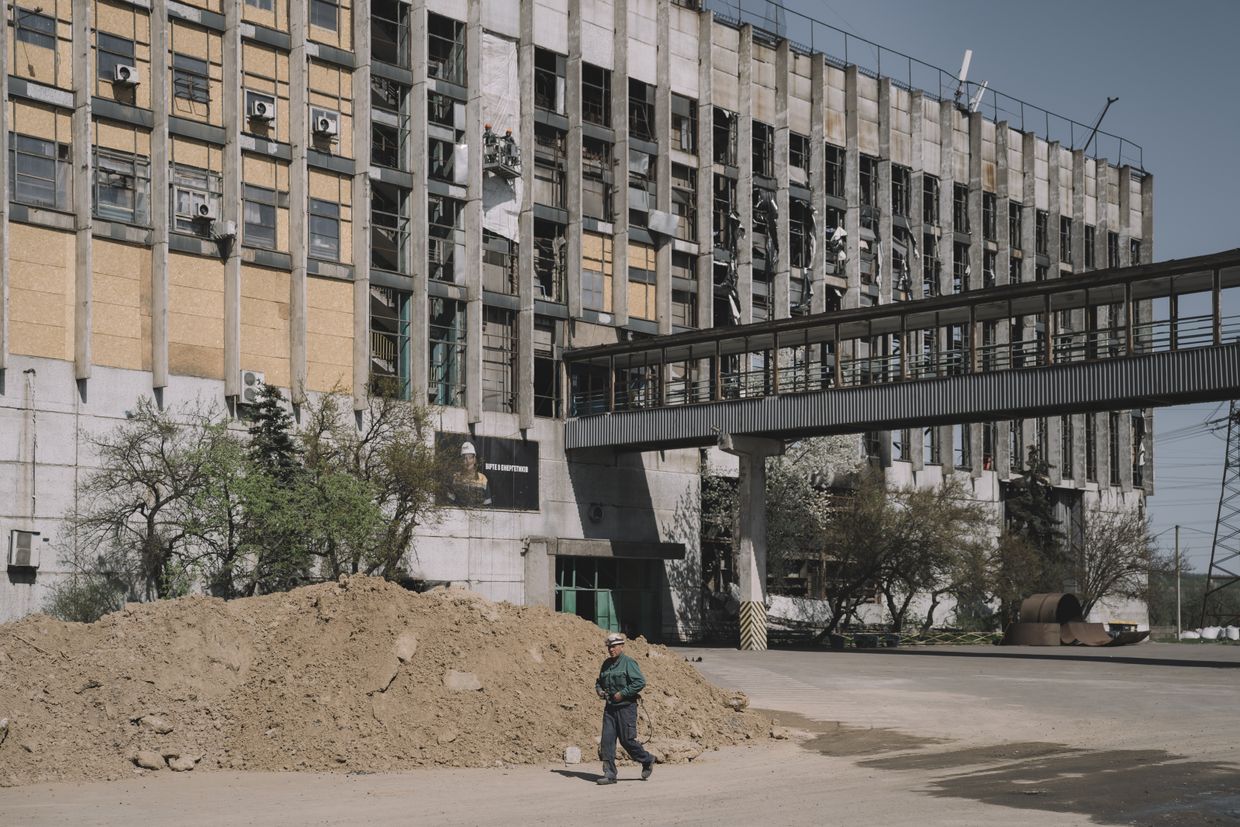
A thermal power plant worker stands outside a thermal power plant that was extensively damaged after a Russian missile attack at an undisclosed location in Ukraine, on April 12, 2024. (Andrew Kravchenko/Bloomberg via Getty Images)
A critical factor in meeting demand during the 2024/2025 heating season was the increase in electricity imports. Following assessments of the decisions made in 2023 and their effectiveness, as well as high-level negotiations with EU partners and the European Commission, we successfully raised our import capacity to 2.1 GW on a commercial basis, with an additional 250 MW available for emergency assistance.
While the Power System Integration Action Plan, adopted in 2019, outlined a five-year timeline for technical and legal measures to integrate Ukraine into the EU’s energy system, Ukraine has accelerated this process and is now de facto integrated, becoming a full member of the EU energy network.
Another vital component of our energy strategy is the expansion of distributed generation across the country. The government has created favorable conditions for this development, implementing key decisions to simplify construction and environmental regulations and streamline the process for connecting to electricity and gas networks.
Moreover, a series of financial measures have been introduced to support households, condominium associations (COAs), and public utilities in building their own generation facilities. These include interest-free loans for households and low-interest loans for utilities, as well as a zero-rate import duty and VAT on energy goods used for electricity generation. These measures have made it more affordable and efficient to purchase and install the necessary equipment without excessive bureaucracy.
In parallel, a collaborative initiative led by the Office of the President, Ministry of Energy, Ministry of Regional Development, and regional authorities is underway to develop “regional energy independence passports.” This effort will assess local energy consumption and identify the needs for backup power, particularly for critical infrastructure. It also takes into account changes in consumption patterns due to internal displacement, population migration, and damage caused by the war.
These passports will focus on the development of local gas and electricity networks, ensuring that solutions like solar panels, geothermal energy, wind power, and gas generation are tailored to the region's specific needs and climate conditions.
As a result of these efforts, nearly 2 GW of new generation capacity is already being commissioned, largely driven by commercial and business interests. Simultaneously, international donors have provided local governments and utilities with a significant number of gas generators, cogeneration units, and mobile boiler houses to ensure backup power for critical infrastructure.
The success of distributed generation depends on a coordinated effort among local communities, regional administrations, national authorities, and energy companies. This integrated approach is key to ensuring economic independence for communities and fostering energy resilience.
Despite the challenges ahead, we have prepared for the 2024/25 heating season. Russia will persist in its efforts to plunge Ukraine into darkness and cold — as it did in its 10th mass attack on Ukraine’s energy infrastructure on Nov. 17 — but thanks to the tireless work of power engineers, the collaboration of central and local authorities, and unwavering international support, we are prepared to keep Ukrainian homes warm and well-lit throughout the winter.
Trust in the power engineers — they have done more than could have been imagined.
Editor’s Note: The opinions expressed in the op-ed section are those of the authors and do not necessarily reflect the views of the Kyiv Independent.
Submit an Opinion Introducing official merch from the Kyiv Independent Shop now
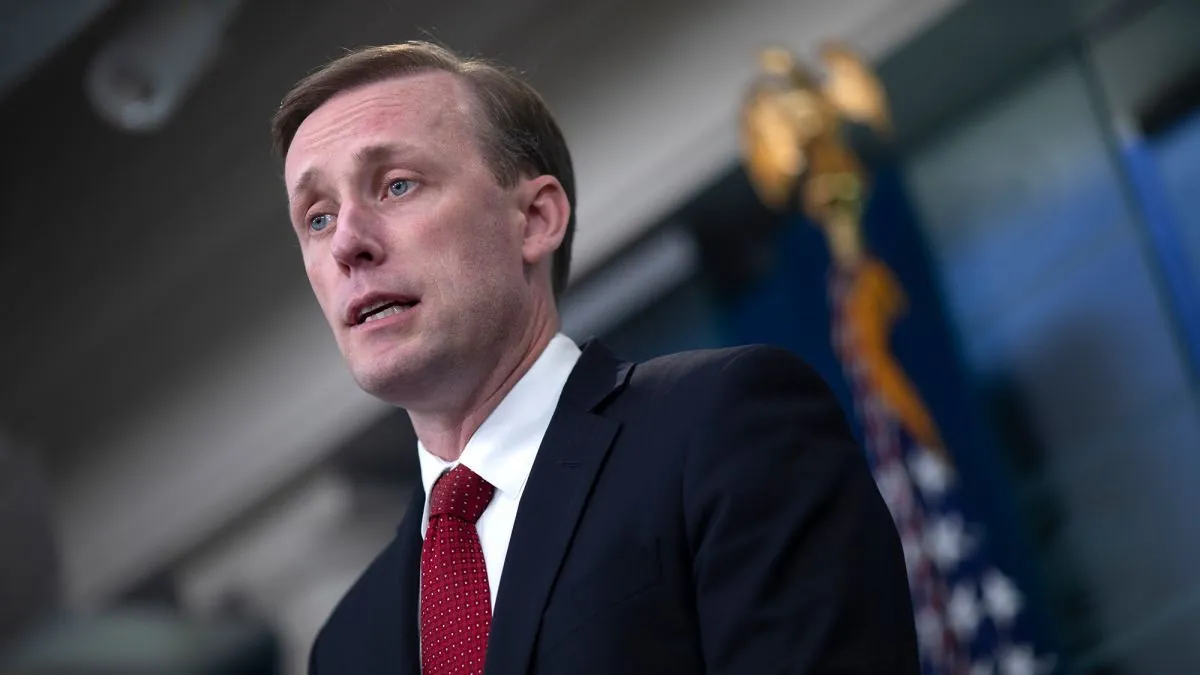
The US National Security Advisor said that Ukraine has problems with mobilization. According to him, no weapon system is decisive without sufficient manpower.
Ukraine has already received a large number of different American weapons, but still finds itself in a difficult situation on the battlefield. The reason for this is problems with mobilization. This was stated by US National Security Advisor Jake Sullivan to PBS News, UNN reports.
"We provided tanks. We provided F-16s. We provided HIMARS. We have provided Patriot systems. We have provided many things that you had previously said we would not provide. Today, Ukraine is in a difficult situation on the battlefield, which shows that there is no direct line between these weapons systems and how it happens on the battlefield. Where is the most direct line between Ukrainian performance and input resources? It's about mobilization and manpower," Sullivan said when asked if the U.S. could have done anything differently in supporting Ukraine – given that Ukraine is now losing more territory than ever before this year.
He emphasized that the United States did not see a significant difference on the battlefield after it gave Ukraine tanks and F-16s.
"In our opinion, there is no single weapon system that matters in this battle. It's about manpower, and Ukraine, in our view, needs to do more to strengthen its lines in terms of the number of forces it has on the front lines. It's about ammunition and all the other things that affect a country's national strength, its morale, its cohesion, its industrial base," Sullivan added.
Recall
During a meeting with President-elect Donald Trump at the White House , US President Joe Biden emphasizedthat the United States' continued support for Ukraine is in the interests of US national security.
Australian scientists have recorded the highest coral mortality in 39 years of observations, with up to 72% of corals dead on 12 reefs. At one northern site, about a third of hard corals died due to rising water temperatures.
Parts of the Great Barrier Reef have experienced the highest coral mortality in the history of observations. This is stated in a study conducted by Australian scientists, UNN writes with reference to CBS News.
Details
The Australian Institute of Marine Science reported that a study of 12 reefs found up to 72% of dead corals due to.
In one northern section of the reef, about a third of the hard corals have died, the "largest annual decline" in 39 years of government monitoring.
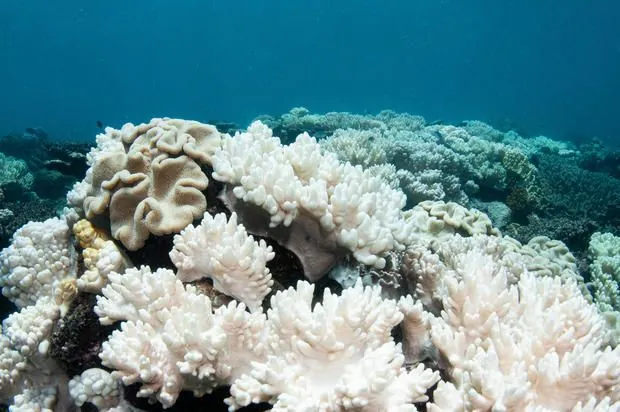
The Great Barrier Reef, often referred to as the largest living structure in the world, is almost 2,000 kilometers of tropical coral containing stunning biodiversity. But recently, corals have been fading, turning a sickly shade of white.
Bleaching occurs when water temperatures rise and corals expel microscopic algae known as zooxanthellae to survive.
If the high temperatures persist, the coral can eventually turn white and die.
This year, it was confirmed that this is the fifth massive coral bleaching on the reef in the last eight years.
But the latest study also found that the fastest-growing species of coral known as acropora is dying the most. This coral grows quickly, but it is also one of the first to discolor.
Lead researcher Mike Emslie told public broadcaster ABC that last summer was "one of the most severe events" on the Great Barrier Reef, with heat stress levels exceeding all other indicators.
Richard Leck, Head of Oceans at the World Wildlife Fund in Australia, said that the Great Barrier Reef can recover, but there are limits to its sustainability.
It can't keep getting hit like this. We are rapidly approaching a tipping point
– He said.
Leck added that the study area was "relatively small" and expressed concern that when the full report is published next year, "there will be a similar mortality rate.
He said that the study's findings confirm the need for Australia to commit to reducing emissions by at least 90% from 2005 levels by 2035 and to phase out fossil fuels.
Recall
Scientists have long identified that global warming is having a negative impact on coral reefs, and recent studies have shown that climate change will cause major damage to the ocean, with consequences for nature and humanity.
As we mark 1,000 days since Russia launched its full-scale invasion of Ukraine, members of the Kyiv Independent’s staff have paused to reflect. These reflections offer a glimpse into the profound impact of war — not only on a nation’s struggle for survival but on those who bear witness to its unfolding.
Francis Farrell
War reporter
Although I was in Lviv when the full-scale war started, the first months of the war were something I experienced mostly from the outside — through news, at a safe distance from the front line. Those first months had a frantic, superlative energy to them: a time of heroes and legends, but also of horrors and depravity we thought impossible in the 21st century.
I joined the Kyiv Independent during the season of liberations — a time that remains the most powerful experience of my life. Light and dark existed together: the unbridled jubilation of Kherson’s liberation made possible by what Russia had put the city through — the tortured, the deported, the stolen, the murdered. Even now, my iPhone suggests musical slideshows of “The Great Outdoors: Autumn 2022,” filled with pictures of the mass graves in Izium.
Light and dark existed together: the unbridled jubilation of Kherson’s liberation made possible by what Russia had put the city through.
Back then, we all thought that the next big counteroffensive was just around the corner, and we screamed at the West to act with greater courage and urgency. We knew the road ahead wouldn’t be easy, but we didn’t anticipate what came next.
First, Bakhmut: Russia’s dress rehearsal for wave attacks paired with the complete annihilation of cities. Then, the summer counteroffensive, which had taken on such a biblical weight in the lead-up that it left me with a pit in my stomach before it even started.
The counteroffensive taught me some important lessons — the greatest being the danger of wishful thinking and the necessity of clinging tightly to reality while navigating the darkness of war. Since then, the darkness has only deepened: realizing the West’s fear of Ukrainian victory, reckoning with Kyiv’s failure to fix internal issues in the military that could turn a stable defense into collapse, and understanding that no amount of individual heroism can stop a glide bomb.
Now, winter is coming, bringing with it what feels like a reckoning for Ukraine and the free world. It’s a bit hard to see the light at the end of the tunnel at the moment. But, in the meantime, there’s no shortage of light to be found around the place — in Ukrainians, and especially in Ukrainian soldiers, thanks to whom I can still type this out in free Kyiv.
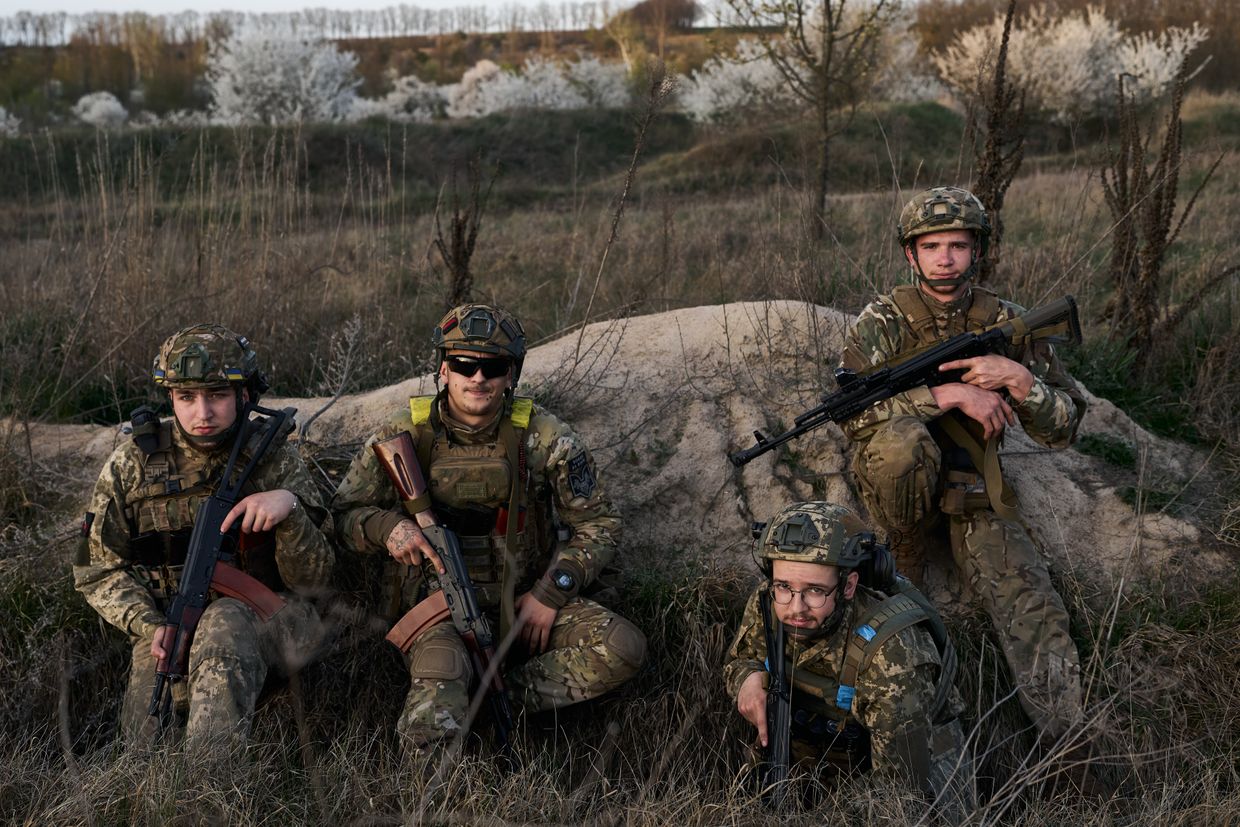
Young soldiers of the "Da Vinci Wolves" battalion who recently joined the Armed Forces of Ukraine pose in ammunition during orientation training as Ukrainian soldiers undergo training before being sent to the front in Ukraine on April 8, 2024. (Kostiantyn Liberov/Libkos/Getty Images)
Anna Belokur
Social media manager One thousand days ago, I woke up in Helsinki, Finland, to a phone full of messages. The top one just said, “I’m so sorry.”
My friends and I joined hundreds of others holding signs outside the Russian embassy, standing in the snow and dark after the sun set in the early afternoon. Every time someone peeked through the embassy’s blinds, the crowd would scream angrily.
Finns are deeply reserved people who rarely make eye contact with strangers, but in the days that followed, other dog walkers began nodding at me and exchanging startled looks when cars backfired. There was a heightened awareness that Finland’s trademark peacefulness is a gift, not a guarantee.
There was a heightened awareness that Finland’s trademark peacefulness is a gift, not a guarantee.
Finns — like Ukrainians, Latvians, and a handful of others — have a joke: they don’t have to deal with deadly insects or hurricanes, but they suffer from the greatest natural disaster of all — sharing a border with Russia.
Finland has defenses woven into every part of society, from the spots under ordinary bridges designed for detonating explosives to the mandatory year of military service required of every Finnish man.
One man told me that training exercises are always based on the assumption of an attack from the east. I don’t know a single Finn who wants to fight, but I also don’t know a single one who isn’t prepared to.
Feb. 24, 2022, is the only time I ever heard Finns scream in anger. Writing this from Kyiv 1,000 days later, I draw strength from the fact that Ukraine still has allies who understand what’s at stake. These are nations that have closed their borders with Russia, advocated against any form of appeasement, and trained to defend against attacks from the east. Just as I wasn’t alone that day, we aren’t alone now.
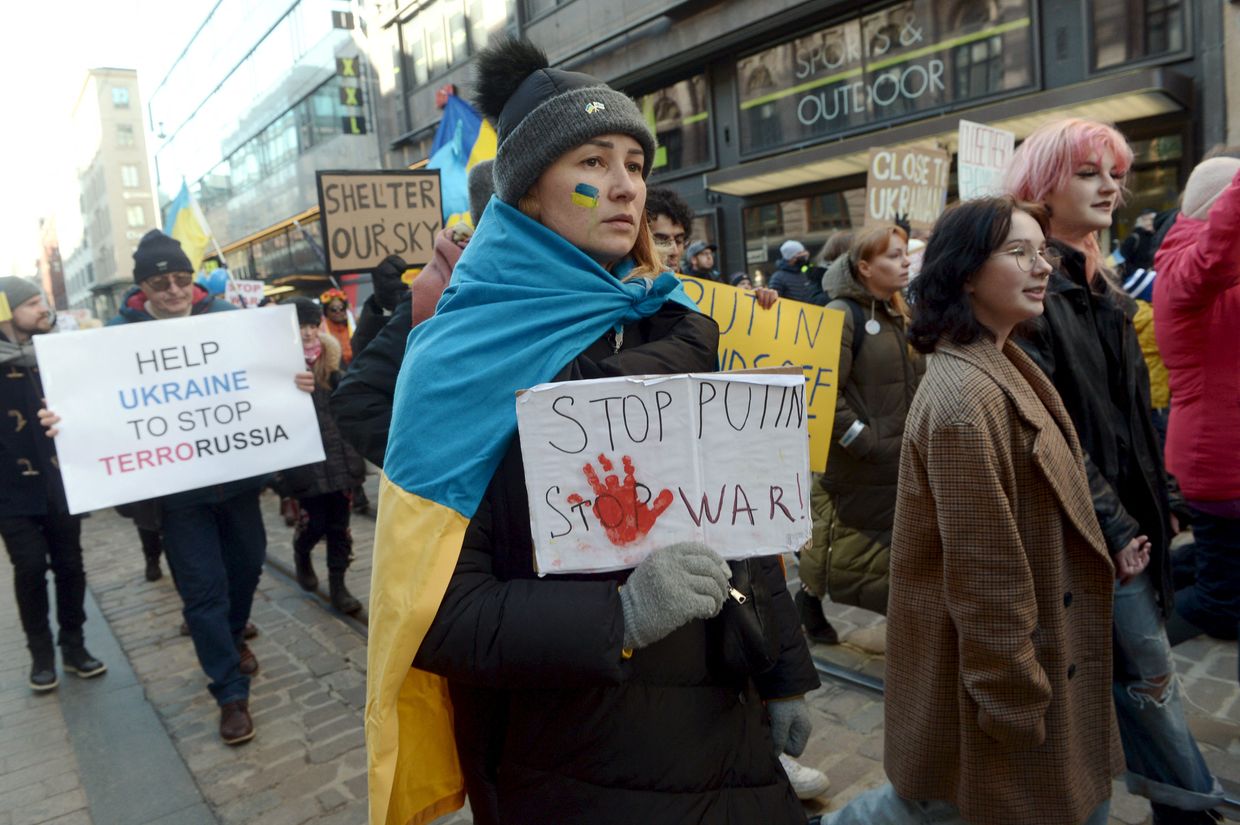
Protestors show their support for Ukraine as they take part in a demonstration against Russia's invasion of Ukraine, in Helsinki, Finland, on March 5, 2022. (Mikko Stig / Lehtikuva / AFP via Getty Images)
Anastasiia Mozghova
War Crimes Investigations Unit’s executive producer
Today marks the 1,000th day of the full-scale invasion, but the war in my country has shaped nearly half my life.
When the war began in 2014, I was in middle school. Growing up in Donetsk Oblast, I remember those early days vividly — a child surrounded by adults grappling with the reality of Russian terror.
The news of the full-scale invasion came while I was in university in Bulgaria. By then, the decision to return to Ukraine after graduation felt natural. Now an adult, it's my turn to confront the terror.
Now an adult, it's my turn to confront the terror.
I do so as part of the Kyiv Independent’s War Crimes Investigations Unit. In these 1,000 days, the Russian army has committed thousands of war crimes. My team works tirelessly on cases of sexual violence, torture of prisoners of war, civilian murders, and child deportation.
People often ask if I’m exhausted by the constant exposure to such horror. My answer: my motivation outweighs the exhaustion. Justice is an essential part of Ukraine’s victory. It will come when the voices of war crimes victims are heard, and the names of perpetrators are spoken clearly and without fear.
Ultimately, our unity and determination will decide whether my children’s generation will have to face Russian terror. My hope is that they never will.
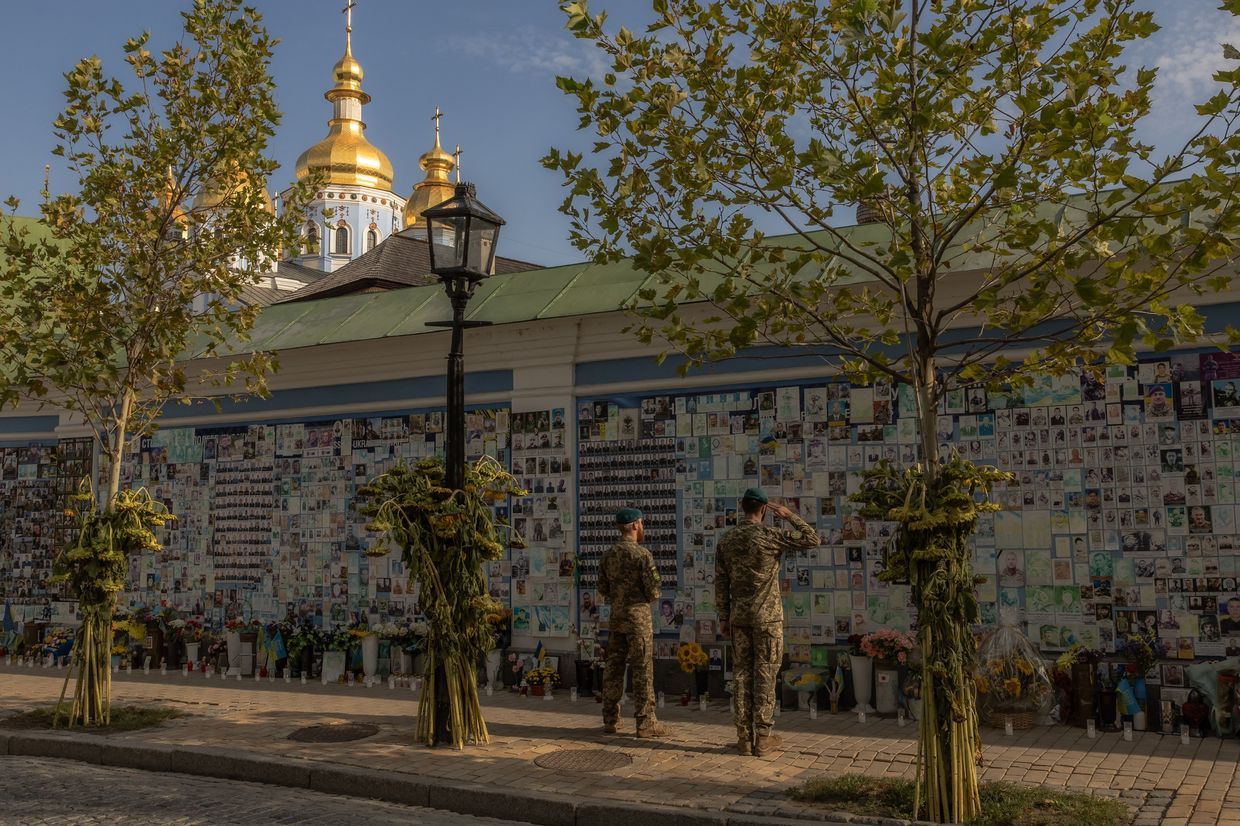
A Ukrainian soldier salutes to honor fallen military personnel at the "Wall of Remembrance of the Fallen for Ukraine" in Kyiv, Ukraine, on Aug. 29, 2024, during the Day of Remembrance for Ukrainian Defenders. (Roman Pilipey / AFP via Getty Images)4o mini
Asami Terajima
War reporter
A year ago today, I received a Facebook message from a friend serving in the mortar unit of the Ukrainian military’s 93rd Separate Mechanized Brigade near embattled Chasiv Yar.
“We have suffered a great tragedy today,” he said.
I felt a chill, already dreading what he might say. I immediately asked what had happened. I was scrambling to finish packing for a work trip to Kherson, but my mind spiraled toward worst-case scenarios.
After a pause, he replied: “Three 200s.” The military code for killed in action in Ukraine.
Any loss is devastating, but you always hope it’s not someone close. I opened WhatsApp to check who had been online last and realized my dear friend Vladyslav hadn’t logged on since early morning.
I soon discovered that three men, including the unit commander and 28-year-old Vladyslav, had been killed by a Russian anti-tank missile. Another friend, who miraculously survived, had to pull out the charred remains of Vladyslav’s body from their position.
The shock was unbearable. My mind replayed bittersweet summer memories: fishing in the dark before dawn, celebrating birthdays with late-night barbecues. Those golden days — despite their nearness to the front line — are now irretrievably gone. It’s strange how the warm smiles you once took for granted fade into distant memories.
Even now, it doesn’t feel real that they’re gone forever. The cottage-turned-military base where we spent those summers was damaged by Russian shelling this year. What remains are fleeting memories and low-quality iPhone photos.
A thousand days into Russia’s full-scale war, you develop a numbness to pain — a survival mechanism that feels both unsettling and inevitable. It’s hard to believe it’s been less than three years since I was a 21-year-old university student-turned-journalist on Feb. 24, 2022, questioning whether I had what it took to cover the war.
A thousand days into Russia’s full-scale war, you develop a numbness to pain — a survival mechanism that feels both unsettling and inevitable.
Long gone are the days when World War I-style trench warfare and cluster munitions were only scenes from films. Now, death feels ever-present, a constant reminder of how fragile and fleeting life is.
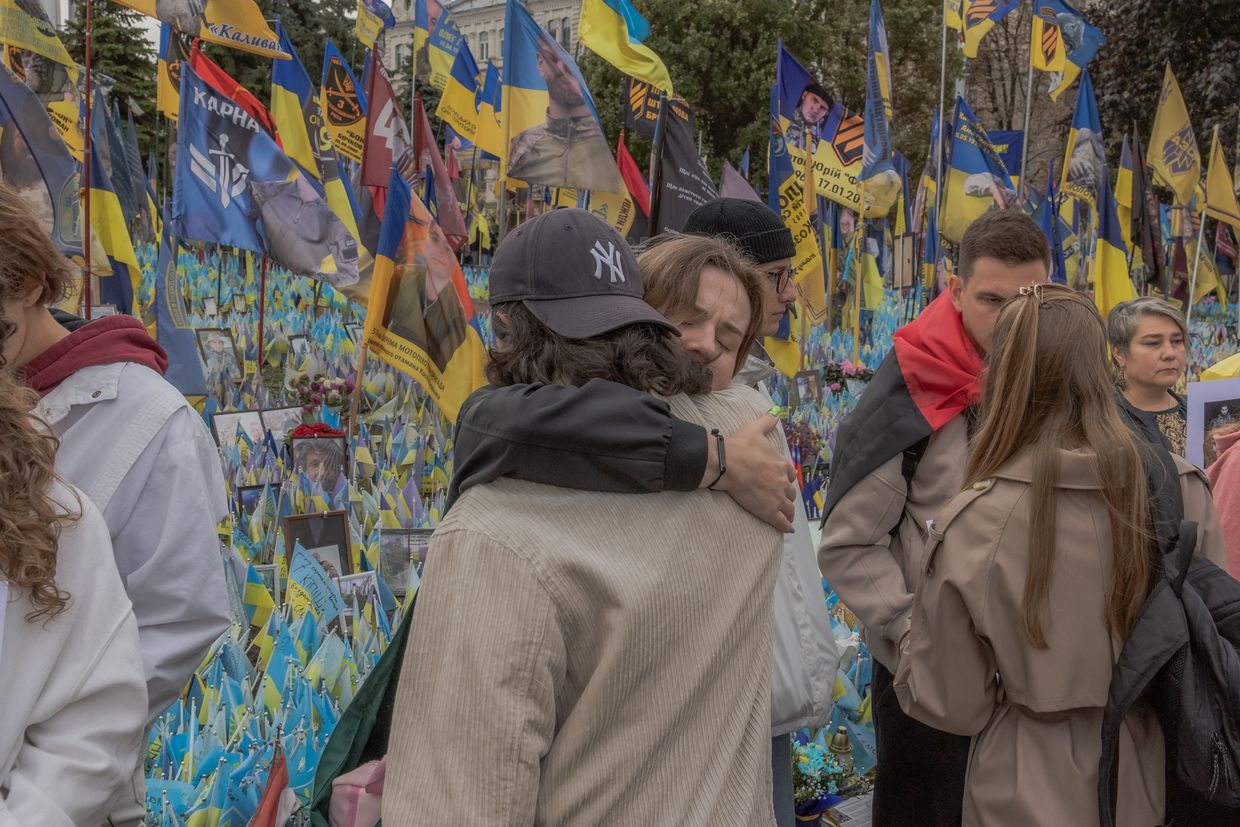
Two people hug one another at the site of a makeshift memorial Ukrainian and foreign fighters on "Defenders Day" at Independence Square in Kyiv, Ukraine, on Oct. 1, 2024. (Roman Pilipey / AFP via Getty Images)
Daryna Shevchenko
CEO
It’s been exactly 1,000 days since Russia's full-scale invasion began, and I’ve been sleeping like a baby the entire time. I know that’s not what you expect to hear from a Ukrainian living in Kyiv, especially when most news reports focus on how Russian attacks deprive the nation of sleep and rest.
On Feb. 24, 2022, I woke up to my alarm clock, ready for a normal workday. My phone was buzzing with hundreds of missed calls and messages from colleagues and family. I slept through the explosions, air raid sirens, the noise in my building, kids crying, and dogs barking. It was the last morning in the next 999 days that I woke up feeling rested.
Since then, I’ve slept through hundreds of overnight attacks, drones flying by my window, and air defense missiles nearby. I thought I was lucky — or perhaps more resilient than others — until I realized that I had also lost my mornings. Returning to reality became a real challenge over the past three years. I drink coffee, work out, and take walks in fresh air, but nothing helps. I still spend most of my energy fighting for moments of concentration and trying to live life to the fullest.
My psychiatrist says excessive sleep under stress isn’t normal, just as insomnia isn’t. My attempts to convince myself that this is a “good sign” are a futile search for normalcy. And guess what? Normalcy has nothing to do with war.
And guess what? Normalcy has nothing to do with war.
I’ve been lucky not to lose anyone close to me in this war — yet. But none of us, here in Ukraine, are emerging unscarred.
Lately, I’ve seen more comments on social media from foreigners doubting the horrors of Russia’s war against Ukraine, looking at photos and videos from Kyiv, Lviv, or Odesa, where dressed-up crowds attend concerts or sit at cafe terraces, appearing so normal.
Sleep or no sleep, makeup or blood and bruises, our reality is never normal. Not in the last 1,000 days. The truth is, the only way for the world to preserve its normalcy is to help us recover ours.
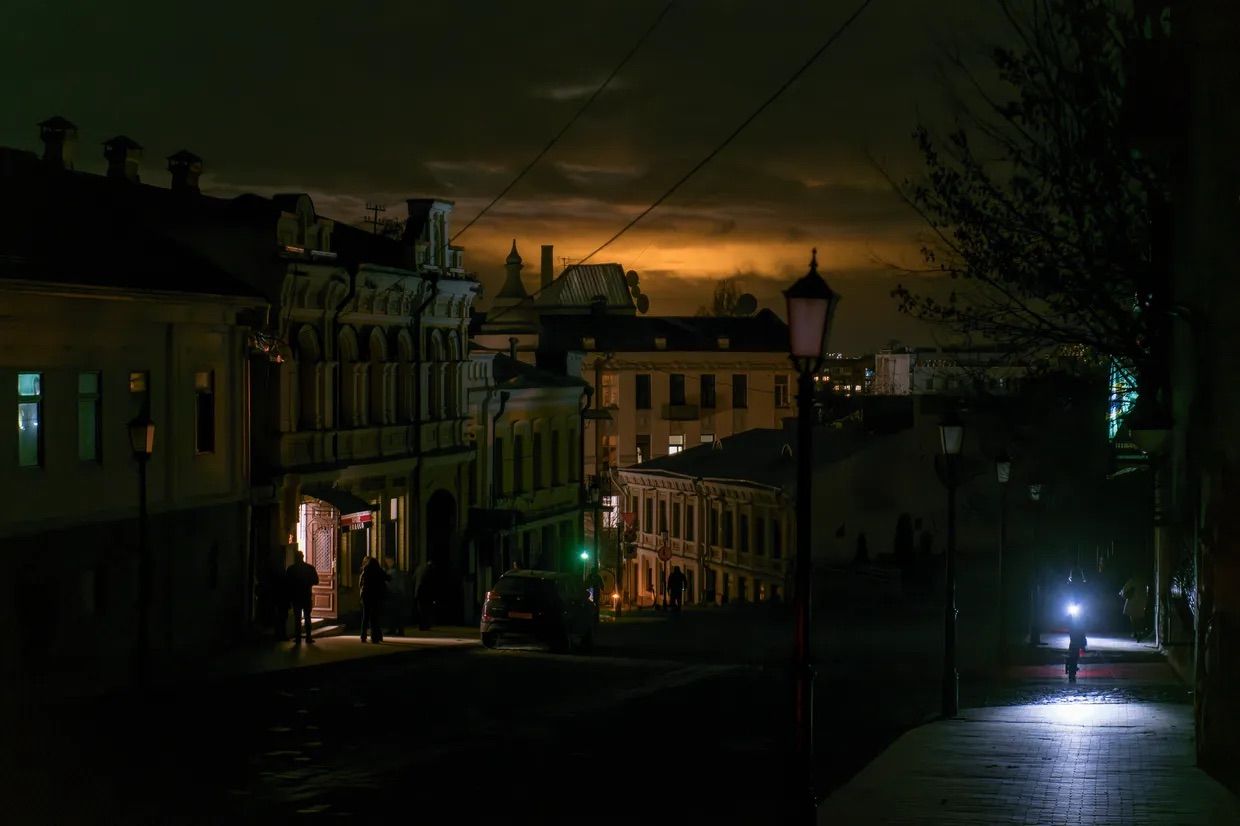
Andriivskyi Descent during a blackout after a Russian missile attack on Ukrainian energy infrastructure in Kyiv, Ukraine, Nov. 11, 2022. (Maxym Marusenko/NurPhoto via Getty Images)
Teah Pelechaty
Opinion editor
I wrote this poem in the early months of the full-scale war, before moving to Kyiv in August 2023. At the time, I worked on the Kyiv Independent’s news desk from Toronto, bearing witness to the war through a relentless stream of images and reports. A war fought in real time on my screen while the world outside my window remained indifferent, untouched.
Rereading this poem now, I realize how the exhaustion of carrying this grief for 1,000 days remains just as heavy as the day I wrote it — grief not only for what has been lost but for the unbearable contrast of living in between.
Even as I sit here writing, I've forgotten. I tend to forget these days.
The city I care not to see assaults my eyes, my ears, my nose, with its relentless permanence.
The billboard at the corner thrashes red, abrasive and blinking, and in its glare, I see her fingernails — also red, but still now, lifeless.
At the club, dim lights scatter across the throng, fracturing faces, bodies, limbs — suffocating.
As bodies crush and contort around me, swaying to a cacophony of Canada’s Top Hits, each appendage belongs at once to everyone, to no one.
In a mass grave, each appendage belongs at once to everyone, to no one.
They are perfect, her fingernails. So meticulously crafted and polished, amaranth red and adhered to a hand that has long gone limp. I wonder if they will remain as her body withers.
I forget her face. I tend to forget these days. I forget her face — the woman with the red fingernails — and yet, I do not search for it.
With each subsequent grave — Bucha, Mariupol, Izium — and with each subsequent face, in my mind’s eye, there remain only red fingernails.
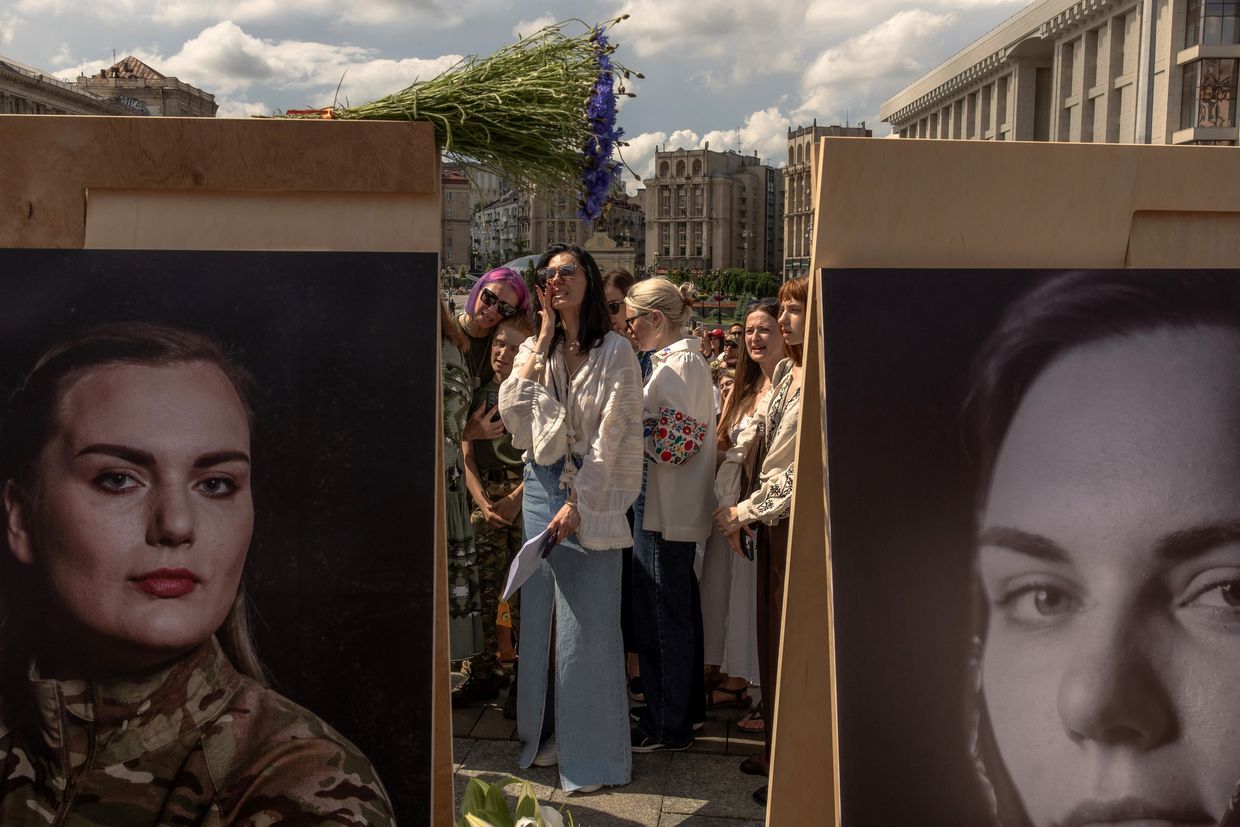
People attend the funeral ceremony of the paramedic Iryna Tsybukh from the Hospitaliers volunteer battalion at Independence Square in Kyiv, Ukraine, on June 2, 2024. (Roman Pilipey /AFP via Getty Images)
Kate Tsurkan
Culture reporter
Focusing too much on how many days have passed since the start of the full-scale war only deepens the sorrow I feel when confronted with news of more innocent people who were killed by Russia. In such moments, the future seems distant, fragile – a thread barely visible.
Counting days can seem meaningless when time itself feels distorted. Plus, this war stretches back over a decade for some Ukrainians, and we can’t forget that.
What keeps me awake at night is thinking about how this war will shape my daughter and every Ukrainian child, leaving its shadow on their lives long after it ends. (Will it ever truly end?) The only thing I can count on is how I will try to bring kindness and goodness into the world.
People look on as smoke rises over buildings in Kyiv, Ukraine, on Aug. 26, 2024, following a Russian attack amid Russia's war against Ukraine. (Roman Pilipey / AFP via Getty Images)
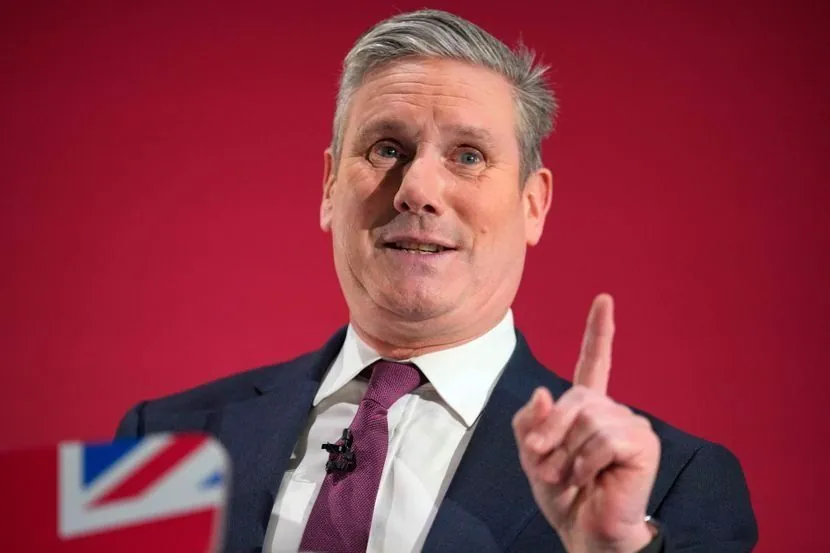
British Prime Minister Keir Starmer announced his intention to provide Ukraine with the necessary weapons to win, but refused to disclose details. He emphasized the importance of supporting Ukraine and the inadmissibility of Russia's victory in the war.
British Prime Minister Keir Starmer told reporters at the G20 summit in Brazil that he is determined that Ukraine will receive the right weapons to defeat Putin, while refusing to talk about the specifics of this weapon. This was reported by The Guardian, according to UNN.
My position has always been that Ukraine should have what it needs, as much as it needs. putin should not win this war. But excuse me, I'm not going to get into operational issues…
– said Starmer, answering the question whether the United States has finally paved the way for the UK to supply Storm Shadow missiles for use by Ukraine against targets in Russia.
Starmer also noted that he has been arguing for many weeks that Ukraine should have what it needs and as much as it needs.
"We have to put Ukraine in the strongest possible position to win this war. It affects Ukraine, but it affects all of us, and we cannot let Russia win this war," Starmer added.
Recall
British Prime Minister's spokesman Keir Starmer called Russia's new nuclear doctrine "the product of a depraved Russian government" and emphasized his unwavering support for Ukraine and defense against illegal invasion.
The European Parliament held an extraordinary plenary session on 19 November to mark 1,000 days since the start of Russia’s full-scale invasion of Ukraine. President Volodymyr Zelenskyy participated in the session.
Source: European Pravda, citing the European Parliament’s press service
Details: During the session’s opening, European Parliament President Roberta Metsola assured that MEPs would support Ukraine "until it achieves freedom and real peace, for as long as it takes".
"Any real peace must be built on the principle of ‘nothing about Ukraine without Ukraine’," Metsola also stressed.
In his address, Zelenskyy thanked the EU for its unwavering support, urged continued unity in recognising that Europe’s collective strength surpasses Putin, and highlighted the West's ability to push Russia toward a just peace.
The president specifically called for stricter sanctions, especially targeting Russia’s so-called "shadow tankers" transporting crude oil and petroleum products.
Quote from Zelenskyy: "No one can enjoy calm water amid the storm. We must do everything we can to end this war fairly and justly. 1,000 days of war is a tremendous challenge. We must make the next year the year of peace."
Most political group leaders in the European Parliament reaffirmed their strong support for Ukraine, urging the EU leadership to provide the necessary weapons for victory, including air defence systems, long-range missiles, tanks and drones.
At the session’s conclusion, Metsola announced that the Ukrainian flag would be flown alongside the EU flag at European Parliament buildings in Brussels, Strasbourg, and Luxembourg.
Throughout Tuesday, Western leaders, government officials, and ambassadors issued statements of solidarity with Ukraine on the 1,000th day since the start of Russia's full-scale invasion.
French President Emmanuel Macron and British Prime Minister Keir Starmer pledged to maintain their support for Ukraine in their respective statements marking this milestone.
The President of Lithuania had a phone conversation with US President-elect Donald Trump to discuss support for Ukraine and defense partnership. The leaders also discussed the threats posed by the cooperation of Russia, China, Iran, and North Korea.
On Monday, Lithuanian President Gitanas Nausėda spoke on the phone with US President-elect Donald Trump. The two leaders discussed defense and support for Ukraine. UNN reports this with reference to the Lithuanian public broadcaster LRT.
The President expressed satisfaction with the plans of the new US administration to achieve peace through a show of force and emphasized the need to support Ukraine in the fight against Russian aggression, thereby curbing the ambitions of other authoritarian regimes
– Nauseda's office said.
"It is gratifying to know that Mr. Trump is well aware of the security situation in the region and the energy system challenges Ukraine faces ahead of the winter season," he said.
The two presidents also discussed "the negative impact of cooperation between Russia, China, Iran and North Korea on the international security architecture.
Nausėda emphasized Lithuania's close defense ties with the United States, noting that in recent years the two countries have signed many new contracts for the purchase of weapons and military equipment.
He also assured Trump that Lithuania would provide the best conditions for the permanent presence of U.S. troops in the country, the report said.
Lithuanian President confirms Ukraine's permission to fire long-range missiles at RussiaNov 18 2024, 07:22 AM • 19158 views