Category: Technologies

Last news • Technologies

  • KNIISE experts investigate Russian weapons: in some cases, they identify up to 90% of foreign components

    KNIISE experts investigate Russian weapons: in some cases, they identify up to 90% of foreign components

    KNIISE experts investigate Russian weapons: in some cases, they identify up to 90% of foreign components

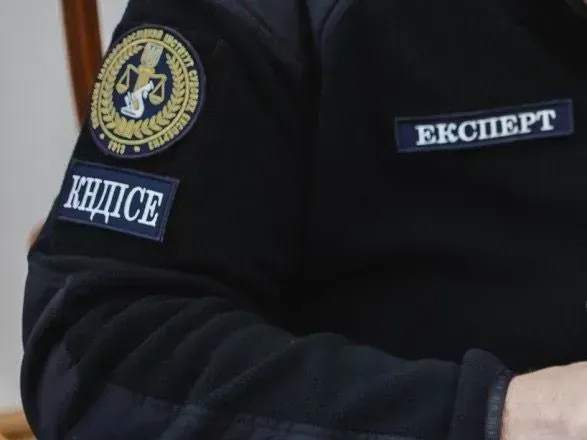
    KNIISE is investigating Russian and Iranian weapons used against Ukraine. Some samples contain up to 90% of foreign components, including parts from Japan, China, and European countries.

    The Kiev Research Institute of forensic expertise (KHNIISE) told about the details of the study of Russian and Iranian weapons used in the war against Ukraine. KNIISE experts are working on investigating parts and fragments of missiles, drones, and other weapons used by the enemy against Ukraine. Experts determine the type of weapon, the specifics of its use, identify foreign components that often fall into weapons, despite sanctions, and find out their Origin, writes UNN.

    sanctions are valid, but not ideal

    According to experts of the KNIISE military research laboratory, a significant part of the components of Russian missiles and drones are of foreign origin. According to them, in some cases, this number reaches 85-90% of the total number of parts.

    "Among the latest research objects, the Russian x-69 cruise missile, which was adopted by the aggressor country only in 2023, was analyzed. So, Japanese — made components have already been identified in flight control and support systems," the experts noted.

    Among other things, according to KNIISE, Russian kamikaze drones marked "Geranium 2" ("Shahed 136") use Chinese engines, Japanese bearings and Polish gas pumps. Therefore, as it turns out, even after the introduction of sanctions, Russia finds ways to receive components through third countries, or in the form of dual-use goods.

    "Shahed" — a technological mix

    According to the Institute's experts, research shows that the Shahed kamikaze drones that Russia uses in the war against Ukraine have gone through several stages of modification.

    In particular, the first models were based on Iranian components, many of which were manufactured on the basis of Chinese technologies. At the next stage, Russia began assembling drones from ready-made vehicle kits received from Iran, adding its own combat units.

    The latest versions of Shahed-K drones are already manufactured in Russia, but with foreign components — from Chinese engines to Japanese bearings.

    "On one of the last studied" Shahed " identified a carburetor made in Ireland. This part was officially purchased through a Chinese company that uses such components for agricultural machinery," KNIISE experts said.

    North Korean missiles are a threat, but with restrictions

    The Institute's specialists are also investigating Russia's use of North Korean KN-23/24 missiles.

    "The peculiarity of this type of weapon is a powerful warhead, but their accuracy is very doubtful. In addition, we believe that significant gaps are observed in navigation systems themselves, which often do not work, which makes them less effective in the general context. However, this does not deny the fact of danger to Ukrainian citizens," the experts noted.

    According to them, components of foreign origin were also found in these missiles, which indicates the importance of continuing to strengthen sanctions pressure and control.

    Experts note that while sanctions work, many components for Russian weapons fall through third countries or circumvent restrictions. "It is important to track the origin of components and block such supply routes. For example, after the appeal of the Ukrainian side to Poland on the facts of identifying the components of Polish companies, a tangible result was achieved," the KNIISE stressed.

    Ukrainian researchers continue to transfer the collected evidence to international partners, including for consideration in courts such as the Hague tribunal. This is an important step in the fight for justice and increasing sanctions pressure on Russia.

    Add

    It is worth noting that the Russians are constantly trying to modify and modernize all the types of missiles and drones available to them, which are used for attacks on Ukraine. KNIISE specialists in the commentary UNN toldwhat features are being discussed and what role Western components play in changing enemy weapons. the enemy uses more than just western components. According to Alexander Ruvin, director of the Kiev Research Institute of forensic examinations, components for UAVs used by the enemy to attack Ukraine are supplied by about 50 manufacturers from China.

    In addition, KNIISE experts have established that the Russian x-69 missiles used by the invaders to hit Ukraine are created from several types of weapons and have foreign componentsand.

  • Europe’s dreams of a flying taxi are crumbling due to lack of money: what’s going on with eVTOL

    Europe’s dreams of a flying taxi are crumbling due to lack of money: what’s going on with eVTOL

    Europe's dreams of a flying taxi are crumbling due to lack of money: what's going on with eVTOL

    The leading European developers of electric vertical take-off aircraft are facing financial problems. Lilium has declared bankruptcy, and Volocopter may come under the control of Chinese Geely.

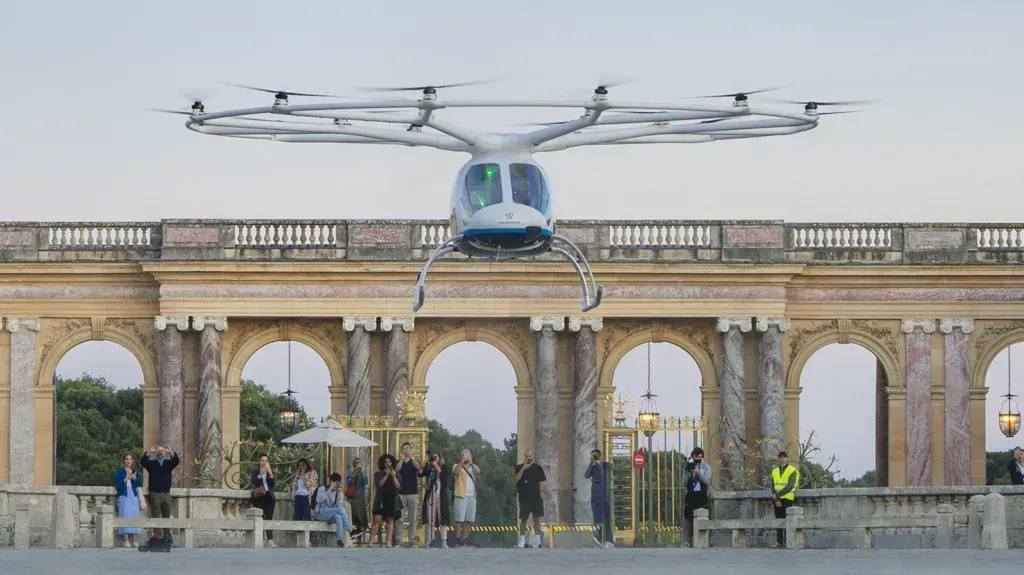
    Leading European manufacturers developing electric aircraft with vertical takeoff and landing (eVTOL) have faced serious financial difficulties. Lilium has declared bankruptcy, and Volocopter is negotiating with Chinese Geely to sell 85% of its shares, the BBC reports, writes UNN.

    Details

    One of the innovations at the Olympic Games in Paris this year was supposed to be an electric flying taxi. The German company Volocopter has promised that its electric two-seater Velocity aircraft will carry passengers around the city. This never happened. Instead, the company conducted demonstration flights. Although non-compliance with this deadline was embarrassing, a more serious problem was playing out behind the scenes – Volocopter was urgently trying to attract new investments in order to save the company, the newspaper writes.

    Negotiations on a loan of 100 million euros from the government failed in April.

    Hopes are now pinned on China's Geely, which is in talks to acquire an 85% stake in Volocopter in exchange for $95 million in financing, according to a Bloomberg report. The deal could mean that all future production will be moved to China.

    Volocopter is one of dozens of companies around the world developing electric vertical takeoff and landing aircraft (eVTOL).

    Their machines promise the flexibility of a helicopter, but without such cost, noise and emissions.

    However, faced with the huge costs of regulatory approval of such new aircraft and the subsequent increase in production capacity, some investors are abandoning them.

    Image

    One of the most high-profile "victims" is Lilium.

    A German company has developed a radical approach to the eVTOL theme.

    The Lilium aircraft uses 30 electric jets that can be tilted synchronously to transition from vertical lift to direct flight.

    The concept proved attractive, and the company said it had orders and memoranda of understanding for 780 aircraft from around the world.

    She was able to demonstrate the technology using a remotely controlled scale model. Construction of the first full-size aircraft has already begun, and testing was scheduled to begin in early 2025.

    Back at the Farnborough Airshow in July, Lilium's chief operating officer Sebastian Borel spoke confidently.

    "We are definitely burning money," he told the BBC. – But this is a good sign, because it means that we are producing an airplane. By the end of the year, we will have three aircraft in production, and we have also raised 1.5 billion euros.

    But then the money ran out.

    Lilium was trying to get a loan in the amount of 100 million euros from the German development bank KfW. However, this required guarantees from national and regional Governments, which were never implemented.

    In early November, the company began bankruptcy proceedings for its main operating businesses, and its shares were removed from the Nasdaq stock exchange.

    At the moment, work on the new aircraft continues as the company works with restructuring experts to sell the business or attract new investments. However, putting the new e-jet into production looks more difficult than ever.

    Image

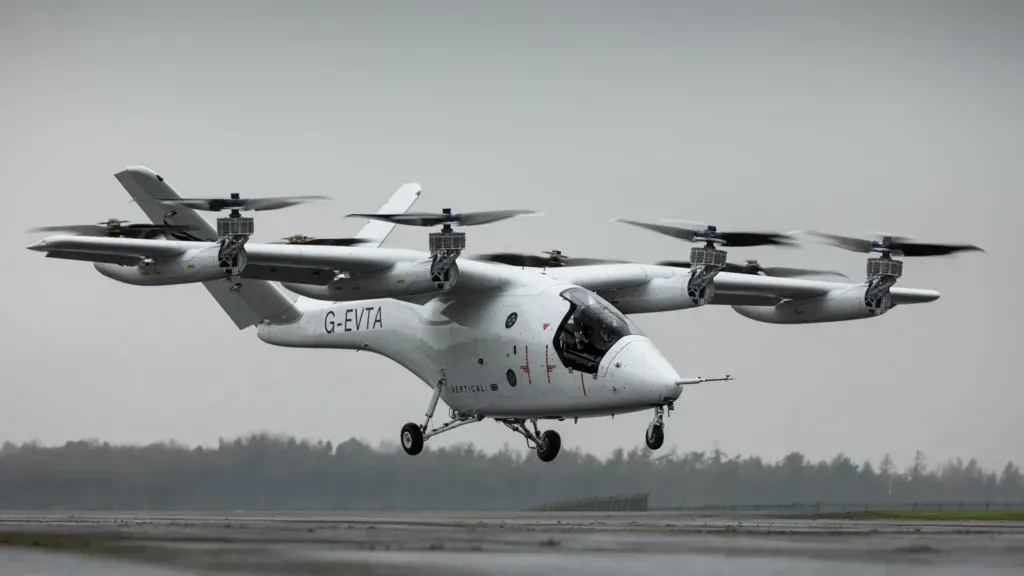
    Vertical Aerospace is a major British player in the eVTOL market. The Bristol-based company was founded in 2016 by businessman Stephen Fitzpatrick, who also created OVOEnergy.

    Its striking V4 design uses eight large propellers mounted on thin airplane-type wings to create lift. Fitzpatrick made ambitious statements about the plane, suggesting that it would be "100 times" safer and quieter than a helicopter, for 20% of the cost.

    The company has made progress. After completing the remote-controlled test program, it began conducting manned tests earlier this year. Initially, they were conducted with an airplane tied to the ground. In early November, he carried out his first takeoff and landing without a leash.

    But there were also serious setbacks. Last August, a remotely piloted prototype was severely damaged when it crashed during tests at Cotswold Airport after a propeller blade fell off.

    In May, one of its key partners, the engineering giant Rolls Royce, backed out of a deal to supply electric motors for the aircraft.

    Ambitions remain sky-high. Vertical Aerospace says it will deliver 150 aircraft to its customers by the end of the decade. By that time, it also expects to produce 200 units per year and break even in monetary terms.

    But the company has run into financial difficulties and recently negotiated a rescue deal with its largest lender, the American company Mudrick Capital.

    As part of the deal, Mudrick will invest up to $50 million in Vertical, while $130 million of loans from Mudrick will be converted into shares.

    This will leave the American investment firm with a 70% stake in Vertical, while Fitzpatrick's stake will be reduced from 70% to 20%.

    Image

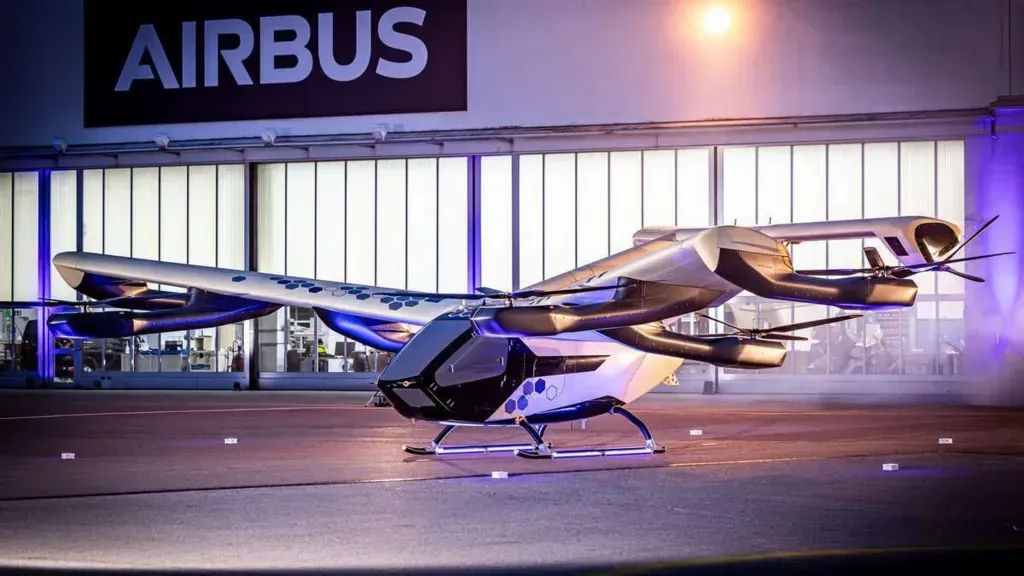
    Amid the turbulence, one European project is quietly going according to plan, says Bjorn Ferme, who has experience in aviation technology and pilots combat aircraft for the Swedish Air Force. He now works for the aerospace consulting company Leeham.

    He says the eVTOL project being implemented at Airbus is likely to survive.

    Named City Airbus NextGen, the four-seat aircraft has eight propellers and a flight range of 80 km.

    "This is a technology project for their engineers, they have the money and the knowledge," says Ferme.

    In other parts of the world, other well-funded startups can count on a good chance to put their aircraft into production. This will include Joby and Archer in the USA.

    After the planes are produced, the next task will be to check whether there is a profitable market for them.

    The first routes are likely to be between airports and urban centers. But will they make a profit?

    "The biggest problem in terms of operating costs is the pilot and batteries. The batteries need to be changed a couple of times a year," says Ferme.

    Given all the uncertainty and costs, as indicated, one may wonder why investors are investing in new electric aircraft at all.

    "No one wanted to miss out on the next Tesla," Ferme laughs.

  • AI and new horizons of Ukrainian business. What was discussed at Forbes Tech 2024

    AI and new horizons of Ukrainian business. What was discussed at Forbes Tech 2024

    AI and new horizons of Ukrainian business. What was discussed at Forbes Tech 2024

    The Forbes Tech 2024 conference was held in Kiev with the participation of 400 representatives of the technology industry. The key topics were the future of artificial intelligence, digital transformation, and cybersecurity.

    On November 24, Kiev hosted the Forbes Tech 2024 conference, one of the leading technology forums in Ukraine to discuss current challenges and trends in the tech industry. This year's key topics were the future of artificial intelligence, digital transformation, and cybersecurity. The event's partner was the Ukrainian IT company FAVBET Tech, reports UNN.

    this year's Forbes Tech participants were representatives from various industries, including pharmaceuticals, industry, energy, and IT. Speakers of thematic panels and discussions were 57 founders and managers of leading companies, innovation leaders and investors.

    Among them are Leonid Polupan, head of Microsoft in Ukraine and the Baltic states, Anna Shcherbakova, Vice President and Chief Operating Officer of GlobalLogic Ukraine, Vitaly Sedler, co-founder and CEO of Intellias, Maxim Balanyuk, head of R&D center of Metinvest Digital, Vodafone CEO Olga Ustinova and others.

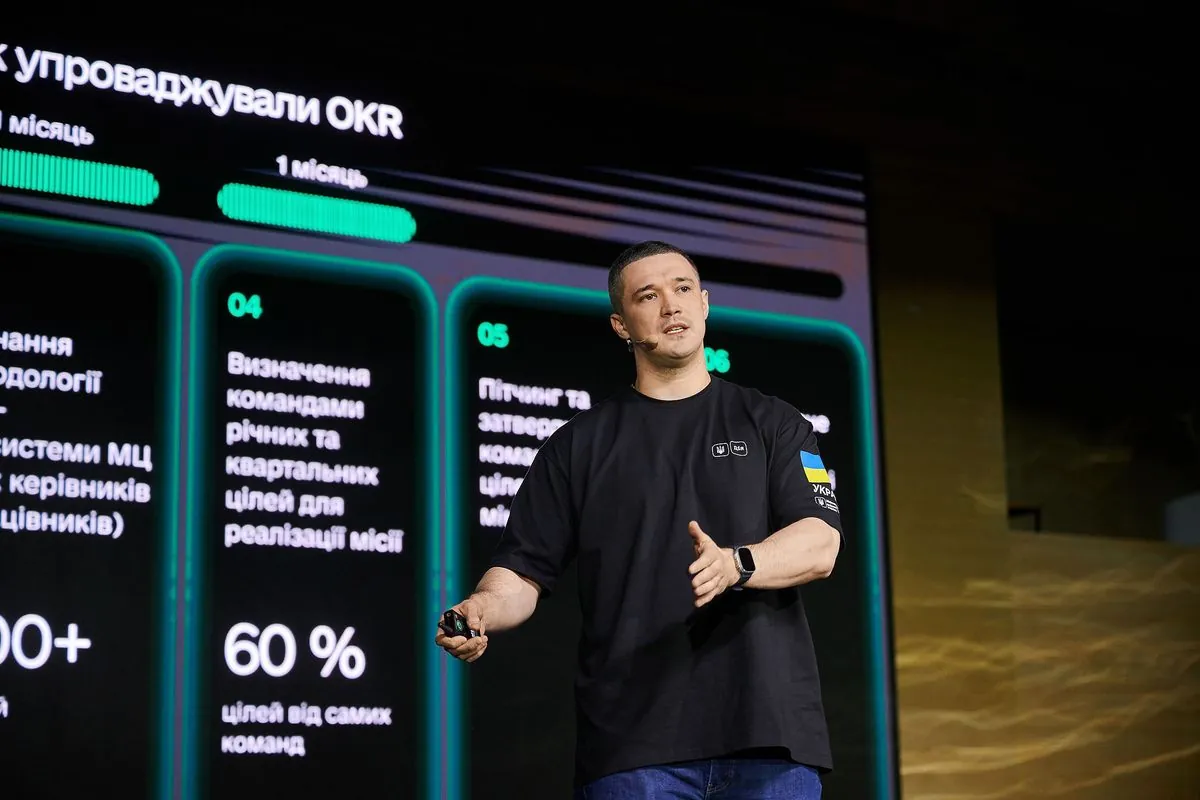
    One of the key speeches at the event was made by Deputy Prime Minister for innovation, development of Education, Science and Technology, Minister of digital transformation Mikhail Fedorov, who spoke about improving the efficiency of teams through the implementation of OKR-goal setting system.

    Image

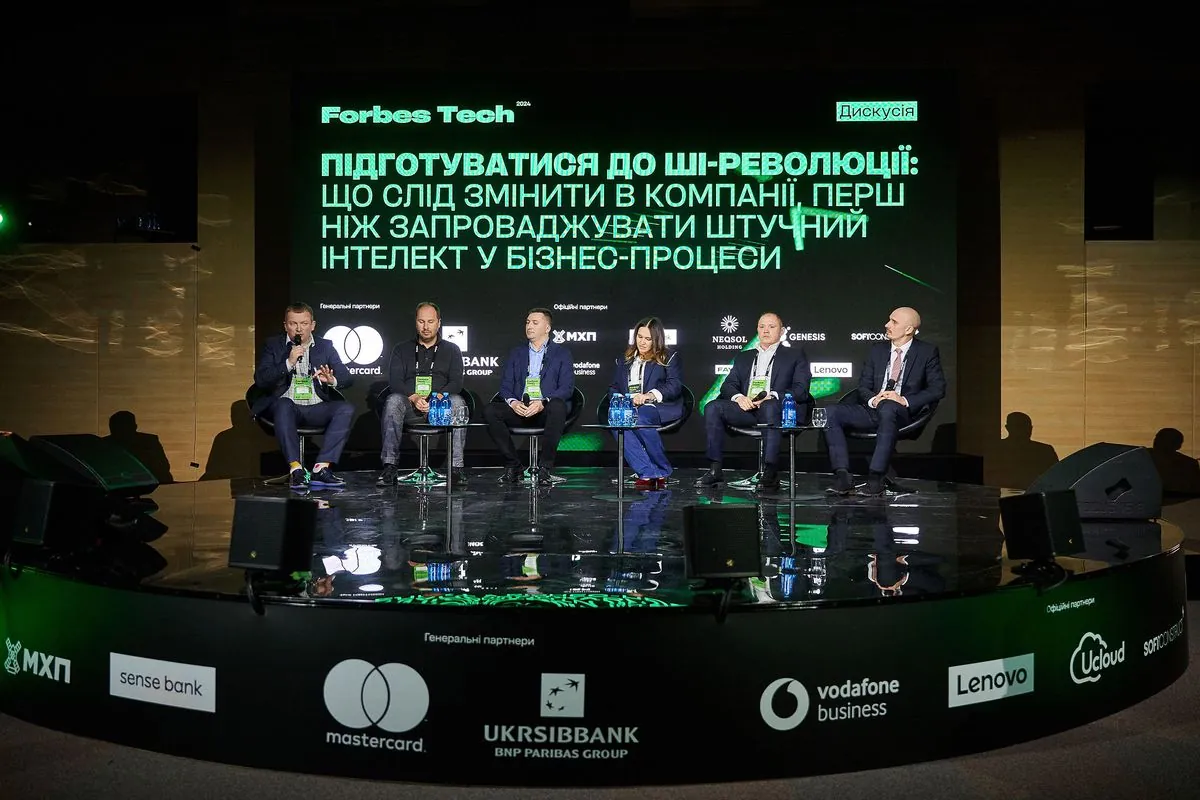
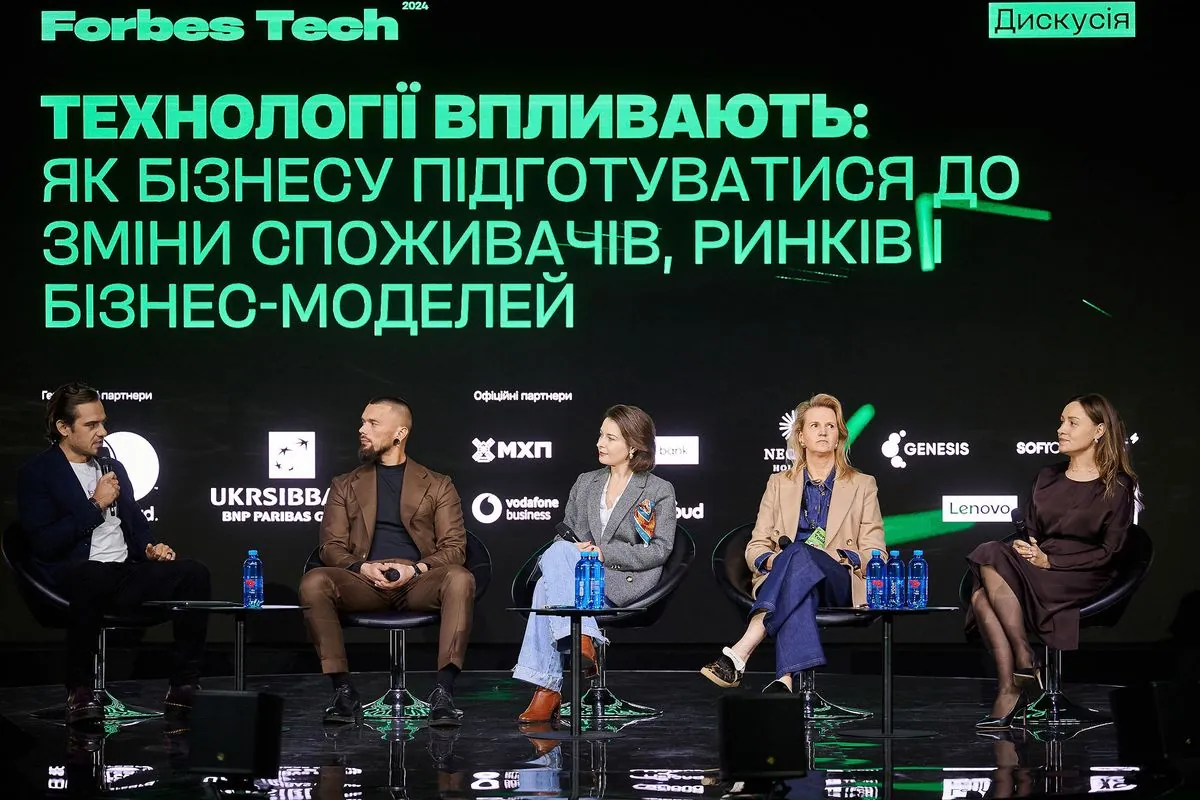
    Tatiana Lukinyuk, head of Google in Ukraine, Alexander Fedorov, CEO and Founder of OBRIO, Evgeny Vygan, co-founder and COO of Appflame, Kateryna Kruk, head of Public Policy at Meta in Central and Eastern Europe, and Marina Pavlyuk, CEO of Glovo in Ukraine, discussed how technologies affect business processes and how businesses actually prepare for changing consumers and markets.

    Image

    Forbes Tech in 2024 brought together more than 400 participants, creating a unique platform with shared experience among the leaders of the technology sector. Among the participants and Partners was the Ukrainian IT company FAVBET Tech. CEO of the company Artem Skrypnyk moderated the discussion panel: "ChatGPT — two years. How have the user cases of Ukrainian companies evolved?". Together with other participants, he discussed the impact of artificial intelligence on modern business: from automating routine processes to developing new products and personalized solutions for customers.

    Image

    "Ukrainian companies, including FAVBET Tech, are successfully implementing AI tools in their workflows and products. This is a requirement of time and circumstances — in a war environment, businesses are looking for the most effective and fast solutions, and in this regard, artificial intelligence offers many advantages. I am grateful to all participants of Forbes Tech 2024 for exchanging opinions and supporting innovations in Ukraine," says Artem Skrypnyk.

  • The media named the Ukrainian officials who agreed on the sale of the last Tu-95s

    The media named the Ukrainian officials who agreed on the sale of the last Tu-95s

    The media named the Ukrainian officials who agreed on the sale of the last Tu-95s

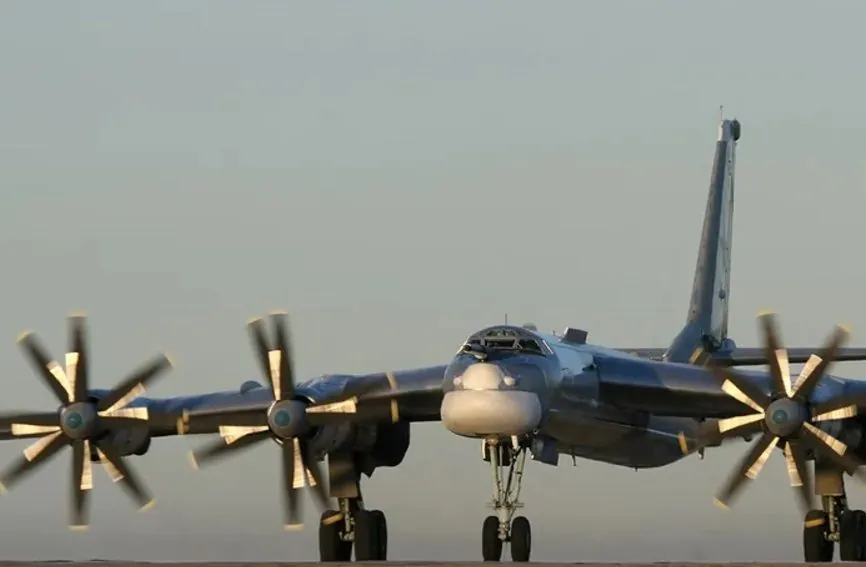
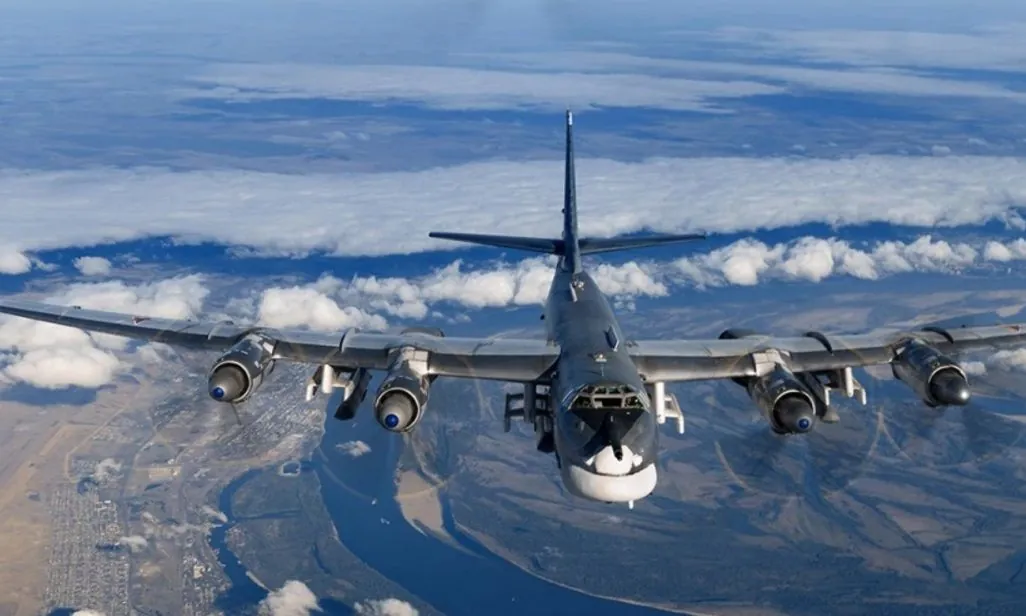
    Schemas has published a list of Ukrainian officials who agreed on the sale of the last two Tu-95MS bombers in 2011. Among them are Viktor Baloga and Inna Yemelyanova, who currently hold public positions.

    "Schemes" (Radio Liberty) referred to officials who agreed on a large-scale alienation of military property of the Armed Forces of Ukraine in 2011, as a result of which the last two Tu-95MS strategic bombers were sold.

    In particular, this is Viktor Baloha, who is now the current MP and current member of the commission on legal reform under the president of Ukraine Inna Yemelyanova, reports UNN.

    Details

    These are, in particular, the then officials – minister of emergency situations Viktor Baloga-now a people's deputy of Ukraine, First Deputy Minister of Justice Inna Yemelyanova – now a member of the commission on legal reform under the president of Ukraine, and head of the commission on reorganization of the Ministry of Economy Valery Muntiyan – a current employee of the state financial institution of the Russian Federation "Vnesheconombank"

    – the message says.

    The journalists also added to the list of Ukrainian officials who in 1999 supported the decision to transfer eleven Tu-95MS and Tu-160 bombers to Russia in exchange for paying off the gas debt, and which are now used by the Russian army.

    The journalists found in the State Archive a draft order "on approval of the list of military property of the Armed Forces that can be alienated", which included, in particular, MiG-29, Su-24 and Su-25 fighters, Mi-8 helicopters, Acacia and Gvozdika howitzers, hundreds of T-80, T-72 and T-64 tanks. including the last two Ukrainian Tu – 95MS.

    It is reported that this draft was submitted to the Cabinet of ministers in the summer of 2011 by the then Defense Minister Mikhail Yezhel. In the explanatory note, he noted:"the Order provides for granting permission to the Ministry of defense of Ukraine to organize the alienation of the specified military property, which is released in connection with the reform and reduction of military units, institutions and institutions of the Armed Forces of Ukraine in the period up to 31.12.13.

    Such an initiative, the document said, "does not involve public consultations."According to the document, this order was coordinated with the ministries of economic development and trade, finance, justice and emergency situations.

    The list of names of officials includes Viktor Baloha, then Minister of emergency situations of Ukraine. Now he is a non-factional MP from Transcarpathia. Balog has not yet responded to the request of" schemes " for comment.

    The then Acting Minister of Justice Inna Yemelyanova signed the conclusion of the Ministry of Justice to the draft order with a note – "no corruption-causing factors were identified." When asked by a journalist why she agreed on a project on a large-scale sale of military equipment, Yemelyanova only noted that "all the answers to these questions were provided where they should be provided, and everything has already been investigated by law enforcement agencies.

    Russia uses Tu-160 bombers that Ukraine gave it in the late 90s-mass mediaNov 26 2024, 07:22 PM • 22819 views

    As previously told "schemes", in November 2013, on the eve of stopping European integration, First Deputy Minister of Justice Yemelyanova was part of a delegation headed by Prime Minister Mykola Azarov to St. Petersburg.

    In 2014, she was on the lists on the website of the Cabinet of ministers among those who should have been dismissed as part of the implementation of the law "on the purification of power". In 2019, by decree of Volodymyr Zelensky, she became a member of the commission on legal reform under the president of Ukraine.

    The Ministry of Economy approved the sale of military property in 2011 by Valery Muntiyan, then acting chairman of the reorganization Commission. As "schemes" found out, Muntiyan received a Russian passport in 2015. In particular, with the help of the website of the tax service of the Russian Federation, it was possible to establish an individual tax number linked to his passport of a citizen of the Russian Federation. After the revolution of dignity, Muntiyan left for Russia and became an employee of the state financial institution of the Russian Federation Vnesheconombank.

    He remained a member of the Academy of Sciences of Ukraine until April 2024. schemes reached out to Muntiyan for comment, but he did not want to speak. He only briefly answered the question of whether he is currently working for the Russian authorities: "no.

    Image

    The final decision on permission to sell the aircraft was voted at a meeting of the Government of Mykola Azarov in August 2011, the investigation says. Thanks to the above-mentioned order on the alienation of military property of the Armed Forces of Ukraine, the state enterprise "Spetstechnoexport", subordinate to the Ministry of Defense headed by Pavel Lebedev, in 2013 sold the last two Ukrainian Tu-95MS bombers to a private company for 250 thousand dollars.

    Subsequently, in 2014, one of the planes was put up for sale on eBay for 3 3 million, but after publicity in the media, the ad disappeared.

    It is noted that in 2015, the state Bureau of Investigation launched an investigation into abuse of office when including, in particular, bombers in the list of property for sale.

    In the process, the investigation found out that the TU-95MS engines were dismantled "for the purpose of their further sale and illegal export to the Russian Federation", they were intended "for installation on military aircraft of the Russian Air Force". According to the judicial register, the owner of the engines is the company "Dneprobusinessbud".

    Co-owner of the company Anna Shafranskaya said that Dneprobusinessbud received aircraft engines on account of debts from the first buyer of aircraft. According to Shafranskaya, law enforcement officers seized their engines back in 2015 and have not yet returned them, "these circumstances led to losses and, as a result, bankruptcy.

    When asked about the possible purpose of engines for Russian aircraft, Shafranskaya did not directly answer. There are no verdicts in the case yet, as the prosecutor general's Office told reporters, it was stopped due to the search for the suspect. According to journalists, we are talking about ex-minister Mikhail Yezhel, who has been living in Belarus since 2014.

    How the Russian Federation gets microchips for missiles and fighters: a scheme through Lukashenka's companiesNov 27 2024, 12:40 PM • 11402 views

  • How the Russian Federation gets microchips for missiles and fighters: a scheme through Lukashenka’s companies

    How the Russian Federation gets microchips for missiles and fighters: a scheme through Lukashenka’s companies

    How the Russian Federation gets microchips for missiles and fighters: a scheme through Lukashenka's companies

    Belarusian companies associated with Lukashenka earned 1 125 million on the supply of microchips for Russian military equipment. Among the delivered products are banned Western components for missiles and fighters.

    Belarusian companies associated with dictator Alexander Lukashenko's entourage are helping Russia circumvent sanctions by supplying microchips for its military equipment. In two years, they earned more than.125 million, including Western-made products that are banned for export. Writes UNN with reference to the investigation of the "Belarusian investigative center".

    From September 2022 to June 2024, Belarusian companies earned more than.125 million on the supply of microchips to Russia. Interestingly, some of them – almost на 400 thousand-were produced in the United States and EU countries, although such products have been banned for sale to Russia and Belarus since the beginning of a full-scale war. But the bans did not stop: in 22 months, almost 10 thousand western-made chips were sent from Belarus to Russia.

    One of the key players was the company "Alexvit Ltd", which sent to Russia 131 chips manufactured in the USA, Germany and Finland. This company is managed by Sergey Borisyuk, who previously worked in the state Customs Committee of Belarus. After the outbreak of the war, the company's revenue tripled to 2 247 million in 2023. In addition to microchips, the company supplies tires and other promotional products to Russia.

    Not far behind is the logistics company Vostok, which sold more than 1.5 thousand chips from December 2022 to March 2023. Its owner Alexey Matveev is associated with Sergey Teterin, a businessman close to Alexander Lukashenko who is under EU sanctions.

    Microchips supplied from Belarus are used in Russian military equipment, such as Su-34 and Su-35S fighters, Kalibr missiles and Orion drones. These devices help to launch strikes on Ukraine, including the use of guided aerial bombs. Among the manufacturers of such chips is the American company Intel.

    Companies associated with Lukashenka's entourage are actively looking for ways to circumvent sanctions. For example, OFS-export, associated with Lukashenka's" wallet "Alexander Shakutin, has sent more than 1,200 chips to Russia, while export trading house, associated with Viktor Lukashenko's former aide Alexander Zaitsev, continues to export sanctioned goods, including Apple machinery and engine oil.

    These schemes are just the tip of the iceberg. Belarusian companies continue to supply banned goods to Russia, violating international restrictions, and make huge profits from this. However, the consequences for them may be much more serious, especially if the sanctions pressure from the West increases.

    addition

    It is worth noting that the Russians are constantly trying to modify and modernize all the types of missiles and drones available to them, which are used for attacks on Ukraine. KNIISE specialists in the commentary UNN toldwhat features are being discussed and what role Western components play in changing enemy weapons. The enemy uses more than just western components. According to Alexander Ruvin, director of the Kiev Research Institute of forensic examinations, components for UAVs used by the enemy to attack Ukraine are supplied by about 50 manufacturers from China. In addition, KNIISE experts have established that the Russian x-69 missiles used by the invaders to hit Ukraine are created from several types of weapons and have foreign components.

    recall

    The European Union is considering new sanctions against Chinese companies for helping a terrorist state develop UAVs used in the war against Ukraine.

  • Trump considers appointing of “AI czar” – Axios

    Trump considers appointing of “AI czar” – Axios

    Trump considers appointing of "AI czar" - Axios

    Donald Trump is considering appointing a federal AI policy coordinator. Elon Musk and Vivek Ramaswamy will influence the choice of a candidate for this position.

    US President-elect Donald Trump is considering appointing an "AI czar" in the White House to coordinate federal policy and the government's use of new technologies, citing sources in Trump's transition team .

    Details

    Elon Musk will not be the "czar of AI", but is expected to be closely involved in the process in the future, the sources said.

    "They say that the role (position – ED.) is likely, but not defined," the newspaper writes.

    Max and Vivek Ramaswamy, who lead Trump's new non-governmental institution, the Department of government efficiency (DOGE), will make a significant contribution to who gets this appointment.

    Musk, who owns leading artificial intelligence company xAI, has publicly feuded with rival CEOs, including OpenAI's Sam Altman and Google's Sundar Pichai. Rivals fear that Musk may use his relationship with Trump to benefit his companies.

    Trump, in part in response to the expanded coalition that contributed to his victory, plans to be very attentive to new technologies.

    Trump's transition team has tested executives in the cryptosphere for the potential role of the world's first "cryptographer in the White House, Bloomberg reported last week.

    The person responsible for AI and cryptocurrencies can be combined and transferred under the leadership of one "czar of emerging technologies".

    "The AI czar is expected to be responsible for concentrating both public and private resources to keep America at the forefront of AI.

    The idea has been discussed in Trump's world for months, as the transition team considered structural changes in the White House to prioritize staffing in line with Trump's priorities.

    The model, as indicated, is similar to the National Energy Council, which, according to Trump, will be headed by North Dakota Governor Doug Bergum, who was appointed to the post of Secretary of the interior. Trump said in a statement that the council "will consist of all departments and agencies involved in the licensing, production, generation, distribution, regulation, and transportation of all forms of American energy.

    Trump announces that the Interior Ministry and the new US National Energy Council will be headed by the same personNov 16 2024, 12:44 AM • 17498 views

  • Elon Musk confirms that he limits the ability of X users to share external news

    Elon Musk confirms that he limits the ability of X users to share external news

    Elon Musk confirms that he limits the ability of X users to share external news

    Elon Musk confirmed the restriction of visibility of posts with external links on social network X. The network's algorithm deliberately reduces the reach of posts with hyperlinks to keep users on the platform.

    The American billionaire, owner of SpaceX and Tesla, Elon Musk, has admitted that he limits the ability of people to spread external news on the social network X, UNN reports, citing Independent.

    Details

    Users have noticed that social media company X, owned by Elon Musk, is slowing down traffic to other websites by suppressing any posts that contain external links. However, the businessman himself confirmed this fact. For example, Paul Graham, an influential tech investor and essayist, complained on Sunday that X had “deprioritized tweets with links,” saying it made it difficult to “find out what's going on.

    Just write a description in the main post and put a link in the reply. It will simply stop linking “lazily”

    – Musk replied.

    Paul Graham then asked why it would be less “lazy” for him to link to one of his essays in a reply rather than the original post, but he never received an answer. In addition, journalists and analysts have long since discovered that X's ordering and recommendation algorithms have penalized posts with hyperlinks. Elon Musk admitted that this was true back in October last year.

    Our algorithm tries to optimize the time spent on X, so links don't attract as much attention because less time is spent if people click far away

    – Musk said at the time.

    When Elon Musk acquired Twitter, which he later renamed X, he said he planned to completely change the social network's policies and introduce a new economy on the platform. All this to encourage people to post on X rather than any other social network.

    The hyperlinking policy is consistent with Elon Musk's longstanding hostility to traditional media, which has often reported on the misconduct of many of his companies.

    Recall

    X users are sharing medical images with Grok chatbot on a massive scale at the urging of Elon Musk. Experts warn of privacy risks, as such data is not protected by federal law.

  • Tik Tok will block beauty filters for teenagers to protect their psyche

    Tik Tok will block beauty filters for teenagers to protect their psyche

    Tik Tok will block beauty filters for teenagers to protect their psyche

    TikTok introduces a ban on the use of filters to change facial features for users under the age of 18. The restrictions will not apply to Entertainment filters with animal elements.

    In the coming weeks, people under the age of 18 will be banned from artificially enlarging their eyes, lips, and smoothing or changing skin tone in TikTok. This is reported by The Guardian, reports UNN.

    Details

    Restrictions will apply to filters like Bold Glamour, which change children's facial features in a way that makeup can't. Comic book filters that add rabbit ears or dog noses won't be affected. The billion-user social media company announced the changes during a security forum at its European headquarters in Dublin.

    The use of filters has increased concerns among psychologists, educators, and parents. They fear that the constant use of such filters creates the illusion of an ideal appearance, can create a false idea of beauty and standards, which will lead to feelings of insecurity and dissatisfaction with their appearance. This can lead to low self-esteem, anxiety, and depression. Some teenagers, faced with reality after using filters, reported frustration with their appearance and disgust with their real appearance.

    TikTok also announced that it is improving its system, which will block users under the age of 13 on the platform.

    recall

    Earlier, UNN reported that the district of Columbia and 13 US states filed lawsuits against TikTok, accusing it of causing addiction and negatively affecting teenagers.

    TikTok is on trial: 13 US states accused of harming teensOct 9 2024, 03:57 AM • 15731 view

  • Zoom renames itself: it’s now an AI-focused platform

    Zoom renames itself: it’s now an AI-focused platform

    Zoom renames itself: it's now an AI-focused platform

    Zoom Communications Inc. abandons “Video Communications” in its name and refocuses on the AI platform. The company launches new tools to compete with Google and Microsoft in the field of corporate communications.

    Zoom has announced its new course in an attempt to compete with the big tech companies.

    Reported by UNN with reference to The Verge.

    Zoom Communications Inc. has announced a name change, dropping "Video Communications" to position itself as an AI-focused workplace platform.

    Image

    In a company blog post, Zoom Communications CEO Eric Yuan writes that Zoom is now "an AI-powered work platform for human communication" that provides "modern hybrid work solutions." The company no longer wants to be known for video, as employees have returned to offices and larger and better-equipped competitors like Google, Microsoft, and Slack offer video as a feature of office suites that companies already pay for.

    OpenAI launches voice ChatGPT in web version: what it changes for usersNov 21 2024, 02:31 AM • 18417 views

    To adapt, Zoom has launched more comprehensive communication tools, including Zoom Team Chat and a new Zoom Workplace solution that competes with productivity apps from Google and Microsoft, as well as an enterprise email client.

    For reference

    By the end of 2020, Zoom's annual revenue quadrupled, but by early 2022, forecasts changed as Wedbush analyst Dan Ives predicted that "users working from home… Netflix, Facebook, Zoom, Peloton, will see a sharp decline in growth".

    Zoom has hit back by launching more comprehensive communication tools, starting with Zoom Team Chat. Now, Zoom offers its own full-featured Zoom Workplace solution with Google and Microsoft-style office apps, an enterprise email client, and more.

    OpenAI to pay 'Google tax' starting from 2025 – MPNov 25 2024, 10:54 AM • 13899 views

  • How to protect yourself from digital violence on the internet: Ukrainians were given a number of tips

    How to protect yourself from digital violence on the internet: Ukrainians were given a number of tips

    How to protect yourself from digital violence on the internet: Ukrainians were given a number of tips

    Law enforcement officers provided advice on identifying and countering cyber violence. It is recommended to store evidence, contact the police, and seek support from loved ones.

    Digital violence is a serious threat to mental and physical well-being. law enforcement officers told how to identify violence in the digital environment, reports UNN.

    Details

    According to the police, it is impossible to protect yourself completely in the digital space, but it is quite possible to protect yourself from risks and threats if you know how to act.

    In addition, law enforcement officers told how to act if you are faced with cyber violence:

    – if possible, identify the person who wrote You offensive comments, posts, messages, etc. Save the link to her page and screenshot.

    – always take screenshots of content or images that you think have a violent context.

    – write a statement to the police or send an electronic request to the cyber police at the link https://ticket.cyberpolice.gov.ua and add all the saved information.

    – ask your family and people you trust for support.

    You can also contact the government hotline 15-47 for advice and assistance.