Category: Technologies

Last news • Technologies

  • Could help people with paralysis: Neuralink wants to test controlling a robotic arm with thoughts

    Could help people with paralysis: Neuralink wants to test controlling a robotic arm with thoughts

    Could help people with paralysis: Neuralink wants to test controlling a robotic arm with thoughts

    Neuralink has announced the start of research on the N1 implant for controlling a robotic arm with the help of thoughts. The project will expand the capabilities of the neurocomputer interface for people with paralysis.

    Elon Musk's brain implant company Neuralink announced on Tuesday that it is launching research to test its implant for a new use: to allow a person to control a robotic arm using only their thoughts, UNN writes, citing Wired.

    Details

    "We are pleased to announce the approval and launch of a new feasibility study to extend BCI control with the N1 implant to the investigational robotic arm," Neuralink said in a post on the social media platform Mask X.

    BCI, or brain-computer interface, is a system that allows a person to directly control external devices using brain waves. It works by reading and decoding predictable movement signals from neurons. The BCI Neuralink includes a coin-sized device called the N1, which is surgically implanted into the brain by a robot. The company is currently evaluating the safety of its BCI, as well as its ability to control a computer in people with paralysis.

    On social media earlier this year, Neuralink demonstrated that its BCI could be used to control a computer cursor. In a video on X, study participant Noland Arbeau demonstrated the use of a Neuralink device to play chess and other games on a computer.

    The new robotic arm study, according to Neuralink's post on X, "will allow cross-registration of participants from the ongoing PRIME study."

    Brian Dekleva, a researcher at the University of Pittsburgh's Rehab Neural Engineering Labs, says the biggest challenge in achieving BCI control over a robotic arm is the need for calibration. "The more complex the control, the more degrees of freedom you add, the longer it will take to calibrate," he says. – "People don't want to sit and do a half-hour calibration at the beginning of every day so they can use their device.

    If this limitation can be overcome, BCIs that control robots will allow people with paralysis to perform simple daily tasks without assistance, the publication notes.

    Neuralink Mask to test brain chip in Canada: a revolution for the paralyzedNov 21 2024, 03:47 PM • 19083 views

  • Google and Meta urge Australia to postpone bill to ban social media for children

    Google and Meta urge Australia to postpone bill to ban social media for children

    Google and Meta urge Australia to postpone bill to ban social media for children

    Tech giants are calling on the Australian authorities to postpone the adoption of a law restricting children's access to social media. The companies emphasize the need for additional time to assess the consequences of such a decision.

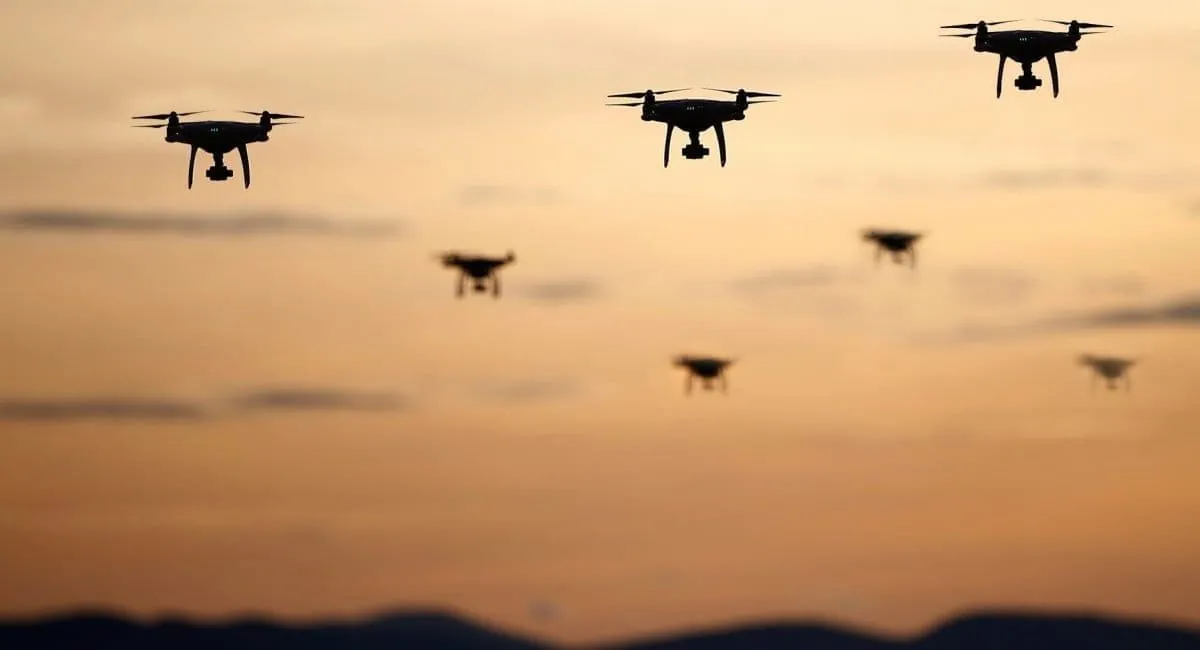
    Google and Meta call on Australia to postpone ban on social networks for children Hostile attack drones are spotted in the sky over Ukraine. This was reported by Reuters, according to UNN.

    Details

    The companies claim that more time is needed to assess the potential consequences of this decision.

    The draft law, initiated by the government of Prime Minister Anthony Albanese, provides for restrictions on children's access to social media. If passed, Australia will become one of the countries with the strictest rules on the use of social media by minors.

    The government plans to finalize the initiative this week, by the end of the parliamentary year. Meanwhile, critics of the draft law, including representatives of the IT industry, argue that the rapid implementation of such restrictions could have unexpected social and technical consequences.

    Australia advocates a ban on social media for children under 16 and the introduction of age verification using biometricsNov 21 2024, 03:43 AM • 17946 views

  • UK creates special laboratory for AI research to counter new threats

    UK creates special laboratory for AI research to counter new threats

    UK creates special laboratory for AI research to counter new threats

    The United Kingdom announced the creation of a secret artificial intelligence security research laboratory at the NATO Conference. The laboratory will bring together experts to assess the impact of AI on the country's security and develop cyber defense tools.

    The UK announced the creation of a special laboratory for AI security research at the NATO Conference. Britain and its allies should be one step ahead in the new arms race in the field of artificial intelligence, according to a statement by the British government , UNN reports.

    "NATO needs to continue to adapt to the world of AI, because as technology evolves, so does the threat," the Chancellor of the Duchy of Lancaster said at the NATO Cyber Defense Conference at Lancaster House on Monday.

    To help the UK stay ahead in the "new AI arms race," the Chancellor of the Duchy of Lancaster has announced the creation of a new AI Security Research Laboratory (LASR) to "protect the UK and its allies from emerging threats," according to a statement from the British government.

    The lab will reportedly bring together world-class industrial, academic, and government experts to assess the impact of AI on the country's security.

    It is noted that while AI can increase existing cyber threats, it can also create better cyber defense tools and provide intelligence agencies with opportunities to collect, analyze, and obtain more useful intelligence.

    Make no mistake: The United Kingdom and others in this room are watching Russia. We know exactly what they are doing, and we are countering their attacks both publicly and behind the scenes. We know from history that appeasing dictators who commit aggression against their neighbors only emboldens them. Britain has long understood the importance of standing firm in the face of such actions

    – said the Chancellor of the Duchy of Lancaster.

    Britain warns of large-scale Russian cyberattacks on critical infrastructure of NATO countriesNov 24 2024, 10:59 AM • 21967 views

  • Sony is developing a portable console to compete with Nintendo and Microsoft

    Sony is developing a portable console to compete with Nintendo and Microsoft

    Sony is developing a portable console to compete with Nintendo and Microsoft

    Sony is developing a new portable gaming console to compete with Nintendo and Microsoft. The device will have a native game launcher without the need for Wi-Fi and is expected to be available in three years.

    Sony is working on a portable console to compete with Nintendo and Microsoft. UNN writes about this with reference to The Verge.

    Details

    The media reports that Sony is developing a console to compete with Nintendo and Microsoft in the handheld gaming market and is likely to release it in three years.

    Next year, the next generation of the Switch console from one of the leading figures in the handheld gaming industry, Nintendo, is expected to be released. Microsoft is also developing its prototype of the Xbox portable console. However, the release of this device, according to Microsoft Gaming CEO Phil Spencer, is expected to be "years away.

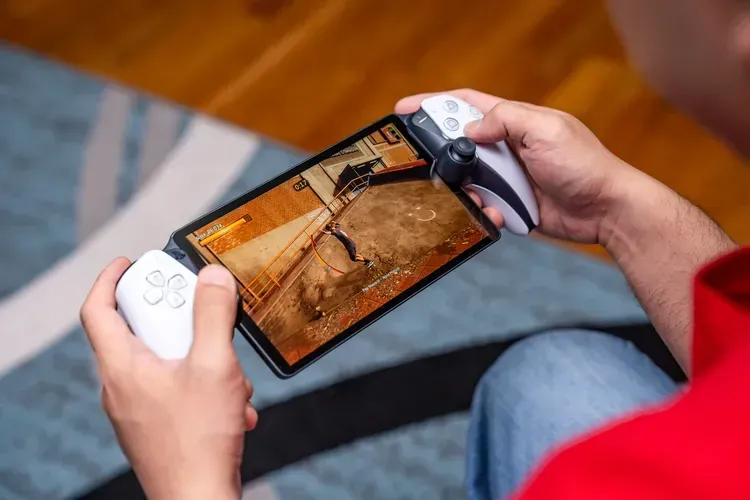
    However, Sony is not willing to be left behind and will build on PlayStation Portal: an eight-inch gaming device released last year that wirelessly streams PS5 games from the cloud but was originally intended to work as a standalone device. The new device will allow games to be played natively rather than over Wi-Fi, potentially expanding Sony's audience and making its games more accessible.

    Recall

    Sony's president reported on the successful sales of PlayStation 5 Pro, despite the high price. The company reached 77.7 million game sales and increased the PlayStation Network user base to 116 million.

    S.T.A.L.K.E.R. 2 reaches one million sales in less than half a week after releaseNov 22 2024, 12:25 PM • 90883 views

  • International Drone Coalition: support for Ukraine will reach €1.8 billion

    International Drone Coalition: support for Ukraine will reach €1.8 billion

    International Drone Coalition: support for Ukraine will reach €1.8 billion

    Latvia and the United Kingdom lead the International Drone Coalition, which will support Ukraine with €1.8 billion in 2024. The Coalition has a €83 million Joint Fund for the purchase of drones and the development of their production.

    Support for Ukraine by the member countries of the International Drone Coalition, led by Latvia and the United Kingdom, will reach 1.8 billion euros by the end of 2024. This was reported by the Ministry of Defense of Latvia, UNN reports.

    "Drones have become an integral part of the Russian-Ukrainian war. This is a technological advantage that allows us to deter and destroy the enemy. That is why it is important to continue working on scaling up their production both in Ukraine and in the West," said Kateryna Chernohorenko, Deputy Minister of Defense of Ukraine for Digital Development, Digital Transformation and Digitalization.

    The Deputy Minister thanked the partners for their consistent and unwavering support of the Coalition, as well as for understanding the importance of this initiative for global security.

    "The International Drone Coalition has become an important platform for the development of the drone industry, which will also strengthen our national defense in the future," said Latvian Defense Minister Andris Spruds.

    The goal of the Drone Coalition is to ensure the industrial production of FPV drones and expand the drone industry in the West and in Ukraine to create an asymmetric technological advantage over the enemy on the battlefield in accordance with the needs of the Ukrainian Armed Forces.

    Add

    The Drone Coalition has a Common Fund for the purchase of drones, which holds regular tenders as a way to create innovative products on a competitive basis. The fund is worth €83 million. All other assistance is provided by Coalition members on a bilateral basis in the form of unmanned aerial vehicles and financial support.

  • OpenAI to pay ‘Google tax’ starting from 2025 – MP

    OpenAI to pay ‘Google tax’ starting from 2025 – MP

    OpenAI to pay 'Google tax' starting from 2025 - MP

    OpenAI has notified owners of paid accounts that the “Google tax” in Ukraine will start on January 1, 2025. This was announced by MP Yaroslav Zheleznyak, noting the “success” of Hetmantsev's initiative on taxation.

    OpenAI has sent out notifications to paid account holders that starting January 1 next year they will be subject to a "Google tax," MP Yaroslav Zheleznyak said, reports UNN.

    Today I received a newsletter from OpenAI, as the owner of a paid account, that from January 1, 2025, they will be a payer of the "Google tax"

    – wrote Zhelezyak on Telegram.

    He noted that in this way "Hetmantsev made (even) artificial intelligence pay VAT in Ukraine!"

    Context

    Under the pretext of the need to increase funding for the army, Danylo Hetmantsev, chairman of the Verkhovna Rada Committee on Finance, Taxation and Customs Policy, has repeatedly initiated tax increases in Ukraine. Among his latest initiatives, he proposed, for example, to oblige working Ukrainians to buy government bonds for 7% of their salaries. Experts criticize the initiative because of the additional burden on the population and possible negative consequences for the economy.

  • Russia fires North Korean missiles with Western components at Ukraine – CNN

    Russia fires North Korean missiles with Western components at Ukraine – CNN

    Russia fires North Korean missiles with Western components at Ukraine - CNN

    Russia has fired about 60 North Korean KN-23 missiles at Ukraine since the beginning of the year. The missiles contained components from nine Western manufacturers, including the United States, the Netherlands, and the United Kingdom.

    Since the beginning of the year, Russia has fired about 60 North Korean KN-23 missiles with Western components, some of which were manufactured in 2023, at Ukraine. The only Korean component in these missiles is metal, which rusts quickly. This was written by CNNand reported by UNN.

    Details

    According to the publication, this year Russia has launched about 60 North Korean KN-23 missiles at Ukraine, which is almost one in three of the 194 ballistic missiles launched so far in 2024.

    “We see that since the spring, Russia has been using ballistic missiles and attack drones much more to strike Ukraine. And there is less use of cruise missiles,” Yuriy Ihnat, acting chief of communications of the Ukrainian Air Force, told CNN.

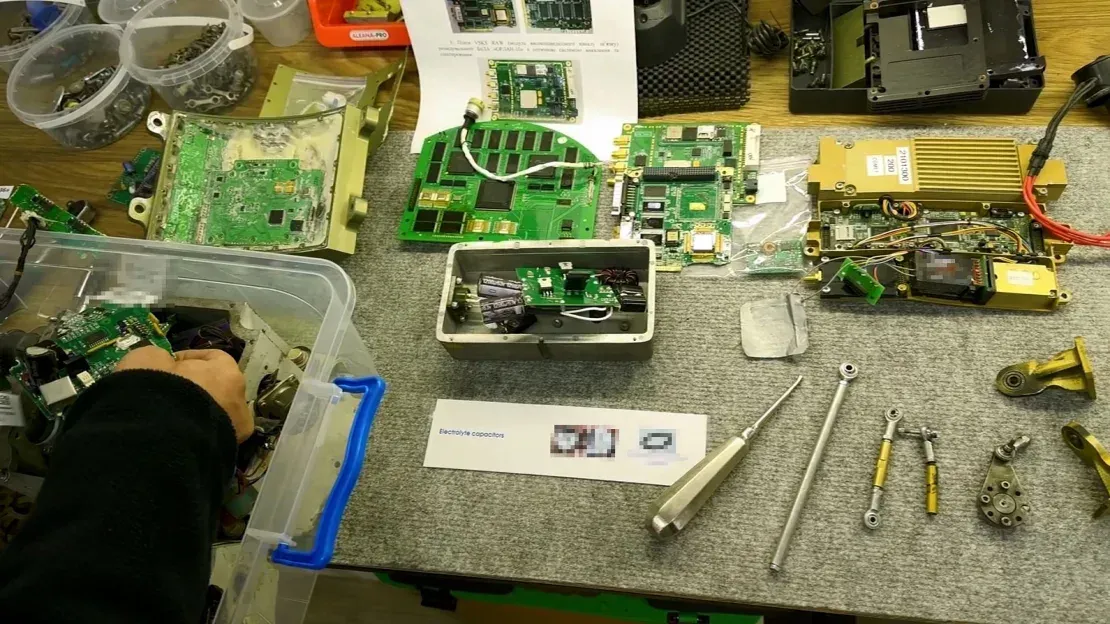
    The publication notes that, according to a recent report by the Ukrainian Independent Anti-Corruption Commission, key components used in North Korean missiles are produced by nine Western manufacturers, including companies based in the United States, the Netherlands, and the United Kingdom. Some parts of the missiles were manufactured as recently as 2023, indicating that they could be delivered to North Korea quickly.

    “Everything that works to control the rocket, to make it fly, is all foreign components. All the electronics are foreign. There is nothing Korean about it. The only thing that is Korean is the metal, which quickly rusts and corrodes,” Andriy Kulchytskyi, head of the military research laboratory of the Kyiv Scientific Research Institute of Forensic Expertise, said in a commentary to the publication.

    The Ukrainian intelligence service told the newspaper that, according to investigations, “the vast majority of components are Western.

    The publication, citing experts, notes that there is no reliable information on how the components get to North Korea, but all signs point to China as a likely channel.

    “We have successfully traced some of these components, and the last known custodians are Chinese companies,” said CAR Deputy Director of Operations Damien Splitters.

    Recall

    Experts from the Kyiv Scientific Research Institute of Forensic Expertise (Kyiv Scientific Research Institute of Forensic Expertise) found that Russia used, among other things, North Korean ballistic missiles of the KN-23/24 type during the combined attack on Ukraine on November 13.

    According to the experts of KFI, the KN-23 combines both modern technologies and solutions from the last century. A significant percentage of the microelectronics is manufactured in China, Taiwan, the United States, and other countries. Probably, launches are carried out from North Korean-made launchers, as it would be much more difficult to adapt Russian systems.

    Add

    Earlier, experts from KFI spoke about the technical features of North Korean missiles used by Russia to attack Ukraine.

  • Apple confirms zero-day attacks on Mac users and recommends important updates

    Apple confirms zero-day attacks on Mac users and recommends important updates

    Apple confirms zero-day attacks on Mac users and recommends important updates

    Apple has confirmed active cyberattacks on Mac users and released critical security updates. Intel-based Macs are at the highest risk, and iPhones and iPads running older versions of iOS 17 are also vulnerable.

    Apple has released a security update that is “recommended for all users” to address the effects of active cyberattacks targeting Mac users.

    Writes UNN with reference to TechCrunch.

    Apple has confirmed that Mac users have been targeted by hackers. But the company's specialists have released security updates “recommended for all users.” This is important to fix several security bugs that were used in cyberattacks.

    It is noted that Intel-based Macs are at the highest risk.

    Macs powered by Intel processors are particularly at risk. iPhone and iPad devices, including older versions of iOS 17, are also affected.
    To fix the bugs, Apple has released a software update for macOS, as well as patches for iPhone and iPad, including for users running an older version of iOS 17.

    The bugs are considered zero-day vulnerable because Apple did not know about them at the time of their exploitation.

    Hungarian army procurement agency attacked by international hacker groupNov 14 2024, 01:30 PM • 15928 views

    It is not yet known who is behind the attacks targeting Mac users, how many Mac users were targeted, or whether any of them were compromised.

    Meta to appear in antitrust court for buying Instagram and WhatsAppNov 14 2024, 03:12 PM • 15755 views

  • NASA has discovered a very young planet, it may have life

    NASA has discovered a very young planet, it may have life

    NASA has discovered a very young planet, it may have life

    Scientists have discovered an exoplanet, LHS 1140 b, located 48 light-years from Earth, which may have liquid water and an atmosphere. The planet is located in the “Goldilocks zone” and has a mass six times that of the Earth.

    Scientists have discovered an exoplanet that may contain liquid water. This distant planet, called LHS 1140, may even have an atmosphere similar to Earth. Ever since humans have looked up at the stars, we have been fascinated by the search for life beyond Earth. But this search may soon come to an end, as scientists have discovered a planet that could be our “best bet” for finding alien life in space. This was reported by mashable, according to UNN.

    Details

    Observations have confirmed that the neighboring planet may have an ocean of liquid water and even a nitrogen-rich atmosphere like on Earth.

    Lead author Charles Cadieux of the University of Montreal said: “Of all the currently known temperate exoplanets, LHS 1140 b may be our best bet to one day indirectly confirm the presence of liquid water on the surface of an alien world outside our solar system.

    Although we don't know exactly what alien life would look like, scientists are almost certain that it would need liquid water to survive. The exoplanet LHS 1140 b is located 48 light years from Earth in the constellation Cygnus. This means that our closest neighboring planet exists in the “Goldilocks zone” of its star, a region where water can exist as a liquid,

    – the message says.

    This exoplanet is about six times the mass of the Earth and orbits a small red dwarf star about one-fifth the size of our Sun at a distance cool enough for potential water formation.

    Recent analysis has shown that the exoplanet was significantly less massive than an object of its size should be. This left researchers with two options: either LHS 1140 b was a “mini-Neptune” composed mostly of liquefied or frozen gas, or it was a “Mega-Earth” covered in liquid or frozen water.

    The exoplanet LHS 1140 b is in the habitable zone of its star, where liquid water may exist. Its high mass also gives it a high enough exit velocity to gather a thick atmosphere, as shown in this planet diagram

    To determine what that is, the researchers combined data from JWST and other space telescopes such as Hubble and Spitzer to make the first “spectroscopic” analysis of LHS 1140 b. Because certain molecules block different wavelengths of light, by measuring the frequencies of light passing by the planet, we can learn what chemicals might be present.

    Their analysis suggests that LHS 1140 b is most likely a “water world” or “snow globe” with a rocky core, rather than a gaseous mini-Neptune. Even more exciting is that initial analysis suggests that the exoplanet may even have a thick atmosphere like Earth's. This would give it a much greater ability to retain heat from its star and increase the likelihood that it could have a stable climate – all important factors for life to exist,

    The scientists added.

    Dr. Ryan McDonald, an astronomer at the University of Michigan who worked on the paper, said: “This is the first time we've seen a hint of an atmosphere on a rocky or ice-rich habitable zone exoplanet.

    Although they warn that more observations from JWST are needed, the atmosphere may be rich in nitrogen, which makes up 78 percent of the atmosphere on Earth.

    Dr. MacDonald adds: “LHS 1140 b is one of the best small exoplanets in the habitable zone that is capable of supporting a thick atmosphere, and we may have just found evidence of air on this world.

    Similar to the Moon's orbit around the Earth, LHS 1140 b has a synchronous orbit, meaning that one side is constantly turned away from the star.

    Although researchers believe that the exoplanet is most likely a frozen “snowball,” this means that there may be liquid water on the side heated by the star.


    Dr. Ryan McDonald, an astronomer at the University of Michigan who worked on the paper, said: “This is the first time we've seen a hint of an atmosphere on a rocky or ice-rich exoplanet in the habitable zone.

    Although they warn that more observations from JWST are needed, the atmosphere may be rich in nitrogen, which makes up 78 percent of the atmosphere on Earth.

    Dr. MacDonald adds: “LHS 1140 b is one of the best small exoplanets in the habitable zone that is capable of supporting a thick atmosphere, and we may have just found evidence of air on this world.

    Similar to the Moon's orbit around the Earth, LHS 1140 b has a synchronous orbit, meaning that one side is constantly turned away from the star.

    Although researchers believe that the exoplanet is most likely a frozen “snowball,” this means that there may be liquid water on the side heated by the star.

  • Lithuania plans to switch to 100% green electricity by 2030

    Lithuania plans to switch to 100% green electricity by 2030

    Lithuania plans to switch to 100% green electricity by 2030

    The Lithuanian Minister of Environment has announced the complete transition of the national power grid to renewable sources by 2030. The country has already quadrupled its solar and wind power capacity since 2020.

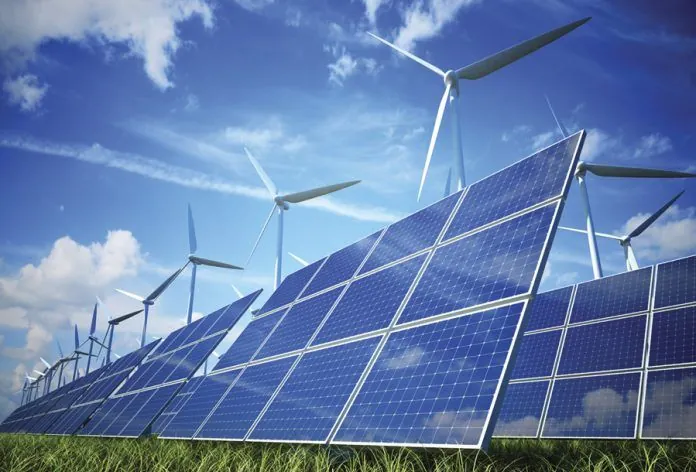
    Lithuania's national power grid will become completely environmentally friendly by 2030, and the share of electricity from renewable sources will reach 100 percent. This was stated by the Minister of Environment of Lithuania Simonas Gentvilas, speaking at the COP29 summit in Baku, UNN reports with reference to Trend.

    Details

    In his speech, the Lithuanian Minister of Environment emphasized the importance of abandoning fossil fuels and set an ambitious goal to triple global renewable energy capacity and double energy saving efforts by 2030, as announced last year at the Dubai Summit.

    However, according to him, the initial assessment of the program showed that the efforts of the international community are still insufficient. “Unfortunately, the first evaluation of the program shows that our collective efforts were not enough. We can and must do better,” the minister said.

    It is noted that Lithuania has already made significant progress in the transition to a green economy. The country has pledged to reduce greenhouse gas emissions by at least 70 percent by 2030 compared to 1990, and the long-term goal is to achieve climate neutrality by 2050.

    Gentvilas also pointed out that since 2020, the capacity of solar and wind energy in Lithuania has quadrupled. These figures are expected to more than double by 2026. In addition, the country intends to reach 100 percent renewable energy use in the heating sector by 2050, the minister added.

    The level of air pollution in Delhi exceeded the WHO standard by 30 timesOct 29 2024, 07:44 AM • 12949 views

    Gentvilas called on the international community to achieve ambitious and balanced results at COP29. “Today, Lithuania calls for ambitious and balanced results here in Baku,” he said, emphasizing the importance of implementing a global stocktaking mechanism and raising ambitions on climate change mitigation to curb the 1.5°C temperature rise.

    The Minister also touched upon the key topic of climate finance, calling for a realistic and ambitious global target. “We need to move towards long-term sustainability and reach a new agreement on a new collective quantified climate finance target,” Gentilas said.

    Ukraine's environmental damage from the full-scale war reached $71 billionNov 19 2024, 04:54 PM • 19951 view