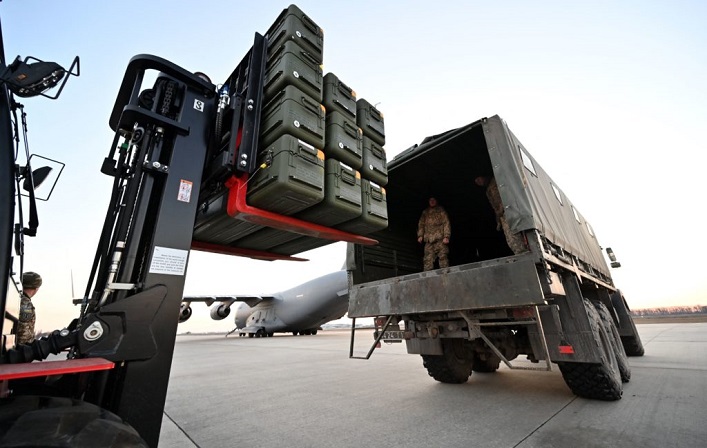
Norway has agreed to share responsibility with Poland for securing a major transit hub for international military aid to Ukraine.
Source: Polish Prime Minister Donald Tusk, cited by Bloomberg and PAP, as reported by European Pravda
Details: Tusk announced on 27 November that he has received confirmation from Norwegian Prime Minister Jonas Gahr Støre that Norway will assist in securing the Rzeszów-Jasionka airport, through which a significant portion of military aid to Ukraine is routed.
"Norway will support the security of this site with its systems," Tusk emphasised, noting that this effort is part of NATO’s broader framework.
Background:
The prime ministers of Denmark, Estonia, Latvia, Norway, Poland, Sweden and Finland have pledged to increase support for Ukraine following a summit at the Swedish Prime Minister's Harpsund residence on 27 November.
Additionally, on 28 November, Norway’s parliament approved an increase in its support for Ukraine to NOK 35 billion (approximately US$3.16 billion) in 2025.
PoliticsWar The US will provide Kyiv with a new military aid package worth $725M, but Biden will not have time to spend the billions that have been allocated to help Ukraine. Friday, November 29, 2024
The Biden administration is preparing a new military aid package for Ukraine worth $725M. It will provide a variety of anti-tank weapons from American stocks. The package is also expected to include anti-personnel mines, drones, Stinger missiles, ammunition for HIMARS systems, and cluster munitions. This package will be one of the largest provided under the Presidential Drawdown Authority (PDA), allowing weapons to be transferred from Pentagon warehouses. Biden has access to another $4-5B in PDA funds that he wants to use before Trump’s inauguration on January 20. However, according to the WSJ, the Biden administration will not have time to spend all of this money before the inauguration, because the US would have to send more than $110M in weapons every day, which is unrealistic. The Pentagon plans to transfer weapons worth $500 to $750M monthly, mostly ammunition and artillery, which are easier to transport.
There will be plenty of ‘only Europa League’ and ‘only Bodo/Glimt’ poo-pooing after this, but every game under a new manager is a learning experience.
And there was plenty to take from Manchester United’s first win under Ruben Amorim on a night that certainly crystallised a few ideas about which players stand to win and lose under the new manager.
What this first home game showed beyond doubt, and we think in a way that exceeds any opposition caveats because Bodo are a decent Europa League team anyway, is that Ruben Amorim’s Manchester United are going to be more fun than Erik Ten Hag’s.
There is already greater urgency and purpose about their football, if not yet quite a full understanding of the requirements and responsibilities of a few new roles.
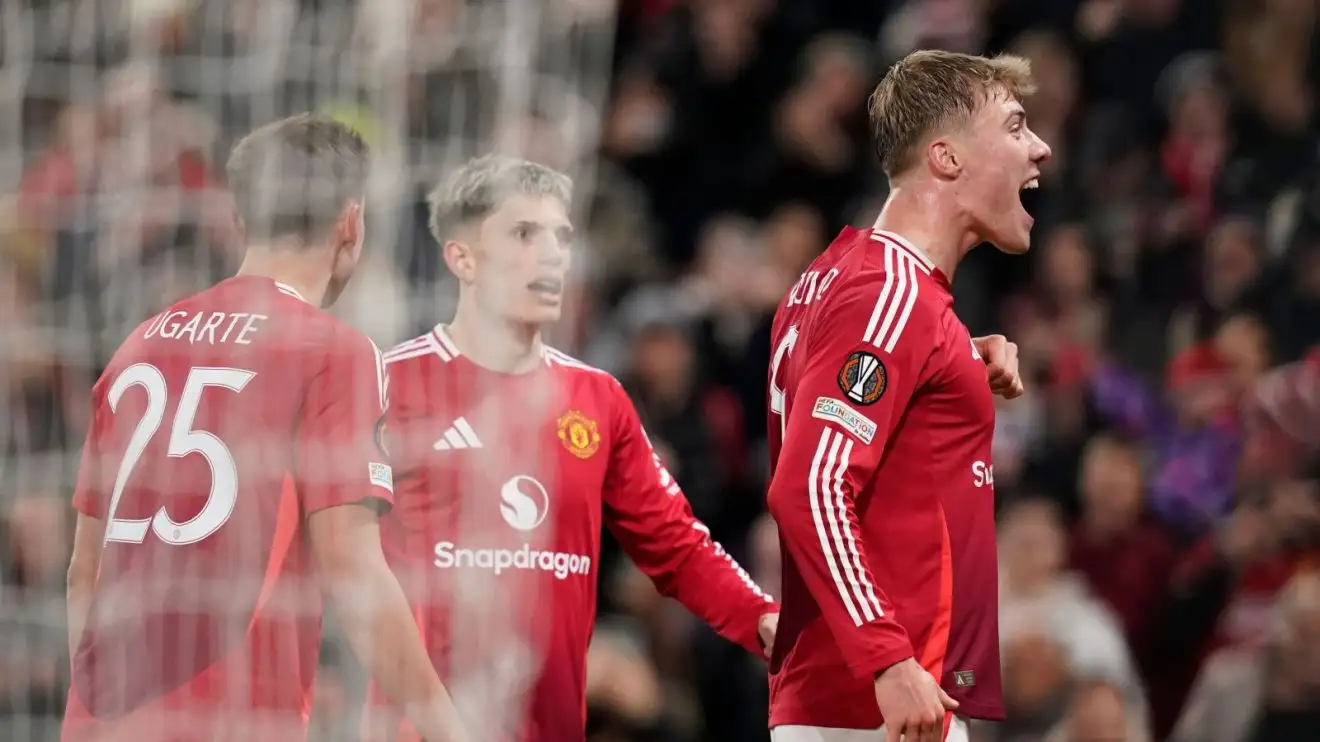
No points for working out the big winner on the night was Rasmus Hojlund after his two goals and assist, but he does look like perhaps the roundest peg in the roundest hole we’ve seen so far for Amorim’s United.
This is already a team now far more geared towards getting the most out of his pace, both in and out of possession. The first goal inside the first minute is obviously keeper-assisted, but it feels reasonable to ask whether Hojlund would have been tasked with bothering and hassling the keeper into the error that handed Alejandro Garnacho the easiest of goals.
Hojlund’s own first goal was a wonder. Again, intelligent high pressing created the chance, with Noussair Mazraoui – another obvious winner under Amorim – winning the ball back high up the pitch and then having the ability and intelligence to do something useful with it once he had it.
Hojlund still had loads to do, mind, and the confidence required to even attempt the outlandish touch-and-finish he pulled off is encouraging in itself.
That was perhaps the moment that will bring Amorim most happiness from the night. If – and it remains a significant if – Hojlund can prove himself a reliably effective spearhead for this 3-4-2-1 formation then it could save United fortunes that can be invested elsewhere to plug some more conspicuous gaps.
Mazraoui, for his part, is just very obviously an excellent footballer. For all the folly of spending all that money in the summer on a manager who always looked doomed, at least in this case they’ve spent it on a player any manager of any style would be happy to accommodate. There are probably five positions in Amorim’s preferred formation where Mazraoui could do a bang-up job, and we may well see him prove it during a packed month before the transfer window opens.
MORE ON MAN UTD FROM F365 👉 Man Utd star who ‘doesn’t want to listen’ should be dropped by Amorim until he learns to be Steve Coppell 👉 ‘Pretender’ Kylian Mbappe is the French version of Marcus Rashford 👉 Ruben Amorim indulges in ‘loving’ SLAPS as Man Utd training session turns ‘bizarre’
In between those two wonderfully Amorim goals, though, came the equally clear warnings. United conceded twice in the space of four frantic, confused minutes and both exposed the limitations that exist within this squad for this shape.
It’s been pointed out time and again that Amorim’s Sporting side relied on non-stop running as well as technical ability from that double-6 pivot. Manuel Ugarte provided it tonight; Bruno Fernandes didn’t.
Too often it allowed a gap to grow between the centre-backs and midfield, gaps Bodo to their credit were able to exploit. Two excellent finishes were nevertheless both assisted by slapdash United defending.
The acres between defence and midfield made it too easy for the equaliser to be teed up and stroked home from around the edge of the box.
And the second goal owed a little to players coming to terms with this new shape and players just coming to terms with playing football again. Lisandro Martinez had bolted upfield – which isn’t necessarily a bad thing when there are three centre-backs. But Tyrell Malacia, gingerly making his way back into the starting XI after his injury horrors, didn’t get the memo to slot in from his post at left wing-back.
United were punished heavily for that bad five minutes, but they were much better after the break.
It would be tempting to put that improvement down to a bravura tactical flourish from Amorim. We’re really not sure it was. It still looked pretty much like a fluid 3-4-3 in the second half; the key difference was that Diogo Dalot (who has played all of the football) replaced Malacia (who has played none of the football) and simply took up far better positions. Maybe that was a managerial directive, but it might just as easily have been a different player taking a slightly different, and better approach to his role.
It still wasn’t perfect by any means. United did have to cling on a little bit at the end having passed up a few chances for a killer fourth goal. And it was only Bodo/Glimt. We’re still not remotely sure Bruno Fernandes is really suited to any of the central roles in this shape, and we’re very sure indeed that Antony is not and never will be a right wing-back.
But there are undoubtedly glimpses of the things that might work. Mason Mount has had a right result for club and country, Ugarte is clearly starting to get the hang of it after taking some time to adapt to his new surroundings. Mazraoui is just really excellent at football. These are all positives, but there’s no doubt that the biggest of the lost on what was, overall, an encouraging night was the performance of Hojlund.
If he can be this striker for United long-term, it solves one problem while making it far easier to address the others that remain.
From December 1, Diya will launch the "Winter support" service with the payment of 1000 UAH for Ukrainians. Funds can be obtained through the app, partner banks or Ukrposhta.
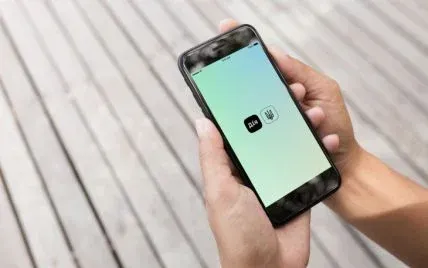
The Diya app is preparing to launch the Winter support service and is already choosing a design. One-time state aid in the amount of 1000 UAH will be available to Ukrainians who are on the territory of Ukraine, including children. This was announced by Deputy Prime Minister-Minister for innovation, development of Education, Science and Technology – Minister of digital transformation of Ukraine Mikhail Fedorov in Telegram, writes UNN.
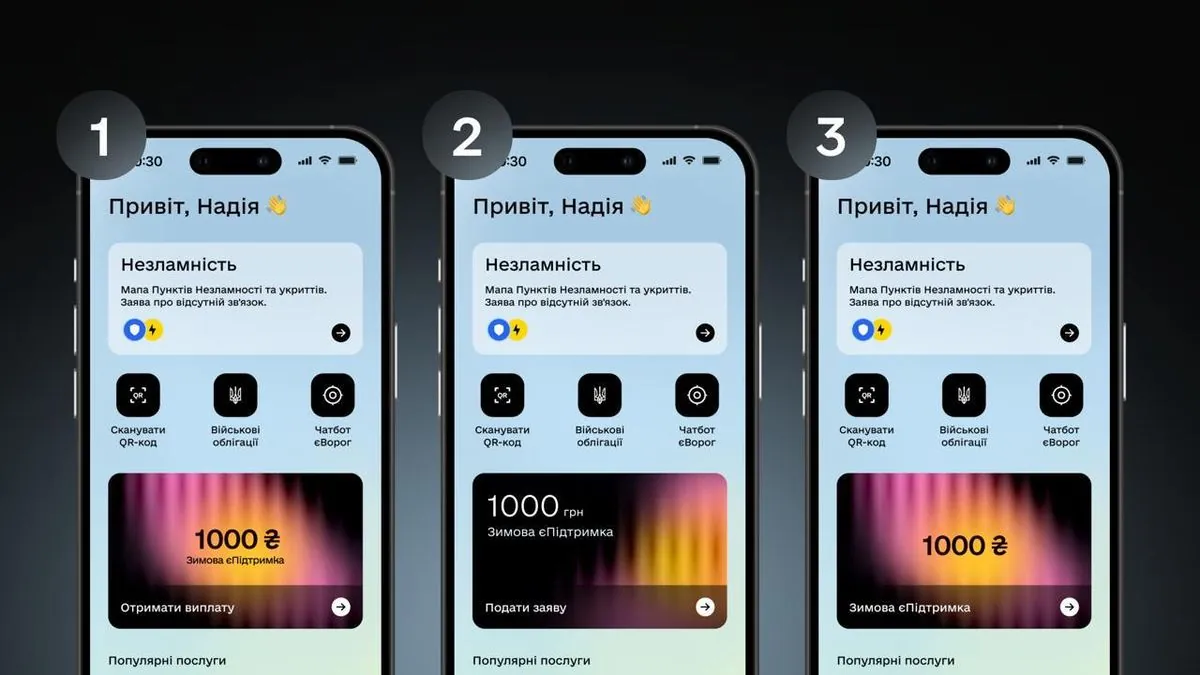
To ensure maximum availability of this service, "Winter support" will be displayed on the main screen of "actions". Currently, users are offered three banner design options that reflect convenience and information content:
Option 1: Clear and minimalistic design with a button for receiving payouts.
Option 2: focus on applying with a darker color scheme.
Option 3: underline the payout amount, which emphasizes the ease of navigation for users.
The service will be available from December 1, and applications will be accepted through the Diya mobile app. The funds received can be used until the end of 2025.
how to get "winter support" via "Action":
1. Install the action app.
2. open the National cashback card in a partner bank, if it is not available.
3. Activate the card in the "services"section.
4. Apply for payment.
5. expect funds to be credited.
There are also alternative ways to get help for people without access to Diya:
Appeal to partner banks.
Pensioners and persons with disabilities can receive funds through Ukrposhta.
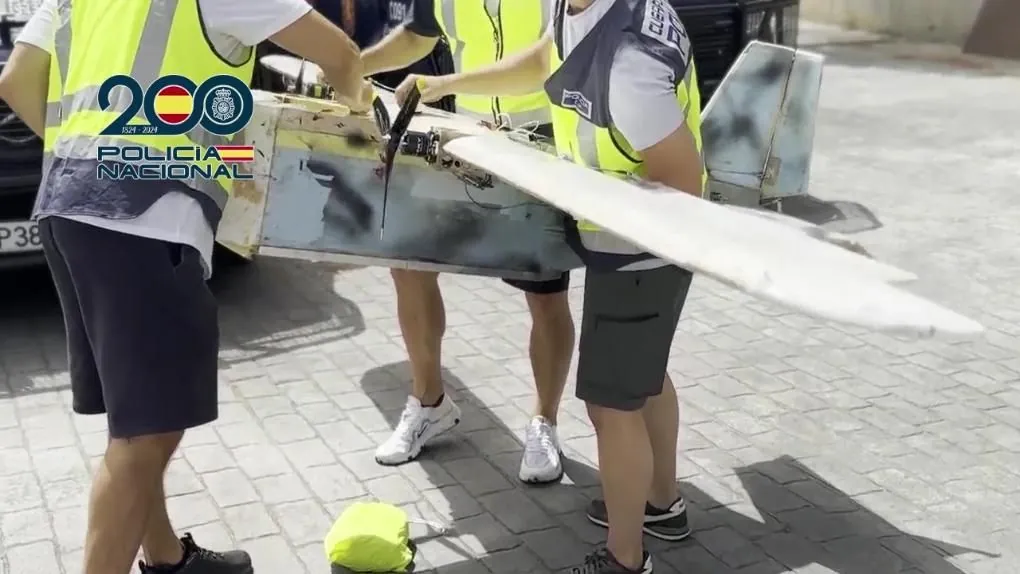
Spanish police have exposed a criminal network that used Ukrainian drones to transport hashish from Morocco. 10 people were detained, three drones capable of carrying up to 10 kg of cargo over a distance of more than 50 km were seized.
Spanish law enforcement officers have exposed a criminal network that used Ukrainian drones to transport drugs between Morocco and Spain. This is reported by the Spanish national police, writes UNN.
Details
It is noted that members of the network, which operated in the city of Algeciras in the south of the country, transported drugs through the Strait of Gibraltar, which separates Morocco and Spain.
According to law enforcement officers, for this they used special drones capable of carrying up to 10 kg of cargo over a distance of more than 50 km. The devices were manufactured by small manufacturers in Ukraine, and then delivered by car to the south of Spain. During the investigation, it was confirmed how the organization tried to send up to thousands of kilograms of hashish using this method.
Together with the police of Spain, Ukraine and Poland, 10 members of the group were detained. Three drones, remote controls, tools, cash and a large batch of hashish were seized from them. Seven of the detainees were given a preventive measure in the form of detention.
Bulgaria confiscates about 170 kg of cocaine transported in bananas from EcuadorMar 27 2024, 02:50 AM • 35257 views
WARNING: This article contains descriptions of graphic scenes.
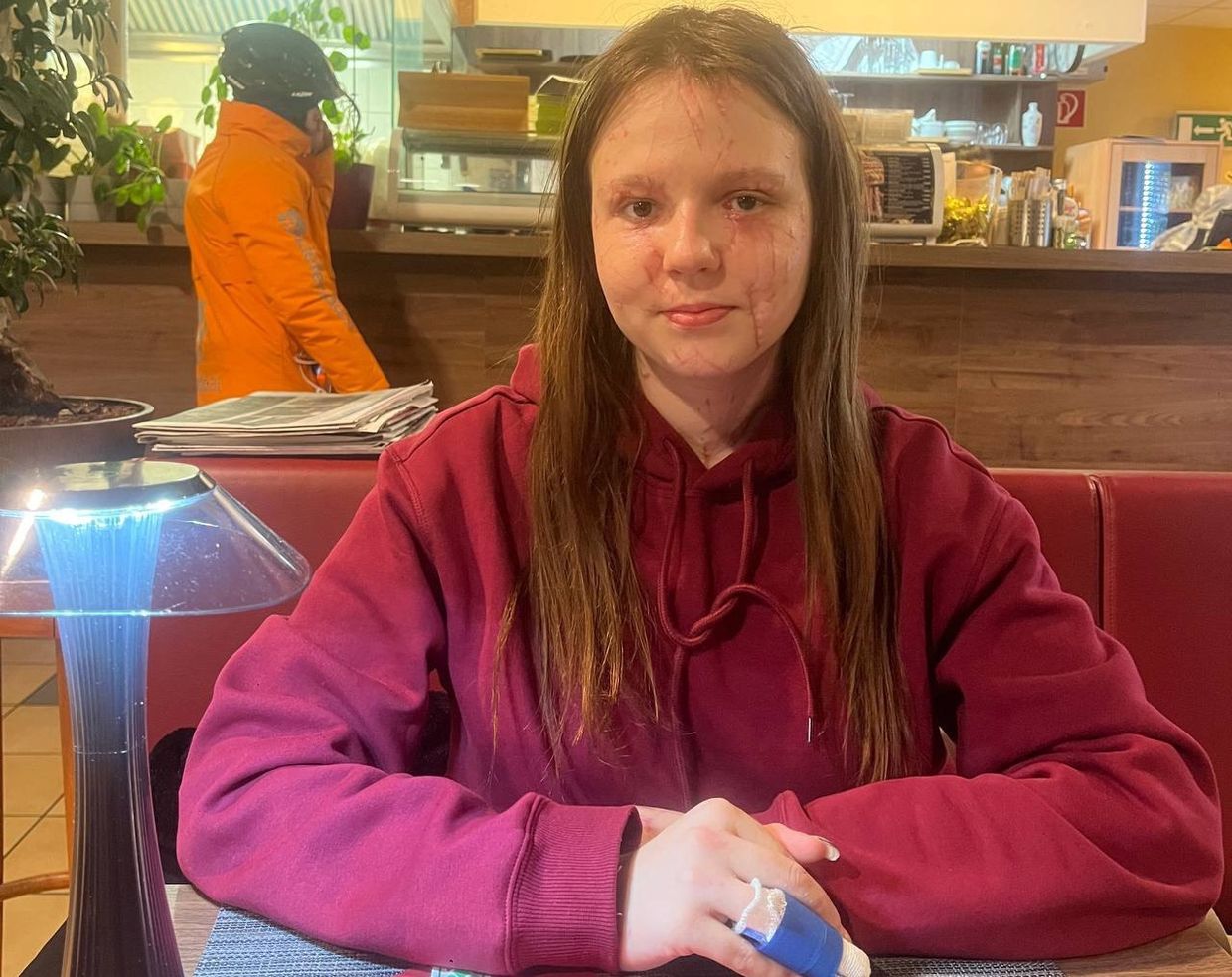
Anna Kotova was chatting with her sister on a video call, admiring her image on the screen. It was her 19th birthday, and for the first time in a while, she was feeling good about how she looked.
“I used to dye my hair a lot, and then I realized my natural hair had grown out, and I liked it so much. I had long eyelashes, and I looked so good,” Kotova recalls.
Then, in an instant, everything went dark. “The missile hit right after I thought that.”
It was Jan. 14, 2023, the day when Russia unleashed one of its deadliest attacks on Ukraine, striking an apartment building in Dnipro and killing 46 people.
"I didn't see or hear anything, like the missile flying… There was none of that,” Kotova says. “At some point, I felt that I was thrown back, and that was it. My brain just stopped working. I don't remember anything at all, just darkness."
"I don't remember anything at all, just darkness."
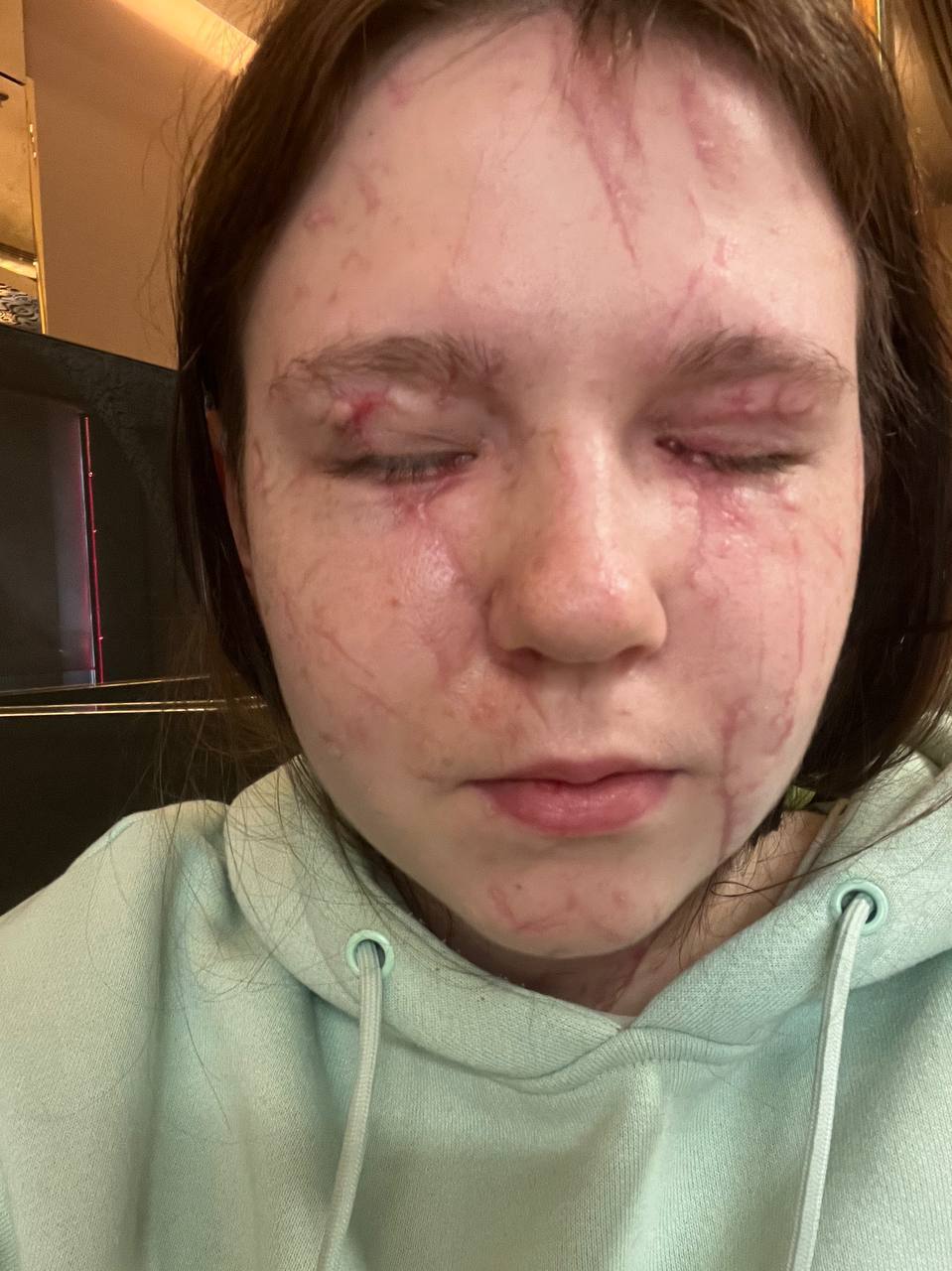
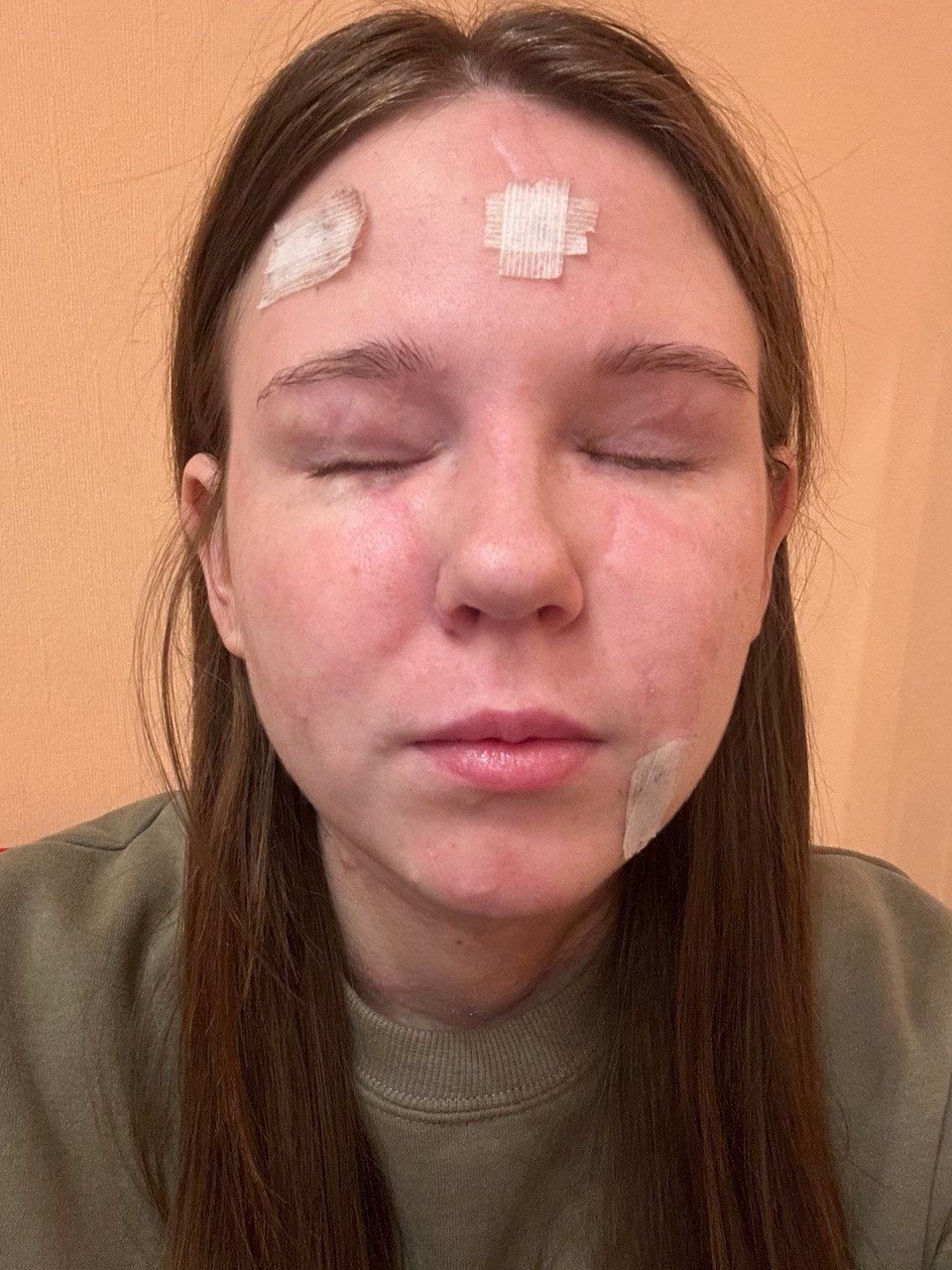
Kotova was among the 79 people injured in the strike. She lost one eye and endured numerous operations to remove all the shards of glass from her body. She is currently receiving laser treatment to minimize the scars left on her face and body.
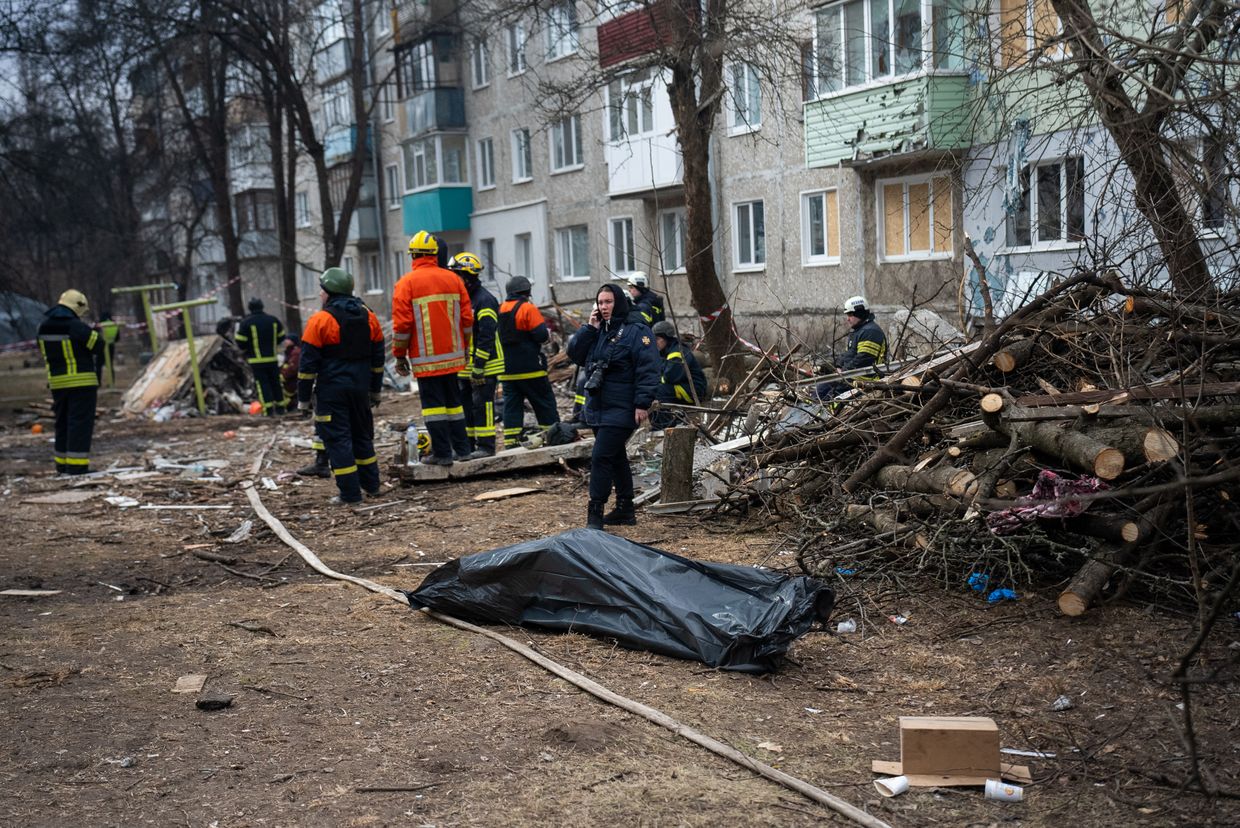
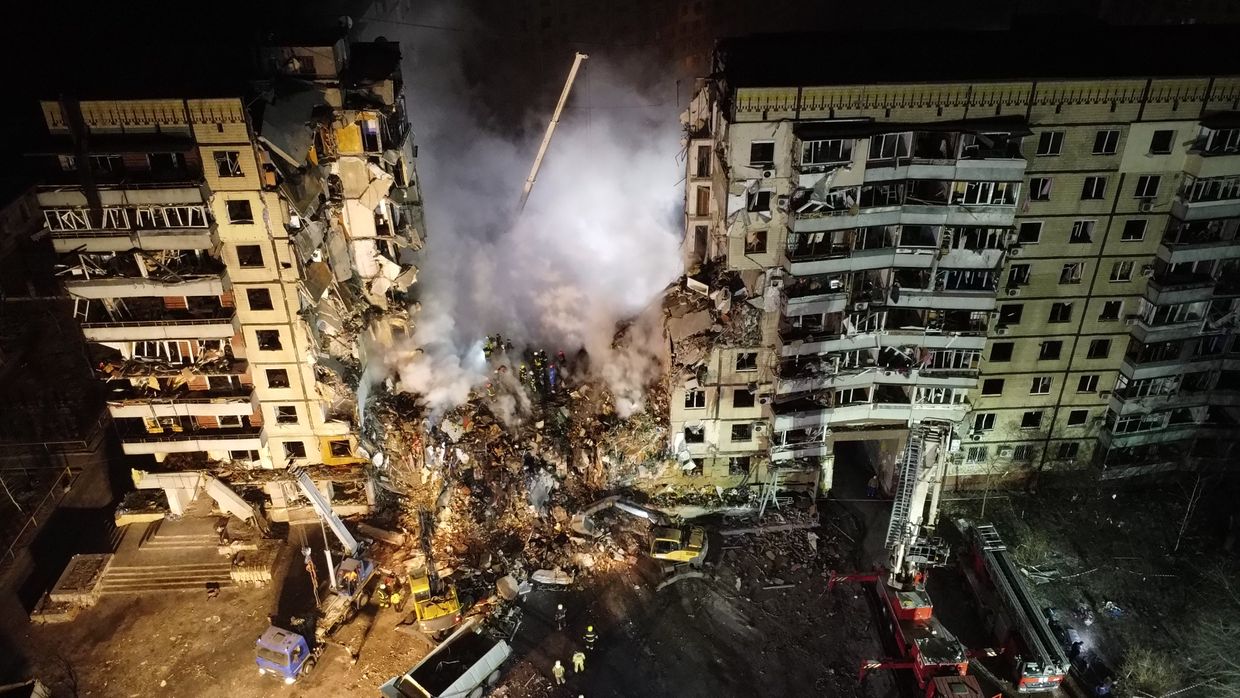
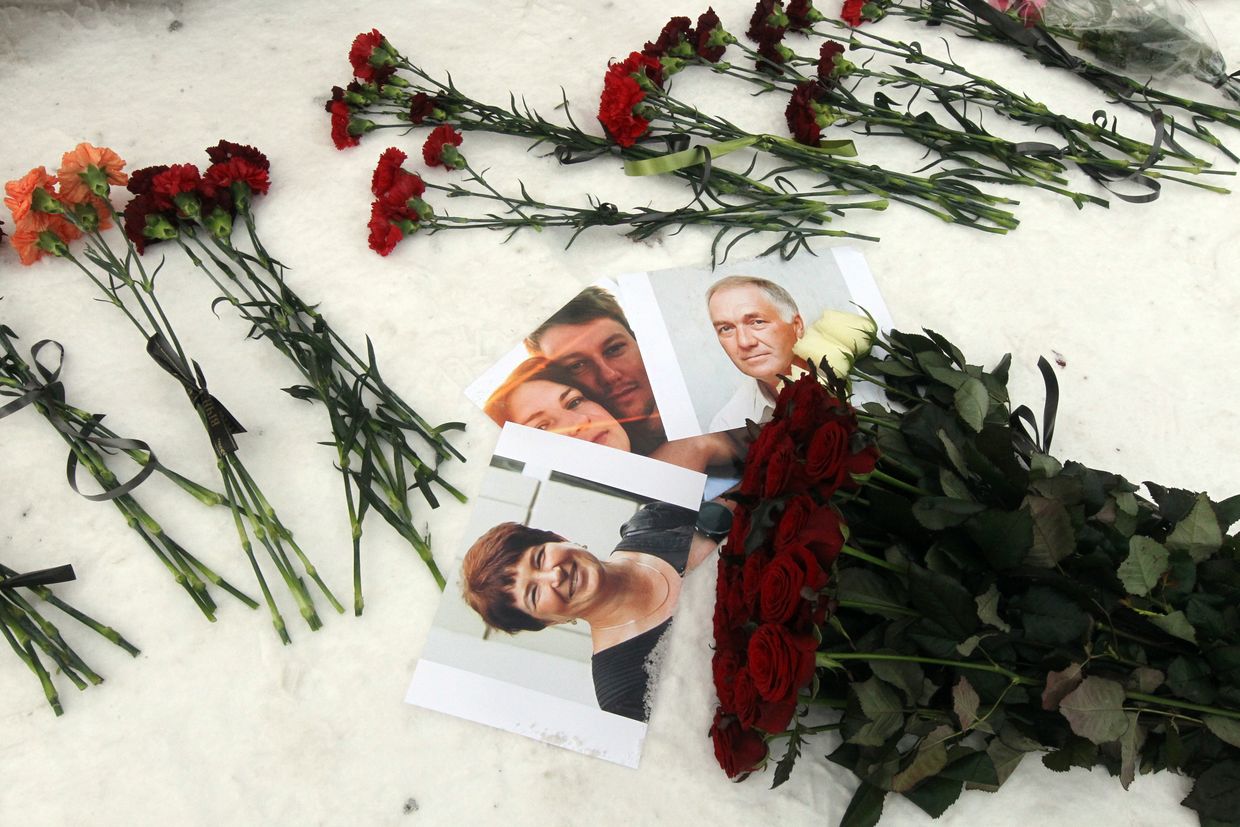
An aerial view of firefighters conducting search and rescue operations at residential building hit by a missile in Dnipro, Ukraine on Jan. 15, 2023. (Yan Dobronosov/Global Images Ukraine via Getty Images)Flowers and photos of the victims of the Russian missile strike on a high-rise building at 118 Peremohy Embankment during a public memorial service organized near the site of the strike on the first anniversary of the tragedy, Dnipro, Ukraine on Jan.14, 2024. (Mykola Miakshykov / Ukrinform/Future Publishing via Getty Images)
Psychologists say that, like Kotova, the thousands of Ukrainians who have survived brutal Russian attacks since Feb. 24, 2022 have been left not just with lasting scars on their bodies, but long-term damage to their mental health from the trauma of their experiences.
And their number is steadily growing, as Russian attacks have been wounding civilians almost every day since the start of the full-scale war.
For Kotova, the day the Russian Kh-22 missile destroyed her home split her life into “before and after,” with no possibility of a return to the way things were before.
Anna Kotova in an undated photo. (Personal Archive)
“You live one day at a time because you are still scared of what tomorrow might bring,” Kotova told the Kyiv Independent. “You also didn’t expect that it would happen then, that a missile would hit your house, that it would happen to you, and that you would suffer such injuries.”
“When I lived in Dnipro, I stopped reacting to the air raid alarms over time. If it hits, it hits. But back then, I just couldn't imagine the consequences.”
Kotova and her boyfriend had moved to Dnipro from now-occupied Sievierodonetsk in Luhansk Oblast on the very day the full-scale invasion began. They rented a spacious apartment with their friends. However, when their friends relocated to another city, the couple began searching for a smaller place.
They never found one.
“On the morning of Jan. 14, everything started very well,” Kotova recalls. “I woke up to flowers and a new phone, and everything was wonderful. I couldn't have imagined something so horrible could happen after just a few hours.”
The explosion occurred around 3 p.m., as Kotova and her boyfriend were preparing to host some guests.
Shortly after the blast, Kotova’s boyfriend found her on the kitchen floor. He told her he could not see her eyes and her whole face, only blood and glass shards.
“I remember that when I touched my face with a towel, it felt like minced meat. There was nothing left. It was so slippery and unrecognizable,” she says.
“I started to panic and asked, 'Is this my face?' My boyfriend told me not to touch anything and that everything would be fine. I fell silent and didn't say anything else.”
Anna Kotova after Russian attack on Dnipro in an undated photo. (Personal Archive)
As they escaped the building, they were able to see the scale of the attack and realized how lucky they had been to survive: “I heard people's screams, sirens, and loud noises. I remember that it was very frightening,” Kotova says.
But for her, the most challenging part was yet to begin.
She was taken to a local hospital, where doctors placed her in a coma and performed surgery.
“I woke up on the 15th or 16th (of January). I tried to move, but a doctor came up to me and told me that they had removed my eye…” she says tearfully.
“I had a breakdown. I couldn't breathe on my own, couldn't swallow or talk, and tears started to flow… I couldn’t see anything; I was just lying there, realizing … I no longer had one eye.”
Numerous other operations, lengthy treatments, and the fitting of eye prosthetics in Austria followed. Kotova currently resides in Czechia but often travels to Kyiv for laser treatment. With time, she has learned to look at herself in the mirror without crying, but she cannot forget that horrible January strike.
Her 20th birthday this year, naturally coinciding with the attack’s anniversary, was one of her hardest days.
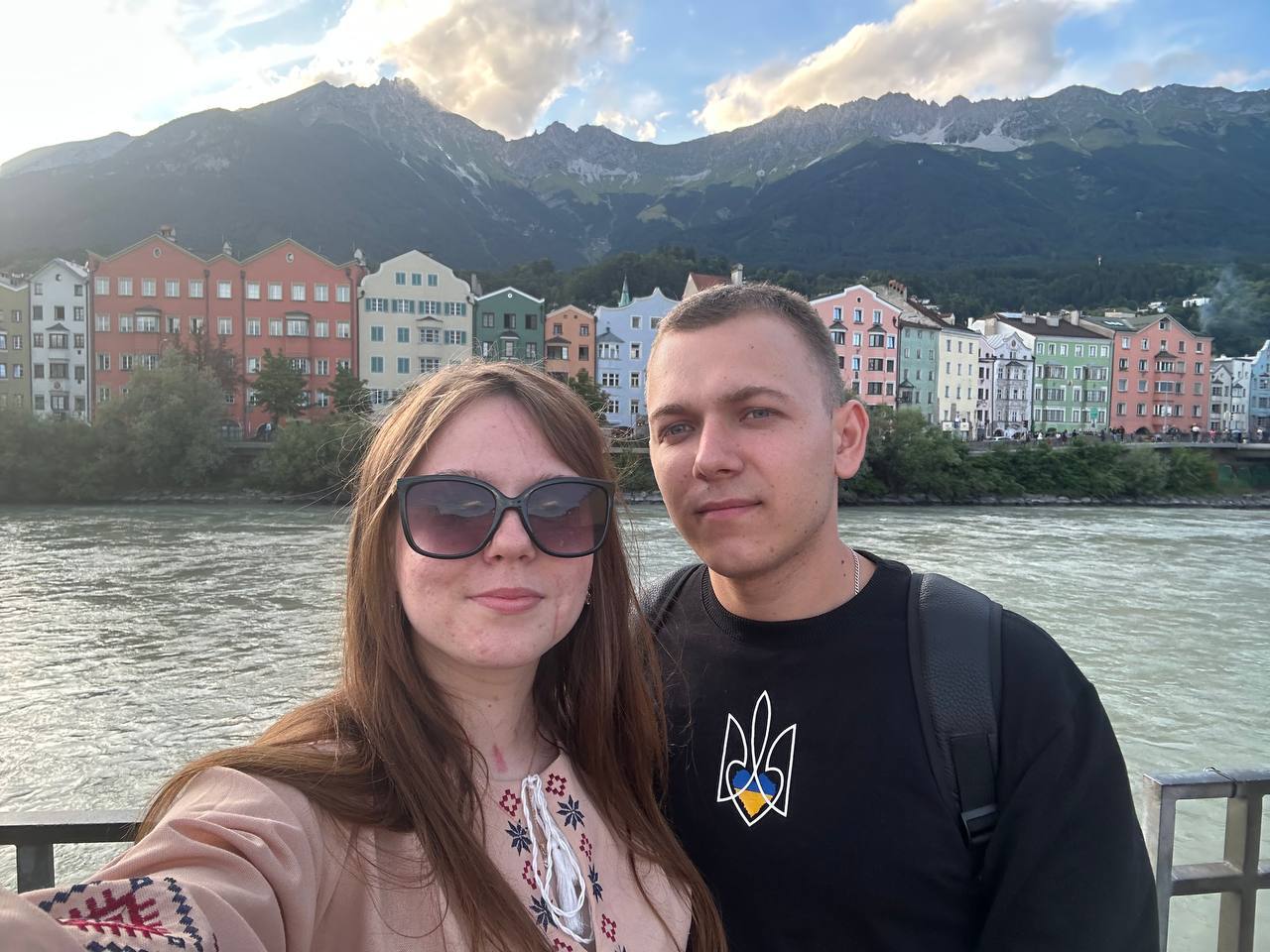
Anna Kotova (L) and her boyfriend (R) in an undated photo. (Personal Archive)
“I knew I was in Czechia, and it was safe there. But I still had this fear that it would happen again.”
“(Shortly after the attack) I simply didn’t want to continue treatment. I didn’t understand how much more there was to endure or why it happened to me. I thought that maybe it would have been better if I had stayed (meaning died) in that house and not suffered further,” Kotova says.
“(But) I (have come to) truly value life because when you are on the brink of losing it, you hold on to everything you can to ensure it doesn’t happen again.”
A thirst for revenge
In mid-October 2022, Ukrainian soldier Viktor Hanych left the front lines to spend a short vacation with his parents in Kyiv. It was the first time in a while that Hanych, who voluntarily joined the military shortly after the invasion started, had seen his parents.
The whole family first gathered at Hanych’s grandmother’s home before returning to his parents’ cozy apartment on Zhylianska Street in Kyiv.
They talked about “everything in the world” and soon fell asleep, tired but happy to be together again, Hanych recalls.
“I woke up to a couple of explosions and quickly told (my parents) to get ready to go to the shelter,” he says, adding that they did not hear the air raid siren that night, and his parents usually reacted to them.
“They had an (underground) parking area right near the house where they hid from attacks,” he says.
Hanych was the first one to leave the apartment. He told his parents he would hold the door for them and wait outside. He also recalls being very calm, as he was used to explosions while fighting in embattled Kherson and Donetsk oblasts.
Just as he reached the first floor, the building was hit by a Russian drone.
“It landed right in their apartment,” Hanych says. “As a soldier, I realized what had happened. But the hardest part was the waiting.”
"It landed right in their apartment."
Although the attack occurred in the early morning, Hanych only identified the bodies of his parents at around 2 p.m. that day.
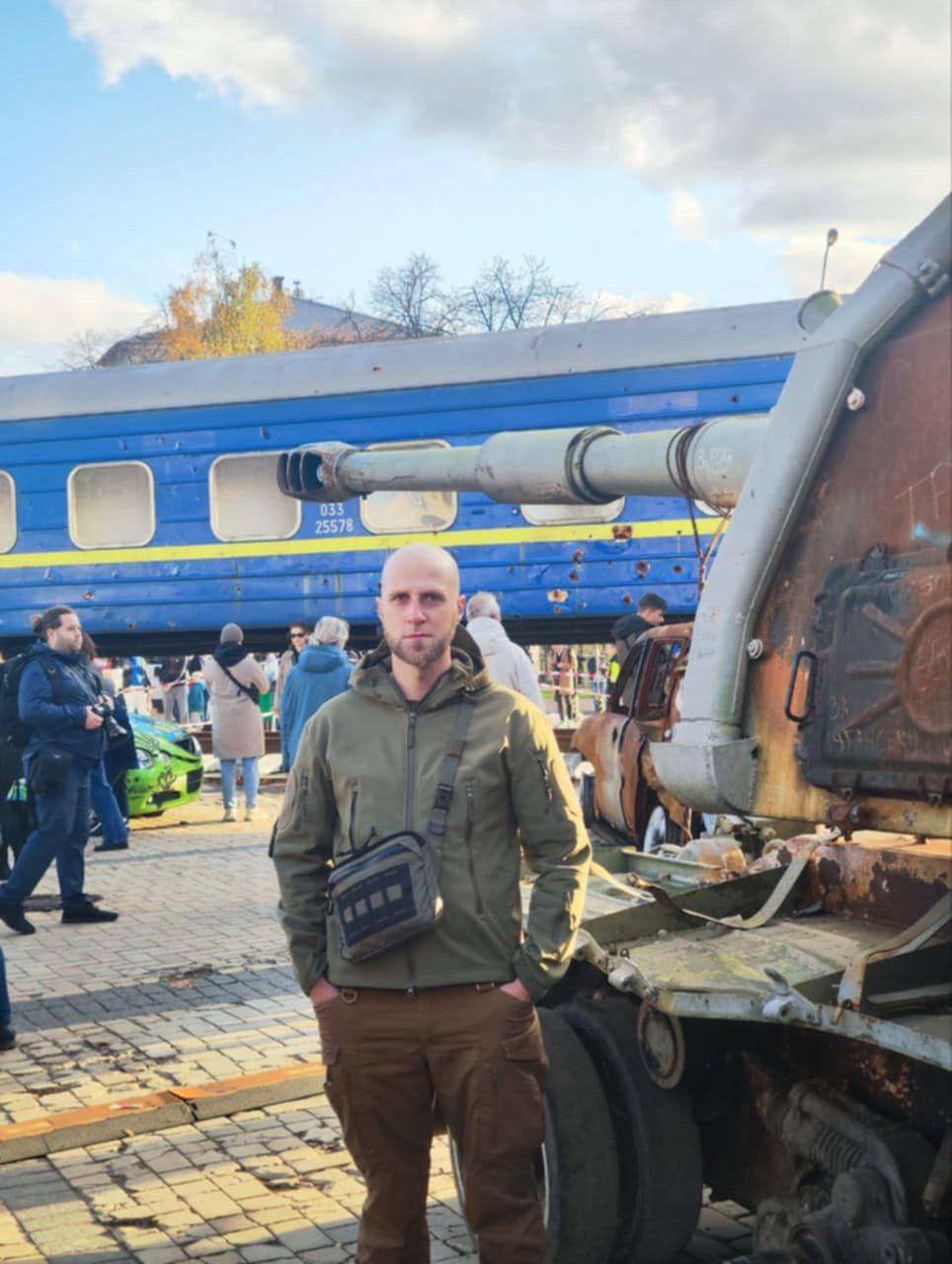
Viktor Hanych in an undated photo. (Personal Archive)
It was the day Russia launched its first-ever attack on Kyiv using Iranian-made Shahed-136 attack drones. Apart from Hanych’s parents, the bodies of two more civilians, including a six-month pregnant woman, were found under the rubble of the apartment building.
“If it wasn’t for my comrades' support…” Hanych says, adding that he had felt a “thirst for revenge” but was thankfully stopped by his fellow soldiers. After participating in fierce battles near now-occupied Bakhmut, Hanych returned to civilian life to care for his grandmother.
To this day, he tries to avoid going to Zhylianska Street, where his parents’ home once stood. “It’s excruciating,” Hanych says.
“I think those who experience something similar become fatalists but also begin to cherish and love this life even more. I felt exactly that.”
‘We no longer have a home’
The four-room apartment in Sumy was the setting for decades of sorrow and joy in the lives of resident Diana Nazarevska and her family.
But now it is gone, destroyed in a Russian attack.
“It was my grandmother's apartment. My mother grew up there, and later, when I was about three years old, we moved there with my parents,” Nazarevska, 28, says. “It was also where I started building my own family with my husband.”
“That apartment held the memories of my family, of my father, when he was still alive.”
On March 13, Nazarevska, her husband, and their baby daughter slept peacefully when an explosion woke them up.
Посмотреть эту публикацию в Instagram
Публикация от Diana Nazarevska (@diasya.nazarevskaya)
“It was the first Shahed drone targeting the residential building, but it was shot down and flew past it. I picked up my daughter, and we lay close to the wall,” Nazarevska recalls.
Then, she heard another drone approaching. “I grabbed my child, stood up, and didn’t even have time to run anywhere… I just realized that there was an explosion in our house.”
“I grabbed my child, stood up, and didn’t even have time to run anywhere… I just realized that there was an explosion in our house.”
“Then I started shouting for my husband, asking if he was alive. He slept very soundly and didn't understand what had happened at first.”
Amid the terrifying chaos, the family grabbed some documents, dressed their baby, and fled the apartment. As her husband opened the door to the hallway, Nazarevska was confronted with the “stench of burning and the smell of damp concrete,” which she says would likely “remain in her memory forever.”
Rescuers stand near a dead body that was pulled from under the rubble in Sumy, Ukraine on March 14, 2024. (Oleh Voronenko/Suspilne Ukraine/JSC "UA:PBC"/Global Images Ukraine via Getty Images)
Outside, as she saw her beloved home in ruins and fire, she also witnessed her neighbors desperately searching for their loved ones in the rubble.
“I will always remember how my neighbor’s father came running and shouting, ‘Vika!’” Nazarevska says, her voice trembling. “It was the shout you hear when someone is on the verge of hysteria. He kept screaming, but no one answered him. He shouted again, and still, no one responded.”
That night, Russia killed three people and injured 14. It also forever altered Nazarevska’s life, teaching her how fragile existence can be and how important it is to cherish every moment, even amid war.
“But we no longer have a home,” she says. “And it’s not just about the walls but the loss of a sense of basic security. For people, home generally means safety. It’s the place you go where you know everything will be okay.”
“Unfortunately, that sense of security is lost now.”
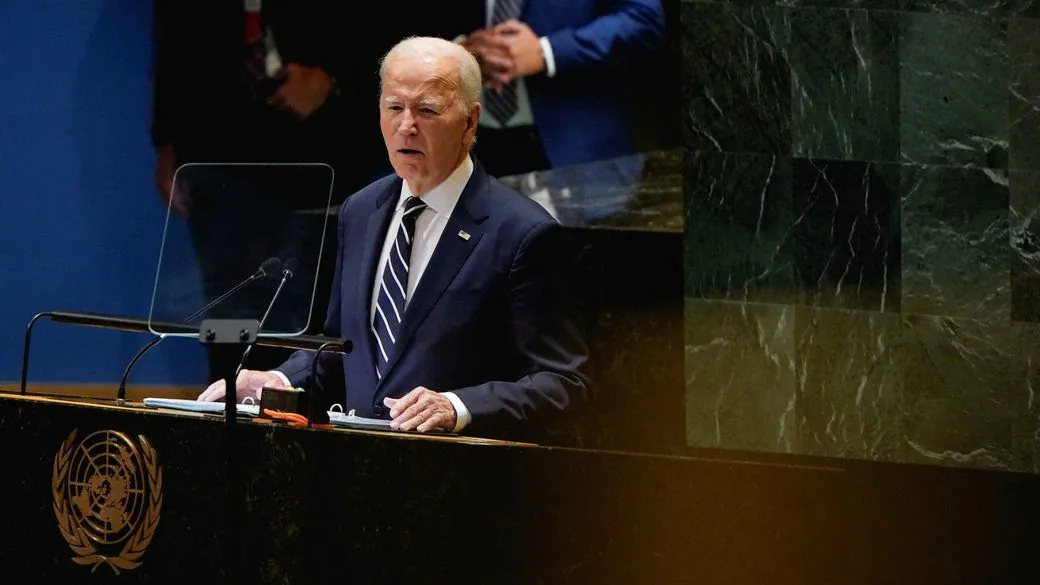
The US president condemned the massive Russian attack on Ukraine with almost 200 missiles and drones. Biden confirmed the priority of supplying air defense and other critical resources to Ukraine.
US President Joe Biden condemned the massive missile and drone attack of the Russian Federation on Ukraine, which occurred on the night of November 28. This is stated in a statement on the White House website, reports UNN.
Joe Biden called Russia's launch of almost 200 missiles and drones at Ukrainian cities and energy infrastructure on the night of November 28" terrible "and" outrageous."
"This attack is outrageous and is yet another reminder of the urgency and importance of supporting the Ukrainian people in their defense against Russian aggression." ,
Joe Biden said.
The current US president stressed that the United States, together with more than 50 countries, supports Ukraine and its struggle for freedom.
"On this day, my message to the Ukrainian people is clear: the United States supports you. At the beginning of this year, at my direction, the United States began to prioritize the export of air defense, so they first go to Ukraine",
Joe Biden said.
Biden also highlighted his administration's efforts to strengthen Ukraine's energy sustainability ahead of winter, as well as providing other critical resources, including artillery, missiles and armored vehicles.
recall
Earlier, UNN reported that on the night of November 28, Russian troops carried out 11 since the beginning of the year, a massive missile and drone attack on the Ukrainian power system, as a result of which power facilities in several regions were damaged.
Russian forces launched attack drones towards Ukraine on the evening of 28 November. Air defence forces have been operating in Kyiv. There are reports of damage to buildings.
Source: Kyiv Mayor Vitali Klitschko; Ukrainian Air Force; Kyiv City Military Administration
Details: At 22:42, the military warned of Russian UAVs in the vicinity of the capital.
Quote from Klitschko: "Air defence forces are operating on the right bank of the city. Stay in shelters!"
Update: Klitschko later reported that drone debris caused the outer cladding of a clinic building in the capital’s Dniprovskyi district to catch fire. Early reports indicate that nearby buildings have also been damaged. Kyiv City Military Administration has reported that one person has been injured.
PoliticsWar What scenarios are the Trump transition team considering to end the war in Ukraine? Friday, November 29, 2024
The incoming National Security Advisor to US President-Elect Donald Trump, Mike Waltz, is studying several options for ending the war between Russia and Ukraine. Among them are proposals from General Keith Kellogg, whom Trump appointed as special representative for the war in Ukraine. Currently, the Trump administration is seeking a quick ceasefire. This would temporarily freeze the conflict and create conditions that would allow negotiations between the parties. It is anticipated that Ukraine’s European allies and NATO will be called on to contribute more financially toward Ukraine’s support. Kellogg’s scenario provides for military assistance to Ukraine on the condition that it participates in peace talks, and Ukraine’s accession to NATO will be postponed indefinitely to encourage Moscow to dialogue. Another proposal includes the creation of “autonomous regions” in Ukraine. The possibility of Russia retaining control over the occupied territories in exchange for Ukraine’s accession to NATO is also being discussed. Sebastian Gorka, incoming Deputy Assistant to the President and Senior Director for Counterterrorism, emphasized that Trump is ready to issue an ultimatum to Putin: “Either you start negotiations, or the aid that has been provided to Ukraine will seem like a trifle compared to what will happen next.”
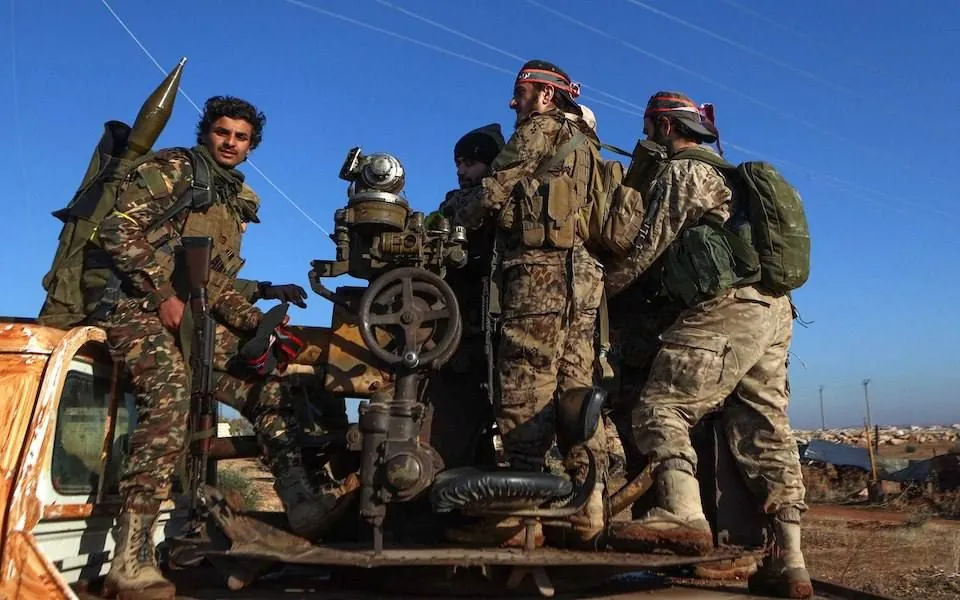
The rebels attacked the positions of the Assad army in the area of western Aleppo, taking advantage of the absence of Russian troops. Bashar al-Assad urgently arrived in Russia amid the aggravation of the situation.
There is a serious escalation in Syria. The rebels, for the first time in 5 years, launched a large-scale offensive against the Assad army and the Russian contingent. This is reported by The Jerusalem Post, reports UNN.
Syrian rebels launched a massive attack on government-controlled areas, sparking fierce clashes on the second day and seizing territory in western Aleppo. They take advantage of the fact that Israel defeated the Hezbollah group, and Russia sent most of its military from Syria to Ukraine.
The reason for the intensification of military operations, as stated by the Rebels, is the increased frequency of strikes on civilian targets from areas of Aleppo. The latest attack took place on November 26, killing three children and injuring 14 civilians.
The offensive is underway in the direction of Aleppo, the capital of the province of the same name. Before the destruction of the city by Russian aircraft, it was considered a powerful, rich industrial and Cultural Center in northern Syria. Russia and Assad have turned it into ruins.
The situation seems to have become critical, as Bashar al-Assad, who has been president of Syria since 2000, arrived in Russia unplanned. Russian President Vladimir Putin is currently in Kazakhstan, where the CSTO summit is being held.
Interestingly, the official Russian media do not report on Bashar al-Assad's visit to Russia. This became known from the message of the Channel Halab Today
It is not known who Assad is meeting while the Russian President and his ally are absent.
recall
As a result of Israeli strikes on Damascus and a military facility near Homs, one Syrian soldier was killed and seven wounded. The attacks targeted the Kafr Sousa area and a military facility, causing material damage.







 The Kyiv IndependentDaria Shulzhenko