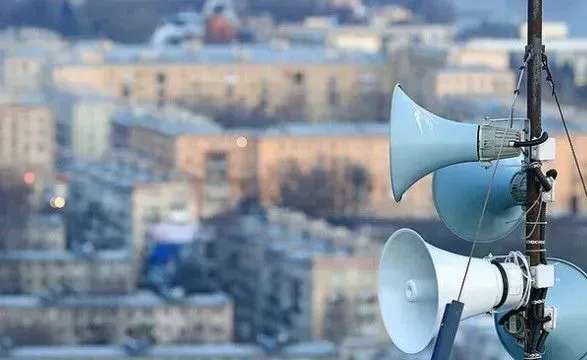
Due to Ukrtelecom's technical problems, the method of notification has been changed on 14 streets in Shevchenkivskyi, Solomianskyi and Sviatoshynskyi districts. Air raid alerts will be announced over loudspeakers until November 25.
Due to technical problems with Ukrtelecom, the alarm will be announced over loudspeakers in Shevchenkivskyi, Solomianskyi and Sviatoshynskyi districts of Kyiv. The changes will be in effect until November 25 on 14 streets. This was reported on Friday by KCSA, UNN reports .
Due to technical problems with Ukrtelecom's equipment, air raid warnings on a number of streets in Shevchenkivskyi, Solomianskyi and Sviatoshynskyi districts will be broadcast via loudspeakers
– KCSA said in a statement.
Notification through mechanized means will be carried out until November 25 at the following addresses:
Beresteysky Avenue – from Vyacheslav Chornovil Street to Velyka Kiltseva Street;
Borshchahivska Street – Liubomyr Huzar Avenue;
Degtyarivska Street;
Vadym Hetman Street – Oleksandr Dovzhenko Street;
Zoolohichna st;
Mykola Vasylenko Street (from Beresteyska metro station to Vaclav Havel Boulevard);
Mriya st;
Danyla Shcherbakovskoho Street;
Boulevard. Academician Vernadsky Blvd;
Svyatoshynska Street;
Geroyev Kosmosa Street;
Copernicus St;
Sholudenko str;
Bohdan Hawrylyshyn Street.
An explosion occurs in Kyiv due to the detonation of an unknown object: one person is killedNov 22 2024, 03:01 PM • 12098 views
Hungarian Foreign Minister calls US sanctions against Gazprombank an attempt on the country's sovereignty. Hungary is discussing the situation with Turkey, Azerbaijan, Bulgaria and Serbia over the threat to energy security.
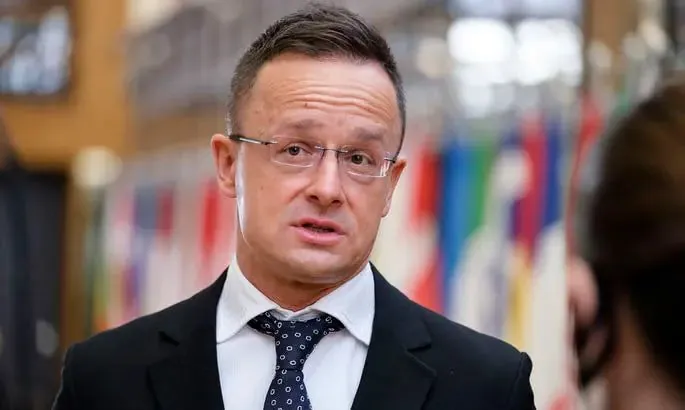
Hungarian Foreign Minister Peter Szijjarto believes that US sanctions against Gazprombank jeopardize the energy security of some Central European countries. This was reported by Bloomberg, according to UNN.
Details
According to Szijjártó, the US decision is an attack on Hungary's sovereignty. That is why Hungary is "considering the situation with the energy ministers of Turkey, Azerbaijan, Bulgaria and Serbia.
Hungary is grateful to Turkey, Bulgaria and Serbia for ensuring a very safe, very reliable and very stable transit,
– Siyarto said.
Details
The publication emphasizes that Hungary, Slovakia, Austria and a number of other EU countries still depend on Russian gas supplies. To pay for these supplies, they used the sanctioned Gazprombank.
According to Bloomberg, if Russia stops supplying gas to Europe, it could increase competition for global supplies and lead to higher prices for natural gas, which would hit Europeans.
Recall
The United States has imposed new sanctions on the Russian financial sector, including Gazprombank and more than 50 banks. The sanctions also targeted 40 securities registrars and 15 financial officials of the Russian Federation.
Serbia agrees with Gazprom on additional gas supplies for the winterOct 13 2024, 12:18 AM • 19537 views
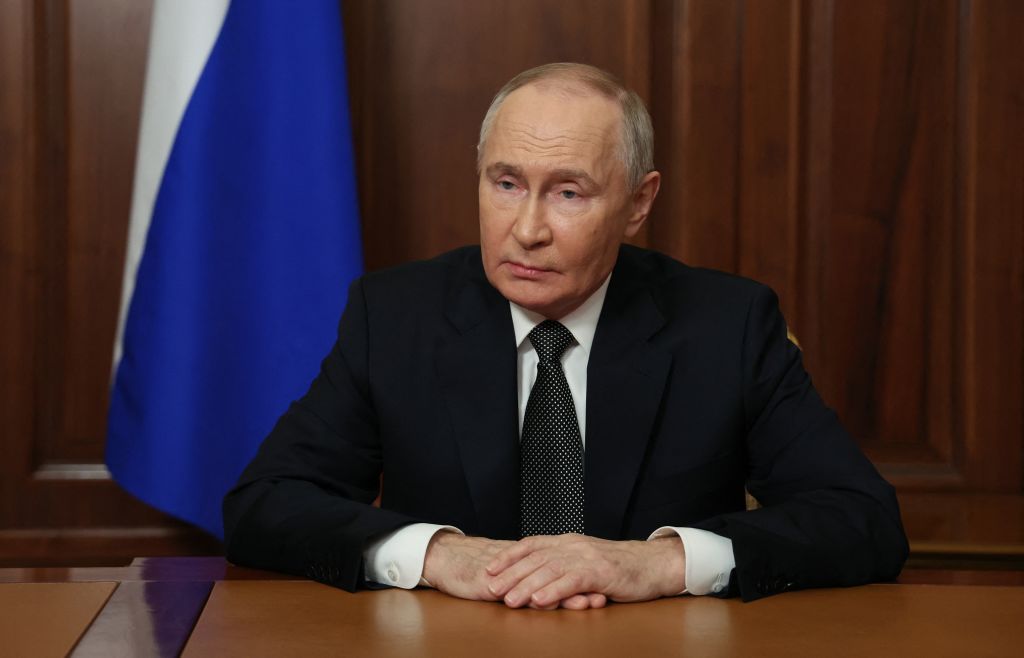
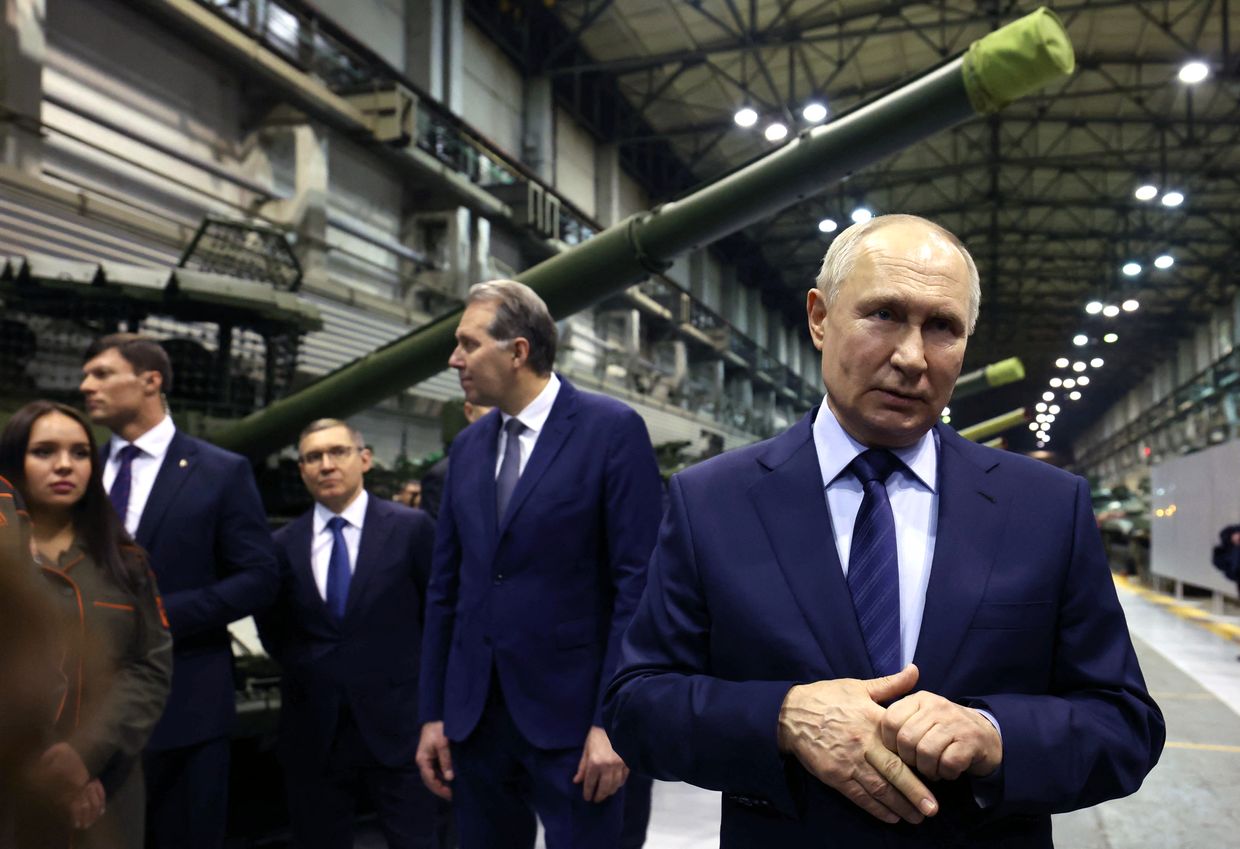
Russian President Vladimir Putin on Nov. 21 announced his country had launched a new type of missile in an attack on Ukraine, a demonstration of military might meant to deter Kyiv's allies from further support against his full-scale invasion.
"There are currently no ways of countering this weapon. The missiles attack targets at a speed of 10 Mach, that's 2.5-3 km per second," he said.
"We are ready for any developments. If anyone still doubts this, they shouldn't. There will always be a response."
Putin said the "new missile" was called "Oreshnik," but analysts and officials have since questioned the novelty of the weapon, as well as how effective it could be to prevent allies' support of Ukraine.
Sign up for our newsletter WTF is wrong with Russia? Sign up
What is the Oreshnik missile?
According to Putin, Oreshnik, which means "hazel" in English, is a new invention that Western air defense systems would not be able to intercept.
The Oreshnik is designed to carry nuclear weapons. However, Putin said it was not armed with a nuclear warhead during this attack.
"In combat conditions, a test was carried out of one of the latest Russian intermediate-range missile systems. In this case, with a non-nuclear hypersonic version of a ballistic missile," he said in a live speech on Nov. 21.
The Oreshnik described by Putin is so new that barely anything is known about it other than what he claimed during his speech.
The reality however, appears to be slightly different.
"I'd be extremely shocked if this missile system had more than 10% new parts," Fabian Hoffmann, a defense expert and doctoral research fellow at the University of Oslo, told the Kyiv Independent.
"I think basically they just took apart the RS-26 or just cannibalized it, and then put together this new missile with a couple of upgrades, and a new paint job."
The RS-26 Hoffman refers to is the RS-26 Rubezh, of which quite a bit is known.
First produced in 2011, and successfully tested in 2012, the Rubezh is a 36,000 kilogram, nuclear capable, intermediate-range ballistic missile (IRBM) with a known range of 5,800 kilometers.
Its declared but undemonstrated range of 6,000 kilometers would only just nudge it into the category of an intercontinental ballistic missile (ICBM).
Its development and deployment was actually halted in 2018 in favor of the Avangard hypersonic glide vehicle.
The Rubezh is equipped with a MIRV payload, which stands for Multiple Independent Reentry Vehicles, which can be seen in videos of the attack on Dnipro.
Footage shows multiple projectiles hitting the ground, but without the large explosions normally associated with conventional missiles or payloads, suggesting it was carrying essentially a dummy warhead.
On Nov. 22, HUR provided further details of Oreshnik, claiming it is actually just a different name for a previously known missile called "Kedr," translated as "cedar," which Russia tested in October 2023 and June 2024.
The missile that struck Dnipro was equipped with six warheads, each containing six submunitions, and reached speeds exceeding Mach 11 (around 13,500 kilometers per hour) as it descended, HUR added.
"I think it's really important that we don't overreact," Hoffman said, adding the missile itself isn't anything particularly new despite what Putin said on Nov. 21.
"I like his 'hypersonic' comment — of course he had to put that in, but every medium-range ballistic missile will reach hypersonic velocity at one point, so this is just nothing," he adds.
A U.S. official speaking on condition of anonymity echoed the sentiment, telling the Kyiv Independent that while "we take all threats against Ukraine seriously, it is important to keep a few key facts in mind."
"Ukraine has withstood countless attacks from Russia, including from missiles with significantly larger warheads than this weapon.
"Let me be clear: Russia may be seeking to use this capability to try to intimidate Ukraine and its supporters, or generate attention in the information space, but it will not be a game changer in this conflict."
What is potentially new is the global geopolitical situation, the level of tension, and the threats of escalation.
The deployment of the missile came shortly after Russia adopted changes to its nuclear deterrence doctrine, which lowered the threshold for a nuclear response. The Kremlin was very clear that the doctrine changes were a signal to the West.
"While the doctrine serves as a signal to decision-makers and national security apparatuses, the missile strike is aimed at the general public," says Matej Kandrík, the executive director at the Adapt Institute.
Russia has deployed nuclear-capable missiles in Ukraine before, but Oreshnik's features, like its MRV (multiple reentry vehicle) capability, "invoke the scary, apocalyptic image of nuclear war and therefore allow our imaginations to do a lot of the work for Putin," Jenny Mathers, senior lecturer in international politics at Aberystwyth University, told the Kyiv Independent.
Russia has been employing covert or overt nuclear threats to deter international support for Ukraine since day one of the full-scale invasion. The Kremlin's "red lines" failed to influence the West from supplying tanks, fighter jets, and long-range missiles.
Putin is now attempting to demonstrate strength after U.S. and British missiles struck targets on Russian sovereign territory.
"Putin's problem is that he is running out of ways to convey this message, given all the times that he and other senior Russian officials have warned against certain courses of action… and hinted at dire consequences but then confined their escalation of the war to increasingly brutal attacks on Ukraine's civilian population and infrastructure," Mathers said.
According to Kandrik, Putin's "ideal outcome would be a prohibition on the use of U.S.-provided deep-strike weapons within its territory and restrictions on future deliveries of such systems." Mathers also sees it as an attempt to deter broader Western support for Ukraine.
Western officials denounced the IRBM launch as an escalation but also made clear that it would not deter their support for Ukraine.
"Deploying this capability will neither change the course of the conflict nor deter NATO allies from supporting Ukraine," NATO spokesperson Farah Dakhlallah said.
The calculus may change after U.S. President-elect Donald Trump takes office in January, as his team is likely to seek a quick settlement to "get out" of the conflict. It remains unclear whether the incoming president, who has often criticized military aid for Ukraine, will keep the long-range strikes policy in place if it could spark further escalatory moves by Russia.
"Putin knows that the clock is ticking for both Russia and Ukraine as we get closer to Jan. 20 and Donald Trump's return to the U.S. presidency," Mathers said.
"Therefore, what Putin needs is to convey the impression that Russia is in a commanding position and can continue to fight for as long as it needs to in order to achieve victory."
Experts say, however, that Oreshnik's launch is not the start of an escalation chain leading to a nuclear apocalypse.
"Let's keep a cool head… . We have a mechanism in place. It's called an escalation ladder with a lot of steps to go through between nuclear saber-rattling or nuclear messaging, which is what's happening now, and the nuclear first use of preemptive strike," Mathieu Boulègue, a senior fellow at the CEPA think tank, told the Kyiv Independent.
"The Russian leadership is not suicidal. The moment they start going a bit too far in nuclear escalation… this will be the end for the Russian regime."
Federico Borsari, a resident fellow at CEPA, pointed out that Russia warned the U.S. about the missile's use in advance and that Iskander and Kinzhal missiles that Russia regularly uses in Ukraine can carry a nuclear warhead as well.
Oreshnik's use "is clearly a political message," but not one indicating a nuclear escalation, he concludes.
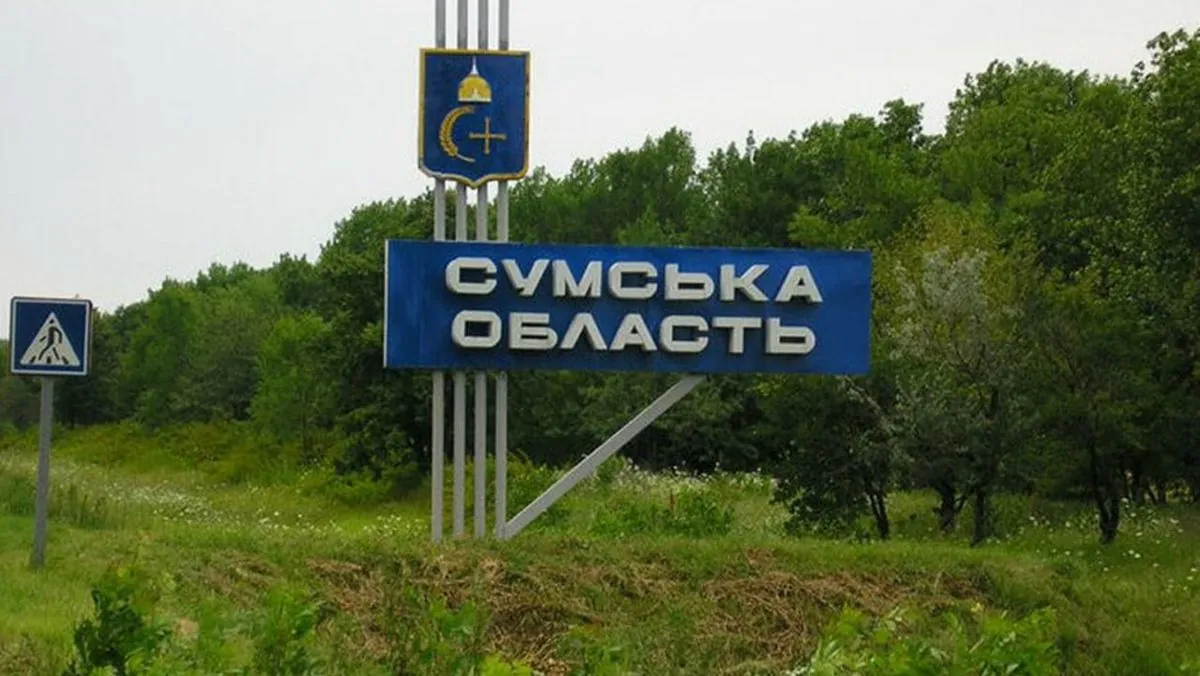
During the day, the occupiers shelled 10 communities in Sumy region, 127 explosions were recorded. The Krasnopilska, Yunakivska and Velykopysarivska communities suffered the most.
During the day, Russians fired 55 times at the border areas and settlements of Sumy region. 127 explosions were recorded. This was reported by the Sumy RMA, UNN reports.
Velykopysarivska community: there was an attack by FPV drones (3 explosions), artillery shelling (12 explosions), and the dropping of explosives from a UAV (6 explosions).
Bilopil community: Russians dropped 11 mines on the territory of the community. There was also an attack by FPV drones (3 explosions).
Krasnopilska community: the enemy attacked with artillery (12 explosions), mortars (8 explosions), FPV drone (1 explosion), and dropped an explosive device from a UAV (12 explosions).
Khotyn community: Russians attacked with artillery (6 explosions), mortars (8 explosions), and an FPV drone (1 explosion).
Seredina-Buda community: an explosive ordnance was dropped from a UAV (2 explosions).
Esman community: the enemy attacked with artillery (8 explosions), mortars (10 explosions), and an FPV drone (1 explosion).
Verkhnya Syrovatska community: Russians attacked with MLRS (3 explosions).
Myropilska community: there were attacks by FPV drones (6 explosions).
Junakivka community: artillery shelling was recorded (13 explosions).
The main event that changed the nature of the war was the use of UAVs – British intelligenceNov 22 2024, 05:03 PM • 11240 views
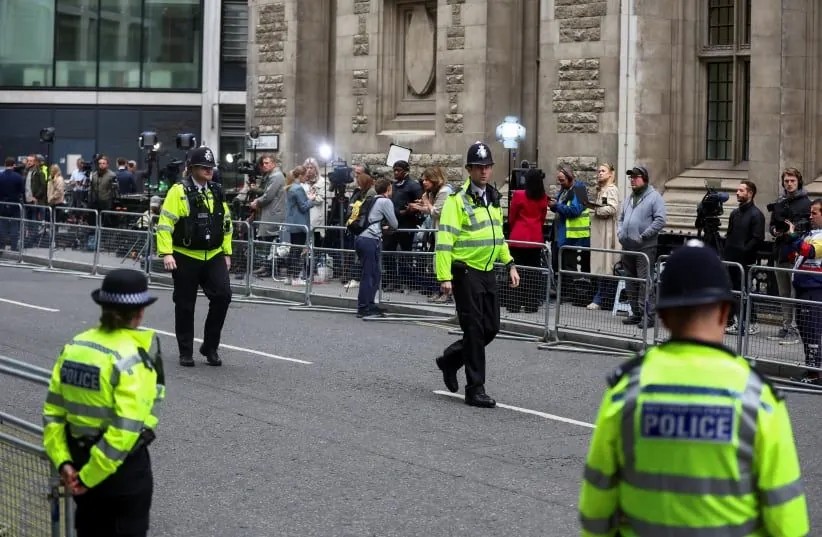
Jake Reeves, 22, pleaded guilty in court to setting fire to commercial real estate in London with ties to Ukraine. Prosecutors suspect that he received payment from Russian intelligence.
A British man has pleaded guilty to committing arson of commercial real estate in London with ties to Ukraine. Prosecutors suspect that the man received money from Russia for this. This was reported by the Guardian, UNN reported.
Details
According to the newspaper, 22-year-old Jake Reeves pleaded guilty in a London court to aggravated arson of commercial property in an industrial zone in east London owned by “Mr. X” and received money from foreign intelligence in a case that prosecutors are linking to Russia.
However, the young man denied further charges of preparing an act that threatens human life or poses a serious risk to public health or safety, and the prosecutor's office said it would not pursue this charge.
Recall
British police have charged two more men with arson at a Ukrainian business in London linked to Russia. The 22-year-old and 19-year-old suspects are charged with aggravated arson, and one is also charged with weapons possession.
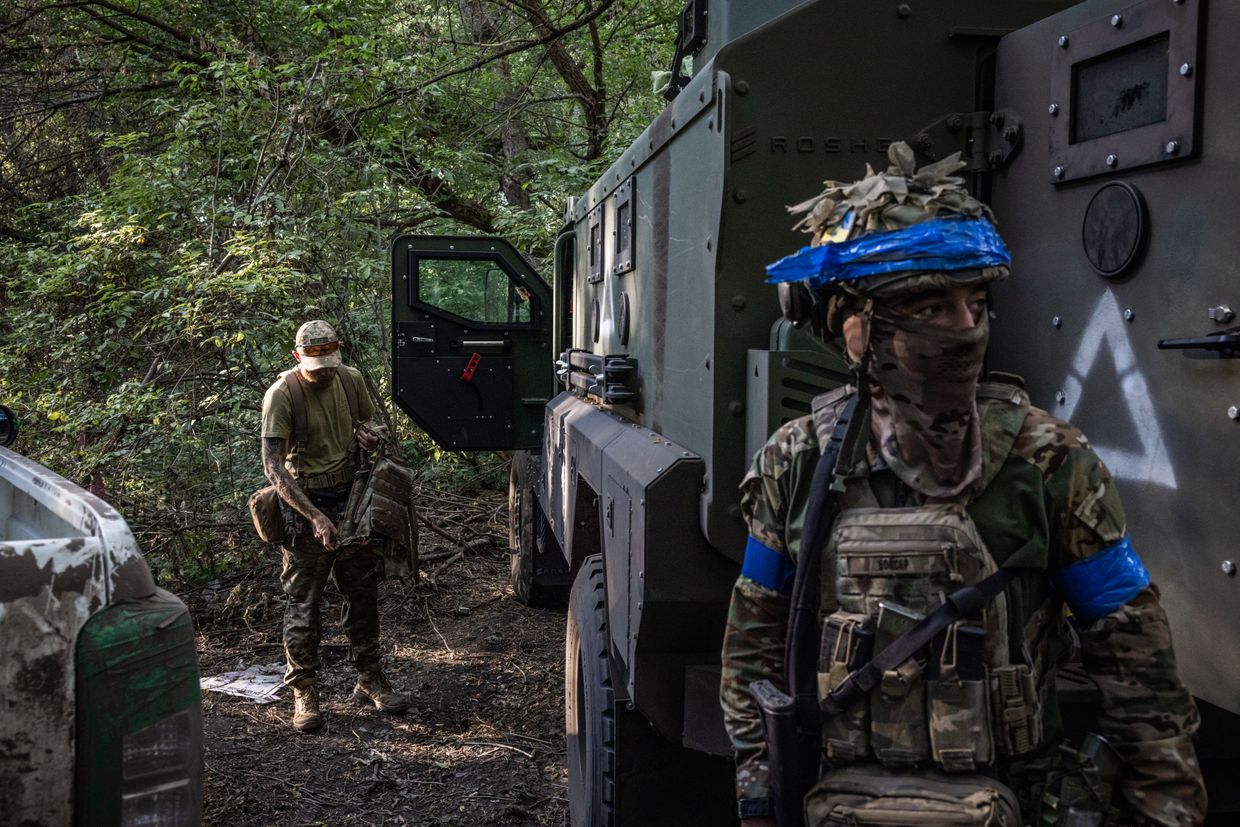
Nearly 60,000 Russian army personnel are currently stationed in Russia's Kursk Oblast, Suspilne reported on Nov. 22, citing its undisclosed source in the General Staff of Ukraine's Armed Forces.
Earlier reports from Ukrainian authorities said Russia had amassed 50,000 troops in Kursk Oblast, including North Korean soldiers, to attempt to push the Ukrainian military out of its territory.
Ukrainian forces will remain in Kursk Oblast as long as "militarily possible," the source said.
According to the source, the General Staff believes that the Russian troops are planning to reach the border with Sumy Oblast to create a "buffer zone" there, as Ukraine looked to do with its incursion into Kursk Oblast.
Kyiv launched the surprise offensive into Kursk Oblast on Aug. 6. Russian forces have managed to reclaim around half of the territory initially captured by Ukrainian troops.
Russia has also deployed thousands of North Korean troops in the embattled region, with some reportedly already clashing with Ukraine in small-scale battles. Around 11,000 North Korean soldiers were stationed in Kursk Oblast as of Nov. 4.
According to Commander-in-Chief Oleksandr Syrskyi, Russian forces have suffered 7,905 soldiers killed, 12,220 injured, and 717 captured during the three months of the Kursk offensive.
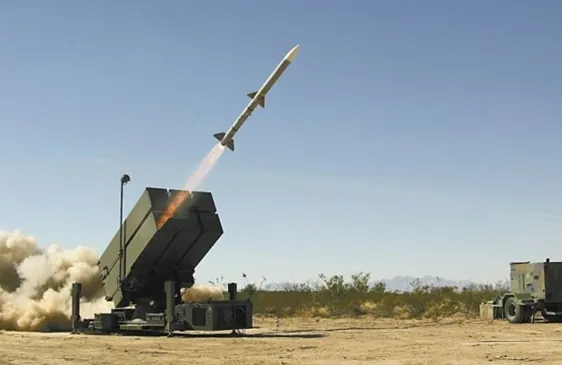
Canada's Minister of Defense has confirmed the delivery of the promised NASAMS air defense systems to Ukraine. The systems were purchased for $406 million, which was announced in January 2023.
Canada's Minister of National Defense Bill Blair said that the long-awaited American-made missile defense systems, which the Canadian government helped to purchase, have been delivered to Ukraine. This was reported by UNN with reference to CBC.
On Thursday morning, Blair told the House Defense Committee that the National Advanced Missile Defense System (NASAMS), for which Ottawa allocated $406 million almost two years ago, is already in the hands of Ukrainians.
I can't give you any more details on that because of operational security, but we were finally able to deliver them, and I think that will make a difference because it will allow them to protect the communities
– Blair told the committee members.
The planned $406 million purchase was announced in January 2023, but the Department of National Defense told CBC News in September that the federal government did not transfer funds to Washington to pay for the system until March 2023.
Washington could not start negotiating a contract with the manufacturers until it had its own and Canada's money in hand, and it had to get Congressional approval to buy NASAM. Congress gave the green light in May 2023.
President: Defense Minister is already working with partners to get new air defense systemsNov 22 2024, 05:13 PM • 8954 views
New Manchester United head coach Ruben Amorim has been tipped to revive one star who was “let down” by former boss Erik ten Hag.
Earlier this month, Man Utdappointed Amorim to replace Ten Hag, who was sacked following their disappointing loss at West Ham at the end of October.
Amorimdid a brilliant job at Sporting Lisbon as he helped them win the Primeira Liga twice and made a perfect start in the league this season, winning their opening eleven league games.
The 39-year-old has a difficult challenge at Man Utd, though. The Red Devils have endured a miserable start to the 2024/25 campaign as they are 13th in the Premier League.
United have carried on from where they let off last season in the Premier League as they have been held back by poor recruitment in recent years.
Casemiro was one of the worst signings made by Man Utd during the Ten Hag-era as they foolishly invested £60m plus add-ons to sign the 32-year-old from Real Madrid.
The Brazil international surpassed expectations during his debut season in 2022/23, but his form has declined over the past 18 months.
Casemiro has been heavily criticised but his form did improve slightly under interim boss Ruud van Nistelrooy. Ex-United striker Louis Saha has backed Amorim to get the best out of the centre-midfielder after he was “let down” by Ten Hag.
“You could see how much he was being exposed in Erik ten Hag’s system and ultimately, the tactics were wrong,” Saha said.
READ: Big Weekend: Man City v Tottenham, Ruben Amorim, Liverpool, Cole Palmer, Napoli, Coventry
“Casemiro was being asked to do too much and it’s difficult for him to do well without the right players around him. It doesn’t matter how many trophies he’s won, he was going to struggle in that system.
“I believe he was let down. I’m a big defender of him because he never complains and he’s aware of when he’s not playing well.
“With the right balance in the midfield and the right positioning, we’re going to see Casemiro playing with a different dimension. He has the right quality and leadership that this Manchester United team needs.”
Speaking to reporters on Friday, Amorim insisted he is the “right guy at the right time” for Man Utd and he “believes in the players”.
“I’m a little bit of a dreamer and I believe in myself and I believe in the club,” Amorim said.
“I think we have the same idea, the same mindset and that can help.
“I truly believe in the players, I know you don’t believe a lot but I do. I want to try new things. You guys don’t think it’s possible, I do.
“Call me naive, but I believe I am the right guy at the right time. I truly believe I am the right guy.”
He added: “I know at Manchester United we have to win games. We need a lot of time because it’s a tough league, we have to improve a lot to try to win the title.
“We have to change the physical aspect of the team. I don’t know how long it will take.”



 The Kyiv IndependentChris York