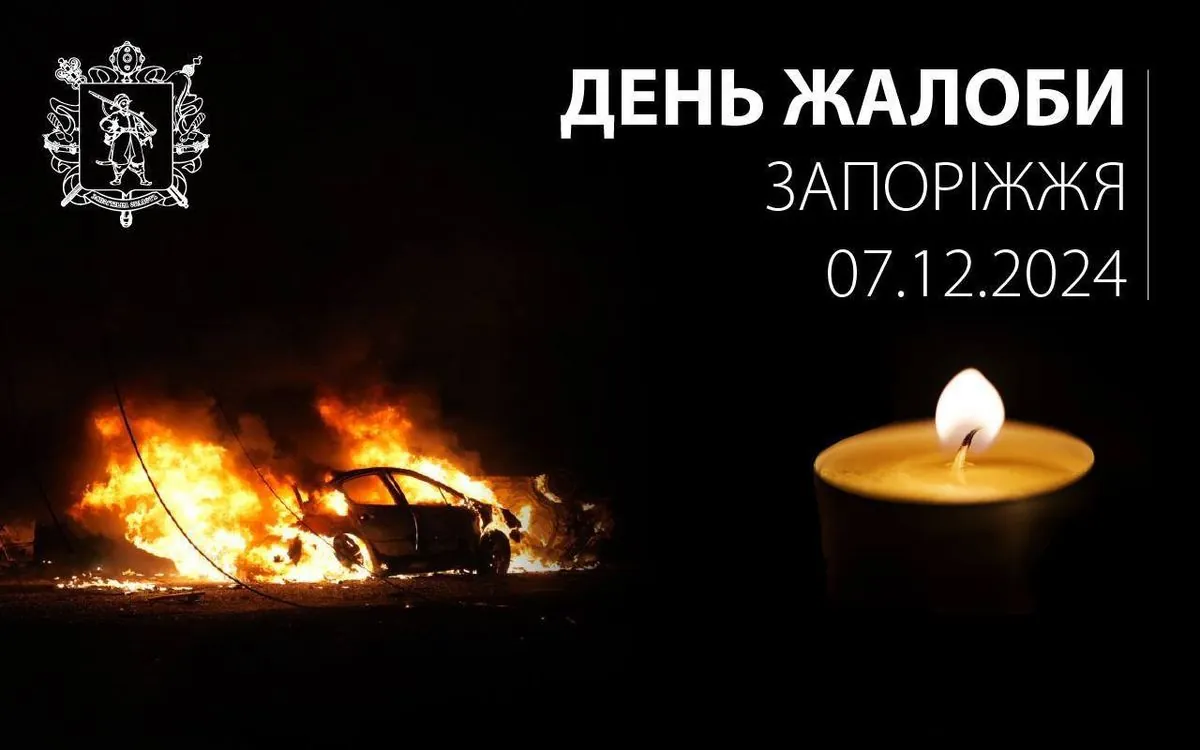
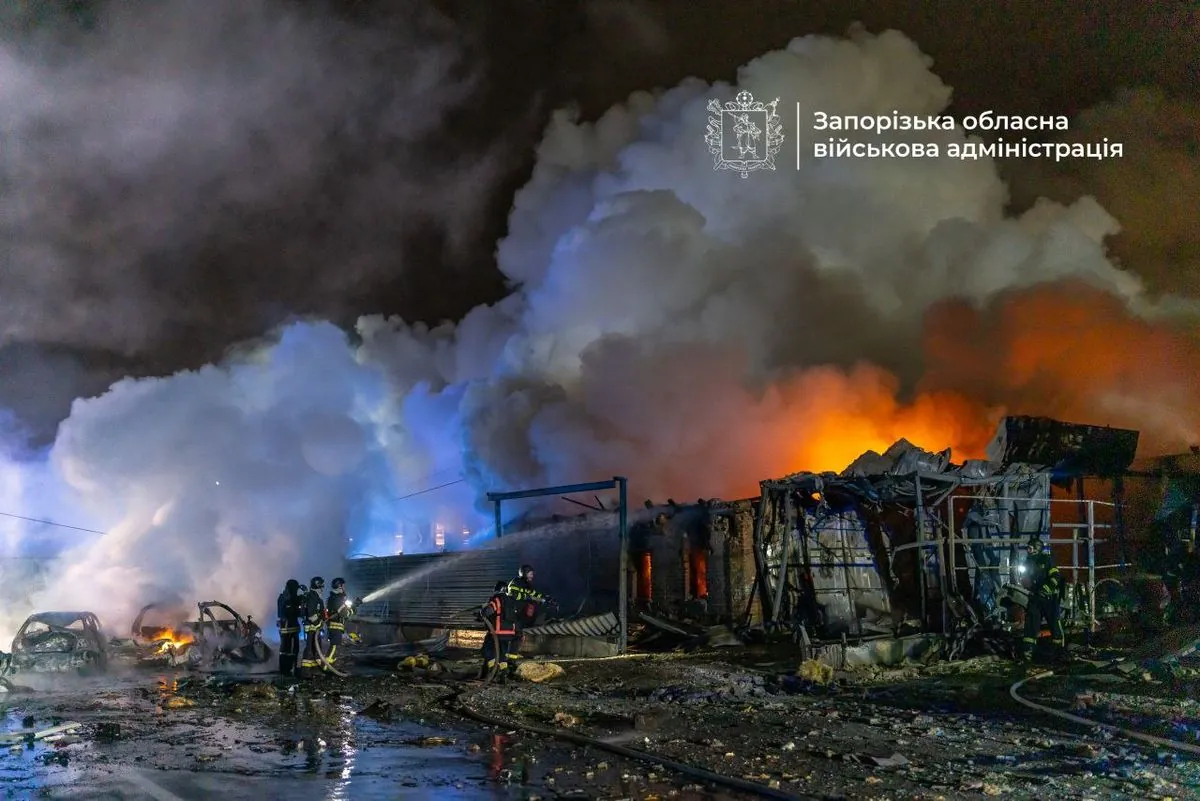
As a result of a Russian airstrike on Zaporozhye, 10 people were killed, including two children. 26 people were injured, and identification of victims continues.
As a result of the Russian attack on Zaporozhye, two children were killed, and identification of the victims continues. This was announced by the chairman of the Zaporozhye RMA Ivan Fedorov, reports UNN.
"Two children are among the dead – identification of people who were killed by the Russians during the attack on Zaporozhye continues," the head of the RMA said.
The number of victims of the airstrike on Zaporozhye increased to 25 peopleDec 7 2024, 08:46 AM • 13437 views
According to him, the enemy hit a busy area, where on Friday evening people were just returning home.
"26 people were injured. 10 died. Their identities are now being established. According to preliminary data, two children are among the dead," Fedorov summed up.
A day of mourning has been declared in the Zaporizhia regionDec 7 2024, 05:22 AM • 32975 views
The situation on the Zaporizhzhia front is becoming "very difficult and tense," but the development was "predicted," Freedom of Russia Legion spokesperson Kostiantyn Denysov said on Dec. 7.
"Their infantry assault groups are trying to find weaknesses in our defenses," he said in an interview with KYIV24.
"Under the cover of armored vehicles, they are trying to figure out how to confront tanks and armored personnel carriers."
The comment comes after a series of warnings about, and attacks on, Zaporizhzhia Oblast, which is becoming an increasingly active part of the frontline.
Denysov said the Russian attacks were still causing difficulties, but added "all this was predicted" as it is a repeat of a pattern observed previously.
"They trained their infantry and practiced with armored vehicles," he said.
"We all understood very well why they were doing all this, and we can already see that they are gradually starting to send bigger groups to attack."
The Freedom of Russia Legion, made up of Russian nationals opposed to the Kremlin, has been actively involved in operations on several fronts, including Zaporizhzhia.
President Zelensky said on Nov. 25 that Ukraine was "aware of the existence of threats" in the Zaporizhzhia sector.
Assault groups arrived in November, and Ukrainian soldiers repelled an attempted offensive in the oblast.Ukraine has been building heavy fortifications just in preparations for a potential Russian offensive in the region.
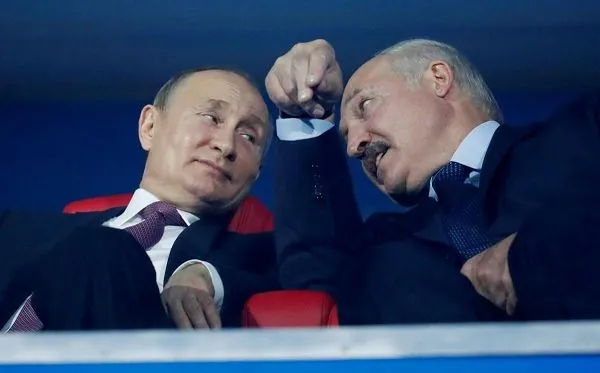
Putin and Lukashenko have signed a new Union Treaty on security guarantees that allows the deployment of oreshnik ballistic missiles in Belarus. The treaty also provides for the use of tactical nuclear weapons in the event of aggression.
The Russian authorities continue their strategic efforts to de facto annex Belarus and further expand the Russian military presence in Belarus as a union state. This is stated in the world of the Institute for the study of war (ISW), writes UNN.
Russian President Vladimir Putin and Belarusian President Alexander Lukashenko signed a new Union Treaty on security guarantees at a meeting of the Supreme State Council of the Union state in Minsk. Lukashenko has publicly called on Putin to deploy oreshnik ballistic missiles in Belarus. The president of Belarus has put forward a condition that the Belarusian military and political leadership will determine the targets of the Oreshnik if the missile is ever launched from the territory of Belarus. At this request, Putin said that by mid-2025, Russia can deploy Oreshnik complexes in Belarus on the basis of a new Union Treaty on security guarantees and as Russia increases production of oreshnik ballistic missiles. Also, as the Russian President noted, the new security treaty allows Russia and Belarus to use "all available forces and means" within the framework of Russia and Belarus ' mutual defense obligations.
According to the treaty, countries must ensure the security of the borders of the Union state. The new document also provides for the possibility of using Russian tactical nuclear weapons deployed in Belarus in the event of aggression against Belarus.
"The agreement was signed after the publication of the updated nuclear doctrine of Russia on November 19, which officially put Belarus under the nuclear umbrella of Russia and is consistent with the current contractual obligations of Russia with Belarus. The deployment of oreshnik ballistic missiles in Belarus will further increase Russia's military footprint in Belarus and advance the Kremlin's long — standing strategic efforts to erode Belarus ' sovereignty and de facto annexation of Belarus through the Union state, "the report says.
It is worth noting that in addition to this agreement, Russia and Belarus signed 10 more union documents. Among them are the concept of security of the Union state, a decree on uniform rules in the field of consumer protection, a decree on joint measures to combat smuggling, an agreement on the formation of a single electric power network of the market, a decree on the abolition of roaming of mobile devices, a decree on a festive event dedicated to the 80th anniversary of victory in World War II.
However, the president of Belarus is probably still trying to preserve the sovereignty of his state against Moscow. Lukashenka is in favor of keeping Russian weapons deployed on the territory of Belarus under control. However, Lukashenka's attempt has historically failed.
For a long time, Lukashenka has tried to compete with the Kremlin to determine whether Belarus can establish control over Russian military assets, such as advanced S-400 air defense systems. According to state secretary of the Security Council of Belarus Alexander volfovich, only Lukashenka can issue an order on the use of Russian tactical nuclear weapons deployed in their country. The president of Belarus himself noted that the Russian military will continue to use the Oreshnik system in Belarus. In other words, this means maintaining Moscow's control over any oreshnik ballistic missiles deployed in Belarus.
The ISW notes that the deployment of Oreshnik in Belarus does not increase the risk of ballistic missile strikes on Ukraine and NATO countries, despite the way the Kremlin talks about nuclear weapons.
Russian troops regularly fire at Ukraine with Iskander ballistic missiles, Kinzhal hypersonic ballistic missiles and X-101 cruise missiles, which can carry nuclear weapons.
Recall
On the border with Russia , 100-150 attacks are recorded daily, most of them in Sumy region. The situation in the Belarusian direction is under control, and there is no movement of troops.
Russian shelling struck residential areas and injured 16 people, including one child, in Kherson Oblast over the past day, regional authorities reported on Dec. 7.
Kherson Oblast Governor Oleksandr Prokudin reported that several locations in the oblast and the city of Kherson had come under enemy fire and airstrikes.
He said the enemy also launched three missile attacks on the Beryslavskyi district of the oblast.
According to Prokudin, Russian forces attacked residential areas in the settlements of the oblast and damaged 16 private houses.
The attack also damaged a gas pipeline, a grain warehouse, a gas station, and private cars.
The Kherson Military Administration reported separately on its Telegram channel that a 57-year-old man was hit by a Russian drone in Vesely and taken to hospital with leg injuries.
Kherson Oblast is the frequent target of attacks.
On Dec. 1, Russian attacks killed three people and injured eight. A few days after, on Dec. 4, another attack killed two people and injured five.
These attacks follow recent developments at the Ukrainian front line, where military forces are locked in a battle over small islands in the Dnipro River.
Control of the islands would allow Moscow to intensify attacks on the city of Kherson in southern Ukraine.
On Dec. 4, Prokudin suggested that Russia was preparing for another offensive toward Kherson, hinting that that front may be about to heat up.
European diplomats are preparing for a scenario where the United States, under the leadership of Trump, may stop helping Ukraine. Borrel recommends that Ukraine develop its own weapons production as the most effective way to continue the fight.
European diplomats fear that European military aid to Ukraine will have to double if US President-elect Donald Trump stops funding the United States, writes UNN with reference to the Guardian.
Details
Former EU foreign minister Josep Borrel recommended radically changing Ukrainian arms production during 2025, as this is the cheapest and most effective way for Ukraine to continue fighting.
However, European officials are confident that Ukraine will receive a поз 50 billion loan, which will be repaid at the expense of interest received from frozen Russian assets in the amount of 2 280 billion, this was announced by the G7 countries back in October.
The U.S. is expected to cover a кредиту 20 billion loan in the first U.S. tranche to be paid before President-elect Donald Trump takes office. However, it is not clear whether he will later be able to legally withdraw from the agreement, trying to force Ukraine to sit down at the negotiating table. Therefore, the EU said that they can agree to compensate for most of the deficit.
Now, since the Russian invasion, Europe has provided Ukraine with assistance in the amount of 46 billion euros, while the United States has provided about 65 billion euros. This is without taking into account assistance to finance Ukraine's debt.
Before the inauguration of Donald Trump, which will take place in January 2025, The Joe Biden administration is promoting military aid packages. However, European diplomats fear that if the war continues in 2025, European aid will have to double.
Josep Borrel believes that the West can still help strengthen Ukraine's position by increasing domestic arms production.
"If you want to support Ukraine's military efforts, give them money to develop their own military-industrial potential," the official said. "This is much more effective than buying weapons here in Europe and sending them. Ukrainian engineers have shown an incredible ability to quickly produce what they need.
Borrell also warned that Russia's electronic warfare means that 80% of 155-mm guided artillery shells, which are mainly supplied by the United States, are clogged. Therefore, Ukraine should return to using cheaper and less accurate ammunition, which cannot be blocked.
Recall
The Pentagon allocates військової 725 million in military assistance to Ukraine, including three types of remote mining systems ADAM, MOPMS and Volcano. The aid package also includes drones, MANPADS, and anti-tank missiles.
Russia has lost 751,910 troops in Ukraine since the beginning of its full-scale invasion on Feb. 24, 2022, the General Staff of Ukraine's Armed Forces reported on Dec. 7.
This number includes 1,300 casualties Russian forces suffered just over the past day.
According to the report, Russia has also lost 9,514 tanks, 19,535 armored fighting vehicles, 30,948 vehicles and fuel tanks, 21,055 artillery systems, 1,253 multiple launch rocket systems, 1022 air defense systems, 369 airplanes, 329 helicopters, 20,042 drones, 28 ships and boats, and one submarine.
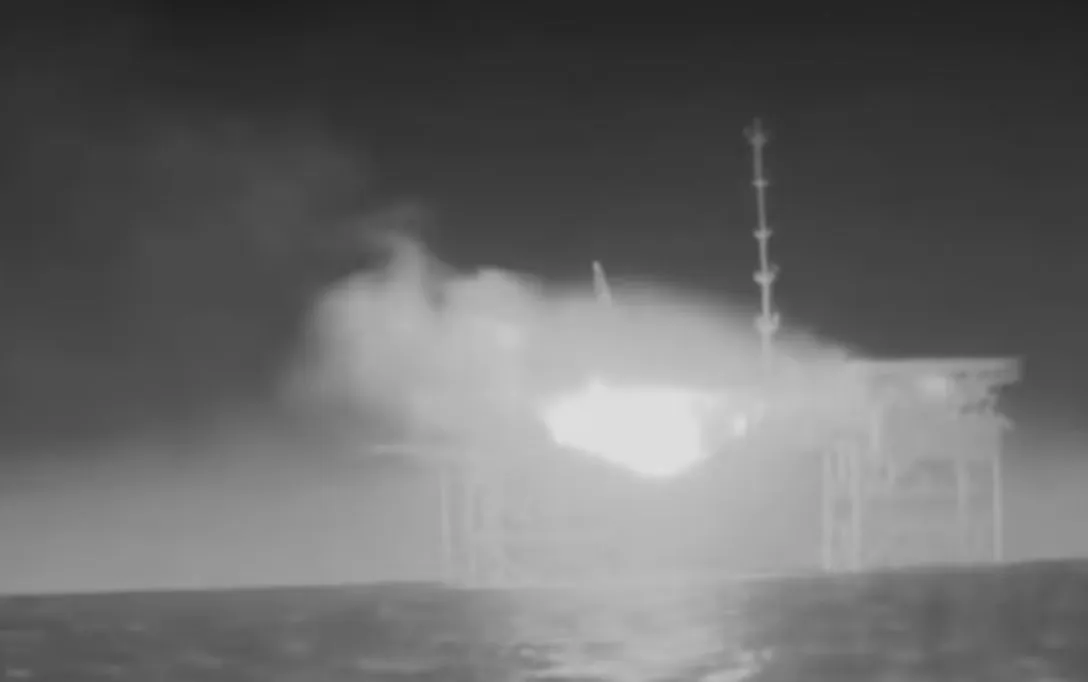
Ukrainian military naval drones attacked Russian targets near the occupied Crimea. Enemy surveillance systems on captured gas platforms were destroyed.
The Ukrainian military attacked Russian targets near the occupied Crimea with naval drones – enemy surveillance systems were destroyed. This was announced by the commander of the Naval Forces of the Armed Forces of Ukraine, Vice Admiral Alexey Neizhpapa, reports UNN.
"The hunt for the enemy in the Black Sea continues. Naval drones of the Navy Unit launched targeted strikes on Russian targets. Enemy surveillance systems placed on captured gas platforms off the coast of the temporarily occupied Crimea were destroyed. The invaders will not stay on our territory – we will get them everywhere," Neizhpapa said.
Ukrainian intelligence officers destroyed three more expensive radar systems in the occupied CrimeaNov 30 2024, 07:54 AM • 23228 views
He also showed the results of the "work" of naval drones of the Armed Forces of Ukraine.
On July 17, 2014, the downing of Malaysia Airlines Flight MH-17, a commercial plane flying from Amsterdam to Kuala Lumpur, shocked the world. The crash claimed the lives of all 298 passengers and crew, including 80 children. It marked a significant escalation in Russia’s war against Ukraine that had been unfolding since early 2014.
However, this tragic incident was just one of many in a turbulent year that also saw Russia’s annexation of Crimea and its covert invasion of Ukraine's Donbas region. What followed was a hybrid war that would span nearly a decade, culminating in Russia’s full-scale invasion of Ukraine in February 2022. Understanding the events of 2014 and the West’s delayed and inadequate response offers critical lessons for interpreting the current war.
"Understanding the events of 2014 and the West’s delayed and inadequate response offers critical lessons for interpreting the current war."
The initial spark for the war can be traced to Ukraine's ambition to align itself with Europe through an Association Agreement with the European Union, which included a Deep and Comprehensive Free Trade Area. Though primarily an economic treaty, Moscow saw it as a direct challenge to its geopolitical influence in the post-Soviet space. Ukraine’s decision to sign the agreement was viewed by Russia as a threat to its efforts to keep Ukraine within its sphere of control. Moscow feared that other former Soviet states might follow suit, prompting a decisive and aggressive response.
In February 2014, Russia began its military intervention by occupying Crimea, and by March, it had formally annexed the peninsula. In April, Russian proxy troops infiltrated Ukraine’s Donbas region, sparking violent confrontations. The war in Ukraine escalated, resulting in further tragedy, including the downing of a Ukrainian Il-76 transport plane in June and MH-17 in July. The latter prompted the European Union to impose sectoral sanctions on Russia later that month.
The West’s response to the initial stages of the war was, at best, tepid. Though sectoral sanctions were introduced after the downing of MH-17, these measures came when the Ukrainian army was temporarily making gains in the Donbas. The EU’s introduction of sanctions in immediate response to the killing of EU rather than Ukrainian citizens sent an ambivalent signal. It suggested that not Russia’s aggression per se, but its collateral damages are the problem. Accordingly, in August 2014, Russia escalated its involvement in eastern Ukraine, now deploying regular troops on a large scale.
The West’s continuing reluctance to take decisive action in 2014 can be attributed to a widely spread fundamental misreading of the situation. Many in the international community, particularly in Europe, viewed the conflict as an internal Ukrainian issue that could be resolved through diplomacy. This failure to recognize the broader strategic ambitions of Russia allowed the war to drag on for over a decade.
A key reason for the West’s failure to grasp the true nature of the conflict was a lack of expertise on Ukraine and Russia’s hybrid warfare tactics. Western journalists, many of whom had spent years covering Russia, often interpreted events through a Russian lens. Russian narratives, depicting the conflict in the Donbas as a regional uprising or civil war, were widely accepted, and Western media often failed to see the larger picture of Russian interference and subversion.
Pro-Russian demonstrations and local sentiments in eastern Ukraine were taken at face value by foreign correspondents, who struggled to distinguish between genuine local movements and orchestrated Russian interventions. Moscow deployed agents from Russia and other controlled regions, such as Transnistria, to create the illusion of local support for its collaborators. Meanwhile, pro-Ukrainian voices in the Donbas were silenced through threats, violence, and abductions, often orchestrated by Russian-backed forces. Western reporters, unfamiliar with the complexities of the region, largely missed this dynamic, resulting in a skewed portrayal of the conflict in international media.
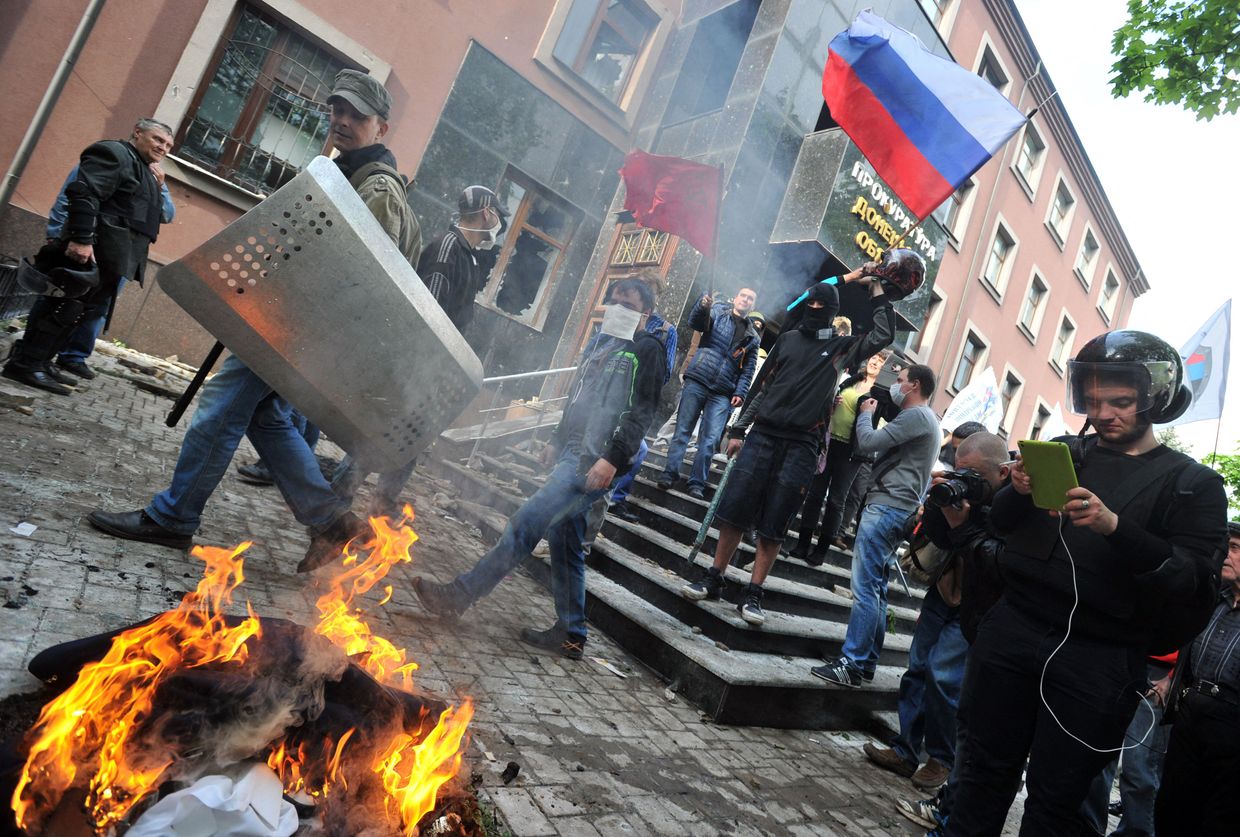
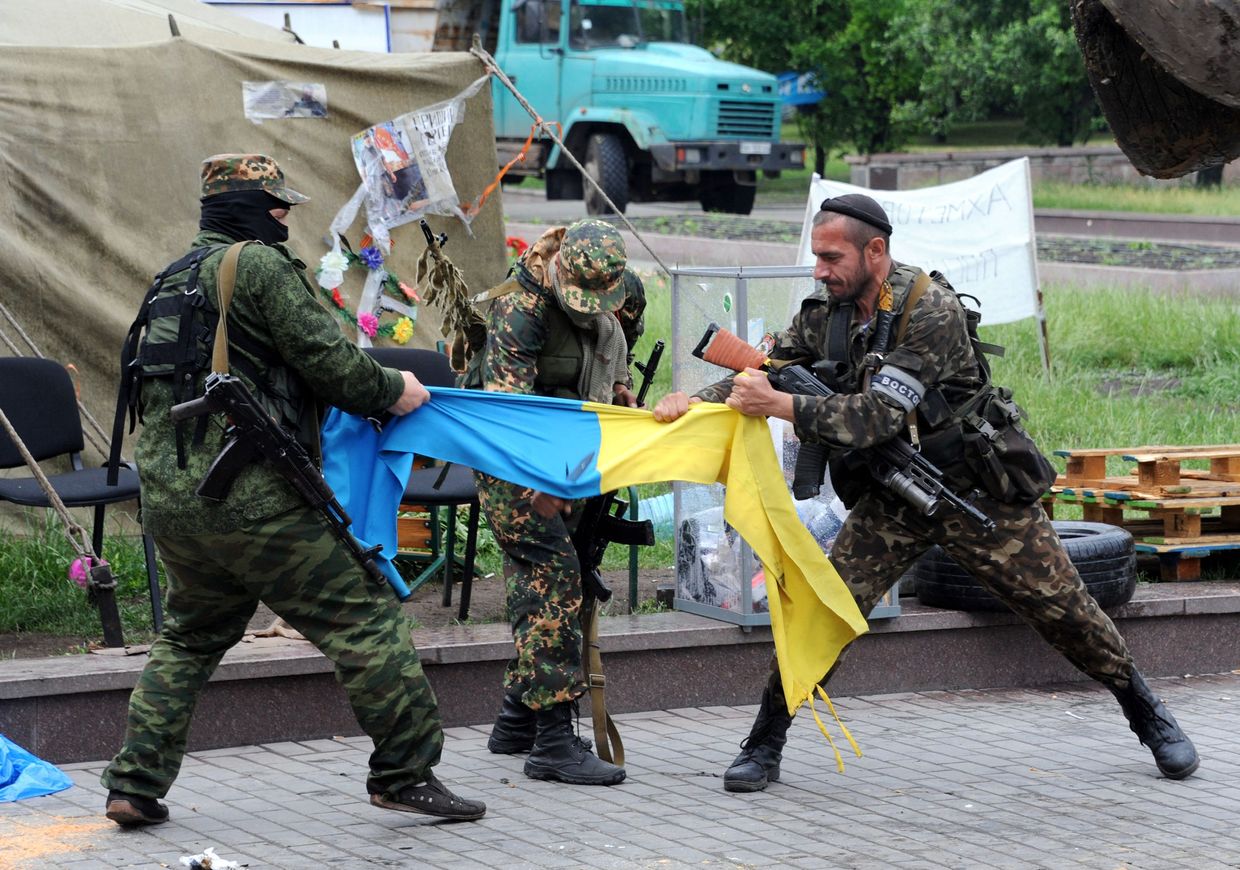
Portraits and uniforms of Ukrainian prosecutors burn outside the Prosecutor's Office as Russia-backed militants attempt to capture the city and other parts of Donetsk Oblast, Ukraine, on May 1, 2014. (Alexander Khudoteply / AFP via Getty Images)Russian proxies rip apart a Ukrainian flag outside of a regional state building in Donetsk, Ukraine, on May 29. 2014. (Viktor Drachev /AFP via Getty Images)
Russia’s manipulation of the conflict-resolution framework was another significant factor in the West’s delayed response. Moscow alternated between periods of overt aggression and gestures of conciliation, such as withdrawing parliamentary approval for troop deployment in Ukraine in mid-2014. This tactic, known as "escalation control," allowed Russia to exert pressure on Ukraine while maintaining plausible deniability and avoiding large-scale retaliation from the West.
By participating in peace negotiations, such as the Minsk agreements, while simultaneously violating ceasefires and continuing covert operations in Ukraine, Russia deceived many Western diplomats into believing a diplomatic resolution was still possible. The Minsk agreements, brokered in 2014 and 2015, were seen by many in the West as a step toward peace. In reality, they served Moscow’s strategy of consolidating control over the Donbas while avoiding direct confrontation with NATO.
The events of 2014 offer important lessons for understanding Russia’s broader strategy and the nature of the current war in Ukraine. One key takeaway is that the West’s piecemeal approach to Russia’s aggression — characterized by limited sanctions and delayed military support for Ukraine—only emboldened Moscow. The belief that Russia would cease its aggression if given economic incentives or diplomatic concessions has been proven wrong time and again.
The full-scale invasion of Ukraine in 2022 was the culmination of eight years of Russian aggression and Western inaction. While the West has since stepped up its support for Ukraine, providing military aid and imposing harsher sanctions on Russia, the initial misreading of the conflict in 2014 and slow reaction to Russia’s enormous aggression since 2022 allowed the war to last far longer than it might have.
Moving forward, the international community must learn from past mistakes and adopt a more assertive and strategic approach to dealing with Russian aggression. Addressing the root causes of the conflict and providing Ukraine with the necessary support are essential to achieving a lasting and secure peace. Based on the lessons of the 2014-2022 war in the Donbas, four key policy recommendations emerge:
First, recognizing the "Russia Problem": The West must recognize that the current war is not a “Ukraine crisis” but a manifestation of Russia’s imperialist ambitions. The root cause lies in Moscow’s revisionist policies, not any internal Ukrainian issues.
Second, military support for Ukraine: As meaningful negotiations with Russia are currently impossible, the West must increase its military support to Ukraine. This will empower Kyiv to negotiate from a position of strength, ensuring that any future peace talks lead to a lasting resolution rather than a partial de-escalation followed by later re-escalation.
Third, countering Russian disinformation and hybrid warfare: Western governments must allocate more resources to countering Russia’s disinformation campaigns and hybrid warfare tactics. This includes developing whole-of-society counterstrategies to defend against Russia’s subversive activities and propaganda.
Strengthening deterrence: Any future peace agreement must include serious security guarantees and strong military deterrents to prevent Russia from using a temporary truce to prepare for another attack. NATO and the European Union must lead a united, robust response to any further Russian aggression.
Editor’s Note: The opinions expressed in the op-ed section are those of the authors and do not necessarily reflect the views of the Kyiv Independent. This article is based on the more extensive September 2024 SCEEUS report.
Submit an Opinion
Stay warm with Ukrainian traditions this winter. Shop our seasonal merch collection.
Russian troops carried out 276 strikes on 11 settlements of the Zaporozhye region using aircraft, drones and artillery. As a result of the shelling, 10 residents were killed and 20 infrastructure facilities were damaged.
During the last 24 hours, enemy troops carried out 276 strikes on 11 settlements of the Zaporozhye region, using aircraft, drones and artillery. A day of mourning has been declared in the region. This is reported by the chairman of the Zaporozhye RMA Ivan Fedorov, reports UNN.
Details
Today, a day of mourning has been declared in the Zaporizhia region for the victims of yesterday's Russian shelling. Zaporozhye lost 10 of its residents due to the cynical blow of the country-a terrorist who claimed their lives.
The cities of Zaporizhia, Novoandreevka, Novopavlovka and Malaya Tokmachka were most affected, where the aggressors carried out 19 air strikes. In addition, 161 drones of various modifications attacked Belenke, Kamenskoye, Gulyai-pole, Shcherbaki, Novoandrievka, Novodanilovka, Malaya Tokmachka, Belogorye and Novodarovka.
In addition to aviation and UAVs, the invaders conducted 7 MLRS attacks on the territories of Novodanilovka, Novoandrievka and Novodarovka. And the artillery strikes were the most intense, in particular, 89 attacks hit Kamenskoye, Gulyai-pole, Shcherbak, Novoandrievka, Novodanilovka, Malaya Tokmachka, Belogorye and Novodarovka.
As a result of the shelling, there were 20 confirmed cases of destruction of residential buildings and critical infrastructure facilities. Local residents continue to experience serious difficulties in the face of constant attacks, and the authorities are working to minimize the consequences of strikes.
President Volodymyr Zelensky on Dec. 6 announced that the first batch of a new missile-drone hybrid called Peklo (Hell) had been delivered to Ukraine's Armed Forces.
In a post on social media, Zelensky did not reveal the number of the supplied weapons but said the aim now was to "scale up production and deployment," adding they already have "proven combat effectiveness."
Long-range domestic weapons are seen as critical to Ukraine’s defense strategy, providing the country's military with an alternative to Western arms whose use is often under restrictions.
While some details of Peklo's capabilities remain undisclosed for security reasons, Zelensky highlighted the weapon as a "fundamentally new type."
The Peklo has a range of 700 kilometers (430 miles) and a speed of 700 km/h (430 mph). During the unveiling, officials reportedly said that the system has already been successfully deployed five times.
The "Peklo" (Hell) drone-missile — our Ukrainian weapon with proven combat effectiveness. Today, the first batch was delivered to our Defense Forces. The mission now is to scale up production and deployment. I am grateful to everyone involved in our defense production, whose… pic.twitter.com/MjIcWHgouZ
— Volodymyr Zelenskyy / Володимир Зеленський (@ZelenskyyUa) December 6, 2024
The officials also noted that the missiles are cost-effective and rival some Russian cruise missiles in performance.
Ukraine's missile development program has gained momentum since Russia's full-scale invasion in February 2022.
Defense Minister Rustem Umerov announced on Dec. 4 that the Palianytsia, a lightweight missile-drone hybrid, has also entered serial production.
These advancements come as Western partners have only recently permitted strikes on Russia’s Kursk Oblast using foreign-made missiles, while attacks deeper into Russian territory remain restricted.

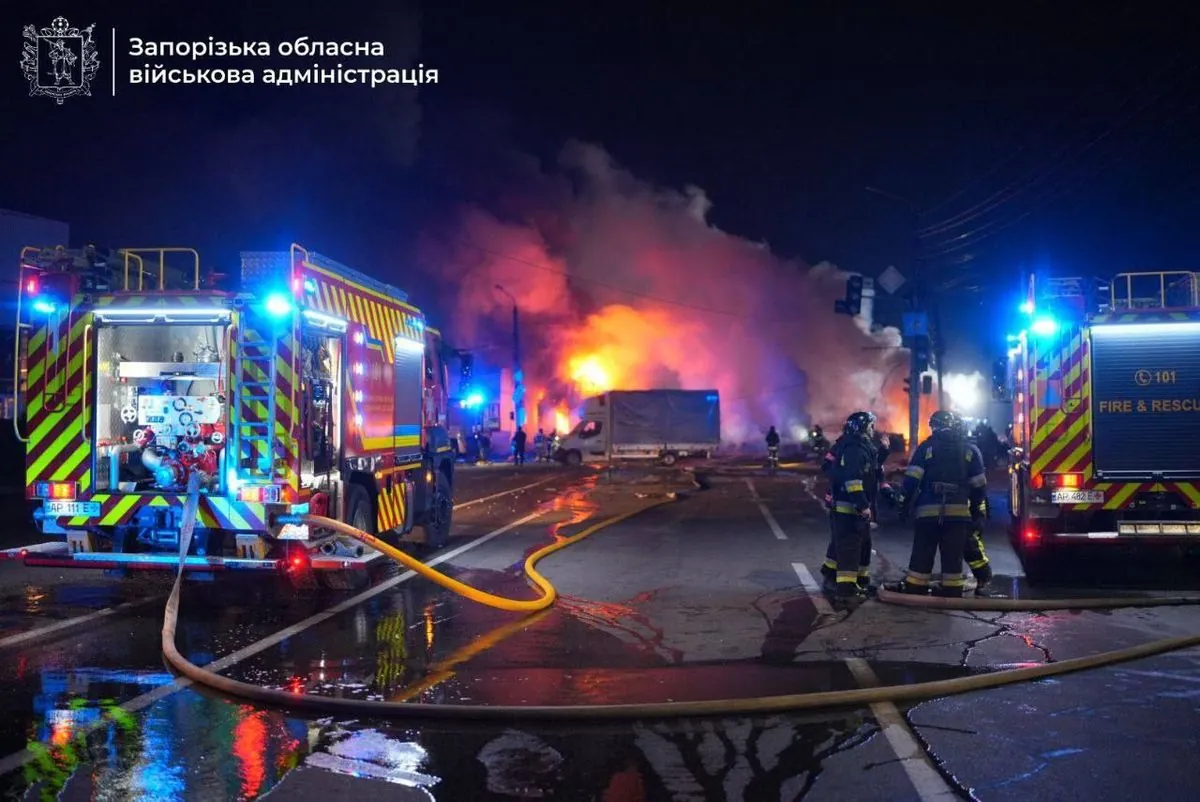

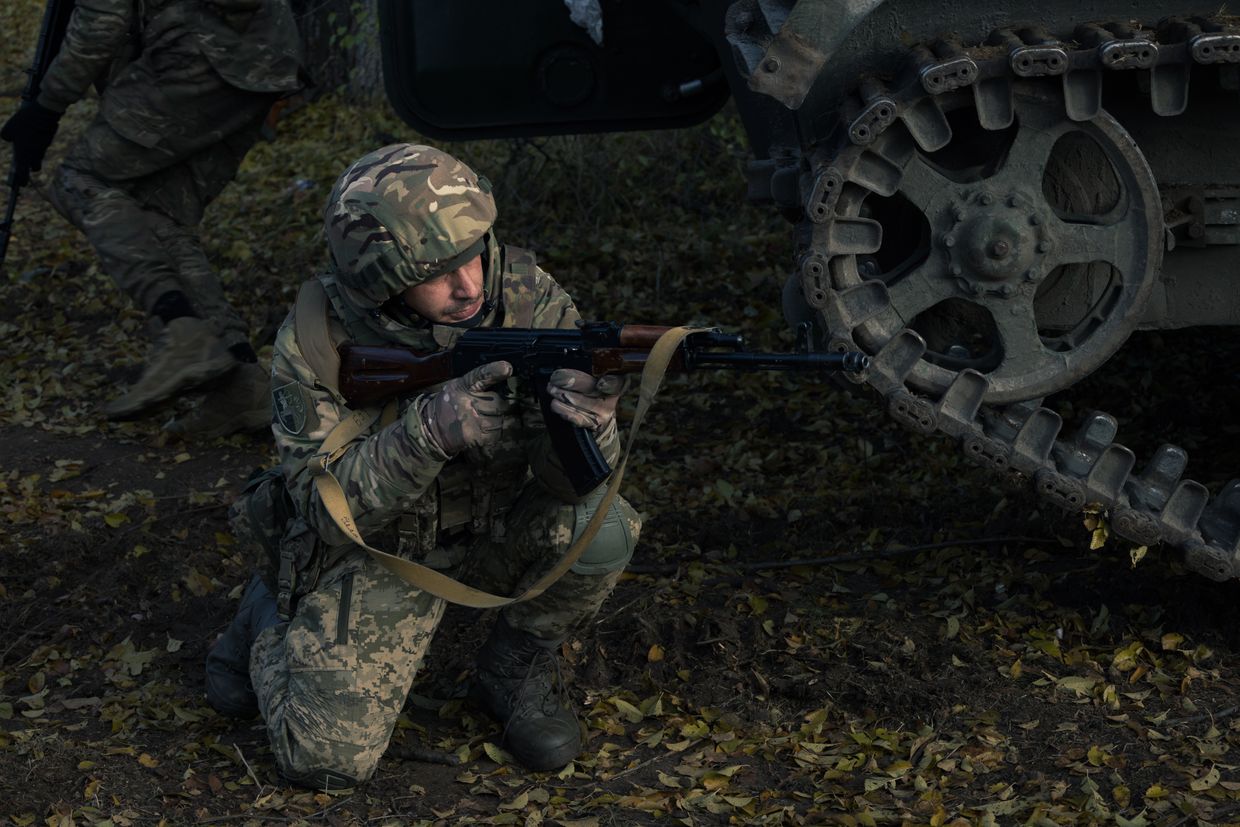
 The Kyiv IndependentMartin Fornusek







 shop now