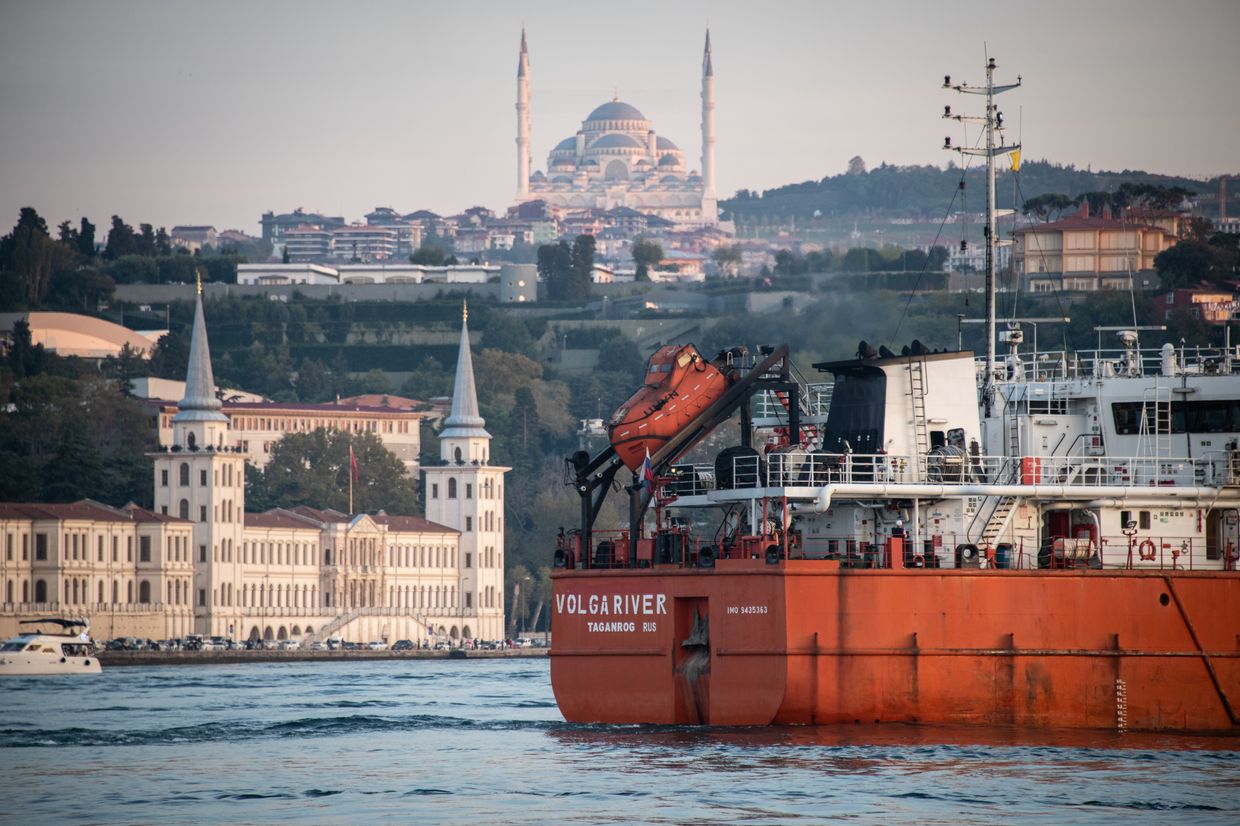
Russia has damaged 321 port infrastructure facilities, as well as 20 foreign merchant vessels since July 2023, President Volodymyr Zelensky said on Nov. 23 at the International Conference on Food Security in Kyiv.
Traveling along the Black Sea route, ships are regularly at risk of being attacked by Russia. Since the beginning of the all-out war, mines have also been drifting along the trade route, which also poses a risk to maritime transport.
As a major grain producer, Ukraine exports about 6 million tons of grain per month through ports along the Black Sea.
Following an initial blockade at the start of Russia's full-scale invasion, Russia unilaterally terminated the Black Sea grain deal last year forcing Kyiv to set up a new export route in the Black Sea.
Initially envisioned as a humanitarian corridor to allow the departure of ships stranded there since the start of the full-scale war, it has since grown into a full-blown trade route.
Last month, Russian forces struck a foreign civilian ships in Odesa, killing a 60 year-old Ukrainian port employee and injuring five foreign nationals.
"By attacking civilian vessels, Russia tries to weaken Ukraine’s economy and put millions around the world at risk of hunger," Ukraine's Foreign Minister Andrii Sybiha wrote on social media following the attack in October.
Speaking at the Grain from Ukraine conference during a program that included journalists from 10 different African countries, Zelensky said that the country's "food exports provide food for 400 million people in 100 countries around the world."
"Food prices in Egypt, Libya, Nigeria, and other countries in Africa directly depend on whether farmers and agricultural companies in Ukraine can operate normally," Zelensky added.
Attempting to strengthen ties with African nations amid Russia's continued influence in the region, Zelensky said that seven of the ten embassies that the country announced it was opening in African nations in December 2022 have already been opened, with an additional three opening in the near future.
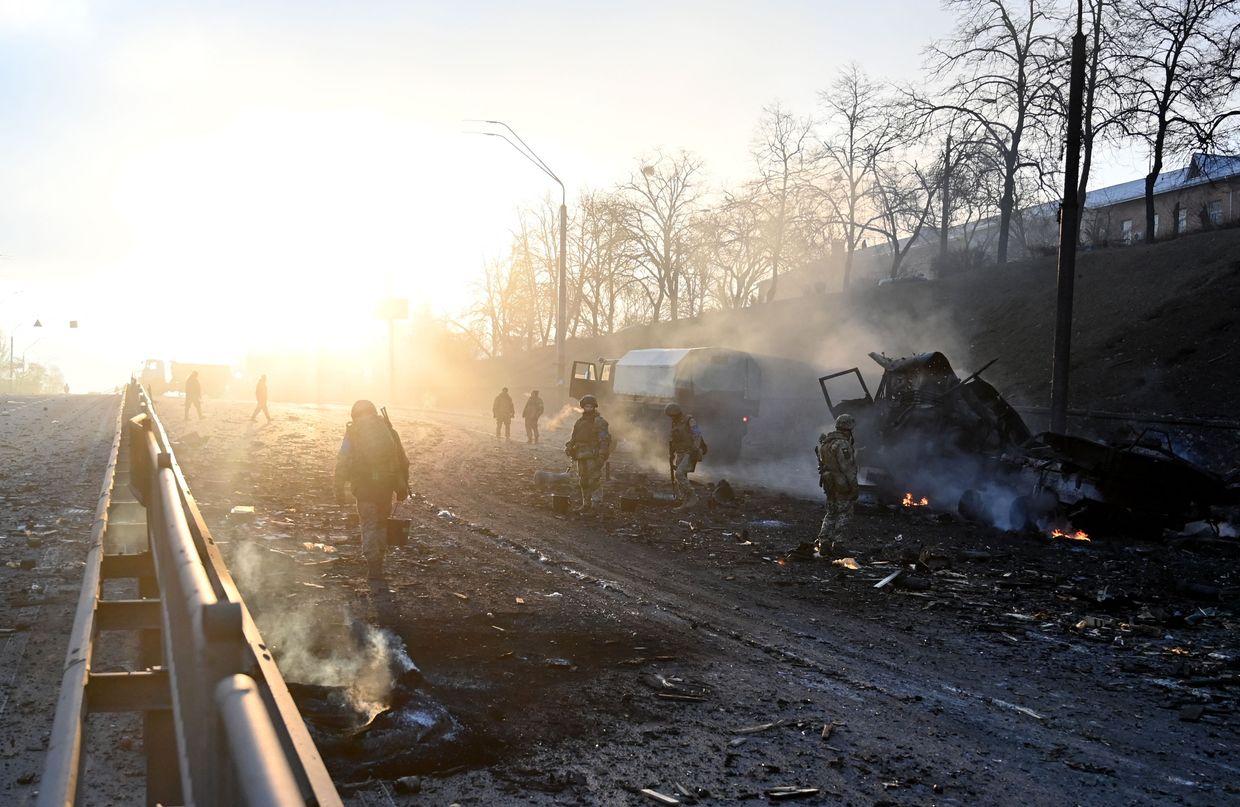
Russian troops fired 16 times at the border areas of Sumy region, 69 explosions were recorded. The attacks were conducted in six communities using artillery, mortars and FPV drones.
During the day, Russians fired 16 times at the border areas and settlements of Sumy region. 69 explosions were recorded. This was reported by the Sumy RMA, according to UNN.
Khotyn, Yunakiv, Myropil, Bilopil, Velykopysariv, and Seredyna-Budska communities were shelled,
– the statement said.
Details
Miropilska community: the enemy attacked with artillery (25 explosions), FPV drone (1 explosion).
Ukraine has lost over 40 per cent of the territory it previously gained in Russia's Kursk Oblast due to Russian counterattacks, Reuters reported on Nov. 23, citing a source in Ukraine's General Staff.
"At most, we controlled about 1,376 square kilometres, now of course this territory is smaller. The enemy is increasing its counterattacks," the source told Reuters. "Now we control approximately 800 square kilometres. We will hold this territory for as long as is militarily appropriate."
Ukraine first gained a foothold in Kursk Oblast during a surprise incursion into the Russian region in early August. Since then, Russia has launched extensive counterattacks in an effort to take back the region.
NATO allies believe that Russian President Vladimir Putin is aiming to recapture territory lost in Kursk Oblast before U.S. President-elect Donald Trump’s inauguration on Jan. 20, The Telegraph reported, hoping to gain leverage in future peace negotiations.
The source added that nearly 60,000 Russian army personnel are currently stationed in Kursk Oblast, planning to reach the border with Sumy Oblast to create a "buffer zone" there, as Ukraine looked to do with its incursion into Kursk Oblast.
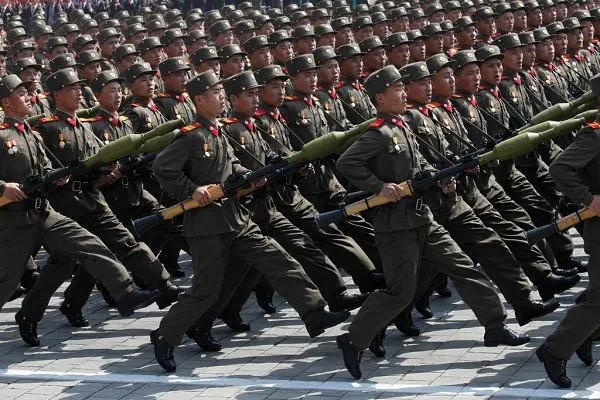
Kyiv has previously said that about 11,000 North Korean soldiers have joined the counteroffensive in Kursk, with the General Staff source noting that the majority of North Korean soldiers was finalizing training along Russian forces.
The Kyiv Independent has not been able to verify the information provided by the General Staff source.
As Russia's attempt to take back Kursk continues to progress, Russia has also intensified its attacks along the eastern front in recent weeks, putting Ukrainian forces under mounting pressure as they struggle to defend key positions.
In total, almost 580,000 Russian soldiers are participating in combat against Ukraine, Vadym Skibitskyi, the deputy head of Ukraine's military intelligence agency (HUR), told Interfax Ukraine on Nov. 21.
Over the last day, 125 combat engagements took place, most of them in the Pokrovske and Kurakhove sectors. Occupants are actively using aviation and anti-aircraft guns, Ukrainian defenders repelled most of the attacks.
Since the beginning of the day, the total number of combat engagements along the entire frontline has increased to 125. The occupants continue to use aviation, in particular, UAVs, and carry out attacks in all directions of the east and south of our country, especially actively in the Pokrovske and Kurakhove directions, UNN reports with reference to the General Staff's report as of 16:00.
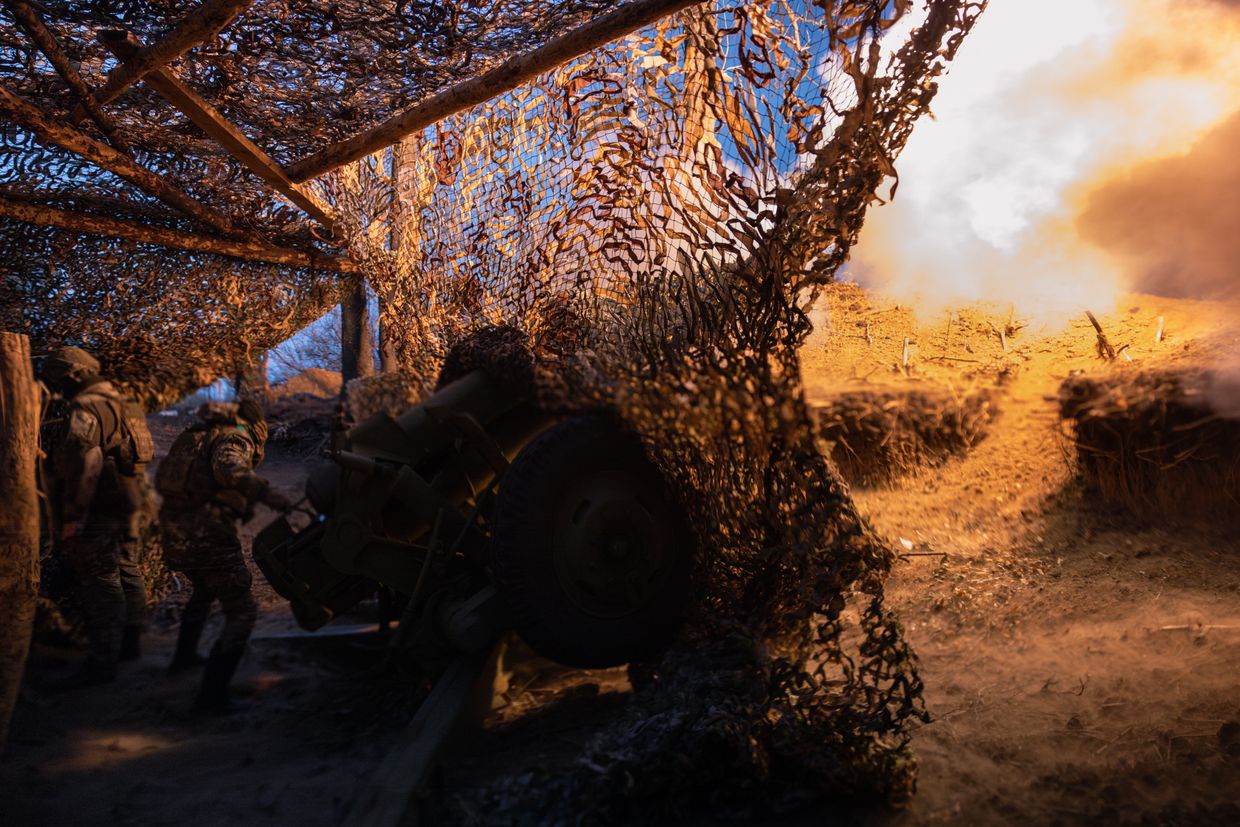
According to the General Staff, the Russians fired 110 times at the territory of the Kursk region of the Russian Federation, including 9 times with multiple launch rocket systems.
Four combat engagements took place in the Kharkiv sector today. Ukrainian troops repelled two Russian attacks in the area of Vovchansk, two more combat engagements are still ongoing in the area of Tykhy.
Our troops repelled eight invaders' attacks near Hlushkivka, Synkivka, Zahryzove, Novoplatonivka and Zelenyi Hai in the Kupyansk sector, and another firefight is still ongoing. The enemy conducted an air strike in the area of Lozova.
In the Liman sector, the enemy attacked seven times without result in the areas of Druzhelyubivka, Tverdokhlibove, Novoyehorivka, Hrekivka and Terny.
With the support of aviation in the Northern sector near Bilohorivka, our defenders repelled one enemy attack.
In the Kramatorsk sector, the enemy unsuccessfully attacked Ukrainian positions in the vicinity of Stupochky once today. The enemy also launched an air strike with unguided aerial missiles in the area of Chasovyi Yar.
In the Toretsk sector, the enemy attacked our troops' positions in the Toretsk area twice in vain, while launching air strikes with guided aerial bombs near the settlements of Toretsk, Nelipivka, Katerynivka, Ivanopillia and Zorya, dropping ten bombs in total.
In the Pokrovsk sector, the enemy has attacked 28 times since the beginning of the day in the areas of Promin, Lysivka, Krutyi Yar, Myrnohrad, Hryhorivka, Dachanske, Zhovte, Pushkine, Petrivka and Pustynka, 23 attacks were repelled, and fierce fighting is ongoing. The enemy also bombed Yablunivka, Zorya, Oleksandropil, Hrodivka, Myroliubivka and Yelyzavetivka, dropping a total of 16 guided aerial bombs.
In the Kurakhove sector, five firefights continue in the areas of Berestky, Dalne and Romanivka. Seventeen enemy attacks have already been repelled by our defenders in the areas of Sontsivka, Zorya, Novodmitrivka, Kurakhove, Katerynivka and Antonivka.
In the Vremivsk sector, seven enemy attacks continue near Velyka Novosilka and Novodarivka, 18 enemy attacks in the area of Trudove, Sukhi Yaliv and Rivne have already been repelled.
The enemy did not conduct any active operations in the Orikhivske and Huliaypillia directions.
In the Prydniprovsky sector, our defenders repelled three enemy attacks.
Ukrainian Armed Forces engage in 194 combat engagements in the frontline: most of them in the Kurakhove, Pokrovske and Vremivske sectors – General StaffNov 23 2024, 06:58 AM • 66988 views
The recent hike in Russia’s key interest rate to 21% by the Central Bank in late October has stirred renewed debate among media and economists about the Russian economy’s outlook and how economic trends could influence Kremlin policies. Today, few predict an "imminent collapse" of the Russian economy. However, signs of deteriorating trends and economic challenges confront Russian President Vladimir Putin's regime with a dilemma: continuing the aggressive war or quickly ending it are both likely to lead to an economic crisis.
Observers point out several unique features of the Russian economy that cast doubt on claims of its "sustainable development" and "prosperity."
First, the current key rate is more than double the official annual inflation rate, resulting in a double-digit real interest rate — an unusual scenario. This could suggest that actual inflation is much higher than official reports indicate and that inflation expectations among the public and businesses exceed the Russian Central Bank's estimates (over 13%). Even if official inflation figures aren’t distorted, the calculation methods don’t account for changes in the consumer basket due to sanctions, such as the replacement of Western goods with cheaper Chinese alternatives.
Second, despite the high interest rate, loan volume continues to grow, as noted by Elvira Nabiullina, governor of the Bank of Russia — a concern for the central bank. Credit growth is currently driven by increased business lending, while consumer lending has declined in response to high rates and the end of the subsidized “preferential” mortgage program in summer 2024. Commercial lending rates have risen to 25–30% and above, signaling heightened inflation expectations, a shortage of working capital due to increased sanctions-related costs, and labor shortages. These factors create significant risks of defaults and bankruptcies.
Third, the planned increase in budget spending for 2025 significantly exceeds even optimistic GDP growth projections. The Russian government has forecast real GDP growth at 2.5% for 2025. However, even Russian analysts suggest growth will likely not exceed 2%, and the International Monetary Fund recently lowered its 2025 forecast to 1.3%. Meanwhile, planned federal expenditures are set to rise by nearly 12% (from 37.2 trillion rubles in 2024 to 41.5 trillion in 2025).
Direct military spending for 2025 is expected to reach an unprecedented 13.5 trillion rubles (about $140 billion). Even within Russia, economists doubt that the government’s projected budget deficit of under 1% of GDP is realistic. This is reflected in declining liquid assets in the so-called "National Wealth Fund," which, as of summer 2024, stood at just over $55 billion — less than half of what it was at the start of the full scale war in 2022.
The revival of the Russian economy in 2023–24 is attributed to two main factors: stable oil and gas revenues and significant growth in war-related government spending. Despite sanctions, Russia has found new markets (mainly China and India), and has employed a “shadow fleet” and other strategies to evade sanctions.
"The revival of the Russian economy in 2023–24 is attributed to two main factors: stable oil and gas revenues and significant growth in war-related government spending."
However, both the Russian Central Bank and the Russian parliament are now warning of stagflation (recession combined with high inflation). Resources are dwindling, fiscal stimuli are no longer effective, supply-side constraints (labor shortages and lack of access to technology and modern equipment) are intensifying, and production cannot keep up with demand, driving inflation. This trajectory will likely lead to a severe economic crisis; the only question is when.
Ending the war also carries significant risks for the Russian economy. Exiting the "Keynesian trap" of increased budget expenditures will be painful, as a decrease in aggregate demand could worsen stagflation tendencies and trigger a major downturn and crisis.
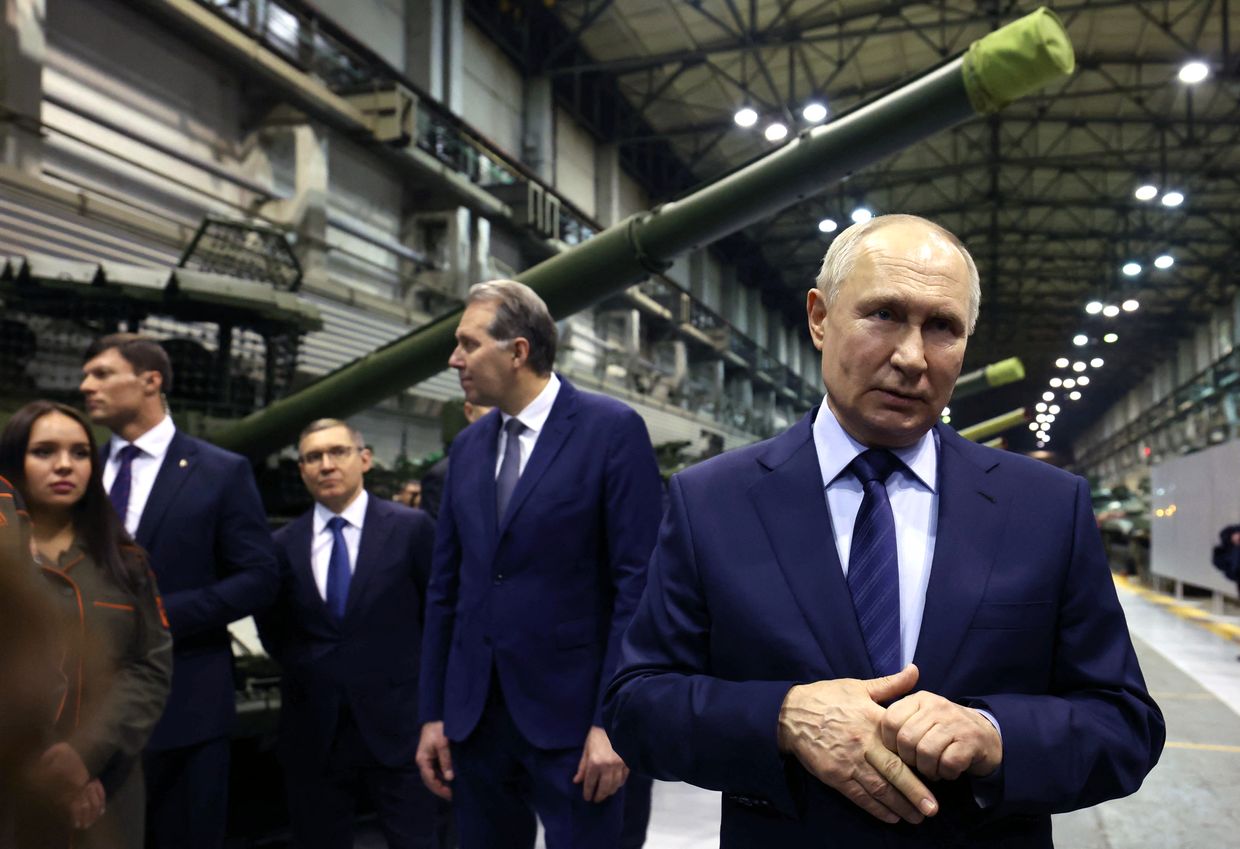
Russian President Vladimir Putin visits Uralvagonzavod, a Russian tank factory, in Nizhny Tagil, Russia on Feb. 15, 2024. (Alexander Kazakov / POOL / AFP via Getty Images)
Over the course of the war, a significant “war party” has formed in Russia, involving both elites and ordinary citizens. Officials have gained new avenues for corrupt enrichment through sanctions circumvention schemes, while businesses have filled market gaps left by Western companies. Families of soldiers or those working directly or indirectly for the military-industrial complex are earning incomes they couldn’t have imagined pre-war.
By various estimates, direct war beneficiaries include 15 million people or more, comprising over 10% of the Russian population. Additionally, increased payouts in the contract army and military-adjacent sectors, coupled with an obvious labor shortage, have driven up wages in other parts of the economy.
"By various estimates, direct war beneficiaries include 15 million people or more, comprising over 10% of the Russian population."
Though public opinion polls indicate broad support for the war, it’s evident that the conflict has allowed a sizable portion of the population to escape the "poverty trap." A return to pre-war conditions and the end of war-related expenditures will inevitably trigger an economic crisis and heightened social tension.
By launching the invasion of Ukraine, the Russian regime set itself up for a dilemma in which both continuing and ending the war will almost certainly lead to an economic — and possibly political — crisis. Given this, it seems prudent for Ukraine’s allies to make Russia’s continued aggression significantly more painful. Enhancing sanctions to meaningfully reduce Russia’s export revenues and restricting imports of critical technologies and equipment would serve this goal.
The problem is not that sanctions “don’t work” but that they’ve been applied slowly and inconsistently, with enforcement often lacking. Sometimes, sanctions inadvertently benefit Russia; for example, capital outflow restrictions have consolidated capital domestically, providing Putin’s regime with additional resources.
A better approach would be to encourage the maximum outflow of capital — including financial and human resources — by avoiding restrictions on emigration opportunities for Russians opposing the regime. By intensifying sanctions and closing enforcement loopholes, the prospects for Russia’s “celebration” of a prolonged, low-cost war will be sharply reduced, far below the five years or more predicted by a recent analysis in The Economist.
Author's Note: "With special thanks to Oleksiy Zagorodnyuk for his help with data research."
Editor’s Note: The opinions expressed in the op-ed section are those of the authors and do not necessarily reflect the views of the Kyiv Independent.
Submit an Opinion Introducing official merch from the Kyiv Independent Shop now
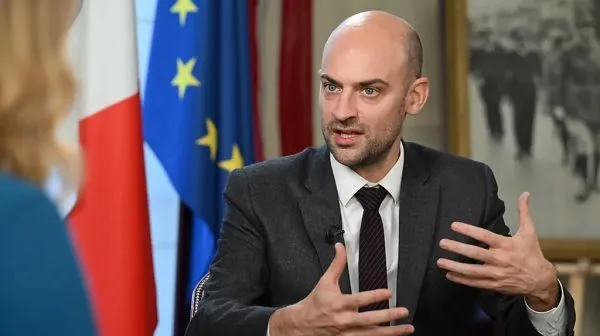
The French foreign minister said that there were no “red lines” in supporting Ukraine and allowing the use of French missiles for self-defense. Barro also did not rule out the possibility of French troops' participation in the conflict.
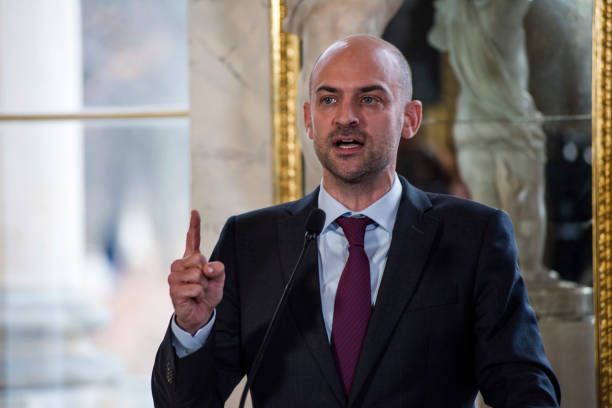
French Foreign Minister Jean-Noel Barrot said that Ukraine could launch French long-range missiles at Russia “in self-defense,” reports UNN citing the BBC.
Details
Barro told the media that there are no “red lines” in supporting Ukraine.
He said Ukraine could launch French long-range missiles at Russia “in self-defense,” but did not confirm whether French weapons had already been used.
“The principle has been established … our messages to President Zelensky were well received,” Barro said.
Add
The publication recalls that French President Macron indicated France's willingness to allow its missiles to be launched at Russia earlier this year. But Barro's comments are significant because they came days after the first use of long-range missiles by the United States and Britain.
Barro, who held talks with Foreign Secretary David Lammy in London on Friday, said Western allies should not limit support for Ukraine against russia and “not set or express red lines.
Asked whether this could mean French troops taking part in the fighting at all, he said, “We are not ruling out any options.
“We will support Ukraine as intensively and for as long as necessary. Why? Because our security is at stake. Every time the Russian army advances one square kilometer, the threat becomes one square kilometer closer to Europe,” he said.
Barro hinted at Ukraine's invitation to join NATO, as requested by President Zelensky. “We are open to an invitation, and so in our discussions with friends and allies and friends and allies of Ukraine, we are working to bring them closer to our positions,” Barro said.
And he suggested that Western countries will have to increase the amount they spend on defense, noting, “Of course we're going to have to spend more if we want to do more, and I think we're going to have to face these new challenges.
Barro's comments come after a week of significant escalation in Ukraine – Britain and the U.S. launching long-range missiles at russia for the first time, russia launching an intercontinental ballistic missile and Vladimir Putin suggesting the possibility of global war.
One UK government source describes the moment as a “critical moment” before winter and before Donald Trump returns to the White House.
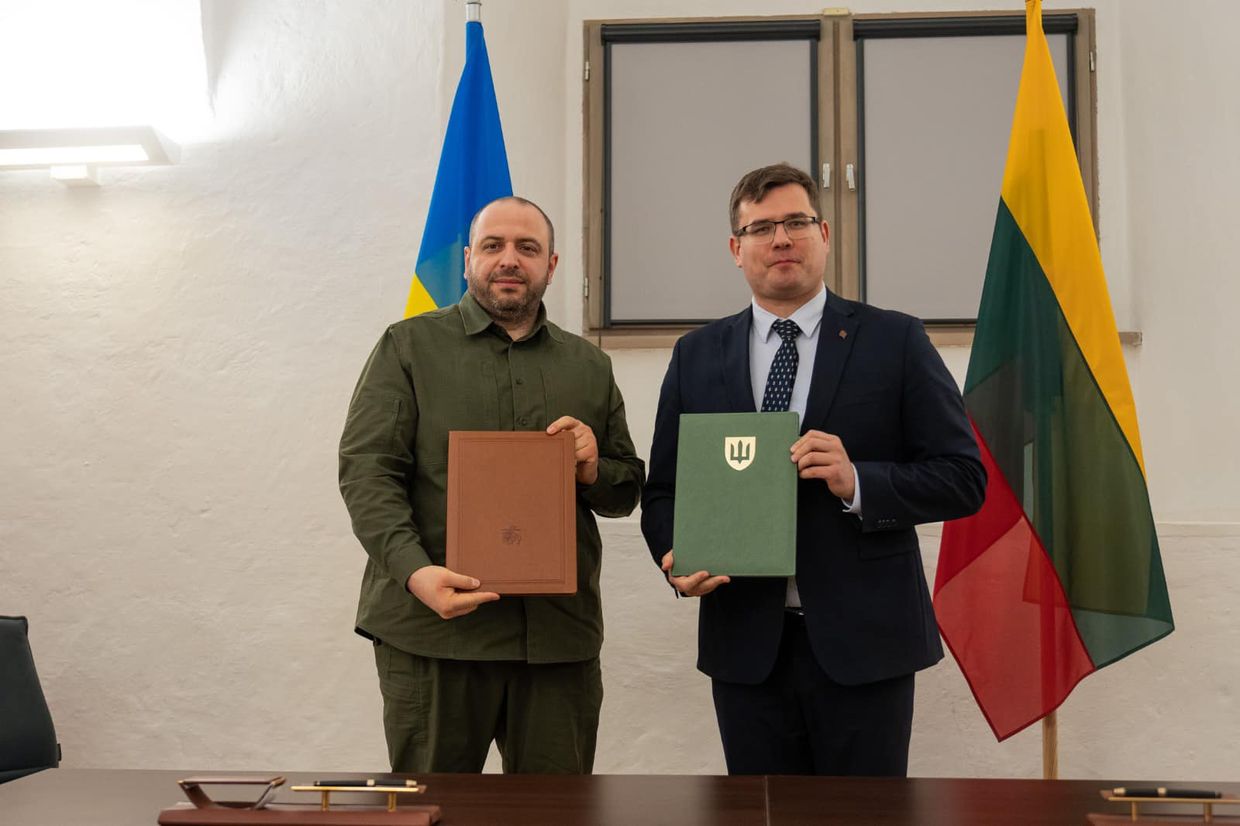
Lithuania will fund the production of Ukrainian long-range drones, Ukrainian Defense Minister Rustem Umerov announced on Nov. 23.
The long-term agreement between Ukraine and Lithuania includes an initial tranche of 10 million euros which has already been agreed upon and focuses particularly on Ukraine's Palianytsia missile-like drones.
"I expressed gratitude to the Republic of Lithuania for its steadfast support during these challenging times and personally thanked (Defense Minister Laurynas) Kasciunas for his leadership," Umerov wrote.
Umerov and his Lithuanian counterpart also reportedly discussed plans to equip Ukrainian brigades, provide ammunition, strengthen air defense, and expand defense industry cooperation between the two countries as "key priorities" for 2025.
The Defense Ministry previously announced on Nov. 22 that Sweden had also agreed to finance the production of long-range drones for Ukraine to aid the country in its defense against Russia's war of aggression.
A missile strike on a sanatorium in the Kursk region killed 18 Russian servicemen, including Lt. Gen. Solodchuk. It is also reported that 33 Russian servicemen were wounded and 500 North Korean soldiers were killed.
A Storm Shadow missile strike in the Kursk region killed 18 Russian military personnel, including Lieutenant General Solodchuk, wounded 33 Russian soldiers and killed 500 North Korean soldiers. This was reported by Global Defense Corp, citing sources, reports UNN.
Details
Several Storm Shadow missiles struck a sanatorium of the Russian Presidential Affairs Directorate in Maryino, Kursk region, causing significant military casualties, including the death of a high-ranking Russian commander, according to multiple sources, Defense Express reported.
The attack, which took place on Nov. 20, targeted an underground facility and killed 18 soldiers and wounded 33, according to the Spy Dossier Telegram feed.
Among the dead was Lieutenant General Valery Solodchuk, first deputy commander of the Leningrad Military District, who previously commanded the 1st Army Corps of the so-called "dnr" in 2014, the channel said.
Lieutenant General Valery Solodchuk was killed in a Storm Shadow strike on November 20.
Three North Korean military officials were also reportedly wounded in the strike, including two male officers and a woman initially identified as a medic. However, sources speculate that she may have served as an interpreter.
According to Spy Dossier, the victims included numerous Russian officers from the Southern and Eastern military districts.
In a subsequent incident, 13 Russian sappers, including the deputy chief of staff of the 88th Mechanized Brigade, were injured while attempting to clear unexploded ordnance on the ground, according to Spy Dossier.
The presence of dignitaries during post-strike cleanup operations suggests the possibility of additional senior officer casualties beyond those initially reported.
"The presence of such high-ranking individuals during the cleanup after the strike may indicate that casualties are not limited to officers and one general," Defense Express suggests.
Ukrainian Armed Forces strike at Russia with British Storm Shadow – BloombergNov 20 2024, 02:58 PM • 19472 views
Russian forces are reportedly advancing near five settlements in Donetsk Oblast, the crowd-sourced monitoring website Deep State reported on Nov. 23.
The settlement of Velyka Novosilka was targeted directly by a military column of "at least" five armored fighting vehicles, as well as two others through tree lines south of the settlement of Rozdolne, according to Deep State.
Ukrainian forces pushed Russian troops out of Rozdolne, but the situation in the area remains "extremely challenging," Deep State reported.
In addition to Velyka Novosilka and Rozdolne, Russian forces are advancing near Maksymivka, Pustynka, and Toretsk, Deep State wrote.
Russia has been mounting increasingly intense attacks along multiple areas of the eastern front, attempting to breach Ukraine's defenses in Donetsk Oblast and to reach the cities of Kurakhove and Pokrovsk.
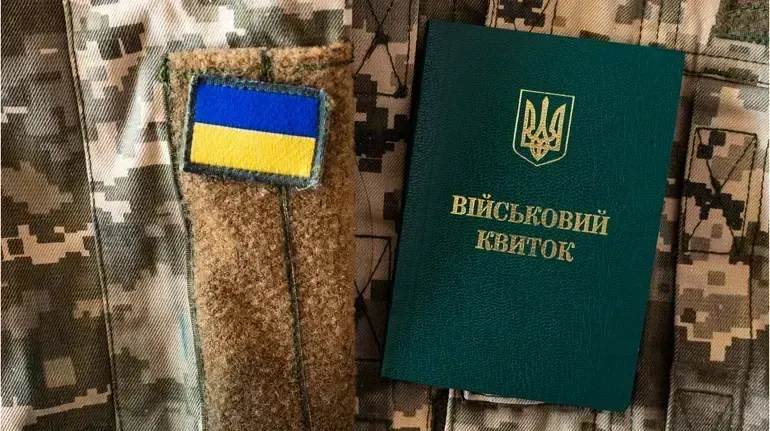
The Cabinet of Ministers has approved updated rules for reserving persons liable for military service, which will be in effect until February 28, 2025. Electronic data exchange between registers and new reporting requirements for employers are being introduced.
The Cabinet of Ministers of Ukraine has published updated rules for reservations for persons liable for military service for the period of mobilization and martial law, UNN reports citing the relevant resolution of the Cabinet of Ministers.
Details
For all those who have already received a draft deferment, it remains valid until the end of the term for which it was granted. But there is a limitation: no deferment will be valid longer than February 28, 2025. This applies to both deferrals issued by the Ministry of Economy and those issued through the Unified State Web Portal of Electronic Services.
The document clearly states cases when the postponement can be canceled, namely::
– the deferral period has expired;
– the company where the person liable for military service works no longer fulfills orders for the Armed Forces;
– the organization has lost its status as critical to the economy or the life support of the population;
– the enterprise or institution is liquidated;
– the employee resigns or terminates the employment contract.
In addition, the postponement may be canceled upon a reasonable submission by the head of the company or in case of failure of the operator to perform humanitarian demining.
For those companies recognized as critical to the economy or the Armed Forces and whose status expires by November 30, 2024, the government has automatically extended the status until December 31, 2024.
Employers are now obliged to promptly notify the Pension Fund of any changes regarding the employment of persons liable for military service.
These include:
– hiring or firing;
– transfer of an employee to another position;
– temporary termination or renewal of an employment contract.
This data is transmitted through the Pension Fund's web portal using an electronic signature.
To facilitate the booking process, the government is introducing real-time data exchange between different registers. In particular, we are talking about:
– The only state web portal for electronic services;
– a register of conscripts and persons liable for military service;
– register of legal entities.
This should make the document submission process faster and more convenient for both businesses and government agencies.
The Ministry of Digital Transformation is tasked with ensuring the technical possibility of submitting documents in electronic form, and the Ministry of Defense is to organize the exchange of data on persons liable for military service. At the same time, all government agencies should review the criteria for recognizing enterprises as critical.
Previously effective Cabinet of Ministers resolutions No. 650 and No. 1125 have been invalidated. The new rules will replace these documents and detail the booking procedure.
New rules for booking employees: what will change from December 1Nov 15 2024, 10:49 AM • 121875 views
Most of the new rules will come into force on December 1, 2024, but certain provisions, such as those on electronic interaction, will take effect immediately after the resolution is published.
For those who have a deferral, the amendments provide clarity on the terms of its validity. Employers should monitor personnel changes more closely and submit information to government agencies in a timely manner. At the same time, the automation of booking processes should simplify the work of both companies and the authorities.
Recall
President of Ukraine Volodymyr Zelensky said that the models of economic bookingthat were shown to him are not entirely fair.

 The Kyiv IndependentDmytro Basmat