After the release of STALKER 2, Ukrainian providers reported overloading of main channels due to massive downloads of the game. Users across the country are experiencing a significant decrease in internet speed.
After the release of the long-awaited game STALKER 2: Heart of Chornobyl, Ukraine experienced significant problems with the Internet connection. This was reported by Itc, according to UNN.
Details
In response to user complaints, the Odesa-based provider Tenet stated that a large number of simultaneous game downloads had overloaded external backbone channels. This caused a noticeable slowdown in access to Internet resources and online services, including games and IPTV. The company emphasized that it is working to resolve the problem together with the backbone operators to stabilize the situation.
Another major provider, Triolan, also confirmed the problem, noting that Internet speeds are decreasing across the country. According to the company, the reason is the increased load on the channels due to the massive download of STALKER 2.
The game itself has not been spared, with users reporting long delays in downloading STALKER 2 despite high internet speeds. Problems with access to servers are being experienced on all platforms.
Fortunately, the providers are already actively working to fix the technical problems, so Ukrainians can hope to restore stable network operation in the coming hours.
For gamers who haven't had time to download the game yet, the only thing left is patience and hope that the usual Internet speed will return soon.
Dipfakes, bots, Russian music and computer games: a mini-series to counter disinformation created in UkraineSep 30 2024, 05:15 PM • 20264 views
Belarus has announced that Vasily Veremeichik – a former soldier in the Kastuś Kalinoŭski Regiment, a unit made up of Belarusian military volunteers fighting on Ukraine's side – has been extradited after he was detained in Vietnam.
Source: Belarusian TV channel ONT; Belarusian news outlet Zerkalo
Details: After supporting the protests in Belarus in 2020, Veremeichik travelled to Ukraine. He joined the Kalinoŭski Regiment at the start of Russia's full-scale invasion of Ukraine. He later moved to Lithuania but was refused a residence permit because of his prior service in the Belarusian Armed Forces.
According to Belarusian media, Veremeichik was detained in Vietnam on 13 November and transferred to Belarus the following day.
Veremeichik faces up to 15 years in prison in Belarus for his service in Kalinoŭski's regiment, which the Belarusian authorities have declared a terrorist organisation.
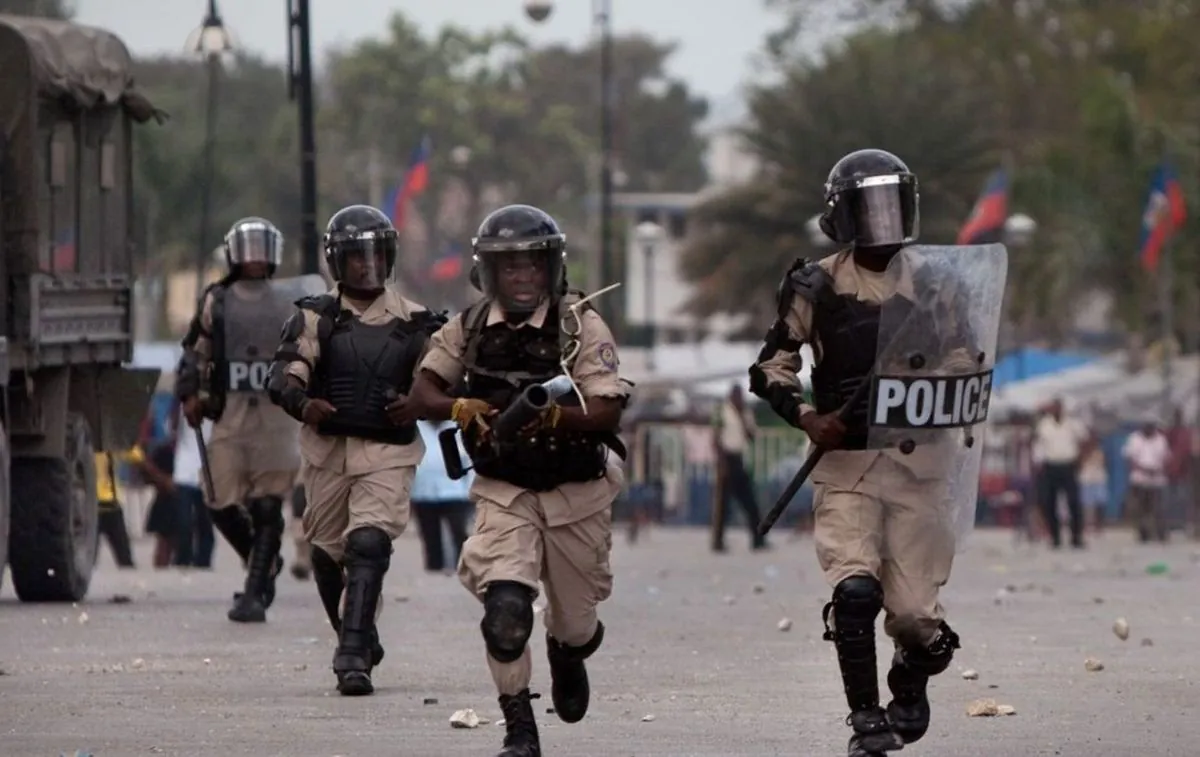
About 150 people have been killed in a new wave of violence between gangs and police in Haiti. The UN calls for an end to the violence, and Médecins Sans Frontières suspends its work after an attack on its staff.
About 150 people were killed in the violence in Haiti. This is reported by AFP, UNN reports.
Details
According to the UN, a new wave of violence among the groups and in clashes with the police indicates a further deterioration of the situation in the country.
UN Human Rights Commissioner Volker Türk said that the violence must stop immediately to avoid Haiti plunging further into chaos. He emphasized that the actions of the armed groups cannot go unpunished and the country cannot afford more instability.
Western humanitarian organizations have also suffered from the escalation of violence. In particular, Médecins Sans Frontières (MSF) announced the suspension of its activities in Port-au-Prince after its employees were attacked. Two police officers who were under the organization's protection were killed.
Haiti continues to struggle with the chaos caused by the activities of gangs that control part of the country's territory.
U.S. bans civilian flights to Haiti after plane is shot downNov 13 2024, 03:19 AM • 20658 views
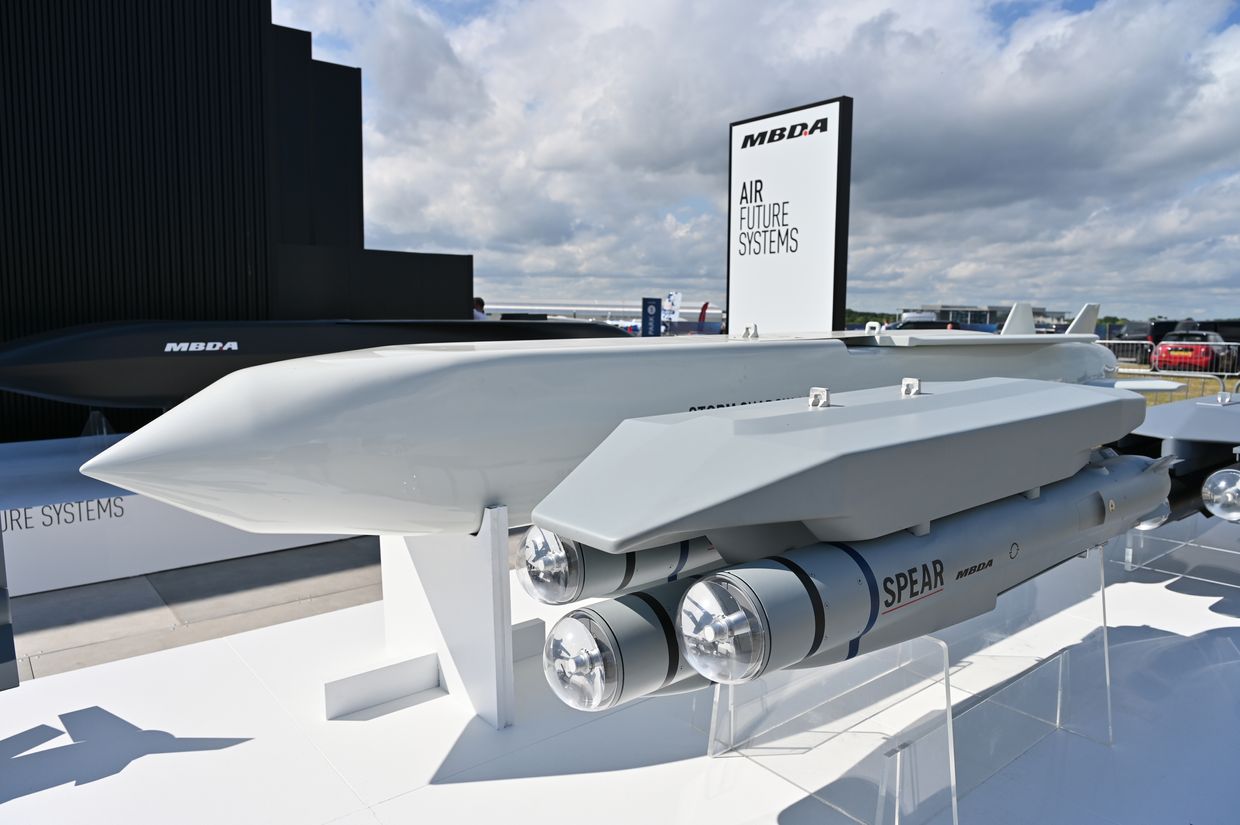
Ukraine strikes Russia with Storm Shadows for the first time, Bloomberg reports
Biden approves delivery of anti-personnel mines to Ukraine in light of Russian gains in east
Ukrainian drones allegedly strike Russian factories, weapons arsenal
North Korean troops in Russia to be led by secrecy-shrouded general close to Kim Jong Un, WSJ reports
Putin open to discussing Ukraine ceasefire with Trump, Reuters reports
Russian officials threaten US over long-range strikes, allude to nuclear doctrine changes
Ukraine has struck targets inside Russia with British-supplied Storm Shadow missiles for the first time, Bloomberg reported on Nov. 20, citing a Western official familiar with the matter.
According to the source, the strikes were approved as a response to the presence of North Korean troops in Russia's Kursk Oblast, a sign of escalation by Russia.
Different versions of Storm Shadow missiles have a range of between 250 and 560 kilometers. Storm Shadows have been used to hit Russian military targets in Crimea, a sovereign Ukrainian territory illegally annexed by Russia.
The reported strikes come a day after Ukraine reportedly used U.S.-made ATACMS long-range missiles to attack Russian territory, following outgoing U.S. President Joe Biden's approval on Nov. 17.
That strike reportedly hit a Russian military facility in Karachev, Bryansk Oblast.
Biden approves delivery of anti-personnel mines to Ukraine in light of Russian gains in east
U.S. President Joe Biden has approved the provision of anti-personnel mines to Ukraine, Defense Secretary Lloyd Austin said on Nov. 20.
The decision is expected to help slow down Russia's advance in the east of the country.
The move follows the Biden administration's authorization of the use of U.S.-made long-range missiles to strike Russian territory. Kyiv has not officially confirmed the claims, but recent reports indicate Ukraine deployed U.S. ATACMS missiles in Russia's Bryansk Oblast.
The transfer of anti-personnel mines could be controversial, as it contradicts the Ottawa Convention, also known as the Anti-Personnel Mine Ban Treaty, which has been signed by more than 160 countries. Russia and the U.S. are not signatories to this initiative.
Since the beginning of the full-scale invasion, Washington has been supplying Kyiv with anti-tank mines, while Ukrainian forces have been looking for opportunities to obtain infantry mines over the past three years. Moscow has used anti-personnel mines without restriction at the front line, hampering the progress of the Ukrainian military.
Biden was reluctant to supply Ukraine with mines due to doubts in his administration and the risk to civilians. Yet Washington is now concerned about Russia's rapid advance in eastern Ukraine and sees the need to halt it, U.S. officials told the WP.
"Russia is attacking Ukrainian lines in the east with waves of troops, regardless of the casualties that they're suffering," one of the officials said.
"So, the Ukrainians are obviously taking losses, and more towns and cities are at risk of falling. These mines were made specifically to combat exactly this."
One U.S. official described the mines for Ukraine as "non-resistant," meaning that they self-destruct or lose battery power to render them inactive within days or weeks, reducing the danger to civilians, the WP reported.
The official said Kyiv had committed to not installing these mines in densely populated areas.
Ukrainian drones allegedly strike Russian factories, weapons arsenal
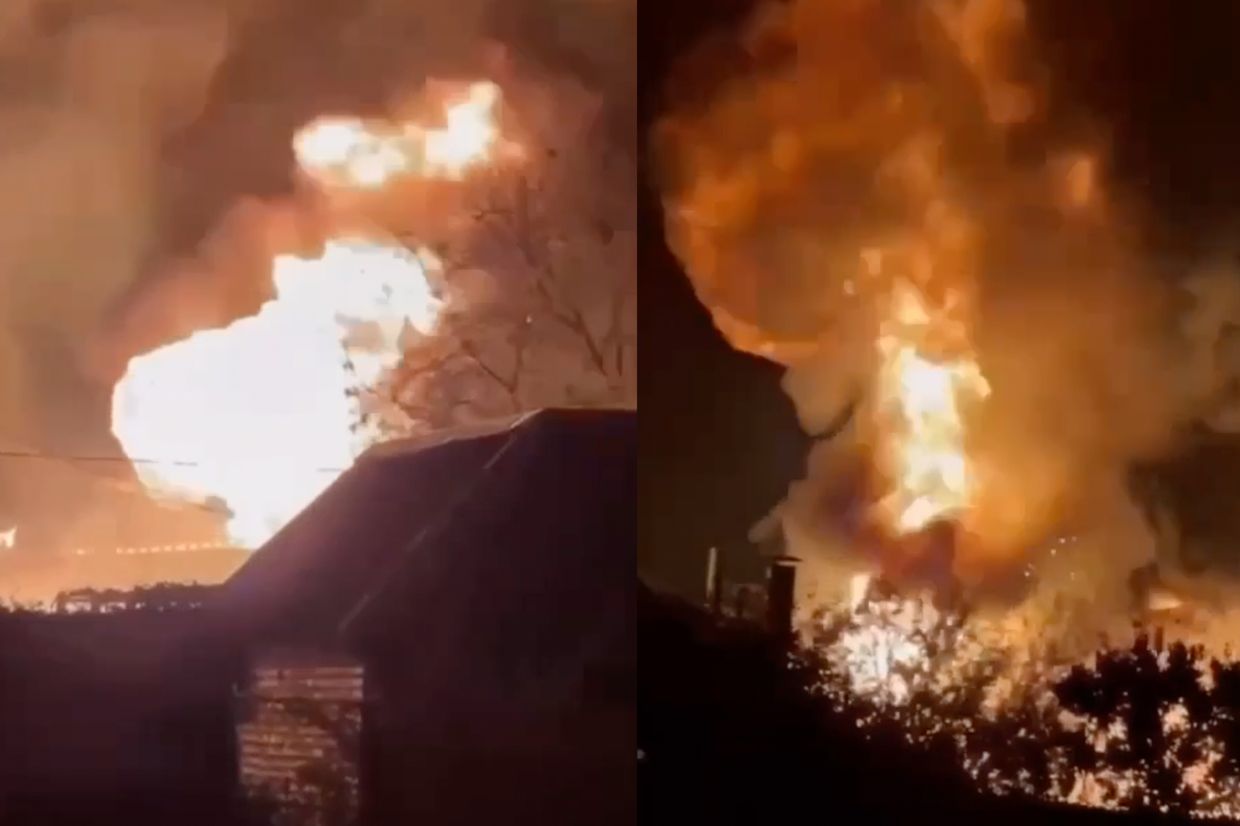
Ukraine reportedly targeted Russian facilities with drones as the Russian Defense Ministry claimed on Nov. 20 that air defense forces shot down 44 drones overnight.
Belgorod Oblast Governor Vyacheslav Gladkov said that drone wreckage damaged the premises of an enterprise in the town of Alekseevka on Nov. 19. Media reports identified the facility as an EFKO plant, officially a sauce manufacturer.
Separately, drone strikes were reported also in Voronezh Oblast, with local authorities claiming that five drones struck a civilian industrial facility, starting a fire.
The Voronezh and Belgorod oblasts lie at the border with Ukraine and are regularly targeted in cross-border drone strikes.
Andrii Kovalenko, head of Ukraine's National Security and Defense Council's counter-disinformation center, said that the EFKO plant also secretly produces cargo drones used by the Russian military.
The official said that Ukrainian drones also attacked the 13th Arsenal of the Main Missile and Artillery Directorate of Russia's Defense Ministry (GRAU) near Kotovo in Novgorod Oblast, some 680 kilometers (420 miles) from Ukraine's border.
According to Kovalenko, the arsenal stores critical military supplies, including artillery shells, multiple-launch rocket system (MLRS) missiles, Iskander and anti-aircraft missiles, and ammunition for various systems, including the Tor complex.
Russia's Defense Ministry claimed that 22 drones were shot down over Novgorod Oblast overnight.
The Kyiv Independent could not verify the claims.
These strikes come as Ukrainian President Volodymyr Zelensky announced plans on Nov. 19 to scale up domestic production of long-range drones and missiles.
As part of Ukraine's resilience plan, the country aims to manufacture at least 30,000 long-range drones in the coming year and establish a new technology center to enhance its defense capabilities.
Ukrainian forces struck a military arsenal in Karachev, Bryansk Oblast, overnight on Nov. 19, with some reports indicating that Kyiv deployed U.S. ATACMS missiles for the first time on Russian soil.
North Korean troops in Russia to be led by secrecy-shrouded general close to Kim Jong Un, WSJ reports
Colonel General Kim Yong Bok, one of the generals accompanying North Korean troops in Russia, is a mystery-shrouded figure close to dictator Kim Jong Un, The Wall Street Journal reported on Nov. 20.
Kim Yong Bok, officially the Deputy Chief of the Army General Staff, is expected to oversee the integration of North Korean troops into Russian forces, gain combat experience, and establish a framework for future deployments, the outlet reports.
A Ukrainian envoy listed him, along with Major General Sin Kum Cheol and Colonel General Ri Chang Ho, during a U.N. Security Council meeting on Oct. 30 as one of the generals commanding some over 10,000 North Korean troops in Russia.
Kim's role in Pyongyang's military has long been shrouded in secrecy. He previously commanded a special forces unit of 200,000 soldiers tasked with covert missions on the Korean Peninsula. His profile was elevated after Russian President Vladimir Putin visited North Korea in June, with reports identifying him as the No. 3 figure in the Korean People's Army, according to the Wall Street Journal's reporting.
In July 2020, Kim was seen alongside Kim Jong Un at a ceremony honoring military officials but largely disappeared from public view until recently.
This deployment coincides with North Korea's formalized mutual defense treaty with Russia, announced on Nov. 12. The agreement obligates the nations to assist each other in the event of an armed attack.
The development follows reports of initial clashes between Ukrainian forces and North Korean troops in Russia's Kursk Oblast. The Western countries denounced the deployment of North Korean troops as an escalation, with the U.S. reportedly responding by permitting Ukraine to launch ATACMS missiles against Russian and North Korean troops amassing in the region.
Putin open to discussing Ukraine ceasefire with Trump, Reuters reports
Russian President Vladimir Putin is willing to discuss a ceasefire in Ukraine with U.S. President-elect Donald Trump but rejects major territorial concessions and insists that Ukraine abandon plans to join NATO, Reuters reported on Nov. 20, citing five former and current Russian officials.
The Kremlin's terms reportedly include freezing the conflict roughly along current front lines and "dividing control" of eastern regions, including the Donetsk, Luhansk, Zaporizhzhia, and Kherson oblasts.
Moscow, which illegally declared annexation of these regions in September 2022, currently controls only 70-80% of them, with approximately 26,000 square kilometers (10,000 square miles) under Ukrainian control. Putin issued a demand in June that Ukraine must withdraw from the four regions completely before any ceasefire talks.
Russia currently occupies roughly a fifth of Ukraine's territory – including Crimea – as its forces continue to steadily advance in the east. Publicly, the Kremlin has rejected freezing the front line or any concessions on its part, with Putin saying any peace deal must be in Moscow's favor.
According to Reuters, Russian officials suggested that Moscow might consider withdrawing from smaller occupied areas in Ukraine's Kharkiv and Mykolaiv regions but emphasized that any deal must reflect "realities" on the ground.
Moscow remains firmly opposed to NATO membership for Ukraine or the presence of foreign troops on Ukrainian soil, the officials said. Additional demands could reportedly include limiting Ukraine's military size and guaranteeing unrestricted use of the Russian language.
Ukraine has rejected territorial concessions and said any peace talks should be based on its 10-point peace formula, which includes a Russian withdrawal and full territorial integrity and sovereignty. Officials acknowledged that some territories might be returned through diplomacy rather than military means.
Kyiv also said that NATO membership is the only way to prevent further Russian aggression.
Without a ceasefire, Russia will continue the war, Kremlin sources told Reuters. Kremlin spokesperson Dmitry Peskov called the U.S. authorization of ATACMS missiles a "very dangerous escalation."
Trump has positioned himself as a potential peace broker, claiming he could negotiate an end to the war. The contours of Trump's peace plan remain unclear, though media reports indicate it might entail postponing Ukraine's NATO membership for 20 years, freezing the front line, and establishing a demilitarized zone in the east manned by European troops.
Russian officials threaten US over long-range strikes, allude to nuclear doctrine changes
Russian Foreign Minister Sergey Lavrov said on Nov. 19 that Moscow "will respond accordingly" to Washington's permission for Ukraine to strike Russian soil with U.S. weapons.
Speaking at the G20 summit in Rio de Janeiro, Lavrov referred to Russia's updated nuclear doctrine, which permits nuclear retaliation for attacks by non-nuclear states supported by nuclear powers.
When asked during the summit if the U.S. had authorized Ukraine to use long-range weapons to target Russia, Lavrov responded, "I don't know whether it's true or not. We are focused on ensuring our security."
"We have already stated everything necessary to those considering this, officially. The president said it, and now it's confirmed in an official document," he said, according to TASS.
On Nov. 19, Russian President Vladimir Putin approved an updated nuclear deterrence policy that expands the conditions for a nuclear strike.
The revised doctrine outlines scenarios that could justify a nuclear strike, suggesting that this could include "aggression against the Russian Federation and its allies by a non-nuclear state with the support of a nuclear state" and large-scale non-nuclear attacks.
In the last day, 147 combat engagements with enemy troops took place. The highest enemy activity was recorded in the Pokrovsk sector, where the invaders carried out 33 assault attacks.
There were 147 combat engagements in the frontline. The enemy is attacking intensively in the Pokrovsk sector. This was reported by the General Staff of the Armed Forces of Ukraine, UNN reports.
Details
In the Kharkiv sector, there were 4 clashes with militants near Vovchansk and Starytsia.
In the Kupyansk sector, the occupants fired 23 times near Kolisnykivka, Zahryzove, Kucherivka, Kruhlyakivka and Zelenyi Hai.
In the Liman sector, the aggressor attacked 10 times in the direction of Cherneshchyna, Zarichne and Terny.
In the Siverskyi sector, enemy forces dropped ten combat vehicles in the vicinity of Siversk.
In the Kramatorsk sector, terrorists dropped 5 bombs near Chasiv Yar and Lypivka.
In the Toretsk sector, enemy troops were spotted 7 times in the areas of Toretsk and Shcherbynivka.
In the Pokrovsk sector, the invaders carried out 33 assault and offensive actions in the areas of Myroliubivka, Pustynka, Promin, Krutyi Yar, Krasny Yar, Liskivka, Yurivka, Zhovte, Petrivka, Dachanske, Novooleksiyivka, Hryhorivka and Pushkine.
In the Kurakhove sector, 23 firefights took place in the areas of Berestky, Zorya, Sontsivka, Maksymilianivka, Katerynivka, Yelizavetivka and Antonivka.
In the Vremivsk sector, 28 firefights took place in the areas of Trudove, Kostiantynopol, Rozdolne, Velyka Novosilka and Novodarivka.
The enemy did not conduct active operations in the Orikhivske and Hulyaypillia directions.
In the Prydniprovsky sector, the Ukrainian Armed Forces repelled the invaders' attacks 5 times.
General Staff: 138 combat engagements took place in the frontline, the enemy is active in the Kurakhove sectorNov 15 2024, 12:13 AM • 15721 view
Russian forces attacked the border areas of Sumy Oblast 33 times on 20 November, leaving one person injured.
Source: Sumy Oblast Military Administration
Quote: "The Russians have conducted 33 bombardments of the border areas and settlements of Sumy Oblast over the past 24 hours. A total of 77 explosions have been recorded. The Khotin, Yunakivka, Myropillia, Bilopillia, Krasnopillia, Velyka Pysarivka, Andriiashivka and Esman hromadas have been targeted." [A hromada is an administrative unit designating a village, several villages, or a town, and their adjacent territories – ed.]
Details: Russian troops launched 39 air-dropped mines, a 40-mm VOG fragmentation round from a UAV and a Lancet loitering munition on the Krasnopillia hromada. The attack resulted in one person being injured. A house and a car were also damaged.
Russian forces targeted the Andriiashivka hromada with a Shahed-type loitering munition. Four houses and the premises of a church were damaged.
Milan's Via Monte Napoleone has become the most expensive shopping street in the world with a rental rate of €20,000 per m². This is the first time in 34 years that a European city has topped this rating.
Milan's Via Monte Napoleone has surpassed New York and London as the most expensive shopping street in the world for the first time, as the Italian city benefits from an influx of wealthy tourists and fierce competition for luxury real estate among luxury brands, the Financial Times reports, UNN writes.
Details
The maximum rents that landlords can charge luxury high street retailers increased by 11 percent year-on-year to €20 ,000 per square meter per annum, the highest rents for stores among all 138 global retail destinations tracked by real estate group Cushman & Wakefield.
This is the first European city to top the list in 34 years.
Milan has seen an influx of big-spending tourists and a wave of moves from abroad, as professionals and the ultra-rich have been lured by generous tax incentive schemes.
Meanwhile, luxury retailers have stepped up competition for the most desirable locations, paying big bucks to buy or rent retail space.
Kering, the luxury group that owns Gucci and Alexander McQueen, paid €1.3 billion to acquire a building on Via Monte Napoleone from Blackstone in April, the largest real estate deal in Europe in two years.
Thomas Casolo, head of retail in Italy at Cushman & Wakefield, said that luxury brands "have invested a lot of money to have the best location… the problem is that there are few opportunities.
Chanel and Gucci opened new stores on Via Monte Napoleone last year. According to Cushman & Wakefield, rents on the street have increased by 30 percent over the past two years, while Fifth Avenue in New York City – previously the most expensive street – saw rent growth remain flat in 2024. New York City recovered quickly from the pandemic in 2022, but has grown more slowly since then.
Milan is comparatively smaller than London, Paris, or New York, with the main shopping outlets concentrated in one area around Via Monte Napoleone, which includes several streets.
"I think the reason why [rents] keep going up is because the street is very short compared to Fifth Avenue, the Champs Elysees or New Bond Street in London," Casolo said. – "Milan has grown very, very quickly in terms of investment and international brands wanting to open.
10 top streets for luxury shopping
The historically austere financial capital of Italy, Milan has recently become a popular destination for tax-free luxury buyers from outside the EU, global investors, and fashion and artistic figures.
2024 was a record year for tourism in the Lombardy region, which includes Lake Como, with more than 13 million arrivals in the first eight months of the year. Milan, the capital of the region, is now on track to surpass last year's record of 8.5 million visitors, experts say.
This popularity among the ultra-rich has led to a rise in real estate and hotel prices. This trend is having a chain reaction in prestigious locations in the historic center, where space for development is limited, the publication points out.
Ukrainians woke up on Nov. 20 to a message that a number of foreign embassies were closing their Kyiv offices — a stark reminder of the departure of foreign diplomats from Kyiv days before the start of the all-out war.
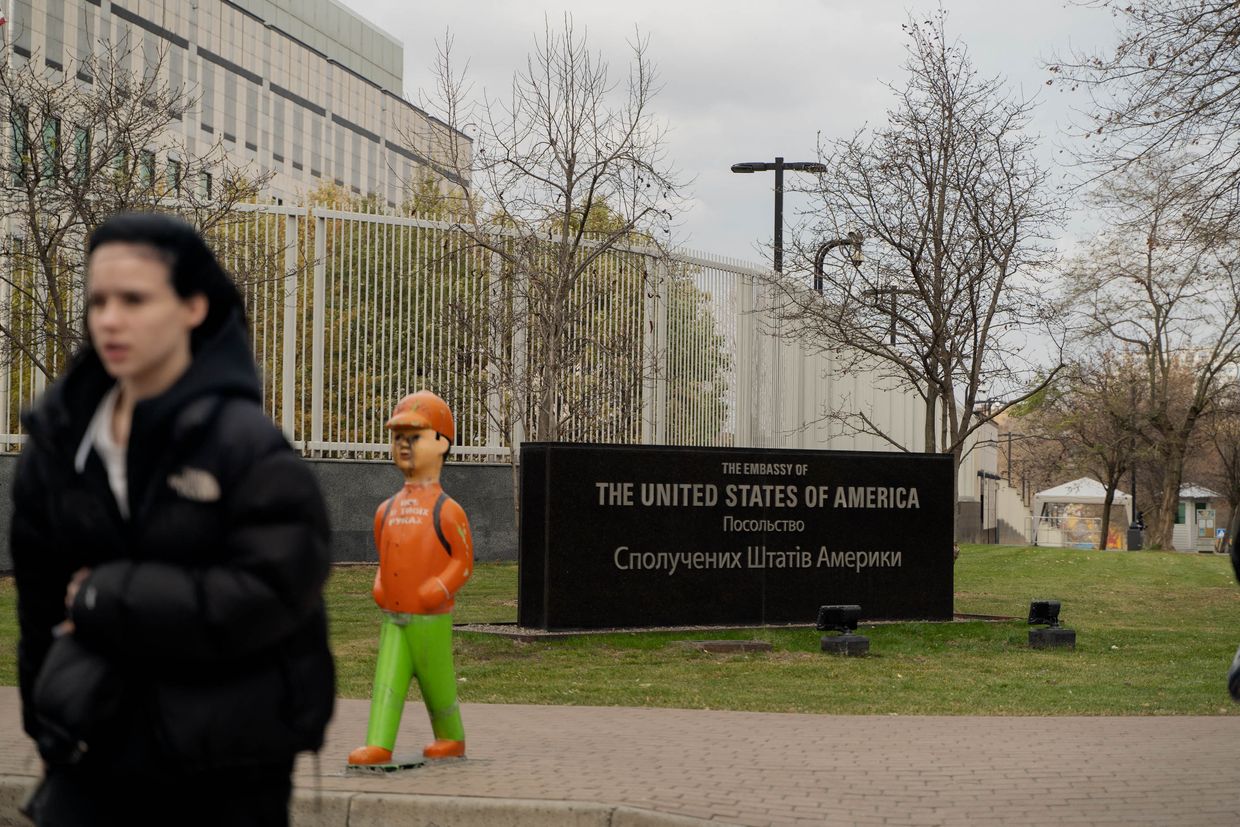
The U.S. Embassy in the capital said it had received "specific information" about a "potential significant air attack" planned for that day.
"Out of an abundance of caution, the Embassy will be closed, and Embassy employees are being instructed to shelter in place," the statement read.
The announcement came in the wake of what appeared to be Ukraine's first successful strike of a military target inside Russia using the U.S.-supplied ATACMS missiles.
After depicting such a move as crossing another "red line" the Kremlin had drawn, Russian President Vladimir Putin said his country would respond. A mass attack using cruise and ballistic missiles, as well as drones, was the most expected outcome.
Throughout the full-scale invasion of Ukraine, the Kremlin has repeatedly laid down red lines, the crossing of which it has said could provoke various responses, sometimes invoking the threat of nuclear weapons.
In an attempt to deter Ukraine's Western allies from further arming Kyiv, the Kremlin issued warnings related to the supply of Patriot air defense systems, F-16 fighter jets, and ATACMS to be used in occupied areas of Ukraine, among others.
Despite crossing multiple red lines on multiple occasions, Russia has yet to follow through with any of its threats.
What has spooked some observers about the latest crossing is that it happened just hours before Putin approved the updated principles of Russia's nuclear deterrence policy.
One of the provisions of the new policy states that "aggression against the Russian Federation and its allies by a non-nuclear state with the support of a nuclear state" could justify a nuclear strike — Ukraine using ATACMS to strike deep inside Russia would appear to qualify.
Shortly after the U.S. Embassy issued its warning, the Spanish, Greek, and Italian embassies followed suit, and the news quickly spread on Ukrainian Telegram channels.
Most of them urged that on this day, it's especially worth taking shelter during air raid alerts.
In central Kyiv, there were mixed responses to the reports. Nina Stupak, 83, said she hadn't seen the specific warning from the U.S. embassy, but her neighbors had called her to tell her about it.
"Of course, I am really scared about this threat, and especially I am worried about the lives of my children and grandchildren," she told the Kyiv Independent while out shopping in the city's Podil district.
Petro Karpenko, an 18-year-old student, was more blasé. "I am not worried because there is a stable situation in Kyiv," he told the Kyiv Independent.
"There have already been massive attacks on Kyiv from May to July. I've got used to it more or less."
Shortly after midday, Andrii Kovalenko of Ukraine's National Security and Defense Council, repeated an appeal he issued earlier in the morning, stating that Russian mass aerial attacks have been in the planning for months, and the embassy closures shouldn't mean Ukrainians act any differently.
"Ukrainians already understand the situation — you need to plan your time and prepare safe places for yourself in case of alarm, calculate the route and the time it takes to reach these safe places can be reached," he said in a post on Telegram.
Kovalenko, who heads the counter-disinformation department, added that Russia was trying to exploit the situation by "stoking panic against the backdrop of the closing of embassies."
Local residents take shelter in a metro station during an air strike alarm in Kyiv, Ukraine on Nov. 20, 2024, amid the Russian invasion of Ukraine. (Roman Pilipey / AFP via Getty Images)
But the warnings weren't just limited to diplomats and Telegram channels — Ukrainian soldiers were also alerted about a potential Russian mass ballistic missile attack, a source in the Ukrainian military told the Kyiv Independent.
"According to intelligence reports, a massive missile attack using ballistic missiles is possible today," a message received by Ukrainian soldiers said.
When asked about the alert, at least one Ukrainian soldier was unmoved by the apparent threat.
"In case anyone hasn't noticed, we are at war with Russia," Lieutenant Colonel Bohdan Krotevych, chief of staff of Azov 12th Special Forces Brigade, told the Kyiv Independent.
"Yesterday was no different from the days before it or those to come. Russia doesn't need to adopt any doctrines to use one weapon or another. This topic isn't even worth discussing."
Further stoking tensions were reports in Ukrainian media about rumors of Russia testing new weapons as part of their planned retaliation.
"According to unconfirmed information, it is an RS-26 'Rubezh' intercontinental (ballistic) missile," one outlet wrote in an article published at 1:45 p.m.
At 1:49 p.m., the air raid sirens sounded in Kyiv and several other oblasts. An almost everyday occurrence, after more than two-and-a-half years of full-scale war, they rarely cause anyone to blink, let alone head to a shelter.
But today was different — many of those on the streets changed direction and quickened their pace, heading to the nearest metro station, the safest place to be during an attack." Usually, I do not go down to the metro or shelter because I am not really worried about attacks," 24-year-old Andriy Bohdantsov told the Kyiv Independent from the underground metro station where hundreds of people had gathered.
Many of those on the streets changed direction and quickened their pace, heading to the nearest metro station, the safest place to be during an attack.
"But today, due to the U.S. Embassy warning, I've decided to come here.
"For me, this situation today is like a flashback of past events, specifically, when people were saying that war wouldn't start, but it had started," he added, referring to the days leading up to the launch of the full-scale invasion in 2022 when constant U.S. intelligence assessments warning of an imminent attack were played down by Ukrainian authorities.
The closure of the U.S. Embassy in Kyiv on Feb. 14, 2022, ten days before the start of Russia's full-scale invasion, has been engraved in the memories of many Ukrainians who were left to witness the unfolding war.
Telegram channels that monitor Russian missile launches reported two ballistic missiles heading for Kyiv, but shortly after said they had "ceased to exist" — either being intercepted, or being fake launches using electronic warfare (EW).
At 2:21 p.m. the all clear sounded, and hundreds of people filed out of the metro to resume their day as best they could.
At exactly the same time, Kovalenko's warnings about a Russian disinformation campaign aimed at stoking panic in Kyiv appeared to be confirmed.
Ukraine's military intelligence (HUR) warned on its Telegram channel that Russian intelligence services were amplifying the panic by spreading fake messages in messengers and social media about the supposedly upcoming attack.
The agency showed one message about the attack spread in messengers and social media, saying it was "fake and contains grammatical errors typical for Russian psychological operations."
"The enemy, unable to subjugate Ukrainians by force, resorts to measures of intimidation and psychological pressure on society. Please be vigilant," the statement read.
"Do not ignore air raid signals—it is safer to wait in a shelter. However, we urge you not to panic."
A woman walks past the US Embassy in Kyiv on Nov. 20, 2024, amid the Russian invasion of Ukraine. (Tanya Dzafarowa / AFP via Getty Images)
The Kyiv Independent's military source clarified that the aerial strike threat remains relevant, but Russia is carrying out a parallel psychological operation to sow panic.
At around 3 p.m., Ukraine's Foreign Ministry released a statement criticizing the decision of Western embassies to issue warnings and close earlier in the day, describing the moves as "information overreaction."
"On this 1,001st day of the full-scale invasion, the threat of Russian strikes remains just as relevant as it has been for the past thousand days," Foreign Ministry spokesman Heorhii Tykhyi said.
Around the same time, Telegram monitoring channels reported seven Russian Tu-95 bombers were redeploying to the Engels airbase, a possible indication of preparation for an attack.
At 7:46 p.m., other channels reported they had been joined there by a further two Tu-95s.
Around an hour later, the U.S. Embassy it had "resumed services following a temporary shelter-in-place suspension earlier today."
"We continue to encourage U.S. citizens to remain vigilant, monitor official Ukrainian sources for updates, and be prepared to shelter in place if an air alert is announced," it added.
At the time of writing, 10:00 p.m., there have been no further air raid alerts in Kyiv, no further embassy warnings, and little further information on the Russian bombers, and even less on what their plans for attack might be.
Martyniuk Oksana, a 26-year-old mother currently on maternity leave, told the Kyiv Independent that given all the information being pumped out by embassies, social media, and government officials, it was "understandable that there is confusion.
"Of course, I am scared of this situation, and I can only hope there will not be a massive attack."
The Defense Ministers of Ukraine and Estonia sign a memorandum on military assistance for 2024-2027. Estonia will allocate 0.25% of GDP for material assistance, an IT coalition, and training for the Ukrainian military.
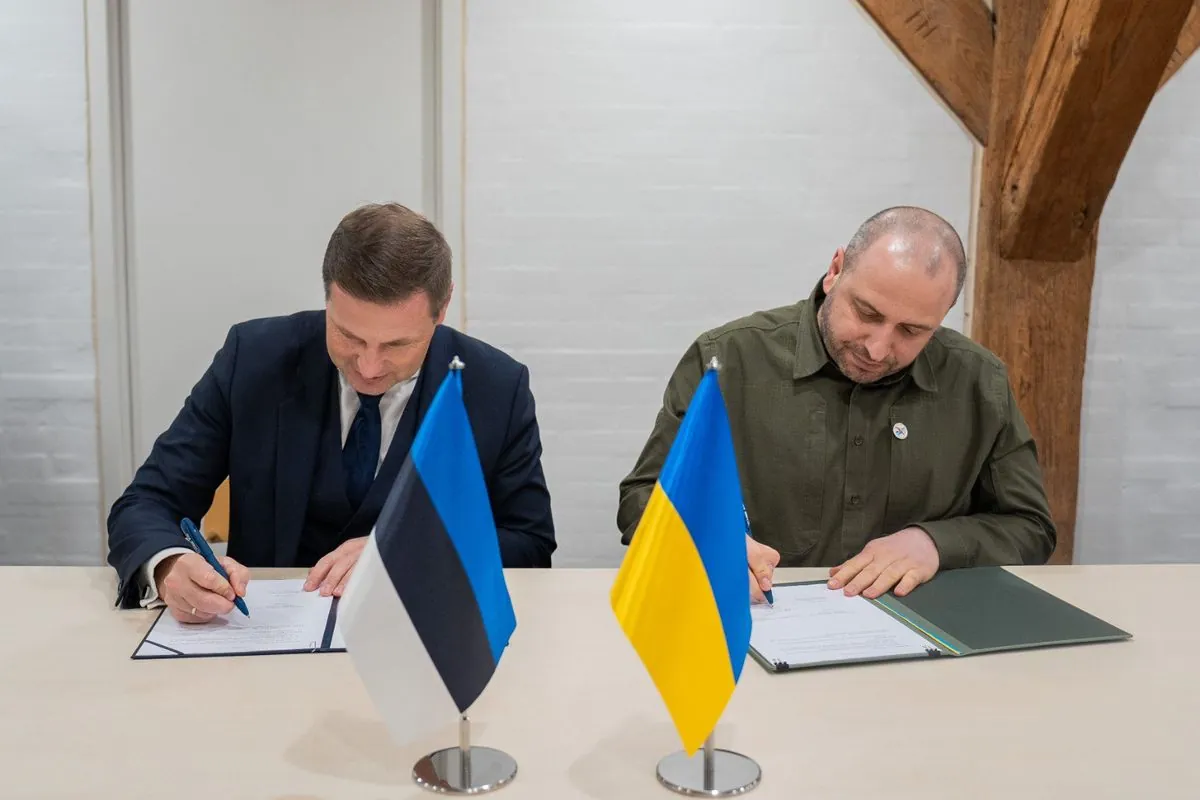
Ukraine and Estonia signed a Memorandum of Understanding between the defense ministries. The document expands the possibilities of using Estonian military assistance to Ukraine in 2024-2027. This was announced by the Minister of Defense of Ukraine Rustem Umerov, UNN reports.
"Together with Estonian Defense Minister Hanno Pevkur, I signed a Memorandum of Understanding between the defense ministries of our countries," Umerov said.
According to him, this document is an important step in the implementation of the Agreement on Security Cooperation and Long-Term Support, which was signed in June by the Prime Minister of Estonia Kaja Kallas and President of Ukraine Volodymyr Zelenskyy.
Add
The memorandum expands the possibilities of using Estonian military assistance to Ukraine in 2024-2027. The support in the amount of 0.25% of Estonia's GDP will be directed to:
– material assistance for the Ukrainian military
– financing of the IT coalition under the chairmanship of Estonia
– training of Ukrainian military personnel.
"This is not only assistance to Ukraine, but also an exchange of experience. Ukraine will share combat knowledge that will strengthen the defense capabilities of Estonia and our partners," Umerov summarized.
Umerov announces the launch of cooperation within the Northern Group-Ukraine: what is known about the new allianceNov 20 2024, 05:17 PM • 15446 views
Aston Villa owner Nassef Sawiris has explained why he has sided with Manchester City and will vote against the Premier League’s associated party transaction (APT) proposal.
All 20 Premier League clubs will vote on Friday on the new sponsorship rules which were drawn up on the back of an independent panel finding that sections of the existing APT rules were unlawful after a legal challenge from City.
But City have accused the Premier League of rushing its consultation and called on clubs to vote against the amendments, raising the prospect of further legal action should they be enforced.
They wrote: ‘It is now abundantly clear that any vote (if passed) will result in immediate further litigation by Manchester City FC and an associated defence by the EPL [English Premier League], incurring material further costs and unnecessary distraction and devotion of time to this issue.
‘It is highly likely that the tribunal will conclude within the coming three months, and that an APT rule that takes into consideration the tribunal’s verdict will be supported by all clubs and cannot be contested.’
The changes would need the support of 14 clubs to pass and the Daily Mail claim Newcastle, Nottingham Forest, Chelsea, Wolves and Everton all have their doubts and are considering their options carefully.
The report adds:
‘The meeting is of huge significance with many factors at play. Previous votes have seen abstentions and City’s threat of potentially-costly further legal action has not gone unnoticed across the league.
‘The league’s legal costs for a variety of cases, including the ongoing hearing with City over the champions’ 115 alleged breaches of financial rules, have raised concerns among a large number of clubs.
‘A vote that fails would also increase the pressure on Premier League chief executive Richard Masters and has the potential to have huge implications, according to those close to the matter.’
Villa chief Sawiris confirmed his position in a statement on Wednesday.
‘In our view, a vote in 90 days on amended terms taking into consideration the Tribunal’s findings will have a significantly greater chance of securing the unanimous support of all 20 Premier League clubs,’ he said.
‘Crucially, a unanimous vote will present a fresh start for an embattled Premier League that began with the failed attempt to launch a Super League in 2021.
‘With the imminent arrival of the Government’s Independent Football Regulator, it is more important than ever that the Premier League can present itself to the regulator with a united front.
‘In our view, this will be far more easily achieved if the APT vote is held in February and supported unanimously by all clubs.
‘It is noteworthy that legal bills to date on this matter have already reached astronomical amounts; further challenges and escalation of these fees could be avoided through reaching consensus.
‘Ultimately, a unanimous vote will showcase the emergence of a new era of clubs who can compete vigorously on the pitch but work together to strengthen the Premier League and its global appeal.’





 The Kyiv IndependentAlexandre Krauss