Category: War in Ukraine

Last news • War in Ukraine

  • ‘It’s excruciating’ – Ukrainians describe surviving Russian attacks that cost them health, loved ones, and homes

    ‘It’s excruciating’ – Ukrainians describe surviving Russian attacks that cost them health, loved ones, and homes

    ‘It’s excruciating’ – Ukrainians describe surviving Russian attacks that cost them health, loved ones, and homes

    WARNING: This article contains descriptions of graphic scenes.

    Anna Kotova was chatting with her sister on a video call, admiring her image on the screen. It was her 19th birthday, and for the first time in a while, she was feeling good about how she looked.

    “I used to dye my hair a lot, and then I realized my natural hair had grown out, and I liked it so much. I had long eyelashes, and I looked so good,” Kotova recalls.

    Then, in an instant, everything went dark. “The missile hit right after I thought that.”

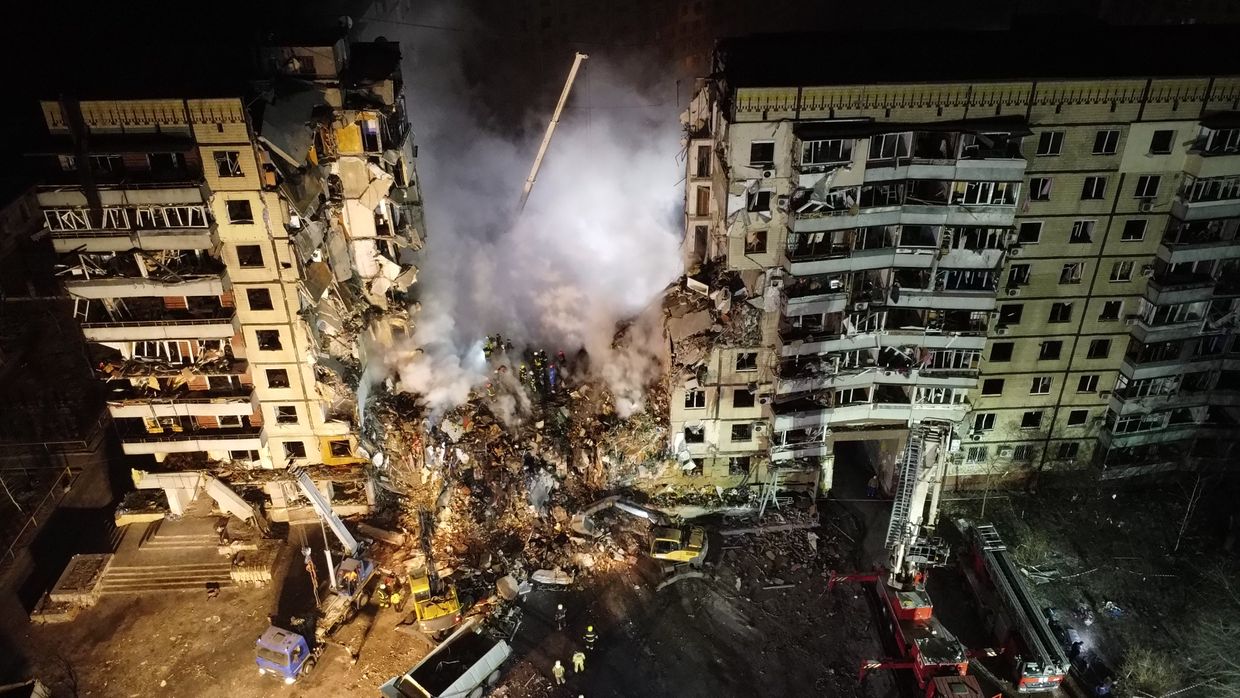
    It was Jan. 14, 2023, the day when Russia unleashed one of its deadliest attacks on Ukraine, striking an apartment building in Dnipro and killing 46 people.

    "I didn't see or hear anything, like the missile flying… There was none of that,” Kotova says. “At some point, I felt that I was thrown back, and that was it. My brain just stopped working. I don't remember anything at all, just darkness."

    "I don't remember anything at all, just darkness."

    Kotova was among the 79 people injured in the strike. She lost one eye and endured numerous operations to remove all the shards of glass from her body. She is currently receiving laser treatment to minimize the scars left on her face and body.
    ‘It’s excruciating’ – Ukrainians describe surviving Russian attacks that cost them health, loved ones, and homes
    An aerial view of firefighters conducting search and rescue operations at residential building hit by a missile in Dnipro, Ukraine on Jan. 15, 2023. (Yan Dobronosov/Global Images Ukraine via Getty Images)
    ‘It’s excruciating’ – Ukrainians describe surviving Russian attacks that cost them health, loved ones, and homes
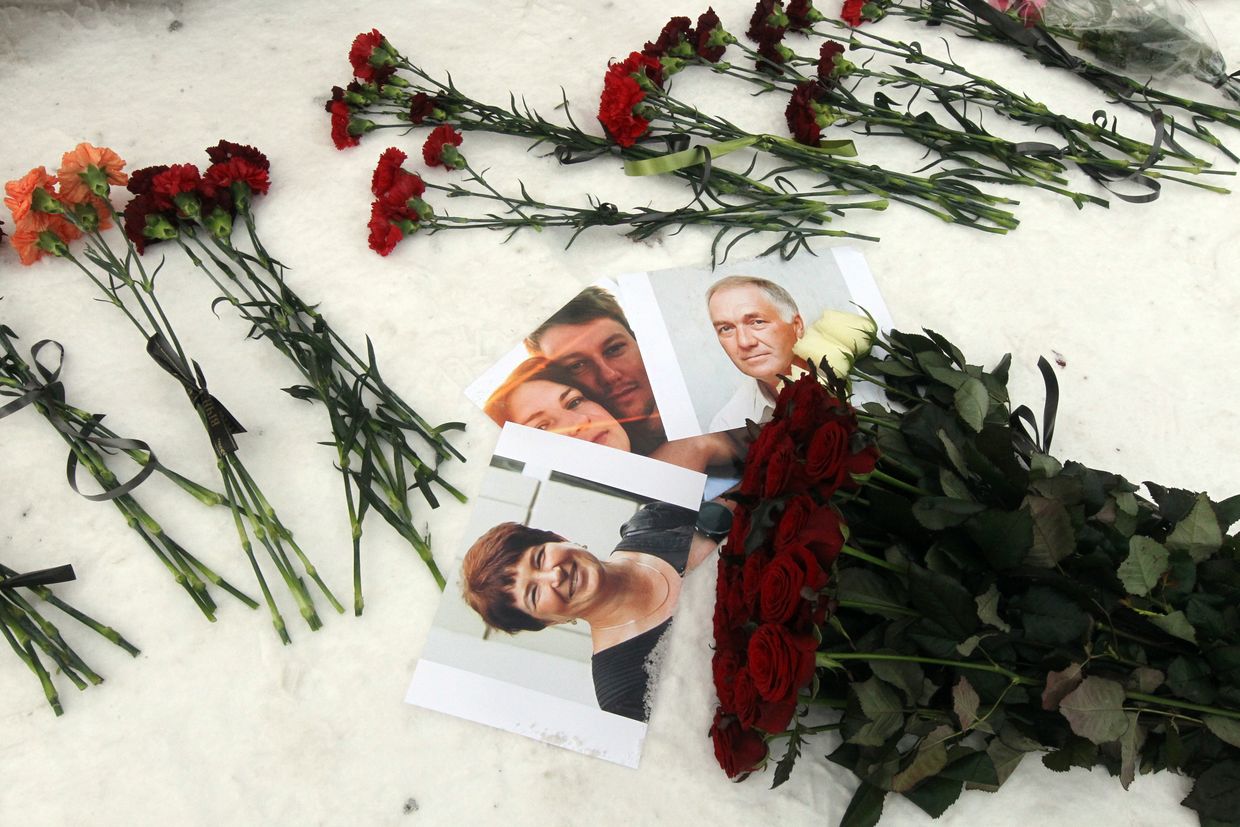
    Flowers and photos of the victims of the Russian missile strike on a high-rise building at 118 Peremohy Embankment during a public memorial service organized near the site of the strike on the first anniversary of the tragedy, Dnipro, Ukraine on Jan.14, 2024. (Mykola Miakshykov / Ukrinform/Future Publishing via Getty Images)

    Psychologists say that, like Kotova, the thousands of Ukrainians who have survived brutal Russian attacks since Feb. 24, 2022 have been left not just with lasting scars on their bodies, but long-term damage to their mental health from the trauma of their experiences.

    And their number is steadily growing, as Russian attacks have been wounding civilians almost every day since the start of the full-scale war.

    For Kotova, the day the Russian Kh-22 missile destroyed her home split her life into “before and after,” with no possibility of a return to the way things were before.

    ‘It’s excruciating’ – Ukrainians describe surviving Russian attacks that cost them health, loved ones, and homes
    Anna Kotova in an undated photo. (Personal Archive)

    “You live one day at a time because you are still scared of what tomorrow might bring,” Kotova told the Kyiv Independent. “You also didn’t expect that it would happen then, that a missile would hit your house, that it would happen to you, and that you would suffer such injuries.”

    “When I lived in Dnipro, I stopped reacting to the air raid alarms over time. If it hits, it hits. But back then, I just couldn't imagine the consequences.”

    Here are the victims of Russia’s brutal strike on apartment building in DniproA Russian missile killed 46 people after smashing straight into an apartment building in the city of Dnipro on Jan. 14. It was one of the deadliest single Russian attacks on Ukraine and the deadliest one for Dnipro, a central Ukrainian city with a pre-war population of nearly 1 million.‘It’s excruciating’ – Ukrainians describe surviving Russian attacks that cost them health, loved ones, and homesThe Kyiv IndependentDaria Shulzhenko‘It’s excruciating’ – Ukrainians describe surviving Russian attacks that cost them health, loved ones, and homes

    ‘Is this my face?’

    Kotova and her boyfriend had moved to Dnipro from now-occupied Sievierodonetsk in Luhansk Oblast on the very day the full-scale invasion began. They rented a spacious apartment with their friends. However, when their friends relocated to another city, the couple began searching for a smaller place.

    They never found one.

    “On the morning of Jan. 14, everything started very well,” Kotova recalls. “I woke up to flowers and a new phone, and everything was wonderful. I couldn't have imagined something so horrible could happen after just a few hours.”

    The explosion occurred around 3 p.m., as Kotova and her boyfriend were preparing to host some guests.

    Shortly after the blast, Kotova’s boyfriend found her on the kitchen floor. He told her he could not see her eyes and her whole face, only blood and glass shards.

    “I remember that when I touched my face with a towel, it felt like minced meat. There was nothing left. It was so slippery and unrecognizable,” she says.

    “I started to panic and asked, 'Is this my face?' My boyfriend told me not to touch anything and that everything would be fine. I fell silent and didn't say anything else.”


    ‘It’s excruciating’ – Ukrainians describe surviving Russian attacks that cost them health, loved ones, and homes‘It’s excruciating’ – Ukrainians describe surviving Russian attacks that cost them health, loved ones, and homes
    Anna Kotova after Russian attack on Dnipro in an undated photo. (Personal Archive)

    As they escaped the building, they were able to see the scale of the attack and realized how lucky they had been to survive: “I heard people's screams, sirens, and loud noises. I remember that it was very frightening,” Kotova says.

    But for her, the most challenging part was yet to begin.

    She was taken to a local hospital, where doctors placed her in a coma and performed surgery.

    “I woke up on the 15th or 16th (of January). I tried to move, but a doctor came up to me and told me that they had removed my eye…” she says tearfully.

    “I had a breakdown. I couldn't breathe on my own, couldn't swallow or talk, and tears started to flow… I couldn’t see anything; I was just lying there, realizing … I no longer had one eye.”

    Numerous other operations, lengthy treatments, and the fitting of eye prosthetics in Austria followed. Kotova currently resides in Czechia but often travels to Kyiv for laser treatment. With time, she has learned to look at herself in the mirror without crying, but she cannot forget that horrible January strike.

    Her 20th birthday this year, naturally coinciding with the attack’s anniversary, was one of her hardest days.

    ‘It’s excruciating’ – Ukrainians describe surviving Russian attacks that cost them health, loved ones, and homes
    Anna Kotova (L) and her boyfriend (R) in an undated photo. (Personal Archive)

    “I knew I was in Czechia, and it was safe there. But I still had this fear that it would happen again.”

    “(Shortly after the attack) I simply didn’t want to continue treatment. I didn’t understand how much more there was to endure or why it happened to me. I thought that maybe it would have been better if I had stayed (meaning died) in that house and not suffered further,” Kotova says.

    “(But) I (have come to) truly value life because when you are on the brink of losing it, you hold on to everything you can to ensure it doesn’t happen again.”

    A thirst for revenge

    In mid-October 2022, Ukrainian soldier Viktor Hanych left the front lines to spend a short vacation with his parents in Kyiv. It was the first time in a while that Hanych, who voluntarily joined the military shortly after the invasion started, had seen his parents.

    The whole family first gathered at Hanych’s grandmother’s home before returning to his parents’ cozy apartment on Zhylianska Street in Kyiv.

    They talked about “everything in the world” and soon fell asleep, tired but happy to be together again, Hanych recalls.

    “I woke up to a couple of explosions and quickly told (my parents) to get ready to go to the shelter,” he says, adding that they did not hear the air raid siren that night, and his parents usually reacted to them.

    “They had an (underground) parking area right near the house where they hid from attacks,” he says.

    Hanych was the first one to leave the apartment. He told his parents he would hold the door for them and wait outside. He also recalls being very calm, as he was used to explosions while fighting in embattled Kherson and Donetsk oblasts.

    Just as he reached the first floor, the building was hit by a Russian drone.

    “It landed right in their apartment,” Hanych says. “As a soldier, I realized what had happened. But the hardest part was the waiting.”

    "It landed right in their apartment."

    Although the attack occurred in the early morning, Hanych only identified the bodies of his parents at around 2 p.m. that day.
    ‘It’s excruciating’ – Ukrainians describe surviving Russian attacks that cost them health, loved ones, and homes
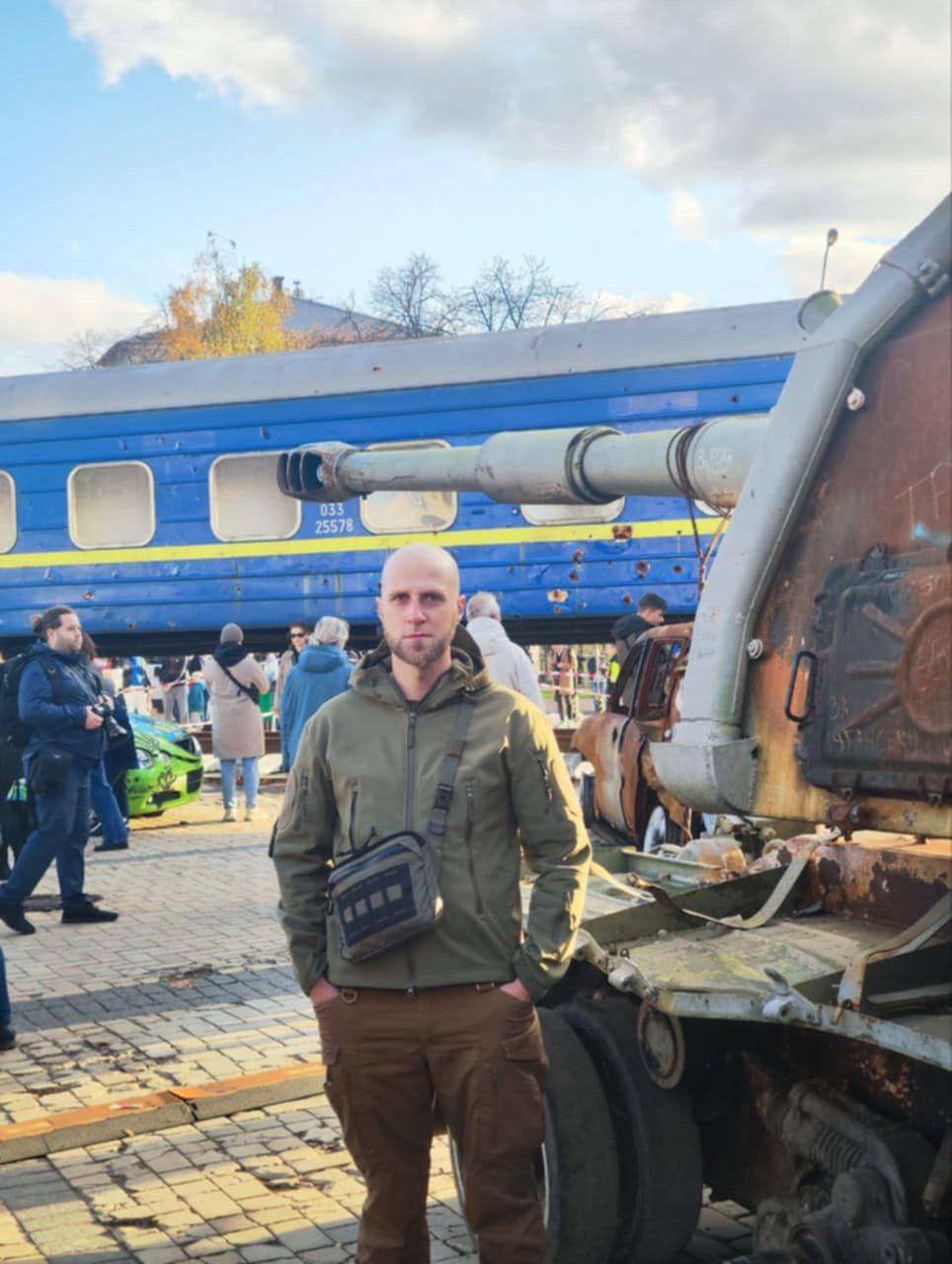
    Viktor Hanych in an undated photo. (Personal Archive)

    It was the day Russia launched its first-ever attack on Kyiv using Iranian-made Shahed-136 attack drones. Apart from Hanych’s parents, the bodies of two more civilians, including a six-month pregnant woman, were found under the rubble of the apartment building.

    “If it wasn’t for my comrades' support…” Hanych says, adding that he had felt a “thirst for revenge” but was thankfully stopped by his fellow soldiers. After participating in fierce battles near now-occupied Bakhmut, Hanych returned to civilian life to care for his grandmother.

    To this day, he tries to avoid going to Zhylianska Street, where his parents’ home once stood. “It’s excruciating,” Hanych says.

    “I think those who experience something similar become fatalists but also begin to cherish and love this life even more. I felt exactly that.”

    ‘We no longer have a home’

    The four-room apartment in Sumy was the setting for decades of sorrow and joy in the lives of resident Diana Nazarevska and her family.

    But now it is gone, destroyed in a Russian attack.

    “It was my grandmother's apartment. My mother grew up there, and later, when I was about three years old, we moved there with my parents,” Nazarevska, 28, says. “It was also where I started building my own family with my husband.”

    “That apartment held the memories of my family, of my father, when he was still alive.”

    On March 13, Nazarevska, her husband, and their baby daughter slept peacefully when an explosion woke them up.

    Посмотреть эту публикацию в Instagram

    Публикация от Diana Nazarevska (@diasya.nazarevskaya)

    “It was the first Shahed drone targeting the residential building, but it was shot down and flew past it. I picked up my daughter, and we lay close to the wall,” Nazarevska recalls.

    Then, she heard another drone approaching. “I grabbed my child, stood up, and didn’t even have time to run anywhere… I just realized that there was an explosion in our house.”

    “I grabbed my child, stood up, and didn’t even have time to run anywhere… I just realized that there was an explosion in our house.”

    “Then I started shouting for my husband, asking if he was alive. He slept very soundly and didn't understand what had happened at first.”

    Amid the terrifying chaos, the family grabbed some documents, dressed their baby, and fled the apartment. As her husband opened the door to the hallway, Nazarevska was confronted with the “stench of burning and the smell of damp concrete,” which she says would likely “remain in her memory forever.”
    ‘It’s excruciating’ – Ukrainians describe surviving Russian attacks that cost them health, loved ones, and homes
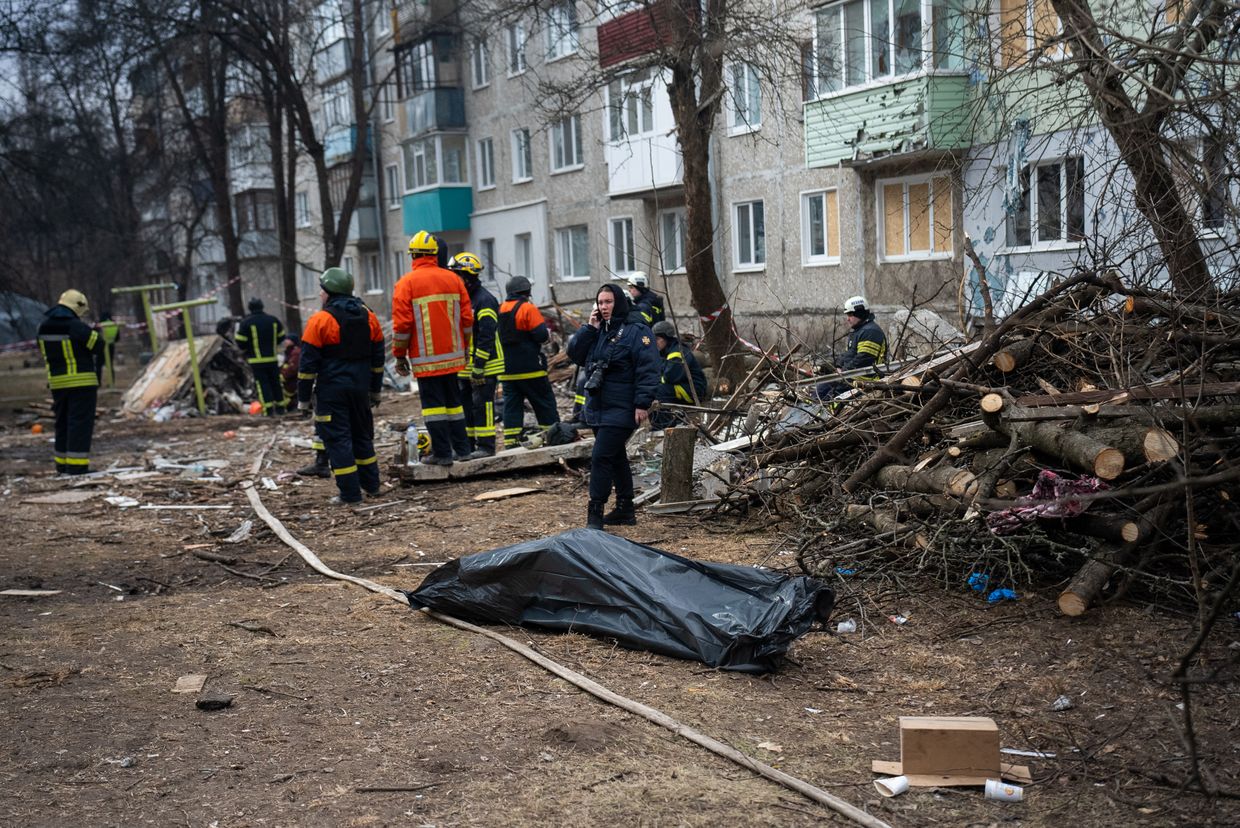
    Rescuers stand near a dead body that was pulled from under the rubble in Sumy, Ukraine on March 14, 2024. (Oleh Voronenko/Suspilne Ukraine/JSC "UA:PBC"/Global Images Ukraine via Getty Images)

    Outside, as she saw her beloved home in ruins and fire, she also witnessed her neighbors desperately searching for their loved ones in the rubble.

    “I will always remember how my neighbor’s father came running and shouting, ‘Vika!’” Nazarevska says, her voice trembling. “It was the shout you hear when someone is on the verge of hysteria. He kept screaming, but no one answered him. He shouted again, and still, no one responded.”

    That night, Russia killed three people and injured 14. It also forever altered Nazarevska’s life, teaching her how fragile existence can be and how important it is to cherish every moment, even amid war.

    “But we no longer have a home,” she says. “And it’s not just about the walls but the loss of a sense of basic security. For people, home generally means safety. It’s the place you go where you know everything will be okay.”

    “Unfortunately, that sense of security is lost now.”

    How thousands of Ukrainian children cope with losing parents to warEditor’s Note: The Kyiv Independent spoke with children under the permission of one of their surviving parents. At the age of 11, Arina Pervunina saw Russian troops killing her father. She and her younger brother were caught behind enemy lines at their grandparents’ house in Kherson Oblast shortly…‘It’s excruciating’ – Ukrainians describe surviving Russian attacks that cost them health, loved ones, and homesThe Kyiv IndependentDaria Shulzhenko‘It’s excruciating’ – Ukrainians describe surviving Russian attacks that cost them health, loved ones, and homes
  • Terrible and outrageous: Biden condemned Russia’s massive attack on Ukraine

    Terrible and outrageous: Biden condemned Russia’s massive attack on Ukraine

    Terrible and outrageous: Biden condemned Russia's massive attack on Ukraine

    The US president condemned the massive Russian attack on Ukraine with almost 200 missiles and drones. Biden confirmed the priority of supplying air defense and other critical resources to Ukraine.

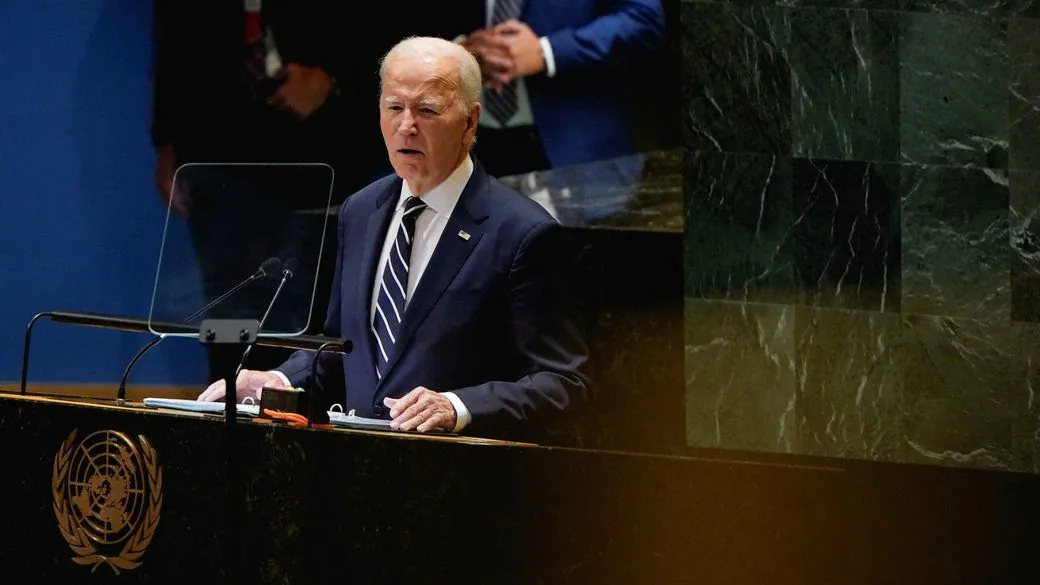
    US President Joe Biden condemned the massive missile and drone attack of the Russian Federation on Ukraine, which occurred on the night of November 28. This is stated in a statement on the White House website, reports UNN.

    Joe Biden called Russia's launch of almost 200 missiles and drones at Ukrainian cities and energy infrastructure on the night of November 28" terrible "and" outrageous."

    "This attack is outrageous and is yet another reminder of the urgency and importance of supporting the Ukrainian people in their defense against Russian aggression." ,

    Joe Biden said.

    The current US president stressed that the United States, together with more than 50 countries, supports Ukraine and its struggle for freedom.

    "On this day, my message to the Ukrainian people is clear: the United States supports you. At the beginning of this year, at my direction, the United States began to prioritize the export of air defense, so they first go to Ukraine",

    Joe Biden said.

    Biden also highlighted his administration's efforts to strengthen Ukraine's energy sustainability ahead of winter, as well as providing other critical resources, including artillery, missiles and armored vehicles.

    recall

    Earlier, UNN reported that on the night of November 28, Russian troops carried out 11 since the beginning of the year, a massive missile and drone attack on the Ukrainian power system, as a result of which power facilities in several regions were damaged.

  • Can Russia sustain its war effort as ruble plummets, inflation soars?

    Can Russia sustain its war effort as ruble plummets, inflation soars?

    Can Russia sustain its war effort as ruble plummets, inflation soars?

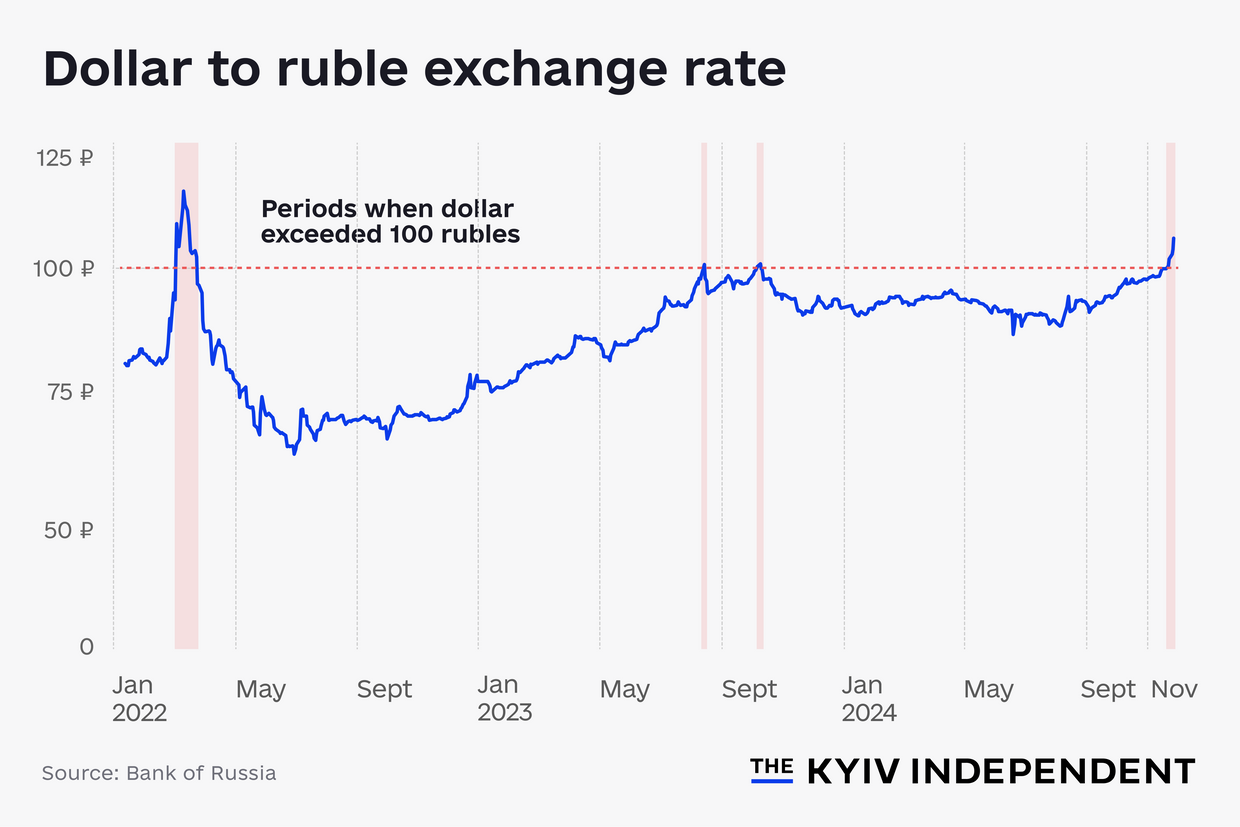
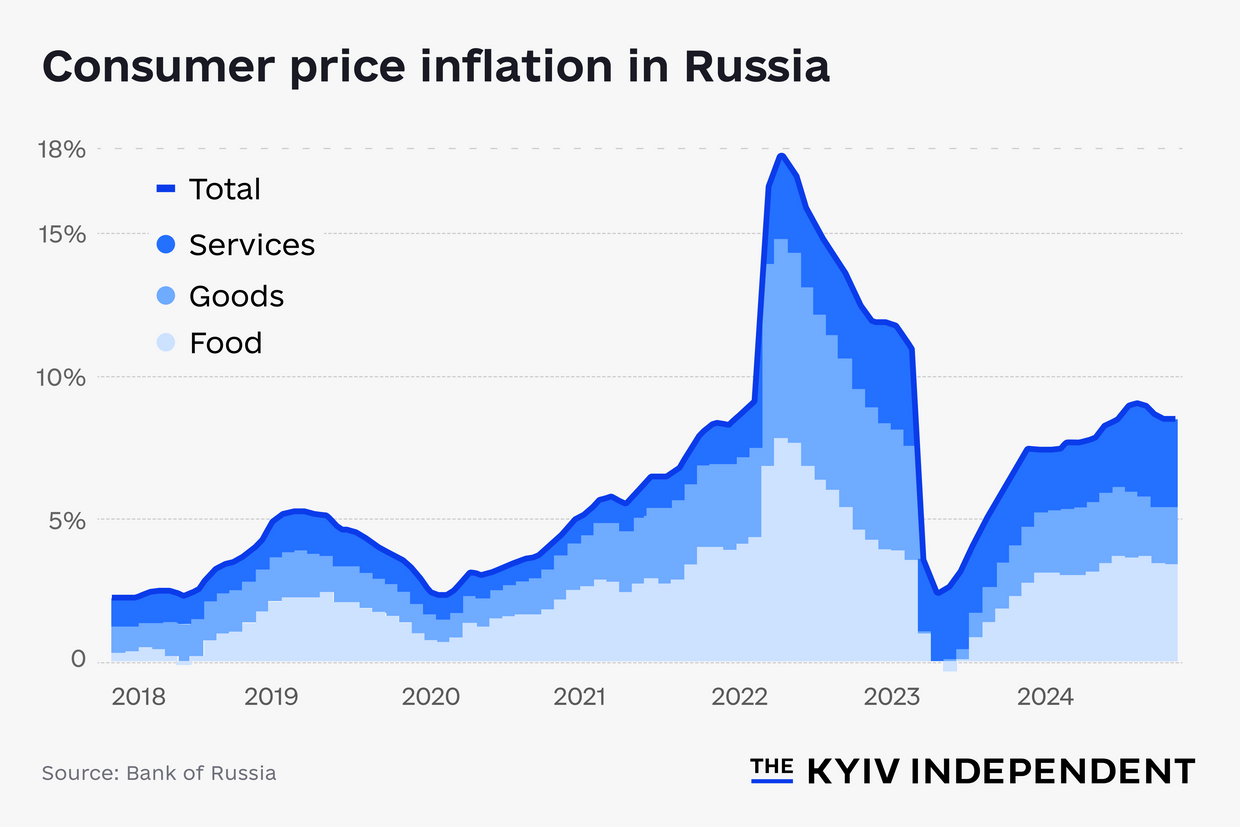
    With the purchasing power of the Russian ruble hitting the lowest point since March 2022, the economic toll of the full-scale invasion of Ukraine becomes glaring.

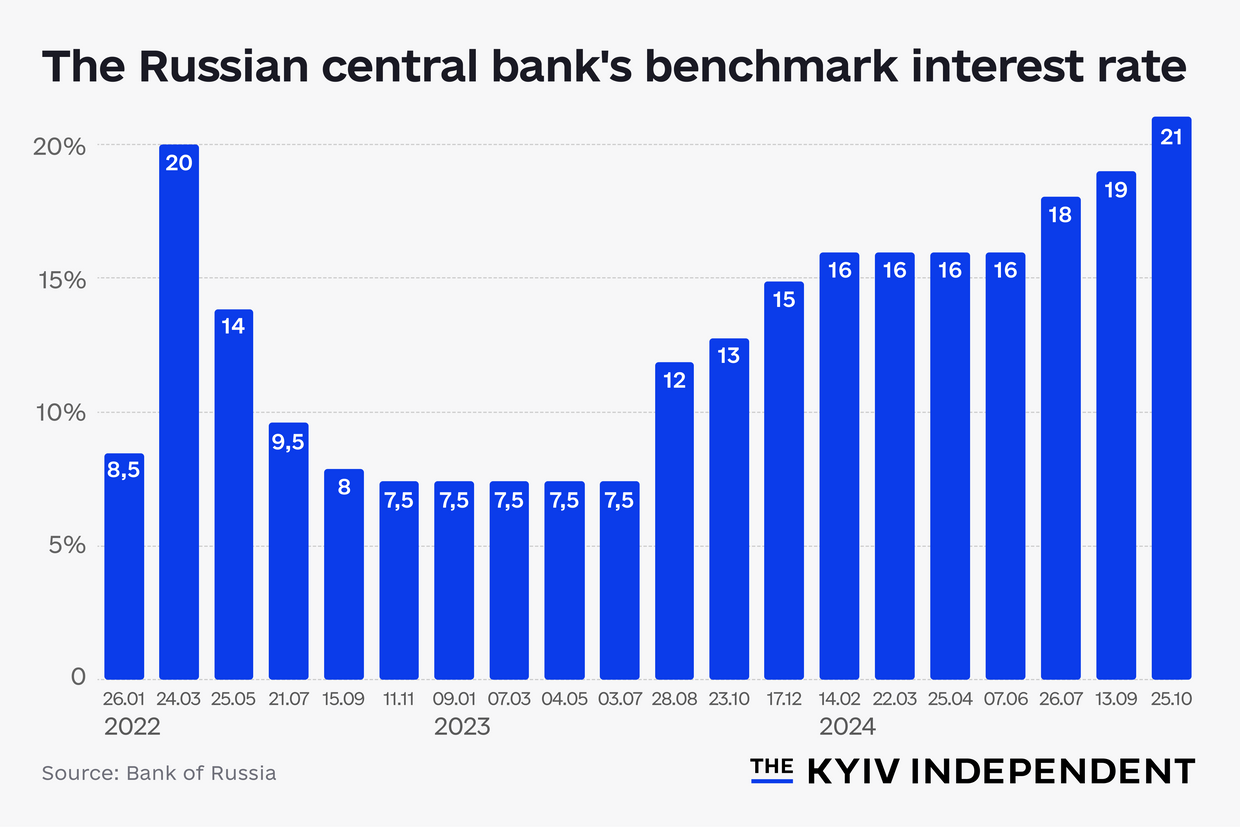
    Russia's expanding spending on the war has fueled inflation, prompting Russia's Central Bank to hike its interest rate to the highest level since the early 2000s — 21 percent — to rein in consumer prices.

    Inflation remained high regardless of the rate hike, speeding up to over 1 percent in the first three weeks of November and pushing the year-to-year numbers to over 8 percent.

    In the wake of the economic challenges the country has faced over the past year, the U.S. government's Nov. 21 decision to impose new sanctions on dozens of Russian banks has proven hard for the country's economy to swallow.

    "Russia is currently facing an impossible economic conundrum because of the rapid increase in military expenditures and the Western sanctions," Anders Aslund, a Swedish economist specializing in post-Soviet countries, told the Kyiv Independent.

    However, economists and analysts are divided on how much of an impact Russia's economic problems will have on its war effort.

    Some argue that it is becoming increasingly difficult for Russia to finance its war.

    "Undaunted by economic reality, (Russian President Vladimir) Putin is raising defense and security costs to officially $176 billion in 2025, 41 percent of the federal budget expenditures," Aslund said.

    "Yet, Russia can only finance 2 percent of GDP in budget deficit a year ($40 billion) because its only reserve is the National Wealth Fund," he said.

    "At the end of March 2024, its liquid resources amounted to a mere $55 billion. Nobody lends money to Russia."

    But others say that, despite all the economic difficulties, the Kremlin will have enough resources to finance the war for a long time at the expense of cutting spending on the country's civilian sector.

    Sergei Aleksashenko, a Russian-born economist based in the U.S., said that "Putin's economic problems shouldn't be overestimated."

    "He will spend as much money on the war as necessary," he said.

    Even so, U.S. President-elect Donald Trump's team has shown openness to a potential plan to dramatically increase oil output and drive down oil prices, on which Russia's economy is heavily dependent. As a result, the Kremlin may be in for a bumpy ride.

    "2025 will be a moment of truth," Vladimir Milov, a Russian opposition politician who was an economic advisor for the Russian government in the early 2000s, told the Kyiv Independent.

    Can Russia sustain its war effort as ruble plummets, inflation soars?

    Central Bank between rock and hard place

    Due to constant increases in military spending, Russia's budget deficit amounted to 3.2 trillion rubles ($30 billion) in 2023 and is expected to amount to 3.1 trillion rubles ($29 billion) in 2024.

    Since 2023, inflation has been speeding up due to the same reason — from 2.3 percent year-on-year in April 2023 to 8.2 percent in November 2024.

    Inflation contributed to the decreasing purchasing power of the ruble, which fell to 108 per dollar on Nov. 28, the lowest level since March 2022.

    One of the latest blows to the ruble's value was the U.S. government's Nov. 21 decision to sanction dozens of Russian banks, including Gazprombank, which handles oil and gas payments.

    To rein in accelerating inflation, Russia's Central Bank has been raising its interest rate — from 7.5 percent in July 2023 to 21 percent in October 2024.

    The tight monetary policy of Elvira Nabiullina, the central bank's chief, has prompted a backlash from businesses, including those involved in the military industrial complex.

    Sergei Chemezov, CEO of state-owned defense conglomerate Rostec, has lashed out at the Central Bank repeatedly.

    "If we continue working this way, most enterprises will essentially go bankrupt," he said in October. "The question today is this: either we cease all high-tech exports — airplanes, air defense systems, ships, and so on, which require production timelines of a year or more — or we need to take some measures."

    Can Russia sustain its war effort as ruble plummets, inflation soars?
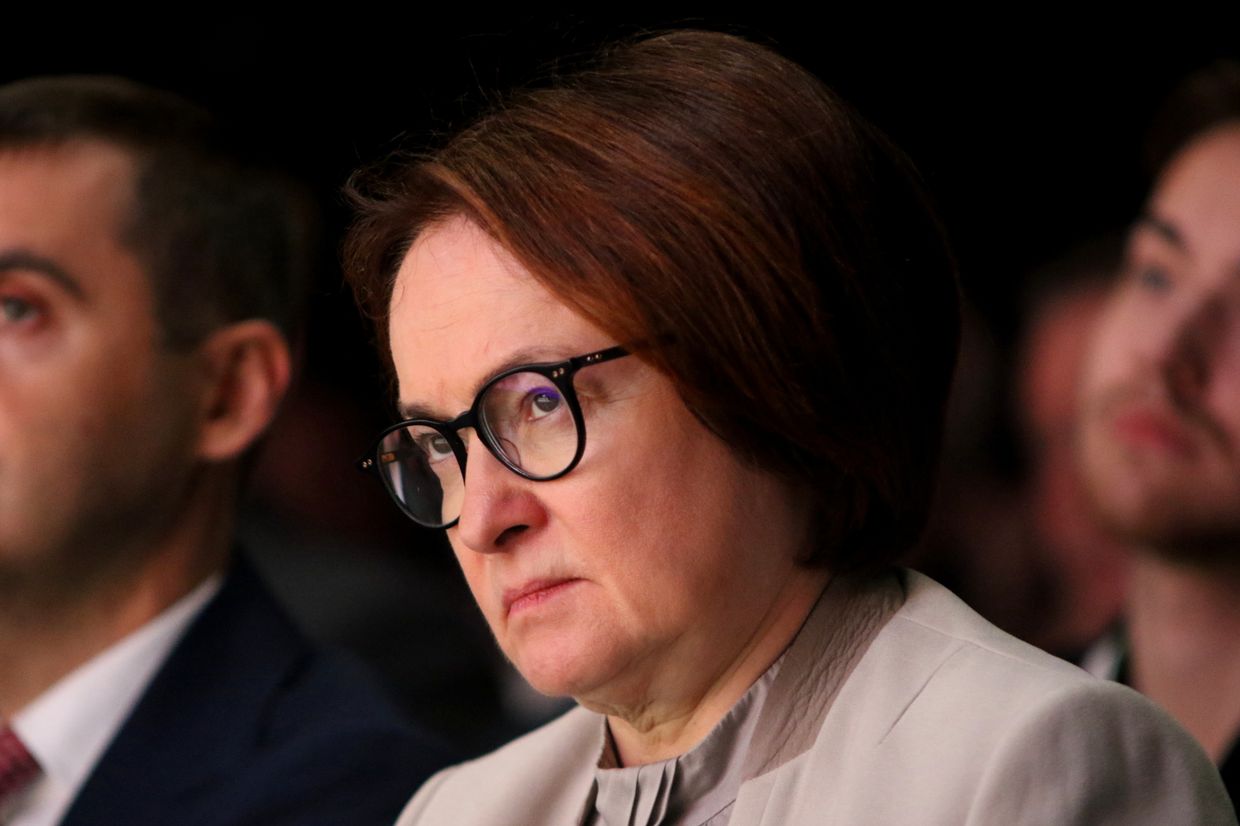
    Elvira Nabiullina, head of the country's Central Bank, in Saint Petersburg, Russia on July 5, 2024. (Maksim Konstantinov/SOPA Images/LightRocket via Getty Images)
    Can Russia sustain its war effort as ruble plummets, inflation soars?
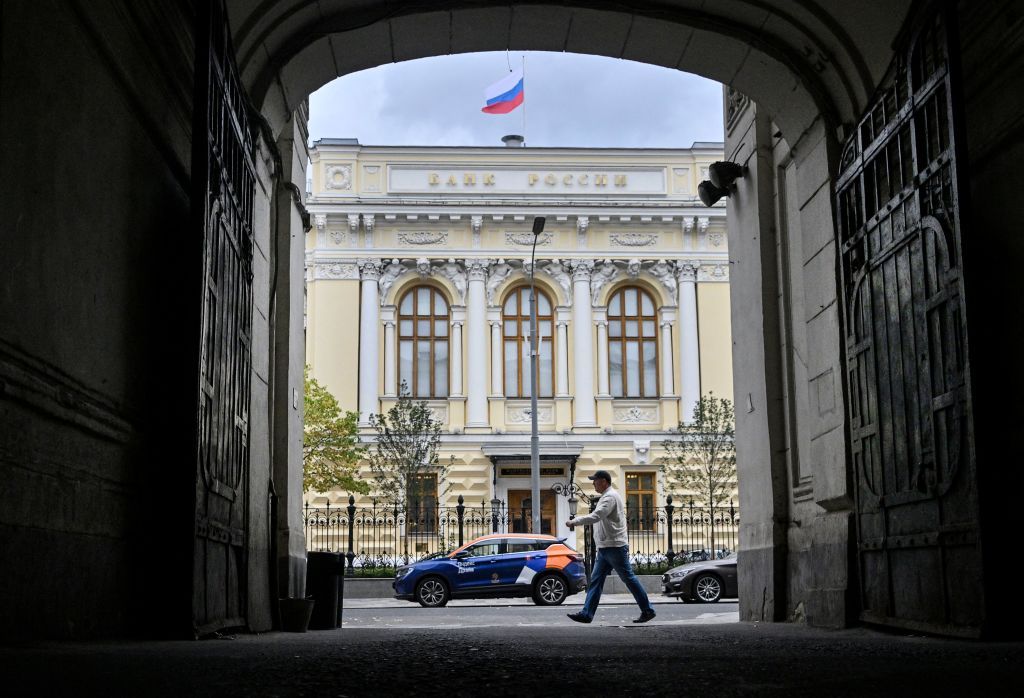
    A man walks past the Russian Central Bank headquarters in downtown Moscow, Russia on Sep. 6, 2023. (Alexander Nemenov/AFP via Getty Images)

    Opposition politician Milov said that Chemezov and Nabiullina "are both right" in their own way.

    "Chemezov is right that businesses will have to shut down at such a (high interest) rate," he told the Kyiv Independent, "Nabiullina is right that the rate cannot be cut because in that case there will be hyperinflation like in Turkey."

    He continued that "there is only one way out — finish the war and withdraw Russian troops" from Ukraine.

    "Nabiullina is in a tough spot because of the spending on the war," Torbjörn Becker, director of the Stockholm Institute of Transition Economics and a co-author of a recent report on the Russian wartime economy, told the Kyiv Independent. "The whole war effort is creating a headache for Nabiullina. The military-industrial complex wants to spend more money. The military guys don't care about macroeconomic stability."

    Can Russia sustain its war effort as ruble plummets, inflation soars?

    Is Russia headed for stagflation?

    The Central Bank's policy of making credit more expensive may be contributing to a slowdown in economic growth.

    Russia's gross domestic product rose 3.6 percent in 2023 amid a boom fueled by military spending, according to the State Statistics Service (RosStat). Russia's economy is expected to grow by 3.5-4 percent in 2024, but the growth is expected to slow down to 0.5-1.5 percent in 2025, according to Russia's Central Bank.

    "There are no new investments, and the effectiveness of the fiscal stimulus is decreasing," Milov said. "(Economic growth) is also being killed by high inflation and the Central Bank's high rate. Credit is unbelievably expensive."

    Milov believes that Russia's GDP may fall in 2025, and the country may experience stagflation — a combination of stagnation and high inflation.

    Alexandra Prokopenko, an economic expert at the Carnegie Russia Eurasia Center, argued that "it's not stagflation yet, but Russia is close."

    "Recent data suggests that the overheated Russian economy is starting to cool," she told the Kyiv Independent. "This includes a fall in retail lending, slowing wage increases, and dropping industrial growth. However, it shouldn't be overstated. Despite the signs of cooling, the fundamental drivers of overheating remain in place — growing military production and an intense labor shortage."

    "Recent data suggests that the overheated Russian economy is starting to cool."

    She added that "in some sectors related to the military (like, for example, finished metal products and optics and computers), there is no sign of any cooling."

    Can Russia sustain its war effort as ruble plummets, inflation soars?
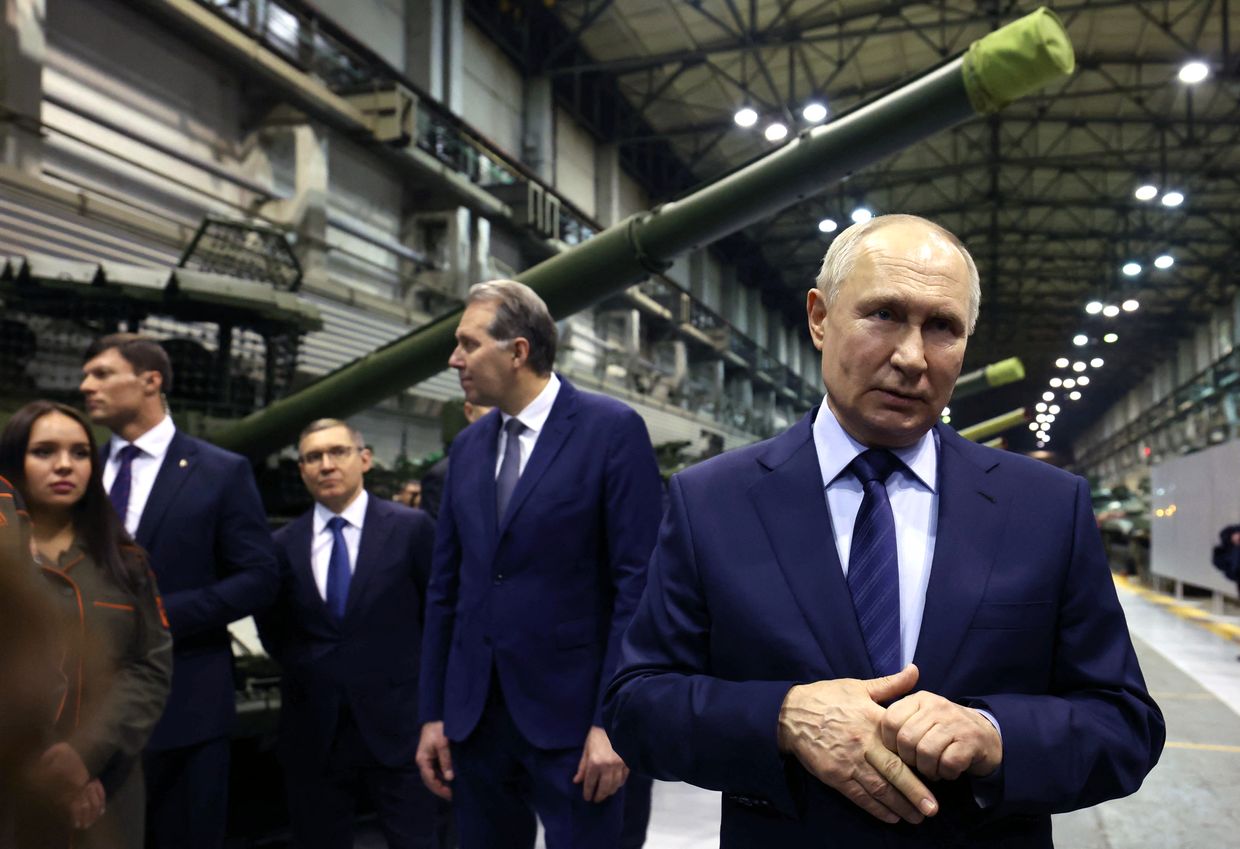
    Russian President Vladimir Putin visits Uralvagonzavod, a Russian tank factory, in Nizhny Tagil, Russia on Feb. 15, 2024. (Alexander Kazakov / POOL / AFP via Getty Images)

    Yulia Pavytska, an economic expert at the Kyiv School of Economics' think-tank, KSE Institute, told the Kyiv Independent that "the current policy of the Russian Central Bank will either lead to stagnation — the absence of economic growth — or the regulator will fail, in which case inflation will continue to rise."

    She added, however, that "a combination of stagnation and inflation is currently an unlikely scenario, given the continued fiscal stimulus in the form of war-related expenditures and the significant labor market deficit."

    Aleksashenko said that he did not expect a drop in Russia's GDP in 2025. He told the Kyiv Independent that labor market shortages were slowing down economic growth but their impact was relatively small.

    Can Russia sustain its war effort as ruble plummets, inflation soars?

    Higher inflation on the horizon?

    Some analysts predict that pressure from industry, including the military-industrial complex, will lead to Nabiullina's downfall.

    "Putin understands that Nabiullina is useful but there is more and more pressure from security forces," Russian political analyst Dmitry Oreshkin told the Kyiv Independent. "In this struggle, the military-industrial complex will inevitably win because Putin is waging a war."

    Aslund agreed, saying that "Chemezov and other industrialists will oust her very soon and make the correct point that high interest rates solve none of the (Central Bank's) tasks, which would be correct, but they will push for lower interest rates, which will aggravate the situation."

    "Inflation will rise, the capital outflow will accelerate, and the exchange rate will fall," he told the Kyiv Independent.

    Aslund also said that he "would not suggest hyperinflation (over 50 percent increase a month) but a substantial increase in inflation, which will cause popular dissatisfaction."

    Andrei Movchan, a Russian-born economist and founder of Movchan's Group, told the Kyiv Independent that, if the Central Bank changes its policy and cuts its rate by several percentage points, inflation could rise to 20-25 percent but it would not lead to a "catastrophe" or "destruction of the economy."

    New Defense Minister Belousov to put Russia’s economy on war footingRussian President Vladimir Putin’s appointment of a new defense minister, Andrey Belousov, is seen as an attempt to streamline Russia’s economy and mobilize it for the war effort. Russia’s military has faced numerous supply and logistics problems that thwarted its all-out war against Ukraine from t…Can Russia sustain its war effort as ruble plummets, inflation soars?The Kyiv IndependentOleg SukhovCan Russia sustain its war effort as ruble plummets, inflation soars?

    Stay warm with Ukrainian traditions this winter. Shop our seasonal merch collection.

    Can Russia sustain its war effort as ruble plummets, inflation soars? shop now

    War effort unsustainable?

    Although economists agree that Russia is experiencing economic difficulties, they are split on whether they will make its war effort unsustainable.

    Aslund said that "Russia's macroeconomic failures will become a critical factor next year, perhaps rather soon, though these things are always difficult to time."

    Anders Olofsgård, a deputy director at the Stockholm Institute of Transition Economics, shares these thoughts.

    He told the Kyiv Independent that "it is becoming increasingly expensive for Russia to finance the war, with domestic military production at capacity, inflation and wages surging, and them increasingly turning to allies such as Iran and North Korea for military equipment and even soldiers."

    "They are also gradually depleting the external reserves they have, and the worse the economic situation, the more they need to turn to those reserves to afford the expansion in military expenditures," he said. "Unfortunately, this doesn't mean that they will run out of money tomorrow, but depending on oil and gas prices, the effectiveness and enforcement of sanctions, and the competence and credibility of their macroeconomic policies, that day is coming."

    Milov said that there is less and less money at Russia's Federal Wealth Fund, and it's difficult for the government to borrow at such a high interest rate.

    The government has tried to raise money by increasing taxes but the "tax hikes will accelerate the slowing down of the economy and reduce the tax base," Milov continued.

    "They'll have to decide something because they can't wage such a high-intensity war anymore," he added.

    Milov said that the production of more primitive military products — such as drones, bombs, and artillery shells — is expanding. However, it is more difficult for Russia to produce more complex equipment — tanks, armored vehicles and aircraft, he added.

    "They'll have to decide something because they can't wage such a high-intensity war anymore."

    Other economists are more cautious.

    "Russia is currently not facing serious fiscal challenges," Pavytska said. "It is likely that the Finance Ministry will be able to execute this year's budget as planned."

    She said that domestic borrowing would be "costly," but the government would take this step if needed because "the regime needs money for the war now, not in some abstract future."

    "In modern Russian realities, the key interest rate is, de facto, irrelevant to the regime," Pavytska added. "Funds for the war will be found in any case, including by cutting other expenditures, as evidenced by the draft budget for next year, or through monetary issuance."

    Movchan and Aleksashenko said that the defense sector gets direct funding from the budget, not loans, and it would be funded regardless of high interest rates. They argued that Russia's economic difficulties were not affecting its war effort.

    Movchan said that Russia would start experiencing problems with funding the war only if oil prices fell significantly, leading to a major drop in the government's foreign currency earnings. He added, however, that he believed that a major fall in oil prices was unlikely in the near future.

    The hope for a drop in oil prices was boosted recently by Trump's plan to issue more permits to drastically increase U.S. oil and liquefied natural gas production. Reuters reported on Nov. 25 that Trump's transition team was working on the plan and would roll it out within days of him taking office in January.

    Oreshkin said that Russia's current economic turmoil is unlikely to strengthen Ukraine's hand in potential peace talks. But, if Trump manages to drive down oil prices and cracks down on Russia's evasion of oil sanctions, Ukraine will have a stronger position, he added.

    Russia struggles to control finances as Ukraine invasion spending soarsSince the full-scale invasion of Ukraine began in 2022, the Russian government has focused all of its financial resources on funding the war. As the war is the Kremlin’s number one priority, all tools at its disposal have been used: increased taxation, sovereign funds, domestic borrowing, and the p…Can Russia sustain its war effort as ruble plummets, inflation soars?The Kyiv IndependentOleg SukhovCan Russia sustain its war effort as ruble plummets, inflation soars?
  • Not a student, but a vice-sergeant: at that point, the militarization of children continues

    Not a student, but a vice-sergeant: at that point, the militarization of children continues

    Not a student, but a vice-sergeant: at that point, the militarization of children continues

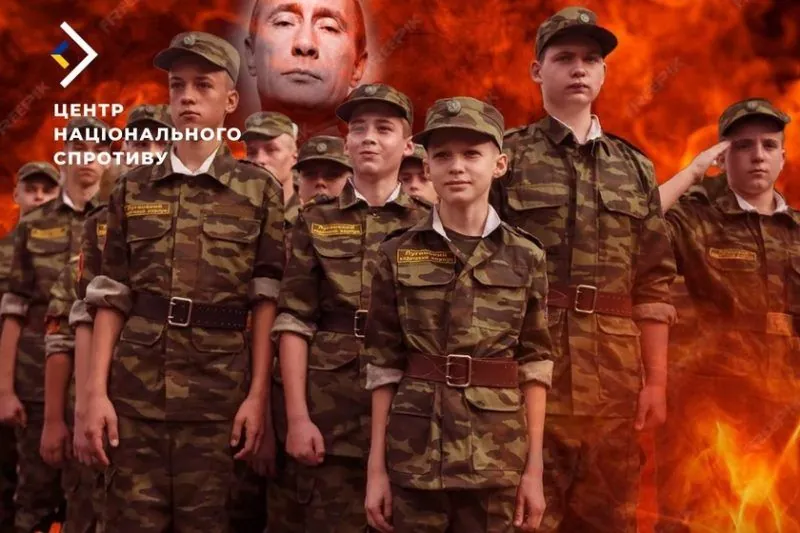
    In the Luhansk boarding school, the invaders awarded children the rank of Vice-sergeants after taking the oath of the Russian Federation. The invaders continue to militarize young people in the occupied territories to create a mobilization resource.

    Children from the temporarily occupied Luhansk region underwent another military training from the invaders. The invaders introduced service "titles"in a local secondary education institution. This is reported by The Center for National Resistance, reports UNN.

    Details

    Pupils of the economic and legal boarding Lyceum named after the heroes of the "young guard" in Luhansk were awarded the rank of Vice-sergeants by the invaders. This was preceded by taking the oath of allegiance to the aggressor country. The "event" was held in the premises of the local museum of local lore, which is equipped in the best propaganda traditions of the Kremlin.

    Moscow is making big bets on the militarization of children. This is done with one goal – to educate young people loyal to the Russian occupation, who are instilled hatred and intolerance to their roots.

    – reports the central nervous system.

    The occupiers systematically introduce military-patriotic programs, force children to participate in paramilitary training, take the oath of office and wear military ranks. Such initiatives are aimed at turning the younger generation into a potential mobilization resource of the Russian army. In the future, these children will become a powerful mobilization resource for the Russian army and will be able to fight against their homeland.

    recall

    Earlier, UNN reported that the occupiers continue to Destroy the national identity of children from the occupied territories and educate them as "cannon fodder" for the Russian Federation through militarization, propaganda and control of their thoughts in schools and youth organizations.

  • ‘Putin wants to escalate’ before Trump takes office — Zelensky hits back at Oreshnik threats

    ‘Putin wants to escalate’ before Trump takes office — Zelensky hits back at Oreshnik threats

    'Putin wants to escalate' before Trump takes office — Zelensky hits back at Oreshnik threats

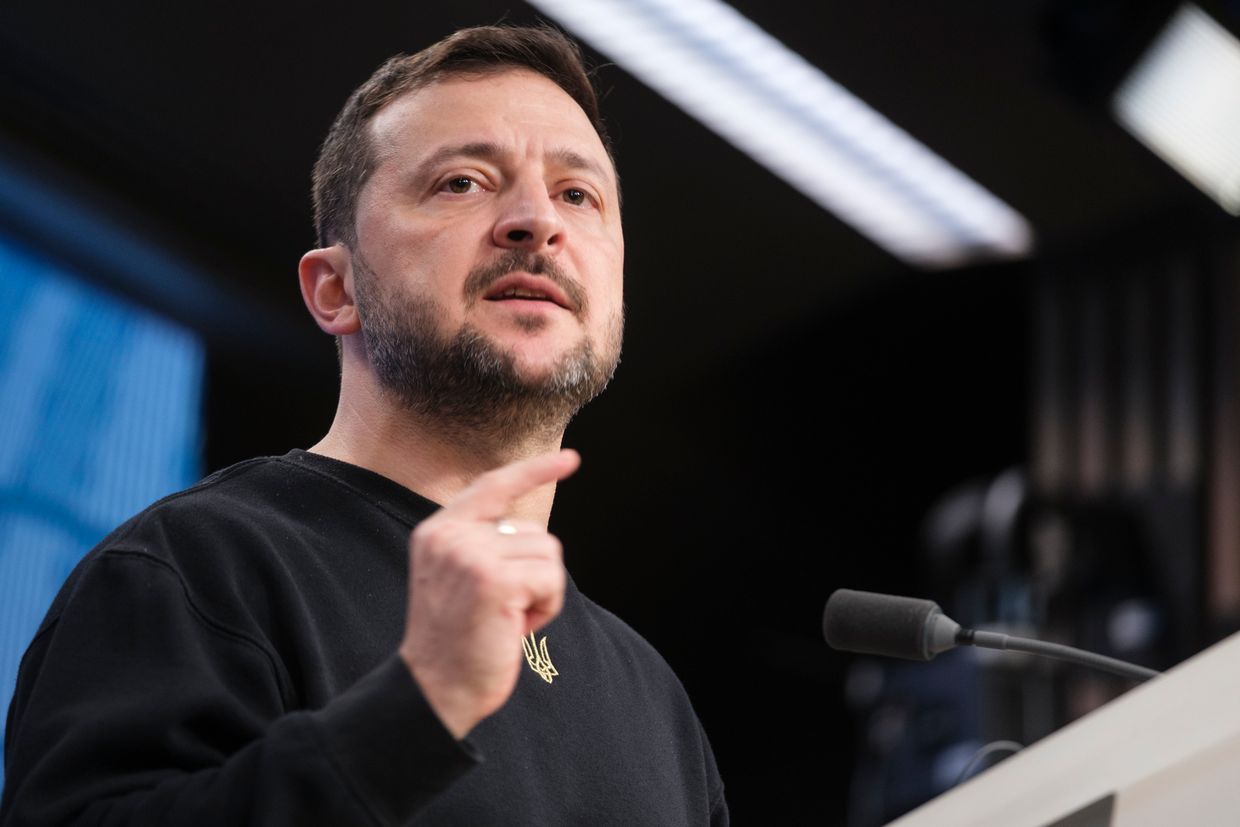
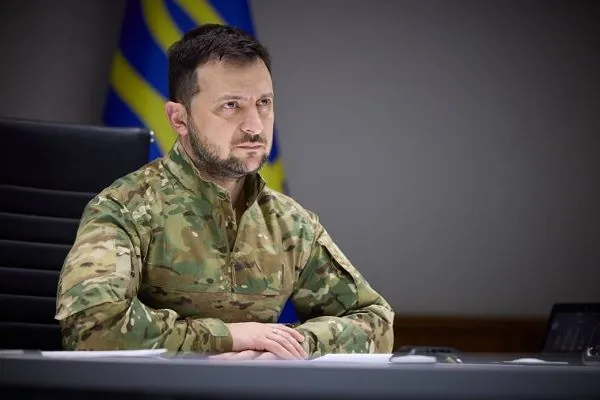
    Russian President Vladimir Putin wants to escalate the war in Ukraine so that U.S. President Donald Trump fails to end the full-scale war, President Volodymyr Zelensky said on Nov. 28.

    Zelensky's comments come in response to Putin's fresh threats to target "decision-making centers" in Kyiv and Ukrainian military facilities with Oreshnik, Russia's new intermediate-range ballistic missile (IRBM).

    "(Putin) is aiming to disrupt the efforts of President Trump that are sure to come after his inauguration," Zelensky said in his evening address.

    "Putin wants to escalate the situation now so that President Trump fails to end the war."

    Speaking at the Collective Security Treaty Organization (CSTO) summit in Astana earlier in the day, Putin said that Russia's military leadership is now "choosing targets" in Ukraine to hit them with Oreshnik.

    Zelensky called Putin's actions "pressure" to force Trump to accept Russia's terms.

    On the campaign trail, Trump has criticized military support provided to Ukraine by Joe Biden's administration and pledged to get the U.S. "out" of the war. While the details of his plans remain elusive, some reports indicate this would entail forcing Ukraine to cede territory and at least temporarily give up on its NATO accession plans.

    Russia first launched Oreshnik in an attack against the city of Dnipro on Nov. 21. Shortly thereafter, Putin claimed that "there are currently no ways of countering this weapon," which later was refuted by Zelensky.

    Russia's Oreshnik attack followed Kyiv's first successful strike on a military target on Russian soil using U.S.-supplied ATACMS missiles. The Russian Defense Ministry admitted more such strikes against targets in Kursk and Bryansk oblasts had followed later.

    ‘Don’t overreact’ — Oreshnik missile isn’t as new as Russia claims, experts sayRussian President Vladimir Putin on Nov. 21 announced his country had launched a new type of missile in an attack on Ukraine, a demonstration of military might meant to deter Kyiv’s allies from further support against his full-scale invasion. “There are currently no ways of countering this weapon.…'Putin wants to escalate' before Trump takes office — Zelensky hits back at Oreshnik threatsThe Kyiv IndependentChris York'Putin wants to escalate' before Trump takes office — Zelensky hits back at Oreshnik threats
  • Zelensky announced an important conversation with German Chancellor Scholz

    Zelensky announced an important conversation with German Chancellor Scholz

    Zelensky announced an important conversation with German Chancellor Scholz

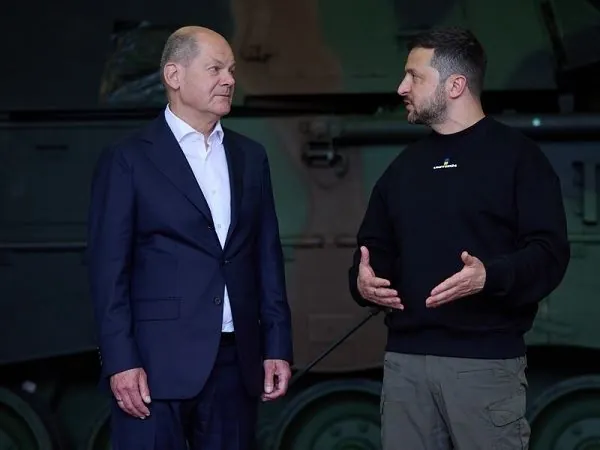
    The president of Ukraine will hold a telephone conversation with Olaf Scholz on November 29. The leaders will discuss the reaction to Russia's attempts to prolong the war and its intentions regarding missile strikes.

    President of Ukraine Volodymyr Zelensky will hold a telephone conversation with German Chancellor Olaf Scholz tomorrow, November 29. Details of the upcoming conversation are still unknown. This was stated by Zelensky in the evening address, reports UNN.

    "Today I had a report from the head of the Gur Budanov regarding the intentions of missile strikes in Russia. Yesterday I explained the situation in a conversation with NATO Secretary General Mark Rutte. I spoke with British Prime Minister Starmer today. The schedule for tomorrow includes a conversation with German Chancellor Scholz. We must respond together to Russia's attempt to make the situation more unbearable and an attempt to prolong this war," Zelensky said.

    Recall

    On November 6, Social Democrat Olaf Scholz announced the dismissal of Finance Minister Christian Lindner, chairman of the Free Democratic Party (FDP). On the night of November 7, almost all FDP member ministers announced that they would voluntarily resign. Thus, the ruling "traffic light coalition" in Germany, consisting of the SPD, FDP and Greens, collapsed.

    Early elections to the Bundestag, which will result in the formation of a new government of Ukraine, will be held in Germany on February 23, 2025.

    The candidate for the seat of the Federal Chancellor of Nimechchini in the Social Democratic Party of Nimechchini (STAN) at the final elections to the Bundestag became the highest official in the row Olaf Scholz.

  • Russian troops operated torture chamber for Ukrainians in Belarus in 2022, media reports

    Russian troops operated torture chamber for Ukrainians in Belarus in 2022, media reports

    Russian troops operated torture chamber for Ukrainians in Belarus in 2022, media reports

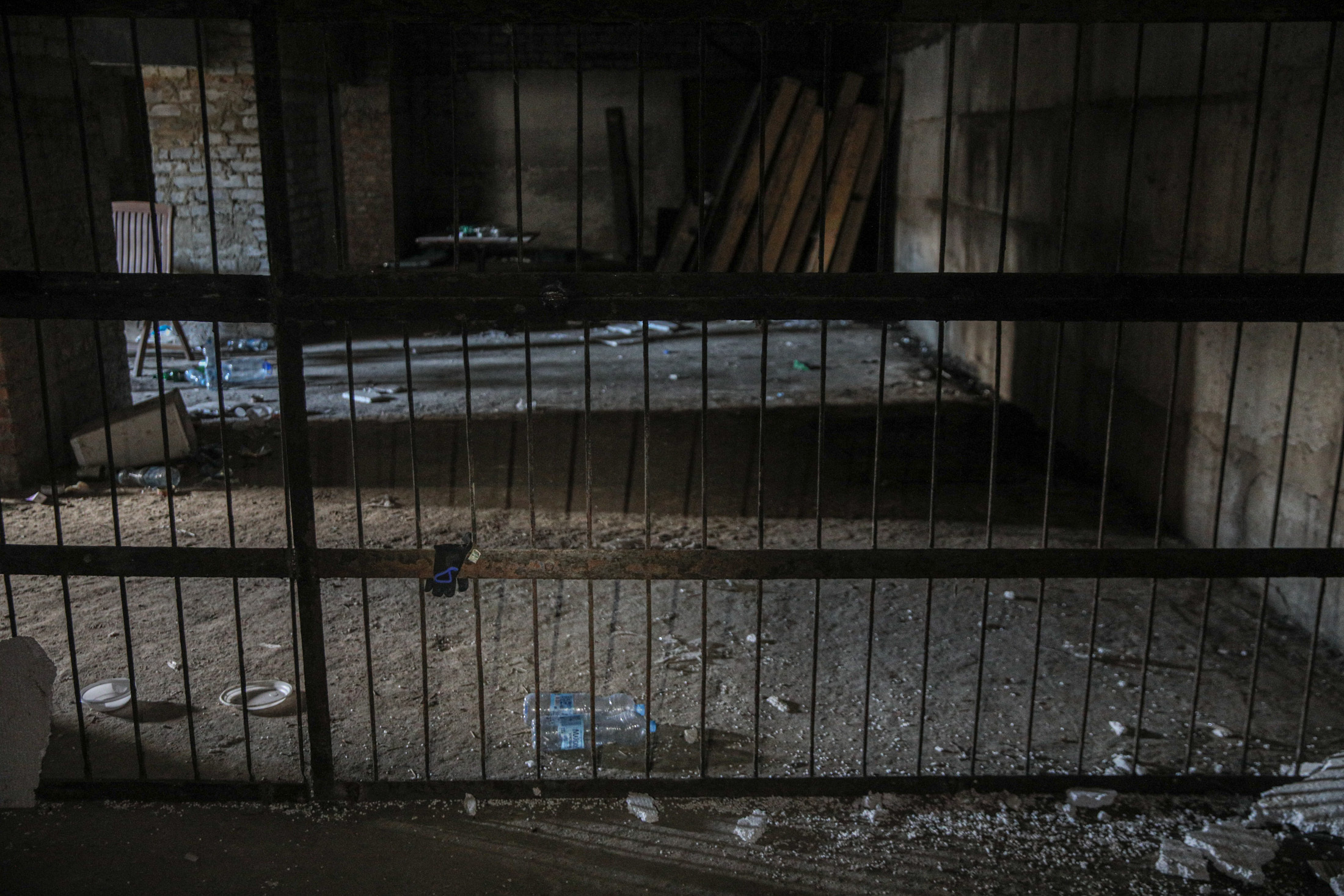
    Russian troops operated a torture chamber in Belarus in the spring of 2022, the Belarusian Investigative Center (BIC) reported on Nov. 28. Ukrainian prisoners of war and civilians abducted from Ukraine were reportedly held there.

    The chamber was located on Belarusian government-owned property in the town of Naroulia, not far from the border with Ukraine, according to BIC.

    The Russian military has reportedly set up a camp in Naroulia for people captured in Kyiv Oblast during the early stages of the full-scale war.

    In comments to BIC, human rights activists described the Naroulia camp as a place where the treatment of civilian hostages “was among the most brutal.”

    Lawyer Yulia Polekhina, working with the Sich human rights group, said that prisoners were tortured there.

    Polekhina’s words echo those of former prisoners who went through Naroulia.

    “They beat up civilians there really hard. One could hear constant screaming there,” said Bohdan Lysenko, a soldier with the Ukrainian Armed Forces who was captured by the Russian military and brought to the camp in March 2022, in a comment to BIC.

    According to the investigation, the camp was located in the compound owned by Pripyatski Alyans on Kamsamolskaya Street. Owned by the Belarusian state, the company conducts catering and food procurement for regional institutions.

    The company did not comment on the allegations and advised to contact local authorities for more information.

    Russian troops operated torture chamber for Ukrainians in Belarus in 2022, media reports Russian troops operated torture chamber for Ukrainians in Belarus in 2022, media reports Subscribe to newsletter Belarus Weekly

    The Reckoning Project, the Ukrainian-American organization that records human rights violations, suggests that the actions of the Russian military in Naroulia may indicate a violation of the Geneva Convention provisions, which prohibit forced displacement of civilians and ban keeping military personnel and civilians at the same detention center.

    The Russian military was reportedly present at the location at least until early May 2022.

    Russia has terrorized Ukrainians in torture chambers across the occupied territories, with previous reports indicating the use of this tactic in Kharkiv and Zaporizhzhia oblasts, as well as the previously occupied areas of Kherson Oblast.

    Belarusian dictator Alexander Lukashenko provided Belarus territory for Russia to launch the all-out war against Ukraine in February 2022. Belarus hosted Russian troops, served as a launchpad for Russian missile attacks against Ukraine, and supplied weapons to the Kremlin.

    Belarus also took part in the abduction of Ukrainian children from Russian-occupied territories.

  • Wants to disrupt Trump’s peace efforts: Zelensky explained why Putin is waving his “hazel tree”

    Wants to disrupt Trump’s peace efforts: Zelensky explained why Putin is waving his “hazel tree”

    Wants to disrupt Trump's peace efforts: Zelensky explained why Putin is waving his "hazel tree"

    The president of Ukraine said that Putin is demonstrating oreshnik missiles to disrupt Trump's future peace efforts. According to Zelensky, the Russian dictator is trying to escalate the situation in order to force the United States to accept Russia's conditions.

    President of Ukraine Volodymyr Zelensky said that Russian dictator Vladimir Putin is waving a "hazel tree" only to disrupt the peaceful efforts of US President Donald Trump, Reports UNN.

    "Today in Kazakhstan, Putin again advertised his missiles-his readiness to kill and destroy. to the thousands of missiles that have already hit Ukraine, Putin obviously wants to add thousands more. He doesn't need an end to this war," Zelensky said in his evening address.

    Sibiga called for the transfer of air defense systems capable of intercepting Oreshnik missiles to UkraineNov 24 2024, 02:31 PM • 50747 views

    The president of Ukraine added that moreover, Putin wants to prevent others from ending this war.

    "He can wave his" hazel tree " now only in order to thwart the efforts of President Trump, which will definitely be after the inauguration. Putin wants to escalate the situation now so that President Trump does not succeed – so that he cannot end the war," Zelensky stressed.

    He also added that "Putin is the only culprit of this war and the only one who believes in war. And that is why Putin's escalation now is pressure to later force the president of America to agree to Russia's conditions.

    The journalists were shown the wreckage of the "Oreshnik" used by russia to attack DniproNov 24 2024, 03:59 PM • 42724 views

  • Netherlands hands over 3 Patriot air defense launchers to Ukraine

    Netherlands hands over 3 Patriot air defense launchers to Ukraine

    Netherlands hands over 3 Patriot air defense launchers to Ukraine

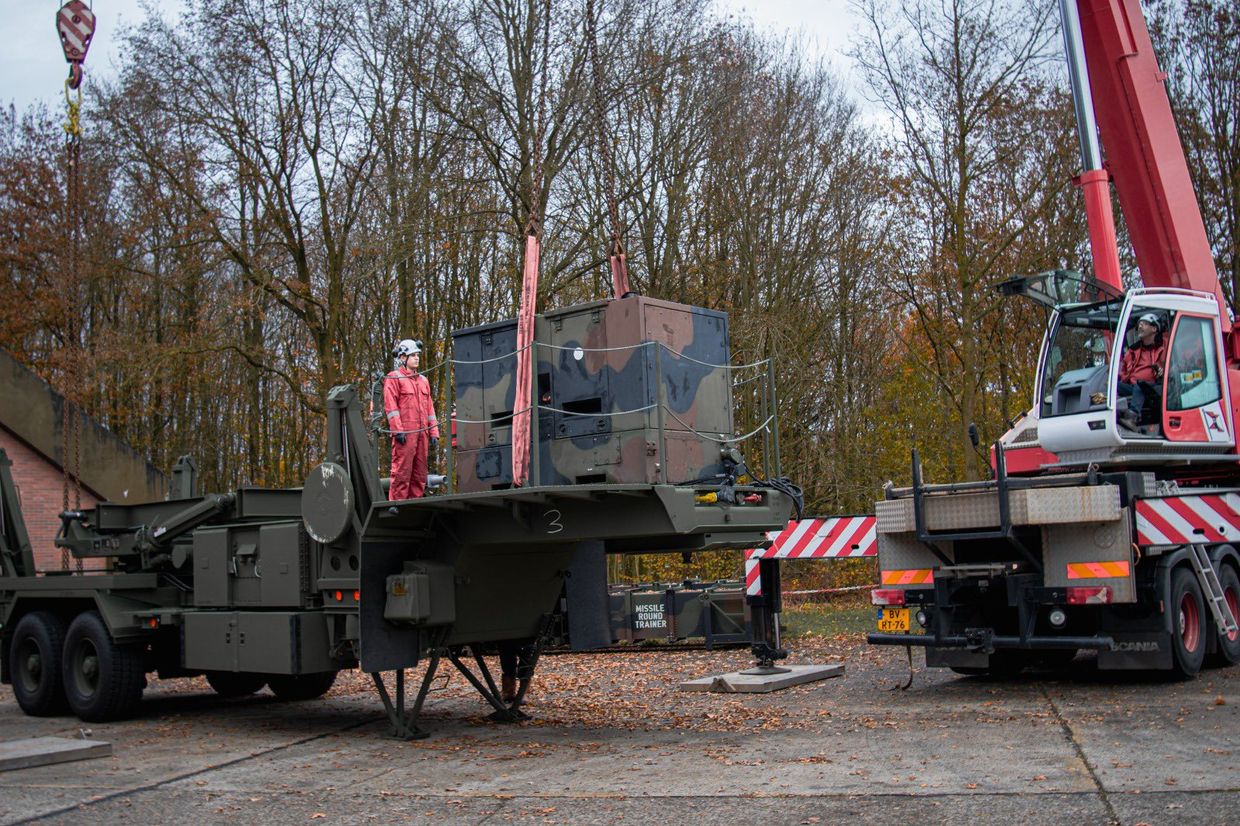
    The Netherlands delivered three new Patriot air defense launchers to Ukraine, Dutch Defense Minister Ruben Brekelmans announced on Nov. 28.

    "This saves lives and protects vital infrastructure. It is and remains in our common interest to stop Russian aggression," Brekelmans said on social media.

    Kyiv has been calling on its partners to provide additional air defense assets as Russia intensifies its strikes against cities ahead of winter.

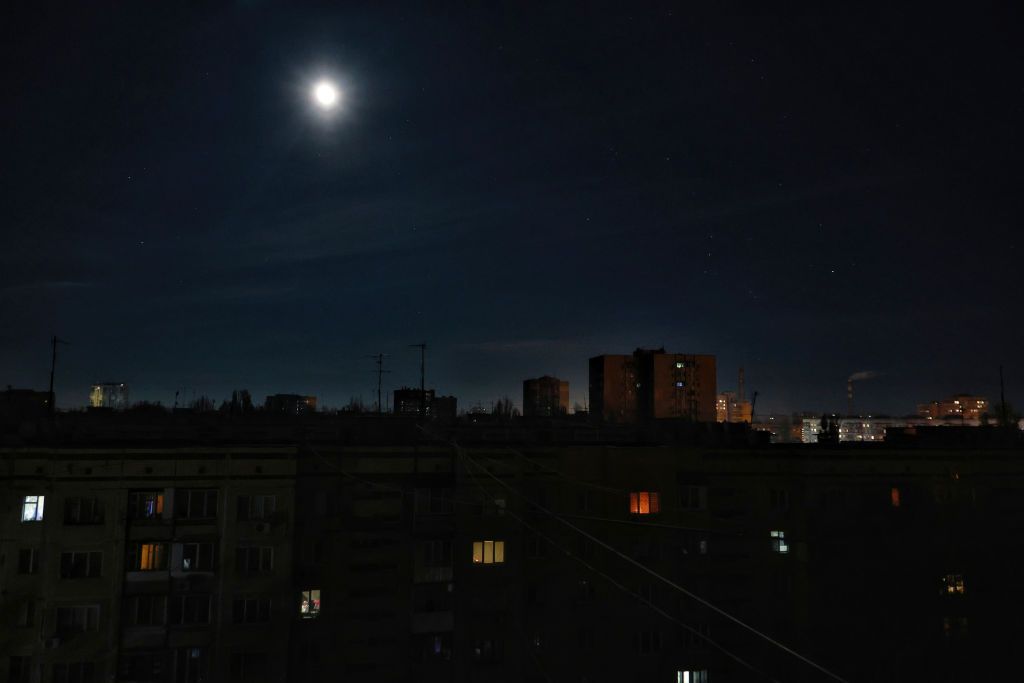
    Russia launched nearly 100 drones and 90 missiles against Ukraine overnight on Nov. 28, targeting energy infrastructure. Additional emergency blackouts were introduced across the country following the attack.

    "I am grateful to Minister Brekelmans and the Dutch government for strengthening Ukrainian air defense capabilities," Ukraine's Defense Minister Rustem Umerov said.

    Ukraine has received at least three Patriot systems from Germany and one from the U.S. Other countries, like the Netherlands and Spain, delivered individual launchers or missiles.

    Stay warm with Ukrainian traditions this winter. Shop our seasonal merch collection.

    Netherlands hands over 3 Patriot air defense launchers to Ukraine shop now

    The U.S. and the Netherlands also pledged in June to deliver one additional system each. Romania transferred a Patriot to Ukraine too after the donation was finally approved in early September.

    President Volodymyr Zelensky said on Nov. 27 that key commitments from NATO's July summit in Washington, including air defense systems and other military support, have not yet been fully implemented.

    Russia launches mass missile attack, explosions reported all over UkraineEnergy Minister Herman Halushchenko said that Russia struck a “massive blow” at the nation’s power grid, with attacks on energy infrastructure occurring throughout the country.Netherlands hands over 3 Patriot air defense launchers to UkraineThe Kyiv IndependentAbbey FenbertNetherlands hands over 3 Patriot air defense launchers to Ukraine
  • Wreckage of Russian x-55 cruise missile found in Kiev: impressive photos

    Wreckage of Russian x-55 cruise missile found in Kiev: impressive photos

    Wreckage of Russian x-55 cruise missile found in Kiev: impressive photos

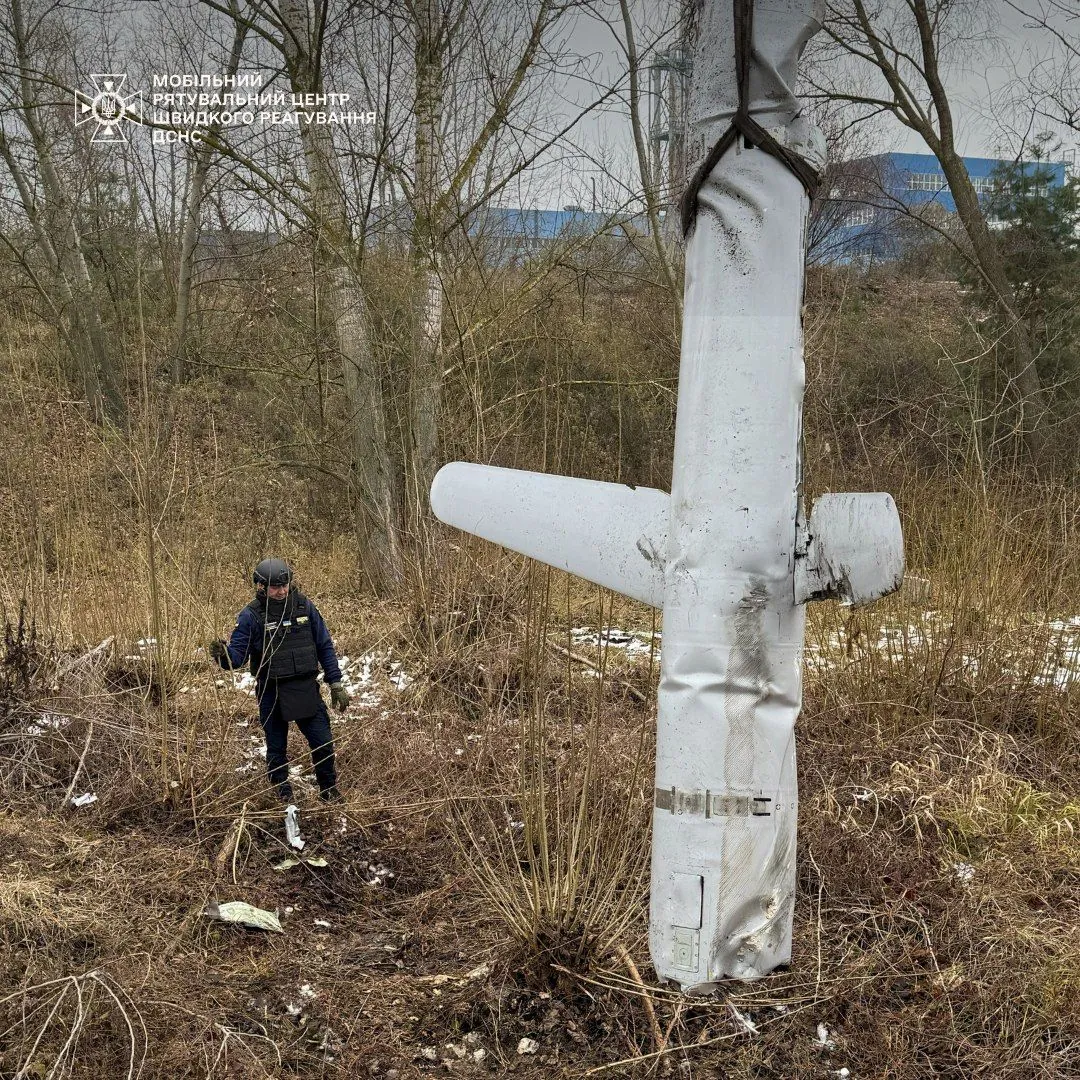
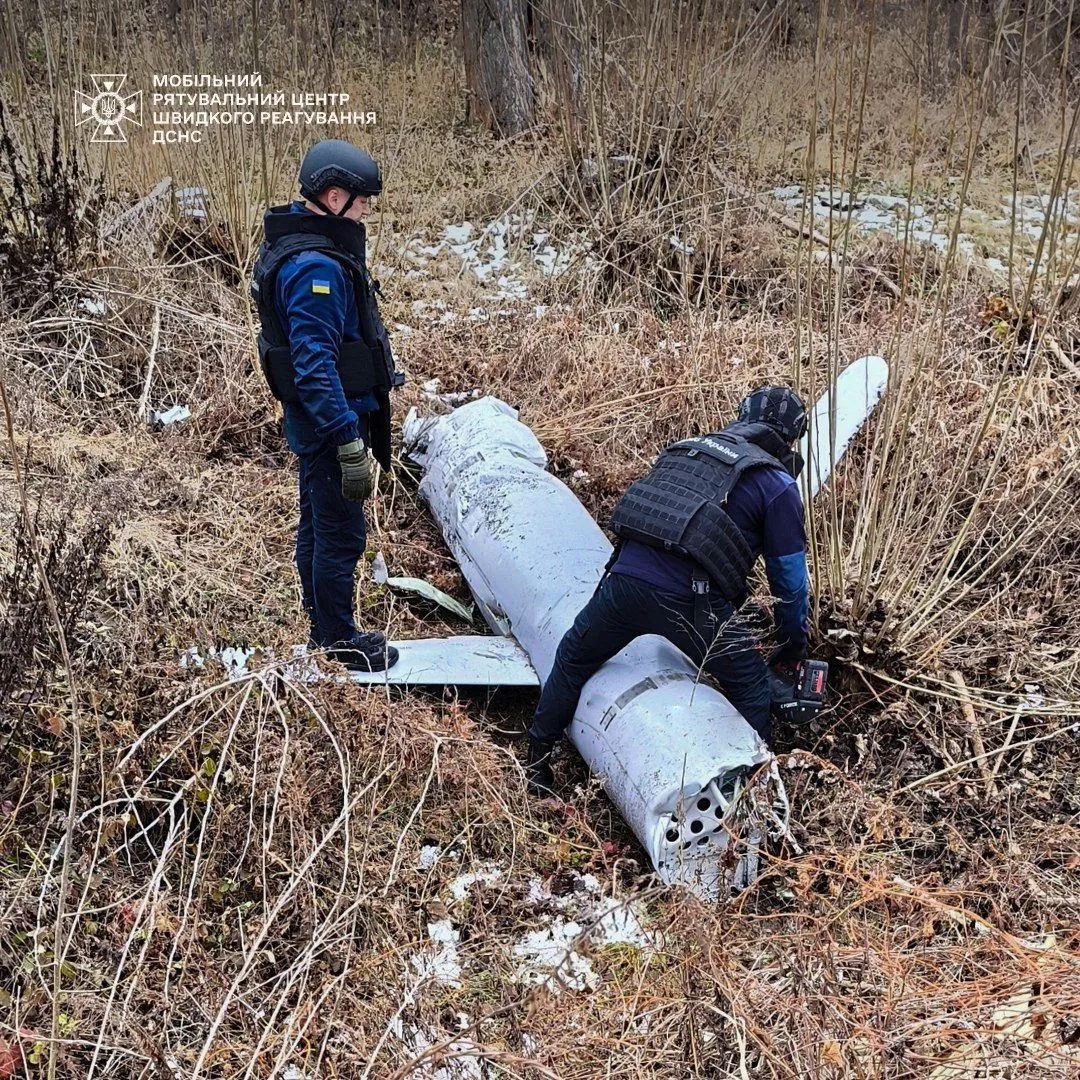
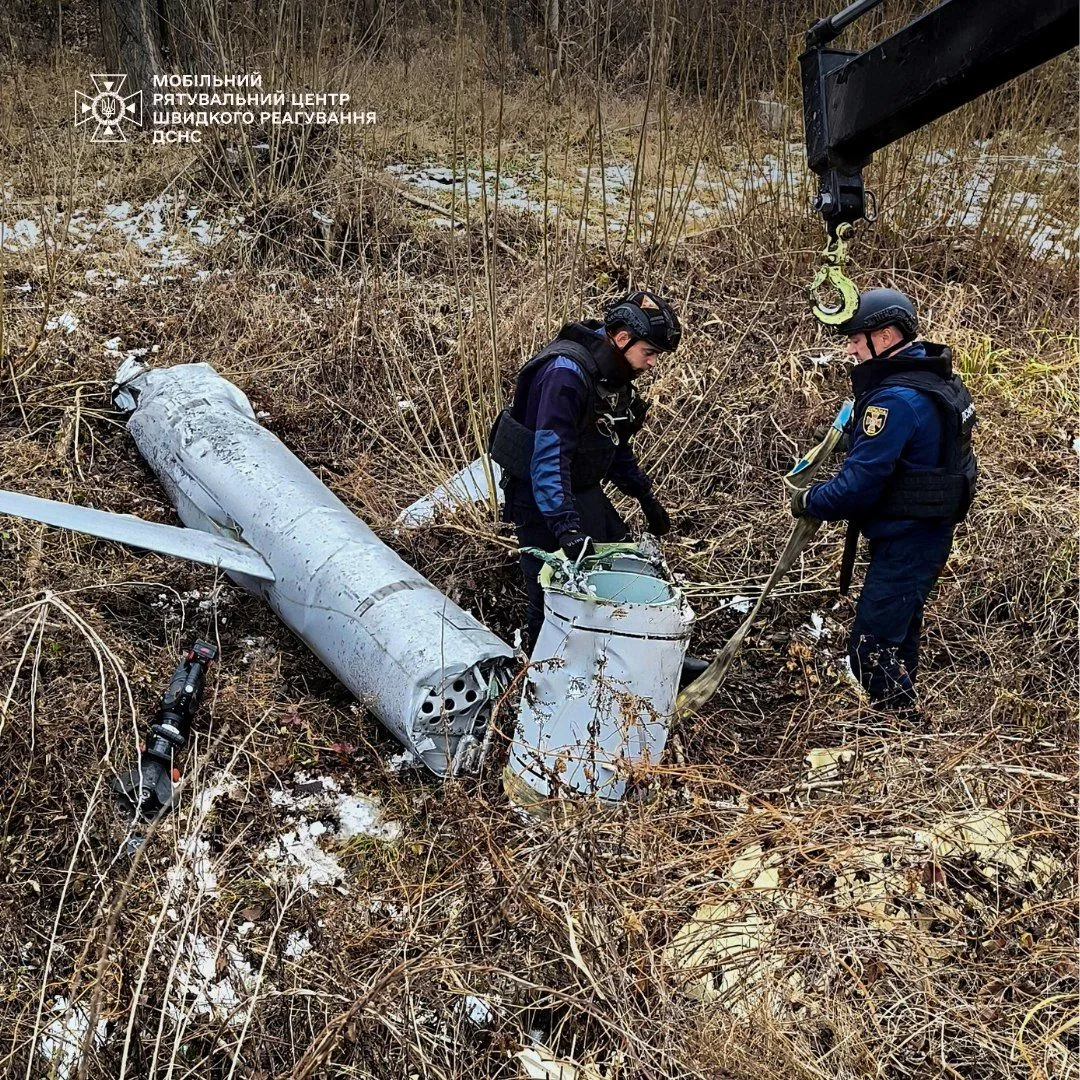
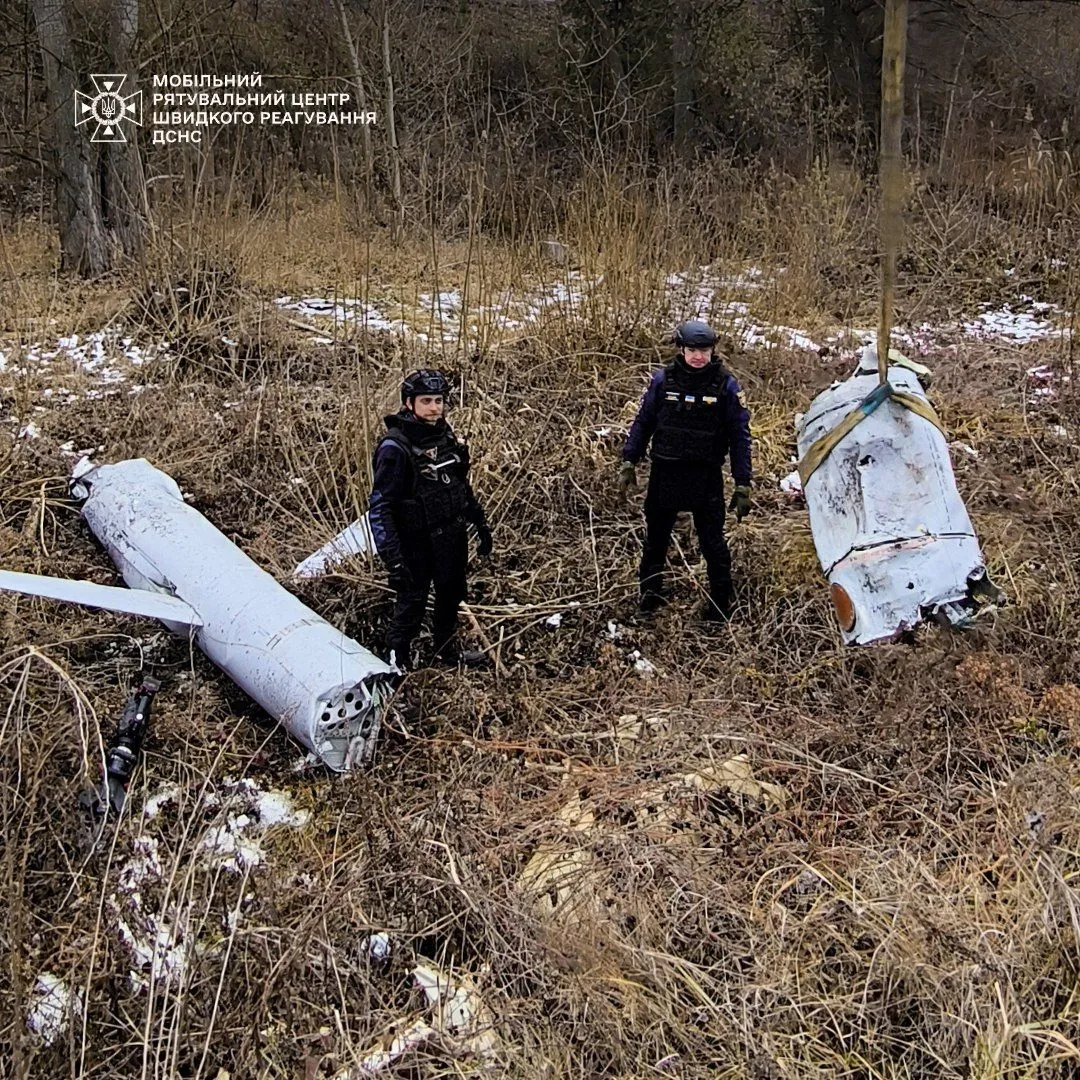
    Pyrotechnics of the State Emergency Service found the remains of a Russian aviation cruise missile x-55 in one of the districts of Kiev. Rescuers warn about the danger and remind you not to touch suspicious objects.

    Pyrotechnics of the State Emergency Service found the remains of a Russian aviation cruise missile x-55 in one of the districts of the capital, reports UNN with reference to the state emergency service.

    According to rescuers, the wreckage, although it did not establish a direct threat to the population, could have become dangerous without surgical intervention.

    In addition, the State Emergency Service reminded all citizens:

    – if you see a suspicious object, do not approach or touch it;

    – immediately report the discovery by calling "101";

    – remember that what seems safe can hide deadly danger.

    11th Massive Attack of the Russian Federation on the Ukrainian energy system: what is happening with electricityNov 28 2024, 09:12 AM • 12694 views