Over the last day, 187 combat engagements took place, the enemy launched 52 air strikes and 748 kamikaze attacks. The most intense attacks were recorded in the Pokrovske and Kurakhove sectors.
Since the beginning of the day, as of 22:00, 187 combat engagements have taken place at the front. This is stated in the report of the General Staff as of 22:00 on 22.11.2024, UNN reports.
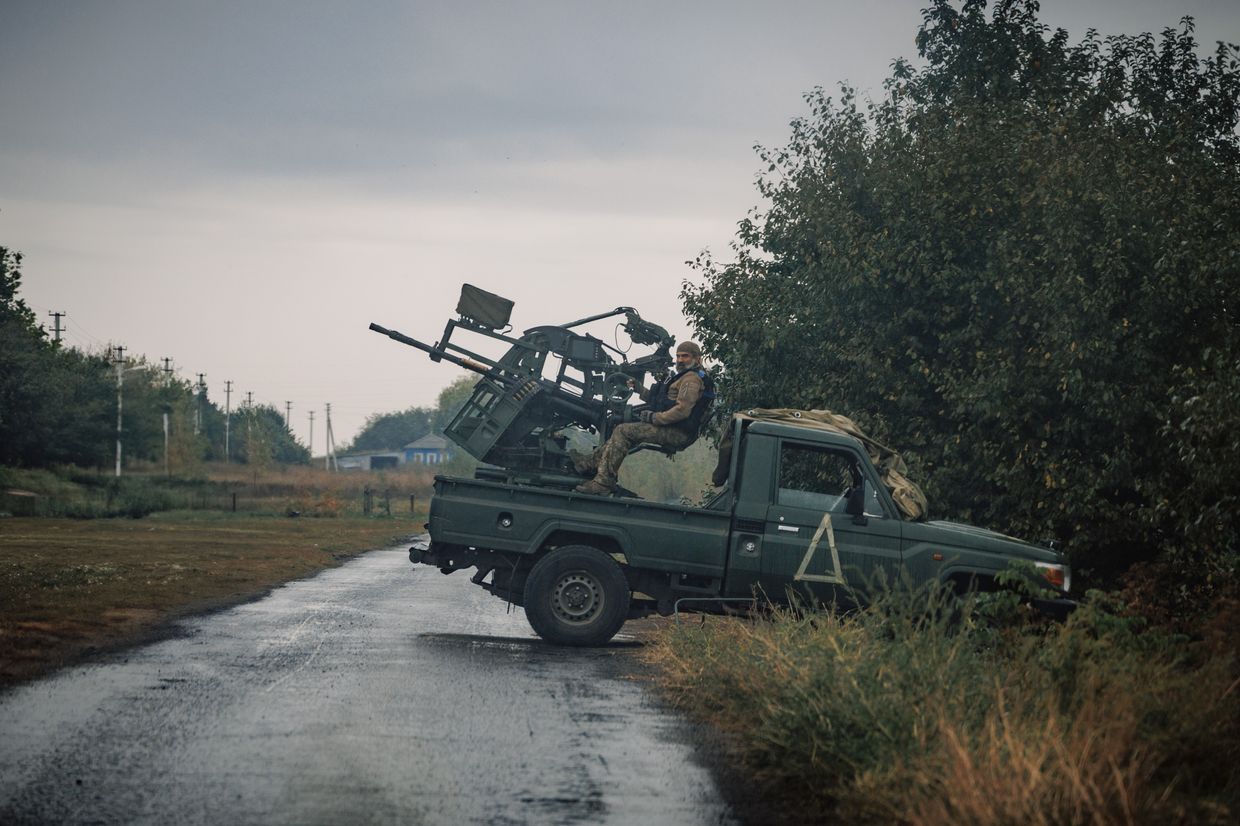
Since the beginning of the day, 187 combat engagements took place, the enemy launched two missile attacks (two rockets), 52 air strikes (56 combat aircraft) and 748 kamikaze drone strikes, and fired over 3,900 times at the positions of our troops,
– the message says.
In the Kharkiv sector , Russian terrorists unsuccessfully stormed the positions of Ukrainian troops near Vovchansk three times. The enemy attacked Lyptsi and Okhrymivka with guided aerial bombs.
The enemy attacked our fortifications six times in the Kupyansk sector near Zelenyi Hai, Hlushkivka and Zahryzove. Two firefights are currently underway.
Eighteen hostile attacks have so far been repelled by Ukrainian troops near Torske, Hrekivka, Terny, Novoyehorivka and Makiivka in the Liman sector. One firefight continues. The enemy conducted air strikes in the areas of Ivanivka, Dronivka, Kryva Luke and Bilohorivka.
In the Siversk sector, did not conduct any offensive actions, but conducted air strikes with guided aerial bombs in the areas of Zakitne and Siversk.
In the Kramatorsk sector, four attempts by the invaders to advance near Stupochky and in the area of Chasovyi Yar failed. Another battle is ongoing.
In Toretsk sector, the enemy, supported by air power, is exerting pressure, trying to advance in the Toretsk area. Seven attacks have already been repelled by our troops, and one more is ongoing.
The enemy is intensively attacking Ukrainian defenders in the Pokrovske sector. During the day, he carried out a total of 40 assault and offensive actions. Russian occupants are most active in the areas of Myroliubivka, Promin, Lysivka, Sukhyi Yar, Pustynka, Hryhorivka, Dachenske, Petrivka and Pushkine. Four firefights are still ongoing. Sukha Balka, Valentynivka and Myrnohrad were hit by air strikes.
According to preliminary estimates, today our troops eliminated 130 militants and wounded 160 in this sector. Two tanks, one armored personnel carrier, eight vehicles, a mortar launcher and two buggies were destroyed. Four tanks, one mortar launcher and one ATV were also damaged.
The situation is also hot in the Kurakhove sector , with 35 combat engagements registered as of this time of day. Terrorists tried to advance in the areas of Berestky, Sontsivka, Dale, Novodmytrivka, Kurakhove, Katerynivka, Romanivka and Antonivka. Thirteen battles are still ongoing.
In the Vremivsk sector, Ukrainian troops repelled 15 attacks by enemy units in the areas of Trudove, Kostiantynopolske, Rozlyv, Rozdolne, Sukhi Yaliv and Novodarivka. Five combat engagements are still ongoing. The enemy actively used aviation in the area.
In the Orikhivsk sector, Ukrainian troops repelled one enemy attack in the direction of Kamianske. The enemy launched an air strike on Mala Tokmachka with anti-aircraft gunships.
In the Prydniprovsky sector, four enemy attacks failed. The enemy fired with NARs at Kozatske.
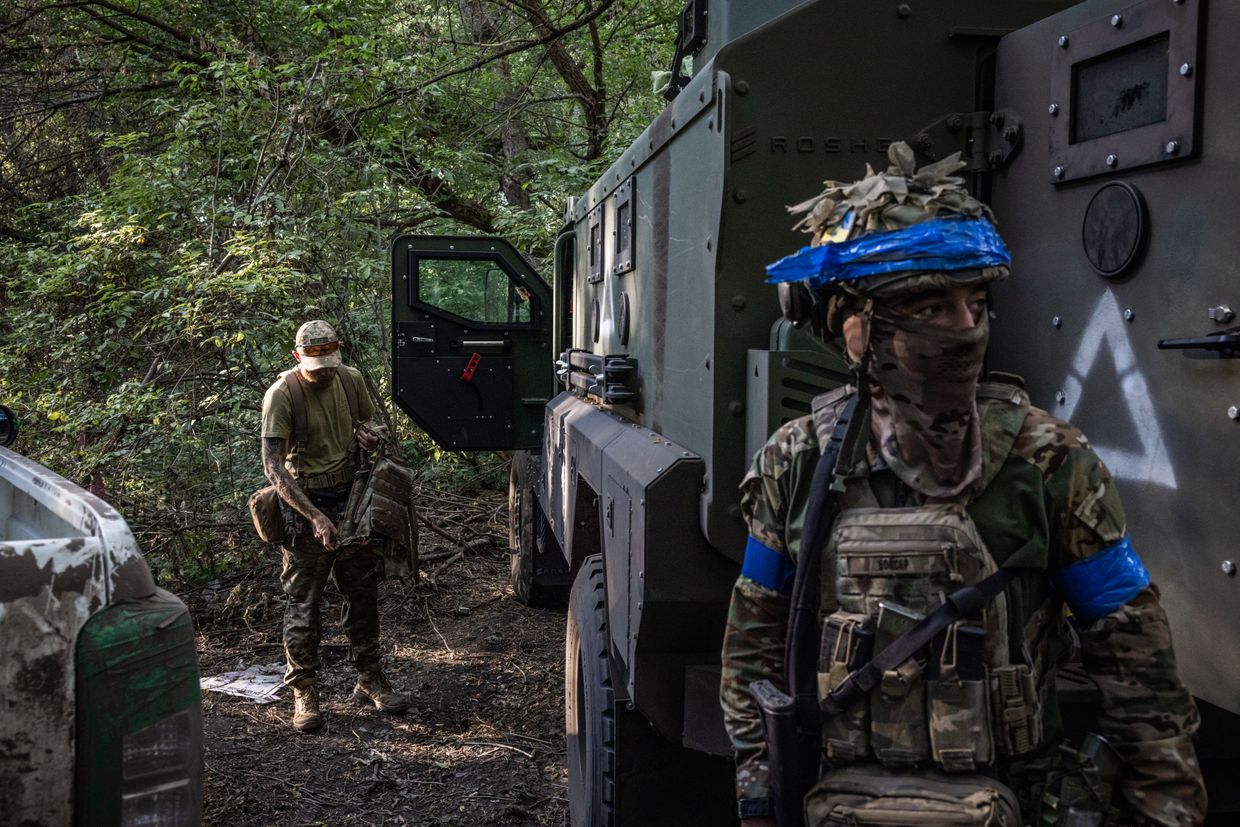
In the Kursk region, Ukrainian soldiers are holding the line, repelling eight enemy attacks; in total, the enemy has made 28 attempts to attack our units today,
– the General Staff added.
In other areas, there were no significant changes in the situation.
Zelenskyy: we must do everything to end the war by diplomatic means in 2025Nov 16 2024, 10:49 AM • 43831 view
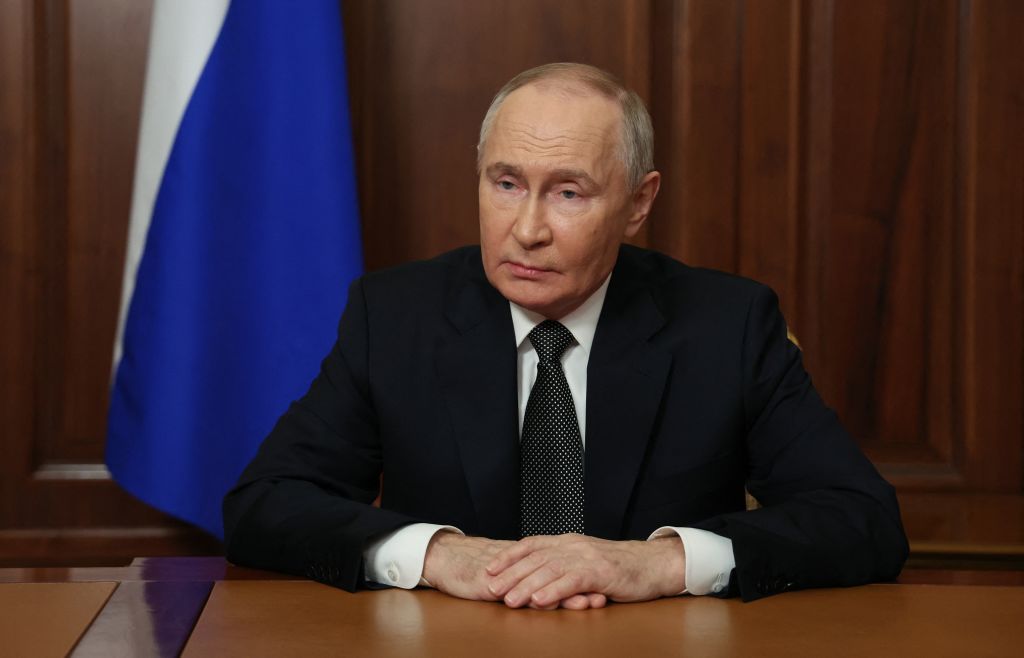
Russian President Vladimir Putin on Nov. 21 announced his country had launched a new type of missile in an attack on Ukraine, a demonstration of military might meant to deter Kyiv's allies from further support against his full-scale invasion.
"There are currently no ways of countering this weapon. The missiles attack targets at a speed of 10 Mach, that's 2.5-3 km per second," he said.
"We are ready for any developments. If anyone still doubts this, they shouldn't. There will always be a response."
Putin said the "new missile" was called "Oreshnik," but analysts and officials have since questioned the novelty of the weapon, as well as how effective it could be to prevent allies' support of Ukraine.
Sign up for our newsletter WTF is wrong with Russia? Sign up
What is the Oreshnik missile?
According to Putin, Oreshnik, which means "hazel" in English, is a new invention that Western air defense systems would not be able to intercept.
The Oreshnik is designed to carry nuclear weapons. However, Putin said it was not armed with a nuclear warhead during this attack.
"In combat conditions, a test was carried out of one of the latest Russian intermediate-range missile systems. In this case, with a non-nuclear hypersonic version of a ballistic missile," he said in a live speech on Nov. 21.
The Oreshnik described by Putin is so new that barely anything is known about it other than what he claimed during his speech.
The reality however, appears to be slightly different.
"I'd be extremely shocked if this missile system had more than 10% new parts," Fabian Hoffmann, a defense expert and doctoral research fellow at the University of Oslo, told the Kyiv Independent.
"I think basically they just took apart the RS-26 or just cannibalized it, and then put together this new missile with a couple of upgrades, and a new paint job."
The RS-26 Hoffman refers to is the RS-26 Rubezh, of which quite a bit is known.
First produced in 2011, and successfully tested in 2012, the Rubezh is a 36,000 kilogram, nuclear capable, intermediate-range ballistic missile (IRBM) with a known range of 5,800 kilometers.
Its declared but undemonstrated range of 6,000 kilometers would only just nudge it into the category of an intercontinental ballistic missile (ICBM).
Its development and deployment was actually halted in 2018 in favor of the Avangard hypersonic glide vehicle.
The Rubezh is equipped with a MIRV payload, which stands for Multiple Independent Reentry Vehicles, which can be seen in videos of the attack on Dnipro.
Footage shows multiple projectiles hitting the ground, but without the large explosions normally associated with conventional missiles or payloads, suggesting it was carrying essentially a dummy warhead.
On Nov. 22, HUR provided further details of Oreshnik, claiming it is actually just a different name for a previously known missile called "Kedr," translated as "cedar," which Russia tested in October 2023 and June 2024.
The missile that struck Dnipro was equipped with six warheads, each containing six submunitions, and reached speeds exceeding Mach 11 (around 13,500 kilometers per hour) as it descended, HUR added.
"I think it's really important that we don't overreact," Hoffman said, adding the missile itself isn't anything particularly new despite what Putin said on Nov. 21.
"I like his 'hypersonic' comment — of course he had to put that in, but every medium-range ballistic missile will reach hypersonic velocity at one point, so this is just nothing," he adds.
A U.S. official speaking on condition of anonymity echoed the sentiment, telling the Kyiv Independent that while "we take all threats against Ukraine seriously, it is important to keep a few key facts in mind."
"Ukraine has withstood countless attacks from Russia, including from missiles with significantly larger warheads than this weapon.
"Let me be clear: Russia may be seeking to use this capability to try to intimidate Ukraine and its supporters, or generate attention in the information space, but it will not be a game changer in this conflict."
What is potentially new is the global geopolitical situation, the level of tension, and the threats of escalation.
The deployment of the missile came shortly after Russia adopted changes to its nuclear deterrence doctrine, which lowered the threshold for a nuclear response. The Kremlin was very clear that the doctrine changes were a signal to the West.
"While the doctrine serves as a signal to decision-makers and national security apparatuses, the missile strike is aimed at the general public," says Matej Kandrík, the executive director at the Adapt Institute.
Russia has deployed nuclear-capable missiles in Ukraine before, but Oreshnik's features, like its MRV (multiple reentry vehicle) capability, "invoke the scary, apocalyptic image of nuclear war and therefore allow our imaginations to do a lot of the work for Putin," Jenny Mathers, senior lecturer in international politics at Aberystwyth University, told the Kyiv Independent.
Russia has been employing covert or overt nuclear threats to deter international support for Ukraine since day one of the full-scale invasion. The Kremlin's "red lines" failed to influence the West from supplying tanks, fighter jets, and long-range missiles.
Putin is now attempting to demonstrate strength after U.S. and British missiles struck targets on Russian sovereign territory.
"Putin's problem is that he is running out of ways to convey this message, given all the times that he and other senior Russian officials have warned against certain courses of action… and hinted at dire consequences but then confined their escalation of the war to increasingly brutal attacks on Ukraine's civilian population and infrastructure," Mathers said.
According to Kandrik, Putin's "ideal outcome would be a prohibition on the use of U.S.-provided deep-strike weapons within its territory and restrictions on future deliveries of such systems." Mathers also sees it as an attempt to deter broader Western support for Ukraine.
Western officials denounced the IRBM launch as an escalation but also made clear that it would not deter their support for Ukraine.
"Deploying this capability will neither change the course of the conflict nor deter NATO allies from supporting Ukraine," NATO spokesperson Farah Dakhlallah said.
The calculus may change after U.S. President-elect Donald Trump takes office in January, as his team is likely to seek a quick settlement to "get out" of the conflict. It remains unclear whether the incoming president, who has often criticized military aid for Ukraine, will keep the long-range strikes policy in place if it could spark further escalatory moves by Russia.
"Putin knows that the clock is ticking for both Russia and Ukraine as we get closer to Jan. 20 and Donald Trump's return to the U.S. presidency," Mathers said.
"Therefore, what Putin needs is to convey the impression that Russia is in a commanding position and can continue to fight for as long as it needs to in order to achieve victory."
Experts say, however, that Oreshnik's launch is not the start of an escalation chain leading to a nuclear apocalypse.
"Let's keep a cool head… . We have a mechanism in place. It's called an escalation ladder with a lot of steps to go through between nuclear saber-rattling or nuclear messaging, which is what's happening now, and the nuclear first use of preemptive strike," Mathieu Boulègue, a senior fellow at the CEPA think tank, told the Kyiv Independent.
"The Russian leadership is not suicidal. The moment they start going a bit too far in nuclear escalation… this will be the end for the Russian regime."
Federico Borsari, a resident fellow at CEPA, pointed out that Russia warned the U.S. about the missile's use in advance and that Iskander and Kinzhal missiles that Russia regularly uses in Ukraine can carry a nuclear warhead as well.
Oreshnik's use "is clearly a political message," but not one indicating a nuclear escalation, he concludes.
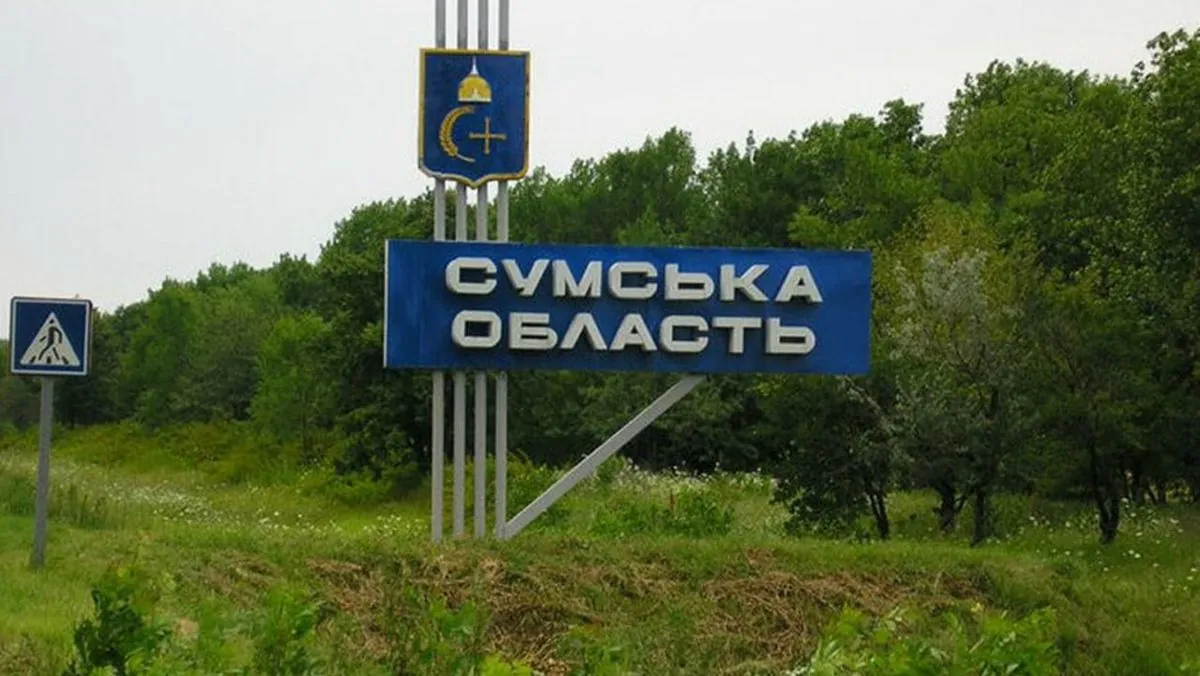
During the day, the occupiers shelled 10 communities in Sumy region, 127 explosions were recorded. The Krasnopilska, Yunakivska and Velykopysarivska communities suffered the most.
During the day, Russians fired 55 times at the border areas and settlements of Sumy region. 127 explosions were recorded. This was reported by the Sumy RMA, UNN reports.
Velykopysarivska community: there was an attack by FPV drones (3 explosions), artillery shelling (12 explosions), and the dropping of explosives from a UAV (6 explosions).
Bilopil community: Russians dropped 11 mines on the territory of the community. There was also an attack by FPV drones (3 explosions).
Krasnopilska community: the enemy attacked with artillery (12 explosions), mortars (8 explosions), FPV drone (1 explosion), and dropped an explosive device from a UAV (12 explosions).
Khotyn community: Russians attacked with artillery (6 explosions), mortars (8 explosions), and an FPV drone (1 explosion).
Seredina-Buda community: an explosive ordnance was dropped from a UAV (2 explosions).
Esman community: the enemy attacked with artillery (8 explosions), mortars (10 explosions), and an FPV drone (1 explosion).
Verkhnya Syrovatska community: Russians attacked with MLRS (3 explosions).
Myropilska community: there were attacks by FPV drones (6 explosions).
Junakivka community: artillery shelling was recorded (13 explosions).
The main event that changed the nature of the war was the use of UAVs – British intelligenceNov 22 2024, 05:03 PM • 11240 views
Nearly 60,000 Russian army personnel are currently stationed in Russia's Kursk Oblast, Suspilne reported on Nov. 22, citing its undisclosed source in the General Staff of Ukraine's Armed Forces.
Earlier reports from Ukrainian authorities said Russia had amassed 50,000 troops in Kursk Oblast, including North Korean soldiers, to attempt to push the Ukrainian military out of its territory.
Ukrainian forces will remain in Kursk Oblast as long as "militarily possible," the source said.
According to the source, the General Staff believes that the Russian troops are planning to reach the border with Sumy Oblast to create a "buffer zone" there, as Ukraine looked to do with its incursion into Kursk Oblast.
Kyiv launched the surprise offensive into Kursk Oblast on Aug. 6. Russian forces have managed to reclaim around half of the territory initially captured by Ukrainian troops.
Russia has also deployed thousands of North Korean troops in the embattled region, with some reportedly already clashing with Ukraine in small-scale battles. Around 11,000 North Korean soldiers were stationed in Kursk Oblast as of Nov. 4.
According to Commander-in-Chief Oleksandr Syrskyi, Russian forces have suffered 7,905 soldiers killed, 12,220 injured, and 717 captured during the three months of the Kursk offensive.
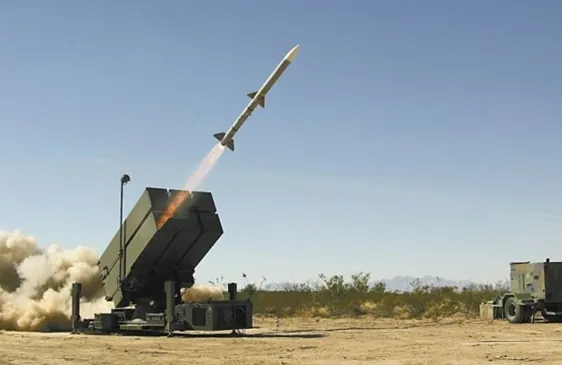
Canada's Minister of Defense has confirmed the delivery of the promised NASAMS air defense systems to Ukraine. The systems were purchased for $406 million, which was announced in January 2023.
Canada's Minister of National Defense Bill Blair said that the long-awaited American-made missile defense systems, which the Canadian government helped to purchase, have been delivered to Ukraine. This was reported by UNN with reference to CBC.
On Thursday morning, Blair told the House Defense Committee that the National Advanced Missile Defense System (NASAMS), for which Ottawa allocated $406 million almost two years ago, is already in the hands of Ukrainians.
I can't give you any more details on that because of operational security, but we were finally able to deliver them, and I think that will make a difference because it will allow them to protect the communities
– Blair told the committee members.
The planned $406 million purchase was announced in January 2023, but the Department of National Defense told CBC News in September that the federal government did not transfer funds to Washington to pay for the system until March 2023.
Washington could not start negotiating a contract with the manufacturers until it had its own and Canada's money in hand, and it had to get Congressional approval to buy NASAM. Congress gave the green light in May 2023.
President: Defense Minister is already working with partners to get new air defense systemsNov 22 2024, 05:13 PM • 8954 views
Russia's ground forces participating in combat against Ukraine amount to almost 580,000 soldiers, Vadym Skibitskyi, the deputy head of Ukraine's military intelligence agency (HUR), told Interfax Ukraine on Nov. 21.
Russia has been looking to increase the number of personnel to fight its war against Ukraine. The Russian government's recently exempted defendants from criminal liability if they join the Russian army and introduced additional financial rewards for contract service to shore up more manpower.
Skibitskyi clarified that the number of Russian troops includes those serving in Russia's Kursk Oblast as they fight off Ukraine's incursion into the area, Interfax Ukraine reported.
About 60,000 Russian military personnel are currently serving in Kursk, Suspilne reported previously, citing its undisclosed source in the General Staff of Ukraine's Armed Forces.
Skibitskyi added that a grouping of almost 35,000 Russian Guard troops, also known as Rosgvardia, was also deployed to the Russian-occupied territories in Ukraine.
Russian President Vladimir Putin said in June that nearly 700,000 Russian troops were fighting in Ukraine. In October, Russian casualties amounted to 600,000 since the start of the full-scale invasion, according to Pentagon estimates.
The figure came at a particularly deadly stage of the war for Russian troops. According to reports from the General Staff of Ukraine's Armed Forces, September was the second-most lethal month for Russian soldiers since February 2022.
As casualties climb, Russian forces continue to press on in eastern Ukraine, focusing on the cities of Pokrovsk and Toretsk in Donetsk Oblast. Outnumbered and outgunned, Ukrainian soldiers are slowly losing ground under Russian pressure.
Unidentified drones attacked the Kapustin Yar training ground in Astrakhan Oblast, from where Russia launched a new ballistic missile at the Dnipro River. At least two UAVs hit site 105 of the range, causing a fire.
Yesterday, on November 21, unknown drones attacked the Kapustyn Yar missile range, from where Russia launched a new Kedr ballistic missile with six warheads on the Dnipro River on the same day. This is reported by the Russian media, UNN reports.
Details
"The Kapustin Yar Strategic Missile Range (military unit 15644) in Znamensk, Astrakhan region, was attacked by drones on the morning of November 21. At least two UAVs were not shot down and struck at the 105th site of the range," RosMedia reported.
It is noted that the consequences of the attack are not known for certain, but the head of the region reported a fire on the day of the attack.
Recall
Russia has used a new missile against Ukraine , which has the characteristics of an intercontinental ballistic missile. President Zelenskyy said that examinations of this weapon are currently underway.
Russian dictator Vladimir Putin was quoted by the Russian media as saying that Russia had attacked Ukraine by testing a "new" medium-range ballistic missile, the Oreshnik.
The GUR reported that a new ballistic missile of the Kedr complex with six warheads was fired at Dnipro. The missile covered the distance from Astrakhan in 15 minutes at a speed of over Mach 11.
Belarus’ authorities are on full alert ahead of upcoming presidential elections in January 2025, new wave of police raids target relatives of political prisoners.
Belarusian police conduct counter-protest drills to prevent “manifestations of extremism and terrorism” during the election campaign.
Russia’s military doctrine was updated, covering Belarus with a Russian nuclear umbrella. No change in the U.S. nuclear posture.
Subscribe to the Newsletter Belarus Weekly Join us
Polish broadcaster TVP appoints new leadership to flagship Belarusian-language channel Belsat amid heated debate over the channel's independence and future.
Record 49 Russian Shahed-type drones entered Belarus’s airspace in October, Belarusian Hajun monitoring group reports.
Belarusian political prisoners’ relatives targeted in new police raids ahead of presidential elections
The Belarusian authorities have launched another wave of raids and arrests across the country ahead of the presidential elections scheduled for Jan. 26, 2025, targeting political prisoners’ relatives, human rights activists reported on Nov. 15.
Since the previous presidential elections in 2020, which sparked nationwide protests, over 3,500 individuals have been recognized as political prisoners by human rights organizations. Nearly 1,300 of them remain behind bars. Over the four-year-long crackdown on dissent in Belarus, 65,000 people have been subjected to politically motivated persecution.
Belarus’s KGB security agency unleashed a new round of raids on Nov. 14, targeting the relatives of political prisoners in the country’s Hrodna and Brest regions, and in the capital Minsk, according to reports by human rights groups Viasna, Dissidentby, and the “Country to Live In” foundation.
The raids constitute the third attack in a “terror campaign” this autumn, potentially targeting several hundred people, says Andrei Stryzhak, the head of Solidarity Foundation BYSOL, a group helping to evacuate dissidents from Belarus and assisting those suffering from persecution in the country.
The activist said the raids were occurring against the backdrop of an “imaginary thaw” in relations between the regime and its opponents, coinciding with the release of 31 political prisoners and the permitting by the authorities of a family visit to Maria Kalesnikava, a prominent opposition leader who had been held incommunicado for over 600 days.
According to BYSOL’s leader, this round of repression has hit the northern Belarusian regions of Polatsk and Navapolatsk.
With the rapid approach of the presidential election, to be held ahead of schedule on Jan. 26, 2025, the regime of Belarusian dictator Alexander Lukashenko has launched a “pre-election intimidation campaign,” human rights activists from the Viasna Center report.
Belarusian police conduct ‘extremism and terrorism prevention’ exercises ahead of presidential elections
Belarusian police are to conduct exercises in Minsk and regional centers to ensure “the prevention of manifestations of extremism and terrorism” ahead of the January presidential elections, the Interior Ministry announced on Nov. 19.
The 2025 Belarusian presidential elections, scheduled for Jan. 26, are intended to extend the rule of the country’s dictator, Alexander Lukashenko, for a seventh consecutive term in office. The previous presidential race sparked protests nationwide after the pro-Lukashenko Central Elections Committee announced his victory amid widespread claims of vote rigging.
The police drills, which were scheduled to take place between Nov. 19 and 22, were to “demonstrate the readiness” of the police to respond to possible “complications of the situation in the country during the election campaign.” The exercises involve practicing street closures, and using smoke, flash and gas bombs and special equipment to disperse protests.
“The goal (of the exercises) … is to prevent manifestations of extremism and terrorism, the involvement of citizens in illegal actions, and the suppression of violations of public order,” the Interior Ministry said in a post on its official Telegram channel.
A video accompanying the post shows the detention of alleged offenders, scenes from a polling station, and shots of riot police countering groups of people with placards.
Belarus Security Council Secretary Alexander Volfovich said the exercises were routine ones, but claimed that exiled opponents of the Lukashenko regime “are using all levers and opportunities to try to sway the situation again.”
Sviatlana Tsikhanouskaya, the Belarusian opposition leader who claimed to have beaten Lukashenko in the 2020 presidential election, said the exercises were intended to intimidate the opposition. “Training to suppress citizens isn’t a sign of strength – it’s a sign of fear,” she wrote on X.
Putin approves new nuclear doctrine allowing nuclear response to attack on Belarus
Russian President Vladimir Putin has signed Russia’s updated nuclear doctrine, providing for nuclear retaliation in the case of armed aggression against Belarus, according to a presidential decree published on the government website on Nov. 19.
The revised deterrence policy suggests that “aggression against the Russian Federation and its allies by a non-nuclear state with the support of a nuclear state” could trigger a nuclear response.
The updated doctrine also considers any large-scale cross-border attack involving aircraft, missiles, or drones to be grounds for consideration of a nuclear strike. The publication of the doctrine comes on the heels of the United States giving Ukraine permission to strike targets in Russia with the U.S.-supplied long-range missiles.
The White House National Security Council said that Russia’s lowered threshold for nuclear retaliation did not come as a surprise, but also provided no reason for the United States to adjust its own nuclear posture.
Putin first proposed making changes to the doctrine on Sept. 25 amid discussions in the United States and the U.K. about allowing Ukraine to strike deep into Russian territory with Western-supplied long-range conventional missiles.
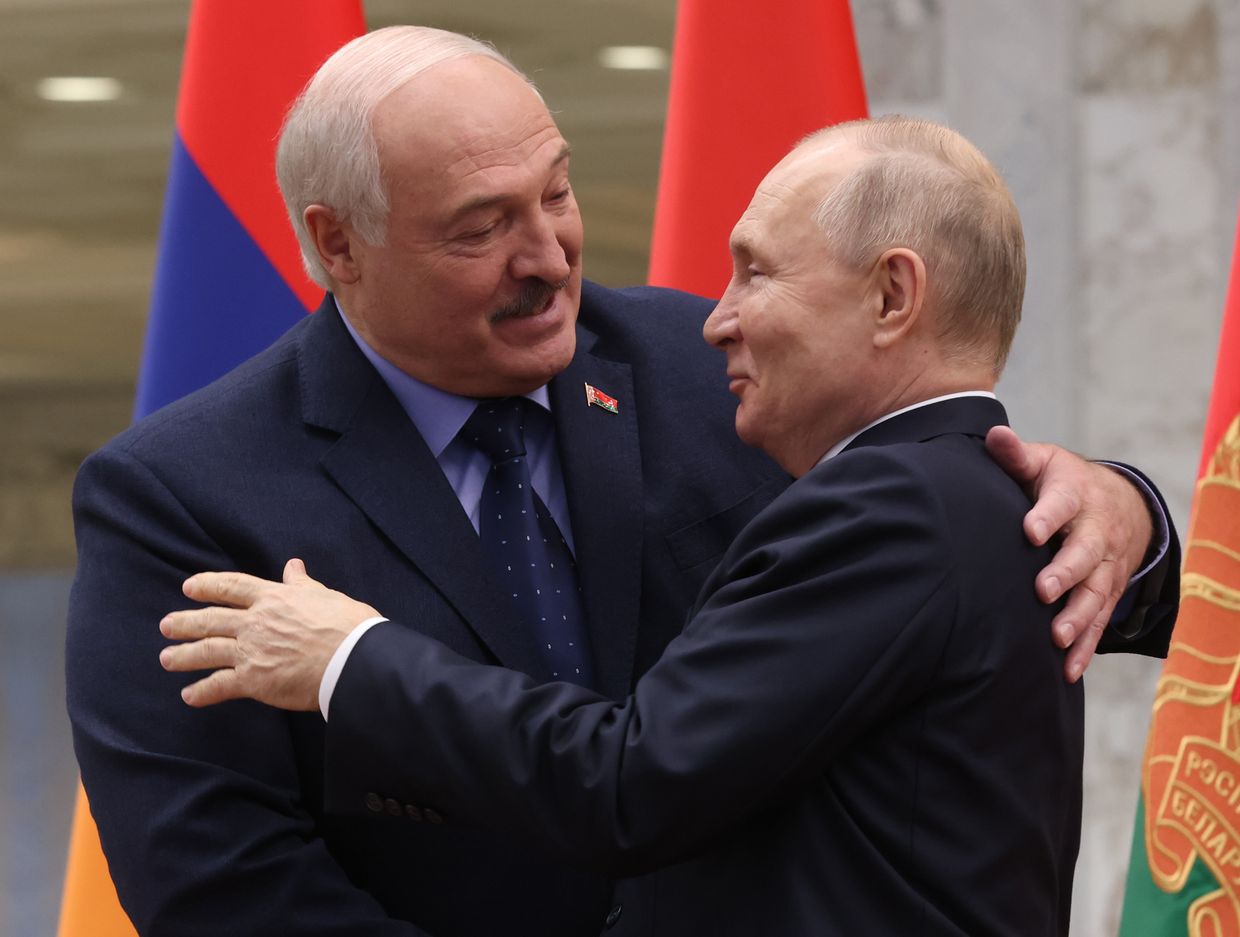
Belarusian dictator Alexander Lukashenko, an ally of the Kremlin, welcomed the inclusion of Belarus under Russia’s nuclear umbrella, saying it was “long overdue.”
“An attack on Belarus is World War III,” Lukashenko said on Sept. 27, alleging NATO countries were deploying troops at the border with Belarus.
Although a non-nuclear state, Belarus reportedly has Russian nuclear weapons deployed on its territory following the signing of the agreement on May 25, 2023 on placing Russian non-strategic nuclear weapons on Belarusian territory. Lukashenko also attended Russian nuclear military drills, during a sudden inspection of the country’s tactical nuclear weapons launchers in May 2024.
Belarusian Hajun: 49 Russian Shahed-type drones crossed into Belarusian airspace in October
Forty-nine Russian Shahed-type combat drones entered Belarus’s airspace in October — the highest number recorded in a month, the Belarusian Hajun war monitoring project wrote.
Russian Shahed-type drones began to cross regularly into Belarus in July this year, with Ukraine reportedly using electronic warfare measures to send the drones off course. Amid intensified attacks against Ukraine in subsequent months, incursions of Russian drones into Belarus surged from infrequent, isolated instances to 27 stray drones being spotted over Belarus in September.
Throughout October, 33 stray drones returned from Belarus to Ukrainian territory, while the location of 14 was lost, according to the monitoring group. One drone crashed in Kalinkavichy, roughly 60 kilometers from the Ukrainian border, overnight on Oct. 3, after three Shahed drones flew into Belarusian airspace.
Lukashenko was traveling by helicopter over the country at the time of the drone incursion.
Another UAV was downed by the Belarusian Air Force over the country’s Homel Oblast overnight on Oct. 20. It was the second instance of the Belarusian military downing a Russian UAV since the incursions began.
“At the moment, there is no reason to believe that Russian UAVs of the Shahed-136/131 type will stop flying into Belarus in the near future,” Belarusian Hajun said in its report.
Lukashenko claimed on Oct. 4 that the Belarusian Air Force downs “a lot of drones,” both Russian and Ukrainian, and attributed the incursions to the work of radio-electronic warfare equipment and mistakes by drone operators.
No proof of Ukrainian drones entering Belarusian airspace has ever been presented.
Minsk, Russia’s staunchest ally, has never publicly raised objections with Moscow over the reported drone incidents.
Polish broadcaster merges exiled Belarusian-language TV channel with international editorial office, despite calls for it to remain separate entity
Polish Public Broadcaster TVP has appointed new leadership to its flagship broadcaster for Belarus, Belsat, in a move to integrate the exiled Belarusian-language television channel into its Center for Foreign Language Programs – despite calls for Belsat’s operations to remain independent.
On Nov. 15, TVP appointed Alina Koushyk, a former anchor and producer at Belsat, as the head of the Belarusian editorial office. Koushyk, who had left Belsat two years ago for a role in Belarusian opposition leader Sviatlana Tsikhanouskaya’s shadow cabinet, said, “We aimed to advocate for Belsat to remain an independent channel, but unfortunately, our efforts did not succeed.”
The merger comes amid broader restructuring of Poland’s state media following the defeat of the conservative Law and Justice (PiS) party in the 2023 parliamentary elections, with the new government saying it was seeking to “restore impartiality” to TVP.
The restructuring implies Belsat’s formerly separate airtime will be split into three sections – six hours each for Belarusian-language programming, the Russia-focused news channel Vot Tak, and a Ukrainian-language broadcaster that has yet to be formed.
Koushyk replaces Aleksy Dzikawicki, a co-founder and acting director of Belsat, who on Nov. 19 requested that his contract be terminated. Dzikawicki said he had requested early dismissal to avoid having to carry out an order to formally liquidate Belsat as an independent entity within TVP.
Belsat started broadcasting in 2007 as the first Belarusian-language TV channel, offering coverage in the Belarusian language, which has been gradually excluded from Belarusian public life by the Lukashenko regime.
Belarus is low in the press freedom rating, ranking 157th among 180 countries in 2023.
Almost no independent media are left in Belarus due to the Lukashenko regime’s efforts to stamp out a free press, which have seen 40 media professionals prosecuted, outlets being branded as “extremist,” and punishments introduced for sharing “extremist” content.
The potential downsizing of Belsat to only one of several editorial offices within the Center for Foreign Language Programs has drawn criticism from Belarusian opposition leaders.
However, TVP World director and editor-in-chief Michał Broniatowski has denied that Belsat will lose its independence after the merger, saying “Belsat’s editorial office will be fully Belarusian, there will be no ‘orders’ to cover what the Foreign Ministry wants, or not to cover what it does not want covered.”
In March, Belsat, lost 47% of its total financing from the Foreign Ministry and Poland’s TVP, and its longtime director, Agnieszka Romaszewska-Guzy, was dismissed.
The International Press Institute (IPI) has urged Poland’s Foreign Ministry to reconsider the decision, warning of the “disastrous impact” on the accessibility of independent Belarusian news. While acknowledging Poland’s financial burden, the IPI called for measures to ensure Belsat’s survival as a vital platform for European security.
The restructuring is set to be finalized on March 1, 2025.
Russia has units of experimental Oreshnik missiles in service. Ukraine is discussing with the United States the modernization of the Patriot and the acquisition of new air defense systems to counter these missiles.
Russia has units of experimental "Oreshnik" missiles in its arsenal, now Ukraine is negotiating with the United States to modernize existing Patriot systems or supply other air defense systems to Ukraine that are capable of eliminating these ballistic missiles in the sky over Ukraine. This was reported to Suspilne by sources in the General Staff, according to UNN.
Details
Suspilne's sources in the General Staff noted that "Russia has only a limited number of experimental missiles that were launched along the Dnipro River." "It is now known that this missile is similar in type to the Yars missile system," the report said.
The source called the use of this ballistic missile on the city of Dnipro on November 21 "a demonstrative step to intimidate.
According to the source, "Ukraine is currently negotiating with the United States to modernize its existing PATRIOT systems or supply other air defense systems to Ukraine that are capable of eliminating these ballistic missiles in the skies over Ukraine.
AddendumAddendum
President Volodymyr Zelenskyy claimedthat Russia had used a new Russian missile against Ukraine. All the characteristics – speed, altitude – of an intercontinental ballistic missile.
Russian dictator Vladimir Putin saidthat Russia attacked Ukraine by testing a "new" medium-range ballistic missile, the Oreshnik.
The Russian "Oreshnik" missile launched on the Dnipro River was created in violation of the 1987 Intermediate-Range Nuclear Forces Treaty, to which the United States and Russia were parties until 2019.
Kedr complex: DIU provides details on new ballistics used by Russia to hit DniproNov 22 2024, 10:51 AM • 12901 view
Russia gave North Korea oil and anti-aircraft missiles in return for military support in Ukraine, according to a South Korean official, and satellite imagery analysis.
North Korea has dispatched 10,000 troops to Russia, with most of them deployed in the western Kursk Oblast and taking part in combat, a Pentagon spokesperson said during a press briefing on Nov. 12.
South Korea's national security advisor Shin Won-sik on Nov. 22 said Moscow had provided Pyongyang with economic and military technology in exchange for the troops.
"It is understood that North Korea has been provided with related equipment and anti-aircraft missiles to strengthen Pyongyang's weak air defense system," Shin said in an interview with South Korea’s SBS News.
Elsewhere, the BBC on Nov. 22 reported that Russia is estimated to have supplied North Korea with more than a million barrels of oil since March this year.
The claim was based on an analysis of satellite imagery by the Open Source Centre, a non-profit research group based in the U.K.
U.K. Foreign Secretary David Lammy told the BBC that the oil is payment for weapons and troops sent to Moscow to fuel the war in Ukraine.
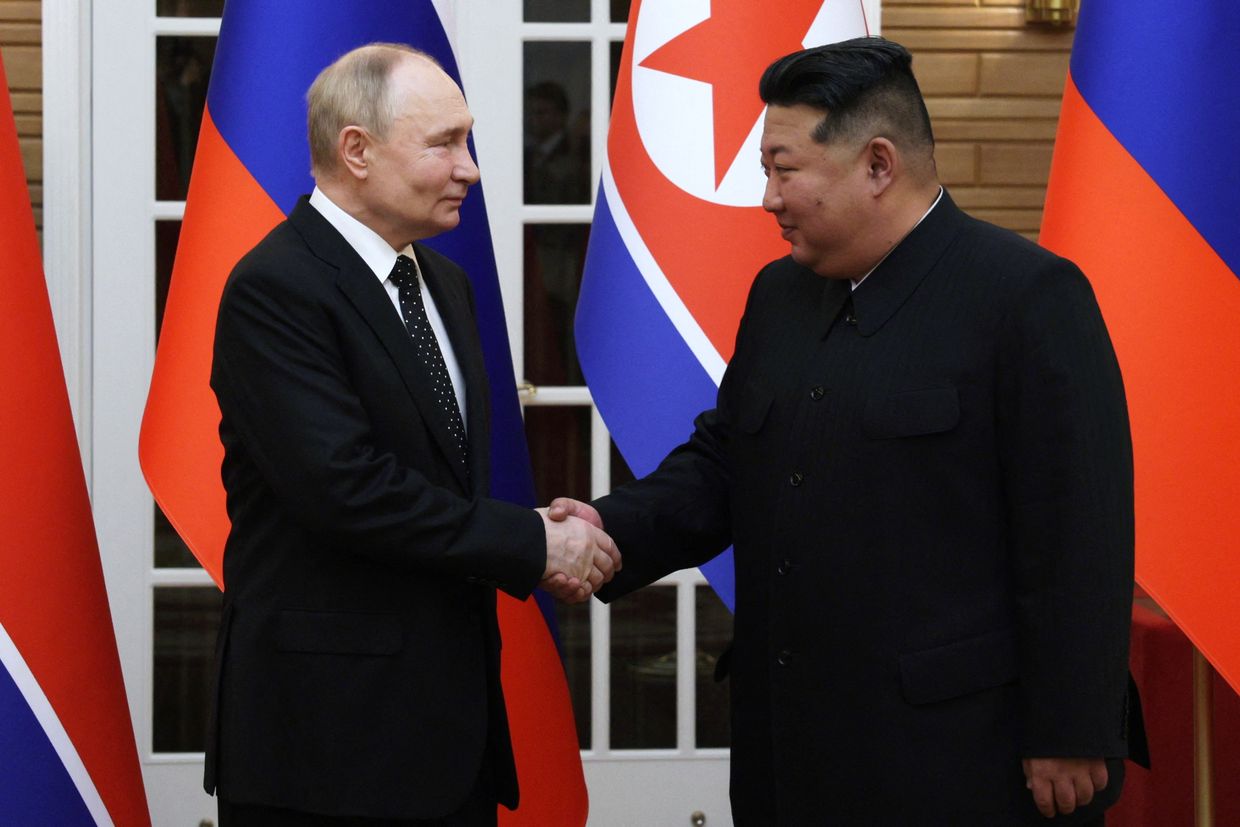
North Korean leader Kim and Russian President Vladimir Putin signed a strategic partnership agreement in June. Under the treaty, the two countries pledge to help each other if either is attacked.
North Korean Foreign Minister Choe Son Hui visited Moscow and met with Russian Foreign Minister Sergei Lavrov on Nov. 4.
"Our country will stand firmly by our Russian comrades until the day of victory," Choe said, calling Moscow's offensive against Ukraine a "sacred struggle."
Valerii Zaluzhnyi, Ukraine's former commander-in-chief and current ambassador to the U.K., claimed that the direct involvement of Russia's allies such as North Korea in the war against Ukraine was evidence of a global conflict.


 The Kyiv IndependentChris York