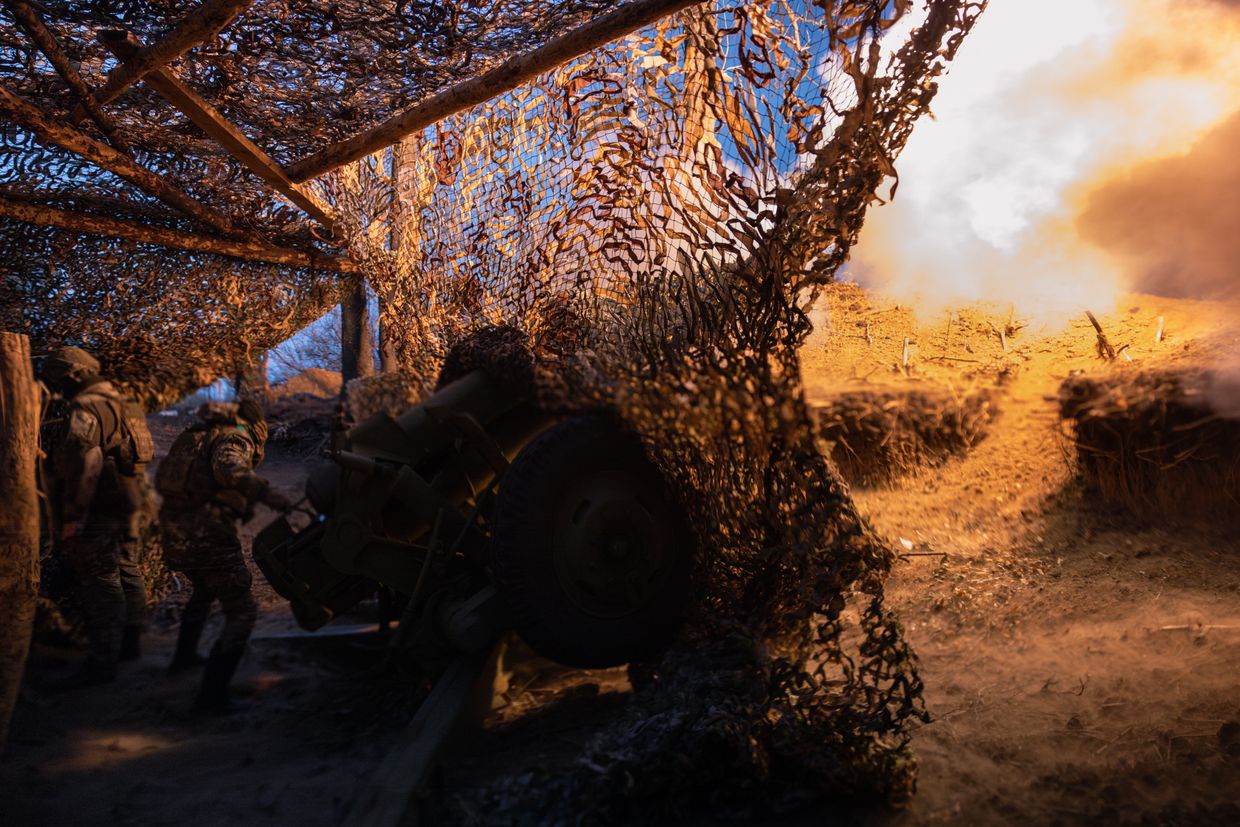
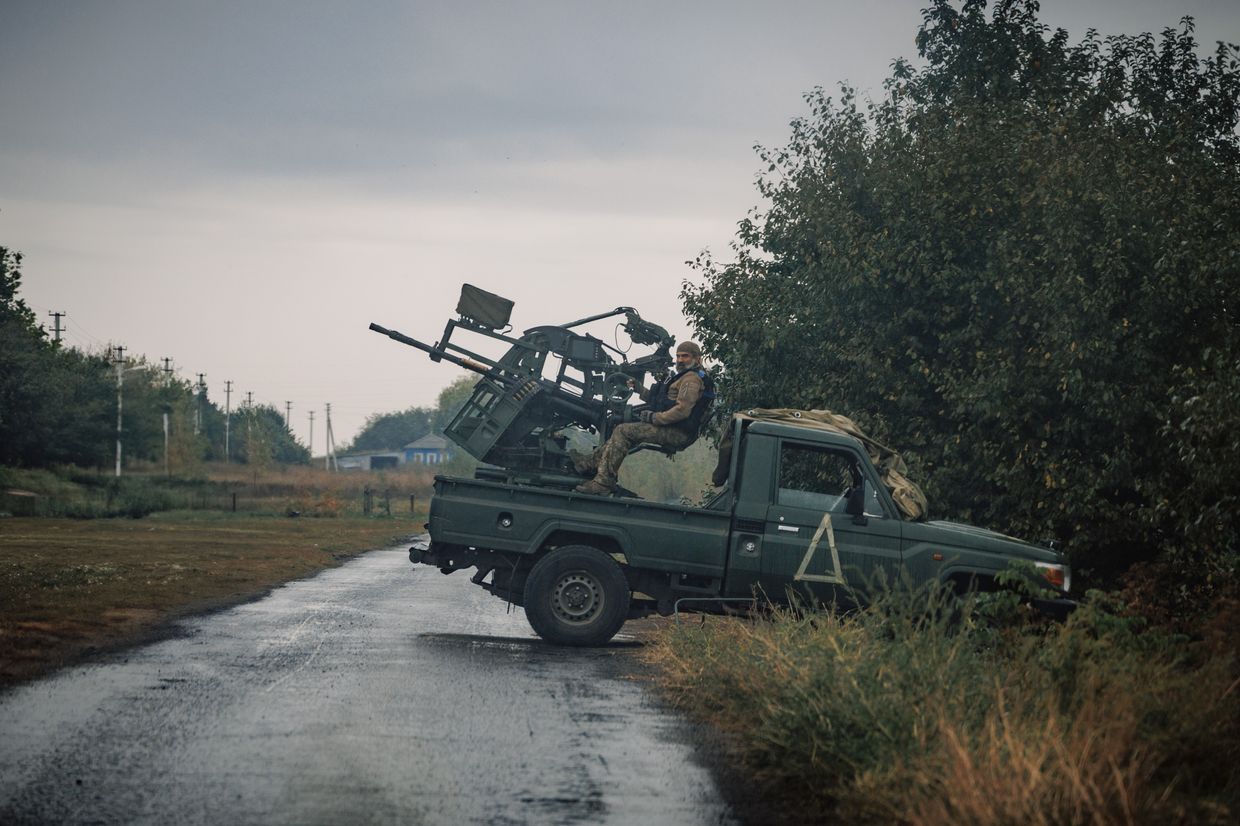
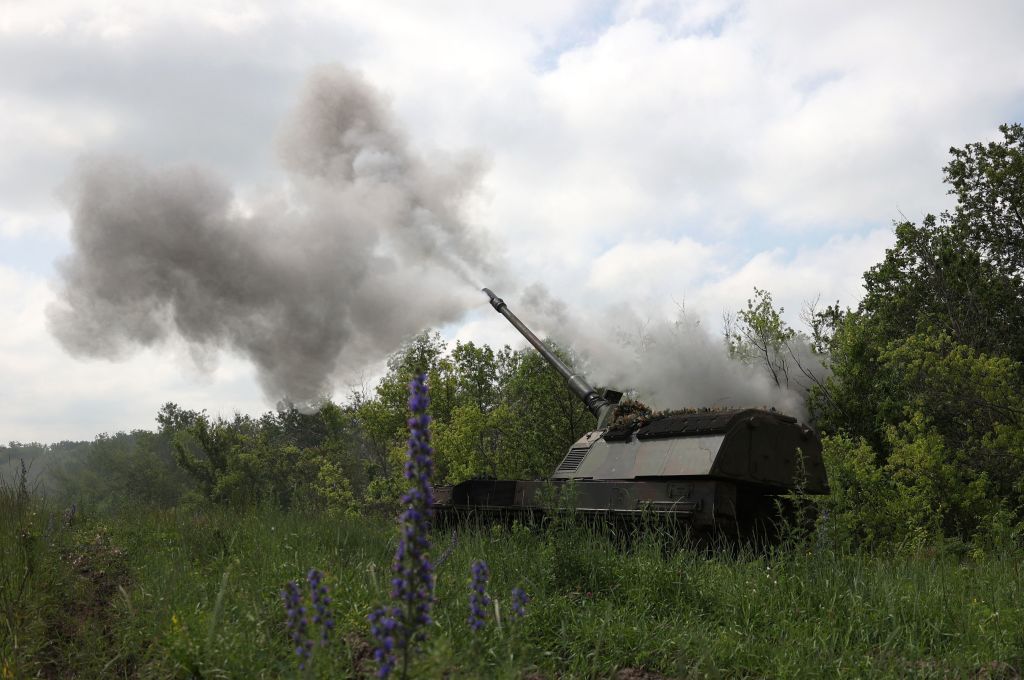
Germany has delivered fresh military aid to Ukraine, including four self-propelled Panzerhaubitze 2000 howitzers, three Gepard anti-aircraft guns, and more, the German government said on Nov. 20.
Initially criticized for its sluggish delivery of military aid to Ukraine following the beginning of the full-scale invasion, Berlin has become the second-largest provider of military equipment after the U.S.
Germany has handed over ammunition for infantry fighting vehicles Marder, 41,000 rounds of 155 mm ammunition, and several reconnaissance drones, including Vector, Hornet XR, Golden Eagle, VT-4 Rochen, Songbird, and others.
Ukraine received medical equipment, 47 mine-resistant ambush-protected vehicles (MRAP), seven howitzer tubes M109 155 mm, three mine clearing tanks Wisent 1, two bridge-laying tanks Beaver, as well as eight air assault vehicles Caracal.
The tranche also included 340 precision rifles HLR 338 with 74,000 rounds of ammunition, 8,000 rounds of 40 mm ammunition, and 100,000 rounds of ammunition for firearms from Bundeswehr and industry stocks.
According to an agreed-upon federal budget, Germany's military aid to Ukraine will be cut by half next year when compared to 2024. Berlin has allocated around 8 billion euros ($8.7 billion) to Kyiv in 2024, whereas the next year's support is currently set at 4 billion euros ($4.35 billion).
Several media outlets reported on Nov. 17 that U.S. President Joe Biden permitted Ukraine to use its ATACMS missiles to strike against targets on Russian soil. German Chancellor Olaf Scholz, in turn, is not planning to supply Ukraine with Taurus missiles despite the U.S. easing restrictions on long-range strikes.
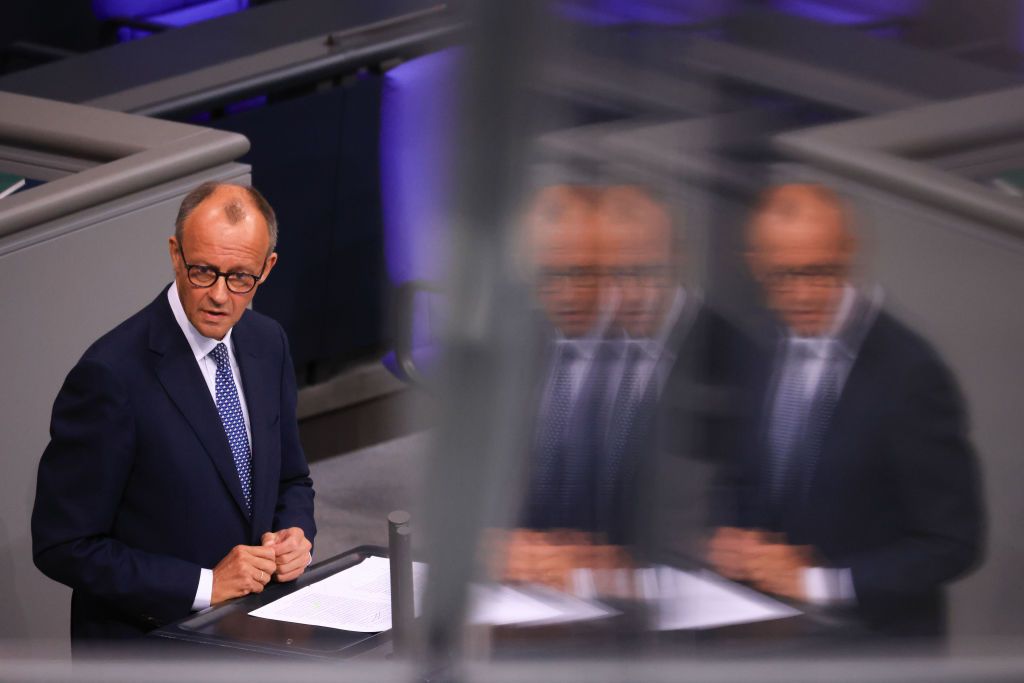
Berlin's policy may soon shift as Germany heads toward snap elections on Feb. 23, with the center-right opposition alliance CDU/CSU currently leading the polls and threatening to oust Scholz.
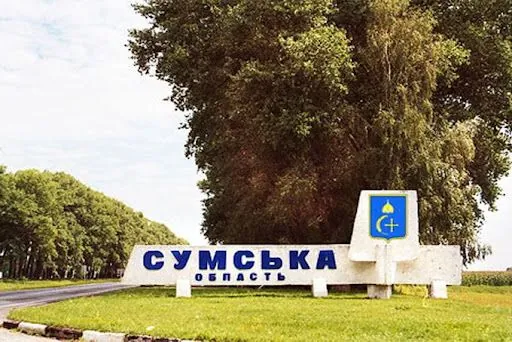
Enemy troops fired 33 times at the border areas of Sumy region, 77 explosions were recorded.
Terrorists shelled Sumy region once again. Unfortunately, there are victims. This was reported by the Sumy Regional Military Administration, UNN reports.
Details
Enemy forces fired 33 times at the border areas and settlements of Sumy region, 77 explosions were recorded. The affected communities include Khotyn, Yunakiv, Miropil, Bilopil, Krasnopil, Velykopysariv, Andriyashiv and Esman.
In the Esman community, the enemy attacked with an FPV drone and mortars, and in Andriyashivska, a drone attack was recorded, which damaged 4 private houses and a church building.
The Velykopysarivska community was subjected to tank and rocket attacks, while Krasnopilska community was subjected to mortar attacks, mine drops and UAV strikes, where one civilian was injured and a house and a car were damaged.
Shelling also took place in other communities: FPV drones and mortars were used in Khotynska and Bilopilska, and an attack with an aerial bomb was recorded in Yunakivska.
The first reports of Ukraine striking deep inside Russia with U.S.-supplied ATACMS emerged on Nov. 19, marking a long-awaited shift in White House policy that could bolster Ukraine's defense against a 50,000-strong joint Russian-North Korean force assembled against them.
President Joe Biden's decision to finally grant Kyiv permission to use ATACMS is likely one of the last significant contributions to the war in Ukraine before Donald Trump takes up residence in the White House on Jan. 20.
With election promises of ending the war in "24 hours," and cabinet appointments marked equally by inexperience and disdain for the fate of Ukraine, a Trump-led U.S. will have a profoundly different stance towards Kyiv than the previous administration.
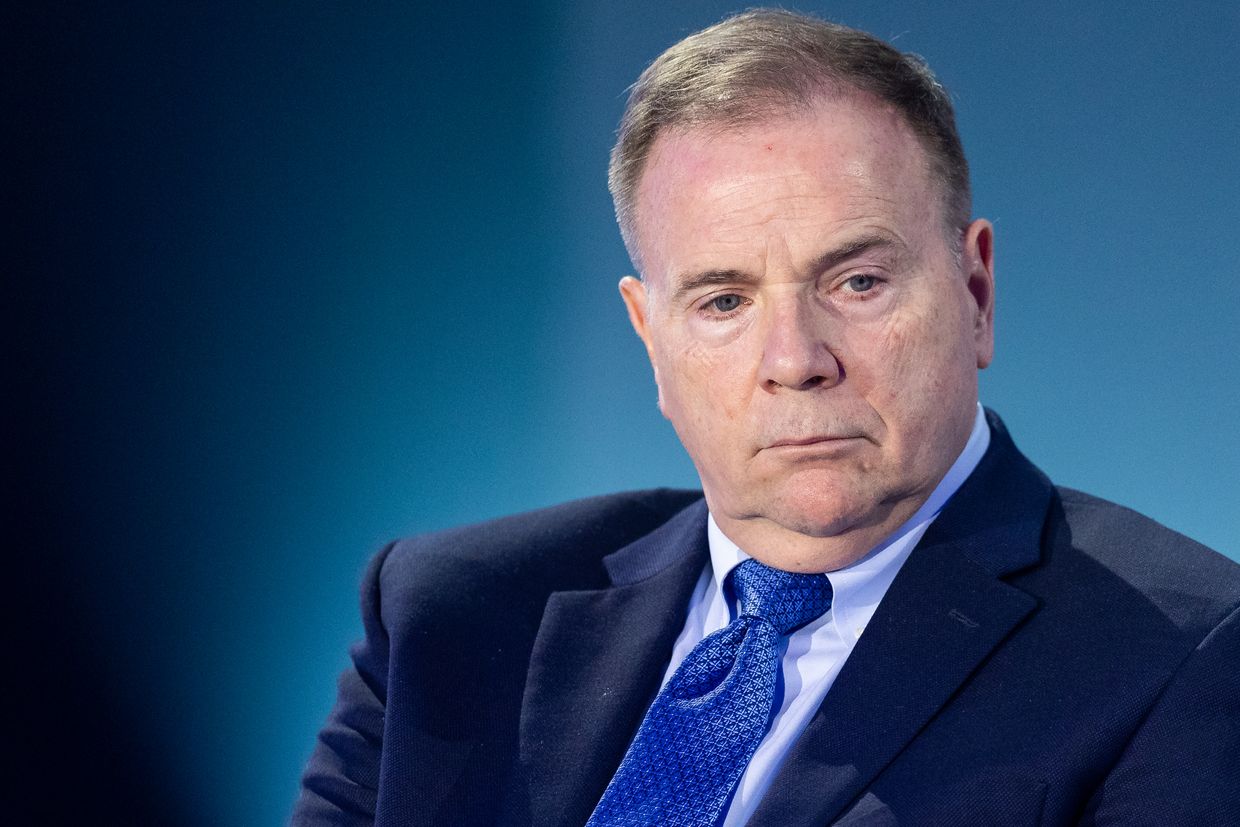
A few hours before reports of the strikes in Bryansk Oblast, the Kyiv Independent sat down with retired U.S. General Ben Hodges for his take on ATACMS, the prospect of peace negotiations, and how he feels personally about Ukraine's future.
Editor's note: This is a transcript of the video interview that has been edited for clarity and brevity.
The Kyiv Independent: This week, we heard the news that the Biden administration is going to authorize long-range strikes inside Russia. What do you think is the significance of the timing?
Ben Hodges: I'm not sure why this finally happened. Obviously this is something that should have happened two years ago. I'm glad it did happen, but I'm not sure what finally caused it.
Perhaps it had something to do with North Korea's involvement. I'm not sure. I am still frustrated that it's not a complete lifting of restrictions, that it still applies only to use against Russian and North Korean forces that are attacking the Kursk bridgehead. So it's better than nothing, but it still falls short of what's actually needed.
The Kyiv Independent: A lot of people have pointed out that this probably won't be a game changer, but what will Ukraine be able to do now that it wasn't able to do before?
Ben Hodges: I've never liked the phrase 'game changer' because the only thing that would really be a game changer would be if the Biden administration, and other European governments would say, "we want Ukraine to actually win this war" and then commit to that. New weapons or permissions by themselves are not game changing.
Nonetheless, this is still a positive step. I would anticipate that the Ukrainian General Staff will use these to target Russian headquarters, logistics, and artillery. That's how you defeat mass, and mass is the only advantage that the Russian forces have, the big numbers (of troops).
And if you can destroy the headquarters that are necessary to coordinate their movements and their support, if you can destroy the artillery that enables their attacks, and if you can destroy the logistics that provide the artillery ammunition, then I think you can really degrade the effectiveness of Russian mass attacks.
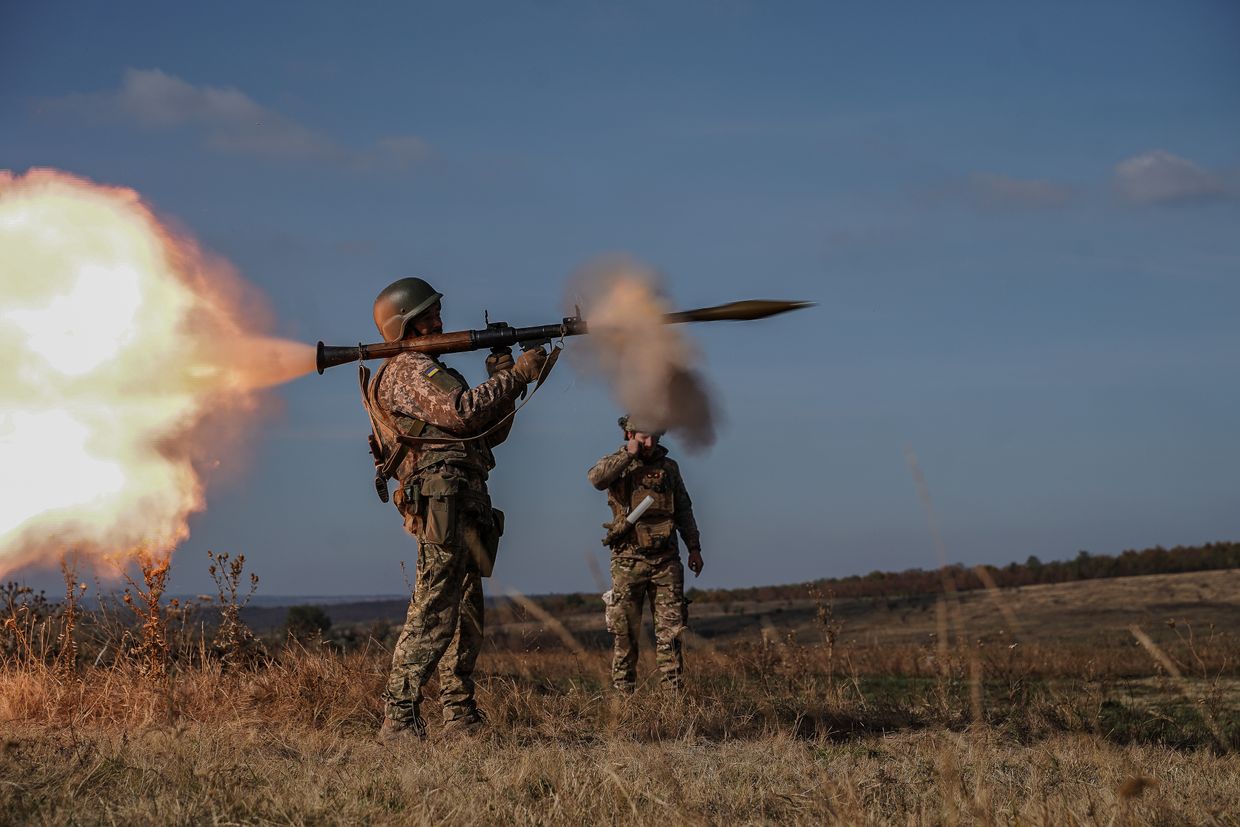
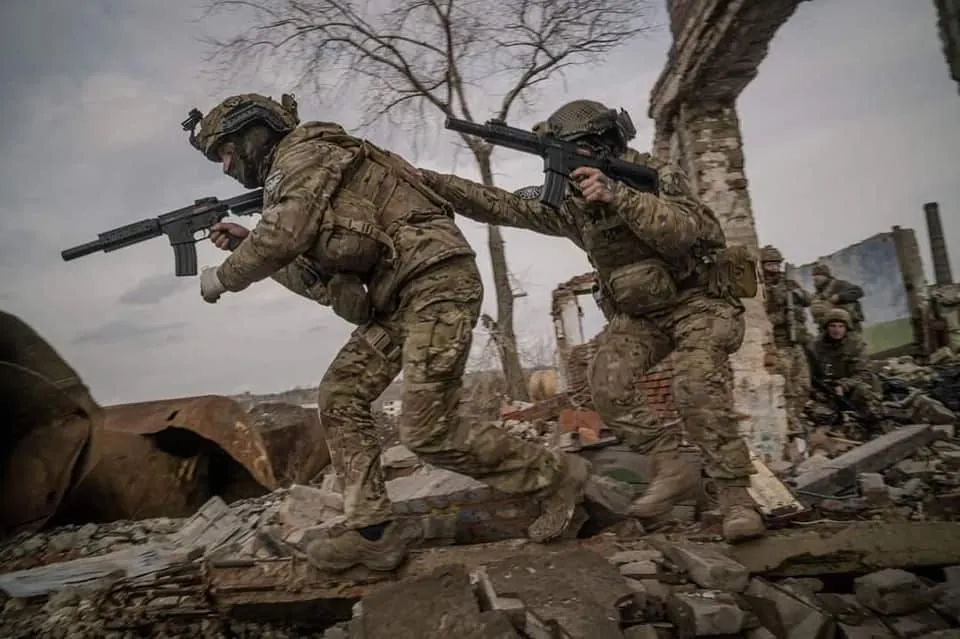
Members of the unit Dnipro One of the Joint Assault Brigade of the National Police of Ukraine "Luty" operate a Soviet-era howitzer D-30 near Toretsk, Ukraine on Nov. 9, 2024. (Diego Fedele/Getty Images)A Ukrainian serviceman of the 56th Motorized Brigade fires a grenade launcher during training in Donetsk Oblast, Ukraine on Oct. 22, 2024. (Yevhenii Vasyliev/Global Images Ukraine via Getty Images)
The Kyiv Independent: With the election of Donald Trump, there's a sort of a deadline now. Trump has said he's going to try and stop or freeze the war quickly. Do you think the timing of the decision for ATACMS has that in mind?
Ben Hodges: The Biden administration would certainly have been very conscious of the fact that the inauguration is only two months away, and that possibly influenced the thinking somehow. I'm not sure. But as I reflected on this all day yesterday, this is actually a gift from the Biden administration to the Trump administration, to have this policy in place so the Trump administration can just leave it (in place) or use it as a point of increased leverage against the Russians — or not.
Of course, I don't know what the Trump administration is going to do based on everything they've said during the campaign. I'm not hopeful that they're going to be supportive of Ukraine, but I am hopeful that the leadership of the Republican Party in Congress, both in the Senate and in the House, who are mostly pro-Ukraine, pro-NATO, pro-transatlantic, will be able to convey to the new administration how important it is that the United States to not turn its back on Ukraine. We'll see if they have the ability and the courage to push back against Trump's designs to end the war in 24 hours.
And, of course, these kinds of ridiculous assertions that he can end the war in 24 hours or freeze it somehow assume that Ukraine will just go along with it or that Eastern European countries — who are not confused about the threat that is Russia — that they'll just go along with it. I doubt that's the case because most of them know that they will end up paying the price if this conflict is frozen. None of them believe for a second that (Russian President Vladimir) Putin would ever live up to any agreement.
So I think once the Trump administration is in place, and they're faced with the reality of owning the situation and the implications, then perhaps that will moderate some of the language that comes from the incoming administration.
The Kyiv Independent: And how important is it that Ukraine retains some territory in Kursk Oblast by the time that Trump comes into office? Because if Trump does try to impose a freeze of the front lines, obviously Ukrainian troops on Russian soil greatly complicates things for the Kremlin.
Ben Hodges: This was one of the reasons I have been a supporter of the Ukrainian decision to launch the Kursk counteroffensive because it does create a real problem for the Kremlin. Both in terms of whether or not to commit forces to try and eliminate this bridgehead and in terms of some sort of negotiations coming up.
So, it does create a problem, and I think this was a brilliant move by the Ukrainian General Staff. Now, at the end of the day, the Ukrainian General Staff will have to decide if it is worth it. Are they getting the benefit of this versus the casualties and the costs of hanging onto it? We'll see. They will know much better than I ever will.
But again, Trump cannot impose a freeze on this conflict. There are no American soldiers there. Europe is providing more aid combined than the United States is.
So I think the idea that somehow Trump can impose a freeze or impose a ceasefire, that's just not what's going to happen. He can, of course, demand it. He can, of course, stop all aid.
But I think that people with cooler heads will understand that it's in our interest that Europe remains stable, secure, and prosperous for our own economic reasons. And China is watching to see how we handle this.
The Kyiv Independent: What sort of leverage will Trump have over Putin to try to get him to stop? Obviously, in Donbas, the Russian offensive is still relatively slow, but it's gaining pace. So Putin does have the upper hand there. So what kind of thing can Trump do to try and force Putin into a deal?
Ben Hodges: There are so many things that we have not done yet. We have not imposed all the sanctions that could have been imposed. We have not taken steps to block Russia from exporting oil and gas to China and India, which is what generates the money necessary for Russia to be able to buy ammunition and weapons from Iran and North Korea.
We've done nothing against those things. So there are still economic tools remaining for the incoming administration. And, of course, he could say, 'I'm going to accelerate delivery of ATACMs,' for example, or other capabilities.
So, the incoming president has a lot of leverage to build on what the Biden administration has already done, which has fallen well short of what I think could have been done. So, Trump will have a lot of leverage against Putin. Does he want to use that? That's what remains to be seen.
The Kyiv Independent: You mentioned China just before. What do you think China is hoping to see when Trump takes office?
Ben Hodges: I think the Chinese are waiting to see if the U.S. and our allies have the political will to actually defend these post-war constructs of respect for sovereignty, freedom of navigation, respect for international law, respect for international agreements. If we're not willing to do that in Europe, they may think we're not willing to do that out in the Indo-Pacific region, where, frankly, it will be much more difficult to do — it takes nine days for a U.S. Navy ship to go all the way from Hawaii to Japan, for example.
I think the Chinese are going to be watching that. They'll be watching to see if Trump follows through on the threat to impose these massive tariffs that will have a significant impact.
I think, like everyone, they want to know how much of what was said in the campaign is actually going to happen in reality.
The Kyiv Independent: Earlier on, you alluded to the differences in how particularly Eastern European states perceive the Russian threat and how America perceives the Russian threat. How do you think that's going to play out with an increasingly isolationist U.S.? Is Europe going to be able to fill that gap if aid slows or if they reduce support in other ways?
Ben Hodges: Well, they certainly can. The combined economies of the European Union — forget Canada and the U.K. — the combined economies of the European Union are about eight times greater than Russia. So this is about political will.
It's not about economic capacity or industrial capacity. It's about political will. And so what I would hope is that Europe, led by a new German government coming in February, probably led by Friedrich Merz and the CDU, Poland under Donald Tusk, Finland under Alexander Stubb, and Italy under Prime Minister Meloni, that together they could convince the American president 'hey, don't turn your back on Europe.'
We still need an American nuclear deterrent. But we, Europe, can pick up the slack if the U.S. needs to back away from its support for Ukraine. There's a lot of potential in Europe. The question is, do they have the political will?
The Kyiv Independent: And just to finish with, how do you personally feel about the future for Ukraine?
Ben Hodges: I've always believed in the eventual victory of Ukraine, not because I want it to be so, but because I have seen what Ukraine has been able to accomplish over the last 11 years, that they have stopped Russia without consistent, decisive aid from the U.S. or from Europe. I mean, this war started in 2014.
So all the people talking about how today is 1,000 days — that's only 1,000 days since the large-scale invasion. It's been almost 7,000 days since Russia first invaded Ukraine. And after 11 years, almost 7,000 days, Russia still only controls about 20% of Ukraine, and they have suffered devastating losses.
Russian industry is in tatters. And so I think it's clear to me that there's no way Russia can just knock Ukraine out of the war unless we in the West quit. So this sort of resilience and determination by Ukrainian soldiers and people, emergency services, is something that we're all going to be studying and admiring for a very long time.
Introducing official merch from the Kyiv Independent Shop now
According to DeepState, the occupation forces have made gains in the areas of Daryne, Kurakhove and other settlements in the east.
The enemy continues its offensive in several areas in eastern Ukraine. This is reported by DeepState, according to UNN.
Details
Occupation forces continue to advance in several locations in eastern Ukraine. According to the latest reports, enemy forces have achieved results in the areas of Daryne, Kurakhove, as well as in the vicinity of Nyzhnyi Klyn and Kremenne, Rozdolne, Novodonetske and Dalne.
Recall
According to the General Staff, the aggressor carried out one missile strike, 61 air attacks using 91 guided aerial bombs, over 560 kamikaze drone attacks and over 3,000 attacks on Ukrainian troops' positions and settlements using various types of weapons.
DeepState: Occupants seized Nova Illka and are advancing on several frontsNov 20 2024, 02:50 AM • 16613 views
Ukraine strikes Russia with Storm Shadows for the first time, Bloomberg reports
Biden approves delivery of anti-personnel mines to Ukraine in light of Russian gains in east
Ukrainian drones allegedly strike Russian factories, weapons arsenal
North Korean troops in Russia to be led by secrecy-shrouded general close to Kim Jong Un, WSJ reports
Putin open to discussing Ukraine ceasefire with Trump, Reuters reports
Russian officials threaten US over long-range strikes, allude to nuclear doctrine changes
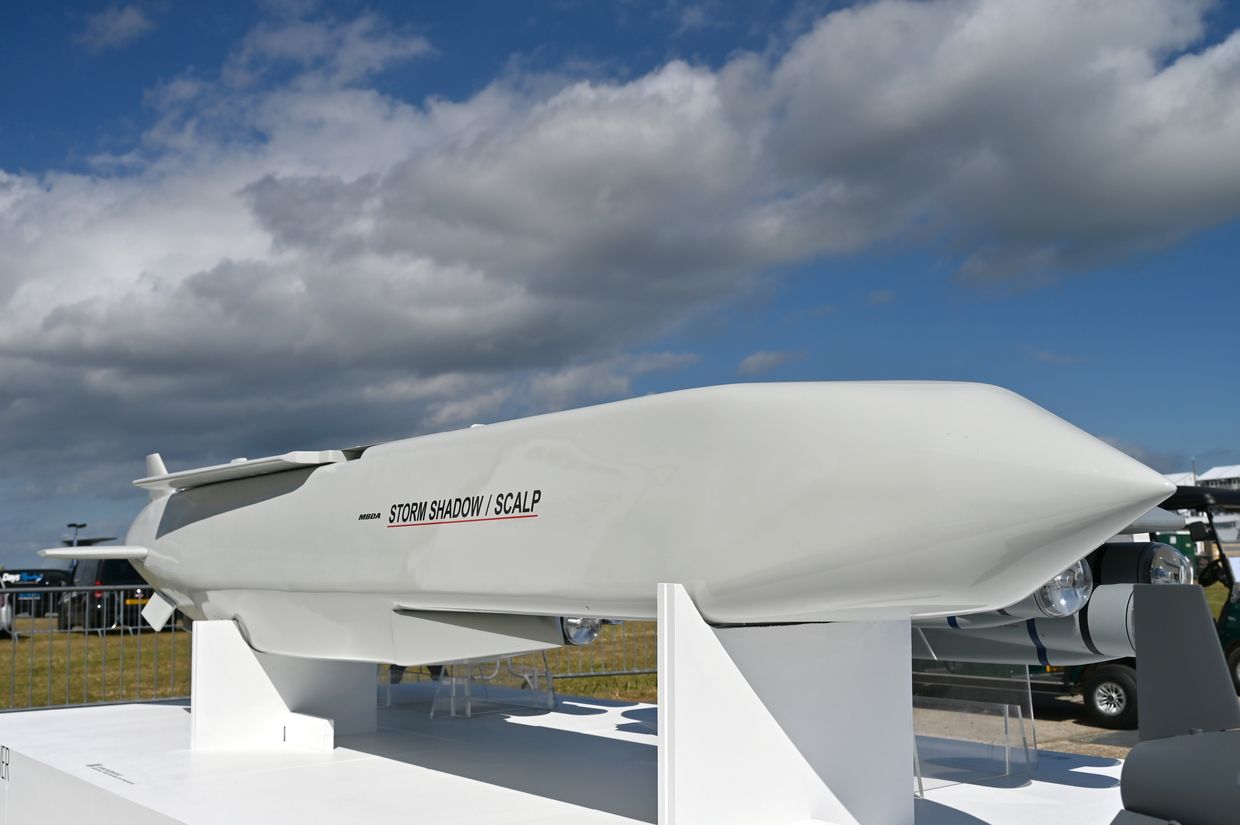
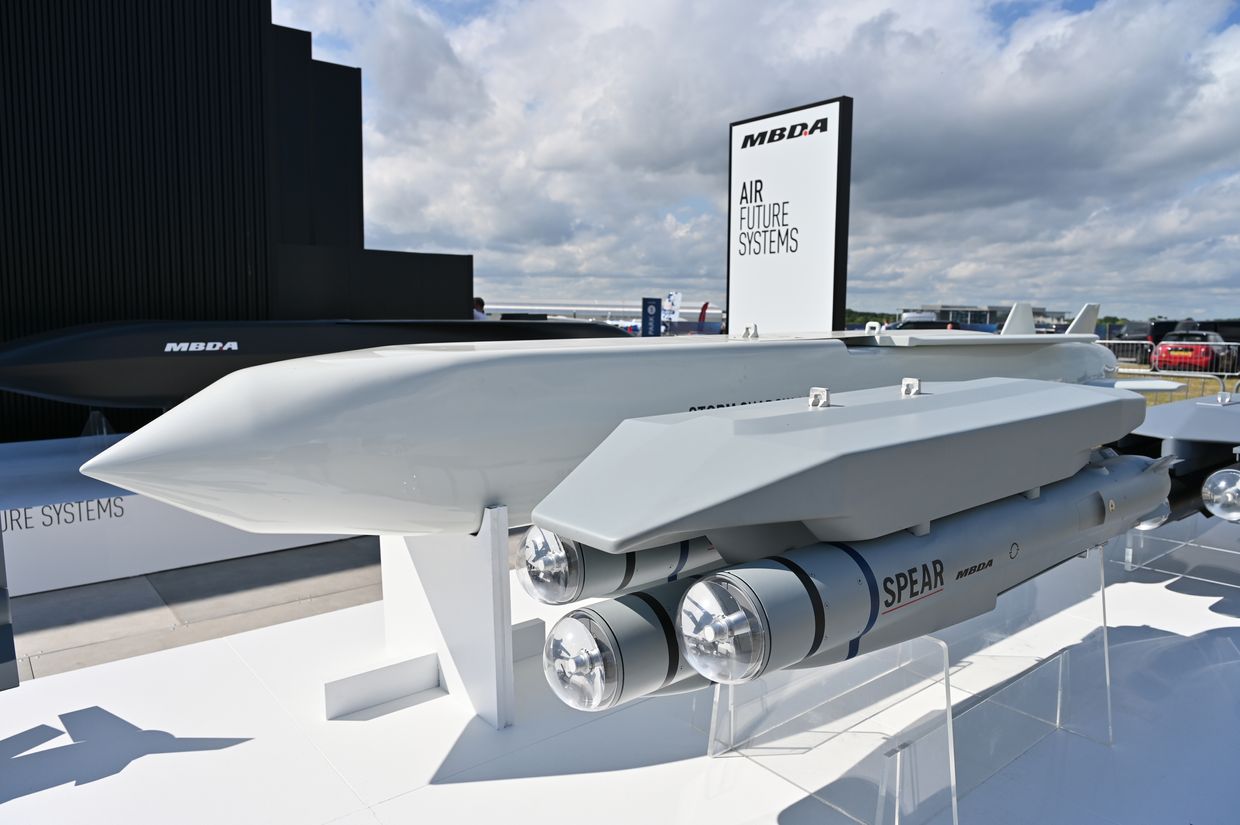
Ukraine has struck targets inside Russia with British-supplied Storm Shadow missiles for the first time, Bloomberg reported on Nov. 20, citing a Western official familiar with the matter.
According to the source, the strikes were approved as a response to the presence of North Korean troops in Russia's Kursk Oblast, a sign of escalation by Russia.
Different versions of Storm Shadow missiles have a range of between 250 and 560 kilometers. Storm Shadows have been used to hit Russian military targets in Crimea, a sovereign Ukrainian territory illegally annexed by Russia.
The reported strikes come a day after Ukraine reportedly used U.S.-made ATACMS long-range missiles to attack Russian territory, following outgoing U.S. President Joe Biden's approval on Nov. 17.
That strike reportedly hit a Russian military facility in Karachev, Bryansk Oblast.
Biden approves delivery of anti-personnel mines to Ukraine in light of Russian gains in east
U.S. President Joe Biden has approved the provision of anti-personnel mines to Ukraine, Defense Secretary Lloyd Austin said on Nov. 20.
The decision is expected to help slow down Russia's advance in the east of the country.
The move follows the Biden administration's authorization of the use of U.S.-made long-range missiles to strike Russian territory. Kyiv has not officially confirmed the claims, but recent reports indicate Ukraine deployed U.S. ATACMS missiles in Russia's Bryansk Oblast.
The transfer of anti-personnel mines could be controversial, as it contradicts the Ottawa Convention, also known as the Anti-Personnel Mine Ban Treaty, which has been signed by more than 160 countries. Russia and the U.S. are not signatories to this initiative.
Since the beginning of the full-scale invasion, Washington has been supplying Kyiv with anti-tank mines, while Ukrainian forces have been looking for opportunities to obtain infantry mines over the past three years. Moscow has used anti-personnel mines without restriction at the front line, hampering the progress of the Ukrainian military.
Biden was reluctant to supply Ukraine with mines due to doubts in his administration and the risk to civilians. Yet Washington is now concerned about Russia's rapid advance in eastern Ukraine and sees the need to halt it, U.S. officials told the WP.
"Russia is attacking Ukrainian lines in the east with waves of troops, regardless of the casualties that they're suffering," one of the officials said.
"So, the Ukrainians are obviously taking losses, and more towns and cities are at risk of falling. These mines were made specifically to combat exactly this."
One U.S. official described the mines for Ukraine as "non-resistant," meaning that they self-destruct or lose battery power to render them inactive within days or weeks, reducing the danger to civilians, the WP reported.
The official said Kyiv had committed to not installing these mines in densely populated areas.
Ukrainian drones allegedly strike Russian factories, weapons arsenal
Ukraine reportedly targeted Russian facilities with drones as the Russian Defense Ministry claimed on Nov. 20 that air defense forces shot down 44 drones overnight.
Belgorod Oblast Governor Vyacheslav Gladkov said that drone wreckage damaged the premises of an enterprise in the town of Alekseevka on Nov. 19. Media reports identified the facility as an EFKO plant, officially a sauce manufacturer.
Separately, drone strikes were reported also in Voronezh Oblast, with local authorities claiming that five drones struck a civilian industrial facility, starting a fire.
The Voronezh and Belgorod oblasts lie at the border with Ukraine and are regularly targeted in cross-border drone strikes.
Andrii Kovalenko, head of Ukraine's National Security and Defense Council's counter-disinformation center, said that the EFKO plant also secretly produces cargo drones used by the Russian military.
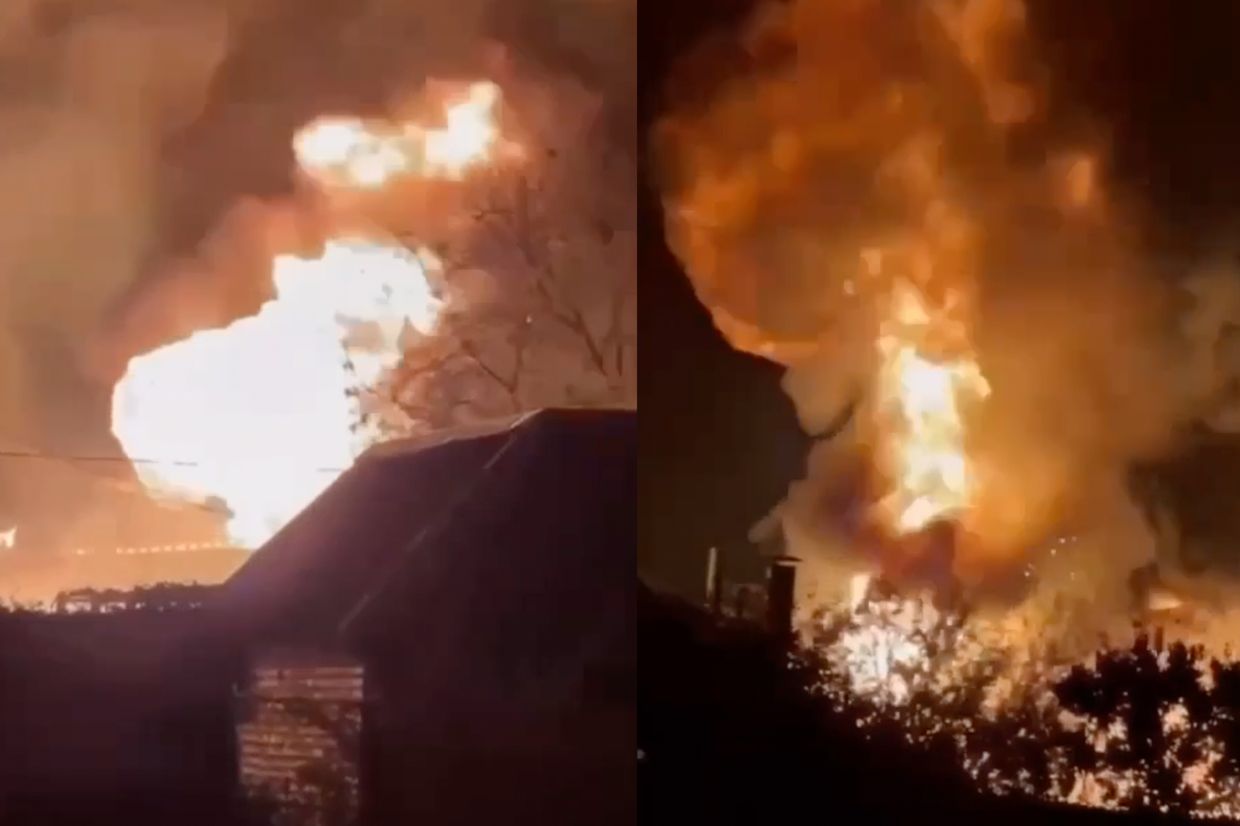
The official said that Ukrainian drones also attacked the 13th Arsenal of the Main Missile and Artillery Directorate of Russia's Defense Ministry (GRAU) near Kotovo in Novgorod Oblast, some 680 kilometers (420 miles) from Ukraine's border.
According to Kovalenko, the arsenal stores critical military supplies, including artillery shells, multiple-launch rocket system (MLRS) missiles, Iskander and anti-aircraft missiles, and ammunition for various systems, including the Tor complex.
Russia's Defense Ministry claimed that 22 drones were shot down over Novgorod Oblast overnight.
The Kyiv Independent could not verify the claims.
These strikes come as Ukrainian President Volodymyr Zelensky announced plans on Nov. 19 to scale up domestic production of long-range drones and missiles.
As part of Ukraine's resilience plan, the country aims to manufacture at least 30,000 long-range drones in the coming year and establish a new technology center to enhance its defense capabilities.
Ukrainian forces struck a military arsenal in Karachev, Bryansk Oblast, overnight on Nov. 19, with some reports indicating that Kyiv deployed U.S. ATACMS missiles for the first time on Russian soil.
North Korean troops in Russia to be led by secrecy-shrouded general close to Kim Jong Un, WSJ reports
Colonel General Kim Yong Bok, one of the generals accompanying North Korean troops in Russia, is a mystery-shrouded figure close to dictator Kim Jong Un, The Wall Street Journal reported on Nov. 20.
Kim Yong Bok, officially the Deputy Chief of the Army General Staff, is expected to oversee the integration of North Korean troops into Russian forces, gain combat experience, and establish a framework for future deployments, the outlet reports.
A Ukrainian envoy listed him, along with Major General Sin Kum Cheol and Colonel General Ri Chang Ho, during a U.N. Security Council meeting on Oct. 30 as one of the generals commanding some over 10,000 North Korean troops in Russia.
Kim's role in Pyongyang's military has long been shrouded in secrecy. He previously commanded a special forces unit of 200,000 soldiers tasked with covert missions on the Korean Peninsula. His profile was elevated after Russian President Vladimir Putin visited North Korea in June, with reports identifying him as the No. 3 figure in the Korean People's Army, according to the Wall Street Journal's reporting.
In July 2020, Kim was seen alongside Kim Jong Un at a ceremony honoring military officials but largely disappeared from public view until recently.
This deployment coincides with North Korea's formalized mutual defense treaty with Russia, announced on Nov. 12. The agreement obligates the nations to assist each other in the event of an armed attack.
The development follows reports of initial clashes between Ukrainian forces and North Korean troops in Russia's Kursk Oblast. The Western countries denounced the deployment of North Korean troops as an escalation, with the U.S. reportedly responding by permitting Ukraine to launch ATACMS missiles against Russian and North Korean troops amassing in the region.
Putin open to discussing Ukraine ceasefire with Trump, Reuters reports
Russian President Vladimir Putin is willing to discuss a ceasefire in Ukraine with U.S. President-elect Donald Trump but rejects major territorial concessions and insists that Ukraine abandon plans to join NATO, Reuters reported on Nov. 20, citing five former and current Russian officials.
The Kremlin's terms reportedly include freezing the conflict roughly along current front lines and "dividing control" of eastern regions, including the Donetsk, Luhansk, Zaporizhzhia, and Kherson oblasts.
Moscow, which illegally declared annexation of these regions in September 2022, currently controls only 70-80% of them, with approximately 26,000 square kilometers (10,000 square miles) under Ukrainian control. Putin issued a demand in June that Ukraine must withdraw from the four regions completely before any ceasefire talks.
Russia currently occupies roughly a fifth of Ukraine's territory – including Crimea – as its forces continue to steadily advance in the east. Publicly, the Kremlin has rejected freezing the front line or any concessions on its part, with Putin saying any peace deal must be in Moscow's favor.
According to Reuters, Russian officials suggested that Moscow might consider withdrawing from smaller occupied areas in Ukraine's Kharkiv and Mykolaiv regions but emphasized that any deal must reflect "realities" on the ground.
Moscow remains firmly opposed to NATO membership for Ukraine or the presence of foreign troops on Ukrainian soil, the officials said. Additional demands could reportedly include limiting Ukraine's military size and guaranteeing unrestricted use of the Russian language.
Ukraine has rejected territorial concessions and said any peace talks should be based on its 10-point peace formula, which includes a Russian withdrawal and full territorial integrity and sovereignty. Officials acknowledged that some territories might be returned through diplomacy rather than military means.
Kyiv also said that NATO membership is the only way to prevent further Russian aggression.
Without a ceasefire, Russia will continue the war, Kremlin sources told Reuters. Kremlin spokesperson Dmitry Peskov called the U.S. authorization of ATACMS missiles a "very dangerous escalation."
Trump has positioned himself as a potential peace broker, claiming he could negotiate an end to the war. The contours of Trump's peace plan remain unclear, though media reports indicate it might entail postponing Ukraine's NATO membership for 20 years, freezing the front line, and establishing a demilitarized zone in the east manned by European troops.
Russian officials threaten US over long-range strikes, allude to nuclear doctrine changes
Russian Foreign Minister Sergey Lavrov said on Nov. 19 that Moscow "will respond accordingly" to Washington's permission for Ukraine to strike Russian soil with U.S. weapons.
Speaking at the G20 summit in Rio de Janeiro, Lavrov referred to Russia's updated nuclear doctrine, which permits nuclear retaliation for attacks by non-nuclear states supported by nuclear powers.
When asked during the summit if the U.S. had authorized Ukraine to use long-range weapons to target Russia, Lavrov responded, "I don't know whether it's true or not. We are focused on ensuring our security."
"We have already stated everything necessary to those considering this, officially. The president said it, and now it's confirmed in an official document," he said, according to TASS.
On Nov. 19, Russian President Vladimir Putin approved an updated nuclear deterrence policy that expands the conditions for a nuclear strike.
The revised doctrine outlines scenarios that could justify a nuclear strike, suggesting that this could include "aggression against the Russian Federation and its allies by a non-nuclear state with the support of a nuclear state" and large-scale non-nuclear attacks.
In the last day, 147 combat engagements with enemy troops took place. The highest enemy activity was recorded in the Pokrovsk sector, where the invaders carried out 33 assault attacks.
There were 147 combat engagements in the frontline. The enemy is attacking intensively in the Pokrovsk sector. This was reported by the General Staff of the Armed Forces of Ukraine, UNN reports.
Details
In the Kharkiv sector, there were 4 clashes with militants near Vovchansk and Starytsia.
In the Kupyansk sector, the occupants fired 23 times near Kolisnykivka, Zahryzove, Kucherivka, Kruhlyakivka and Zelenyi Hai.
In the Liman sector, the aggressor attacked 10 times in the direction of Cherneshchyna, Zarichne and Terny.
In the Siverskyi sector, enemy forces dropped ten combat vehicles in the vicinity of Siversk.
In the Kramatorsk sector, terrorists dropped 5 bombs near Chasiv Yar and Lypivka.
In the Toretsk sector, enemy troops were spotted 7 times in the areas of Toretsk and Shcherbynivka.
In the Pokrovsk sector, the invaders carried out 33 assault and offensive actions in the areas of Myroliubivka, Pustynka, Promin, Krutyi Yar, Krasny Yar, Liskivka, Yurivka, Zhovte, Petrivka, Dachanske, Novooleksiyivka, Hryhorivka and Pushkine.
In the Kurakhove sector, 23 firefights took place in the areas of Berestky, Zorya, Sontsivka, Maksymilianivka, Katerynivka, Yelizavetivka and Antonivka.
In the Vremivsk sector, 28 firefights took place in the areas of Trudove, Kostiantynopol, Rozdolne, Velyka Novosilka and Novodarivka.
The enemy did not conduct active operations in the Orikhivske and Hulyaypillia directions.
In the Prydniprovsky sector, the Ukrainian Armed Forces repelled the invaders' attacks 5 times.
General Staff: 138 combat engagements took place in the frontline, the enemy is active in the Kurakhove sectorNov 15 2024, 12:13 AM • 15721 view
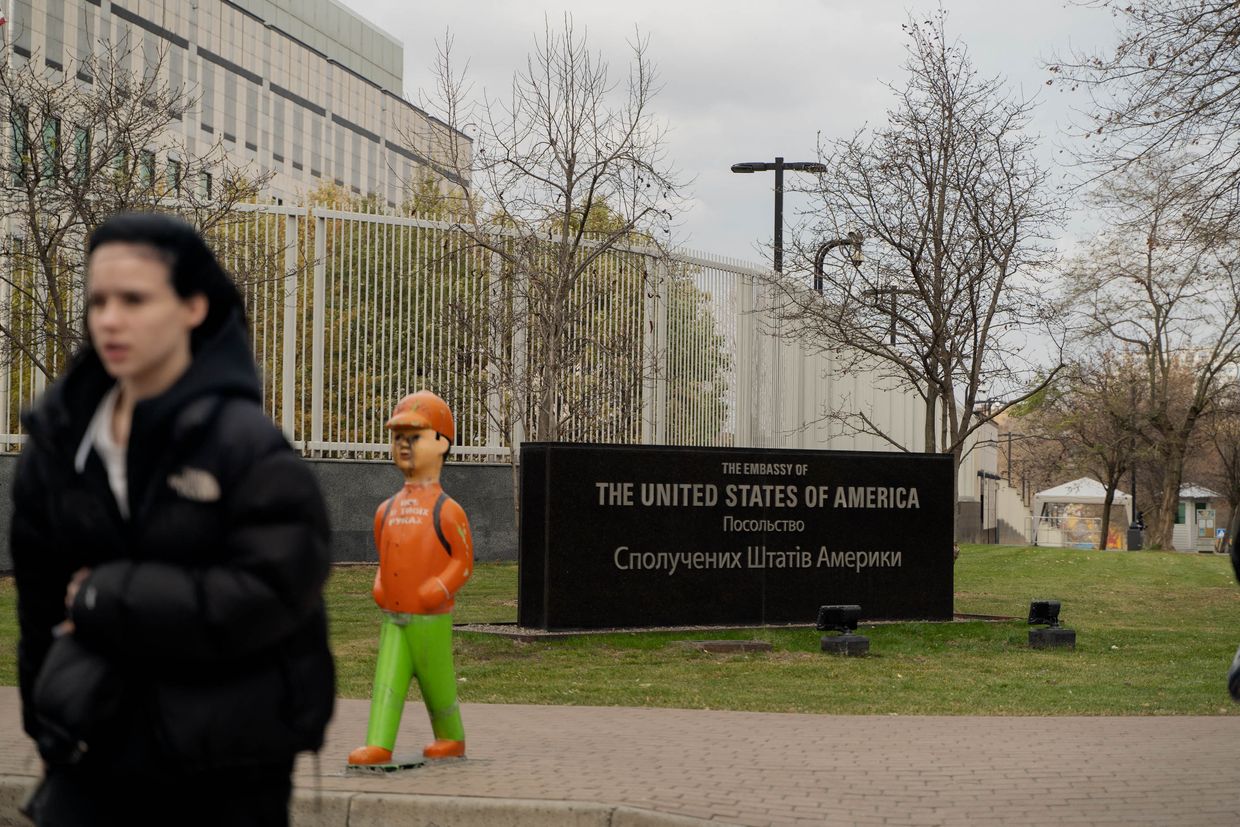
Ukrainians woke up on Nov. 20 to a message that a number of foreign embassies were closing their Kyiv offices — a stark reminder of the departure of foreign diplomats from Kyiv days before the start of the all-out war.
The U.S. Embassy in the capital said it had received "specific information" about a "potential significant air attack" planned for that day.
"Out of an abundance of caution, the Embassy will be closed, and Embassy employees are being instructed to shelter in place," the statement read.
The announcement came in the wake of what appeared to be Ukraine's first successful strike of a military target inside Russia using the U.S.-supplied ATACMS missiles.
After depicting such a move as crossing another "red line" the Kremlin had drawn, Russian President Vladimir Putin said his country would respond. A mass attack using cruise and ballistic missiles, as well as drones, was the most expected outcome.
Throughout the full-scale invasion of Ukraine, the Kremlin has repeatedly laid down red lines, the crossing of which it has said could provoke various responses, sometimes invoking the threat of nuclear weapons.
In an attempt to deter Ukraine's Western allies from further arming Kyiv, the Kremlin issued warnings related to the supply of Patriot air defense systems, F-16 fighter jets, and ATACMS to be used in occupied areas of Ukraine, among others.
Despite crossing multiple red lines on multiple occasions, Russia has yet to follow through with any of its threats.
What has spooked some observers about the latest crossing is that it happened just hours before Putin approved the updated principles of Russia's nuclear deterrence policy.
One of the provisions of the new policy states that "aggression against the Russian Federation and its allies by a non-nuclear state with the support of a nuclear state" could justify a nuclear strike — Ukraine using ATACMS to strike deep inside Russia would appear to qualify.
Shortly after the U.S. Embassy issued its warning, the Spanish, Greek, and Italian embassies followed suit, and the news quickly spread on Ukrainian Telegram channels.
Most of them urged that on this day, it's especially worth taking shelter during air raid alerts.
In central Kyiv, there were mixed responses to the reports. Nina Stupak, 83, said she hadn't seen the specific warning from the U.S. embassy, but her neighbors had called her to tell her about it.
"Of course, I am really scared about this threat, and especially I am worried about the lives of my children and grandchildren," she told the Kyiv Independent while out shopping in the city's Podil district.
Petro Karpenko, an 18-year-old student, was more blasé. "I am not worried because there is a stable situation in Kyiv," he told the Kyiv Independent.
"There have already been massive attacks on Kyiv from May to July. I've got used to it more or less."
Shortly after midday, Andrii Kovalenko of Ukraine's National Security and Defense Council, repeated an appeal he issued earlier in the morning, stating that Russian mass aerial attacks have been in the planning for months, and the embassy closures shouldn't mean Ukrainians act any differently.
"Ukrainians already understand the situation — you need to plan your time and prepare safe places for yourself in case of alarm, calculate the route and the time it takes to reach these safe places can be reached," he said in a post on Telegram.
Kovalenko, who heads the counter-disinformation department, added that Russia was trying to exploit the situation by "stoking panic against the backdrop of the closing of embassies."
Local residents take shelter in a metro station during an air strike alarm in Kyiv, Ukraine on Nov. 20, 2024, amid the Russian invasion of Ukraine. (Roman Pilipey / AFP via Getty Images)
But the warnings weren't just limited to diplomats and Telegram channels — Ukrainian soldiers were also alerted about a potential Russian mass ballistic missile attack, a source in the Ukrainian military told the Kyiv Independent.
"According to intelligence reports, a massive missile attack using ballistic missiles is possible today," a message received by Ukrainian soldiers said.
When asked about the alert, at least one Ukrainian soldier was unmoved by the apparent threat.
"In case anyone hasn't noticed, we are at war with Russia," Lieutenant Colonel Bohdan Krotevych, chief of staff of Azov 12th Special Forces Brigade, told the Kyiv Independent.
"Yesterday was no different from the days before it or those to come. Russia doesn't need to adopt any doctrines to use one weapon or another. This topic isn't even worth discussing."
Further stoking tensions were reports in Ukrainian media about rumors of Russia testing new weapons as part of their planned retaliation.
"According to unconfirmed information, it is an RS-26 'Rubezh' intercontinental (ballistic) missile," one outlet wrote in an article published at 1:45 p.m.
At 1:49 p.m., the air raid sirens sounded in Kyiv and several other oblasts. An almost everyday occurrence, after more than two-and-a-half years of full-scale war, they rarely cause anyone to blink, let alone head to a shelter.
But today was different — many of those on the streets changed direction and quickened their pace, heading to the nearest metro station, the safest place to be during an attack." Usually, I do not go down to the metro or shelter because I am not really worried about attacks," 24-year-old Andriy Bohdantsov told the Kyiv Independent from the underground metro station where hundreds of people had gathered.
Many of those on the streets changed direction and quickened their pace, heading to the nearest metro station, the safest place to be during an attack.
"But today, due to the U.S. Embassy warning, I've decided to come here.
"For me, this situation today is like a flashback of past events, specifically, when people were saying that war wouldn't start, but it had started," he added, referring to the days leading up to the launch of the full-scale invasion in 2022 when constant U.S. intelligence assessments warning of an imminent attack were played down by Ukrainian authorities.
The closure of the U.S. Embassy in Kyiv on Feb. 14, 2022, ten days before the start of Russia's full-scale invasion, has been engraved in the memories of many Ukrainians who were left to witness the unfolding war.
Telegram channels that monitor Russian missile launches reported two ballistic missiles heading for Kyiv, but shortly after said they had "ceased to exist" — either being intercepted, or being fake launches using electronic warfare (EW).
At 2:21 p.m. the all clear sounded, and hundreds of people filed out of the metro to resume their day as best they could.
At exactly the same time, Kovalenko's warnings about a Russian disinformation campaign aimed at stoking panic in Kyiv appeared to be confirmed.
Ukraine's military intelligence (HUR) warned on its Telegram channel that Russian intelligence services were amplifying the panic by spreading fake messages in messengers and social media about the supposedly upcoming attack.
The agency showed one message about the attack spread in messengers and social media, saying it was "fake and contains grammatical errors typical for Russian psychological operations."
"The enemy, unable to subjugate Ukrainians by force, resorts to measures of intimidation and psychological pressure on society. Please be vigilant," the statement read.
"Do not ignore air raid signals—it is safer to wait in a shelter. However, we urge you not to panic."
A woman walks past the US Embassy in Kyiv on Nov. 20, 2024, amid the Russian invasion of Ukraine. (Tanya Dzafarowa / AFP via Getty Images)
The Kyiv Independent's military source clarified that the aerial strike threat remains relevant, but Russia is carrying out a parallel psychological operation to sow panic.
At around 3 p.m., Ukraine's Foreign Ministry released a statement criticizing the decision of Western embassies to issue warnings and close earlier in the day, describing the moves as "information overreaction."
"On this 1,001st day of the full-scale invasion, the threat of Russian strikes remains just as relevant as it has been for the past thousand days," Foreign Ministry spokesman Heorhii Tykhyi said.
Around the same time, Telegram monitoring channels reported seven Russian Tu-95 bombers were redeploying to the Engels airbase, a possible indication of preparation for an attack.
At 7:46 p.m., other channels reported they had been joined there by a further two Tu-95s.
Around an hour later, the U.S. Embassy it had "resumed services following a temporary shelter-in-place suspension earlier today."
"We continue to encourage U.S. citizens to remain vigilant, monitor official Ukrainian sources for updates, and be prepared to shelter in place if an air alert is announced," it added.
At the time of writing, 10:00 p.m., there have been no further air raid alerts in Kyiv, no further embassy warnings, and little further information on the Russian bombers, and even less on what their plans for attack might be.
Martyniuk Oksana, a 26-year-old mother currently on maternity leave, told the Kyiv Independent that given all the information being pumped out by embassies, social media, and government officials, it was "understandable that there is confusion.
"Of course, I am scared of this situation, and I can only hope there will not be a massive attack."
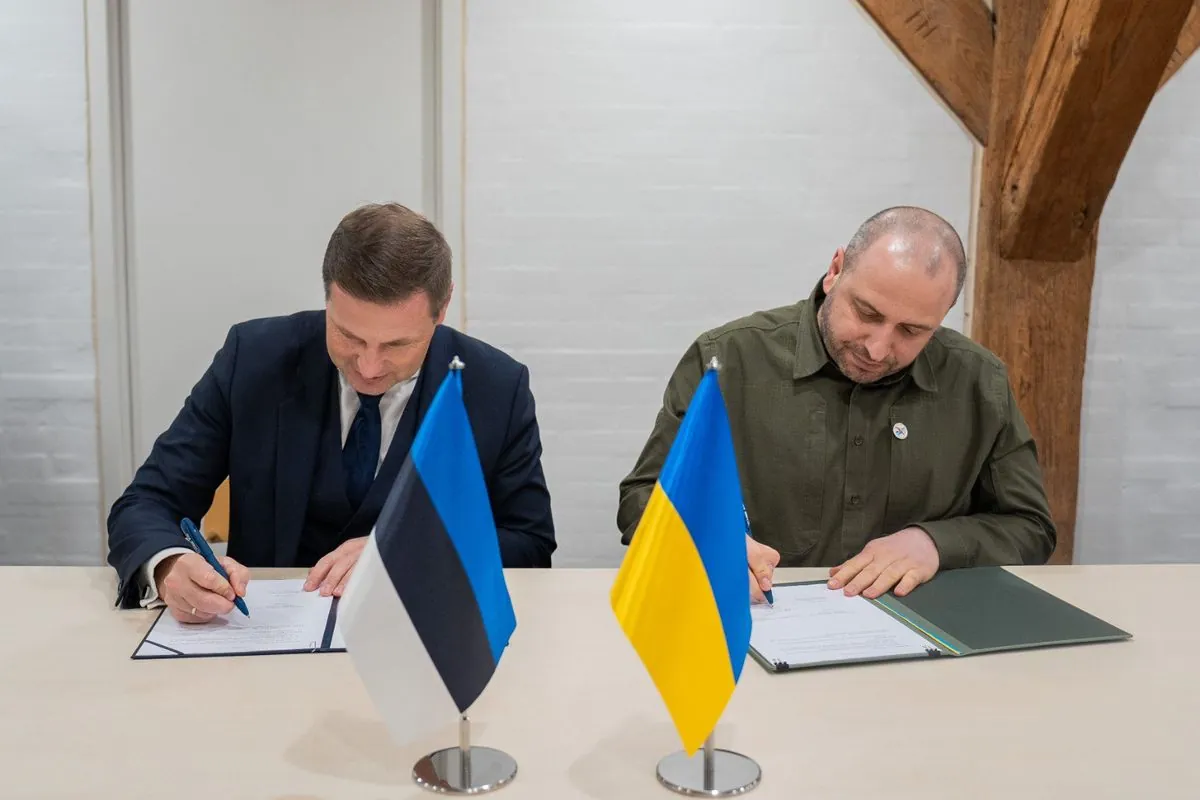
The Defense Ministers of Ukraine and Estonia sign a memorandum on military assistance for 2024-2027. Estonia will allocate 0.25% of GDP for material assistance, an IT coalition, and training for the Ukrainian military.
Ukraine and Estonia signed a Memorandum of Understanding between the defense ministries. The document expands the possibilities of using Estonian military assistance to Ukraine in 2024-2027. This was announced by the Minister of Defense of Ukraine Rustem Umerov, UNN reports.
"Together with Estonian Defense Minister Hanno Pevkur, I signed a Memorandum of Understanding between the defense ministries of our countries," Umerov said.
According to him, this document is an important step in the implementation of the Agreement on Security Cooperation and Long-Term Support, which was signed in June by the Prime Minister of Estonia Kaja Kallas and President of Ukraine Volodymyr Zelenskyy.
Add
The memorandum expands the possibilities of using Estonian military assistance to Ukraine in 2024-2027. The support in the amount of 0.25% of Estonia's GDP will be directed to:
– material assistance for the Ukrainian military
– financing of the IT coalition under the chairmanship of Estonia
– training of Ukrainian military personnel.
"This is not only assistance to Ukraine, but also an exchange of experience. Ukraine will share combat knowledge that will strengthen the defense capabilities of Estonia and our partners," Umerov summarized.
Umerov announces the launch of cooperation within the Northern Group-Ukraine: what is known about the new allianceNov 20 2024, 05:17 PM • 15446 views
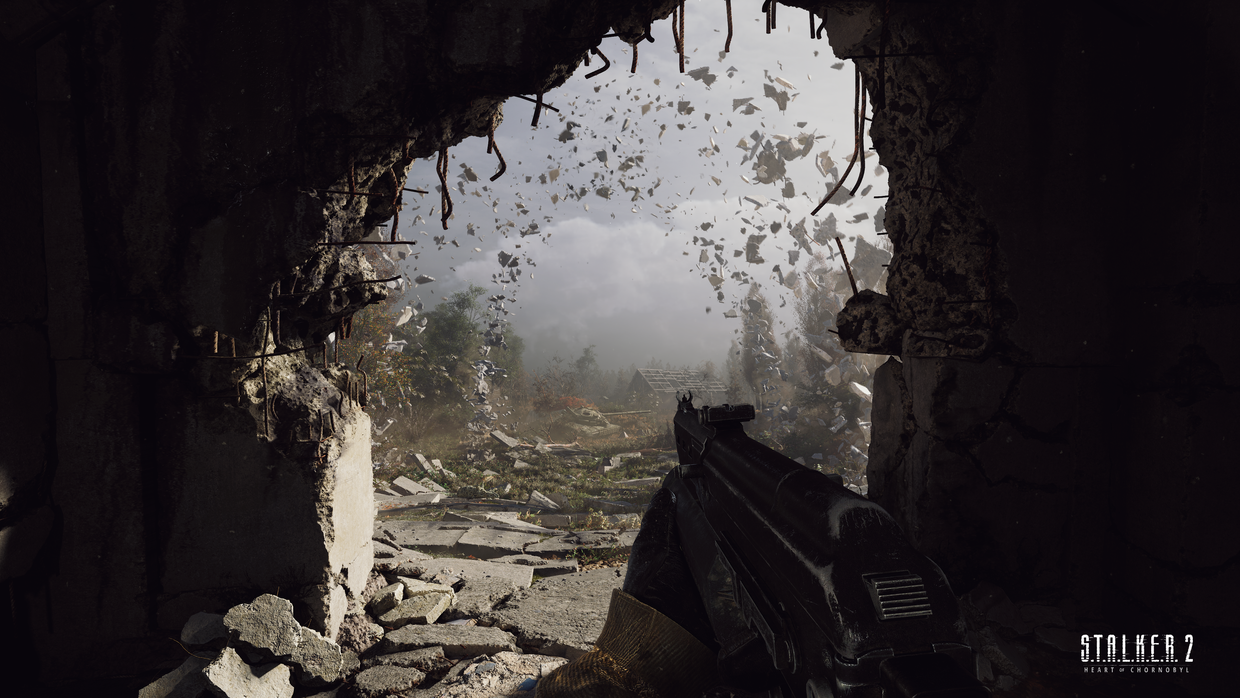
More than two years after Russia’s full-scale invasion delayed its release and upended its developers’ lives, Ukraine’s "S.T.A.L.K.E.R. 2" — one of the most anticipated video games of the year — was released on Nov. 20.
Employees of GSC Game World, the Ukrainian company behind its creation, completed the game while navigating blackouts, missile strikes, scattered employees, and the challenge of restarting operations from a new office in Prague.
Originally set for a release in April 2022, the game experienced several delays when many of its staff were forced to flee Ukraine that February. Ahead of the release this week, presales of the game took it to the top spot for games sold on the popular video game platform Steam.
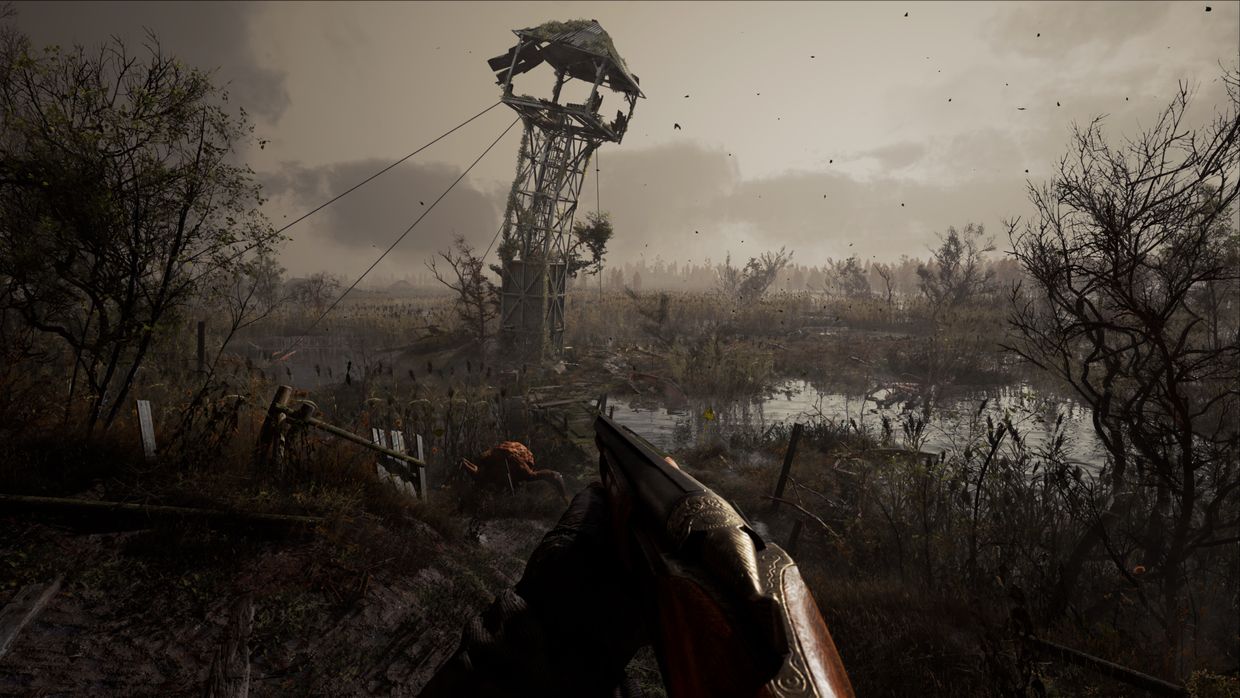
Like the 2007 original in the series, which has been played by millions, "S.T.A.L.K.E.R. 2": Heart of Chornobyl is a first-person immersive shooter game set in a fictionalized version of Chornobyl's exclusion zone after an apocalyptic nuclear disaster.
The war affected more than just the timing of the game's release. After the full-scale invasion, the game's name was changed to use the Ukrainian spelling of Chornobyl, instead of the Russian version, "Chernobyl." GSC Game World also removed Russian voiceovers and has refused to sell the game in Russia.
The game developers have spoken about facing Russian threats and frequent hacking attempts because of their decisions.
'I switched to drawing on paper'
In a documentary about the game’s creation released in October, Anton Kukhtytskyi, the game’s lead concept artist, described his first weeks of the full-scale war. For two weeks, he had no electricity, internet, or connection outside his village. He had no idea if the rest of his family had survived.
"Sitting in that cellar with my wife and my cats, I felt like I was abandoned. But like a 'stalker,' you have to learn how to live in such situation," Kukhtytskyi said. "I switched to drawing on paper, so I didn’t stop developing."
After many of the staff relocated to Prague, they had to completely recast their voice-actors, since many had gone to fight, relocated, or fallen out of communication. Additionally, the staff had fled without their equipment and had to build new motion capture and audio recording studios from scratch, according to the film.
"S.T.A.L.K.E.R. 2," released on Nov. 20, is set in a fictionalized exclusion zone of the Chornobyl nuclear power plant. (GSC Game World)
A significant portion of the staff still remains in Ukraine.
Because of the developers' vocal support for Ukrainian armed forces and the content of the game, a Russian official suggested this month that purchases of the game in Russia could be criminalized after its release. (While GSC Game World products are not officially available in Russia, users have reported workarounds online.)
Prior to the full-scale invasion, Ukraine was home to hundreds of video game companies and an estimated tens of thousands of Ukrainian video game developers.
GSC Game World was founded in Kyiv in 1995 and is one of the oldest and most prominent video game developers in the country. In addition to "S.T.A.L.K.E.R.," the company is known for its "Cossacks" strategy game franchise.
Since 2020, the company is co-owned by Maksym Krippa, a wealthy Ukrainian businessman who has kept a low profile and mostly avoided public attention.
Krippa's career is reportedly connected with casinos and gambling businesses, though GSC Game World distanced itself from his former activities, stating his portfolio no longer holds gambling companies.
In the past several years, Krippa has built up significant stakes in online gaming and real estate, including the 2018 purchase of Ukraine's major e-sports league NAVI and a subsequent deal to become co-owner of Maincast, an e-sports broadcasting studio.
He made headlines recently with real estate purchases of the Parus business center in Kyiv last year, which Forbes Ukraine dubbed "the largest deal since the start of the full-scale war," and purchases of major hotels in downtown Kyiv.
Glowing letters advertising "S.T.A.L.K.E.R. 2" topped the Parus business center ahead of the game's release.
The President of Ukraine urged not to panic over reports of a possible Russian attack. He emphasized that information injection only helps the enemy and called for further strengthening of air defense.
President of Ukraine Volodymyr Zelenskyy reacted to panic reports about some special danger and noted that this only helps Russia, UNN reports.
"Today there were a lot of nerves and questions about some special danger. Although we have already gone through so many cruel and vile attacks by Russia during this time. We should always pay attention to the air raid alert. We have a neighbor who is crazy. Today, on the 1001st day of the full-scale war, Russia is just as crazy as it was on the 1000th day and on February 24. The information injection that took place today, some panic messages that were sent – all this only helps Russia," Zelensky said.
He called on Ukrainians to take care of themselves, help the army, and make sure that "no one can use your emotions for their own benefit.
"And we continue to strengthen air defense," the President summarized.
US Embassy in Kyiv warns of “possible large-scale attack”Nov 20 2024, 06:46 AM • 15152 views
Addendum
The United States and several other countries closed their embassies on Wednesday. The US diplomatic mission warned of a possible air attack.

 The Kyiv IndependentMartin Fornusek