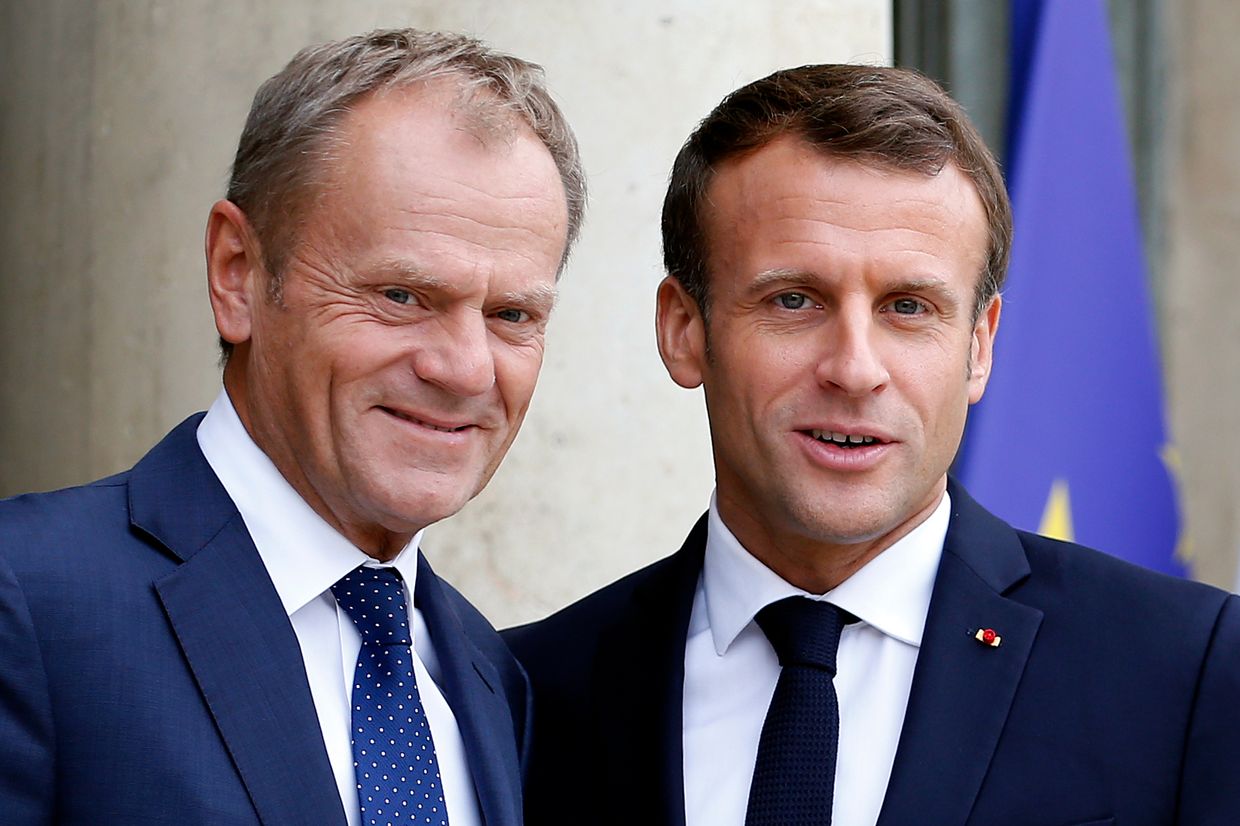
Polish Prime Minister Donald Tusk and French President Emmanuel Macron are expected to discuss the possibility of sending soldiers to Ukraine after a potential ceasefire deal, Bloomberg reported on Dec. 11, citing undisclosed sources.
Macron is visiting Warsaw on Dec. 12 to brief the Polish prime minister on his meeting with U.S. President-elect Donald Trump last week and to discuss Europe's support for Ukraine and ways to end Russia's war.
European powers, like France and Poland, are expected to take center stage in helping Kyiv resist and deter Russian aggression as Trump signaled intent to reduce support and get the U.S. "out" of the war.
According to Bloomberg, the talks between Macron and Tusk are to focus on how to strengthen Ukraine's security in the short- and long-term, including the option of deploying European soldiers once a ceasefire is reached.
The French president has spearheaded the idea of sending troops to Ukraine in some capacity since February. More recently, Macron reportedly discussed the proposal of sending peacekeepers on the ground with U.K. Prime Minister Keir Starmer in November.
Szymon Holownia, the speaker of the lower chamber of the Polish parliament, told the media that Poland would be involved in such a mission only within a NATO framework.
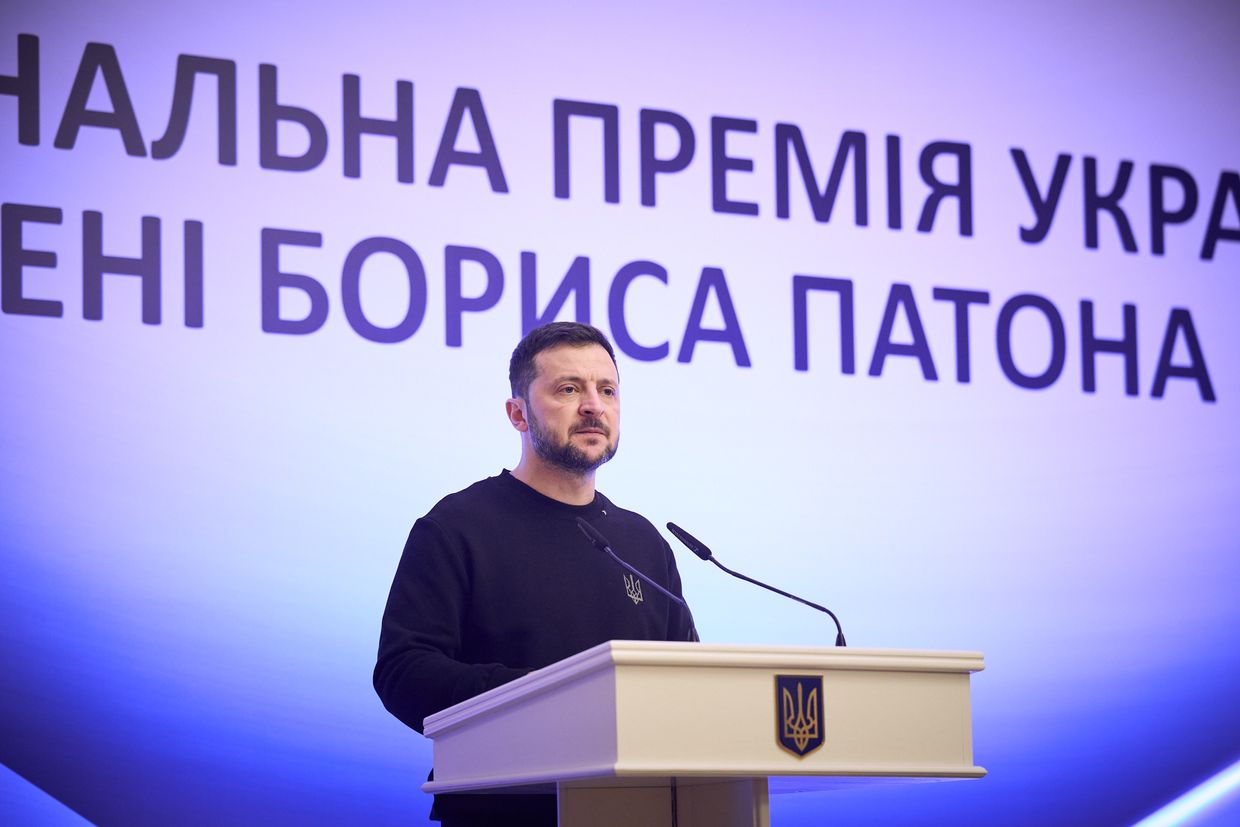
President Volodymyr Zelensky, who also met Trump and Macron on Dec. 7, recently said that Ukraine "may consider" the deployment of foreign peacekeepers, but only after receiving a clear timeline for NATO membership.
Both Paris and Warsaw have been favorable toward Ukraine's entry into the alliance, but the step continues to meet opposition in the U.S., Germany, Hungary, and elsewhere.
The possibility of a diplomatic end to the war is increasingly discussed in Ukraine and the West. Tusk, whose country takes over the EU Council's presidency in January, said peace talks could begin as early as this winter.
Russia showed no interest in a ceasefire as its forces currently hold the upper hand on the battlefield, closing in on key Ukrainian strongholds in Donetsk Oblast.
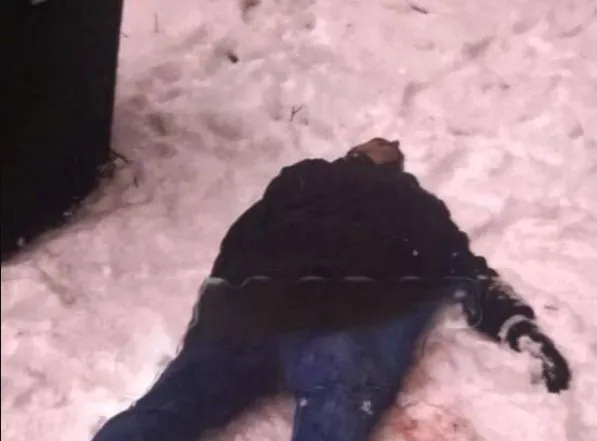
Mikhail Shatsky, deputy general designer of the Mars Design Bureau, is shot dead near Kotelniki. He was engaged in the modernization of X-59 cruise missiles and the introduction of artificial intelligence into UAVs.
Mikhail Alexandrovich Shatsky, deputy general designer and head of the functional software department of the Mars Design Bureau, was shot dead in the Kuzminsky Forest Park near the boiler houses in the Moscow region.
This was reported by UNN with reference to the source.
Details
According to UNN sources in the Defense Forces, the Main Intelligence Directorate of the Defense Ministry may be involved in the murder of Mykhailo Shatsky.
Mikhail Shatsky was the head of the functional software department at the Russian federal state unitary enterprise Moscow Research and Development Bureau Mars, a subsidiary of the Russian state nuclear energy holding company Rosatom.
In particular, Shatsky was engaged in the modernization of X-59 cruise missiles to the X-69 level, and his colleagues considered the murdered designer to be the main ideologist of the introduction of artificial intelligence into UAVs and other Russian aircraft and spacecraft.
We remind you that every person who is in any way involved in the development of the Russian military-industrial complex and thus supports Russian aggression against Ukraine is a legitimate target for the Defense Forces
– said the UNN source.
Recall
Russian journalist Aleksandr Nevzorov reported that the deputy general designer, head of the software department of the Mars design bureau, Mikhail Shatsky, who was engaged in the modernization of X-59 cruise missiles to the X-69 level and the introduction of new UAVs, was eliminated in Moscow.
Russian attacks across Ukraine killed at least one civilian and injured at least 11 over the past day, regional authorities reported early on Dec. 12.
In Donetsk Oblast, three people were injured in the town of Pokrovsk and one in the village of Novotroitske, according to Governor Vadym Filashkin.
A 44-year-old man was injured during Russian artillery and drone attacks against the Nikopol district in Dnipropetrovsk Oblast, Governor Serhii Lysak reported.
In Kherson Oblast, six people were injured in Russian strikes over the past day, Governor Oleksandr Prokudin reported. A 67-year-old man was killed in a drone attack against Kherson early on the morning of Dec. 12, he said.
A Russian attack with a multiple-launch rocket system against the village of Kutkivka in Kharkiv Oblast damaged an educational institution, said the regional governor, Oleh Syniehubov. No casualties were reported.
German Chancellor Olaf Scholz said he was ready to continue the dialogue with Putin, despite the frustrating conversation in November. Scholz emphasized that it is important to convey to Putin the unwavering support of Germany for Ukraine.
Despite an unsuccessful phone conversation with Russian dictator Vladimir Putin, German Chancellor Olaf Scholz is ready for further talks with him, the German edition RND reports, according to UNN.
Details
"It was frustrating," said the Chancellor in the RTL channel's annual review, "because he just repeated all his formulas again."
Nevertheless, the phone call was necessary to make it clear to Putin that he could not hope that Germany's support for Ukraine would weaken and to ask him "that he also has to withdraw his troops so that the basis for peaceful development can be created," Scholz explained. "And it needs to be done, and I will do it again. But we should not have any illusions about this," he said.
Addendum
Scholz called Putin on his own initiative in mid-November, the first time since December 2022. This drew criticism from Russia's EU neighbors.
Scholz did not discuss Taurus with Putin: what is known about secret talksNov 19 2024, 09:40 AM • 14672 views
Russia has lost 758,730 troops in Ukraine since the beginning of its full-scale invasion on Feb. 24, 2022, the General Staff of Ukraine's Armed Forces reported on Dec. 12.
This number includes 1,390 casualties Russian forces suffered just over the past day.
According to the report, Russia has also lost 9,532 tanks, 19,644 armored fighting vehicles, 31,127 vehicles and fuel tanks, 21,072 artillery systems, 1,253 multiple launch rocket systems, 1,023 air defense systems, 369 airplanes, 329 helicopters, 20,111 drones, 28 ships and boats, and one submarine.
There were 203 combat engagements in the frontline, with the largest number of attacks in the Kurakhove sector – 49. The enemy launched 2 missile and 15 air strikes, firing 3,500 times.
203 combat engagements took place on the frontline over the last day, the most intense – in the Kurakhove sector, the General Staff of the Armed Forces of Ukraine reported in its morning report, UNN writes.
The situation at the front remains difficult. The enemy, using its superiority in manpower and equipment, continues to attack our positions. Ukrainian defenders are steadfastly holding back the onslaught of the occupiers and inflicting significant losses on the enemy. In total, 203 combat engagements were registered over the last day
– reported the General Staff.
Yesterday, the enemy launched two missile and 15 air strikes at the positions of Ukrainian units and localities, using two missiles and dropping 24 drones. In addition, it fired three and a half thousand times at localities and positions of our troops, 134 of them from multiple launch rocket systems, and used over a thousand kamikaze drones to attack.
Over the past day, the missile forces and artillery of the Defense Forces, as indicated, hit four control points and four areas of concentration of enemy personnel.
The situation is reportedly as follows:
In the Kharkiv sector, Russian terrorists stormed the positions of Ukrainian troops six times without success near Hlyboke, Lyptsi, Starytsia and Vovchansk.
In the Kupyansk sector, 14 militants' attacks took place over the last day. Defense forces repelled enemy assaults near Zakhidne, Pishchane, Lozova and Zahryzove.
On the Lyman direction, the invaders attacked the positions of Ukrainian defenders 30 times. They tried to break into our defense near Tverdokhlibove, Druzhelyubivka, Novoyehorivka, Hrekivka, Makiivka, Terny, Torske, Hryhorivka, Kopanka and in the Serebryansky forest.
In the Siverskiy sector, Ukrainian defenders repelled one attack by Russian invaders near Verkhnekamianske.
In the Kramatorsk sector, the enemy made two attempts to advance near Chasiv Yar and Stupochky yesterday.
Using guided aerial bombs actively in the Toretsk sector, the occupants stormed the positions of our defenders in the Toretsk area five times yesterday.
In the Pokrovsk sector, our defenders stopped 40 enemy offensives. The enemy was actively using aviation. He stormed Ukrainian positions near the settlements of Shevchenko, Pishchane, Novotroyitske, Novooleksiyivka, Novyi Trud, Dachanske, Lysivka, Myrolyubivka, Promin and Pokrovsk.
In the Kurakhove direction, the defense forces repelled 49 attacks. Most actively, the invaders tried to move forward near Solntsevka, Starye Ternovi, Dachensky, Zarya, Kurakhovo, Dachny, Katerinovka, Elizavetovka, Ganovka, Antonovka and Uspenovka.
On the Vremivsky direction, the enemy made 29 assaults on our positions in the areas of Trudove, Kostiantynopolske, Sukhi Yaliv, Blahodatne and Novodarivka. He actively used bomber aircraft to carry out attacks in the area.
The enemy did not conduct any offensive actions in the Gulyaypilsky sector yesterday.
Yesterday, in the Orikhivsky sector, the enemy attacked our positions once near Novoandriivka.
Five times, the invaders tried to force the units of the Defense Forces out of their positions on the Prydniprovsky direction without success.
No signs of enemy offensive groups were detected in the Volyn and Polissia directions.
On the border with Chernihiv and Sumy regions, the enemy from the territory of the Russian Federation is actively using artillery and aviation in the areas of Ukrainian settlements.
"In the operational zone in Kursk region, units of the Ukrainian Defense Forces repelled 22 attacks by Russian invaders over the past day," the report says.
According to the General Staff, our soldiers are inflicting significant losses in manpower and equipment on the occupation forces and are actively undermining the enemy's offensive potential in the rear.
Plus 1390 occupants, 6 tanks and 28 armored vehicles: General Staff updates data on enemy lossesDec 12 2024, 05:48 AM • 7101 view
Ukraine is exhausted. Low on manpower, ammunition, and, most importantly, morale, the country is slowly reckoning with the fact that the ongoing war may be unwinnable on the battlefield — at least for now. According to a Gallup survey published on Nov. 19, 52% of Ukrainians now say they want their country to negotiate an end to the war “as soon as possible.” However, the terms of such a settlement would depend on Washington as much, if not more, than on Kyiv.
U.S. President-elect Donald Trump has been vocal about Russia’s all-out war against Ukraine, often making remarks in support of Moscow rather than Kyiv. He has promised to end the war within “24 hours,” without providing details, and called Ukrainian President Volodymyr Zelensky “the greatest salesman.” Trump and his allies have blocked a $61 billion aid package critical to Kyiv’s war effort for over six months.
Trump’s son, Donald Trump Jr., has vocally opposed outgoing U.S. President Joe Biden’s decision to allow Ukraine to strike targets deep inside Russia with Western-provided long-range missiles. These developments have unsettled Kyiv.
Another concerning development is Trump’s nominations for key positions, including individuals with controversial views on Ukraine. Among the most contentious are Tulsi Gabbard, his pick for director of national intelligence, and Pete Hegseth, a candidate for defense secretary. The stance of Keith Kellogg, nominated as a potential special envoy for Ukrainian peace, remains to be seen.
In March 2022, Gabbard echoed Russian propaganda by promoting false claims that Ukraine was hosting “U.S.-funded biolabs.” She also warned that U.S. sanctions against Russia could trigger nuclear war. Meanwhile, Kellogg co-authored a peace plan proposing to freeze the front line in Ukraine, delay NATO accession indefinitely, and partially lift sanctions on Russia.
These statements and nominations have fueled concerns in Kyiv and Moscow that the new administration will push to freeze the war along current front lines. But both sides are likely to reject such a proposal.
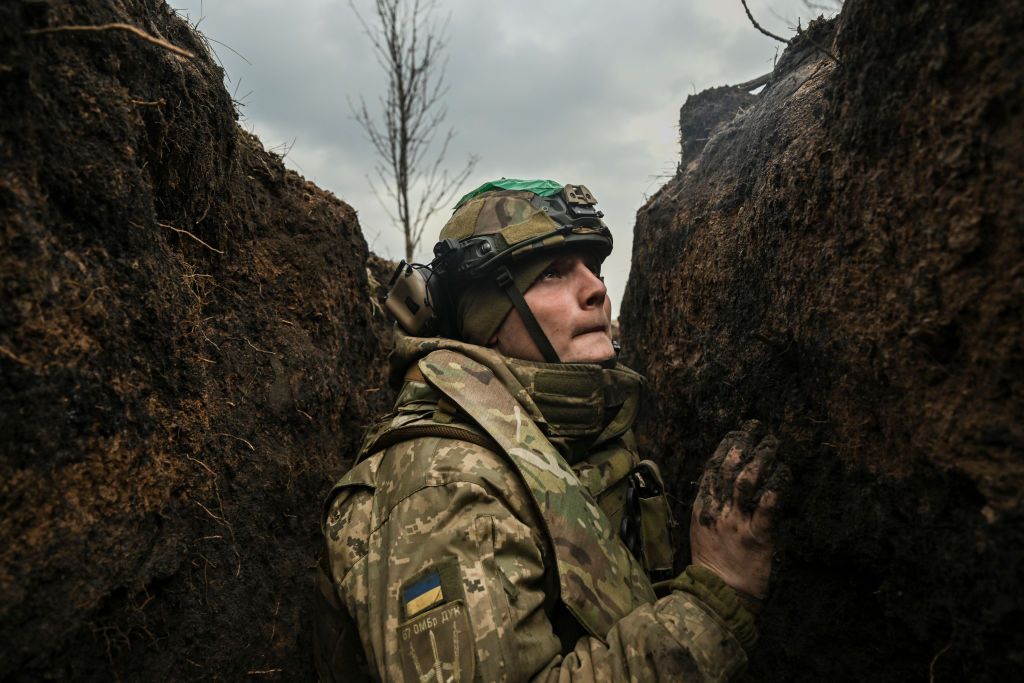
A Ukrainian soldier looks out from a trench at an artillery position near Kharkiv, Ukraine, on Dec. 6, 2024. (Photo by Nikoletta Stoyanova/Getty Images)
“The (Russian) president has repeatedly said that any option of freezing the conflict won’t work for us,” Kremlin spokesperson Dmitry Peskov told reporters on Nov. 20. “It’s important for us to achieve our goals.”
Russia’s goals include occupying more territory in Ukraine’s Donetsk Oblast and pushing Ukrainian forces out of Russia’s Kursk Oblast. Moscow may also aim to retake northeastern Kharkiv Oblast, with Russian forces currently threatening Kupiansk, a city liberated by Ukraine in September 2022.
Russia’s steady advances in eastern Ukraine, combined with its attacks on Ukraine’s energy infrastructure, give Moscow leverage in potential peace talks. Ukrainian lawmaker Oleksandr Merezhko has warned that Russia’s demands far exceed what Ukraine can offer. Moscow has already declared the annexation of four Ukrainian oblasts — Donetsk, Luhansk, Zaporizhzhia, and Kherson — despite not fully controlling them.
"Russia’s steady advances in eastern Ukraine, combined with its attacks on Ukraine’s energy infrastructure, give Moscow leverage in potential peace talks."
“(Russian President Vladimir) Putin cannot backtrack on annexations,” Merezhko told the Kyiv Independent.
Russia is also expected to demand that Ukraine abandon its NATO aspirations.
Caught in this dire situation, Ukraine faces a difficult balancing act. A source in Zelensky’s office, speaking anonymously, said Kyiv will not agree to freeze the war along the current front lines. Such an arrangement would leave Ukraine vulnerable, allowing Russia to regroup and rearm.
“Many of our fellow citizens will be hurt by these words, but the defense of Kursk Oblast is a higher priority than the Kurakhiv bridgehead, Donetsk, and Luhansk oblasts,” said Dmytro Zhmailo, a military expert and executive director of the Ukrainian Security and Cooperation Center.
Holding Russian territory could prevent peace talks on Moscow’s terms, as the Kremlin has stated it will not negotiate while Ukraine controls any part of Russia. Meanwhile, Ukraine must maintain morale while engaging with Trump’s incoming administration to promote the idea that supporting Kyiv serves U.S. interests.
In September, Zelensky presented Biden with a “victory plan,” outlining steps needed for Ukraine to continue its fight. While the plan received little enthusiasm, two proposals reportedly caught Trump’s attention: Ukrainian troops replacing U.S. forces in Europe and sharing Ukraine’s critical natural resources with the U.S. and its allies.
Ukrainian President Volodymyr Zelensky (R), French President Emmanuel Macron (C), and U.S. President-elect Donald Trump (R) pose for photos at the Elysee Presidential Palace in Paris, France, on Dec. 7, 2024. (Chesnot/Getty Images)
Over the past few months, Ukrainian leadership has shown greater openness to peace talks, even with limited leverage. Kyiv hopes to push the U.S. toward stricter sanctions on Russia and a stronger negotiating position for peace talks expected next year.
However, whether these talks will yield results remains uncertain. Ukrainian officials insist that any agreement must provide security guarantees, ensure Ukraine’s independence, and restore at least some territories occupied by Russia.
The potential shift in U.S. policy under Trump has alarmed not just Kyiv but also its allies in Europe. Countries like Poland, which share a direct stake in Ukraine’s survival and regional stability, are already bracing for the impact of a reduced American commitment.
Poland, in particular, has emerged as a key player in rallying European support for Ukraine. Polish Prime Minister Donald Tusk, drawing from his experience in the European Council, has expressed concerns about Trump’s unpredictability and its implications for Ukraine. He warned that we must expect the worst, and that a forced ceasefire on Putin’s terms could lead to renewed conflict and greater instability in Eastern Europe.
Poland is leveraging its defense spending — nearly 5% of GDP — and its strategic purchases of American weapons to assert its commitment to NATO and transatlantic security. Warsaw hopes to use this position to persuade Trump to maintain U.S. support for Ukraine. At the same time, Poland and its regional partners are preparing contingency plans, including potentially forming a coalition of willing nations to continue military aid if U.S. support falters.
Yet, even with such efforts, Europe faces significant challenges in maintaining the flow of military supplies to Ukraine. Production levels have not yet scaled up to meet demand, and some Western European leaders remain hesitant about deeper involvement.
Ukrainians are exhausted, and for now, a military solution seems out of reach. The trajectory of peace talks, however, will largely depend on Washington. There is a golden opportunity to persuade the new administration to take decisive action.
Ending the war for good is within reach, but it will require granting Ukraine NATO membership and reclaiming territories currently occupied by Russia. The U.S. has the leverage to compel the Kremlin to negotiate and to force meaningful concessions. Key economic tools include lowering global oil prices, tightening sanctions enforcement, and cutting off Moscow’s ability to sustain its war effort financially.
To support Ukraine, the U.S. could also tap into frozen Russian assets to fund the military hardware Ukraine still needs. A critical window of opportunity is on the horizon, and the U.S. has the tools to seize it. Now, it’s up to Kyiv to convince Trump that this is the path forward.
Editor’s Note: The opinions expressed in the op-ed section are those of the authors and do not necessarily reflect the views of the Kyiv Independent. This article was created as part of the Thematic Networks of PULSE, a European initiative promoting transnational journalistic collaborations.
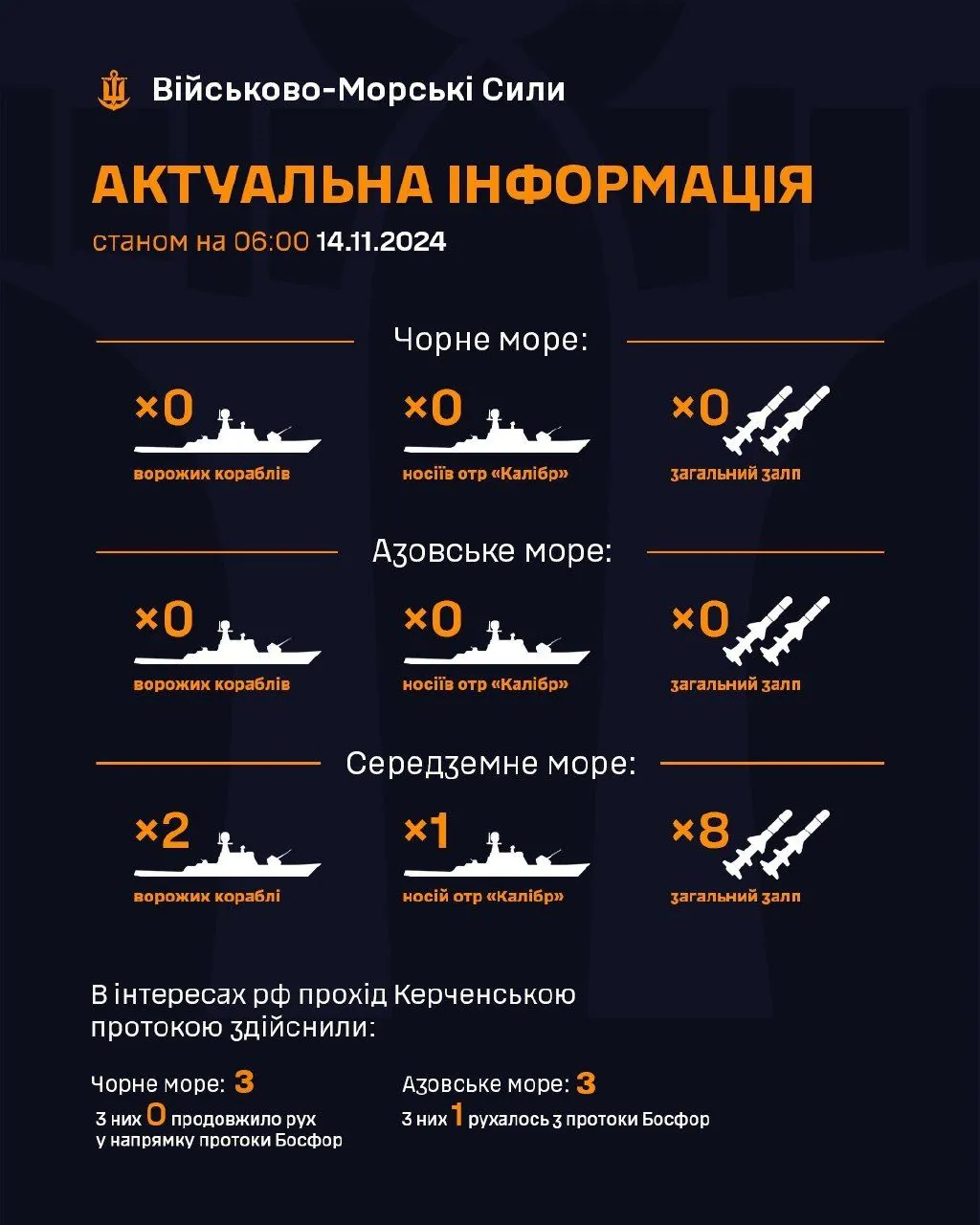
No Russian ships have been spotted in the Black Sea or the Sea of Azov. There are two Russian vessels in the Mediterranean Sea, one of which is equipped with Kalibr missiles.
As of November 14, 2024, no enemy ships have been spotted in the Black and Azov Seas. This is reported by the Naval Forces of the Armed Forces of Ukraine, UNN reports.
Details
However, according to reports, there are two Russian vessels in the Mediterranean, one of which is equipped with Kalibr cruise missiles and is capable of firing up to eight missiles.
Three vessels crossed the Kerch Strait to the Black Sea over the past 24 hours, none of which continued on to the Bosphorus. Three vessels also arrived in the Sea of Azov, one of which was heading from the Bosphorus.
No enemy ships in the Black and Azov SeasNov 10 2024, 05:01 AM • 47323 views
Battles in the front-line city of Pokrovsk in Donetsk Oblast is "exceptionally tough," requiring Ukraine's military leadership to make "non-standard decisions," Commander-in-Chief Oleksandr Syrskyi said on Dec. 11.
Previously on Dec. 11, military spokesperson Nazar Voloshyn confirmed that Russian forces had destroyed two Ukrainian positions near Pokrovsk.
Pokrovsk, a key logistics hub for Ukrainian forces in the east, has seen heavy fighting in recent months as Russian forces continue their relentless advance in Donetsk Oblast.
Syrskyi's comments followed a visit to the 38th Separate Marine Brigade, operating on the front lines in the Pokrovsk sector.
"We have to make non-standard decisions to increase the resilience of the defense and more effectively destroy the occupiers," he said in a Facebook post Dec. 11.
"The battles are of an exceptionally tough nature."
The Ukrainian military also confirmed on Dec. 11 that Russia had gained ground in Pokrovsk. Speaking in a televised broadcast, Nazar Voloshyn, the spokesperson for the Khortytsia group of forces, said that Russian troops had destroyed two Ukrainian positions in the area.
"As a result of prolonged clashes, two of our positions were destroyed, one was lost," Voloshyn said.
"Currently, measures are being taken to restore positions."
According to Syrskyi, the Ukrainian military is at a disadvantage, especially in terms of manpower. Russian troops outnumber Ukrainian units and "are throwing all available forces forward."
Syrskyi did not say what kinds of unconventional decisions would be required in the coming days, but said a priority was to deliver sufficient quantities of ammunition to the front line. He also said he responded to "existing problems" by issuing "appropriate orders."
Russian forces are now only 3 kilometers (1.5 miles) from Pokrovsk, according to the crowd-sourced monitoring website Deep State.
Observers and the Ukrainian military have previously warned of an increasingly difficult situation in Pokrovsk as Russian forces push forward. Syrskyi ordered additional reserves and weapons to Pokrovsk on Nov. 29 in an effort to stall Russia's assault.
Russia's grinding advance in eastern Ukraine continues to gain momentum at the cost of heavy personnel losses.
EU and US companies continue to supply weapons to Russia through intermediary countries. Arms exports to Armenia, Georgia, Kazakhstan, and other countries have increased 2.5 times in three years, from where they end up in Russia.
Despite years of sanctions, Russia annually purchases thousands of Western rifles and millions of rounds of ammunition from companies in the European Union and the United States. No one sells them directly, but large batches of various weapons reach Russia through third countries and are then used in the war with Ukraine. This is stated in a joint investigation by The Insider with Czech Investigace.cz, Italian IrpiMedia and Kazakh Vlast.kz, UNN reports.
Details
The journalists found out that in recent years, companies from the European Union, the United States (US) and Turkey have been sending more weapons to Armenia, Georgia, Kazakhstan, Kyrgyzstan and Uzbekistan.
Weapons exports to these countries have increased two and a half times in three years: from 19,556 guns in 2020 to 53,211 in 2023,
– the publication says.
Investigators note that the export of rifles and shotguns from Italy to Armenia has increased almost 30 times in four years – from 68 weapons in 2019 to 1,862 in 2023. Kyrgyzstan did not buy weapons from Italy in 2020 and 2021, but received 882 weapons in 2022 and 4434 in 2023. Arms exports from Turkey to Georgia increased from 8,426 in 2019 to 18,843 in 2023.
The largest European arms manufacturer with ties to Russia is the Luxembourg-based Beretta holding. In June 2024, the Russian importer of Beretta was included in the U.S. Treasury Department's sanctions list. Despite the sanctions, Beretta Holding remains the majority owner of the Russian company.
Foreign components made in 2023 were found in North Korean missiles used by Russia to hit Ukraine – DIUNov 25 2024, 07:15 AM • 13146 views
Among the German arms manufacturers, Hans Wrage & Co from Hamburg maintains ties with Russia. Its head, Frauke Löhmann, still owns 15.96% of the Russian Rusimpeks.
"Despite the war in Ukraine, this company continues to import Japanese Miroku carbines, German Anschutz, Krieghoff hunting rifles, Ruag Ammotec and RWS ammunition, including army calibers," The Insider writes.
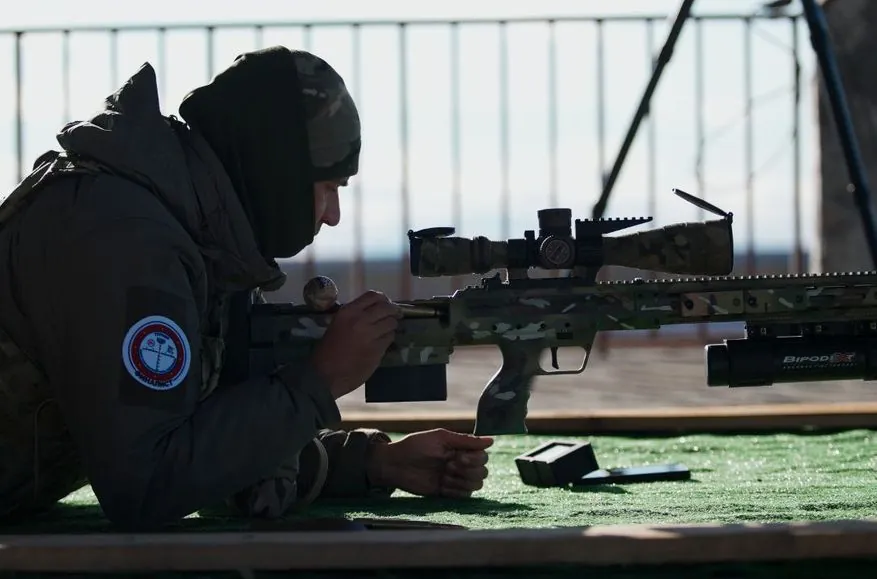
Russian snipers, both civilian and military, continue to use Western rifles and ammunition instead of Russian weapons. This is confirmed by the protocols of sniper competitions that took place last September at the Angarsk training ground in annexed Crimea,
– the publication writes.
EU countries have imposed an arms embargo on Russia since the annexation of Crimea in 2014. But, as the investigation notes, there are still no controls on exports to the Customs Union countries of Armenia, Belarus, Kazakhstan, and Kyrgyzstan, which share a common customs space with Russia and the CSTO military-political bloc.
Recall
The President of Ukraine saidthat Russian missiles attacking Ukrainian schools may have components from America, Europe and Asia. He emphasized that the safety of children is everyone's concern.

 The Kyiv IndependentDinara Khalilova