Category: War in Ukraine

Last news • War in Ukraine

  • As China weaponizes the drone supply chain, Ukraine builds more parts at home

    As China weaponizes the drone supply chain, Ukraine builds more parts at home

    As China weaponizes the drone supply chain, Ukraine builds more parts at home

    Some 25 miles south of the Russian border, explosions rumble off in the distance more or less continuously.

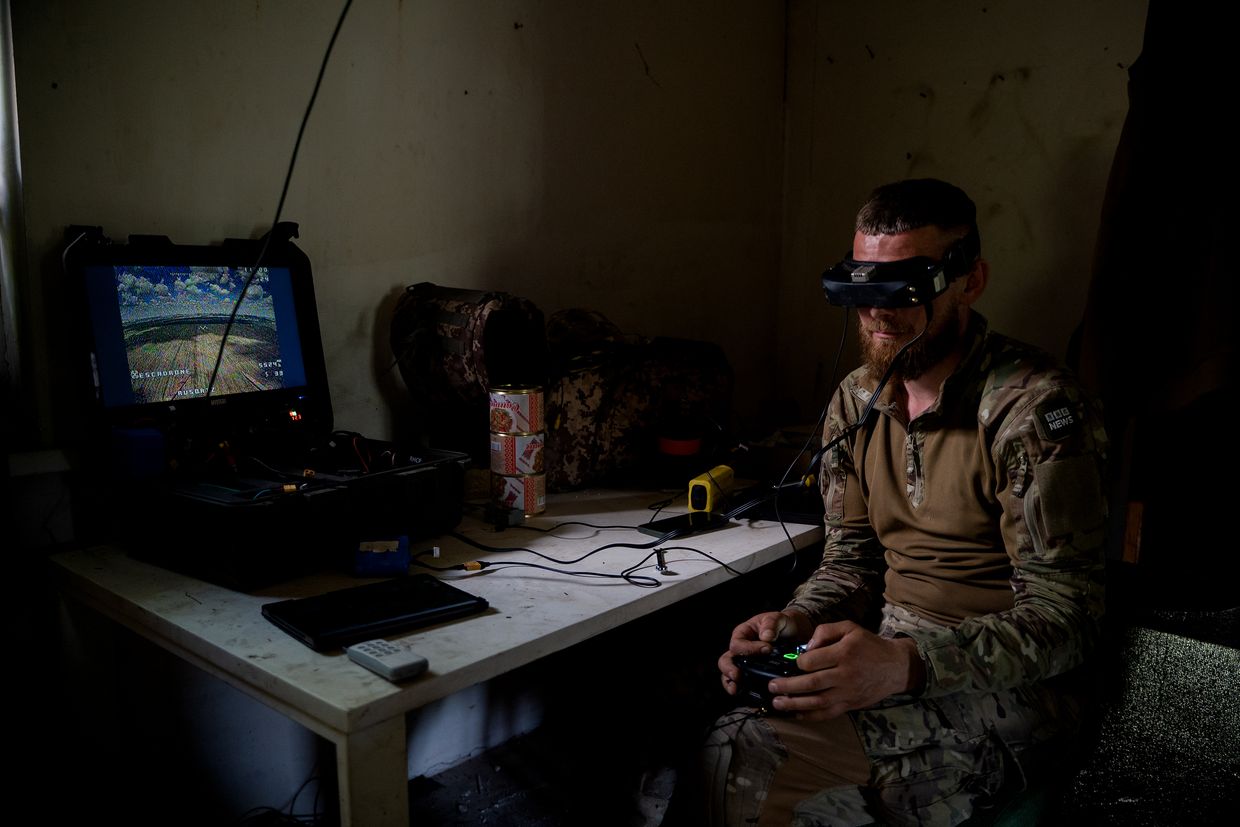
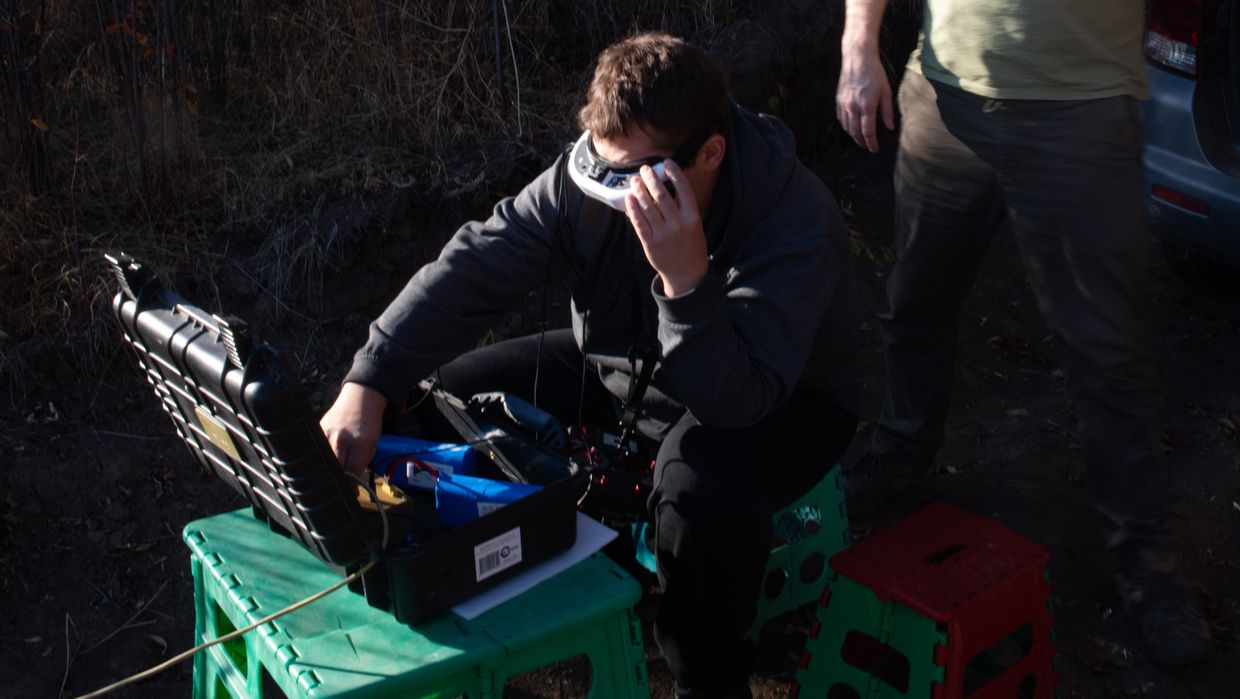
    “We don’t even hear them anymore,” Zhenya chuckles from under first-person-view (FPV) goggles branded with the U.S. company “Fat Shark.”

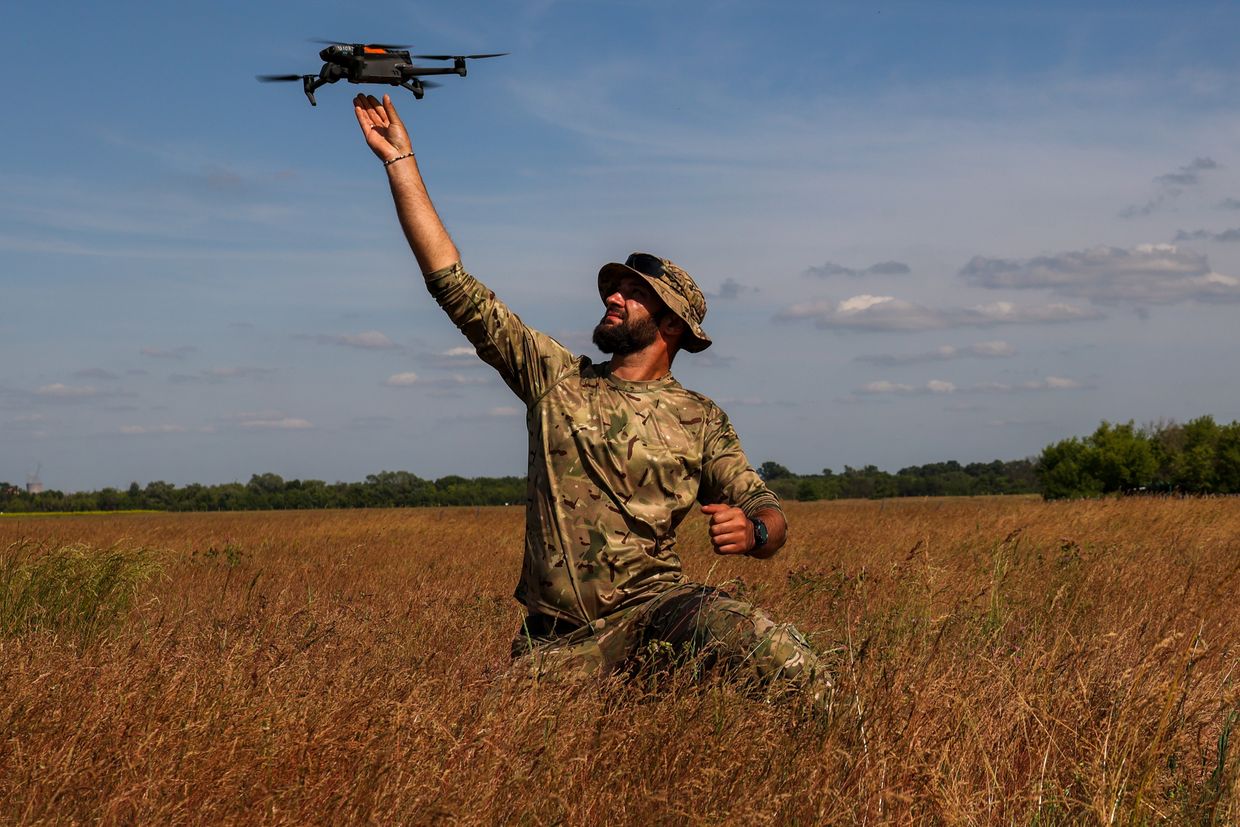
    Zhenya and his co-developer for DragoDrones, or DCU, Maksym, are testing a stack of small FPV drones in a field in Kharkiv Oblast. They asked not to be identified by last name, due to the proximity of their workshops to Russian air power.

    Most of the drones they made themselves. One is of ambiguous Chinese provenance — unmarked, maker unknown, and most importantly, not working.

    Zhenya launches the drone into a couple of neat somersaults before sending it off into the distance. Around three kilometers away, Maksym gestures to a screen. The video is clipping out.
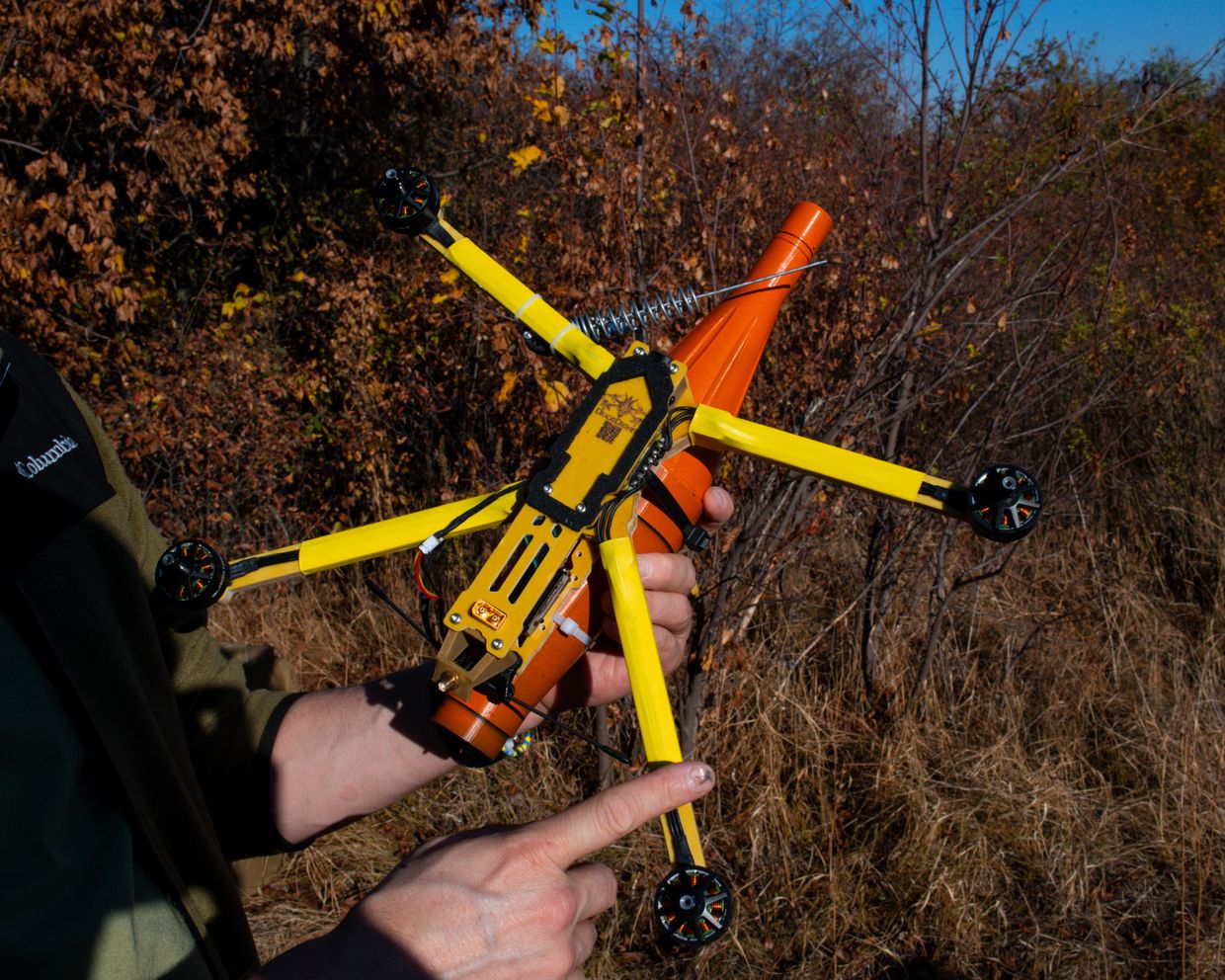
    As China weaponizes the drone supply chain, Ukraine builds more parts at home
    Maksym shows off DragoDrones' newest bomber model in an undisclosed location on Oct. 22, 2024 (Kollen Post / The Kyiv Independent).
    As China weaponizes the drone supply chain, Ukraine builds more parts at home
    Zhenya puts on his FPV goggles and starts testing in an undisclosed location on Oct. 22, 2024. (Kollen Post / The Kyiv Independent).

    It’s the bug that a brigade holding thousands of these drones has asked them to fix, explains Maksym: A faulty video transmitter, a cheap under-tested gadget that they're now replacing.

    It’s a persistent problem with the drone supply to Ukrainian troops: Imported Chinese drones are often laden with defective parts. And while they have typically been cheap enough to merit replacing, China is actively cutting off its exports of components and materials critical to drone building.

    In the face of these threats, Ukraine’s drone industry is increasingly onshoring the production of more ambitious components. And they’re getting better than anyone expected at building even the trickier gadgets needed to keep Ukraine’s army of drones in flight.

    "We cannot rely on a Chinese supply chain," says Denys Nikolayenko, who makes high-end thermal cameras for drones, from an office in Kyiv.

    Native drone

    The first drones to see mass use in Ukraine following Russia’s invasion in February 2022 were cheap, off-the-shelf Chinese imports.

    As the country realized the importance of these new weapons, Ukraine began building out its local drone manufacturing in the early months of the war. Thanks to heavy investment in the industry, a major proportion of drones on the front today are Ukrainian-made.

    The components of those drones are a different matter. China’s chokehold on the supply chain has been a source of persistent alarm. Nataliia Kushnerska, head of Ukrainian defense tech hub Brave1, identified the “particular dependence on China” as one of the three biggest problems in Ukraine’s drone industry, speaking to Forbes Ukraine last November.

    China made headlines in Ukraine for restricting drone components at the outset of September. Recent reports show China has already begun curbing sales to American and European drone makers and is readying more sanctions.

    Zelensky addressed the nation referring to the Chinese controls announced in September, alluding to Ukraine’s new self-reliance: "Some of the largest state exporters of drone components are instituting export controls. We know what to do so that these controls don't become a critical threat to us."

    "Some of the largest state exporters of drone components are instituting export controls. We know what to do so that these controls don't become a critical threat to us."

    China sanctioned U.S. drone company Skydio in late October, barring Chinese manufacturers from selling to the firm. Skydio’s dependence on Chinese components, particularly motors, has led to backups at the firm. It has also exposed China’s readiness to weaponize its dominance in unmanned weapons.

    “This is a clarifying moment for the drone industry,” Skydio CEO Adam Bry wrote to customers. “If there was ever any doubt, this action makes clear that the Chinese government will use supply chains as a weapon to advance their interests over ours.”

    Ukraine’s manufacturers have gotten remarkably adept at replicating Chinese drone functionality at home, both out of concern for cost and concerns about China’s loyalties to Russia.

    Herman Smetanin, minister of Strategic Industries, announced early in November that Ukraine had developed a “Shmavic,” a local copy of the DJI Mavics that were the first drones to see wide use following Russia’s full-scale invasion.

    But the focus on the more minute elements within the supply chain for drone production is a newer phenomenon.

    As China weaponizes the drone supply chain, Ukraine builds more parts at home
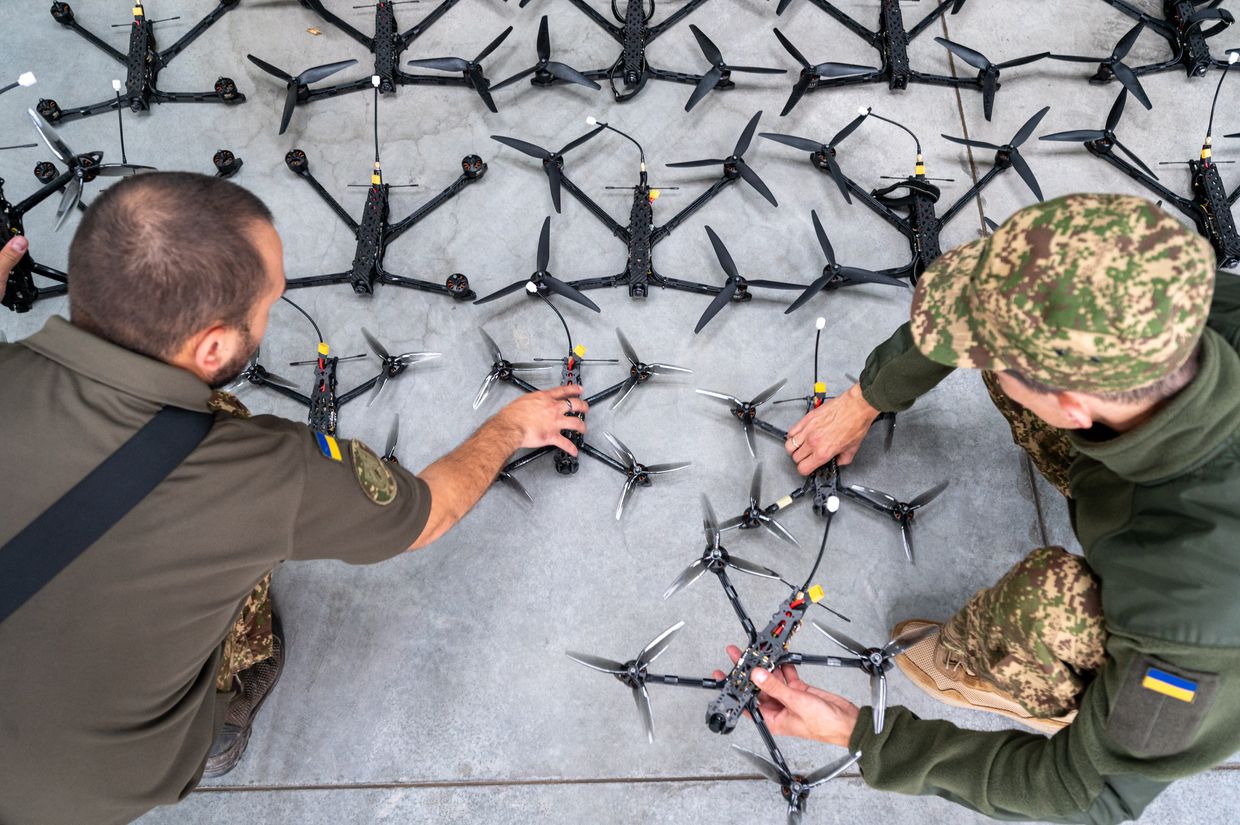
    Ukrainian soldiers repair drones in a laboratory at an undetermined location in Donetsk Oblast, Ukraine, on Nov. 24, 2024. (Diego Herrera Carcedo/Anadolu via Getty Images)
    As China weaponizes the drone supply chain, Ukraine builds more parts at home
    Soldiers of the Armed Forces inspect FPV drones during the handover from the volunteer organization in Lviv, Ukraine, on Sep. 13, 2024. (Stanislav Ivanov/Global Images Ukraine via Getty Images)

    Producers like Zhenya and Maksym are increasingly equipping their own drones with parts made at home. Beyond their own frames routed out of Kharkiv-sourced foam plastic and 3D-printed fasteners, they recently got a Ukrainian computer numerical control machine — essential for precise tooling — and have begun buying motors from a new Ukrainian supplier.

    The pair's drones run between $300 and $600, making them cheaper than off-the-shelf FPVs or Mavics with which they compete on function. Maksym and Zhenya have a lot more at stake in keeping those explosions from coming any closer than DJI or Autel do.

    Beyond drone-specific components, China is also tightening controls on key raw materials, especially rare-earth metals key to certain higher-end gadgets on a drone.

    "Before 2023 you could just buy germanium from China without any export controls or whatever procedures on Alibaba, two weeks later you got your germanium bricks here in Kyiv," reminisces Nikolayenko. "But in 2023 they started to control it."

    NIkolayenko’s company, Oko Camera, needs germanium to make thermal lenses for drones. Despite being the Ukrainian word for “eye,” Oko is cautious about being overly visible as a company. Russian airstrikes remain a threat to local manufacturers, even those based in the Kyiv region. Oko lenses are maybe most famous for being the visual guidance of Ukraine's famous "Baba Yaga" drones, so dubbed by Russian soldiers after a mythical witch due to their ability to strike on the gloomiest of nights.

    Displaying a trio of their lenses on a desk. Nikolayenko and his business manager, Nazariy Nikolaychuk, note that they’ve built many of their own machining tools, and specifically worked out an independent calibration process.

    “The benefit is that actually you ensure the quality of the image of each camera that you produce, and this is not the case for some Chinese cameras. This makes us different,” says Nikolayenko.

    The images are undoubtedly crisp, showing the twigs on trees and soldiers behind them, and even the thermal differential between hair and skin.

    Long-term, Ukrainian drone makers are keen to sell to Western buyers, particularly after a ceasefire allows them to export. With increasing volleys of sanctions, many are betting that NATO will increasingly see Chinese parts, particularly the higher-tech ones, as a disqualifying feature for would-be suppliers.

    Stay warm with Ukrainian traditions this winter. Shop our seasonal merch collection.

    As China weaponizes the drone supply chain, Ukraine builds more parts at home shop now

    The plane in Ukraine falls gently on the chain

    Nonetheless, there remain enduring concerns that many “Ukrainian-made” drones are Chinese imports barely modified and sent out to the front.

    “They say the government bought a bunch of drones. The fact is, they bought them from China and stuck on some stickers of their own. And then they don’t work,” says Maksym.

    And while local producers are trying their hands at new links in the supply chain, the most and least complicated elements still depend heavily on imports.

    For Oko, the sensors remain strictly European. Though Nikolayenko says they’ve built some of their own machining tools, most manufacturers of everything within Ukraine remain dependent on imported machining tools — traditionally Chinese, but increasingly Indian and, for those who can afford it, European.

    But for the cheapest components, simple base-line products like transistors, circuit boards, wiring, or solar cells, nobody can yet step up to the scale of China’s mass production.

    While DragoDrones 3D-prints some of the components, and are prototyping more, the problem is not cost so much as speed. They lament that despite their clever workarounds, localized mass production within Ukraine was a pre-war casualty of bad policy.

    “Production capacity is much bigger in Russia, plus China. In Ukraine, over the last fifteen years, they closed down the production of all the little electronics — at the hands of both our government and the Russians doing the financing,” says Zhenya.

    “(The Russians) copy what we make, for the most part,” says Maksym. “We were the ones who started using drones because we had nothing else.”

    ‘Battle-tested in Ukraine’ — How US drone makers turned Ukraine into a tagline to sell westThe biggest weapons makers in the world convened in Washington, D.C. for the 70th meeting of the Association of the United States Army in early October. It was the third year in a row where Ukraine remained at the center of the event’s enormous buzz. Synchronized press releases ensued.As China weaponizes the drone supply chain, Ukraine builds more parts at homeThe Kyiv IndependentKollen PostAs China weaponizes the drone supply chain, Ukraine builds more parts at home
  • US plans new sanctions against Russia in the oil sector to weaken Putin in front of Trump

    US plans new sanctions against Russia in the oil sector to weaken Putin in front of Trump

    US plans new sanctions against Russia in the oil sector to weaken Putin in front of Trump

    The Biden administration is considering tougher sanctions against Russia's oil trade and shadow tanker fleet. The new restrictions may be similar to sanctions against Iran.

    US President Joe Biden is looking for ways to blow up the Kremlin's War Machine. The restrictions will also affect the Russian shadow tanker fleet. This is reported by Bloomberg, reports UNN.

    Details

    The Biden administration is considering imposing new, tougher sanctions on Russia's lucrative oil trade, seeking to increase pressure on Russia's military apparatus weeks before Donald Trump returns to the White House.

    Details of possible new measures are being worked out, but President Joe Biden's team is considering restrictions that may affect some types of Russian oil exports, Bloomberg reports, citing its own anonymous sources.

    Biden has long resisted the move out of fear that it could trigger a jump in energy prices, especially in the run-up to last month's presidential election. But with falling oil prices amid global surpluses and growing fears that Trump could try to force Ukraine to make a quick deal with Russia to end its nearly three-year war, the Biden administration is now open to more aggressive action

    – says a Bloomberg Post .

    One of the models of tougher US sanctions may be the introduction of restrictions similar to those on Iranian oil.

    The administration is also considering new sanctions aimed at the tanker fleet that Russia uses to transport its oil. New restrictions on the so-called shadow fleet may be made public in the coming weeks

    – writes Bloomberg.

    Such restrictions can lead to a sharp increase in oil prices in the shortest possible time, which will lead to tension in the global economy.

    It will also increase tensions with both adversaries and partners through whom the US wants to restrict exports of sensitive goods such as chips and other technologies that fuel Russia's War Machine.

    While these steps will be aimed at capitalizing on a weaker oil market, they will also be aimed at increasing pressure on Russia before Trump takes office. The president-elect has insisted on negotiations to end the war in Ukraine, and current officials say they want to give President Volodymyr Zelensky's government as much leverage as possible before any negotiations.

    recall

    The United Kingdom imposed sanctions on 18 Russian oil tankers and 4 LNG tankers. These are" the biggest sanctions against Putin's shadow fleet", which are aimed at undermining Russia's energy revenues.

  • Confusion over Russian advances in Sumy Oblast, authorities deny border breach

    Confusion over Russian advances in Sumy Oblast, authorities deny border breach

    Confusion over Russian advances in Sumy Oblast, authorities deny border breach

    Analysts from the crowd-sourced monitoring website DeepState Map reported on Dec. 10 that Russian forces had advanced in Sumy Oblast near the border village of Oleksandriya.

    DeepState is a mapping project, independent but with close ties to the Defense Ministry, widely trusted as one of the most reliable sources of accurate information on territorial changes along the front line.

    The map changes showed Russian forces occupying 2 square kilometers (0,8 square miles) in Sumy and advancing in the Kursk Oblast. These developments are reflected as of December 10.

    Sumy Oblast authorities, including head of the Military Administration Volodymyr Artyukh, rejected the notion that Russian forces had breached the border, calling the reports "fake" and describing them as disinformation.

    "Now, there is no data from the military on the change of the situation on the border; the situation is controlled," Artyukh said.

    Sumy Oblast borders Russia's Bryansk, Kursk, and Belgorod oblasts. Residents of the vulnerable border communities experience multiple attacks per day.

    Ukraine peace talks could start this winter, Tusk saysSpeaking during a government meeting, the Polish Prime Minister announced that Poland, set to assume the rotating presidency of the Council of the European Union on Jan. 1, intends to play an active role in the talks.Confusion over Russian advances in Sumy Oblast, authorities deny border breachThe Kyiv IndependentTim ZadorozhnyyConfusion over Russian advances in Sumy Oblast, authorities deny border breach
  • US State Department approves sale of F-16 maintenance equipment to Ukraine

    US State Department approves sale of F-16 maintenance equipment to Ukraine

    US State Department approves sale of F-16 maintenance equipment to Ukraine

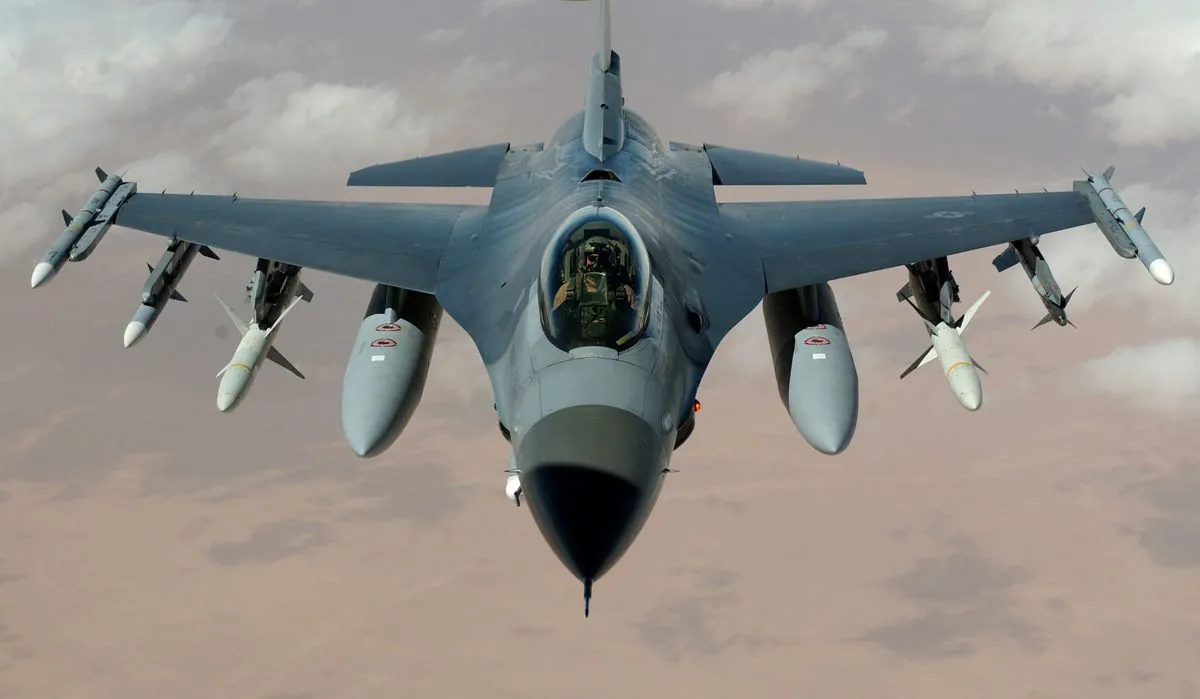
    The US State Department has approved the sale of services and equipment for servicing the F-16 to Ukraine. the package includes mission planning systems, technical support and personnel training.

    The US State Department has approved the sale of F-16 aircraft maintenance services to Ukraine for a total of.266.4 million. This is stated on the website of the agency for security cooperation of the US Department of Defense, writes UNN.

    Details

    The agency issued the required certificate and notified the US Congress about it.

    The estimated total cost of all the declared equipment is 2 266.4 million.

    The head jackets are claimed by Sabena (Charleroi, Belgium), Lockheed Martin Aeronautics (Fort Worth, Texas) and Pratt and Whitney (East Hartford, Connecticut).

    It is noted that this aid package will improve Ukraine's ability to resist current and future threats, providing it with a more powerful air defense system for performing self-defense missions and ensuring regional security.

    recall

    In November, Zelensky reported the first success of F16 in Ukraine – the destruction of seven cruise missiles flying at civilian targets.

    The Netherlands says goodbye to F-16s: Fighter jets that have served for 45 years are being transferred to UkraineSep 28 2024, 02:22 AM • 68802 views

  • Zelensky announces ‘successful tests’ of new Ukrainian missile

    Zelensky announces ‘successful tests’ of new Ukrainian missile

    Zelensky announces 'successful tests' of new Ukrainian missile

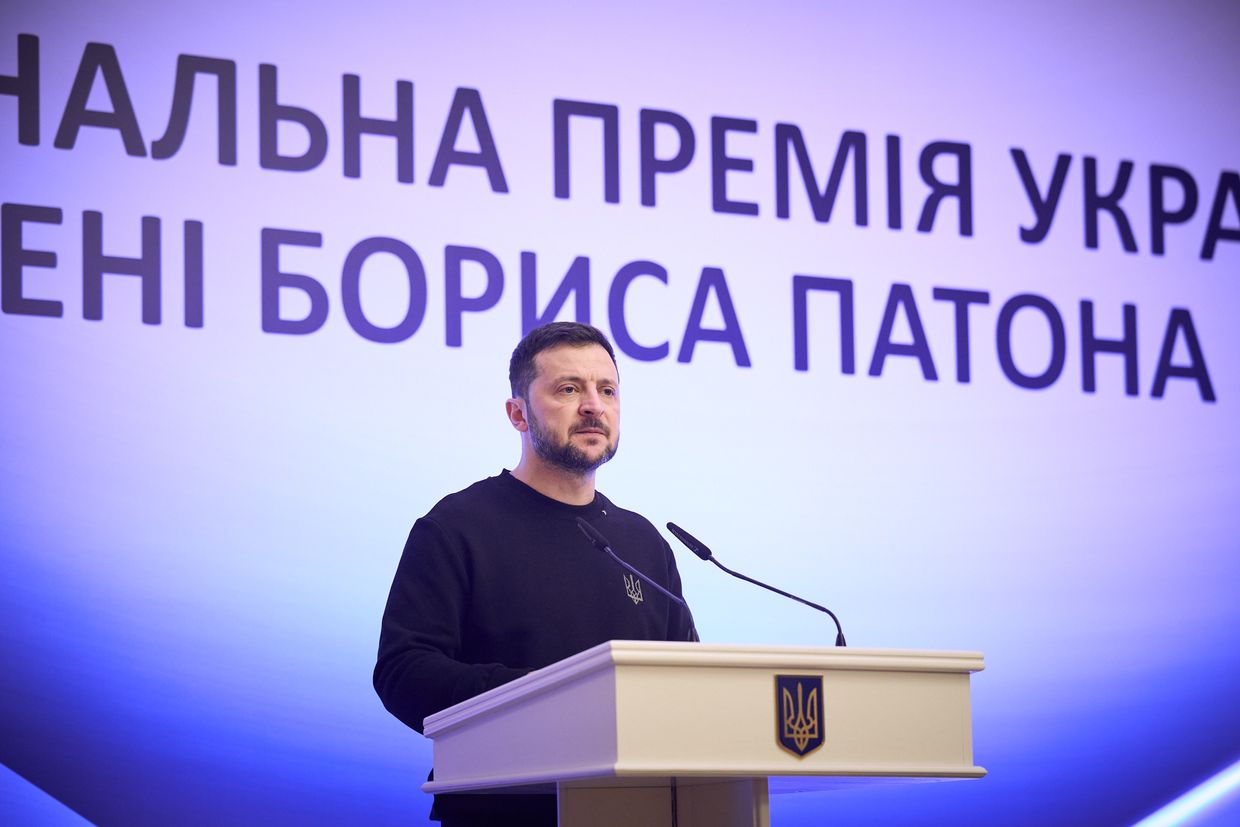
    Successful tests of a new Ukrainian missile, dubbed Ruta (Rue), are underway, President Volodymyr Zelensky announced on Dec. 10.

    Speaking at the Borys Paton National Prize presentation, Zelensky provided no additional details about the missile’s characteristics.

    The president highlighted Ukraine’s progress in missile and drone development, noting that the Palianytsia, a lightweight missile-drone hybrid, has entered mass production, while the Peklo (Hell) hybrid has already been successfully deployed in combat.

    Zelensky confirmed on Dec. 6 that the first batch of Peklo had been delivered to Ukraine's Armed Forces.

    In August, Zelensky announced that Ukraine had also tested its first home-grown ballistic missile.

    These advancements reflect the rapid growth of Ukraine's missile program since Russia’s full-scale invasion began in February 2022.

    While Ukraine continues to develop indigenous missile capabilities, Western partners have only recently approved the use of foreign-made missiles for strikes on Russia’s Kursk Oblast.

    70% of Ukrainians support ‘West German’ model for NATO accession, survey showsA key difference is that the invitation would encompass the entire Ukraine, but the alliance’s defensive “umbrella” would extend to the occupied territories only after their future liberation.Zelensky announces 'successful tests' of new Ukrainian missileThe Kyiv IndependentMartin FornusekZelensky announces 'successful tests' of new Ukrainian missile
  • Galushchenko: Ukraine initiated IAEA meeting due to Russian attack on agency’s official car

    Galushchenko: Ukraine initiated IAEA meeting due to Russian attack on agency’s official car

    Galushchenko: Ukraine initiated IAEA meeting due to Russian attack on agency's official car

    Energy Minister Galushchenko initiated an emergency meeting of the IAEA Board of Governors due to the Russian drone attack on the mission's vehicle. The meeting will be held on December 12 in Vienna.

    Ukrainian Energy Minister Herman Galushchenko has initiated an emergency meeting of the Board of Governors of the International Atomic Energy Agency in connection with the Russian drone attack on the IAEA mission vehicle. He announced this on Facebook, UNN reports.

    Details

    Galushchenko noted that the meeting will be held on December 12 in Vienna.

    The attack by a Russian UAV on the IAEA mission vehicle is yet another crime and manifestation of Russia's unprecedented cynicism. The enemy deliberately uses its terrorist methods and intimidation

    – the Minister noted.

    He also emphasized that the international community must respond decisively to the actions of the aggressor country, Russia, against the Ukrainian energy sector.

    Recall

    In Zaporizhzhia region, a Russian FPV drone attacked an IAEA convoy, damaging one of the vehicles. President Zelensky called on international partners to respond decisively to the incident.

  • US announces $20 billion loan for Ukraine as part of G7 initiative

    US announces $20 billion loan for Ukraine as part of G7 initiative

    US announces $20 billion loan for Ukraine as part of G7 initiative

    The U.S. Treasury Department announced on Dec. 10 that it will provide $20 billion in loan assistance to Ukraine, marking its contribution to a broader $50 billion initiative supported by G7 countries.

    The loan will be repaid using proceeds from frozen Russian assets.

    U.S. Treasury Secretary Janet Yellen emphasized the significance of the funding, stating, “The $50 billion collectively being provided by the G7 through this initiative will help ensure Ukraine has the resources it needs to sustain emergency services, hospitals, and other foundations of its brave resistance.”

    The funds will be channeled to Ukraine through the World Bank’s Facilitation of Resources to Invest in Strengthening Ukraine Financial Intermediary Fund (F.O.R.T.I.S. Ukraine FIF), ensuring immediate availability for critical needs.

    The U.S. contributed $20 billion of the total loan, matched by European Union countries, including France, Germany, and Italy, which will provide $19.4 billion together.

    Additional contributions include $3.7 billion from Canada, $3.07 billion from Japan, and $2.9 billion from the United Kingdom.

    While Western countries have frozen $300 billion in Russian assets, only the annual income generated — approximately $3.2 billion — is accessible.

    These proceeds will back the $50-billion loan, with the majority of the frozen assets located in Europe.

    Speaking at the G7 summit in June, President Volodymyr Zelensky called for a mechanism to fully confiscate the frozen Russian funds, highlighting their potential to bolster Ukraine’s long-term recovery.

    According to October reports, the G7 plans to keep these Russian assets immobilized even after the war ends.

    70% of Ukrainians support ‘West German’ model for NATO accession, survey showsA key difference is that the invitation would encompass the entire Ukraine, but the alliance’s defensive “umbrella” would extend to the occupied territories only after their future liberation.US announces $20 billion loan for Ukraine as part of G7 initiativeThe Kyiv IndependentMartin FornusekUS announces $20 billion loan for Ukraine as part of G7 initiative
  • In Zaporizhzhia, rescuers pulled two women from the rubble who had called 101

    In Zaporizhzhia, rescuers pulled two women from the rubble who had called 101

    In Zaporizhzhia, rescuers pulled two women from the rubble who had called 101

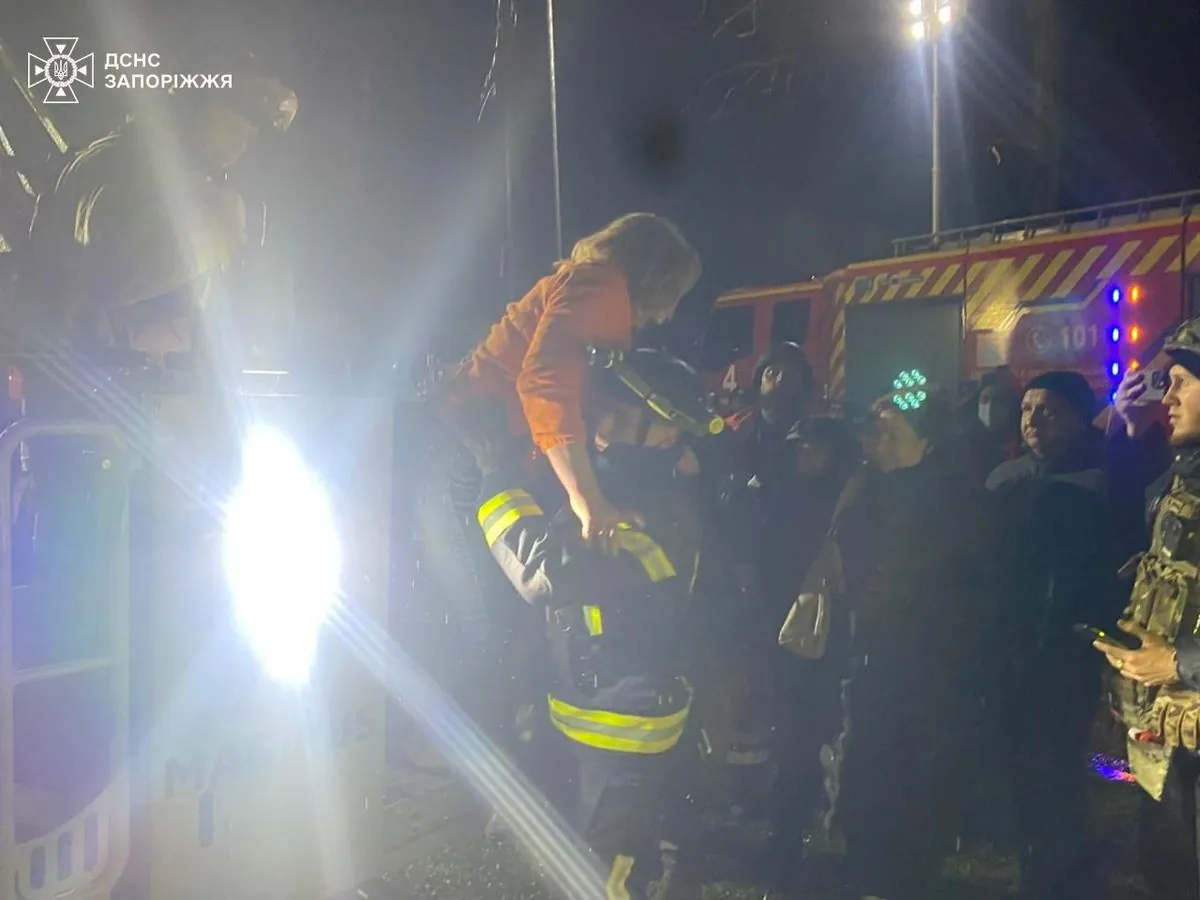
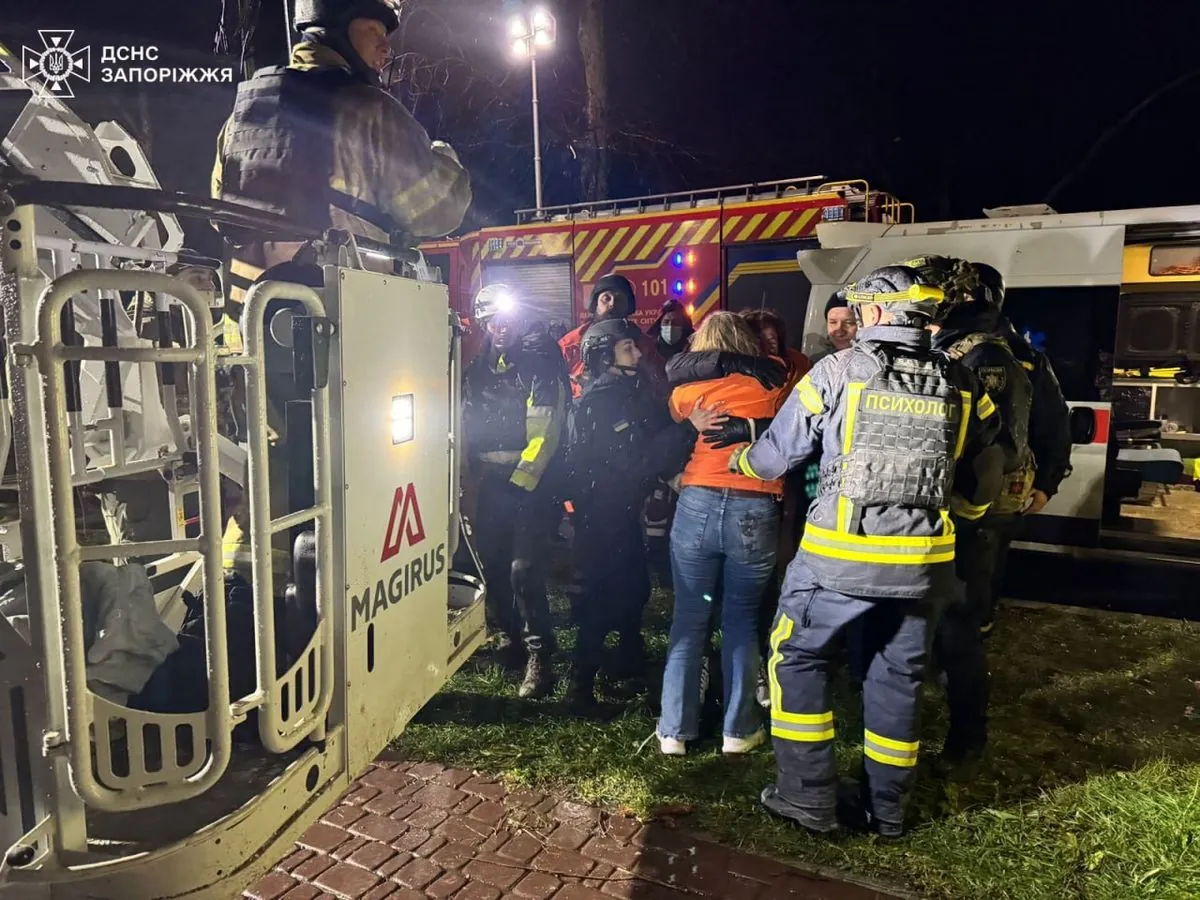
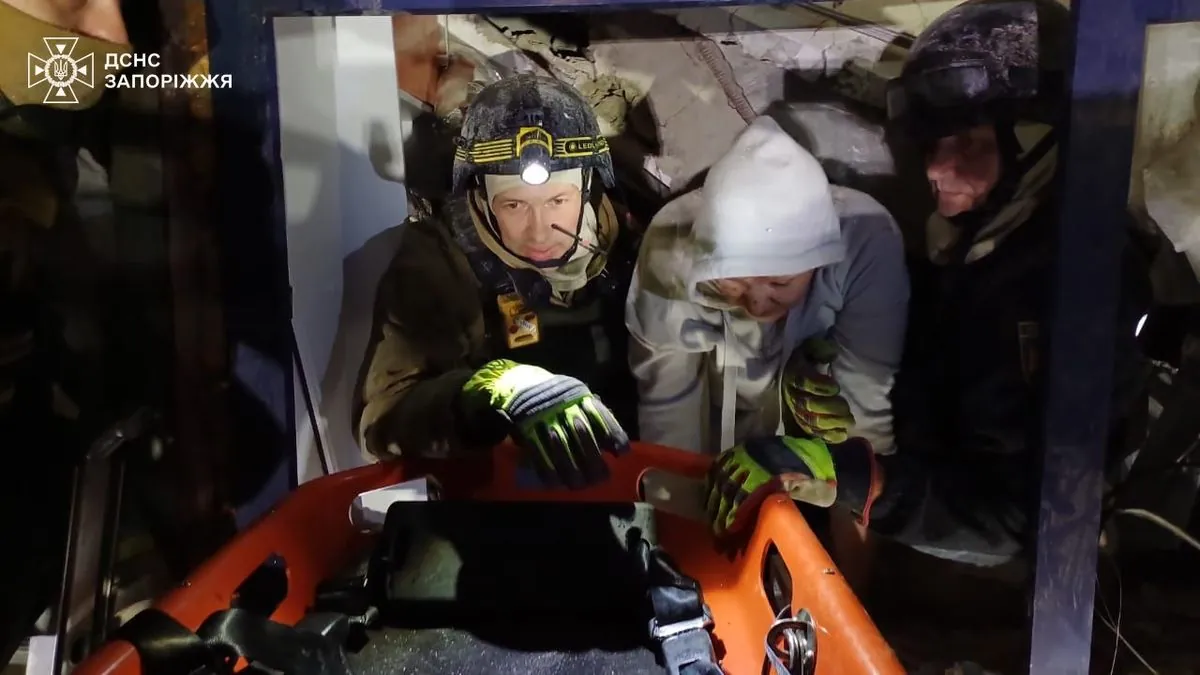
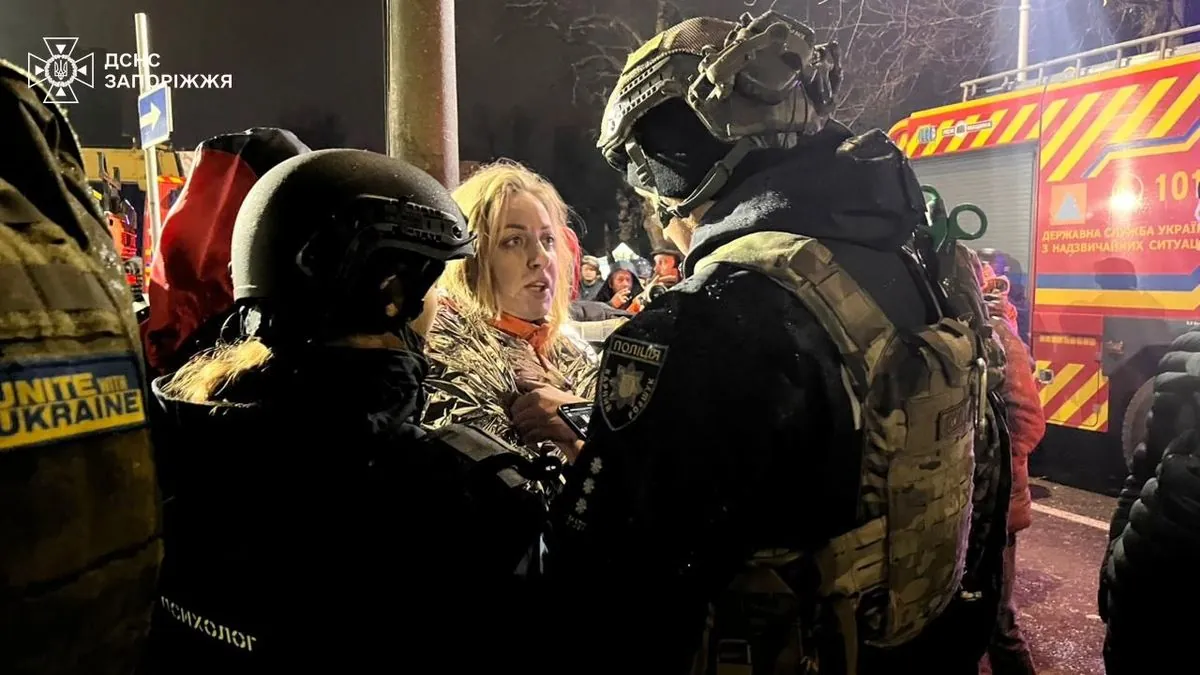
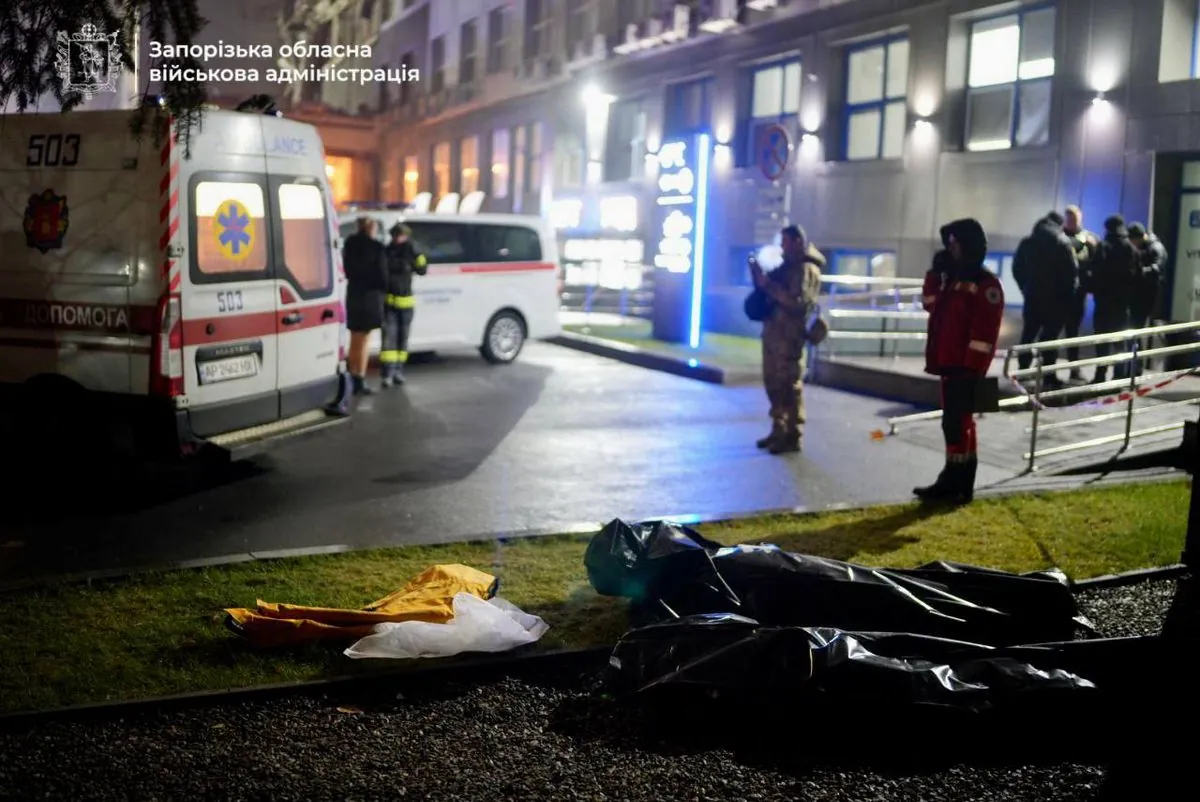
    In Zaporizhzhia, rescuers rescued two women from the rubble of a destroyed building after they called 101. The strike on the private clinic killed 5 people and injured 19, and rescue operations are ongoing.

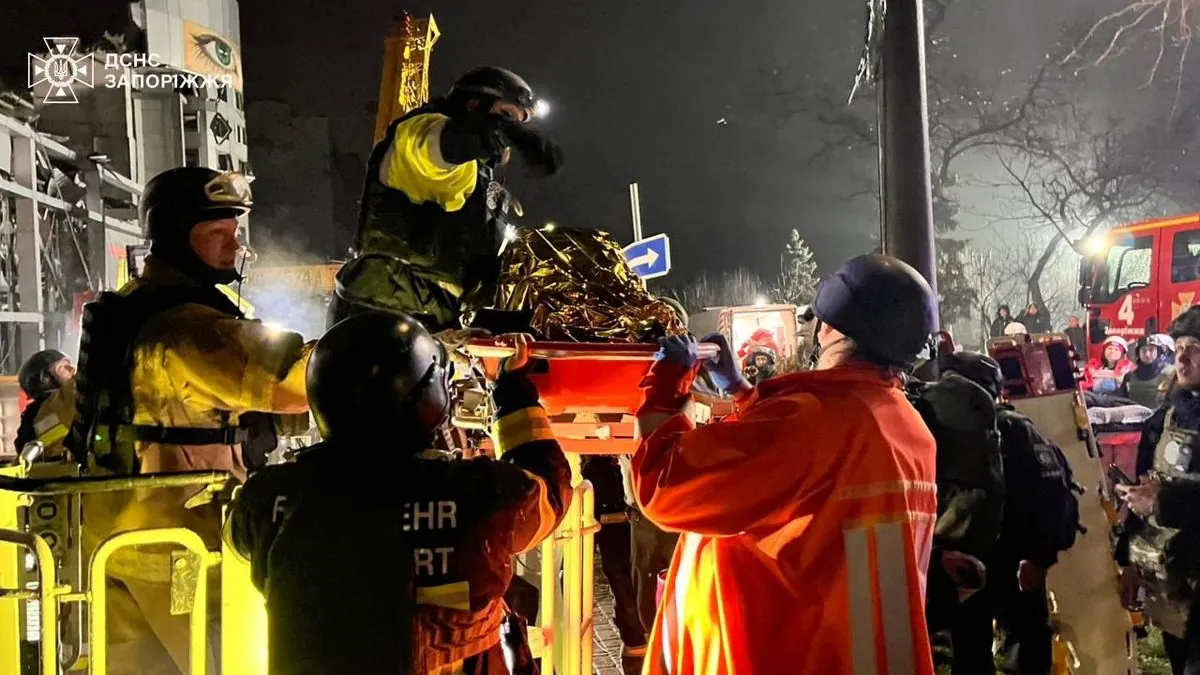
    In Zaporizhzhia, rescuers pulled two women from the rubble of a destroyed building who had called the 101 line. This was reported by the State Emergency Service of Zaporizhzhia, according to UNN.

    Details

    During the search and rescue operations, two women called the 101 Rescue Service Line, who reported that they were under the rubble of the destroyed building.

    During the conversation, rescuers professionally found out the details in order to determine their exact location.

    Having received important information, emergency workers with the help of special equipment released the victims. For more than seven hours, the women were under the rubble, waiting for help. Thanks to the well-coordinated work of rescuers, they were removed from the trap and handed over to doctors. After being examined by ambulance doctors, both women were hospitalized in a medical facility,

    – the statement said.

    addition

    As of 22: 30, as a result of the impact on a private clinic , 4 people were killed, 19 people were injured, including 1 child. Unfortunately, one victim died in hospital. Units of the State Emergency Service rescued 4 people.

    Emergency rescue operations continue.

    75 rescuers and 18 pieces of equipment were involved from the State Emergency Service.

    Zelensky on the strike on Zaporizhzhia: we reiterate that air defense should save lives, not gather dust in storage basesDec 10 2024, 08:17 PM • 8442 views

  • Russia reduces barge barriers protecting Crimean Bridge by half in a month

    Russia reduces barge barriers protecting Crimean Bridge by half in a month

    Russia reduces barge barriers protecting Crimean Bridge by half in a month

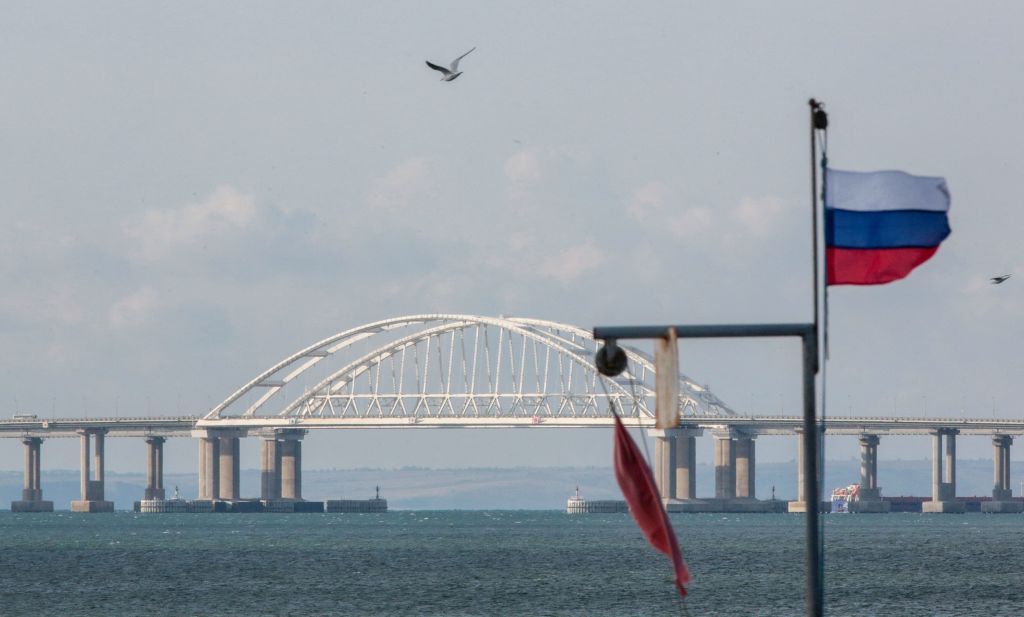
    The number of barges Russia has deployed in the Kerch Strait to protect the illegal Crimean Bridge against Ukrainian maritime drones has halved in a month, the Center of Journalistic Investigations reported on Dec. 10.

    Satellite images from Nov. 8 showed 34 barges arranged in two rows near the shipping channel in the Kerch Strait, installed between July 27 and Aug. 8.

    Recent Sentinel-2 satellite images from Dec. 8 reveal only 18 barges remaining between Tuzla Island and the Kerch Peninsula. The fate of the other 16 vessels is unclear.

    On Sept. 30, it was reported that barriers intended to protect the bridge from attacks were washed ashore after a storm, with plastic and metal barrels connected by frames scattered on Kerch beaches.

    The 19-kilometer-long Crimean Bridge, constructed following Russia’s illegal occupation of Crimea in 2014 and completed in 2018, serves as a vital supply route for Russian forces.

    The bridge has been targeted by Ukraine multiple times, suffering heavy damage in strikes in October 2022 and July 2023.

    The Crimean bridge remains a focal point of the conflict and is also the subject of a legal dispute between Ukraine and Russia at the Permanent Court of Arbitration.

    Confusion over Russian advances in Sumy Oblast, authorities deny border breachThe map changes showed Russian forces occupying 2 square kilometers (0,8 square miles) in Sumy and advancing in the Kursk Oblast. These developments are reflected as of December 10.Russia reduces barge barriers protecting Crimean Bridge by half in a monthThe Kyiv IndependentTim ZadorozhnyyRussia reduces barge barriers protecting Crimean Bridge by half in a month
  • Death toll from enemy attack on Zaporizhzhia rises to four – RMA

    Death toll from enemy attack on Zaporizhzhia rises to four – RMA

    Death toll from enemy attack on Zaporizhzhia rises to four - RMA

    As a result of an enemy attack on Zaporizhzhya, 4 people were killed and 20 others were wounded. 13 victims were hospitalized, among the wounded is a 5-year-old girl.

    As a result of the strike on Zaporizhzhia, the death toll has risen to 4 people, and 20 people are currently known to be wounded. This was reported by the head of the Zaporizhzhya RMA Ivan Fedorov, UNN reports.

    "Unfortunately, the number of deaths as a result of the enemy strike has increased. the Russians killed 4 people, " Fedorov said.

    He also noted that the number of Russians wounded due to the strike on Zaporozhye has increased to 20.

    "13 people are in the hospital, seven refused to be hospitalized, including a 5-year-old girl. The child was treated by doctors on the spot," the head of RMA added.

    Recall

    Earlier it was reportedthat the death toll as a result of the strike on Zaporozhye increased to 3 people , rescuers pulled the body out from under the rubble.

    Doctors were able to resuscitateone of the victims, who was found dead during the search operation as a result of the strike on Zaporozhye.