Category: World

Last news • News of the World

  • Finnish peacekeepers come under fire in Lebanon

    Finnish peacekeepers come under fire in Lebanon

    Finnish peacekeepers come under fire in Lebanon

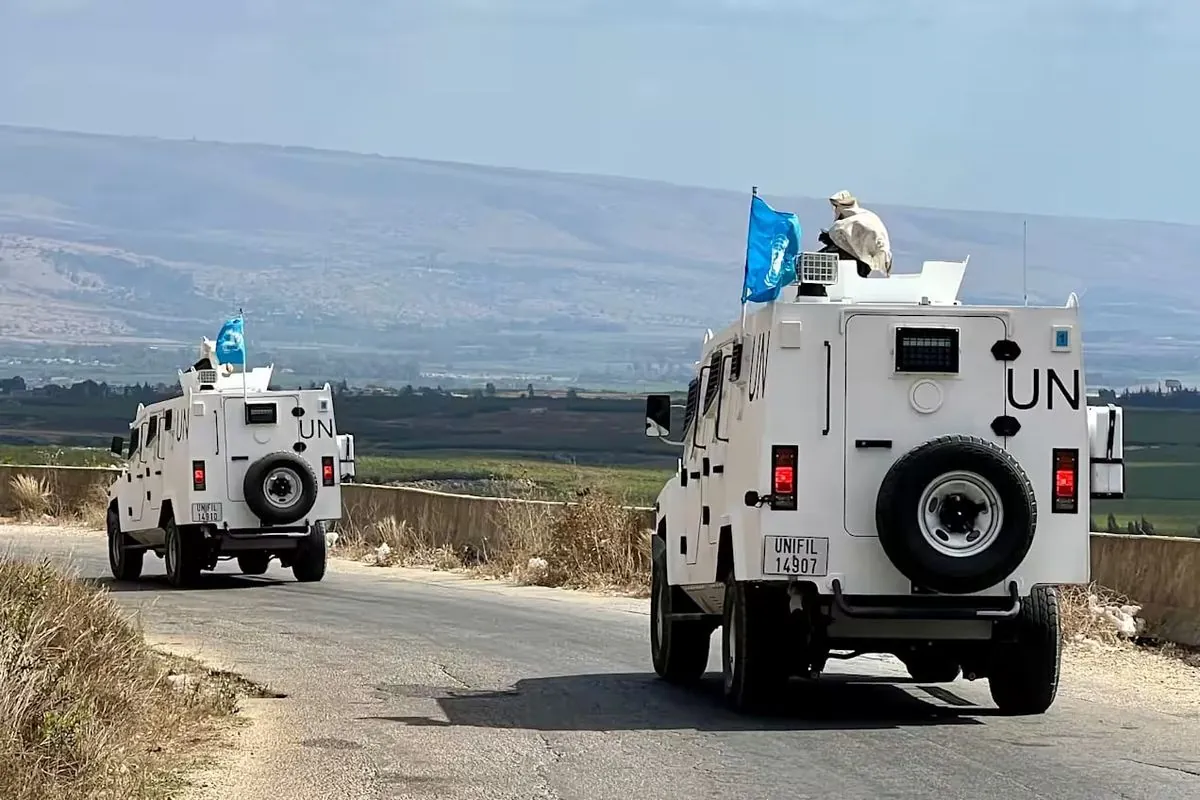
    While patrolling in Marak, five armored vehicles of Finnish UNIFIL peacekeepers came under fire. As a result of the incident, the rear window of one of the vehicles was damaged, and there were no casualties.

    On November 16, Finnish peacekeepers came under fire in southern Lebanon. This was reported by Yle with reference to the information of the ground forces, UNN reports.

    Details

    The publication notes that Finnish peacekeepers of the UN Interim Force in Lebanon (UNIFIL) were carrying out a planned patrol mission in Marakah, using five armored vehicles. However, on that day, the vehicles were shot at several times with pistols. As a result of the shelling, the rear window of one of the patrol vehicles was smashed.

    At the time of the incident, the peacekeepers were wearing protective gear in their armored vehicles. They reportedly immediately went to their base. The causes of the incident are currently unknown, the military added.

    Recall

    The UN Security Council condemned the attacks on UNIFIL peacekeeping forces in southern Lebanon in late October and early November. The UN Security Council called on all parties to the conflict to ensure the safety of peacekeepers.

  • Russians attack Mykolaiv Oblast

    Russians attack Mykolaiv Oblast

    Russian troops attacked Mykolaiv on Saturday evening.

    Source: Air Force of Ukraine; Oleksandr Sienkevych, Mayor of Mykolaiv; Vitalii Kim, Head of Mykolaiv Oblast State Administration, on Telegram

    Details: At 19:22, the Air Force of Ukraine warned of the threat of ballistic missile attacks from the south.

    Sienkevych reported at 19:24 that an explosion had been heard in Mykolaiv.

    Quote from Vitalii Kim at 19:49: "We clearly understand where [it hit]. So far, there have been no calls for an ambulance. I hope that won’t change."

    Support
    UP or become our patron!

  • Turned German clothing stores into a fashion empire: the head of New Yorker has died

    Turned German clothing stores into a fashion empire: the head of New Yorker has died

    Turned German clothing stores into a fashion empire: the head of New Yorker has died

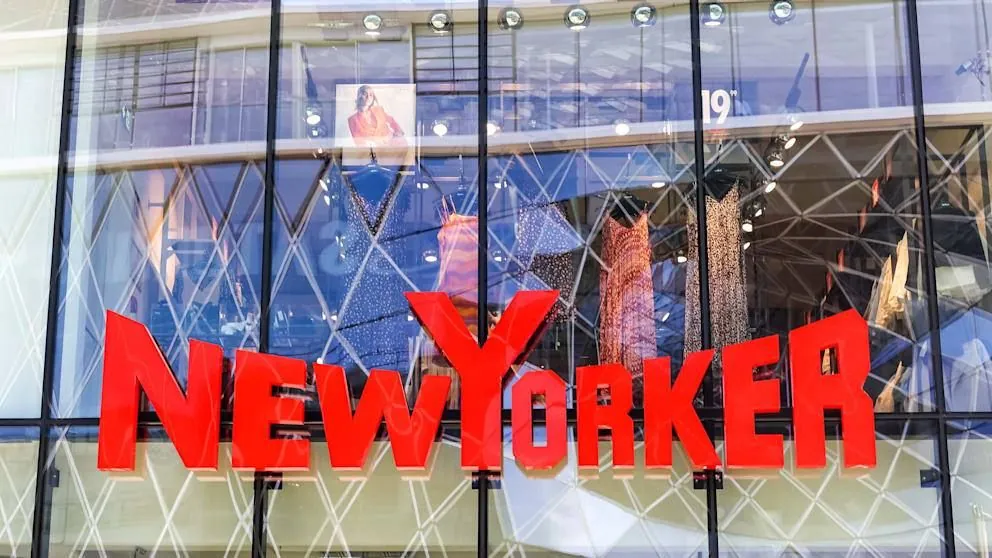
    Billionaire Friedrich Knapp, creator of the New Yorker clothing chain, has died after a long illness. His company has more than 1,200 branches in 47 countries and about 23,000 employees.

    Billionaire Friedrich Knapp, the founder and head of the German chain of clothing stores New Yorker, has passed away. He was left with three children and a life partner, reports UNN with reference to Bild.

    Details

    Knapp turned New Yorker, founded in Lower Saxony, into a global fashion empire. Today, the company has more than 1,200 branches in 47 countries and about 23,000 employees. Branches can be found in almost every major city in Germany.

    Knapp, who rarely appeared in public, died on the island of Sylt, where he arrived last week after long treatment in Switzerland. According to the Braunschweiger Zeitung newspaper, he had fallen seriously ill about a year ago.

    Braunschweig Mayor Thorsten Kornblum expressed his condolences on the death of the entrepreneur and noted his contribution to the development of the city, especially in the field of sports and culture.

  • Russia cuts off gas supplies to Austria – Reuters

    Russia cuts off gas supplies to Austria – Reuters

    The Russian energy giant Gazprom has stopped gas supplies for Austrian energy company OMV, just hours after Vienna revealed that Russia had issued a warning about the cut-off.

    Source: Reuters

    Details: Austria announced on Friday that Moscow had notified it of a gas cutoff, effective Saturday, 16 November. This followed an arbitration ruling in favour of OMV, Austria's largest energy supplier, due to Gazprom's failure to meet its obligations to supply gas to its German subsidiary.

    The Austrian energy regulator E-Control reported on Saturday that Gazprom's supplies to OMV had stopped at 06:00 local time, adding that prices and supplies to Austrian customers remained stable.

    OMV is seeking to recover €230 million in damages from Gazprom, as awarded in arbitration.

    Gazprom claimed it would send 42.4 million cubic metres (MCM) of gas to Europe via Ukraine on Saturday, the same volume as on Friday.

    According to data from gas transmission system operator Eustream, flows from Ukraine to Slovakia remained stable, but nominations for flows from Slovakia to Austria were approximately 16% below this month's average.

    OMV typically accounts for around 40% of Russian gas flows through Ukraine, equating to approximately 17 mcm per day.

    One of Russia's remaining major gas routes to Europe, the Soviet-era Urengoy-Pomary-Uzhhorod pipeline through Ukraine, is set to close at the end of this year. This is because Kyiv has decided not to renew a five-year transit agreement that delivers North Siberian gas to Slovakia, Czechia and Austria.

    Without Austria, only two European countries will receive significant volumes of Russian gas: Hungary and Slovakia. In Hungary's case, the gas is delivered via a pipeline that primarily runs through Türkiye.

    Reuters reported that in 2023, Russia transported approximately 15 billion cubic metres of gas through Ukraine, accounting for about 8% of the peak Russian gas flows to Europe via various routes in 2018-2019.

    The International Energy Agency estimates that in 2023, the Ukrainian transit route supplied 65% of the gas demand in Austria and its eastern neighbours, Hungary and Slovakia.

    Background: The European Commission has raised its expectations for gas prices in Europe by 9.7% this year and by 14.4% in 2025.

    Support UP or become our patron!

  • There was a hostage situation at a restaurant in France

    There was a hostage situation at a restaurant in France

    There was a hostage situation at a restaurant in France

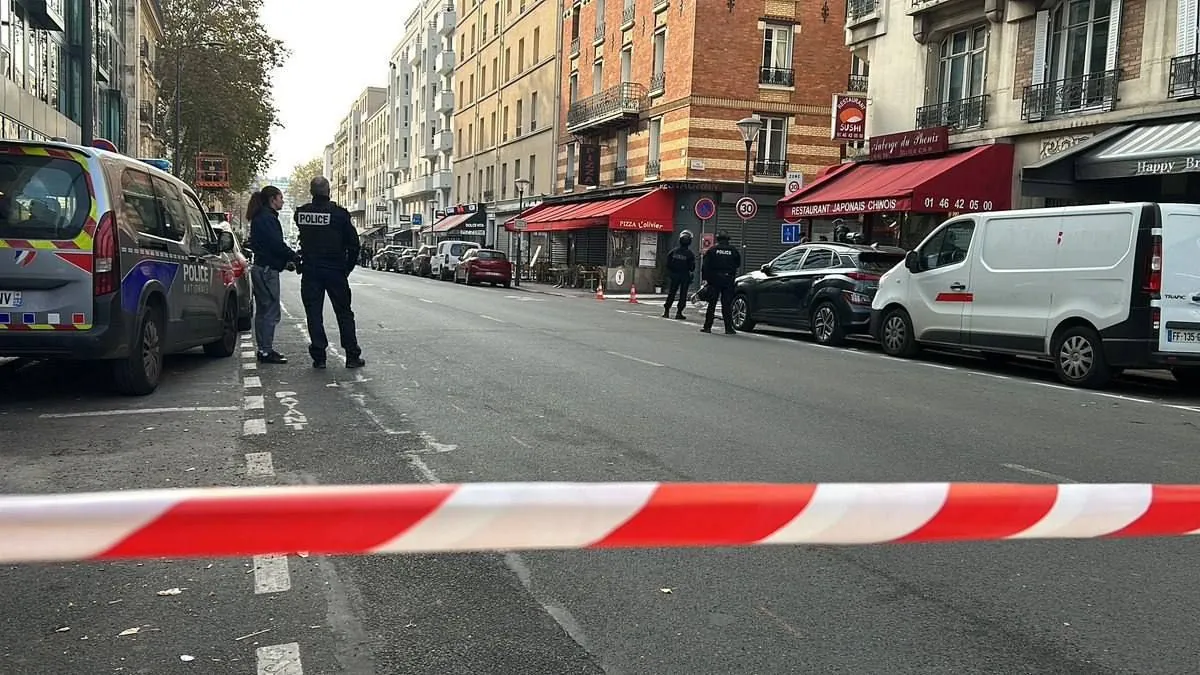
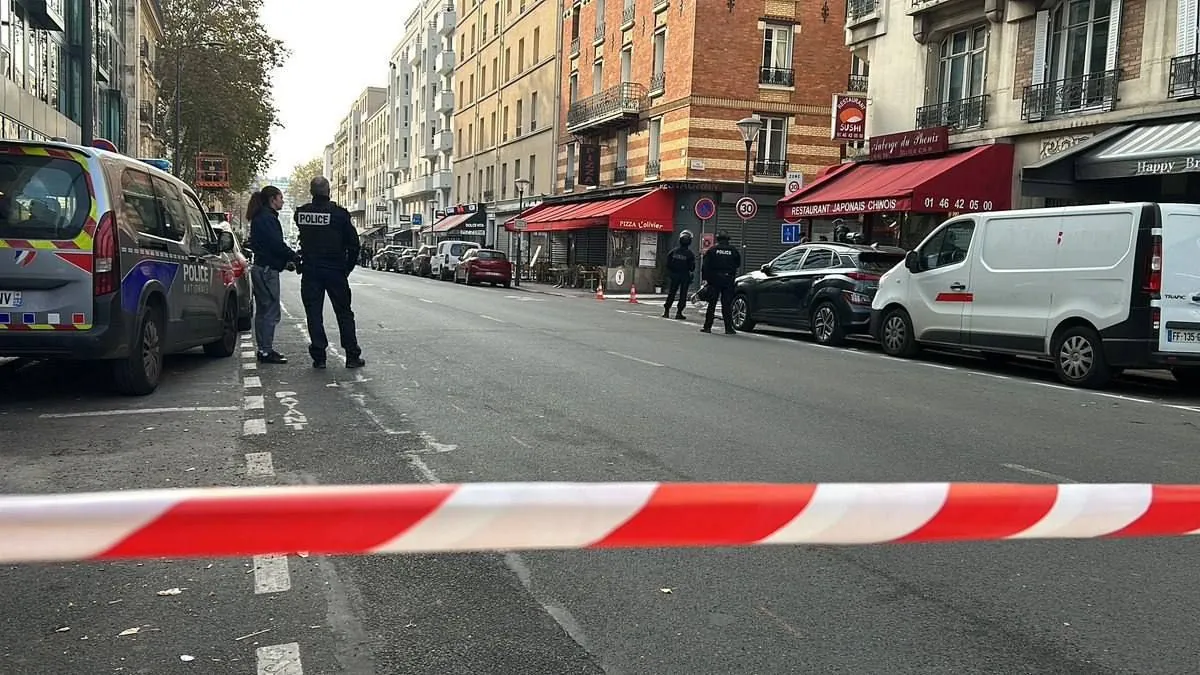
    In a restaurant in the French town of Issy-Le-Moulineau, the owner is holding back several employees of the establishment. The area is cordoned off by a large police force, firefighters arrived on the scene.

    At a restaurant in the French town of Issy-Le-Moulineau, near Paris, a man is “holding back several employees”. Police headed to the site, the area is cordoned off. This UNN reports with reference to BFMTV.

    On Saturday, November 16, there was a hostage situation at a restaurant in Issy-les-Moulineaux.

    The owner of a restaurant in Issy-les-Moulineaux is reportedly “keeping a few employees.

    The owner of the establishment has “established a foothold there” and “retains several employees.

    “Large police forces surround the restaurant a few dozen meters from the Paris ring road,” the report said.

    Police and firefighters were dispatched at noon.

  • Saudi prince to miss G20 summit: Putin’s absence and Biden’s term ending may have influenced this – Bloomberg

    Saudi prince to miss G20 summit: Putin’s absence and Biden’s term ending may have influenced this – Bloomberg

    Saudi prince to miss G20 summit: Putin's absence and Biden's term ending may have influenced this - Bloomberg

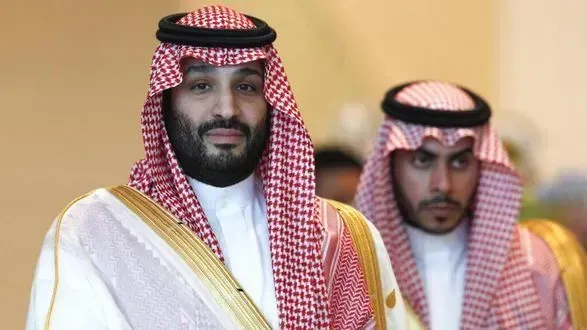
    Mohammed bin Salman will not attend the G20 summit in Rio de Janeiro due to a chronic ear canal disease. The decision could also be influenced by Putin's absence and the end of Biden's presidency.

    The de facto ruler of Saudi Arabia, Crown Prince Mohammed bin Salman, has decided to skip next week's G20 summit in Rio de Janeiro, Bloomberg reports, citing an informed source, UNN .

    Details

    The most likely reason is that a flight of more than 14 hours from the Saudi capital Riyadh to the Brazilian city could worsen a chronic ear canal disease that the 39-year-old suffers from, according to the source.

    The Saudi leader has in the past experienced ear congestion and inflammation that lasted several days after long-haul flights, the source said. He has previously canceled foreign trips at the last minute, including a state visit to Japan this year when his ailing 88-year-old father, King Salman bin Abdulaziz, was being treated for pneumonia.

    A spokesman for the Saudi government declined to comment.

    Prince Mohammed is the prime minister and manages the day-to-day affairs of the kingdom in view of the Saudi monarch's poor health. Last year, he attended the G20 summit in New Delhi.

    The absence of Russian dictator Vladimir Putin and the fact that Joe Biden's presidency in the United States ends in two months may have influenced Prince Mohammed's decision, the source added.

    AddendumAddendum

    The Saudi crown prince, who enjoys a warm relationship with Donald Trump, was one of the first world leaders to call the US president-elect to congratulate him immediately after his victory earlier this month. The royal, as the newspaper notes, is also close to Putin. russia and Saudi Arabia, which are among the world's five largest oil producers, continue to work together to manage market supply through the OPEC+ coalition they jointly lead.

    Putin, as the newspaper recalls, high-fived Prince Mohammed during the G20 summit in Buenos Aires in 2018, when the Saudi prince was ostracized by many Western leaders after the murder of Washington Post columnist Jamal Khashoggi in the Saudi consulate.

    The United States and its allies have since put Khashoggi's case behind them, given the kingdom's political and economic weight and its increasingly prominent role in global finance. The crown prince has launched his multi-trillion dollar master plan, known as Vision 2030, to open up the once ultra-conservative and mysterious country, reduce its dependence on oil, and propel it into the world's 10 largest economies, the publication notes.

  • Estonia sends new military aid package to Ukraine

    Estonia sends new military aid package to Ukraine

    The Estonian government has approved Defence Minister Hanno Pevkur's proposal to send a new military aid package to Ukraine.

    Source: European Pravda, citing Estonian Defence Ministry

    Details: The aid package will be drawn from the reserves of the Estonian Defence Forces, tailored to meet Ukraine's needs while ensuring Estonia's defence capabilities remain intact.

    It will include naval uniforms, surveillance equipment, scopes, ballistic protection gear and various types of ammunition.

    "This is not the final aid package," Pevkur noted. "We will soon launch an annual competitive support programme for Estonian companies, allowing Ukraine to benefit from goods produced by Estonia’s defence industry. This initiative will support not only Ukraine but also Estonia’s economy and security."

    Background:

    • Estonia announced a €20 million military aid package for Ukraine in March.
    • Previously, Estonian officials stated that the country had almost exhausted its stockpiles of weapons and ammunition available for transfer to Ukraine.

    Support UP or become our patron!

  • Georgian CEC head doused with black paint while approving election results

    Georgian CEC head doused with black paint while approving election results

    Georgian CEC head doused with black paint while approving election results

    At a session of the Georgian Central Election Commission, an opposition representative threw black paint on the chairman after the microphone was cut off. Despite the incident, the commission approved the election results, with Georgian Dream receiving 54% of the vote.

    Georgian CEC Chairman Giorgi Kalandarishvili was doused with black paint during the commission's meeting, which approved the results of the parliamentary elections in the country, writes UNN with reference to "Real Time".

    Details

    There was reportedly a conflict between the head of Georgia's CEC and David Kirtadze of the opposition Unity-National Movement party. During Kirtadze's speech, Kalandarishvili cut off his microphone after the end of the regulated time. In response, the representative of the opposition party splashed a black liquid, presumably paint, at the head of the CEC.

    "You don't hear the Georgian people, you don't hear the protesting students. You have taken away the future of Georgia, our future, and you are pushing our country towards russia. I can't even call you chairman, you are a 'dot ru'. You are a black spot," Kirtadze said.

    The session was stopped, and after a pause, the CEC head appeared with an eye patch.

    As a result, Georgia's CEC reportedly officially approved the results of the parliamentary elections held on October 26. According to the country's CEC, the ruling Georgian Dream party won almost 54 percent of the vote, thus securing 89 seats out of 150 in parliament.

    "Coalition for Change" gets 19 parliamentary mandates, ‘United National Movement’ – 16, ‘Strong Georgia’ – 14, ‘For Georgia’ – 12 parliamentary mandates.

    Dissenters with the election results gathered near the CEC building in Georgia. After the end of the session of the commission, the protesters began to swing the fence. Police officers tried to force the protesters off the road and onto the sidewalk; detentions and clashes broke out.

    Supplement

    Georgian President Salome Zurabishvili and opposition parties have not recognized the results of the country's parliamentary elections, amid hundreds of irregularities detected by observers and questions about the secrecy of the vote. Georgia's Central Election Commission and the ruling Georgian Dream party deny any fraud.

    Analysts who have analyzed data from polling stations point to anomalies in the distribution of votes, which may indicate fraud: ballot stuffing, voter fraud or bribery in rural areas. Observers also noted similar irregularities in the Georgian elections.

    The Parliamentary Assembly of the Council of Europe (PACE) in its report on the last elections in Georgia recorded "cases of vote buying, a widespread atmosphere of pressure and party-organized intimidation before and during the elections, especially in rural areas".

    The non-profit observation organization "Fair Elections" (ISFED) recorded cases of drop-offs, bribery and "merry-go-rounds" among other violations.

  • Soldiers tired, reserve brigades not equipped – Zelenskyy on situation in Ukraine’s east

    Soldiers tired, reserve brigades not equipped – Zelenskyy on situation in Ukraine’s east

    Ukrainian President Volodymyr Zelenskyy has explained that rotations on the front line cannot take place as long as reserve brigades are not equipped with weapons and equipment. This is why soldiers on the front line are forced to retreat due to the Russian advance and their own fatigue.

    Source: Zelenskyy in an interview with Ukrainian Radio

    Quote: "The guys on the front line are standing there, and they need rotation to rest, take a break, and so on.

    Other brigades are supposed to take their place. But imagine, these other brigades are not properly equipped. Are we supposed to throw them there like cannon fodder, like the Russians do? No one wants that; they are just standing still.

    The guys [from the front line – ed.] get tired, they retreat. They are being attacked with aerial bombs, and they’re exhausted. They ask if they can take steps back, and the military leadership allows it.

    Because our stance is that the human comes first, and then the land.

    People must be confident that when they withdraw, a well-equipped brigade will take their place, ready for the oncoming attack.

    We had an agreement on the number of these brigades, but their staffing is happening very, very slowly."

    Details: Zelenskyy emphasised that, due to the lack of equipment, new brigades are not being created.

    However, he added that reserve units have been formed with experienced personnel who have already fought in the war.

    Zelenskyy said that instances where new brigades are being formed while the stronger brigades lack personnel are rare occurrences.

    The president predicts that once the reserve brigades are fully equipped, the Russian advance in Ukraine’s east will come to an end.

    Background: Zelenskyy stated that Ukraine had not received even half of the weapons officially allocated by the United States and that Europe had helped Ukraine just as much as the US.

    Support UP or become our patron!

  • Xi Jinping meets for the first time with Japan’s new prime minister: they discuss pressing issues

    Xi Jinping meets for the first time with Japan’s new prime minister: they discuss pressing issues

    Xi Jinping meets for the first time with Japan's new prime minister: they discuss pressing issues

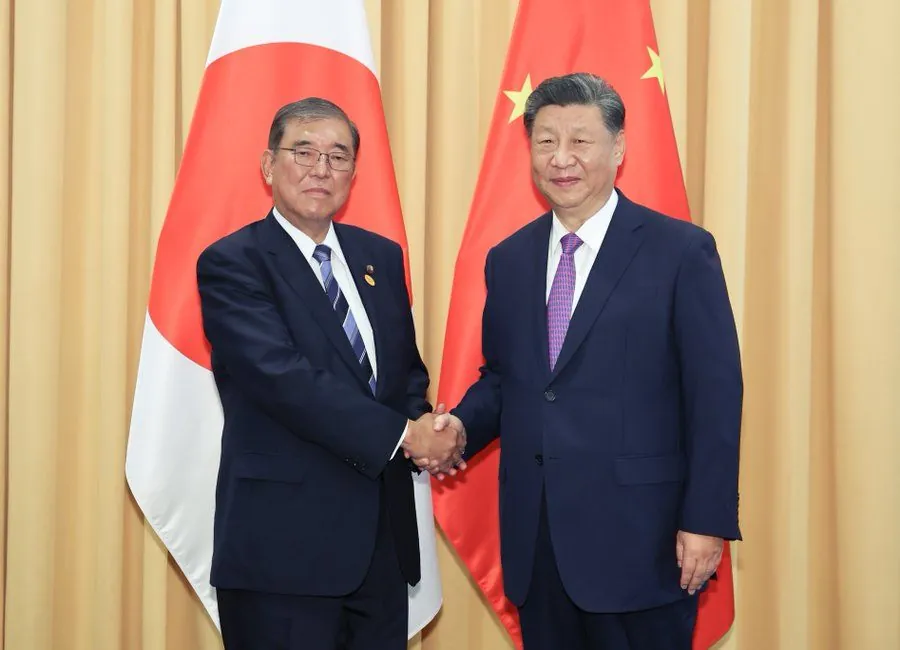
    The leaders of China and Japan held their first meeting to discuss issues between the two countries. Japan asked for the ban on seafood to be lifted and for the security of Japanese in China to be strengthened.

    Chinese President Xi Jinping told Japanese Prime Minister Shigeru Ishiba at their first meeting that China hopes Japan will “properly address” important issues such as history and Taiwan, Chinese state media reported on Saturday, UNN reported citing Reuters.

    Details

    Xi urged the two Asian neighbors to protect the global free trade system as well as stable and unimpeded production and supply chains when they met on the sidelines of the Asia-Pacific Economic Cooperation forum summit in Lima, Peru.

    Ishiba told Xi he wanted to build a “constructive and stable” relationship, but asked him to lift the ban on Japanese seafood imports and to increase security measures for Japanese citizens in China following recent deadly knife attacks, and expressed concern about Chinese activities at sea.

    According to a Japanese report on the meeting, Ishiba asked Xi to release Japanese citizens detained in China.

    It was the first meeting between Ishiba, who took office in October, and the long-ruling Chinese leader.

    AddendumAddendum

    In recent months, Chinese and Japanese officials have taken steps to reopen several consultative negotiation platforms for the first time in years, indicating a possible resolution of tense relations.

    In recent years, China and Japan have been at odds over issues such as territorial claims, trade tensions, and Beijing's anger over Tokyo's decision to dump treated water from the damaged Fukushima nuclear power plant into the sea, leading to a seafood ban.

    Also raising concerns about anti-Japanese sentiment in China are two recent attacks in China – a knife attack that killed a 10-year-old Japanese schoolboy in Shenzhen in September and a knife attack that killed a Chinese woman who was trying to protect a Japanese mother and her child from an attacker.

    Joe Biden met with the leaders of South Korea and Japan: what they talked aboutNov 16 2024, 07:14 AM • 7040 views