CAS rejected Evgeny Ustyugov's appeal and stripped him of his gold and bronze medals at the 2010 Vancouver Olympics. The athlete was disqualified for 4 years due to anti-doping rule violations.
The court of Arbitration for Sport (CAS) rejected the appeal of Russian biathlete Yevgeny Ustyugov in the case of anti-doping rule violation. The athlete was stripped of the gold and bronze medals at the 2010 Vancouver Olympics.
This is stated in the message of the International Biathlon Union, reports UNN.
Details
According to the International Biathlon Union, the court of appeal of the court of Arbitration for Sport confirmed the conclusions of the Anti-Doping Department, which found that Ustyugov committed an anti-doping rule violation based on anomalies found in his biological passport of the athlete.
Ustyugov was sentenced to a four-year suspension, and the court annulled all results between January 24, 2010 and his retirement at the end of the 2013/2014 season, including being stripped of the gold and bronze medals he won at the 2010 Winter Olympics in Vancouver.
In February, the CAS annulled all the athlete's results from 2010 to 2014, including the Sochi 2014 gold medal.Ustyugov can appeal this decision to the Swiss Federal Court (SFT), but such appeals are allowed only on narrow procedural grounds.
addition
Ustyugov-two-time world junior champion, 2010 Olympic champion in the mass start and bronze medalist in the 4×7.5 km relay,Honored Master of sports of Russia (2010), winner of 3 World Cup stages, winner of the Small World Cup in the mass start (2009-2010), two-time silver medalist of the 2011 World Championship, two-time vice-champion of Europe.Ustyugov won a gold medal at the 2014 Olympics, but was found guilty of doping (oxandrolone), so all his results from August 27, 2013 to the end of the 2013-2014 Cup were annulled.
recall
Former football player of the Ukrainian national team Anatoly Tymoshchuk, who claimed that he sees no difference between the Ukrainian and Russian peoples and called the war of the Russian Federation against Ukraine a "special military operation", won a court in Lausanne against the Ukrainian Football Association. The court ordered the UAF to lift sanctions against Tymoshchuk, which were imposed after a full-scale invasion for supporting the war.
President Volodymyr Zelensky signed a decree that put into effect the decision of the national security and Defense Council to deprive 34 people of state awards, including Tymoshchuk.
Law enforcement officers provided advice on identifying and countering cyber violence. It is recommended to store evidence, contact the police, and seek support from loved ones.
Digital violence is a serious threat to mental and physical well-being. law enforcement officers told how to identify violence in the digital environment, reports UNN.
Details
According to the police, it is impossible to protect yourself completely in the digital space, but it is quite possible to protect yourself from risks and threats if you know how to act.
In addition, law enforcement officers told how to act if you are faced with cyber violence:
– if possible, identify the person who wrote You offensive comments, posts, messages, etc. Save the link to her page and screenshot.
– always take screenshots of content or images that you think have a violent context.
– write a statement to the police or send an electronic request to the cyber police at the link https://ticket.cyberpolice.gov.ua and add all the saved information.
– ask your family and people you trust for support.
You can also contact the government hotline 15-47 for advice and assistance.
The European Commission has accused Bluesky of violating the Digital Services Act by failing to provide mandatory information. The company has engaged lawyers to resolve the issue of compliance with EU requirements.
The social network Bluesky, in the wake of the growing number of users around the world, violates the rules of the digital services law in the EU. The EU executive recently provided details of the claims.
Reports UNN with reference to Bloomberg.
Details
The new favorite of social networks Bluesky is being criticized by the EU supervisory authority for non-compliance with transparency obligations. that is, it violates the Digital Services Act (DSA).
The EU executive said on Monday that Bluesky did not provide information that it is required to share under the block's Digital Services Act, which regulates content on social media sites.
for Reference
According to the DSA, platforms that can be used in the EU must provide complete information about the operator and user numbers. The latter requirement is primarily due to the fact that a platform with 45 million or more daily users becomes the so-called VLOP (a very large online platform), which is subject to even stricter requirements.
All platforms in the EU must have a dedicated page on their websites indicating how many user numbers they have in the EU and where they are legally established
– Thomas Rainier, a spokesman for the Digital Commission, told reporters.
Bluesky's Response
Bluesky said it was working to comply with European Union rules after the bloc accused the fast-growing social media platform of violating digital rules.
The company is consulting with its lawyer on compliance with EU disclosure rules, a Bluesky spokesperson wrote in an email on Tuesday.
recall
Bluesky, a social network created by former Twitter CEOJack Dorsey, abandoned the invitation system and opened registration to all users to encourage them to participate more actively.
The social network Bluesky recorded a significant increase in new users. This happened against the background of an outflow of users from Platform X (formerly Twitter) after the US presidential election. The platform reached 14.5 million users.
Celebrities active at Bluesky include rapper Lizzo and comedian Ricky Gervais, as well as European Commission President Ursula von der Leyen, who recently created an account.
Google and Meta urge Australia to postpone bill to ban social media for childrenNov 26 2024, 03:26 AM • 16166 views
The day Russia invaded Ukraine, Ivan Kaunov watched from his 23rd-floor Kyiv apartment in disbelief as rockets came down on his city. He was 30, married, and running a fintech startup that was seeing remarkable traction.
The scion of a Kyivan family that had gotten wealthy on construction and IT, Kaunov had gone to university for marketing, doing a student officer training program to satisfy Ukraine’s theoretically mandatory but half-heartedly enforced nine-month military requirement — training he never expected to use.
“I said ‘I’ll go fight if there’s ever a war,’” chuckled Kaunov. “I never thought it would happen. I was sure there would be no invasion. I was thinking, ‘It’s the 21st century.’”
In mid-March 2022, he joined. Leading 150 fresh recruits to defend a village east of Bakhmut, he would find himself blown up by a rocket as his unit was pulling back from Russia’s advance on the Donbas that May.
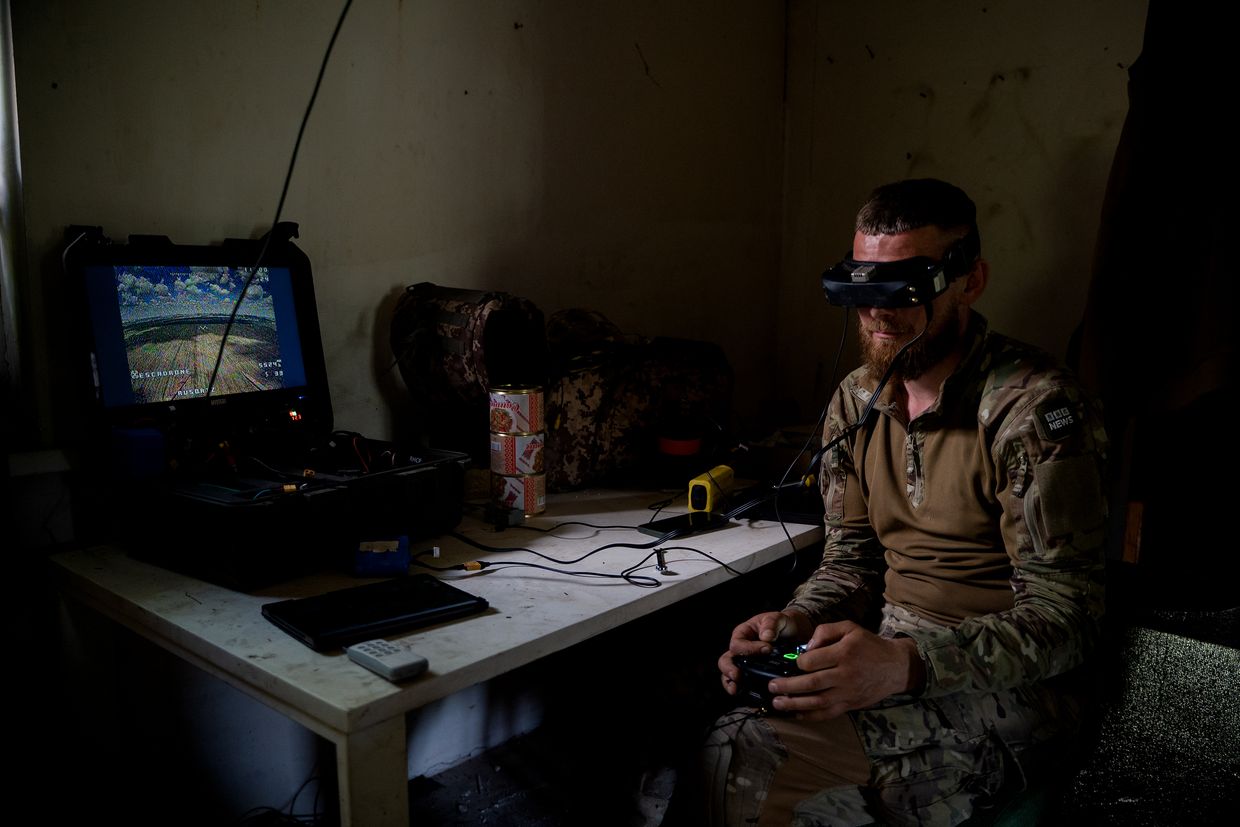
A head injury meant rejoining infantry assaults was a no-go, but with drones, he could return to the fight.
After spending around a year piloting mostly reconnaissance drones, Kaunov recognized the need for a more perfect guidance system. He assembled a wishlist of the best gear to put into a Ukrainian drone that would be meant for long-term, deep surveillance usage.
He rallied enough interest to translate into funding for a prototype of the Buntar-1, the basis for his current company, Buntar Aerospace. Rather than fall to Russian jammers or a kamikaze attack, the envisioned Buntar — the Ukrainian name for the Star Wars: Rogue movie — would live to fly another day.
Over the past year, Buntar has armed itself with nearly $3 million in investment from Ukraine, the EU, and the U.S. and is building what Kaunov hopes will be the Cadillac of Ukrainian surveillance drones – high-cost, premium quality, and repeat usage — in a major divergence from the cheap one-time kamikaze drones that have become symbols of Ukraine’s resistance to Russia’s invasion.
Going rogue
The company's latest model is the Buntar-3, a sleek machine to be sold in kits of two for some $200,000, decked out with Western components with the exception of Chinese wiring. The Buntar Aerospace team is currently taking the Buntar-3 along the front line for testing.
Ukrainian drone pilots typically rely on cheap models — initially Chinese-made consumer models like DJI Mavics — but today, mostly analogs made in Ukraine. The assumption remains that most will fall in flight.
Buntar says it is different in that it aims squarely for the top shelf of the market. The radios on the Buntar 1 are, for example, U.S. imports, a trio of high-end models from L3Harris, Persistent Systems MQ5, and Silvus. And the cameras, if including night vision, can run up to $75,000 — the most expensive part of any recon drone.
Buntar’s premium drones recently started probing the front lines. But as with many of the most ambitious Ukrainian drone firms, the guiding light is not just to win the war, but, ultimately, the West, specifically a Western arms market that’s been following the war in Ukraine raptly.
The team recently began front-line tests on the Buntar-3 and boasts a connectivity time of 98% — a massive improvement over the 30% of more rank-and-file drones that they attribute to the quality of components, which hail from the U.S. and U.K. in addition to Ukraine.
“It’s the biggest war since WWII. Lots of new technology, lots of electronic warfare,” says Bohdan Sas, Buntar’s Chief Technology Officer. “Drones that were designed by civilian engineers for a civil environment before the war don’t work in this war. So this is all custom.”
"Drones that were designed by civilian engineers for a civil environment before the war don’t work in this war."
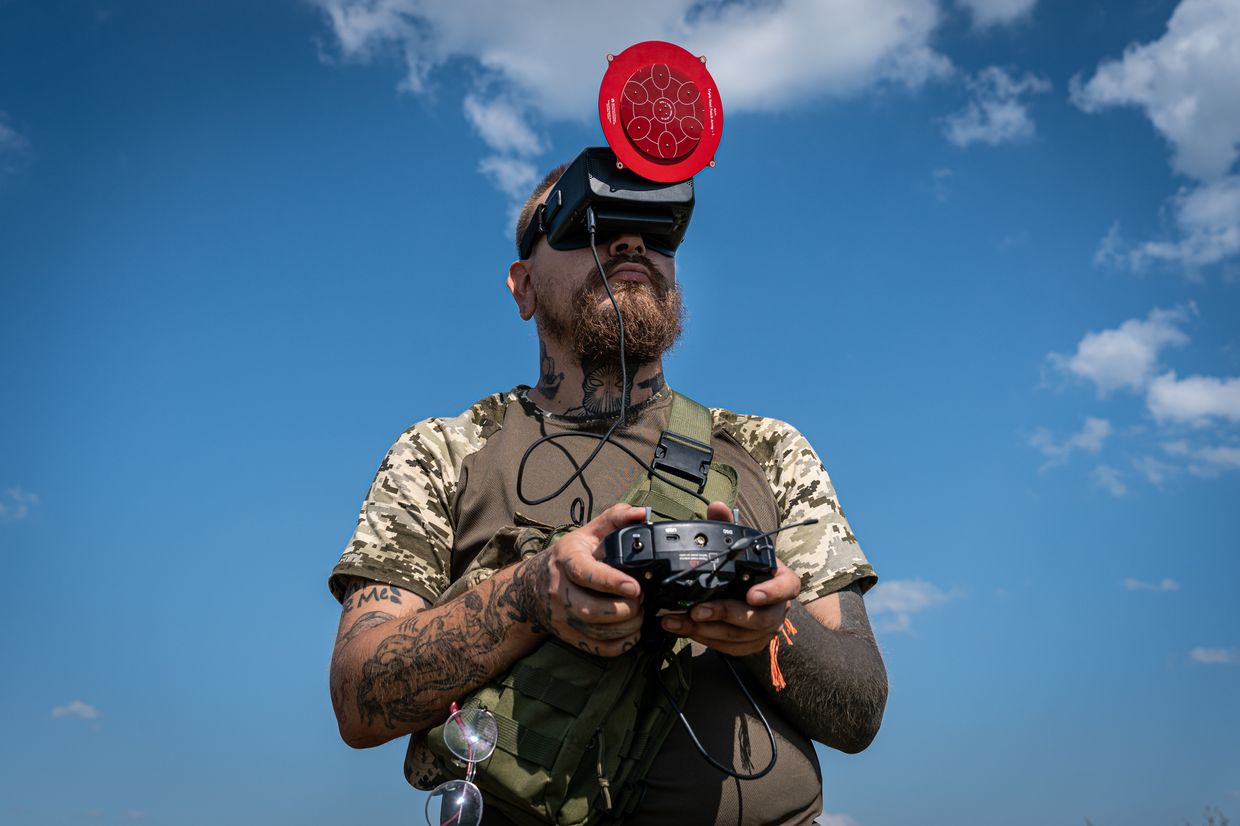
Beyond his experience at the front, the highly extroverted, heavily tatted, and always clean-shaven Kaunov is a convincing ambassador for the Buntar brand. His is a classic story of Ukraine’s current generation of military tech startups: A soldier with a background in IT and Western financing who managed to blend the three into his own drone project.
Kaunov’s drone work lines up closely with the emergence of unmanned aerial vehicles (UAVs) as a game changer in Ukraine’s resistance to Russia. By 2023, the Ukrainian government understood it had a unique development on its hands and started pouring money into the domestic drone industry.
That industry has grown rapidly and by many accounts is producing the majority of drones Ukraine is using on the front these days.
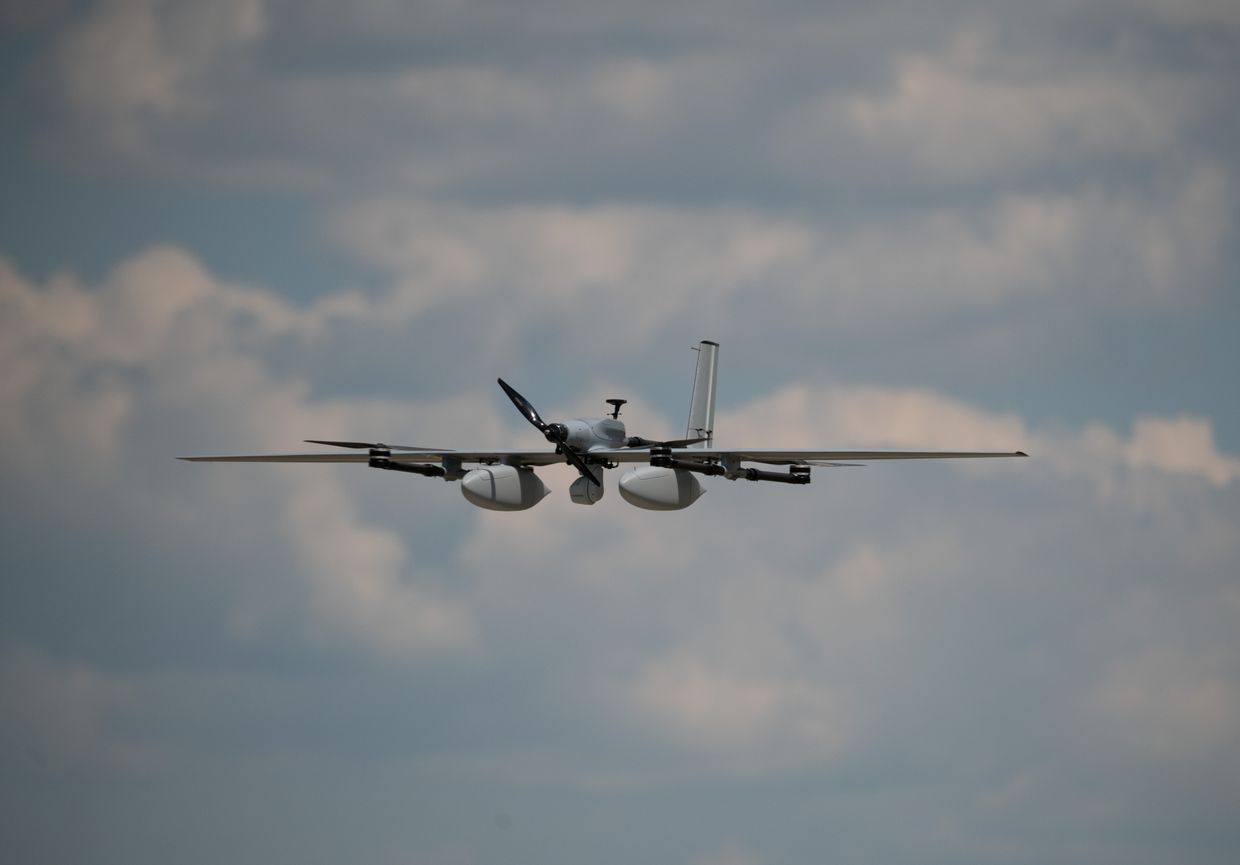
The Buntar-1 in flight on June 29, 2024. takeoff at a test site in an undisclosed location, Ukraine on June 29, 2024. (Kollen Post / The Kyiv Independent)
Given the ad-hoc means by which many drones make it to the front, hard numbers are tough to come by. President Volodymyr Zelensky said in mid-October that the government had already achieved its goal of one million Ukrainian drones produced in 2024. The Royal United Services Institute, a U.K.-based think tank, last year estimated Ukraine’s drone losses at 10,000 units per month.
Very few Ukrainian drones cost even the $20,000 that Buntar is asking for its cheaper recon drone, the Skyhopper.
Buntar counts “tens” of its fixed-wing Skyhoppers already sold to the front. “Each unit completes dozens of missions, maintaining high altitudes to avoid being shot down,” says Kaunov.
Thus far, Kaunov says only one Skyhopper has gone down — due to friendly fire. “I know exactly the tree it’s in in no-man’s land. Not worth trying to get,” he says.
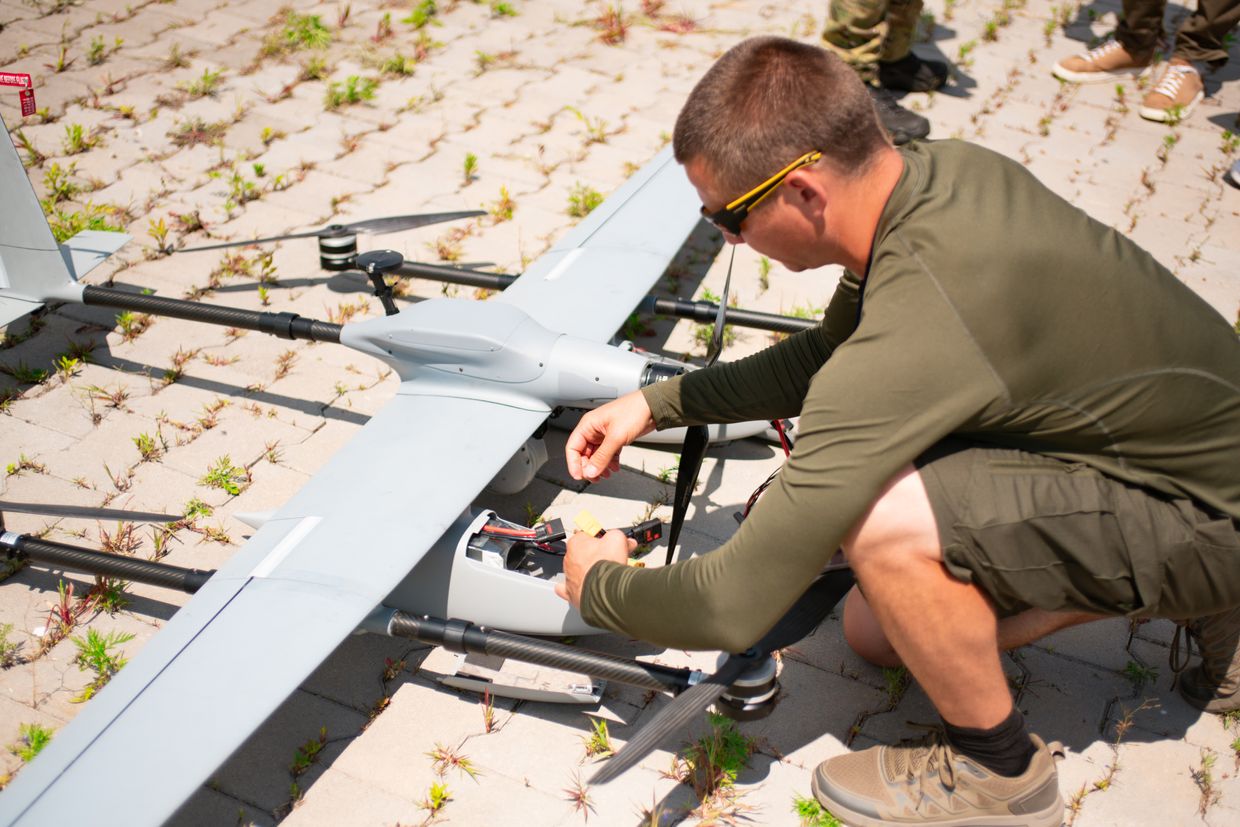
The Buntar units 1, 2, and 3 are still in testing, with Buntar-1 seeing some performance at the front lines. Kaunov says the Buntar-3 has achieved a flight time of three hours — putting it up there with the German Quantum Systems’ Vector and the Estonian Threod’s EOS VTOL, two drones that Kaunov sees as future competitors, which similarly run nearly 200,000 euros per system.
CoPilot, the company’s navigating and auto-piloting software, is likely the most marketable of Buntar’s products right now, provided it can readily adapt to new drone hardware and be brought on board new mission types. Software is easier to scale up than physical factories and the Ukrainian government maintains strict controls on the export of military goods.
With its software registered abroad, CoPilot is theoretically free to go into the drone systems of foreign militaries.
Introducing official merch from the Kyiv Independent Shop now
Western skies
But here, Buntar has a leg up. Part of the firm’s success is thanks to Kaunov’s connections to the West, and, particularly, his knowledge of Western business financing. Prior to the full-scale invasion, his last project was FinMap, a still-functioning company selling B2B budgeting software.
Kaunov’s FinMap co-founder Oleksandr Solovei continues running FinMap today. As is typical of startups, Buntar remains a much more public-facing company than many of the massive drone makers who are at this point well-established in Ukraine but who keep relatively low profiles.
Like FinMap, Buntar Aerospace operates via a U.K. company that has eased the process of getting Western investment and, Kaunov hopes, sales.
Buntar has managed to gather up $2.7 million in funding in just 13 months of existence. By the standards of Silicon Valley, it’s not a massive sum, but among the young generation of Ukrainian military tech startups, it’s one of the larger publicly acknowledged war chests.
Other leaders include drone software company Swarmer and disinformation startup Osavul, both using AI, who announced similar funding rounds in September. For comparison, many defense startups in Ukraine rely on $25,000 government grants to get off the ground.
In addition to new drone models and workshops, Buntar has used the new funds to staff up, employing some 60 people, including Kaunov’s father, Serhiy, and three brothers.
Several of Buntar’s investors remain unidentified. Buntar received a grant from Brave1, a government program for miltech, as well as various government awards. Private investors include several founders of Uklon, a Ukrainian equivalent to Uber. The funding allowed Buntar to acquire a smaller UAV manufacturer over the summer.
Despite Buntar’s financial savvy, questions remain about the battlefield readiness of Buntar drones. The Belgium-based Seven Capital is another early investor concerned about the core product.
“About Buntar, we’ve had a lot of great feedback from investors. But not from the polihon (drone testing field). Not from soldiers. Not from our engineers,” Brent Christiaens, founder and managing partner of Seven Capital, tells the Kyiv Independent.
Buntar has already expanded rapidly, currently working on several updates to the Buntar-1, continued production of the Skyhopper, and a new line of kamikaze drones. The firm is currently working out production in the U.K., which would allow them to avoid the export controls currently holding more or less all drones made within Ukraine inside the country.
Getting around those controls is, however, a controversial proposition during wartime.
While the war guarantees local demand, it’s tough to build a drone that can compensate investors and keep staff fed within Ukraine, where the Defense Ministry caps profits on military hardware at 25% over cost.
"It’s tough to build a drone that can compensate investors and keep staff fed within Ukraine."
Whether Western buyers will be open to a Ukrainian drone competing on equal footing with those built by German, U.K. or Israeli companies is a question that may well go unanswered until after the war.
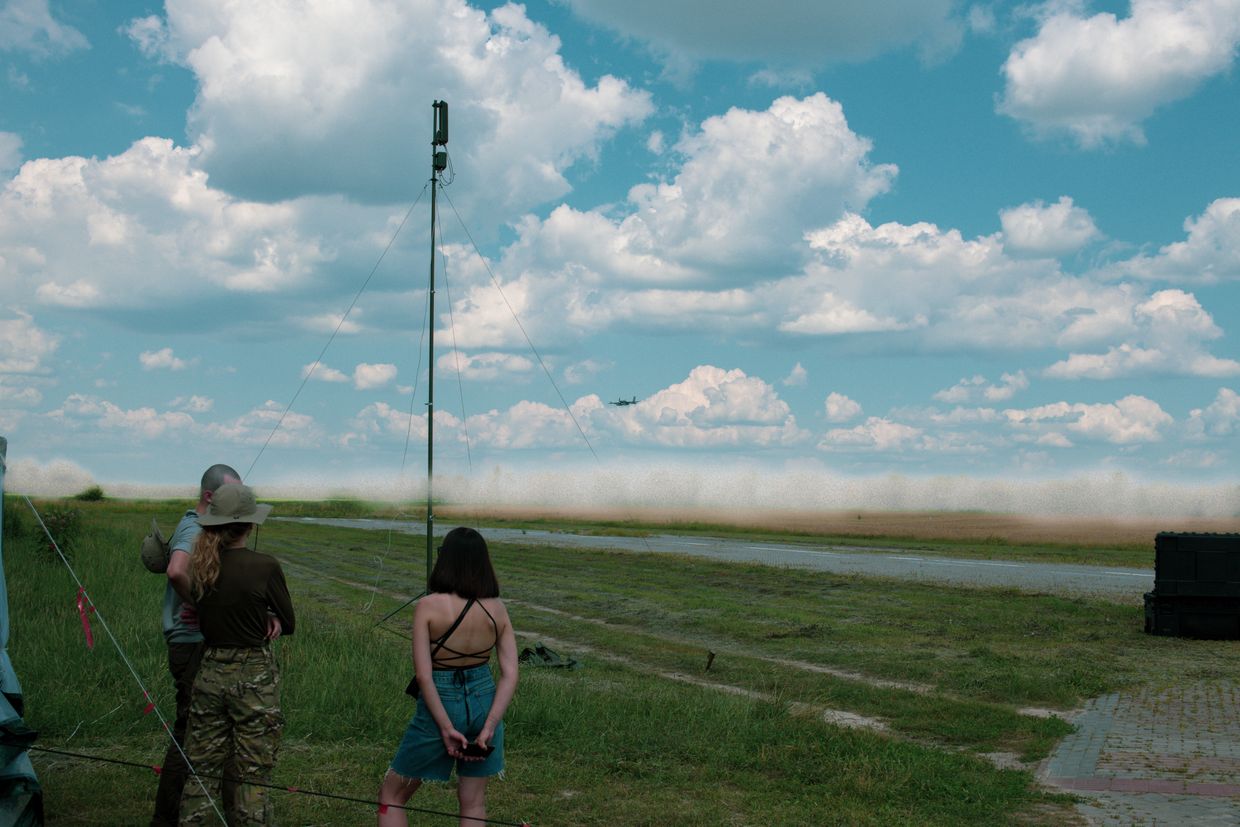
The Buntar team watch the Buntar-1 take off on June 29, 2024. takeoff at a test site in an undisclosed location, Ukraine on June 29, 2024. (Kollen Post / The Kyiv Independent)
Buntar is in a fairly unique situation in that it has money and staff that allowed the project to draw eyes even before getting their first planes to market, thanks in no small part to Kaunov’s marketing acumen. He anticipates the Skyhoppers, which Buntar prices at around $20,000, receiving a contract from the Ukrainian Defense Ministry before the end of this year, and says that the Buntar-3s just passed tests critical to securing such a contract of its own.
But if the higher-end planes currently under testing don’t pass muster, Buntar could well flounder.
Kaunov anticipates a ceasefire of sorts in the next year but sees Ukraine continuing to buy up weapons for its arsenal afterward on the assumption that Russia will be back.
Like many of his peers building defense tech in Ukraine, he’s hopeful that before a ceasefire Buntar will prove itself in battle enough that Western militaries will clamor for it on the basis of quality, rather than cost.
MP Venislavsky said that the bill on reducing the age limit for military service from 60 to 55 years will not be considered in the near future. Ukraine does not plan to reduce the number of Citizens for mobilization.
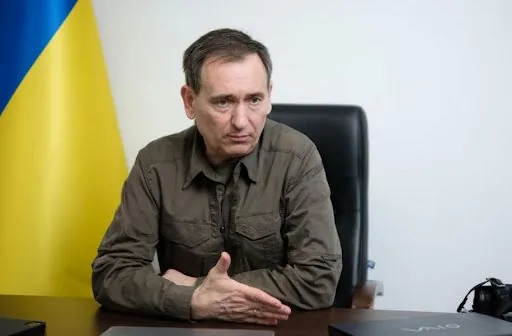
There is no reason to say that the bill, which proposes to reduce the age limit for military service and in the Reserve from 60 to 55 years, will be considered in the near future. This opinion was expressed by the chairman of the subcommittee of the Verkhovna Rada Committee on national security, defense and intelligence, a member of "servants of the people" Fyodor Venislavsky in on the air of Ukrainian Radio, reports UNN.
Venislavsky commented on the status of the draft law on reducing the age limit for military service and reserve from 60 to 55 years.
"Today, it is very difficult to talk about any legislative initiatives that will lead to a decrease in the number of Ukrainian citizens who can be mobilized. The enemy, on the contrary, is increasing its mobilization efforts and encouraging citizens both in cash and by writing off loan arrears," Venislavsky said.
He noted that all this is aimed in Russia at increasing the number of citizens who are involved in the army of the aggressor country.
"Therefore, in Ukraine, this bill is not considered even in the first reading. I have no reason to say that it will be considered in the near future," Venislavsky said.
Addition
On November 25, it was reportedthat draft law No. 12222 was submitted to the Verkhovna Rada, which proposes to reduce the age limit for military service and in reserve to 55 years.
Venislavsky statedthat now we should not expect changes in the issues of mobilization.
Earlier, Defense Minister Rustem Umerov saidthat the ministry has proposals that will be discussed in the Cabinet of ministers , the implementation of reforms, so that in the future there will be no so-called "busification", when men are forcibly mobilized into the ranks of the Armed Forces of Ukraine.
On Tuesday, 26 November, Lithuania presented Russian charge d'affaires Alexander Elkin with a letter of protest against Russia's war crimes in Ukraine.
Source: Ministry of Foreign Affairs of Lithuania, as reported by European Pravda
Details: Lithuania invited Elkin to the Ministry of Foreign Affairs on 26 November and presented him with a note expressing a strong protest against Russia's continued war crimes against Ukraine and its people, the ministry said.
Quote: "As Russia continues its aggression against Ukraine and increasingly shells Ukrainian cities, their residents and the critical infrastructure, reports of unarmed Ukrainian prisoners of war being shot by Russian forces and other war crimes committed by the aggressor appear with appalling regularity," the Lithuanian Foreign Ministry stated.
According to the government, at least three such cases involving over 20 Ukrainian military personnel were reported in October and November of 2024 alone.
"Today, during the meeting, the representative of the Russian Federation was told that if the Russian leadership and country’s law enforcement agencies did not take action to investigate and prevent these crimes, they would be considered complicit in these crimes," Lithuania informed.
The statement said that Russian diplomats who defend Russia's military aggression against Ukraine and who actively or passively absolve the Russian Federation of culpability for a number of war crimes will also be held accountable.
Background:
On 26 November, Ukrainian law enforcers uncovered another war crime by the Russians and opened an investigation into the execution of five Ukrainian prisoners of war on the Pokrovsk front in Donetsk Oblast.
A representative of the Russian Embassy was summoned to the Lithuanian Foreign Ministry on 18 November and presented with a note of protest over Russia's full-scale, 1,000-day-old invasion on Ukraine.
Western leaders, members of governments and ambassadors issued statements of solidarity with Ukraine on the 1,000th day since Russia's full-scale invasion of Ukraine.
PoliticsTechWar Norway will finance the production of weapons and equipment in Ukraine according to the Danish model. Monday, November 18, 2024
Norway will mirror the Danish support format, which is direct financing of Ukrainian weapon and equipment production, allowing faster production and delivery of weapons to the front.
In addition, the Ministry of Defense of Ukraine announced a new format for investing in Ukrainian defense technology companies – the Norwegian model.
Estonia will send a new military aid package to Ukraine that includes naval uniforms, surveillance devices, sights, ballistic protection, and various types of ammunition. Soon, the country will open an annual support program for Estonian companies on a competitive basis, allowing Ukraine to order Estonian defense products.
Moreover, the 14 member countries of the coalition of artillery capabilities in support of Ukraine discussed the needs of Ukraine’s Armed Forces until 2027. The talks centered on the potential contributions of each participant to meet these needs, as well as the possibility of investing in the Ukrainian defense industry.
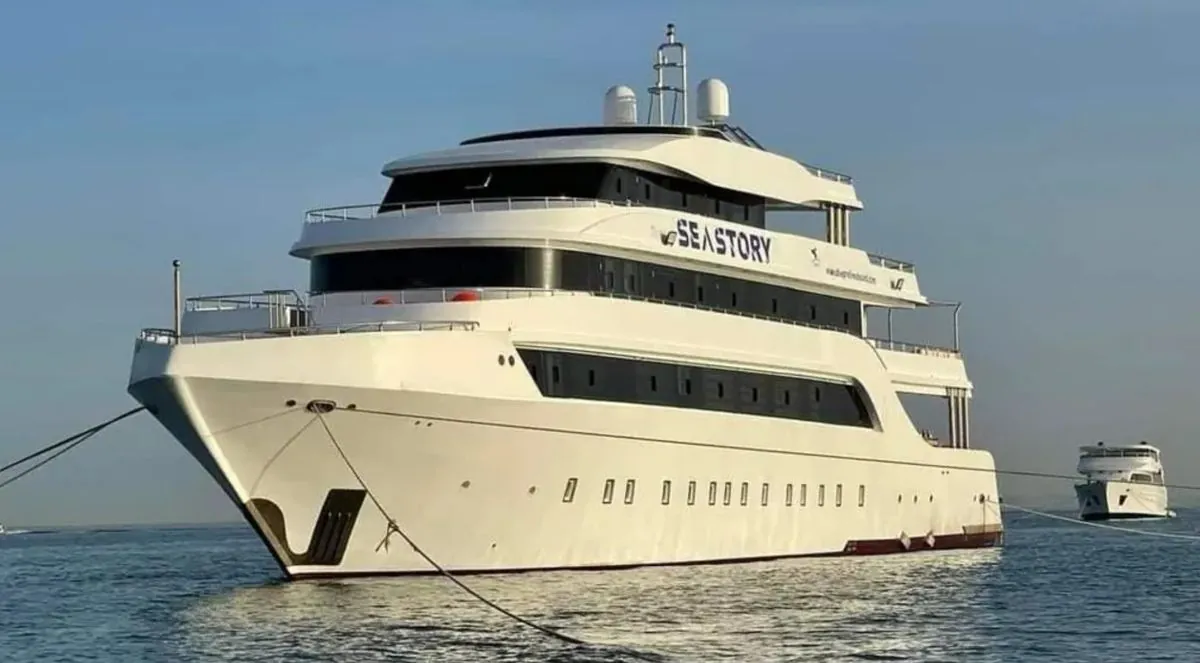
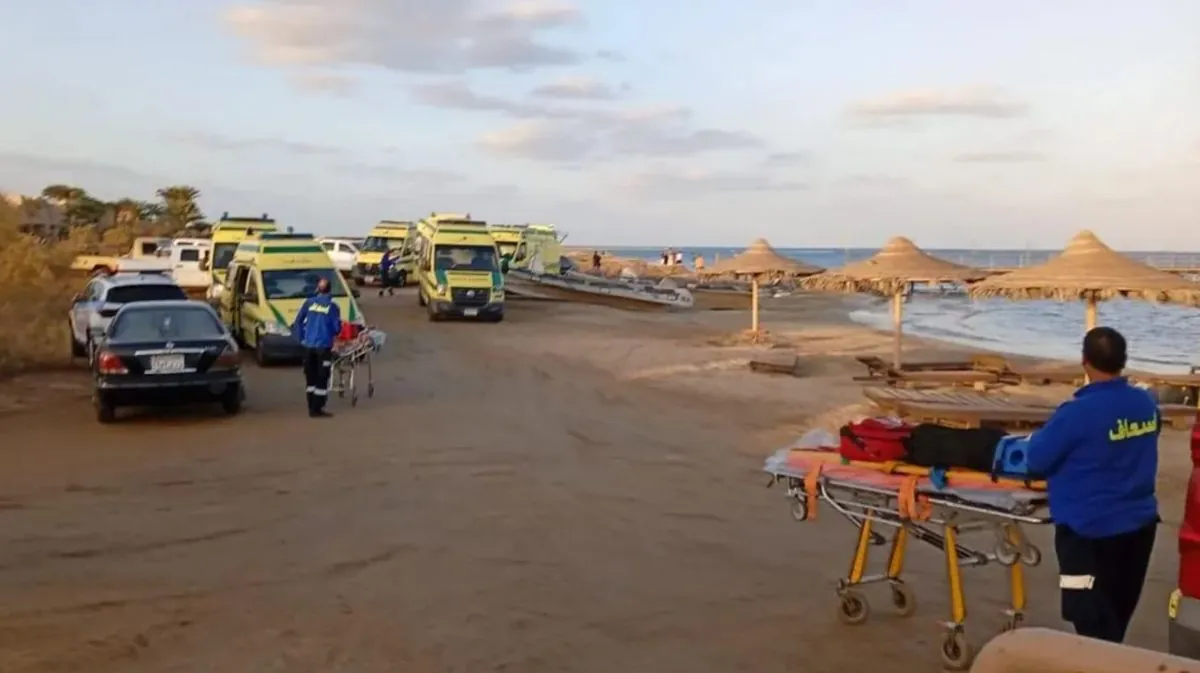
The yacht Sea Story with 44 passengers sank near the Egyptian resort of Marsa Alam. 31 people were rescued, 4 died, 9 are missing, and their search continues.
After the sinking of a pleasure yacht with European tourists on board in the Red Sea, 9 people are still missing. Authorities believe they may not have had time to get out of their cabins and drowned along with the boat. UNN writes about this with reference to the Air Force.
Details
Rescuers found 28 survivors at the wreck of the Sea Story yacht near the Egyptian resort of Marsa Alam. According to updated data, 44 people were on board, including 13 crew members. At first, 16 people were reported missing. Then three were found alive, in addition, 4 bodies were taken out of the sea. Thus, 9 people still remain on the missing persons list.
Egyptian rescue services continue to search, but the chances of finding survivors are decreasing by the minute.
On Sunday, the Sea Story vessel left the port near the eastern city of Marsa Alam and embarked on a five-day diving tour.
According to preliminary information, the yacht went to sea despite warnings of an impending storm. The Egyptian prosecutor's office has launched an investigation into the Hurghada-based operator, suspecting that it may have ignored weather warnings. One of the crew members said that the ship capsized due to an unusually strong wave that suddenly hit it. According to local governor Amr Hanafi, the yacht sank within five to seven minutes, and that some people probably could not get out of their cabins.
On board were tourists from Germany, Great Britain, the USA, Poland, Belgium, Switzerland, Finland, China, Spain and Slovakia.
Recall
In August, the Bayesian superyacht crashed off the coast of Sicily by Mike Lynch, a technology entrepreneur from the United Kingdom. A day later, divers who examined the sunken yacht found the bodies of the entrepreneur and his 18-year-old daughter Hannah inside one of the cabins . In total, 7 people died, 15 people, including Lynch's wife and the yacht's captain, were rescued.
The Prosecutor's Office is considering charges of shipwreck, disaster and multiple murders in connection with the sinking. This can lead to imprisonment for up to 12 years.
Tourist bus overturned in Egypt: Ukrainians among the victimsNov 10 2024, 02:02 PM • 23187 views
Russian forces apparently shot five unarmed Ukrainian prisoners of war (POW) in Donetsk Oblast earlier this November, the Prosecutor General's Office said on Nov. 26, launching a war crime investigation.
According to the statement, Russian troops captured five Ukrainian defenders during an assault in the Pokrovsk sector. After forcing them to lay down their weapons and lie down on the ground, they are said to have shot them with automatic weapons.
"An investigation is currently underway to establish all the circumstances of the crime and the persons involved," the prosecutors' statement read.
Reports of murders, torture, and ill-treatment of Ukrainian prisoners of war are received regularly by Ukrainian authorities and have spiked in recent months. Most cases were recorded in the embattled Donetsk Oblast.
Ukraine’s Ombudsman, Dmytro Lubinets, said he had notified the United Nations and the Red Cross regarding the latest case from the Pokrovsk sector.
"I emphasize that the killing of prisoners of war is a gross violation of the Geneva Conventions and is qualified as a serious international crime," he wrote.
Last week, the Donetsk Regional Prosecutor's Office reported two other Ukrainian POWs killed by Russian troops in the Pokrovsk sector.
Law enforcement officers are investigating 53 criminal proceedings over the executions of 177 Ukrainian soldiers, while 37 proceedings of 109 executions were registered in 2024 alone, the Prosecutor General's Office said on Nov. 22.
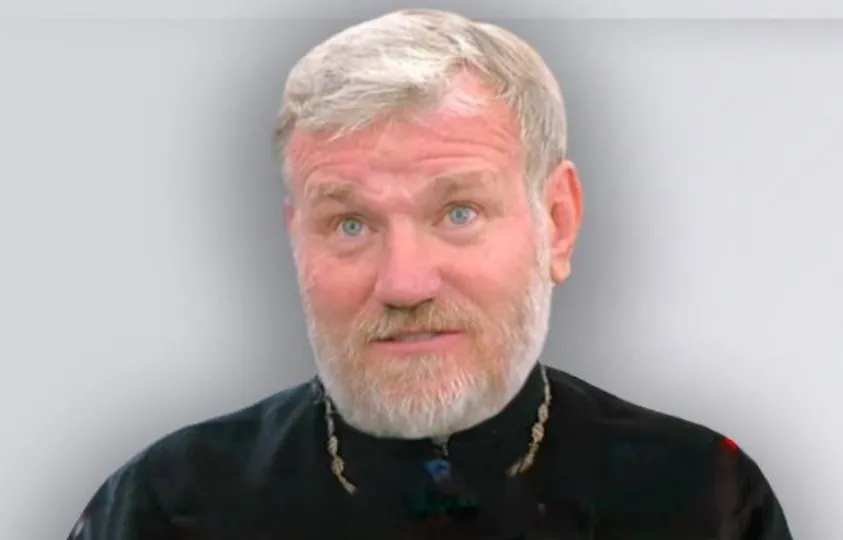
The court sentenced in absentia the former rector of the Cathedral of the Kherson Diocese of the UOC-MP for high treason. Archimandrite Alexey collaborated with the invaders, blessed the pseudo-referendum and fled to the Crimea.
The court convicted in absentia for high treason the former rector of the Cathedral of the Kherson Diocese of the UOC-MP Archimandrite Alexey, who "blessed "the annexation of" Kherson to the Russian Federation," the SBU reported on Tuesday, writes UNN.
Details
""Alexey, an ex-head of the Cathedral of the Kherson Diocese of the UOC-MP, who is hiding in Crimea, received 15 years in prison for treason in absentia. after the capture of the Regional Center, the Archimandrite agreed to cooperate with the invaders and the local Gauleiter Baldo," the SBU said.
According to the investigation, the cleric regularly invited him to the church for pro-Kremlin speeches to the faithful. "Also during the services, the Archimandrite blessed the holding of a pseudo-referendum of the Russian Federation on the "annexation" of the Kherson region to Russia. in addition, the cleric personally appealed to Patriarch Kirill of Moscow with a request to include the local council in the parish of the Russian Orthodox Church," the SBU noted.
"For supporting rashism, the traitor was given the seized real estate in the center of Kherson and invited to the Kremlin to participate in the "ceremony of inclusion" of the temporarily occupied regions of Ukraine in the Russian Federation," the report says.
During the liberation of the Regional Center, the cleric, as indicated, fled with the Russian invaders first to the Left Bank of the region, and then to the Crimea.
The court reportedly found the attacker guilty under two articles of the Criminal Code of Ukraine: Part 2 of Article 111 (high treason committed under martial law); Part 1 of Article 111-2 (aiding and abetting the aggressor state).
As indicated in the SBU, comprehensive measures are continuing to bring him to justice for the crimes committed before our state.
SBU detains UOC (MP) cleric who passed data on Ukrainian Armed Forces to Russia in KharkivNov 25 2024, 10:25 AM • 13759 views





 The Kyiv IndependentKollen Post