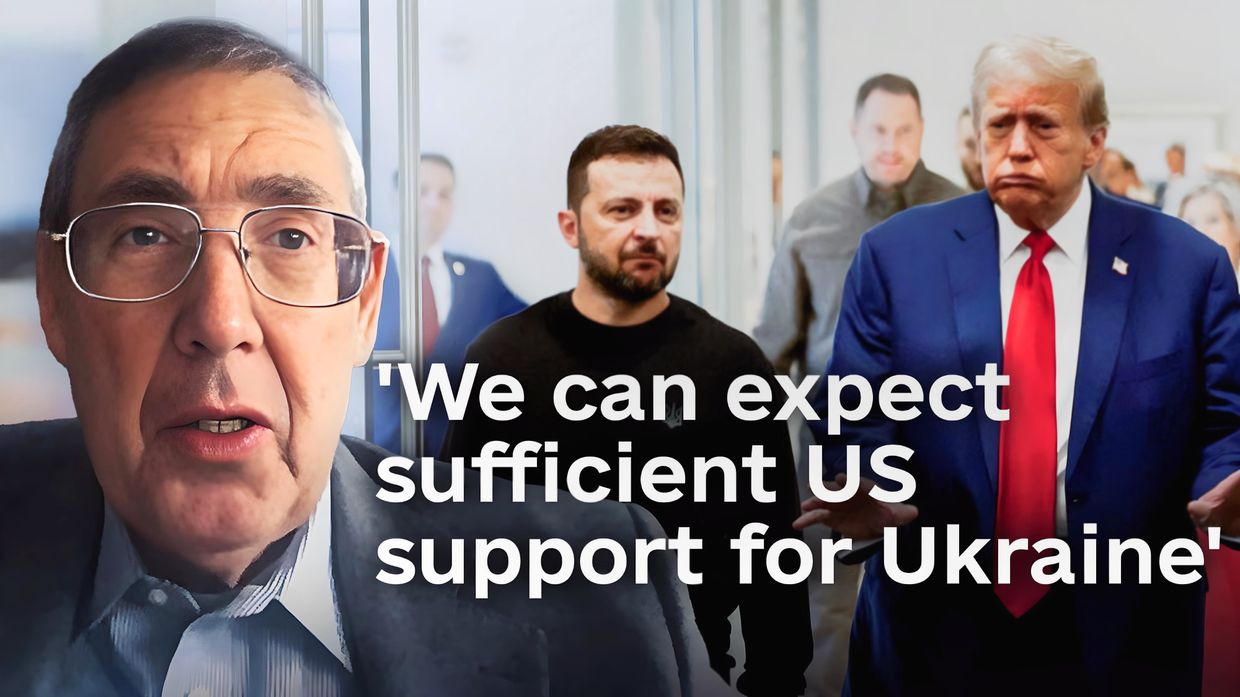
Trump's representatives consider granting Ukraine ATACMS a step toward escalating the conflict. They emphasize the need to find ways to end the war through negotiations.
Trump's team has criticized Biden's decision to allow Ukraine to use ATACMS missiles to strike at the territory. This is reported by the Voice of America, UNN reports.
Details
According to representatives of the Trump team, this is a step that could lead to further escalation of the conflict, and no one can predict where it might lead.
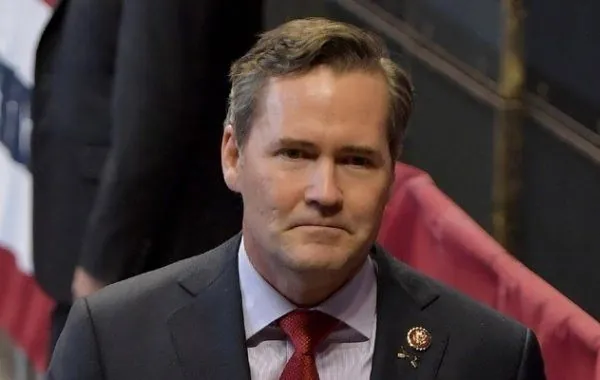
Republican Congressman Michael Volz expressed concern about this step, noting that against the backdrop of military actions by North Korea, China and Iran, such a decision could further complicate the situation. Volz drew attention to the fact that North Korea is already actively supplying ballistic missiles and artillery, while Iran, using oil purchased from China, continues to supply Russia with missiles and drones that strike at Ukraine's critical infrastructure.
In his opinion, Biden's decision is a "tactical development," but it is more important for Trump to focus on a "grand strategy." Volz emphasized that the future Trump administration will focus on finding ways to end the war, including negotiations that should lead to a peace agreement.
Borrell: US allows Ukraine to strike Russia with missiles with a range of up to 300 kmNov 18 2024, 07:24 PM • 13576 views
Amid rising fears of U.S. aid being cut off under a second Donald Trump presidency, Ukrainians are left wondering whether Europe can rise to the challenge and fill the gap.
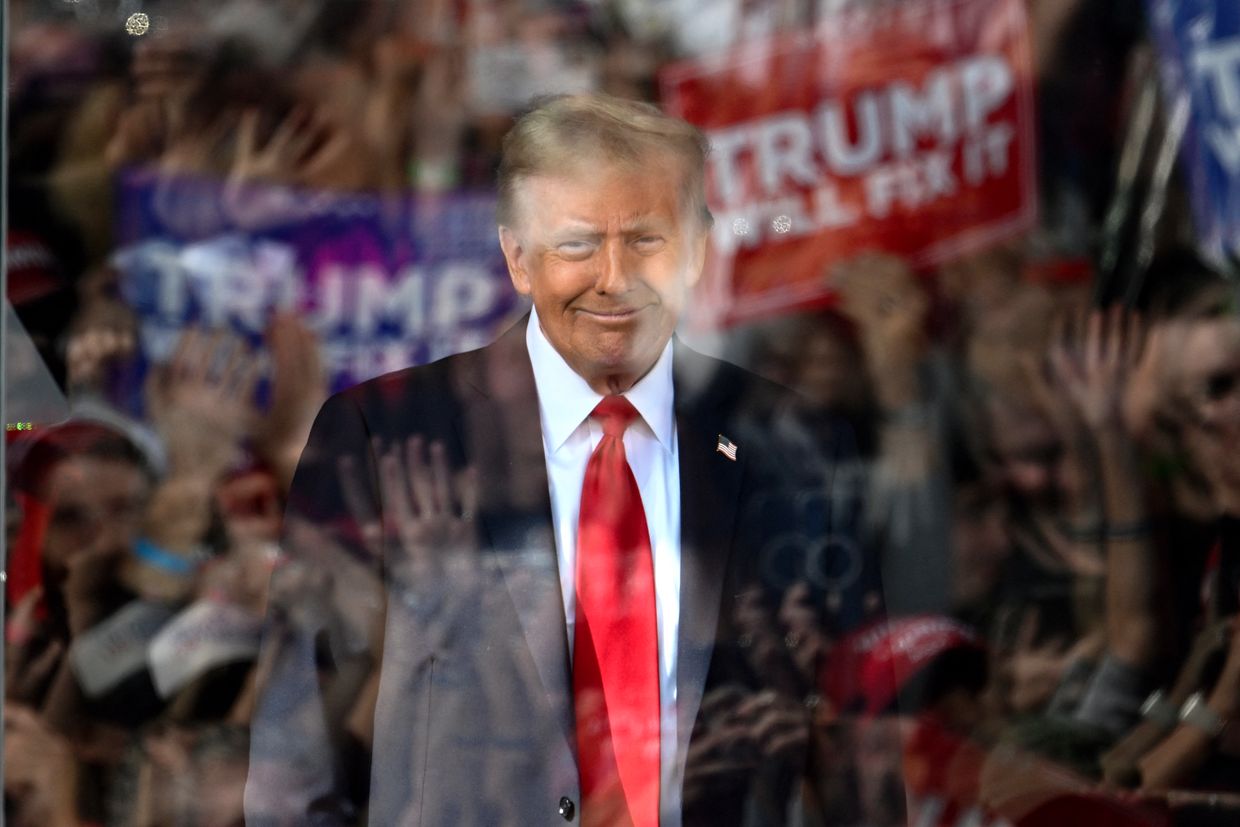
Trump has promised to swiftly end Russia's war against Ukraine, speaking highly of Russian President Vladimir Putin and making unflattering comments about his Ukrainian counterpart.
Fears that Ukraine's top Western ally could pull the plug on aid that is key to fending off Russia's full-scale invasion, now in its third year, swelled this past weekend when those close to the president-elect made a few jabs at Ukraine and its president.
Donald Trump Jr., the increasingly influential son of the president-elect, has publicly stated his opposition to Ukraine's right to use Western-provided weapons to hit targets inside Russia.
"The Military Industrial Complex seems to want to make sure they get World War III going before my father has a chance to create peace and save lives," Trump Jr. wrote on X on Nov. 17, commenting on reports that outgoing President Joe Biden had authorized the use of U.S.-made ATACMS against targets inside Russia.
As the decision came in the last months of Biden's term in office, it remains unclear whether Trump will uphold the policy after he returns to the White House.
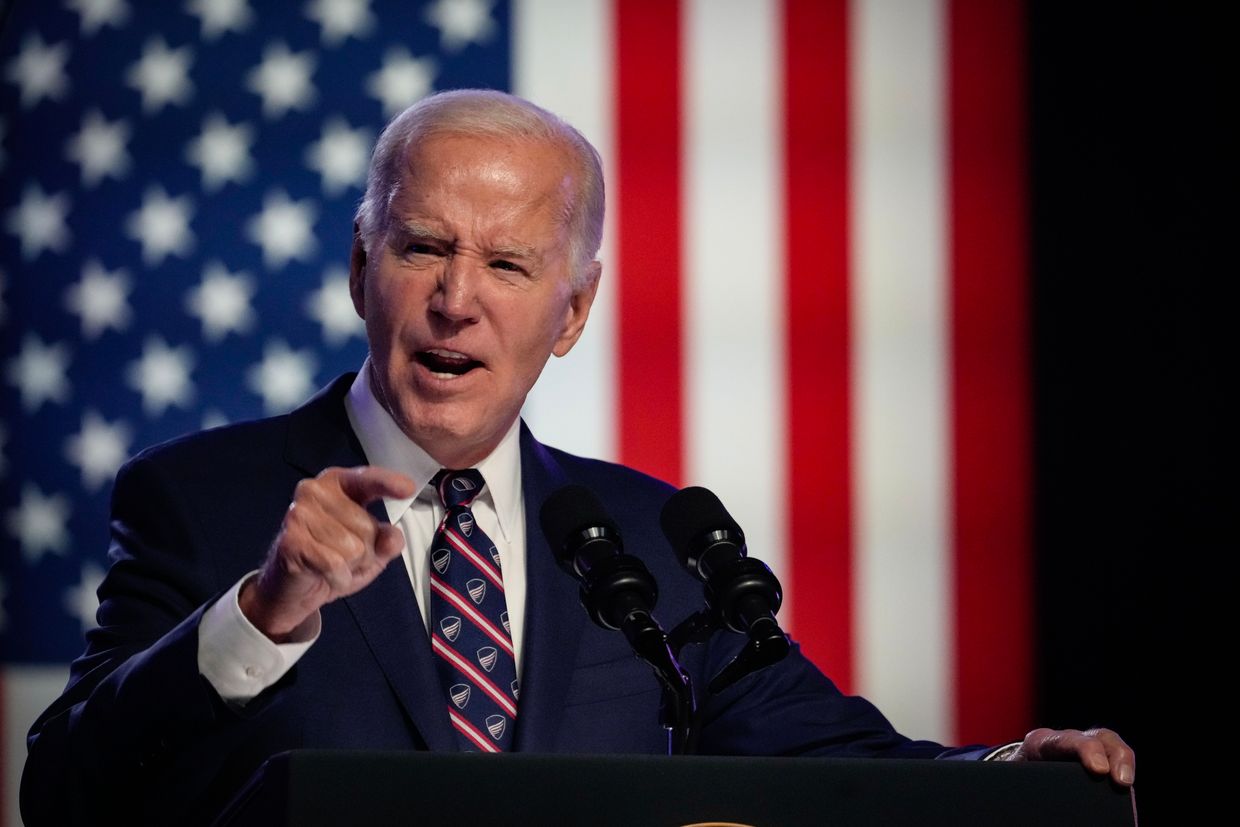
U.S. President Joe Biden speaks during a campaign event at Montgomery County Community College in Blue Bell, Pennsylvania, US on Jan. 5, 2024. (Drew Angerer/Getty Images)
And while Ukraine has a number of influential allies in Europe that would have the power to pick up where the U.S. might leave, doing so in the upcoming year would be a near-impossible task.
"Trump's victory could scarcely have come at a worse time," Nick Witney, a security expert at the European Council on Foreign Relations, told the Kyiv Independent.
"Most European governments are in economic or political difficulties, or both."
Wake-up call for Europe's defense industry
Russia's full-scale invasion of Ukraine in 2022 was a wake-up call for Europe.
Since then, Europe's defense industry has increased its ammunition production capacity by 50%. It aims to produce over 2 million shells per year by the end of 2025 — double its capacity in February 2022, according to the European Council of Foreign Relations.
Stefan Wolff, professor of international security at the University of Birmingham, said that "the EU defense industrial base has improved and will continue to improve, not least because it is now possible to allocate structural/cohesion funding to security projects within the EU."
"This will not benefit Ukraine directly, but it will likely mean more investment into defense capacity in general," he told the Kyiv Independent.
"This could then also benefit Ukraine but again not necessarily in the timeframe dictated by events in the U.S."
Fabian Hoffmann, a defense policy expert at the University of Oslo's Oslo Nuclear Project, agreed that "Europe has significantly ramped up production of some capabilities, such as 155mm artillery shells and other types of ammunition."
"In these areas, Europe could compensate relatively well, although the absence of U.S. assistance would, of course, still be felt," he told the Kyiv Independent.
But Hoffmann argued that, compared with the U.S., Europe does not have some crucial types of weapons needed by Ukraine.
He said that the "U.S. maintains a large reserve arsenal of tanks and infantry fighting vehicles that could be made available to Ukraine, whereas Europe lacks such reserves."
The U.S. also has about 2,000 AGM-158A JASSM cruise missiles and another 2,000+ AGM-158B JASSM-ER cruise missiles in its arsenal, while "European states do not have anywhere near that number of cruise missiles," he added.
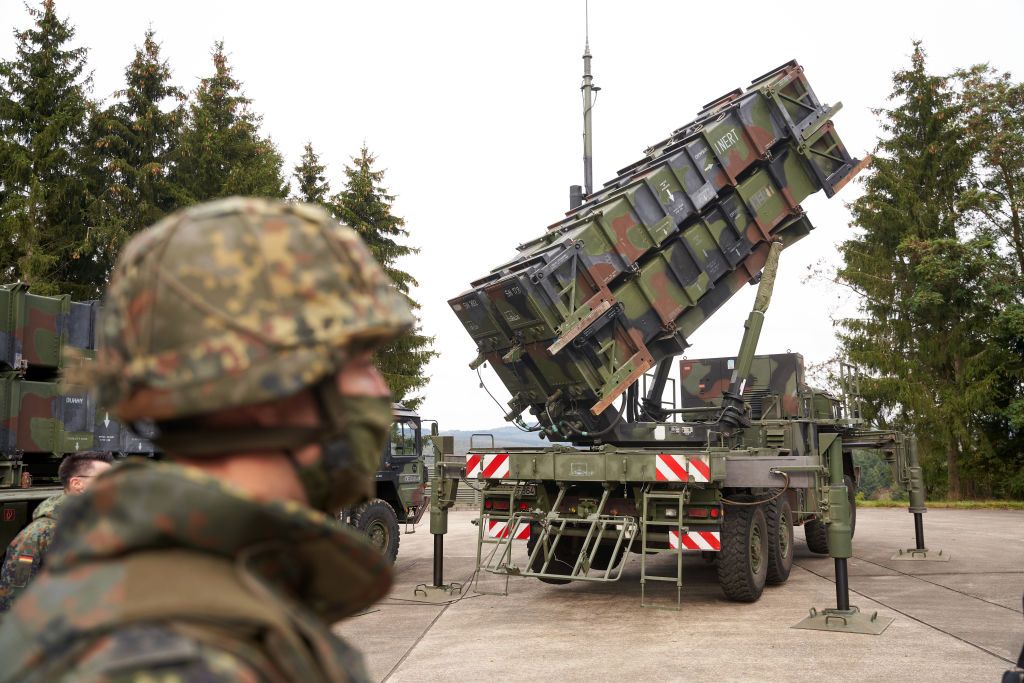
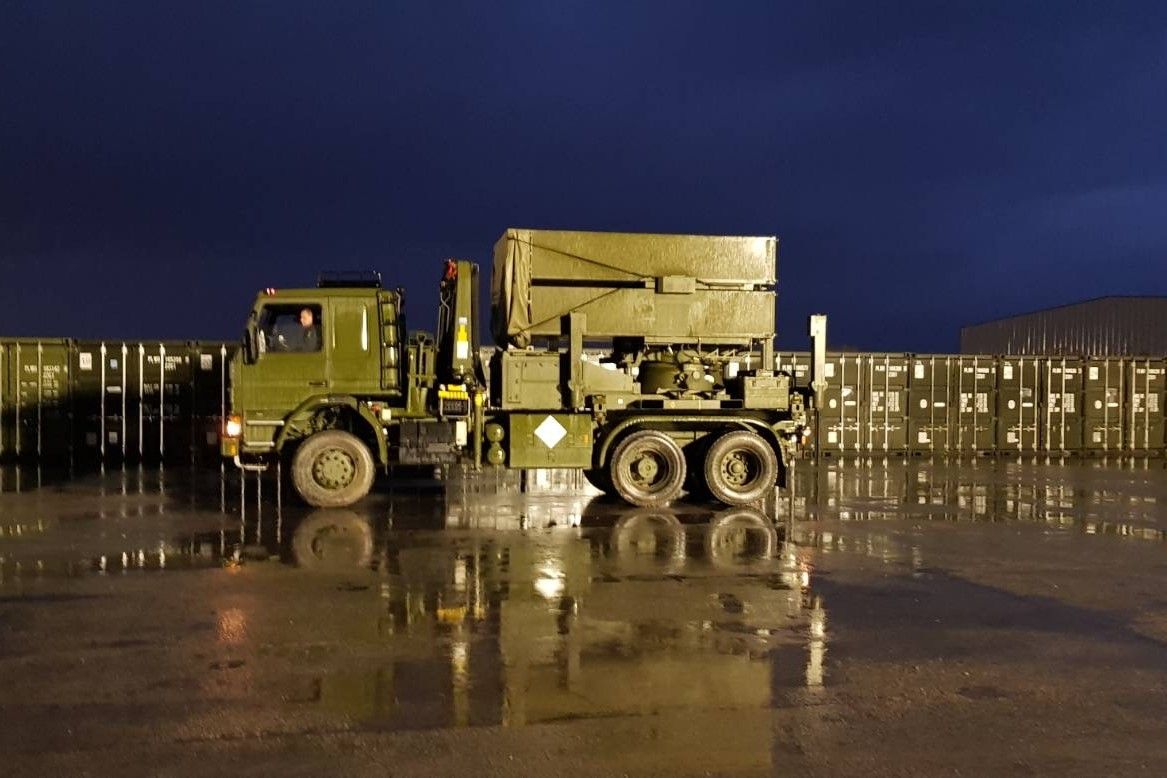
Moreover, the U.S. is "the sole producer of interceptors for Patriot and NASAMS air defense systems," he said.
"If the U.S. were to withdraw as a supplier, Ukraine would face severe challenges in missile defense, particularly against ballistic missile threats," Hoffmann added.
A soldier faces the launcher of a Patriot air defense system during the air defense exercise "Resilient Guard 2020" on Oct. 14, 2020, in Rhineland-Palatinate, Germany. (Thomas Frey/picture alliance via Getty Images)An image of the NASAMS delivery shared by the Lithuanian Defense Ministry on Nov. 10, 2023. (Lithuanian MOD / X)
Europe producing more weaponry, but it's not enough
Even with the increase in the production of those weapons Europe is capable of offering without U.S. oversight, the deliveries have not been large enough to meet Ukraine's needs, analysts say.
Pavel Havlicek, an expert on Russia and Ukraine at the Czech Republic's Association of International Affairs, argued that "over the past two and half years, the EU proved very slow, even somehow lenient, to expand military production, massively increase military spending and investments, or boost its military industry."
"If you ask me if the EU can overnight replace the role of the U.S., it is absolutely no — since the American backing is multilayered and strategic, including the air protection — Patriot (air defense systems), mid- and long-range missiles that operate on the U.S. tech, including with their precision or intelligence gathering, which is key with limited resources at the battlefield," he told the Kyiv Independent.
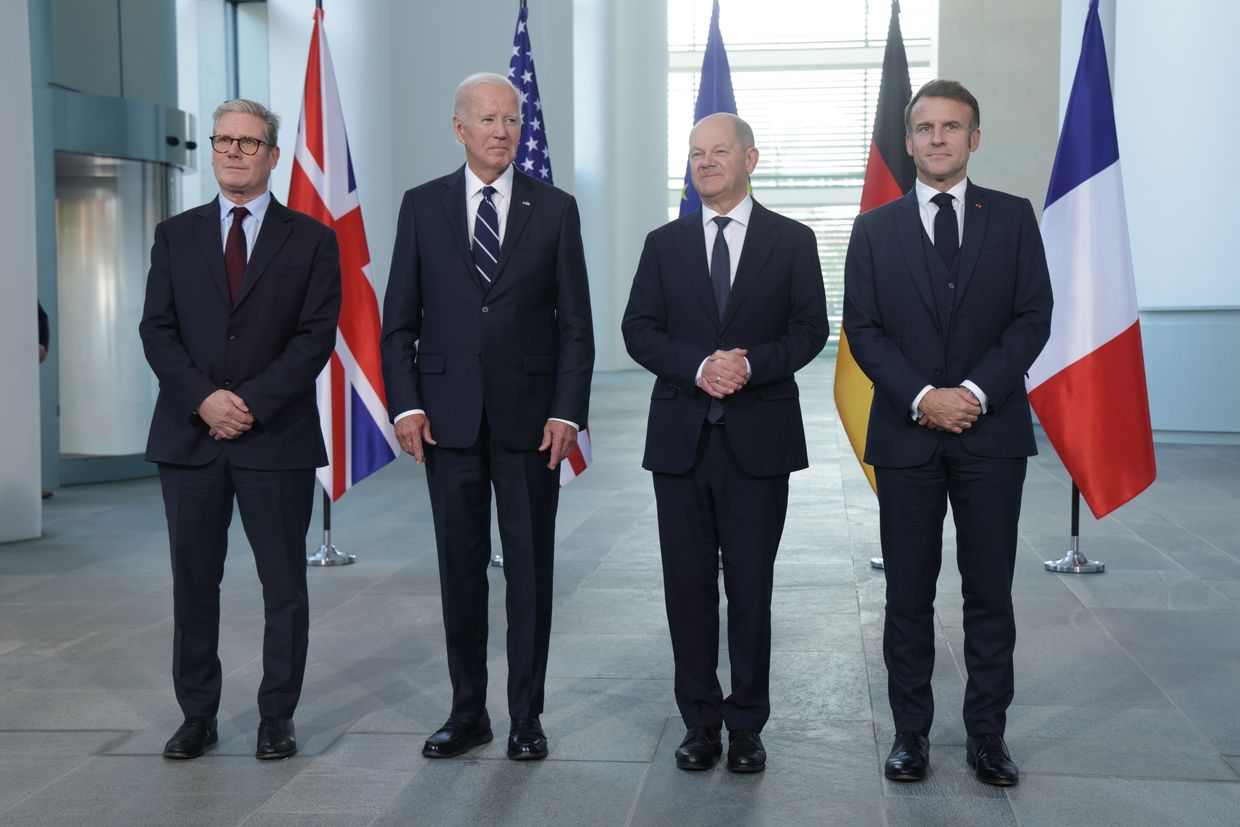
(From L to R) British Prime Minister Keir Starmer, U.S. President Joe Biden, German Chancellor Olaf Scholz, and French President Emmanuel Macron stand for a group photo at the Chancellery in Berlin, Germany, on Oct. 18, 2024. (Sean Gallup/Getty Images)
Lucian Kim, senior analyst for Ukraine at the International Crisis Group, also said that Europe would not be able to fill the gap because "Europe's militaries — Germany's in particular — are themselves under-armed, and Western allies lack both the stocks and production capacity to match the assistance Ukraine has been receiving from the U.S."
He cited problems with the Czech-led initiative to supply artillery shells to Ukraine.
The initiative, which was announced in early 2024, aims to deliver 1 million shells to Ukraine by the end of this year but it has faced delays.
European Union's chief diplomat, Josep Borrell, announced on Nov. 11 that the bloc had delivered 980,000 artillery shells to Ukraine out of the 1 million promised. He explained the shortfall, citing unexpected production capacity limits.
Samantha de Bendern, an associate fellow at the Royal Institute of International Affairs at Chatham House, agreed that the EU was unlikely to fill the gap if the U.S. pulled the plug on aid.
"While the EU and its member states have made strides in increasing military aid and production, the stark reality remains that Europe cannot yet fill the void left by the United States, either in terms of its own defense or that of Ukraine," she told the Kyiv Independent.
"As long as perceived national interests continue to diverge and political stability wavers, particularly in key countries like Germany and France, Europe will struggle to forge a unified and effective response to the war raging on its continent."
She also said that "Europe is now in a position in which it cannot defend the country that has sacrificed tens, maybe hundreds of thousands of lives to defend not only its own territory but Europe as a whole."
De Bendern said that European governments were under pressure from the electorate to spend money on health infrastructure and other public projects rather than Ukraine.
"The question for them is whether you spend money on Ukraine or build another hospital," she added.
Europe in crisis
Apart from technical limitations, there are political problems that obstruct a further increase in Europe's aid for Ukraine. These include political instability in Germany, where Chancellor Olaf Scholz' coalition has collapsed.
"Germany, Europe's largest military donor to Ukraine, has plunged into political chaos with the collapse of the Scholz-led coalition. France's Emmanuel Macron, a staunch defender of Ukraine in spite of his initial impulses to seek a dialog with (Vladimir) Putin, has lost much of his freedom of action since the parliamentary elections in June in which he lost his parliamentary majority," De Bendern said.
"Elsewhere in Europe, political parties on the far right or far left of the political spectrum with pro-Russian sympathies are rising," De Bendern added.
"Already-fragile EU unity, a stalled Franco-German motor, a Trojan Horse in the shape of (Hungarian Prime Minister Viktor) Orban holding the presidency," Witney said, listing the problems the EU is facing.
"(All) will come under further pressure as individual states delude themselves they can build 'special relationships' with Trump, and that supporting his agenda for Ukraine would be a good way to win favor."
When asked for a comment, a spokesperson for the European Commission referred the Kyiv Independent to a Nov. 18 statement by Borrell, who said that "we have to continue supporting Ukraine as much as we can and quicker, as quick as we can."
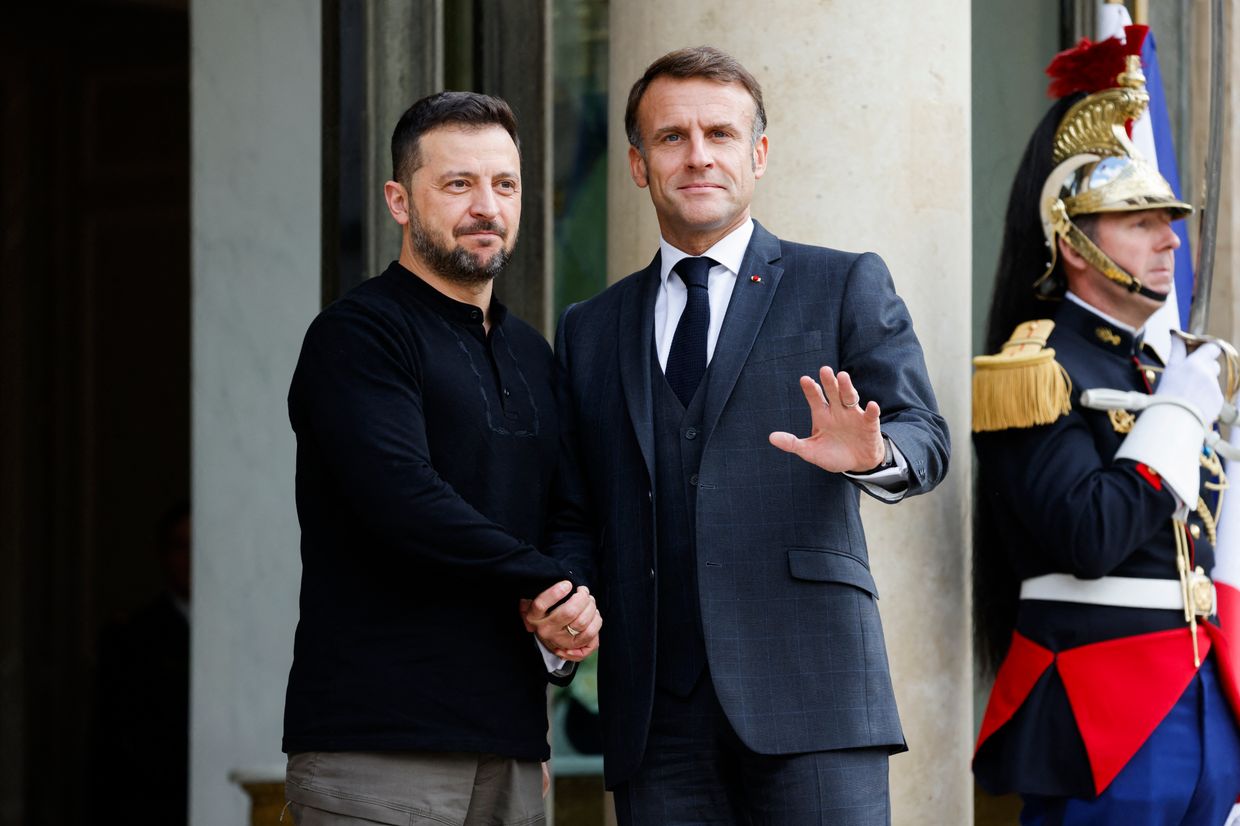
France's President Emmanuel Macron (R) shakes hands with his Ukrainian counterpart Volodymyr Zelensky as he arrives prior to their meeting at the Elysee Palace in Paris on Oct. 10, 2024. Ukrainian president visited Britain, France and Italy on Oct. 10, 2024, (Ludovic Marin/AFP via Getty Images)
The U.S. and the EU currently provide 43% of military aid to Ukraine each, according to figures cited by de Bendern. In the EU, Germany is the biggest donor, with 12%.
"These figures speak for themselves: for the EU to replace the U.S., it would have to double the amount of military aid it gives to Ukraine," De Bendern said.
"The current political situation in Europe, as well as the real military capabilities of individual European countries, mean that Europe will not be able to step up in the short term."
But it all boils down to the presence of political will. If there is a will, Europe will be able to at least partially fill the gap in case of a U.S. withdrawal, according to analysts.
"There is so much more Europe can afford to do or could do creatively with some more money, including the frozen Russian assets," Sascha Bruchmann, a military analyst at the London-based International Institute for Strategic Studies, told the Kyiv Independent.
"It is the lack of political will and geopolitical naïveté, not financial weakness, that holds Europe back."
What should be done to continue helping Ukraine?
Susan Stewart, an expert at the Eastern Europe and Eurasia Division of the German Institute for International and Security Affairs, said that, although the EU may not be able to undertake some projects as a bloc, some of its member states could create a coalition to boost support.
"There could be a sort of 'coalition of the willing' of those states that see their own security as severely threatened and/or have shown unwavering support for Ukraine," she said.
"A possible beginning of this coalition may be indicated by the meetings Donald Tusk is planning with the leaders of the UK, France, and the Baltic and Nordic states. And it will certainly not hurt that Poland will take over the presidency of the EU for six months in January 2025."
Stephen Hall, lecturer in Russian and post-Soviet politics at the University of Bath, argues that supporting Ukraine is vital for Europe's survival.
"Europe has to step up for its own safety as well," he told the Kyiv Independent.
Yet it's up to the countries that understand the risks to do so, no matter what U.S. policy come January will be.
A spokesperson for Rheinmetall, one of Germany's largest defense companies, said that it "is a strategic partner of Ukraine and intends to support the country in the long term."
"This applies regardless of the outcome of the U.S. election," he told the Kyiv Independent. "Should the countries of Europe decide to increase their support for Ukraine in the future, Rheinmetall will do everything in its power to meet these increased demands as well."
Martin Fornusek and Chris York contributed to this story.
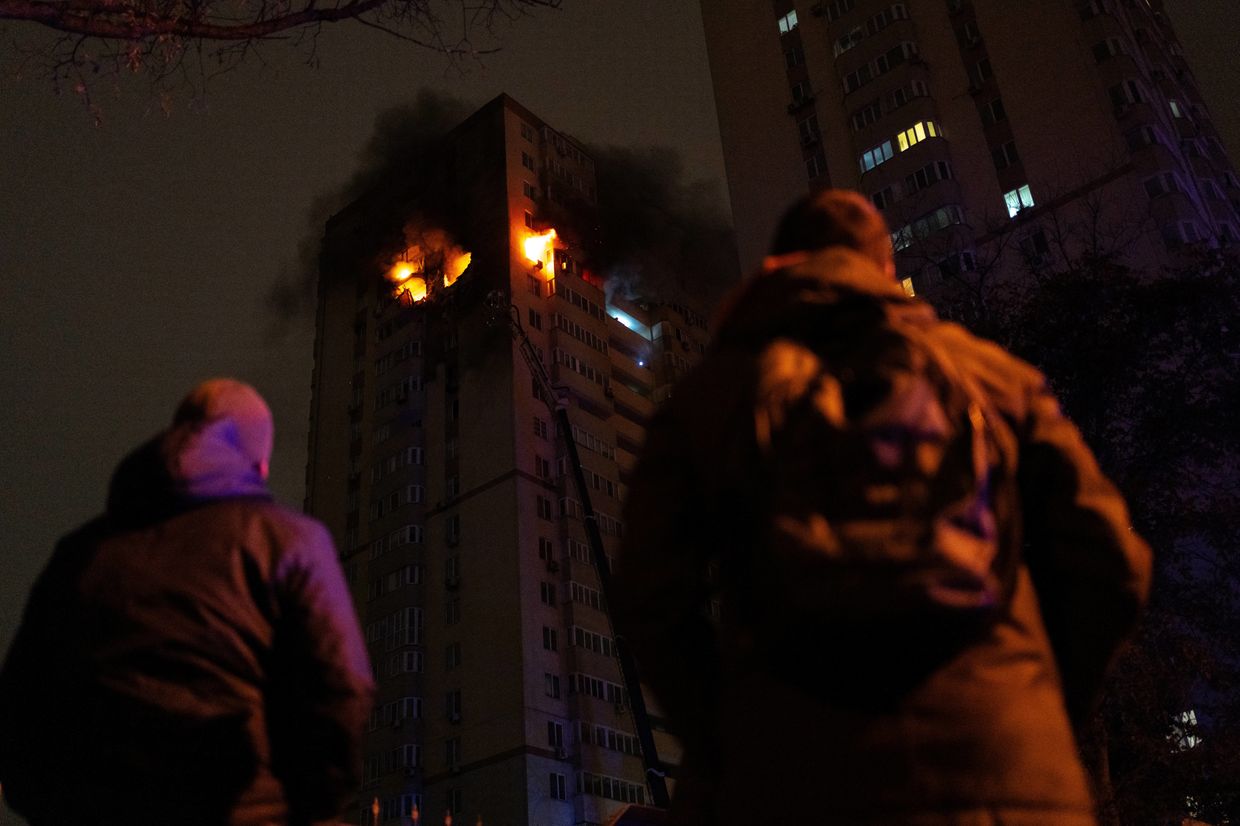
Explosions were heard in Kyiv after missile launches by the Ukrainian Air Force, with one missile fired toward the city.
Explosions in Kyiv, reports UNN.
Details
Explosions have been heard in the capital. Earlier, the Air Force reported missile launches, after which they fired a missile in the direction of Kyiv.
"The direction is towards Kyiv!" the Ukrainian Air Force said in a statement.
A couple of minutes later, an explosion occurred, UNN notes.
Josep Borrell, EU High Representative for Foreign Affairs and Security Policy, believes that Kremlin leader Vladimir Putin is not ready for peace talks after 4,000 days of war against Ukraine.
Source: Josep Borrell after a meeting of EU foreign ministers in Brussels on Monday, European Pravda reports
Details: Borrell referred to the massive air attack that Russia launched on Ukraine overnight on 16-17 November and Monday’s lethal attacks on Odesa.
Quote from Borrell: "What does it mean? Well, it means that Putin does not look to be ready to negotiate, but rather to escalate. He does not look willing to negotiate, but to escalate the war in order to fulfil his goals. His goals have been clear since the beginning: to conquer, to occupy and to subjugate Ukraine."
The EU’s chief diplomat noted that Putin had believed that the war would be over in two weeks, but his plan failed.
Quote from Borrell: "This was his plan. In a couple of weeks, in Kyiv. 1,000 days later, they are still fighting in Donbas. But it is not only 1,000 days – it is 4,000 days since Putin attacked Ukraine for the first time. It was in 2014."
Borrell acknowledged that the EU's response should have been firmer and stronger from the beginning. He warned against leaving Russia's latest escalation without a response.
Quote from Borrell: "It is clear that each step that is being left without reaction encourages Russia to escalate further: no reaction, more escalation."
Background: Borrell has also announced that the European Union has handed over the promised million artillery rounds to Ukraine. The munitions were supposed to have arrived by spring.
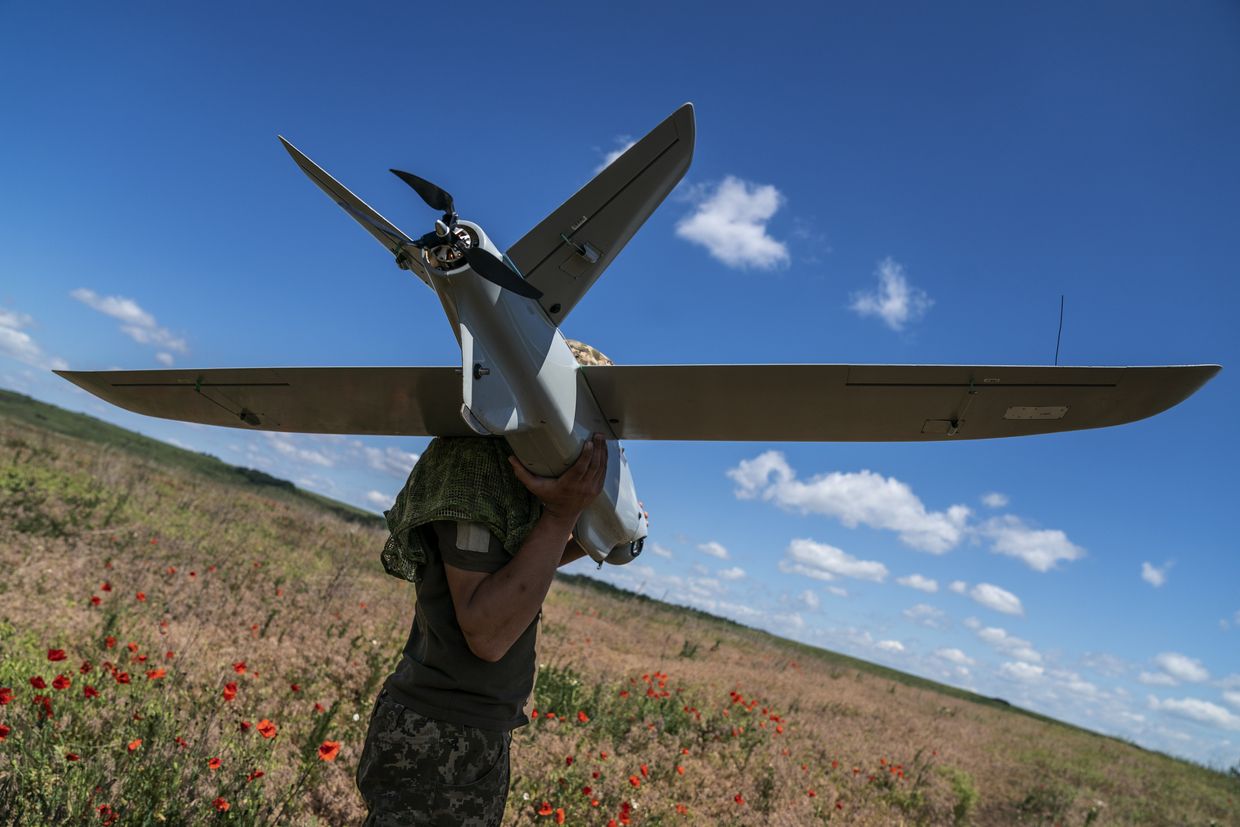
russia has begun using Iranian UAVs with thermobaric warheads to attack Ukraine. Deepening cooperation between Tehran and moscow could worsen the situation in the Middle East.
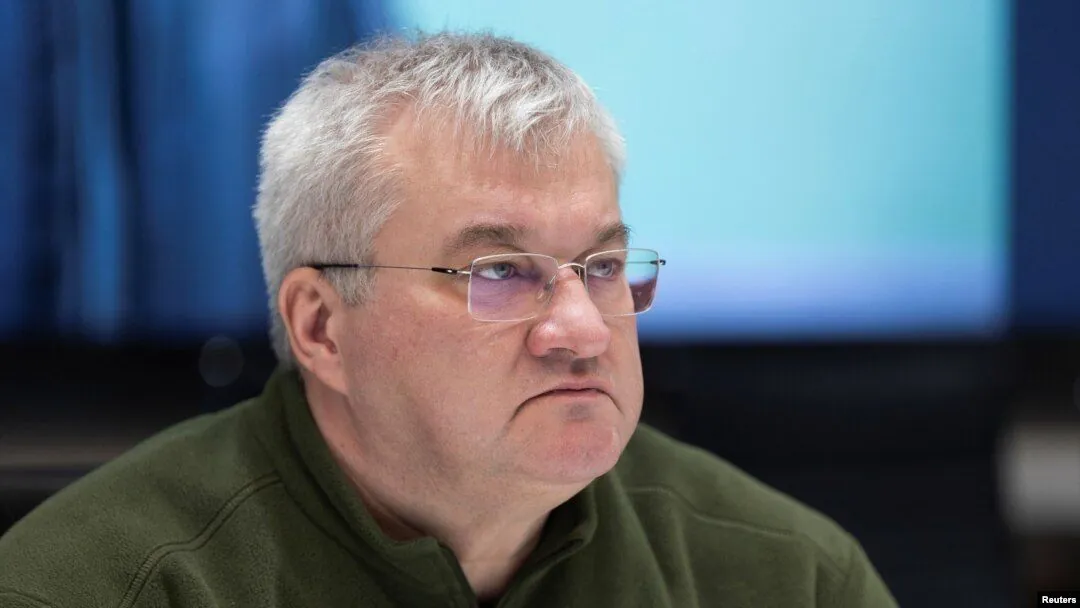
russia uses Iranian UAVs with thermobaric warheads. Deepening cooperation between Tehran and Moscow could worsen the situation in the Middle East. This was stated by Ukrainian Foreign Minister Andriy Sybiga at a special meeting of the UN Security Council, UNN reports.
Details
russia's cooperation with Iran is worrying. russia has also started using thermobaric warheads on Iranian drones, increasing their destructive power. The question is also what does Tehran want to get in return from moscow? And this could worsen the situation in the Middle East
– Sibiga said.
He added that the crisis could deepen significantly if russia is not stopped now.
Add
Earlier, the Kyiv Scientific Research Institute of Forensic Expertise (Kyiv Scientific Research Institute of Forensic Expertise) reported that during the attacks on the territory of Ukraine on October 26-29, the russians used attack drones with thermobaric warheads.
Russians have used drones with thermobaric warheads for recent attacks on Ukraine – Kyiv Scientific Research Institute of Forensic ExpertiseOct 29 2024, 12:32 PM • 126744 views
It is worth noting that the russians are constantly trying to modify and modernize all types of missiles and drones they have, which are used for attacks on Ukraine. In their comments to UNN , the experts of the Kyiv Scientific Research Institute of Forensic Expertise explained what features are involved and what role Western components play in the changes of enemy weapons. The enemy uses not only Western components.
Russian strike weapons have changed – KFI told about the results of the latest research on enemy missiles and dronesOct 16 2024, 01:07 PM • 105361 view
According to Oleksandr Ruvin, director of the Kyiv Scientific Research Institute of Forensic Expertise, the components for UAVs used by the enemy to attack Ukraine are supplied by about 50 manufacturers from China.
About 50 manufacturers from China supply components for UAVs used by the enemy to attack Ukraine – Oleksandr RuvinOct 8 2024, 07:30 AM • 101322 views
In addition, the experts of the Kyiv Scientific Research Institute of Forensic Expertise found that the russian X-69 missiles used by the occupiers to hit Ukraine are made of several types of weapons and have foreign components.
The Kyiv Scientific Research Institute of Forensic Expertise told about the equipment of X-69 missiles launched by russia at UkraineNov 8 2024, 11:57 AM • 17952 views
US aims to 'provoke further escalation' — Kremlin comments on long-range strikes
Scholz's stance on Taurus unchanged despite US permission on long-range strikes
Turkish president to propose freezing Ukraine front line, Bloomberg reports
Zelensky visits key front-line town of Pokrovsk
Russia uses cheap decoy drones to overload Ukraine's air defense, Ukrainian intelligence says
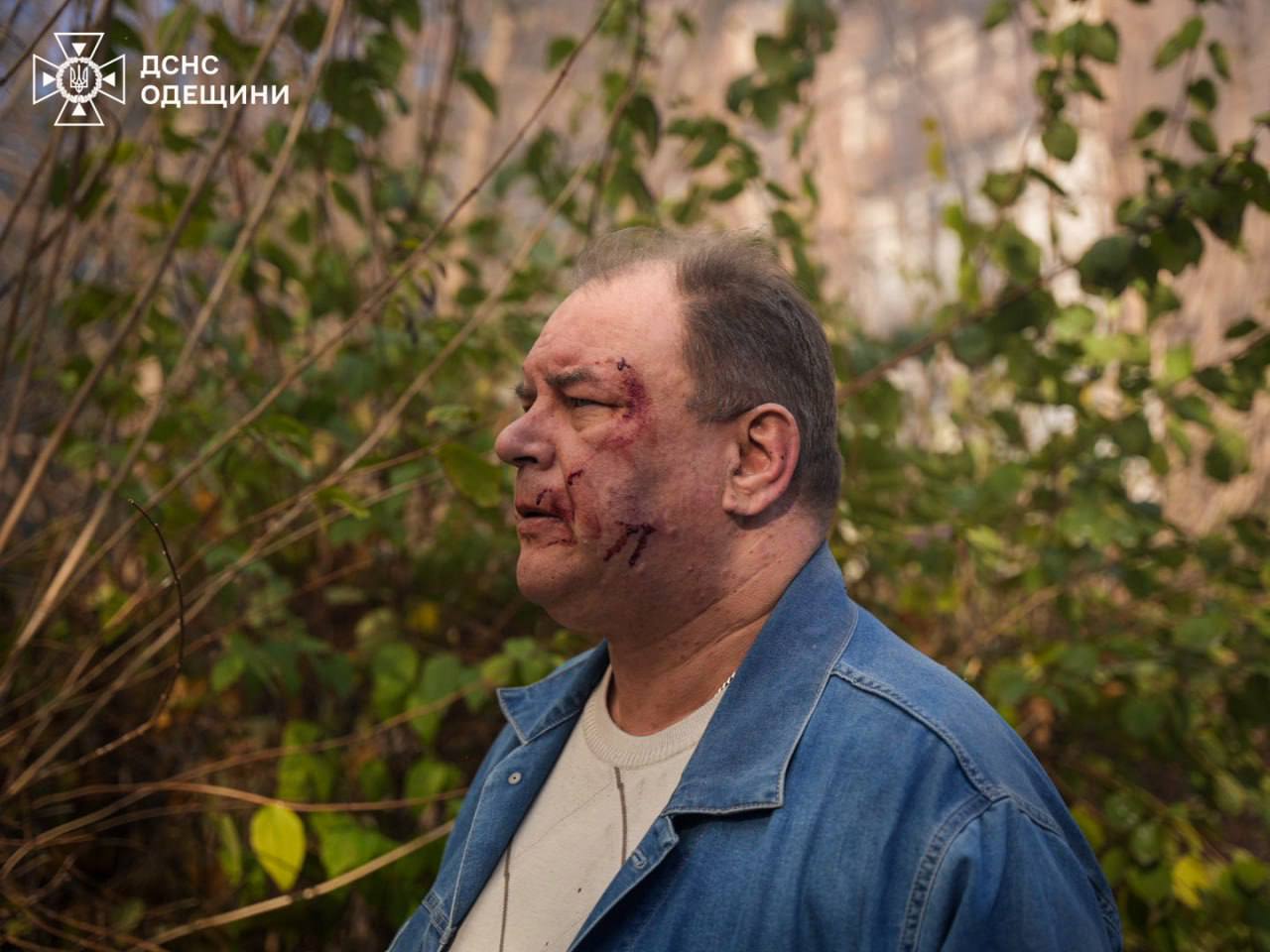
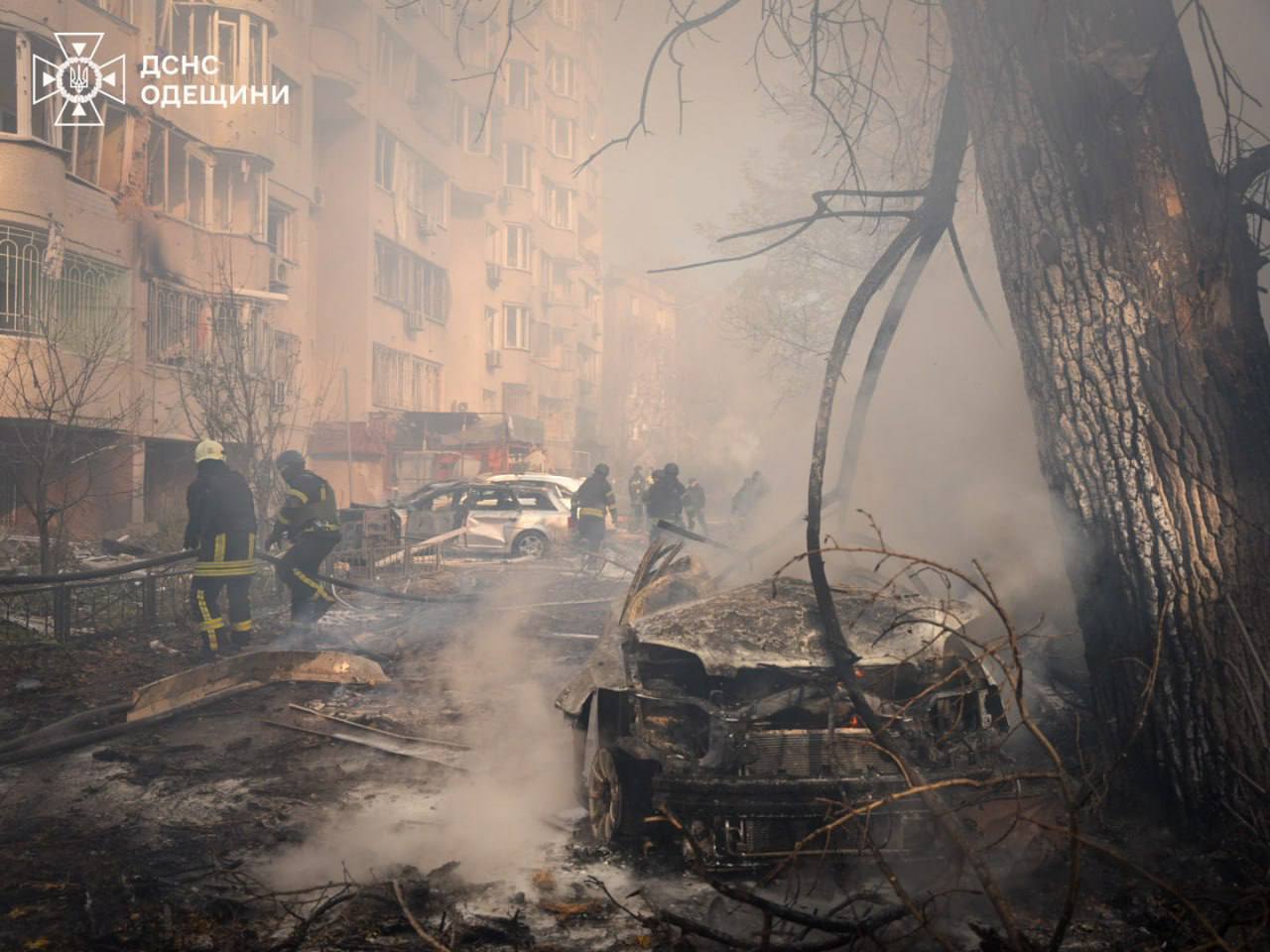
Russian forces launched a ballistic missile attack against the port city of Odesa on Nov. 18, killing at least 10 people and injuring 55.
The killed included seven police officers, a medic, and two civilian residents. Among the injured were at least 14 law enforcement officers and four children, two of them aged 7, 10, and two 11-year-olds.
The children are hospitalized and are in condition of moderate severity, Governor Oleh Kiper said. Thirty other people are hospitalized, of which three are in critical condition.
Local authorities declared Nov. 19 a day of mourning in Odesa, Kiper said.
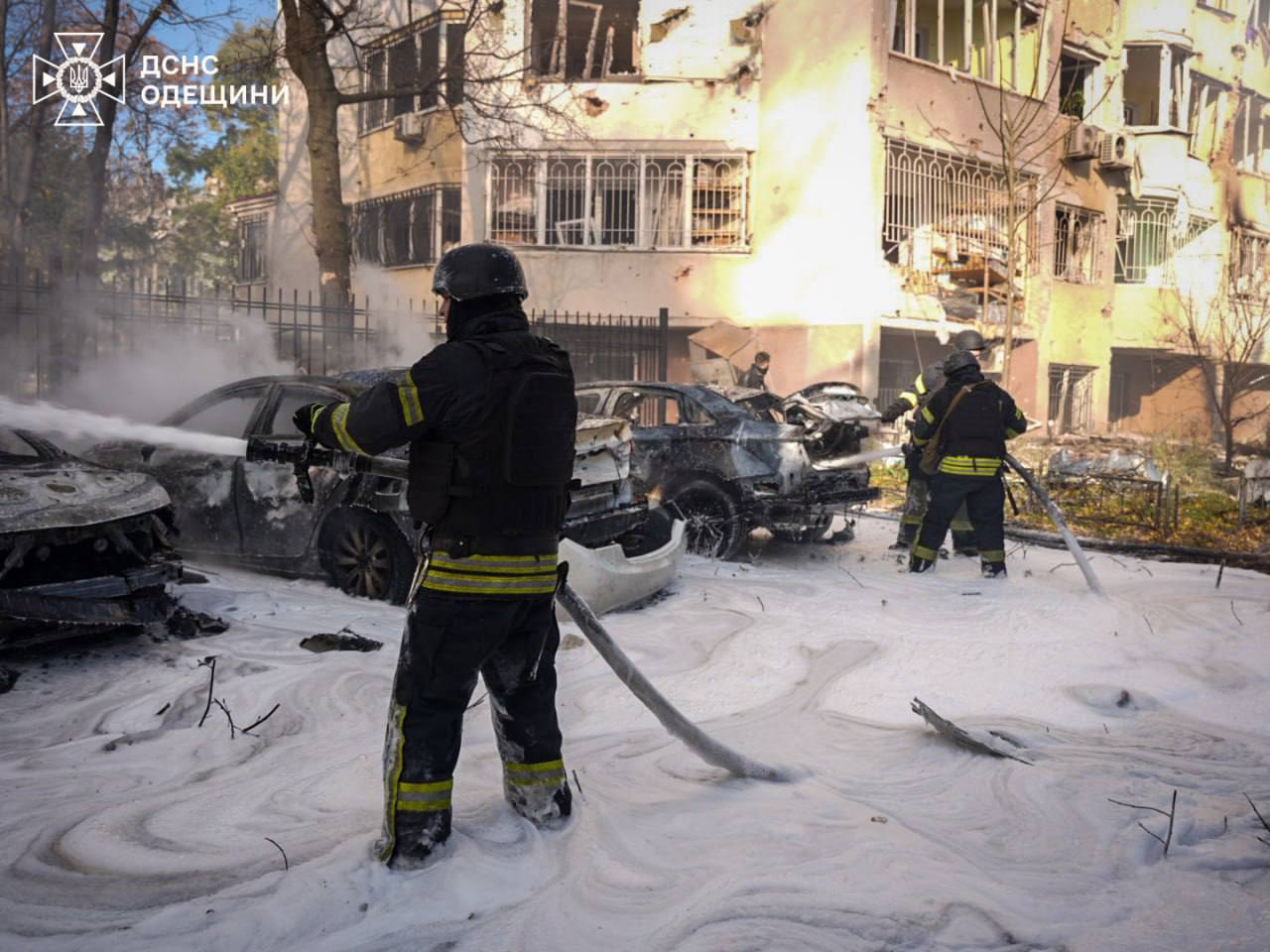
The aftermath of a Russian missile attack against Odesa, Ukraine, on Nov. 18, 2024. (State Emergency Service/Telegram)The aftermath of a Russian missile attack against Odesa, Ukraine, on Nov. 18, 2024. (State Emergency Service/Telegram)
"After calls and meetings with (Russian President Vladimir) Putin, after false media gossip about 'refraining' from strikes, Russia shows what it is really interested in: only war," Zelensky said.
The attack occurred shortly after Russia launched one of its largest mass strikes against Ukraine on Nov. 17 and deadly missile attacks against the city of Sumy overnight on Nov. 18.
Odesa, lying on the Black Sea coast in southern Ukraine, is home to some 1 million residents. The port city has been repeatedly targeted throughout the full-scale war.
US aims to 'provoke further escalation' — Kremlin comments on long-range strikes
The outgoing U.S. administration intends to provoke an escalation of the war in Ukraine, Kremlin spokesperson Dmitry Peskov told the media on Nov. 18 following reports that Washington eased restrictions on long-range strikes.
Peskov's words come as a Russian missile attack on Odesa hit a residential area, killing 10, and injuring 55 more.
Several media outlets reported on Nov. 17 that U.S. President Joe Biden permitted Ukraine to use its ATACMS missiles to strike against targets on Russian soil. According to some reports, this so far concerns only Russian and North Korean forces amassing in Russia's Kursk Oblast.
"You know, with the reports in Western media, it is obvious that the outgoing administration in Washington intends to take steps… to add fuel to the fire and continue to provoke further escalation of tensions," Peskov said in response to a question whether the Kremlin can confirm that Washington took the step, RIA Novosti reported.
The statement comes as Biden is set to leave office in January, with Donald Trump replacing him in the Oval Office. The Biden administration has pledged to deliver as much support to Ukraine as possible before Trump takes office.
Scholz's stance on Taurus unchanged despite US permission on long-range strikes
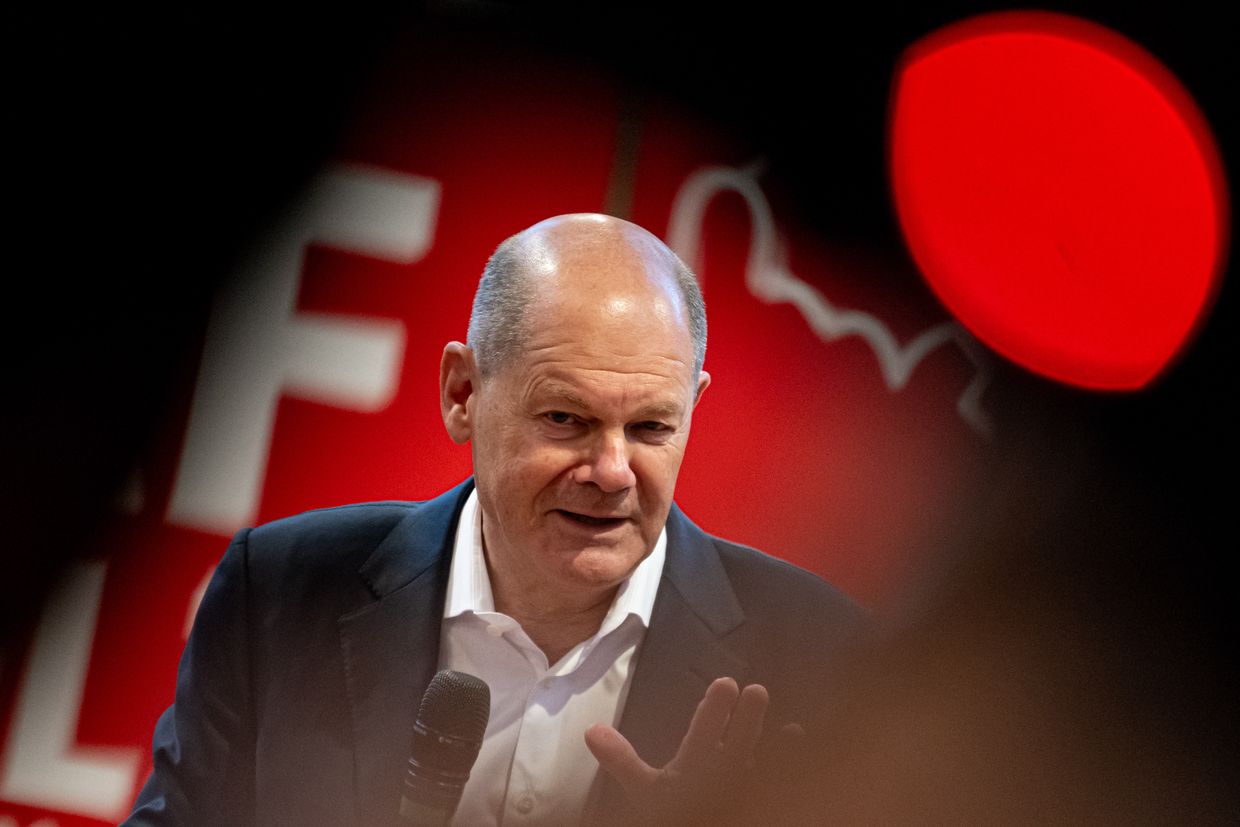
German Chancellor Olaf Scholz is not planning to supply Ukraine with Taurus missiles despite the U.S. easing restrictions on long-range strikes, a government spokesperson told the AFP news agency on Nov. 18.
Scholz has "made his position clear" on the matter and will "not change his stance anymore," spokesperson Wolfgang Buchner said.
Ukraine has previously received U.S.-made ATACMS and Storm Shadow/SCALP missiles from the U.K. and France, with a range of 300 kilometers (190 miles) and 250 kilometers (150 miles), respectively.
In contrast, Scholz has been adamant about not supplying the Taurus cruise missiles, which boast a range of 500 kilometers (310 miles), fearing an escalation with Russia.
Berlin's policy may soon shift as Germany heads toward snap elections on Feb. 23, with the center-right opposition alliance CDU/CSU currently leading the polls and threatening to oust Scholz.
CDU/CSU's chancellor candidate, Friedrich Merz, said he would allow the delivery of Taurus missiles, but only if necessary after issuing an ultimatum to Russian President Vladimir Putin and lifting restrictions on arms that had already been provided.
Similarly, Vice Chancellor and Economy Minister Robert Habeck, who is running for the chancellery for the Greens, said he would greenlight the delivery of the missiles if elected in February.
Turkish president to propose freezing Ukraine front line, Bloomberg reports
Turkish President Recep Tayyip Erdogan will propose his peace plan for Ukraine during the G20 talks commencing on Nov. 18, Bloomberg reported, citing undisclosed sources.
Erdogan's proposal would include Ukraine foregoing joining NATO for at least 10 years, freezing the current front line, providing Ukraine with weapons, and deploying international troops to a demilitarized buffer zone in the Donbas, Bloomberg reported.
The Turkish leader's proposal comes as NATO countries prepare for a Donald Trump presidency, which many fear will lead to the U.S. pressuring Ukraine to end the war quickly, even at the cost of territorial concessions.
The G20 countries are set to convene in Brazil without the participation of Russian President Vladimir Putin. Brazil is a party to the Rome Statute of the International Criminal Court (ICC), which issued an arrest warrant for Putin last year for the abduction of Ukrainian children.
Zelensky will also not be present, despite numerous appeals to receive an invitation. Zelensky said on Nov. 16 that Ukraine must do everything possible to end the war through diplomatic means in 2025.
Zelensky's words followed Scholz’s phone conversation with Putin, during which he condemned Russia's war against Ukraine and called to withdraw Russian troops from Ukrainian territory. He also urged Russia to negotiate with Ukraine to achieve a "just and lasting peace."
The call sparked anger in Ukraine, with Zelensky saying it could open a "Pandora's Box" for further engagement with the Russian leader. In the wake of Trump's election, Kyiv has urged its partners to adopt a "peace through strength" approach to pressure Russia toward a just peace.
Zelensky visits key front-line town of Pokrovsk
President Volodymyr Zelensky visited the town of Pokrovsk in Donetsk Oblast, currently lying some 6-7 kilometers from the front line, his Telegram channel reported on Nov. 18.
Pokrovsk, a key logistics hub for Ukrainian forces in the east, has come into artillery and drone range of Russian forces moving relentlessly forward in Donetsk Oblast. With Moscow's troops drawing near, losing the town would be a serious blow to other parts of Ukraine's defense as well.
"A tense sector. It is only thanks to the strength of the soldiers that the east (of Ukraine) is not completely occupied by Russia. The enemy receives a response every day," Zelensky said.
The head of state also visited the base of the 25th Airborne Brigade and handed out awards to soldiers.
During his trip, Zelensky was accompanied by Donetsk Oblast Governor Vadym Filashkin, who called Pokrovsk "one of the hottest spots" of the front line.
Zelensky has previously visited the most critical sectors of the front line during the full-scale war, including now Russian-occupied Bakhmut or Avdiivka.
His visit aims to boost the morale among Ukrainian troops, who are increasingly on the back foot in the face of a Russian advance. The inauguration of U.S. President-elect Donald Trump in January adds further uncertainty regarding the future of Ukrainian defense capabilities.
Russia uses cheap decoy drones to overload Ukraine's air defense, Ukrainian intelligence says
Russian forces use cheap decoy drones with foreign components to overload Ukraine's air defense system, Ukraine's military intelligence (HUR) reported on Nov. 18.
Russia has recently increased the number of large-scale drone attacks against Ukrainian cities, depleting Ukraine's air defense systems and targeting critical infrastructure.
According to HUR, Russian manufacturers use components from the U.S., China, the Netherlands, and Switzerland to produce the Gerbera drone, a cheaper and less deadly equivalent of Iran's Shahed, at a plant in Yelabuga, in the Republic of Tatarstan, central Russia.
The Gerbera drone can carry a combat payload similar to that of a kamikaze drone and conduct reconnaissance missions, particularly to detect air defense positions and record hits from other attack drones.
The Gerbera is ten times cheaper than the Shahed or Geran drones due to the use of simple materials, such as plywood and foam. Yet, the drone contains a set of components from foreign manufacturers that "are common for Russian weapons," according to HUR.
Examination of the downed drones showed that Russia manufactures Gerberas based on a Chinese prototype using foreign components imported from China.
The Gerbera drones were developed by the Chinese model aircraft manufacturer Skywalker Technology Co., Ltd., which also produces fuselages and organizes the supply of kits to Russia.
The Gerbera's jamming-resistant antenna (CRPA) contains chips from Analog Devices and Texas Instruments, both made in the U.S., and NXP Semiconductors, made in the Netherlands. The flight controller also uses components manufactured by Texas Instruments, Atmel (USA), STMicroelectronics, U-Blox (Switzerland), NXP Semiconductors (Netherlands), and XLSEMI (China).
The DLE60 engine is manufactured by the Chinese company Mile Hao Xiang Technology Co, Ltd. In the summer of 2024, the U.S. sanctioned this company for supplying Russia.
Supplies are made through third-party companies, according to HUR.
"At this point, the biggest advantage that Russia may have in such attacks is sheer numbers of drones," Samuel Bendett, a senior fellow at the Center for a New American Security think tank, told the Kyiv Independent.
Bendett mentioned the Alabuga Special Economic Zone in Russia's Republic of Tatarstan, where a Shahed-type drones plant is located. In May, the Wall Street Journal (WSJ) reported, citing a contract leaked by the Prana Network hacker group, that the factory already produces 4,500 Shaheds and aims to increase this number to 6,000.
"It appears that Russian efforts in Alabuga have ensured that the Russian military has thousands such UAVs at its disposal along with other simpler, smaller variance identified recently that fly alongside these official Geran (Russian name for Shahed-type) UAVs," Bendett said.
On Nov. 17, Russian forces launched one of the heaviest aerial strikes against the country throughout the full-scale war, primarily targeting the energy grid. Ukrainian air defenses shot down 102 of the 120 missiles and 42 of the 90 drones launched by Russia overnight.
The Ukrainian Foreign Minister spoke at a UN Security Council meeting on the territorial integrity of Ukraine. He presented evidence of the DPRK's use of missiles and called for increased support for Ukraine to force russia to withdraw its troops.
Ukrainian Foreign Minister Andriy Sybiga said that no compromises on the territorial integrity of Ukraine are possible and stressed that the fastest way to end the war is to support Ukraine so that it forces russia to withdraw its troops. Sibiga said this during a meeting of the UN Security Council, reports UNN.
Details
It must be recognized that no compromises on the territorial integrity and sovereignty of either Ukraine or any other country are possible. The fastest way to end the war is to support Ukraine so that it can force russia to withdraw its troops. It is also necessary to remove artificial restrictions on the use of weapons. This will only speed up a just peace. Stronger sanctions will deprive russia of the means to wage war. russia is also planning to invest several billion in its military machine. We have to cut off the flow of petrodollars. Zelenskyy's plan is the only realistic approach for peace
– said Sibiga.
According to him, russia loses as many soldiers in Ukraine in 10 days as the USSR lost in Afghanistan during all the years of the war.
russia does not value human life. As a result, the price will be too high and may lead to a more global war. We witnessed this in 2014. Back then, there was an argument among peacekeepers that russia only wanted Crimea and would not go further. However, this did not work. Such a weak response did not deter russia, but only encouraged russia to further violations. russia started a war in Donbas. Ukraine signed the Minsk agreements and held more than 200 rounds of negotiations with russia. In fact, 20 ceasefire agreements were signed, but 8 years later, russia launched a full-scale invasion of Ukraine. Between February 23, 2023, and October 2024, the Ukrainian Defense Forces recorded 4,600 cases of russian use of chemical munitions. Today's OPCW report is a reminder that russia has violated the red lines repeatedly. For russia, this is also a war for natural resources. It will try to steal Ukraine's rich deposits of uranium, titanium and other resources. We must stop it, prevent the aggressor from seizing these important resources so that they do not fall into the hands of russia, North Korea and Iran
– Sibiga added.
Recall
Ukraine's Foreign Minister Andriy Sybiga demonstrates a fragment of a North Korean KN-23 missile that russia fired at Ukraine at a special meeting of the UN Security Council.
At the UN Security Council meeting, Ukraine's Foreign Minister showed a fragment of the North Korean missile that russia used to hit Kyiv regionNov 18 2024, 11:18 PM • 2310 views
Sibiga, commenting on the strikes on Odesa and Sumy, said that these attacks are russia's response to all those who recently called and visited russian dictator putin to ask for peace, emphasizing that he wants war, not peace.
Sibiga on russia's latest strikes: “this is russia's response to all those who have recently called and visited putin to ask for peace”Nov 18 2024, 11:10 PM • 2614 views
Polish President Andrzej Duda has accused German Chancellor Olaf Scholz of trying to exclude US President-elect Donald Trump from negotiations on Ukraine's future.
Source: Andrzej Duda in an interview with Bloomberg, as reported by European Pravda
Details: The Polish president said Scholz's call to Kremlin leader Vladimir Putin was not intended to push Putin towards negotiating about ending the war, as Scholz himself has claimed.
Quote from Duda: "I believe it was an attempt to bring about a ceasefire in Ukraine before Donald Trump took office."
Duda believes Scholz is concerned about the possibility of being forced into unfavourable deals with the US under the Trump administration and is trying to be proactive: "What the Germans are most afraid of is that Donald Trump will force them to buy gas from America."
At the same time, Duda called the suggestion that the US president-elect would withdraw support for Ukraine ridiculous, recalling the military aid that Kyiv received during his first administration.
Quote from Duda: "I’m convinced that when it comes to the war in Ukraine, he is collecting data and information. At this moment, he is constantly, continuously collecting this information in a very vigilant manner."
Background: On the afternoon of 15 November, it was reported that Scholz had spoken to Kremlin leader Vladimir Putin for the first time in two years. President Volodymyr Zelenskyy said the call was a "Pandora's box".
Ruben Amorim promoted 16-year-old Goodwill Kukonki to first-team training in his first session as Manchester United manager, while a report suggests a fellow academy star is ‘expected to be fast-tracked’ under the Portuguese boss.
Amorim was announced as Erik ten Hag’s permanent successor at Old Trafford on November 1 but remained in charge of Sporting ahead of the international break and will be in the dugout for his first Red Devils game against Ipswich on Sunday.
Monday was Amorim’s first opportunity to see some of the players he will be working with, while others will return to training over the next week as they return from international duty.
Speculation is rife as to which United players will be boosted by Amorim’s arrival and the likely switch to a 3-4-3 formation, but Kukonki wasn’t one of those talked about as even a potential beneficiary.
The teenage centre-back, who towers over the rest of the squad at 6ft 5ins tall, has been tipped for a bright future at United and was welcomed to first-team training for the first time by Amorim.
The left-footed defender is a regular starter of the Under-18s team, and while it’s not clear whether he will remain with the group when the rest of the senior squad returns, it’s a move that adds weight to the view that Amorim will look to bring young players through from the academy, as he did with great success at Sporting.
And a GIVEMESPORT report claims ‘Amorim is expected to fast-track the development of Chido Obi-Martin after being given rave reviews of the 16-year-old striker by Manchester United youth coaches’.
United poached Obi-Martin from Arsenal in the summer after he scored 32 goals in just 18 Under-18 games for the Gunners, and he’s managed four in four since the move to the United academy.
The report adds:
‘Technical director Jason Wilcox, academy head Nick Cox and coach Darren Fletcher are all believed to have spoken with Amorim about Obi-Martin.
‘And they plan to integrate the teenager into some Under-21 games as well as some first-team training sessions to prepare him for the senior team.’
The drive to improve the pathway for academy players into the first team may well be driven by a lack of funds for transfers.
A Daily Telegraph report claims that Amorim will ‘operate on a more modest budget’ than Ten Hag as the Portuguese coach will be tasked with ‘maximising the untapped potential in the squad as the club aim to end the damaging and costly cycle of mass overhauls’.
The report states:
‘The new United hierarchy have no plans under Amorim to rip up a squad they feel is capable of delivering far more and are determined to move away from a culture of persistent upheaval they believe to be financially unsustainable and destructive to coherent squad building.
‘Denmark striker Rasmus Hojlund and England midfielder Mason Mount are cited as just two examples of players United are hoping can thrive in a new environment under the charismatic Portuguese, who will take charge of his first game as the club’s new head coach away to Ipswich Town on Sunday.
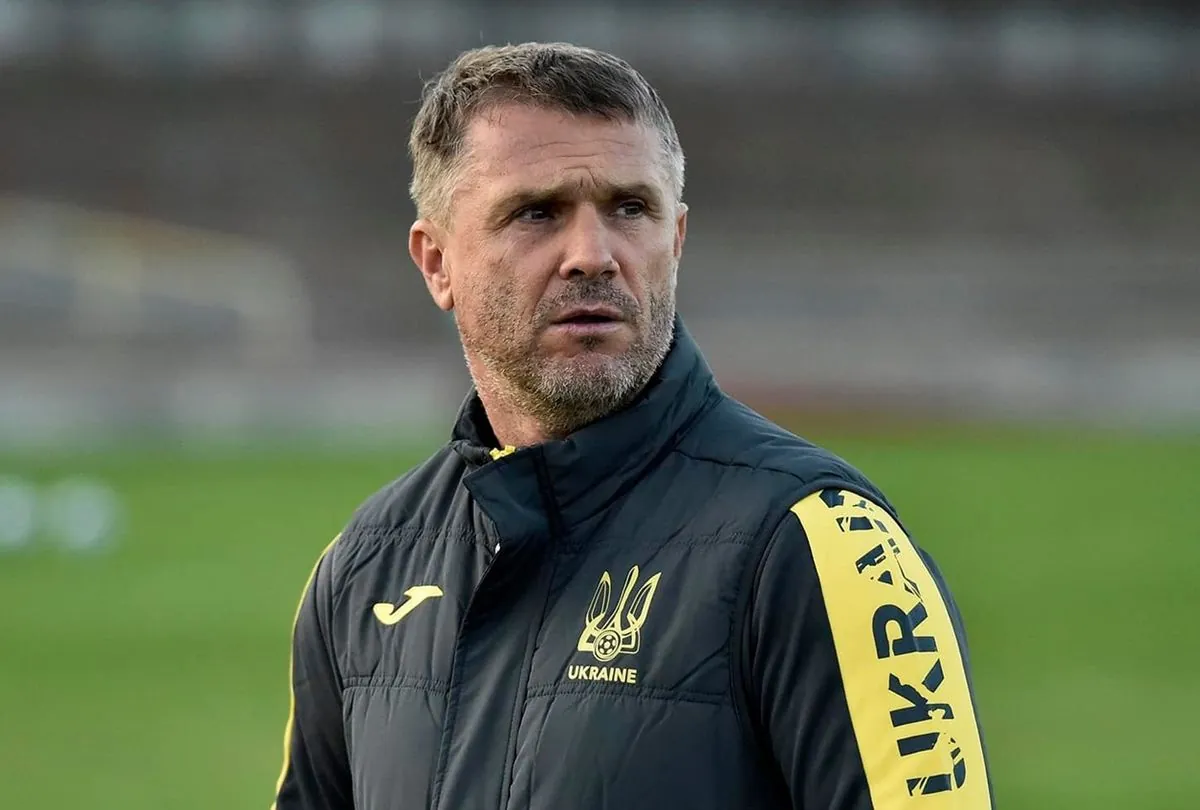
The head coach of the Ukrainian national team, Serhiy Rebrov, did not speak at the press conference because of the interpreter who wanted to translate into Russian. The coach expressed his condolences to the victims of the shelling and offered to communicate in English.
During a press conference dedicated to tomorrow's match against Albania, Ukraine's head coach Serhiy Rebrov refused to answer questions because the interpreter provided by the Albanian side intended to translate into Russian, UNN reports.
Details
Prior to the press conference, Rebrov expressed his condolences to the families whose loved ones were killed in Russia's recent strikes on Ukraine.
"In connection with the recent shelling of the enemy, the terrorist country, and our civilian cities, I would like to express my personal and all the players of the Ukrainian national team's support to the families of the victims. I would like to remind you that the war in Ukraine continues. Every day the enemy shells our cities and kills our civilians. I would like to emphasize that we are truly grateful to everyone for their help. Right now we need this help from the European countries," said Rebrov.
After Rebrov finished his speech, the interpreter provided by the Albanian side asked the coach to repeat it again, but in Russian, because the interpreter did not understand Ukrainian well.
Rebrov refused and added that he could answer in English to make it easier for the interpreter.
"No Russians," added the national team's press attaché.
Recall
On Tuesday, November 19, the Ukrainian national team will play the final match in the League of Nations against Albania. The Ukrainians drew their previous match against Georgia.


 The Kyiv IndependentDinara Khalilova