Category: Technologies

Last news • Technologies

  • Head of the Center for Countering Disinformation: The enemy uses “chess” for intelligence

    Head of the Center for Countering Disinformation: The enemy uses “chess” for intelligence

    Head of the Center for Countering Disinformation: The enemy uses “chess” for intelligence

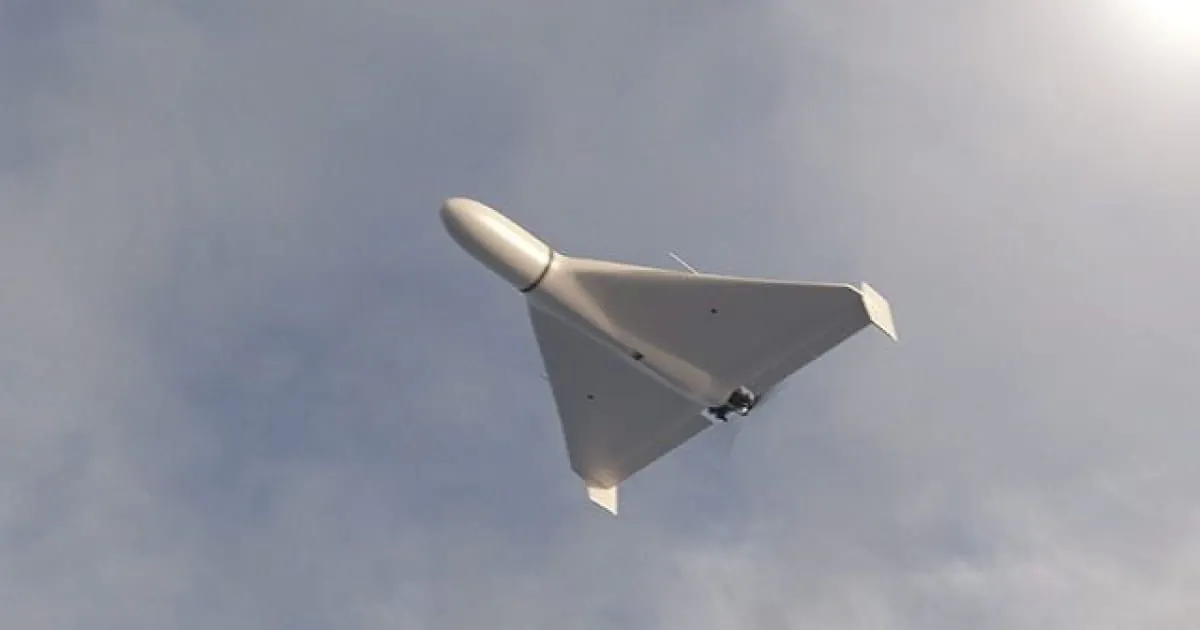
    He published a video from the “shahed's” camera, which was made public by the enemy

    Russians use "chess" to conduct intelligence. This was written by the head of the Center for Countering Disinformation (CCD) Andriy Kovalenko on his Telegram channel, UNN reports.

    "the Russians published footage from the shahed's camera. As I said earlier, the Russian Federation is now also using Shaheds as reconnaissance aircraft, and a significant number of them fly without a combat unit and are controlled remotely (smuggled Starliners, among others)," Kovalenko wrote.

    Add

    Experts from the Kyiv Scientific Research Institute of Forensic Expertise believethat the Russians may install Starlink on attack drones to improve coordination between them, in particular during an attack.

    Experts also found changes in the guidance system and coordinate system in these attack drones. Previously, there was a four-channel antenna, but now they have started using a 16-channel antenna. The electronic warfare jamming protection is equipped with an additional Russian-made unit.

    Experts also note that there have been changes in the explosive part of the "Shahed". While in Iranian-made drones it was a projectile type, in drones assembled in Russia it explodes like a small aircraft bomb.

  • Outdated technologies and launch peculiarities: KFI told about the differences between Russian and North Korean ballistics

    Outdated technologies and launch peculiarities: KFI told about the differences between Russian and North Korean ballistics

    Outdated technologies and launch peculiarities: KFI told about the differences between Russian and North Korean ballistics

    KFI experts described the technical features of North Korean missiles used by Russia to attack Ukraine. They identified differences in design, materials and markings compared to Russian missiles.

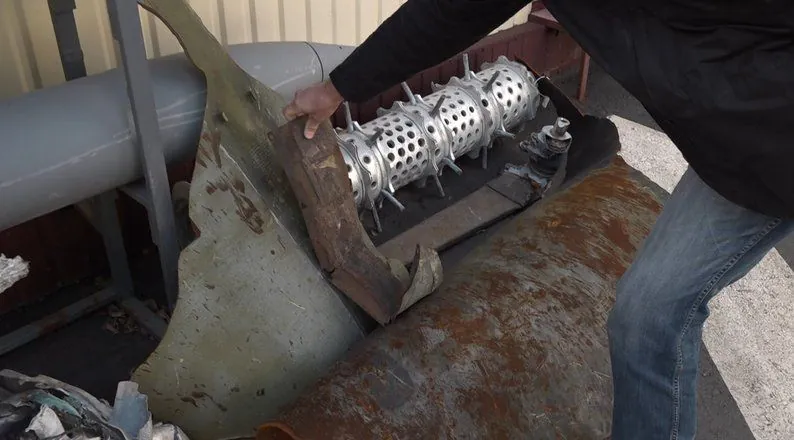
    Since 2023, Russia has been using North Korean KN-23 or KN-24 aeroballistic missiles to strike Ukraine, as evidenced by research data. It was also found that missiles of this type differ from Russian ballistic missiles “Kinzhal” or “Iskander-M”. Oleksandr Vysikan, Chief Forensic Expert of the Department of Explosive Research, Artillery and Missile Weapons of Kyiv Scientific Research Institute of Forensic Expertise (Kyiv Scientific Research Institute of Forensic Expertise), told this to Suspilne, according to UNN.

    According to the expert, the difference between the metal alloy of the DPRK and Russian missile engine is very different.

    The Koreans (we are talking about the DPRK – ed.) use low-carbon (alloy – ed.), and Russian missiles use high-carbon. There are also “keyways” on the propulsion system – this is where the gargoyle is attached (a three-dimensional streamlined element on the rocket body that covers control wiring, pipelines and parts of systems – ed.), which contains cables that run from the rocket's flight control system to the tail section

    – Vysikan explained.

    He noted that the Russians also have such a design, but its structure is different.

    “What we found is typical only for a Korean missile. In addition, we reviewed the footage published by the official media of the DPRK, where their leader (Kim Jong-un – ed.) walks near these missiles, and we clearly noticed this characteristic type of structure (of the missile – ed.),” said the expert of KFI.

    He also said that one of the fragments had a serial number on it, which is not typical for such missile markings by the Russians.

    On one side, the 9-digit number of the missile is written. In this case, the first 6 digits are preserved: “321 518”. We have already seen a similar 9-digit marking. They differed only in the last three digits. We can say that this is a serial number, which indicates that North Korean missiles of the same series are used. The Russians do not have such markings on the engine installation

    – said Vysikan.

    In particular, according to him, there is also a difference in the aerodynamic rudder and the missile's launcher. The experts of KFI counted 45 bolts on it, and according to them, this is different from the Russian Daggers and Iskanders.

    “There is a distinctive difference. In Russian-made ballistic missiles, they are solid, and the shell is titanium. The base is different, where the aerodynamic surface is attached, which is also characteristic of these missiles. The drive, gearbox, and many other things are also characteristic, which points us to North Korean missiles,” says Vysikan.

    Western components were found in a North Korean missile used by Russia to attack UkraineOctober 20 2024, 04:24 PM • 43927 views

    He added that the institute's experts continue to study these missiles and other elements, and answered the question whether these weapons are more modern than Russian ones:

    “These are older technologies. They differ from the Russian ones in terms of metal structure, welding seams of control units – this is not high-tech production, it is simpler and more affordable. However, these missiles have a large one-piece warhead, but its structure is completely different from the ones we studied in the Russian Kinzhal. It differs both in terms of metal composition and explosives.

    Vysikan noted that the deviation of North Korean missiles from the initial target is large. He said that these weapons were used “a dozen times” to strike Kyiv and the region, but “KFOR does not keep statistics.” In addition, the expert added that a DPRK-made launcher is most likely to be used to launch these missiles, as Russian ones are not adapted for this purpose.

    “For example, the Iskander missile has its own devices, how it docks with the launcher, where the flight mission must be recorded. And the sizes of the missiles are different, so you need a “native” launcher,” explained Vysikan.

    Atypical signs of metal welding, markings – Oleksandr Ruvin spoke about the features of North Korean missiles used by the enemy to hit UkraineAugust 14 2024, 10:49 AM • 113535 views

  • Electronic permit for weapons will be available in Diia

    Electronic permit for weapons will be available in Diia

    Electronic permit for weapons will be available in Diia

    Users will be able to receive digital extracts from the Unified Register of Weapons and control the validity of permits.

    The Diia application will soon allow users to view information about weapons. Users will also be able to order a digital extract from the Unified Register of Weapons, which will help to monitor the validity of the permit in time. This was announced by Valeria Tkach, Deputy Director of Electronic Services Development at the Ministry of Digital Transformation, during a telethon, UNN reports.

    "The Diia app will display information about the weapon," Tkach said.

    According to her, it will be a register where you can view all relevant information about weapons: type, model, serial number, and status.

    "As for weapons permits, it will contain information only on existing permits, their status: active, suspended or canceled. The validity period of the permit will also be indicated for control purposes to renew it in a timely manner," she added.

    Tkach emphasized that it will also be possible to order an extract from the Unified Register of Weapons and the document will be in digital form.

    Recall

    Ukrainians have already filed almost 476 thousand applications for various types of weapons permits through the Unified Register of Weapons.

  • Artificial intelligence reveals what one of Raphael’s most famous paintings hides

    Artificial intelligence reveals what one of Raphael’s most famous paintings hides

    Artificial intelligence reveals what one of Raphael's most famous paintings hides

    Scientists have developed an AI-based algorithm for analyzing paintings that allows determining whether a canvas belongs to a certain master

    Scientists have taught artificial intelligence (AI) to see image details that are hidden from the human eye. Thanks to this, the neural network was able to establish that one of the most famous paintings by Raphael is not one hundred percent his work, writes UNN with reference to a study published in Heritage Science.

    We are talking about the painting "Madonna with a Rose" (another title "The Holy Family with St. Joseph"), probably painted in 1518-1520. This canvas has long been a source of controversy among art historians – some experts doubted whether this painting was really created by Raphael.

    Image

    Thanks to the use of AI, the researchers were able to find out that one of the faces in the painting, namely the face of Joseph, was painted by another artist. But the Madonna herself, baby Jesus, and St. John were painted by Raphael.

    Researchers from the United Kingdom and the United States have developed a special analysis algorithm based on works that we know to be the result of the work of the Italian master.

    "Using deep feature analysis, we used photographs of authenticated paintings by Raphael to train the computer to recognize his style in great detail, from brushstrokes, color palette, shading, and every aspect of the work," said mathematician and computer scientist Hassan Ugail of the University of Bradford in the United Kingdom.

    In their work, the researchers used a modified neural network developed by Microscoft called ResNet50, combined with a traditional machine learning technique called Support Vector Machine. This method demonstrated 98 percent accuracy in identifying Raphael's work.

    In the future, the researchers hope to use their findings to help art historians identify works of art.

    For decades, Picasso's painting hung in the living room of a dealer who had no idea about the artistOctober 1 2024, 06:01 PM • 104045 views

  • They produce electronic warfare and ballistic missile control systems: guerrillas scouted a plant in Bryansk that is important for the Russian military-industrial complex

    They produce electronic warfare and ballistic missile control systems: guerrillas scouted a plant in Bryansk that is important for the Russian military-industrial complex

    They produce electronic warfare and ballistic missile control systems: guerrillas scouted a plant in Bryansk that is important for the Russian military-industrial complex

    The ATESh movement conducted reconnaissance of the Bryansk Electromechanical Plant, which produces electronic warfare and other important equipment for the Russian military-industrial complex. The guerrillas published the coordinates of the facility and details of its activities.

    The Atesh guerrilla movement has scouted the Bryansk Electromechanical Plant, an important enterprise for Russia's military-industrial complex, UNN reports, citing Atesh.

    "BEMZ is a very important enterprise for Russia's military-industrial complex, with a powerful production base. This production facility produces ground-based electronic warfare (EW) systems, avionics, digital computing systems for controlling intercontinental ballistic missiles, and radar stations for aircraft

    – The guerrillas said.

    In addition, ATESH published the coordinates of the plant: 53.32949145414071, 34.252962229229844

    A large warehouse for artillery and tanks of the Russian army was discovered by ATES guerrillas in Donetsk regionOctober 10 2024, 12:38 PM • 12496 views

    The guerrillas point out that it was BEMZ that developed the Krasukha-4 electronic warfare system, a complex that suppresses spy satellites, ground-based radars, and AVAKS aircraft systems within a radius of 300 km.

    Add

    In June 2022, BEMZ was subjected to US sanctions, and 2 years later, to EU sanctions.

    In Saratov, Russians are already training North Korean air defense systems – “ATESH”October 17 2024, 11:15 AM • 10023 views

  • One of the largest military microelectronics plants in Russia suspends operations after drone attack

    One of the largest military microelectronics plants in Russia suspends operations after drone attack

    One of the largest military microelectronics plants in Russia suspends operations after drone attack

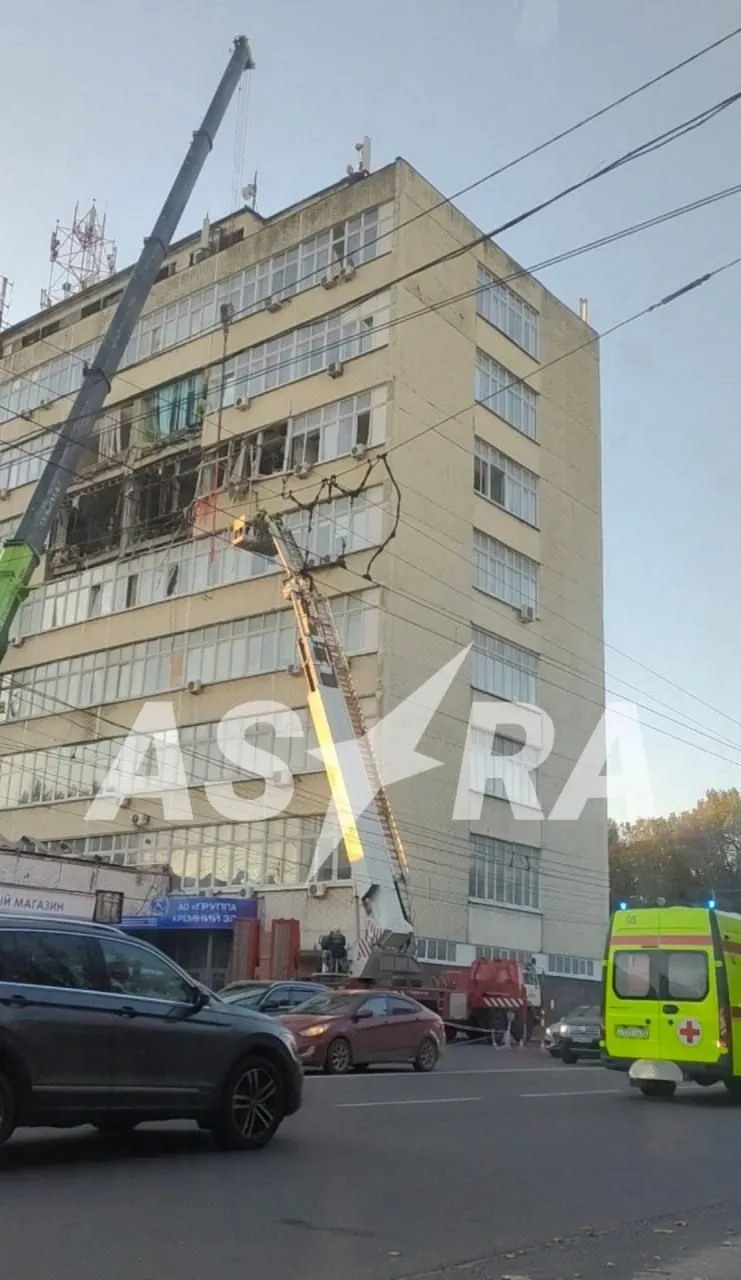
    Russia's Kremniy EL plant in Bryansk has stopped production after a nighttime drone attack. The infrastructure was damaged, 300 employees were evacuated, and problems with equipment recovery arose.

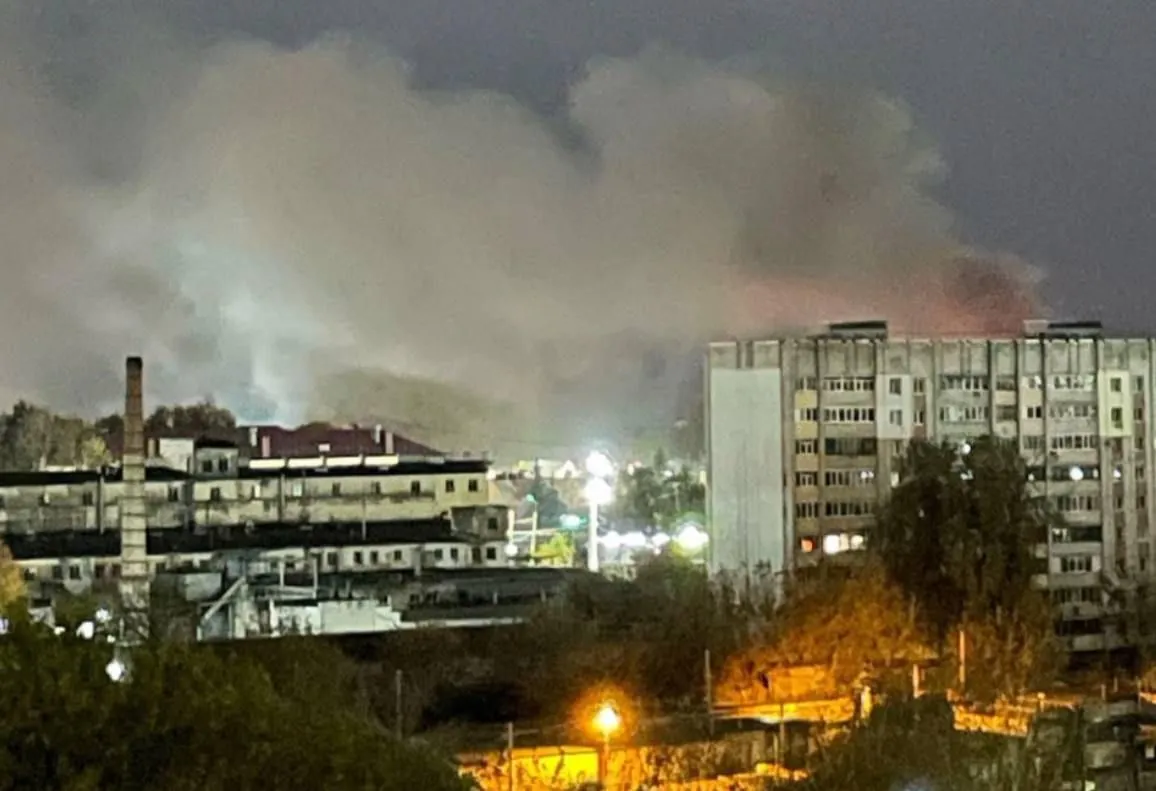
    The Kremniy EL military microelectronics plant in Russia's Bryansk region has suspended operations due to a nighttime attack. This is reported on the company's website, UNN reports.

    As a result, "power supply was disrupted, damage was done to special energy facilities, and technological production chains were interrupted," the statement said.

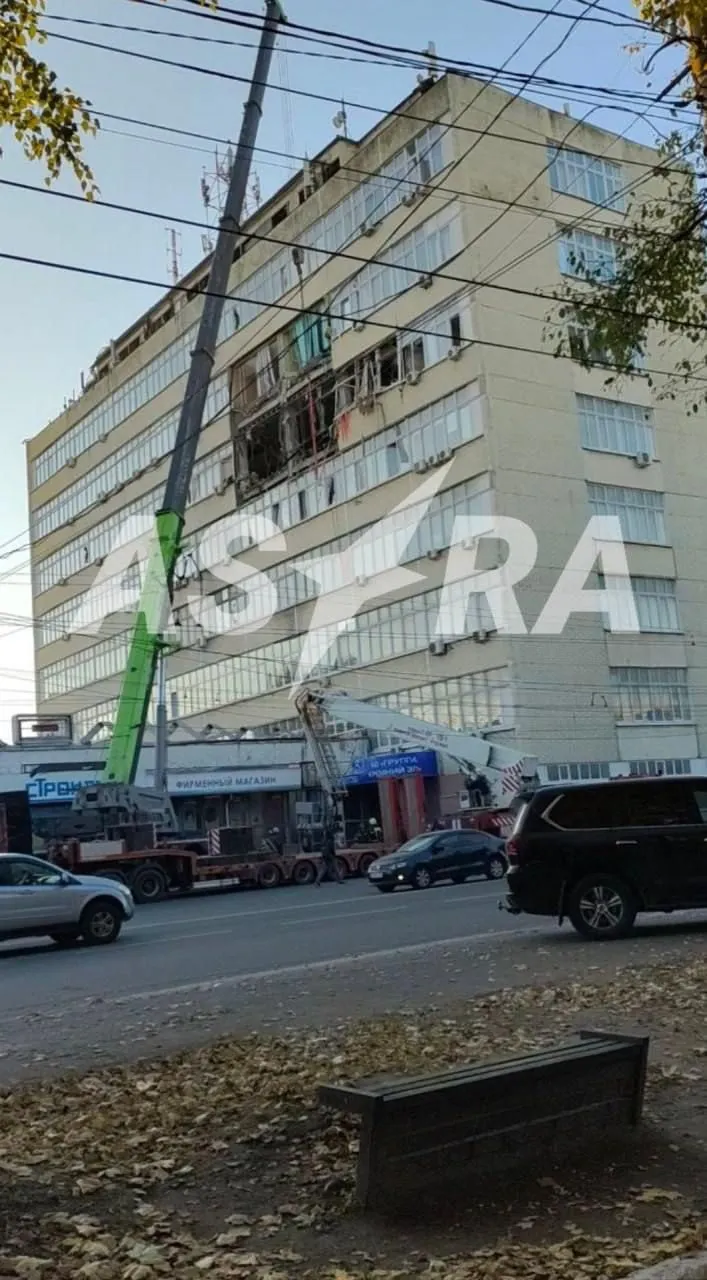
    According to ASTRA's sources in the regional office of the Russian Ministry of Emergency Situations, two drones struck the plant on October 19, damaging the facade and windows of one of the company's production buildings. More than 300 employees had to be evacuated due to the attack. In addition, according to sources, a cordon-off group was subsequently deployed on the territory to protect the plant from further drone attacks.

    "Our main task today is to resume production of electronic equipment as soon as possible to meet our targets. However, not everything depends on us – there are difficulties in purchasing spare parts to restore the process equipment and energy infrastructure…" said Oleg Dantsev, the plant's general director.

    Help

    "Silicon EL is one of the largest microelectronics manufacturers in Russia. In 2017, 94% of the company's products were produced for the needs of the Russian Ministry of Defense. The plant serves the Almaz-Antey, Aerospace Equipment, Suzirya, and Vega concerns. It produces parts for Pantsyr air defense systems and Iskander missile systems.

  • X changed its terms of service to let its AI train on everyone’s posts

    X changed its terms of service to let its AI train on everyone’s posts

    X changed its terms of service to let its AI train on everyone’s posts

    X updates its terms of service to allow the use of user content to train AI. This raises privacy and copyright concerns, and the ability to opt out of data sharing becomes uncertain.

    Social network X updates its terms of service to allow the use of user content for AI training, CNN reports, UNN writes.

    Details

    According to the publication, when X introduced its new terms of service, which come into effect on November 15, users quickly noticed one change.

    "By submitting, publishing, or displaying content on or through the Services, you grant us a worldwide, non-exclusive, royalty-free license to make your content available to the rest of the world," the terms of service say, which include the right to analyze any such content, "including, for example, to use and train our machine learning and artificial intelligence models, whether generative or otherwise.

    Essentially, by continuing to use the platform, users agree that X can use the data to train its AI models.

    The use of content to train AI has become a serious issue as technology has evolved. On X, artists and other creatives worry that their work is being used – not just on X – to train computers that may one day completely replace human creators. Other X users say they are concerned that personal information in their tweets could be used in this way. Some users have told the site that they have already started deleting their photos from their feeds.

    And if users have any problems with these terms, they may end up in federal court. According to the update, all disputes related to the terms will be filed in the U.S. District Court for the Northern District of Texas or in the state courts of Tarrant County in Texas.

    X's terms state that any users who continue to use their products or services on or after November 15 will agree to the updated terms.

    Grok, X's AI-powered chatbot, has already been at the center of scandal, from spreading false information about the 2024 elections to creating violent, graphic fake images of famous politicians. Companies from Google to Microsoft have also been criticized for sometimes strange artificial intelligence tools that are not at all true.

    Until the latest update to the terms of service, X users could opt out of data sharing by going to "settings" and then "privacy and security." Under the heading of "data sharing and personalization," there is a tab for Grok where users can uncheck the box that allows the platform to use their data for AI training.

    But it is not clear whether the new terms of service of X remove this possibility.

    X previously stated that messages from personal accounts would not be used for Grok training. However, the wording of the terms of service does not distinguish between account types.

    But only time will tell if you will still be able to refuse despite the new conditions.

    Google invests in nuclear energy to support the development of artificial intelligenceOctober 15 2024, 01:29 AM • 16568 views

  • Meta suspended accounts that tracked celebrities ‘ private jets

    Meta suspended accounts that tracked celebrities ‘ private jets

    Meta suspended accounts that tracked celebrities ' private jets

    Meta blocked Instagram's Threads accounts that tracked the flights of Zuckerberg, Musk and other celebrities ' private jets. The company attributed this to a violation of its Privacy Policy and the risk of physical harm.

    S Threads ' Instagram accounts, which track the private jets of celebrities including Mark Zuckerberg, Elon Musk, Kim Kardashian, Bill Gates, Jeff Bezos and Kylie Jenner, were suspended on Monday. Meta told TechCrunch that Cheek accounts violated its privacy policy, citing the "risk of physical harm" in relation to these individuals, reports UNN.

    As it became known, most of these accounts belonged to a college student from Florida, Jack Sweeney.

    Links to Instagram/Threads accounts that track flights of former President Donald Trump, Florida governor Ron DeSantis and other celebrities on Monday night issued an error message: "the link you clicked on may be broken or the page may have been deleted.

    It is noted that Sweeney's account, which tracked Taylor Swift's plane, was disabled on Friday.

    Sweeney wrote from his personal account that" today is like December 15, 2022, " referring to the time when Elon Musk permanently deleted his @ElonJet account from Twitter.

    In May, US President Joe Biden signed a bill that allows private jet owners to anonymize their registration information. However, according to Sweeney, tracking high-ranking officials is still easy, including with the help of tips from other "flight tracking enthusiasts," writes TechCrunch.

    Meta bans RT and other Russian state media from its platformsSeptember 17 2024, 03:05 AM • 33340 views

  • Top smartphone trends in 2025

    Top smartphone trends in 2025

    Top smartphone trends in 2025

    An expert predicts key trends in the smartphone industry for 2025. These include improved AI, enhanced security, multi-screen displays, eco-friendly manufacturing and new battery technologies.

    The introduction and empowerment of artificial intelligence will still drive the smart phone industry. But it's not just AI that will set the tone. On the main trends of 2025 in the field of smartphones in his author's column on Forbes told the world-famous futurologist, author of books on AI Bernard Marr, writes UNN.

    AI-based voice assistants

    Perhaps the most transformative application of AI in the smartphone ecosystem in 2025 will be the continued addition of LLM functionality (a type of artificial intelligence program that can recognize and generate text, among other tasks) to AI assistants. We've already seen this kind of thing with Apple adding Apple Intelligence to Siri and Google's Gemini merger with Android. This means that the conversational capabilities of our phones will become more natural and human-like.

    Apple unveils new iPad mini with support for Apple Intelligence and Pencil ProOctober 15 2024, 02:01 PM • 12177 views

    User experience based on artificial intelligence

    In addition to LLM-based voice features, AI should be expected to improve the user experience in more subtle ways, such as extending battery life, optimizing storage, and improving camera functionality. Devices are expected to become capable of anticipating user behavior and intuitively allocating resources in a more personalized way.

    Privacy and security

    As phones gain the ability to learn more about us through their scanners and sensors and become increasingly important in our lives, the importance of keeping them safe increases.

    Image

    This year, an innovation has already been presented when a phone is able to recognize a possible theft. The expert predicts further development of features that use encryption, biometrics and artificial intelligence on the device, designed to protect the valuable data they store.

    Not-so-smart phones

    As the subset of phone users suffering from “feature fatigue” grows, futurologist expect to see a further increase in interest in “dumb” phones. These minimalistic devices are designed to reduce the impact on users' lives of the many distractions of feature phones. Or simply to provide a secure device that, if lost or stolen, will make little difference to the owner's life.

    More affordable multi-screen displays

    Dual-screen displays have been around for some time, and this year saw the introduction of a three-screen model. This push to expand screen area without increasing device size shows that smartphone buyers have an appetite for devices with larger displays and innovative form factors, even though current models are expensive. This means we're likely to see cheaper models appear in the near future.

    After years of development, Amazon unveils its first color KindleOctober 17 2024, 07:09 AM • 12163 views

    Sustainability in smartphone manufacturing and design

    As consumer behavior is increasingly driven by environmental concerns, manufacturers are responding by adopting more sustainable practices throughout the lifecycle of their products. Apple and Samsung have increased the percentage of recycled materials used in their devices, a trend that is likely to continue into 2025. Apple, in particular, has stated that it intends to reach 100% recycled cobalt use in its batteries in the near future.

    Image

    There is also a move towards greater use of modular parts such as batteries and screens that can be easily replaced to improve repairability and recyclability, extending product life.

    Better battery technology

    New developments in battery technology will continue to change the smartphone user experience throughout 2025. Major manufacturers are known to be working on developing solid state batteries that will significantly improve the life and charging speed of batteries used in devices. They are also less prone to overheating and could address safety concerns and reduce the incidence of battery failure. We can also expect ongoing incremental improvements such as improved wireless charging and artificial intelligence-based battery management.

    Advanced connectivity solutions

    While many parts of the world are still waiting to reap the benefits of deploying true 5G networks, other advanced networking solutions promise to revolutionize smartphone usage in the near future. One of the major innovations is the deployment of satellite networks – the most prominent of which is Starlink. This could lead to the expansion of mobile coverage to even the most remote regions of the planet, as well as providing resilience in the face of technological disruptions or natural disasters in areas with good connectivity at present.

    X changed its terms of service to let its AI train on everyone’s postsOctober 22 2024, 05:38 AM • 16209 views

  • Satellite made by Boeing just fell apart in space

    Satellite made by Boeing just fell apart in space

    Satellite made by Boeing just fell apart in space

    Intelsat has confirmed the total loss of its 33e satellite due to an “anomaly”. The US Space Force is tracking about 20 fragments, and ExoAnalytic Solutions reports 57 pieces of space debris.

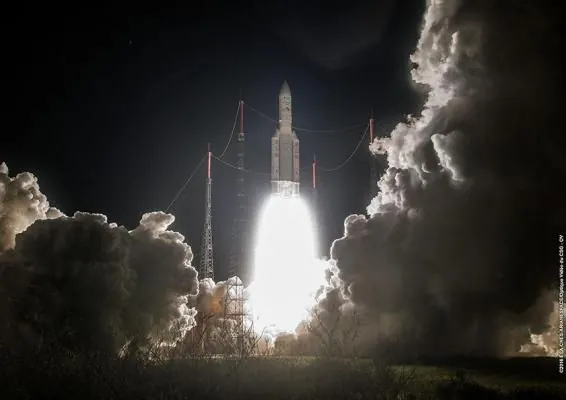
    A Boeing-built communications satellite has collapsed in orbit. Intelsat said on Saturday that its 33e satellite stopped working due to an "anomaly," and on Monday confirmed its "complete loss," UNN reports citing The Verge.

    Details

    "We are coordinating with the satellite manufacturer, Boeing, and government agencies to analyze the data and observations," Intelsat said. The company has since set up a board to conduct a comprehensive analysis of the cause of the anomaly.

    The satellite's destruction comes at a bad time for Boeing, after the company's troubled Starliner mission and fraud charges in connection with the 737 Max crash, the newspaper writes.

    The US Space Force also confirmed the incident.

    "The U.S. Space Force (S4S) has confirmed the destruction of Intelsat 33e (#41748, 2016-053B) in GEO on October 19, 2024 at approximately 04:30 UTC. Approximately 20 associated pieces are currently being tracked and analysis is ongoing. S4S has not identified any immediate threats and continues to conduct routine rendezvous assessments to ensure the safety and sustainability of the space sector," the statement said.

    It is reportedly unclear how many fragments in total, as satellite tracking company ExoAnalytic Solutions reports tracking 57 pieces of debris.

    AddendumAddendum

    Intelsat 33e was launched in 2016 to provide connectivity across Europe, Asia and Africa. The satellite experienced engine problems shortly after launch, and it entered orbit later than expected. Another engine problem in 2017 reduced its expected 15-year lifespan by 3.5 years. Intelsat 29e, a satellite also manufactured by Boeing, was declared a "total loss" in 2019 after just three years in space.