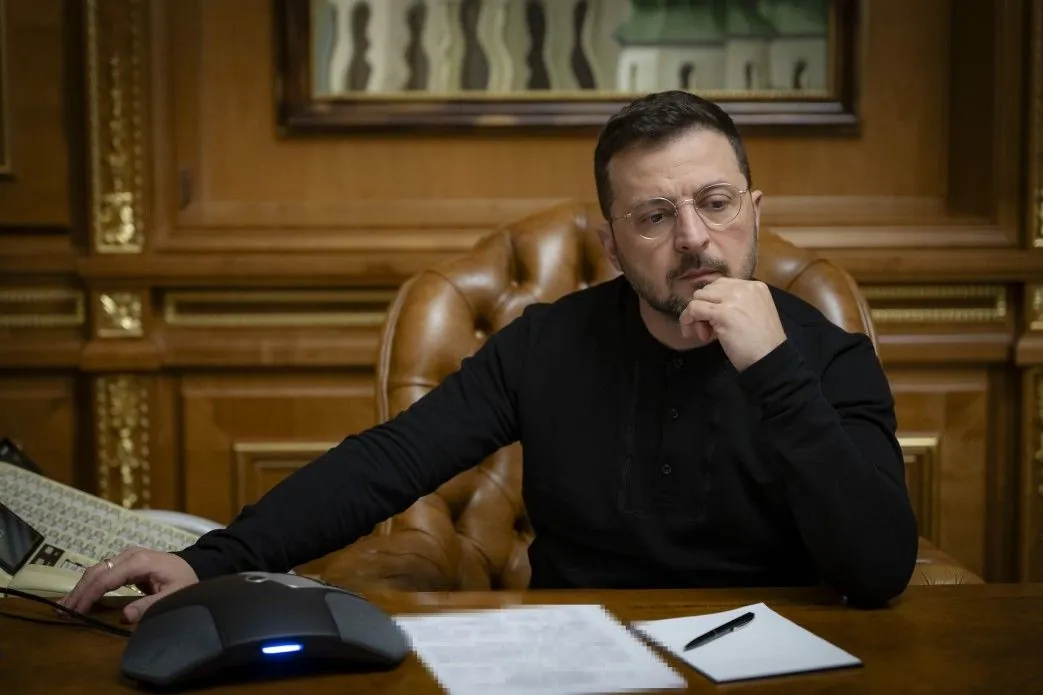
A senior advisor to President-elect Donald Trump has said Ukraine needs to be "realistic" in its aims for the war, adding the Russian-occupied peninsula of Crimea was "gone."
Speaking to the BBC on Nov. 9, Republican party strategist Bryan Lanza said the Trump administration would ask President Volodymyr Zelensky to present a "realistic vision for peace."
"When Zelensky says we will only stop this fighting, there will only be peace once Crimea is returned, we've got news for President Zelensky: Crimea is gone," he said.
Russia invaded and then illegally annexed the Crimea peninsula in 2014.
Ukraine's leadership has said publicly that it plans to restore the country's 1991 borders, which includes the liberation of Crimea and parts of the Donbas occupied by Russia since 2014.
Lanza did not reference the Donbas during the interview, but said the return of Crimea was "not the goal of the United States."
Despite U.S. troops never being deployed in Ukraine, nor Kyiv ever requesting as much, Lanza added Ukraine would be "on your own" if the goal was "having American soldiers fight to get Crimea back."
Trump defeated Democratic candidate and Vice President Kamala Harris in the Nov. 5 presidential election, adding further uncertainty for Ukraine as it struggles to envision its future.
"If we have a win, long before Jan. 20, before I would take the presidency, long before that, I think we could work out something that is good for both sides," Trump said, standing alongside Zelensky in New York in September.
It remains unclear why Russia would want to pause at the current phase since Moscow's forces are currently at the height of their offensive in 2024 and reportedly still have the resources to keep pushing further.
On Nov. 9, Russian Deputy Foreign Minister Sergei Ryabkov said that Russia was "ready to listen" to Trump's proposals but added that there would be no "simple solution."
Zelenskiy announces the production of the first 100 missile weapons in Ukraine this year. More than 800 companies are working on weapons production, with Denmark and France helping with investments.
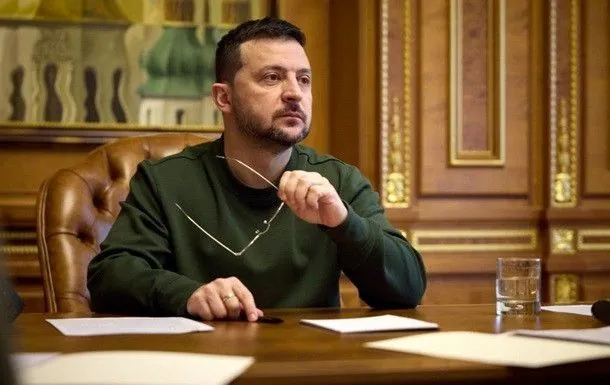
President of Ukraine Volodymyr Zelenskyy said that Ukraine has crossed the mark of the first hundred missile weapons this year and plans to increase this area, UNN reports.
Today I have already held several meetings on defense issues… our special production, our strategic industries, our weapons. There was a report by Oleksandr Kamyshyn. This year we were able to achieve significant results in several areas. This includes our Ukrainian artillery – our shells, our guns. This includes drones of different types for different tasks, which not only help the frontline to defend its positions and destroy the occupier, but also strike at Russia at greater and greater depths. We are going to increase this. We have crossed the mark of the first hundred missile weapons this year. There are no details here, but I want to thank each and every person involved in this production, who organizes the relevant processes. We will continue to develop this area
– Zelensky said during a video address.
Denmark plans to create a fund to develop Ukraine's defense industryOctober 11 2024, 05:13 PM • 34605 views
According to him, more than 800 companies are currently working on the production of weapons for the Ukrainian Defense and Security Forces.
"Now, for the first time in more than 30 years of independence, we have not just individual investment steps by our partners in Ukraine, but systemic models for investment. In particular, this is the Danish model, the Danish model that invests and attracts investments in production. We have also agreed with France on a slightly different model involving technology and the construction of relevant production facilities. We also have preliminary agreements with our other partners to localize weapons production in Ukraine. And this is what will constantly strengthen us," the Head of State summarized.
Ukraine to receive Frankenburg Technologies air defense missiles for testingNovember 8 2024, 10:13 AM • 32478 views
Since the beginning of the full-scale invasion, Russia has destroyed over 1,000 cultural heritage sites in Ukraine, including those under the protection of UNESCO, according to the Culture Ministry.
Moscow destroys cultural monuments not only with missile or drone strikes. Several historical monuments are under occupation, where Russian occupation authorties carry out so-called restorations, changing the authentic appearance of sites or destroying them completely, erasing all possible references to Ukrainian or Crimean Tatar culture.
As of Oct. 16, UNESCO confirmed the damage to 457 sites, including 143 religious sites, 231 buildings of historical or artistic interest, 32 museums, 33 monuments, 17 libraries, and one archive.
"It's not only the killing of children, elderly people, or soldiers, not only the occupation of our land and expropriation of our assets, but the destruction of our cultural heritage and built environment and immovable heritage," Jenia Gubkina, a Ukrainian architect and architectural historian from Kharkiv, told the Kyiv Independent.
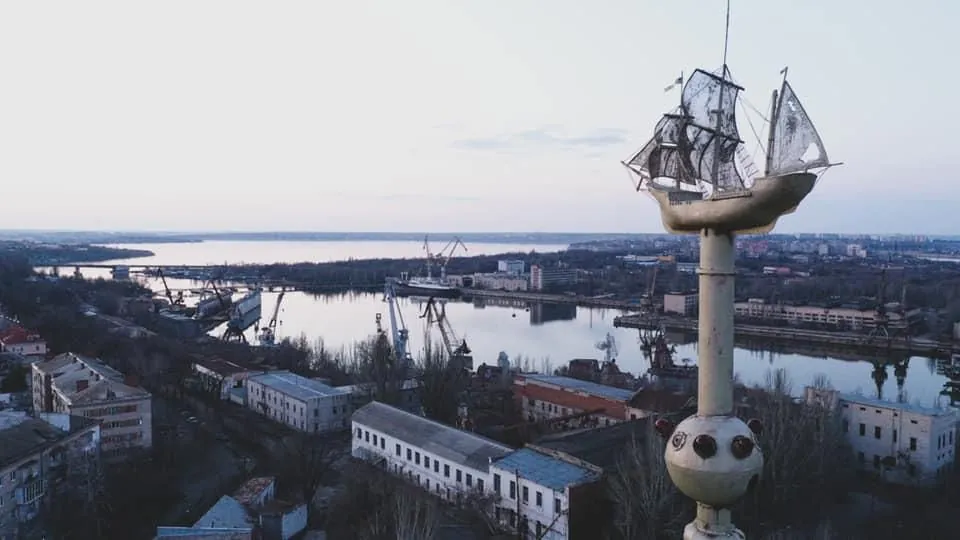
Lviv, a city in Ukraine's west known for its splendid architecture, lies just about 70 kilometers (approximately 43 miles) east of the Polish border and has become a relative safe haven for internally displaced Ukrainians.
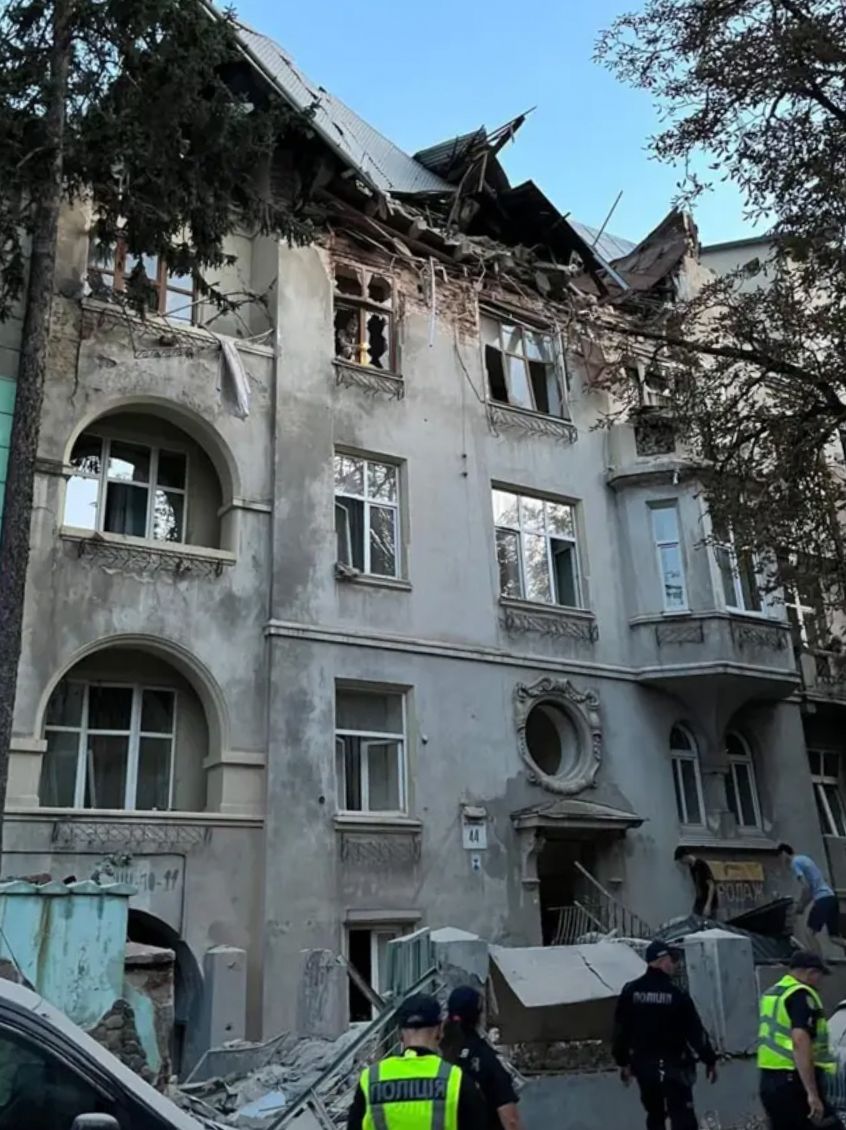
Yet, Lviv saw a number of Russian drone and missile attacks, with at least two strikes damaging buildings located in the city’s historic area and the UNESCO buffer zone.
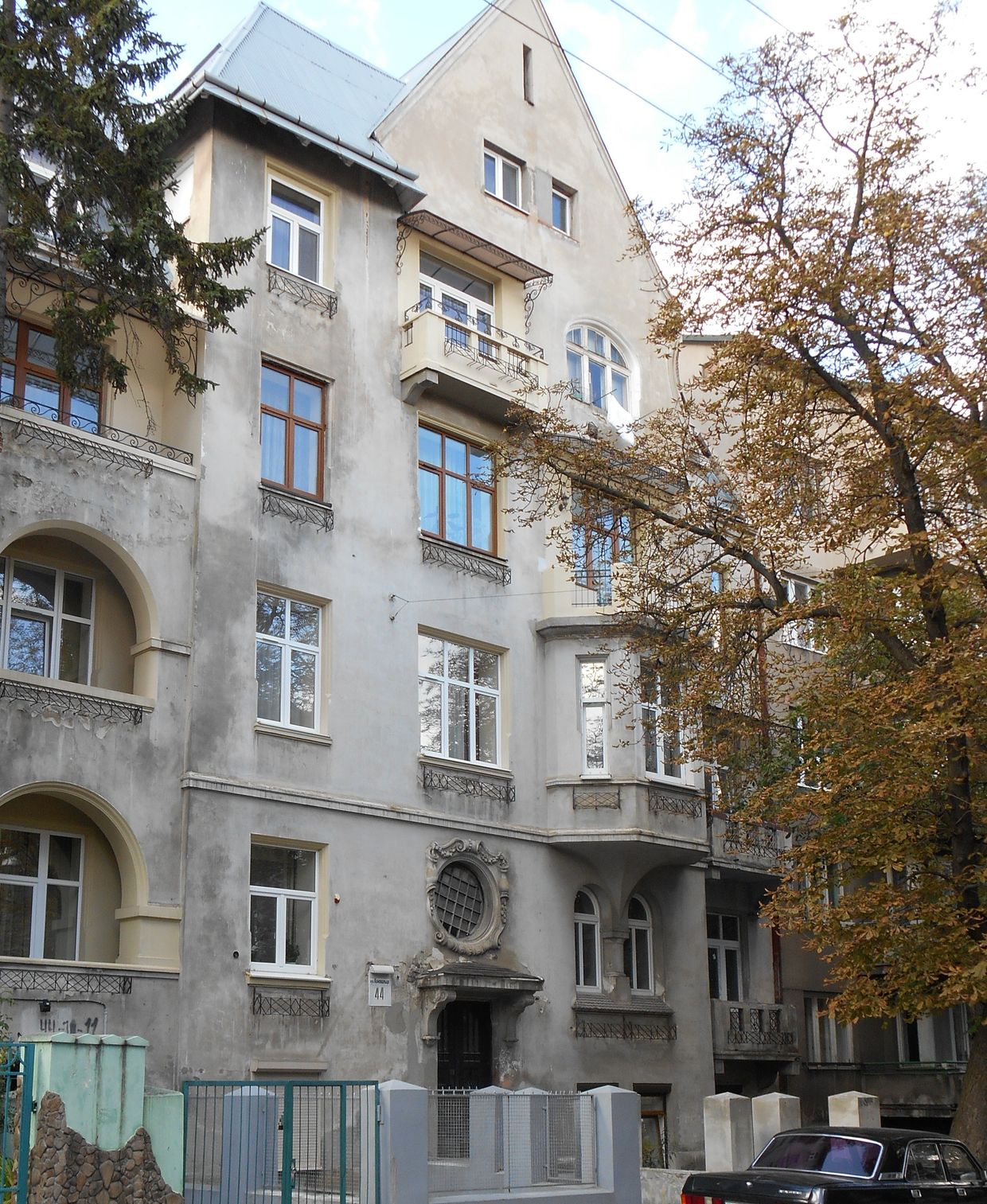
L: The building in a historic part of Lviv, Ukraine, before the attack. (Telegram) R: The aftermath of a Russian attack against Lviv, Ukraine, on Sept. 4, 2024. (Mayor Andrii Sadovyi/Telegram)
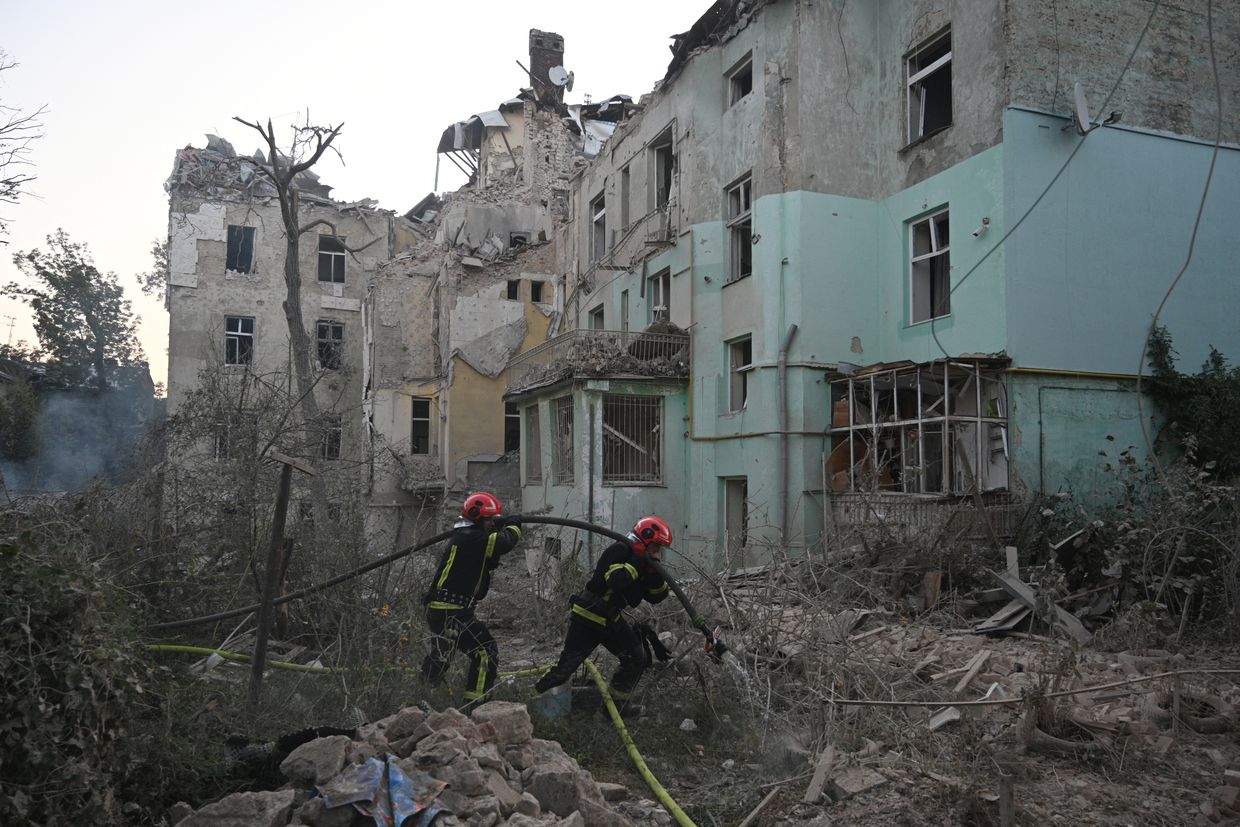
In early September, Russia struck Konovaltsia Street, which hosts buildings dating back to the late XIX-early XX century.
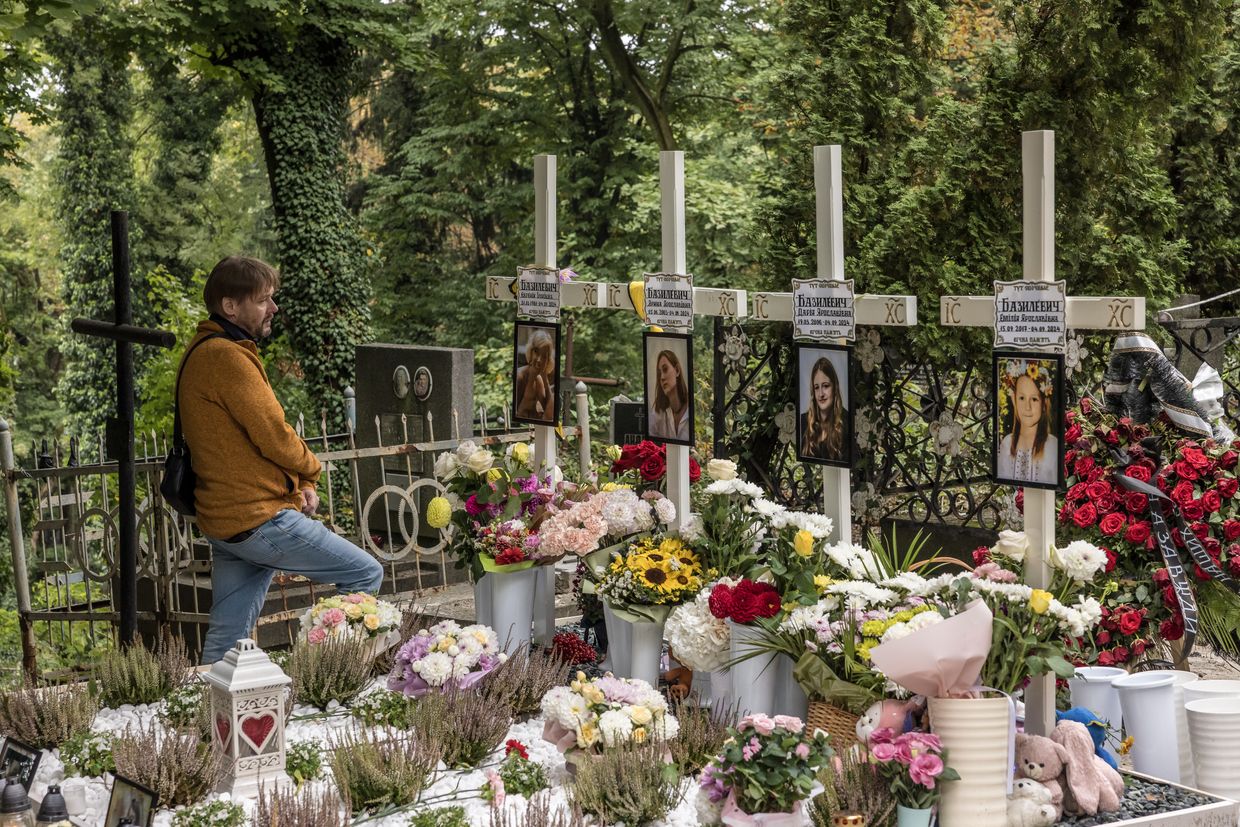
One of the residential buildings hit by a Russian Kinzhal ballistic missile was home to the Bazylevych family, a husband and wife and their three daughters.
The attack killed six people, including six-year-old Emilia Bazylevych along with her 43-year-old mother, Yevhenia, and two sisters, 21-year-old Daria and Yaryna, aged 18 and 21. Only their father, Yaroslav, survived.
Ukrainian rescuers work at the site of a missile attack in Lviv, Ukraine on Sep. 4, 2024. (Yuriy Dyachyshyn/AFP via Getty Images)Yaroslav Bazylevch visits the graves of his wife and their three daughters, who were killed in a Russian missile attack on Sept. 4, 2024, that hit their home, at a cemetery in Lviv, Ukraine, on Sept. 15, 2024. (Oksana Parafeniuk/For The Washington Post via Getty Images)
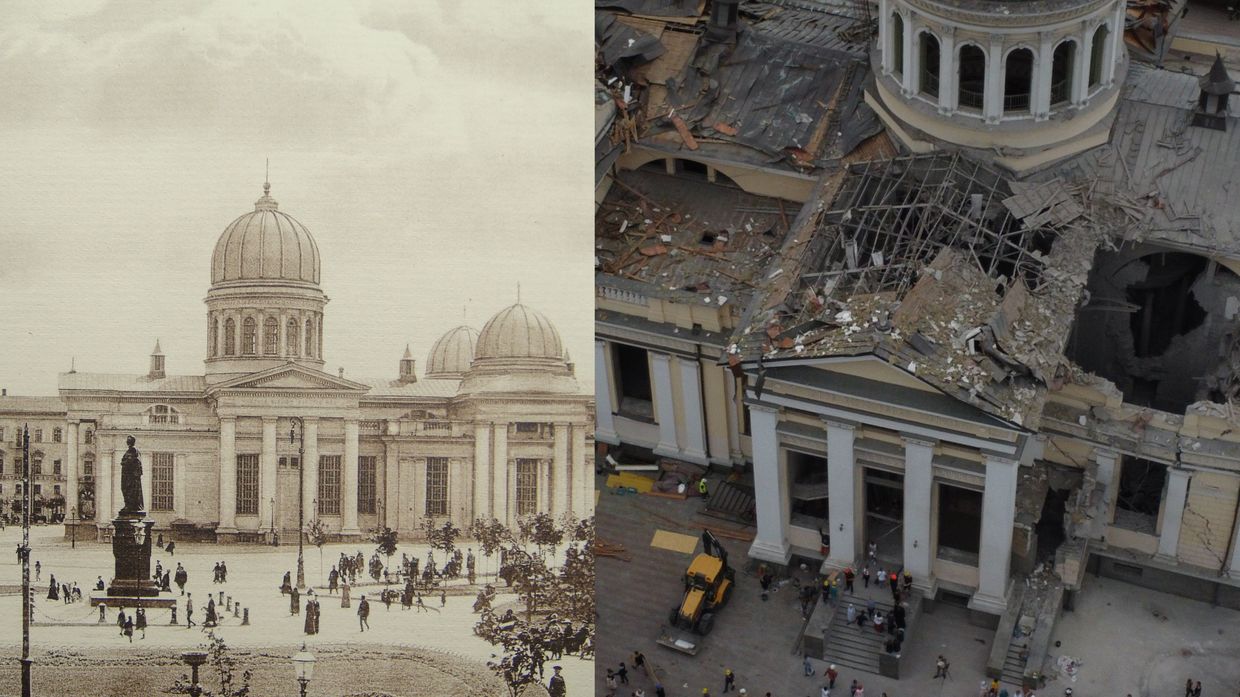
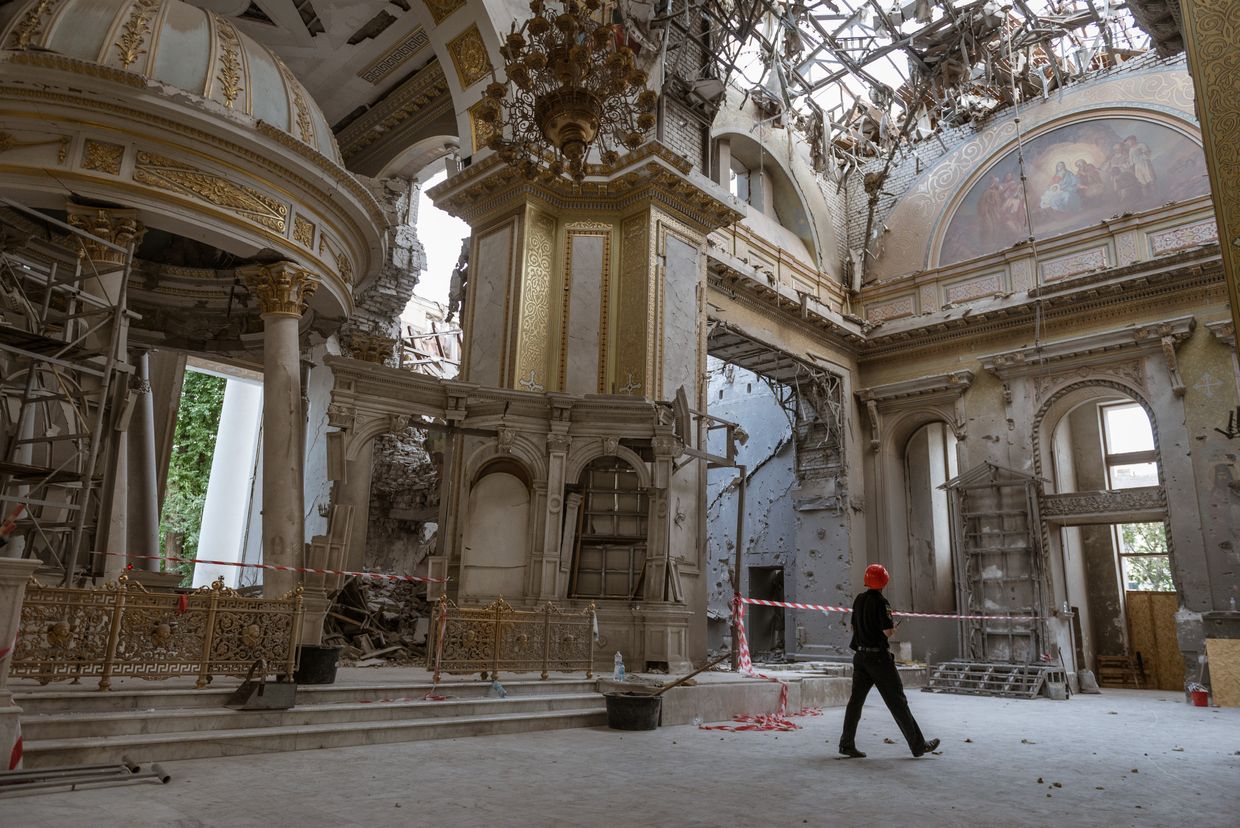
Transfiguration Cathedral in Odesa
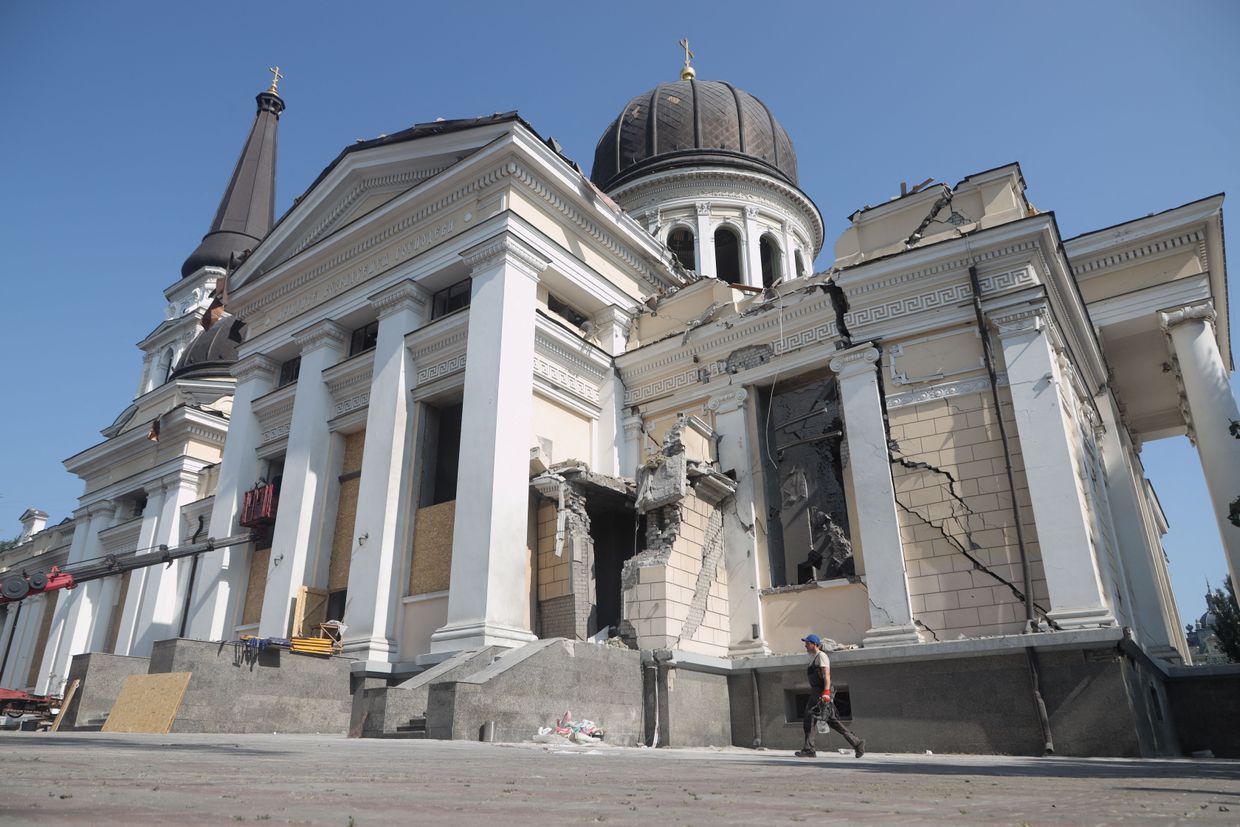
The historical center of the southern city of Odesa was named a UNESCO World Heritage Site in January 2023. In July of that year, a Russian missile strike damaged more than 20 architectural monuments in this part of the city and heavily damaged the Transfiguration Cathedral.
One person was killed and at least 22 injured, according to local authorities.
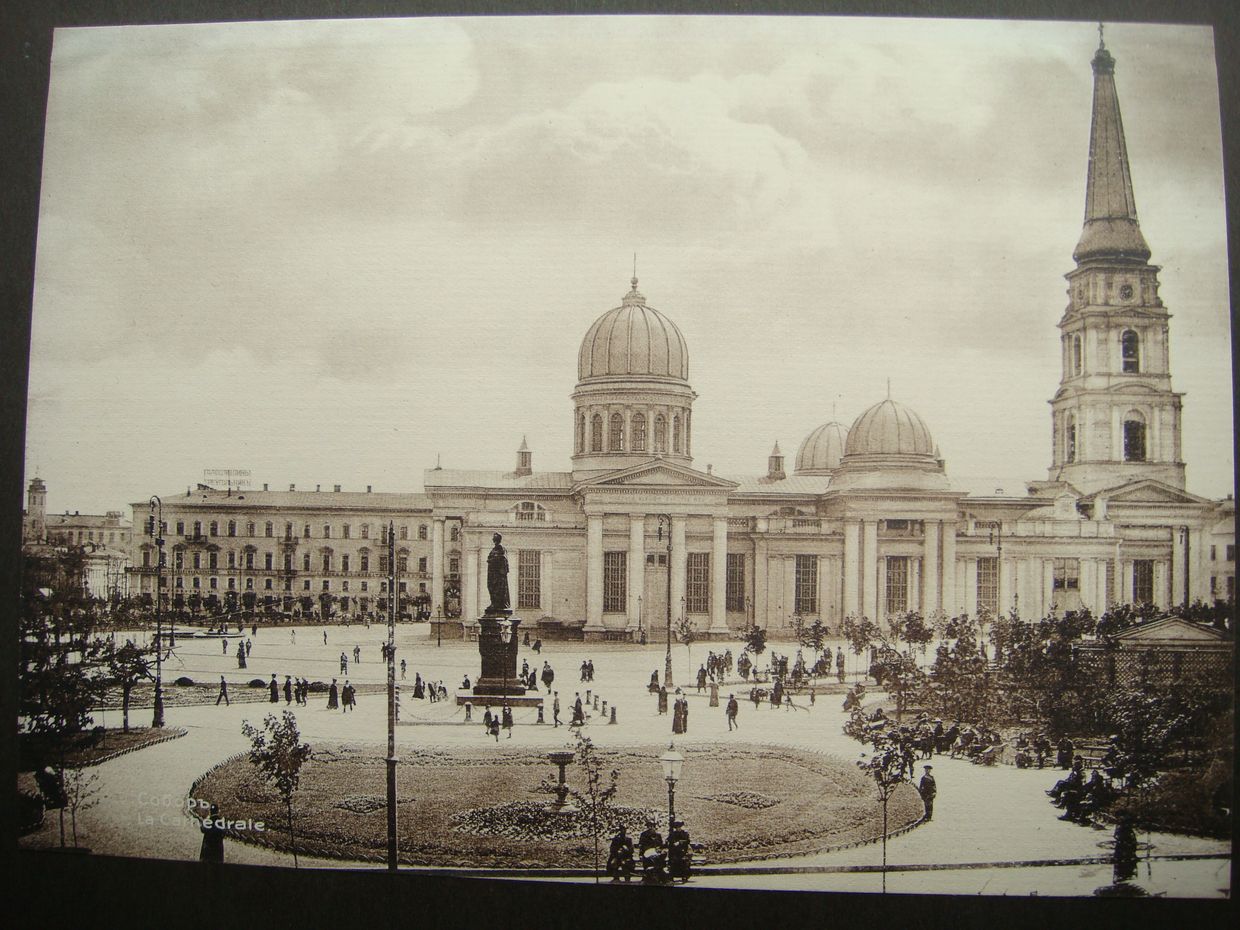
The Transfiguration Cathedral, Odesa's foremost Orthodox church, was built in 1794. The Soviet regime destroyed the original building in 1936, and the new cathedral was built in the early 2000s.
Italy and UNESCO signed an agreement under which Rome allocated 500,000 euros (about $542,000) for the restoration of the cathedral in Odesa.
Transfiguration Cathedral in Odesa, Ukraine in early XX century. (Wikimedia)A worker walks outside the Transfiguration Cathedral, damaged as a result of a Russian missile strike in Odesa, Ukraine on July 24, 2023, amid the Russian invasion of Ukraine. (Oleksandr Gimanov / via Getty Images)ODESA, UKRAINE – JULY 23: Workers in action on the construction of the damaged Historical Transfiguration Cathedral after Russian missile strike as Russia-Ukraine war continues in Odesa, Ukraine on July 23, 2023. Historical Transfiguration Cathedral (Spaso-Preobrazhensky Cathedral) the largest in Odesa and second largest in Ukraine was strike in the dawn by Russian forces. (Photo by Andre Alves/Anadolu Agency via Getty Images)
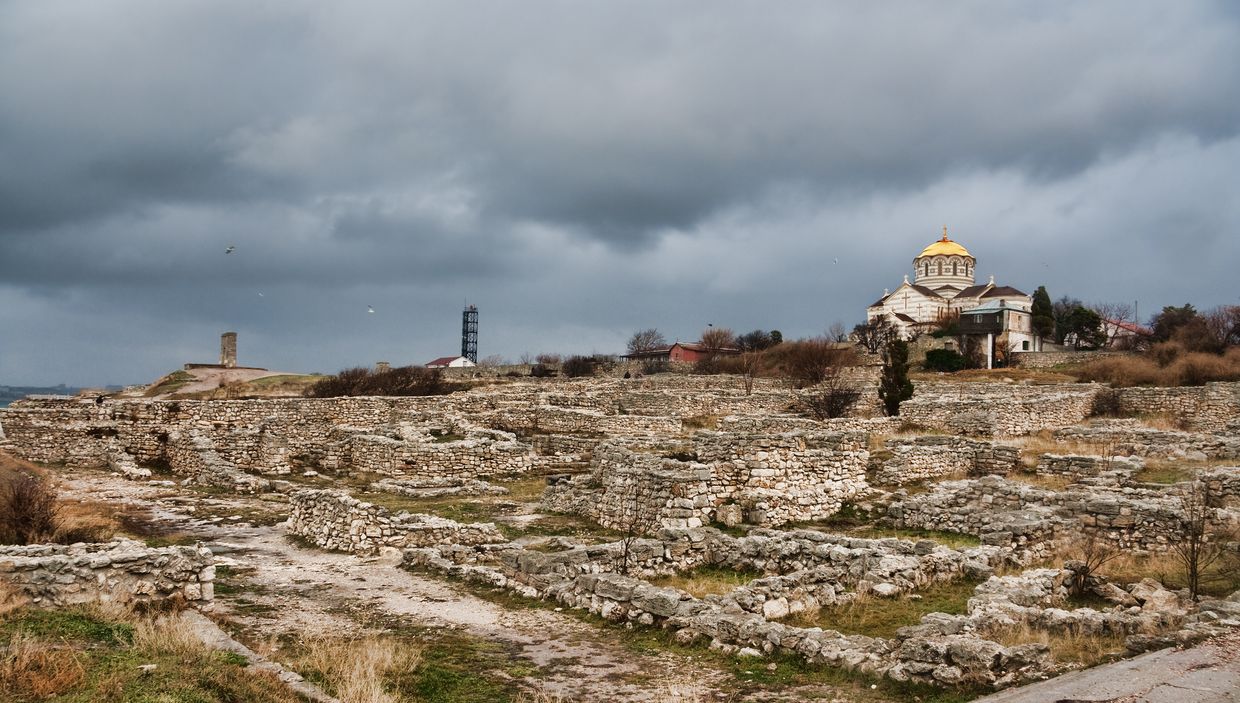
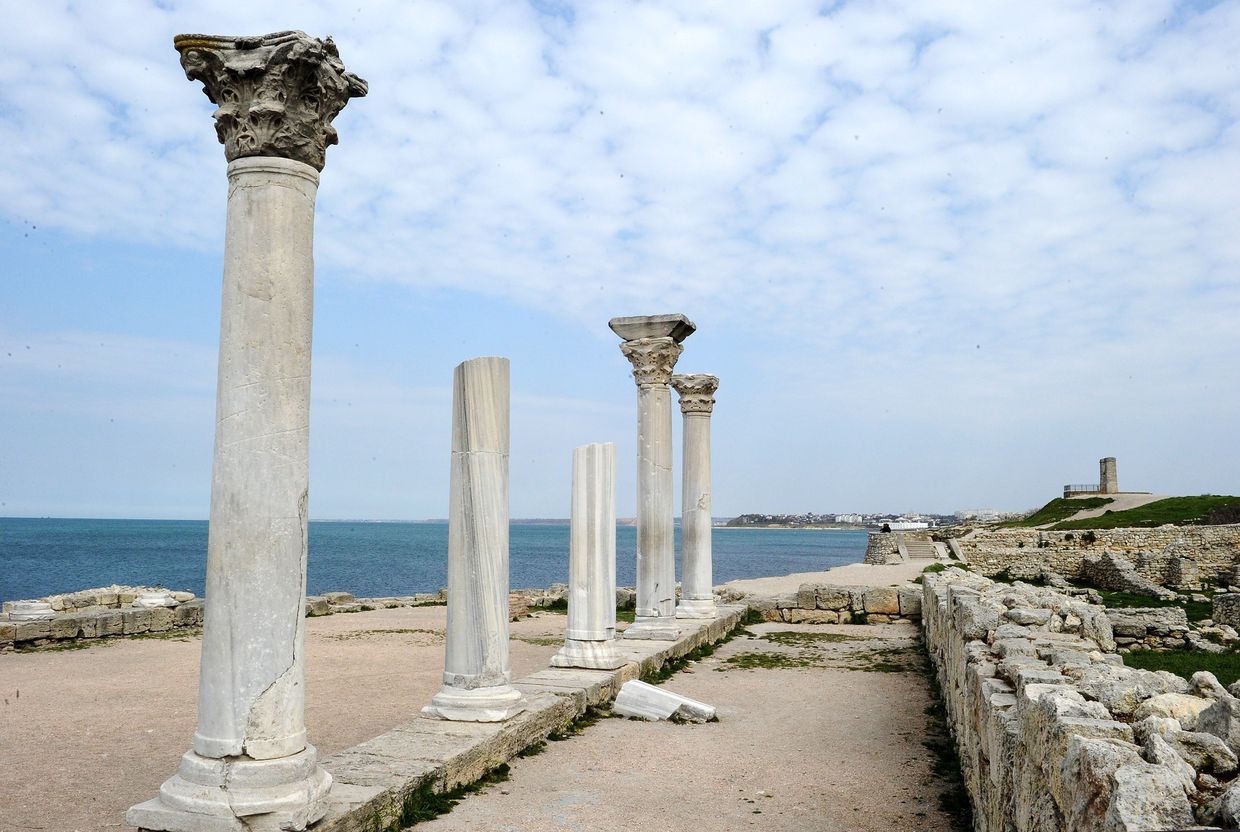
The ancient city of Chersonesus
A number of Ukrainian cultural heritage sites have been in peril since Russia’s invasion in 2014.
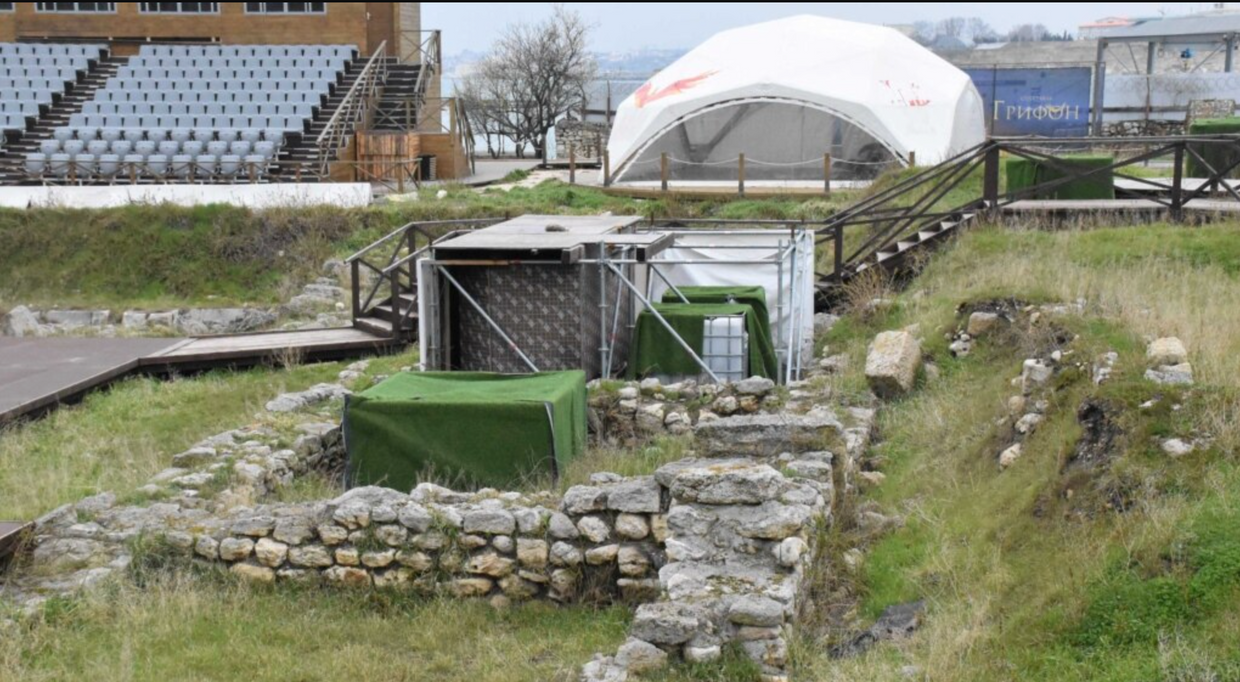
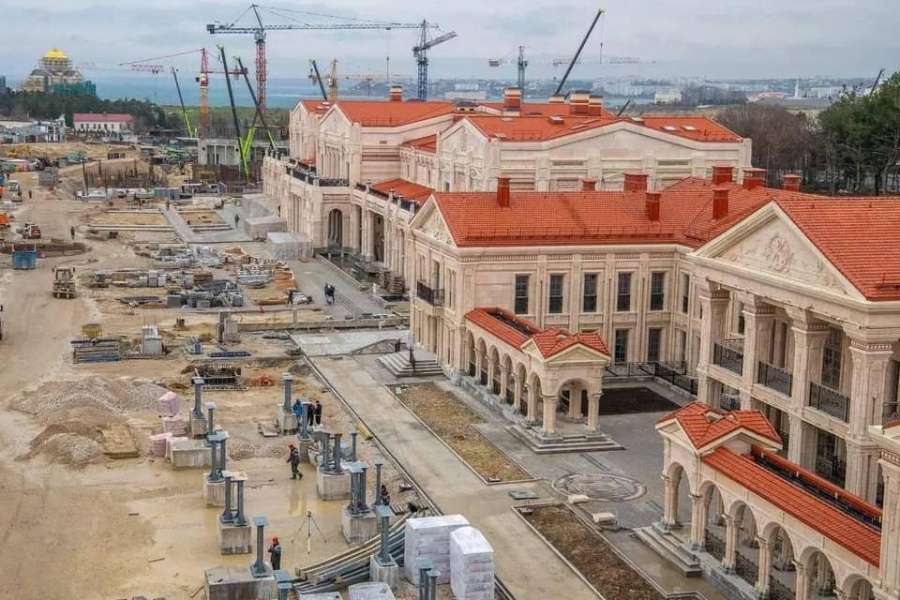
Over the years, Russia has excavated huge areas in occupied Crimea and appropriated the found artifacts. It also demolished several cultural heritage sites that have been around.
R: The ancient city of Chersonesus in in Sevastopol, Crimea, Ukraine in an undated photo. (Wikimedia) L: The photo shows the foundation on the original site of the ancient city in an undated photo. (X)
Russia has partially destroyed the city of Chersonesus, an ancient Greek colony founded over 2,500 years ago, located within the city limits of occupied Sevastopol. The ancient city of Tauric Chersonesus were added to the UNESCO World Heritage list in 2013.
Throughout Russia's occupation, the original sights were replaced with new buildings.
L: A view of Chersonesus, an ancient Greek city and UNESCO heritage site in Sevastopol, Crimea, Ukraine on April 1, 2014. (Olga Maltseva /AFP via Getty Images) R: The photo shows construction on the original site of the ancient city in an undated photo. (Rada.gov)
Derzhprom in Kharkiv
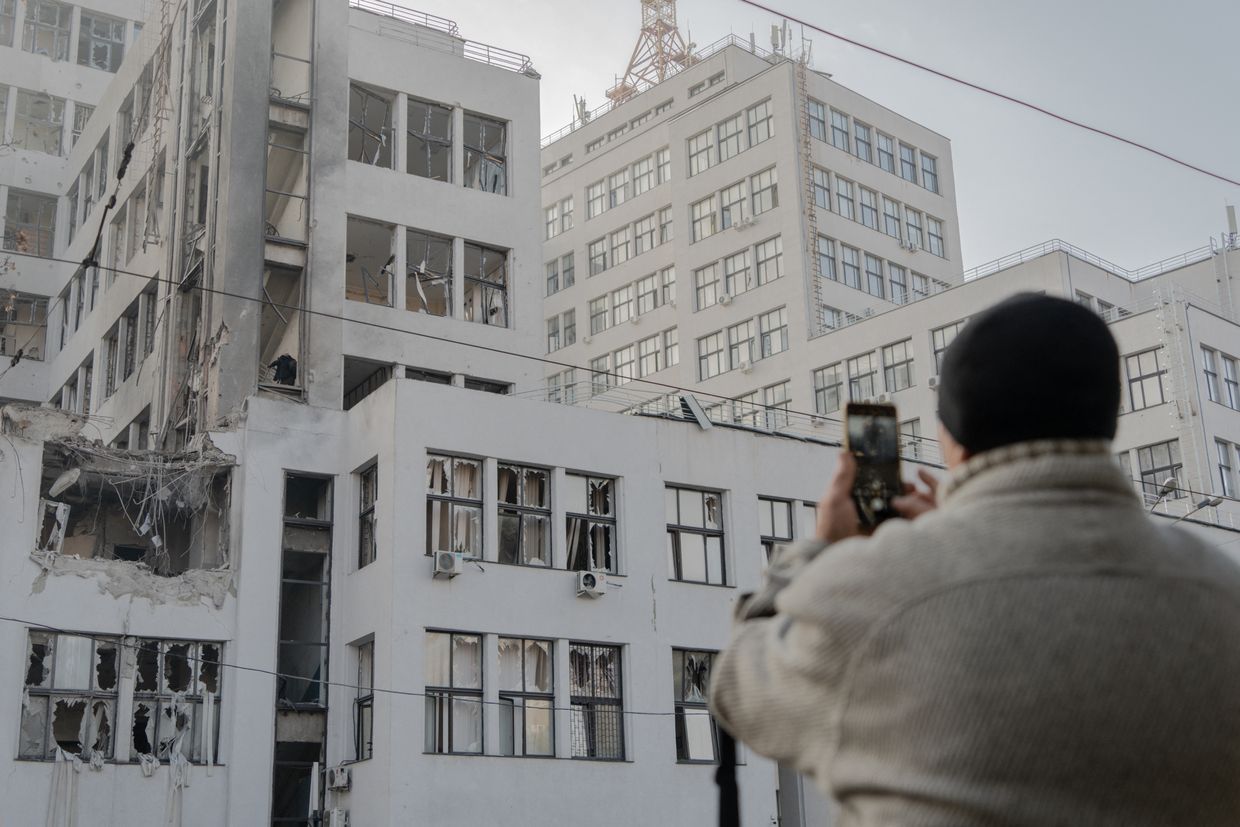
Derzhprom, or the State Industry House, is the latest cultural site attacked by Russia.
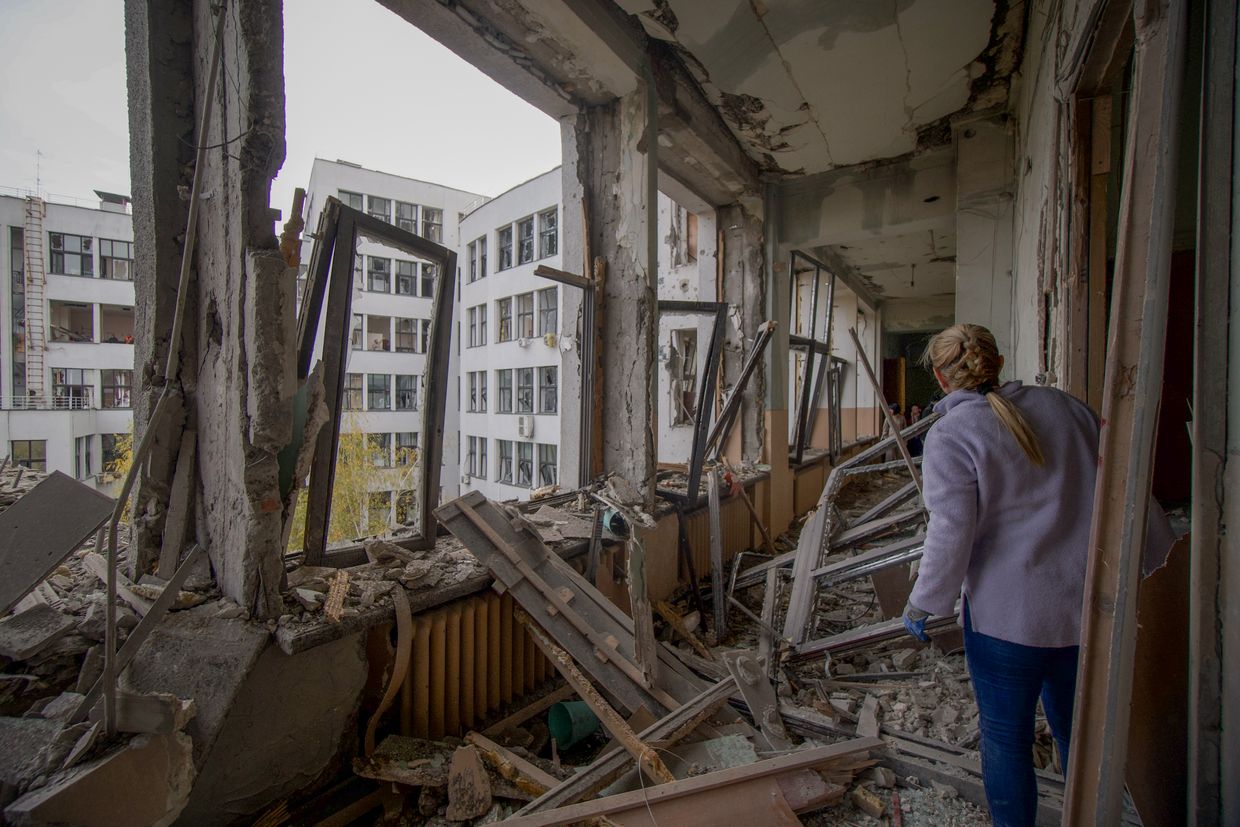
An iconic 13-story building is located in the very heart of Kharkiv, Ukraine's second-largest city, and was hit by a guided aerial bomb on the evening of Oct. 28. The site was first damaged during a Russian attack in early January.
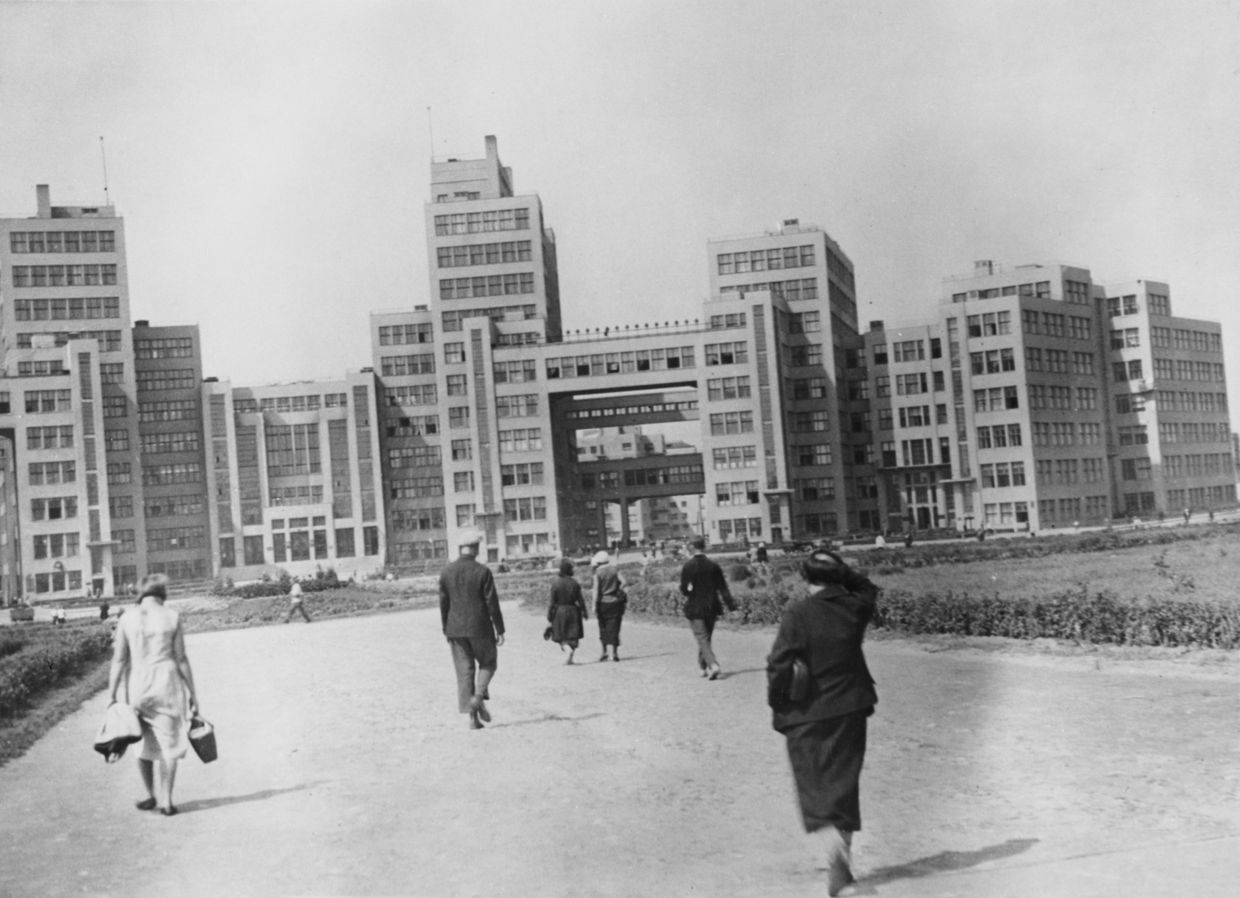
Completed in 1928, Derzhprom was one of the first skyscrapers built in Eastern Europe and is internationally renowned for its constructivist design using reinforced concrete and glass.
In 2017, Derzhprom was added to UNESCO's preliminary list, and after Russia's full-scale invasion, was placed under provisional enhanced UNESCO protection.
"It is the city's hallmark, so we will officially apply to UNESCO (to help recover the building). Our international department is working to get this process started," Kharkiv Mayor Ihor Terekhov said.
The Derzhprom building (also known as the State Industry Building or the Palace of Industry), an example of constructivist architecture, in Freedom Square, Kharkiv, Ukraine, Soviet Union, circa 1935. Completed in 1928 and designed by architects Sergei Serafimov, Samuil Kravets, and Mark Felger, the building's name is a shortening of two words meaning 'State Industry.' (Hulton Archive/Getty Images)A person takes a photo of the damaged Derzhprom building, a historic Soviet skyscraper, following a missile attack in Kharkiv on Oct. 29, 2024. (Ivan Samoilov / AFP via Getty Images)People clean up inside the damaged Derzhprom building after the Russian aerial bomb attack on the city center in Kharkiv, Ukraine, on Oct. 29, 2024. (Ivan Samoilov/Gwara Media/Global Images Ukraine via Getty Images)
Biosphere reserve Askania-Nova
The nature reserve was founded in 1898 and has been under Russian occupation since the beginning of the full-scale invasion. Askania-Nova in the Kakhovka district of Kherson Oblast is a member of the UNESCO Man and the Biosphere Program, and its area is 333.08 square kilometers (128.6 square miles).
The reserve was home to 3,500 animal species before the start of the all-out war. Before the all-out war, Askania-Nova was visited by about 150,000 tourists a year.
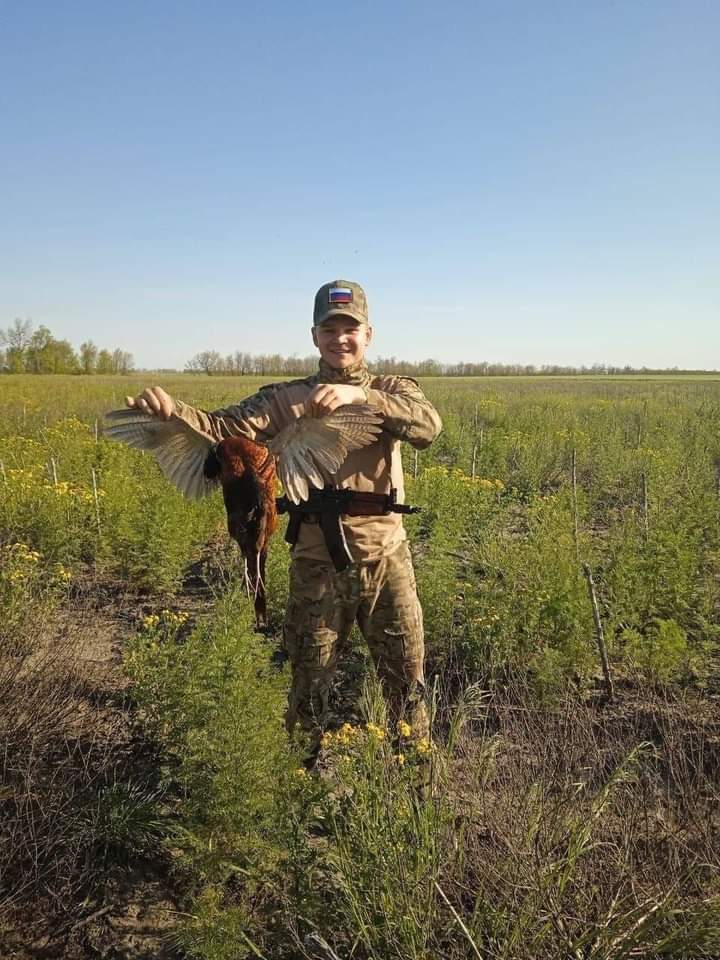
Ukraine is currently unable to monitor the territory of the facility and take care of the animals, some of which have already been illegally transported to Russia and the Russian-occupied Crimea. The Russian military also hunts rare species, according to reserve's director, Viktor Shapoval.
"Firstly, some species are kept in small enclosures and require daily care. Secondly, there are heat-loving animals that are moved to winter quarters for the winter. It is clear that without proper support, these animals are simply doomed to die," Shapoval said.
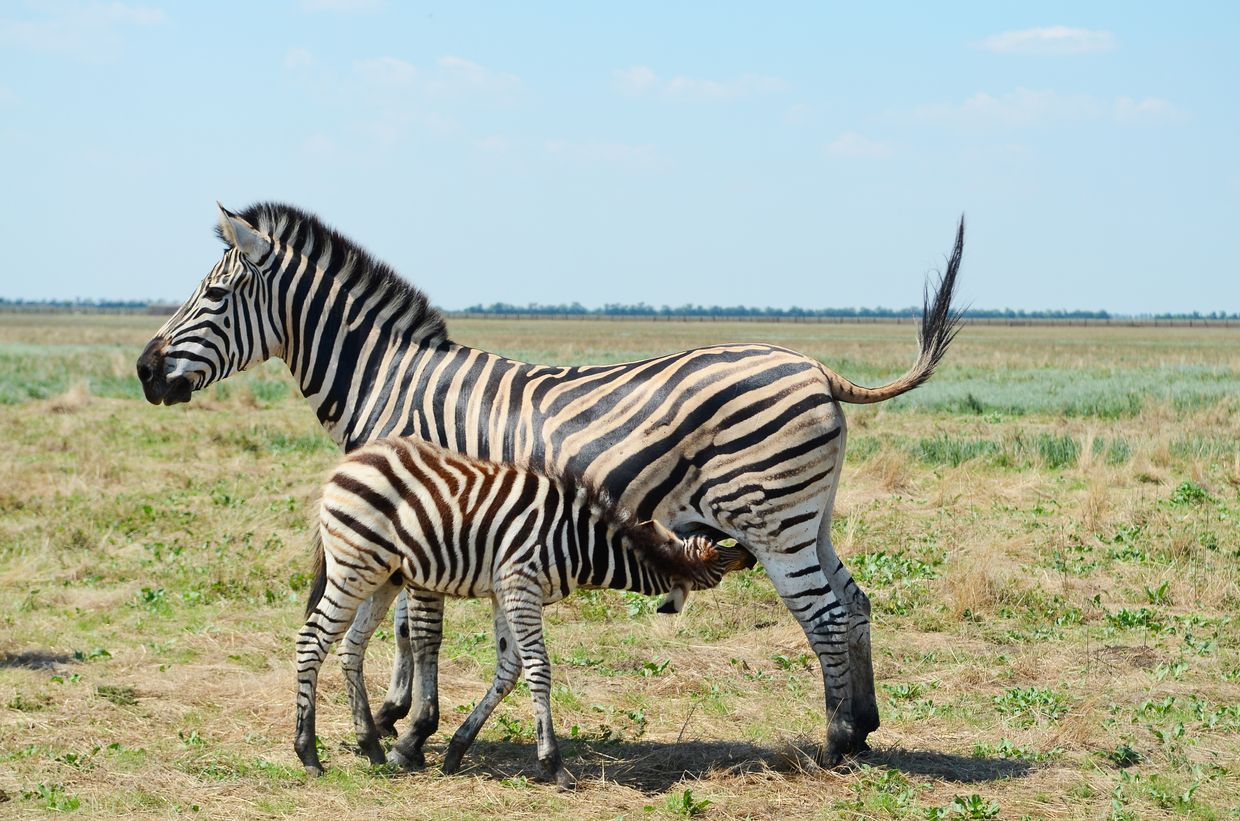
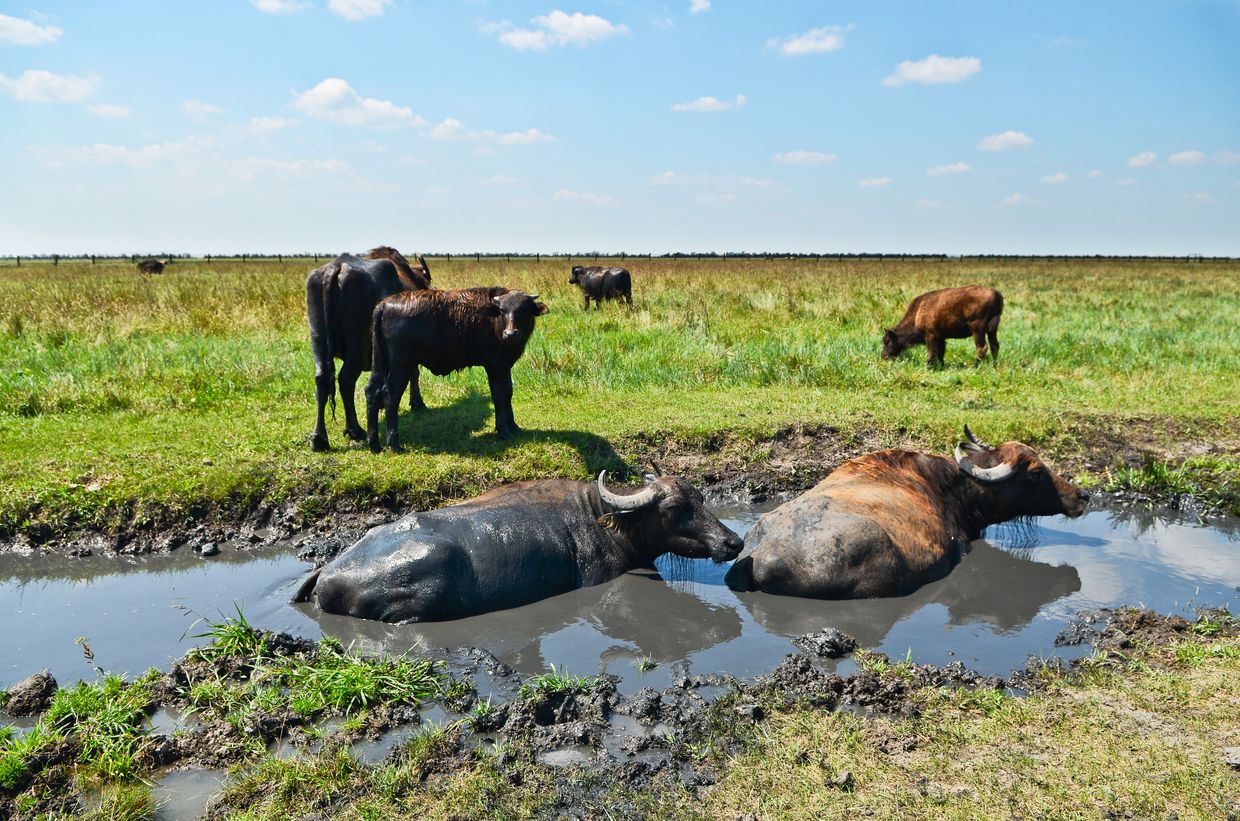
A zebra calf drinks milk from his mother at the Friedrich-Jacob Falz-Fein Askania-Nova Biosphere Reserve, Kherson Oblast, Ukraine on Aug. 1, 2021. (Oleksandra Butova/ Ukrinform/Future Publishing via Getty Images)Buffaloes lie in the mud at the Friedrich-Jacob Falz-Fein Askania-Nova Biosphere Reserve, Kherson Oblast, southern Ukraine. (Oleksandra Butova/ Ukrinform/Future Publishing via Getty Images)Russian soldiers pose with killed animals and birds in Askania-Nova. (X)0:00/1×A video allegedly showing zebras from biosphere reserve Askania-Nova being transported to a zoo in an unknown location. (X)
Bakhchysarai Palace
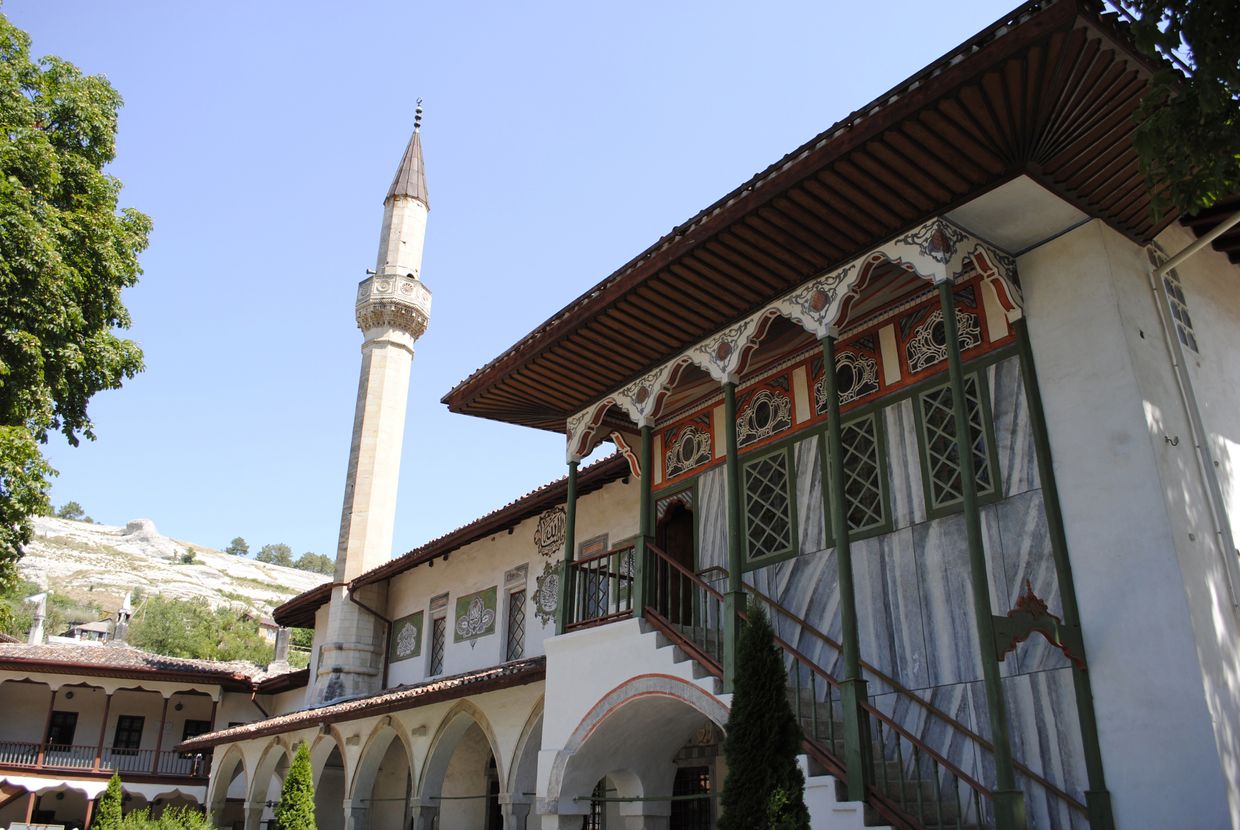
The Bakhchysarai Palace or Khan's Palace, listed on the UNESCO Tentative World Heritage List, is the only preserved example of Crimean Tatar palace architecture worldwide. It was the main residence of Crimean khans, the leaders of the Crimean Khanate (1441–1783), and the state's administrative and political center from the the mid 16th century.
The palace in Bakhchysarai is a unique Crimean Tatar architectural monument.
Sign up for our newsletter
sign up
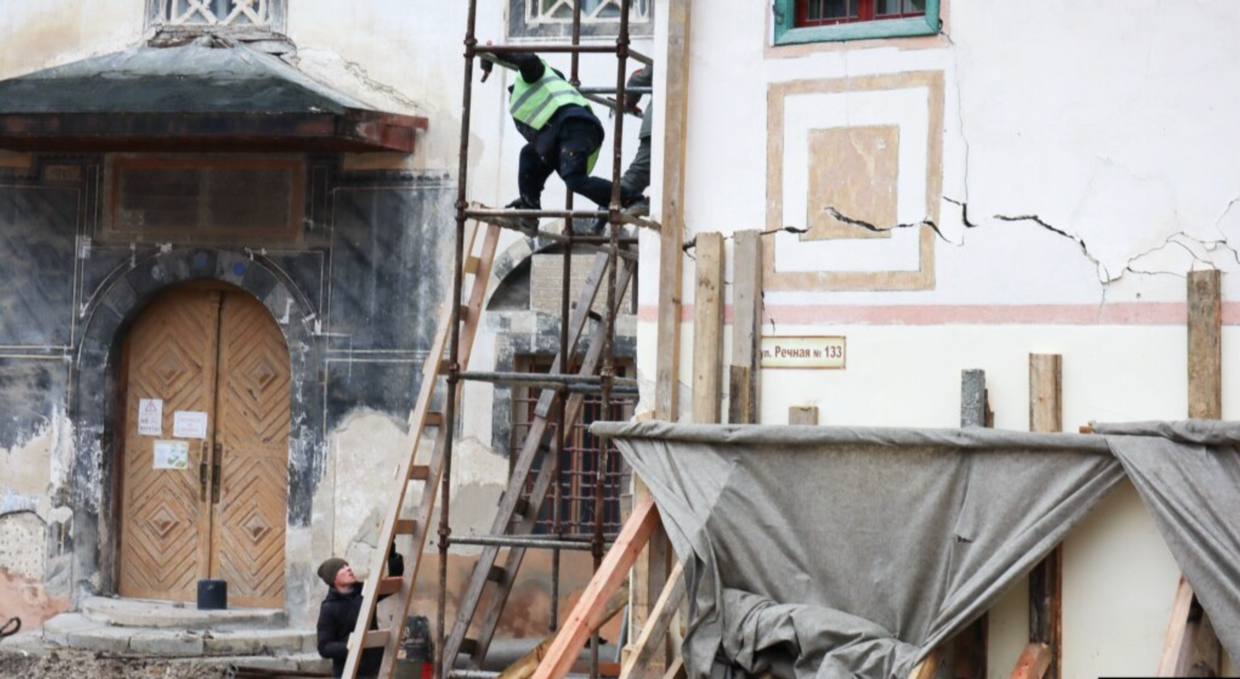
Russian forces had been destroying the Khan's palace in Bakhchysarai, calling it "repair and restoration work," former director of the Bakhchysarai Historical and Cultural Reserve Elmira Ablialimova told Ukrinform in January 2023.
The monument had undergone "irreversible changes," and Russians were carrying out repair and restoration work even where there was no need, Ablialimova said.
As a result of the actions of the Russian proxies, the roof of the Khan's Mosque was dismantled, causing severe damage to the building and destroying its authentic appearance. The frescoed walls and stained glass windows were also damaged, and a huge crack appeared on the wall of the Secular Building of the Khan's Palace due to violations of restoration requirements, according to the Ukrainian Institute.
For years, Russia has blocked all appeals and attempts by Ukrainian authorities and activists to allow specialists and the UNESCO monitoring mission to participate in the restoration.
Exterior of the Khan's Palace in Bakhchysarai, Crimea, Ukraine.(Prisma/Universal Images Group via Getty Images)Damage on the exterior of the Khan's Palace in Bakhchysarai, Crimea, Ukraine. (X)
The Genoese fortress
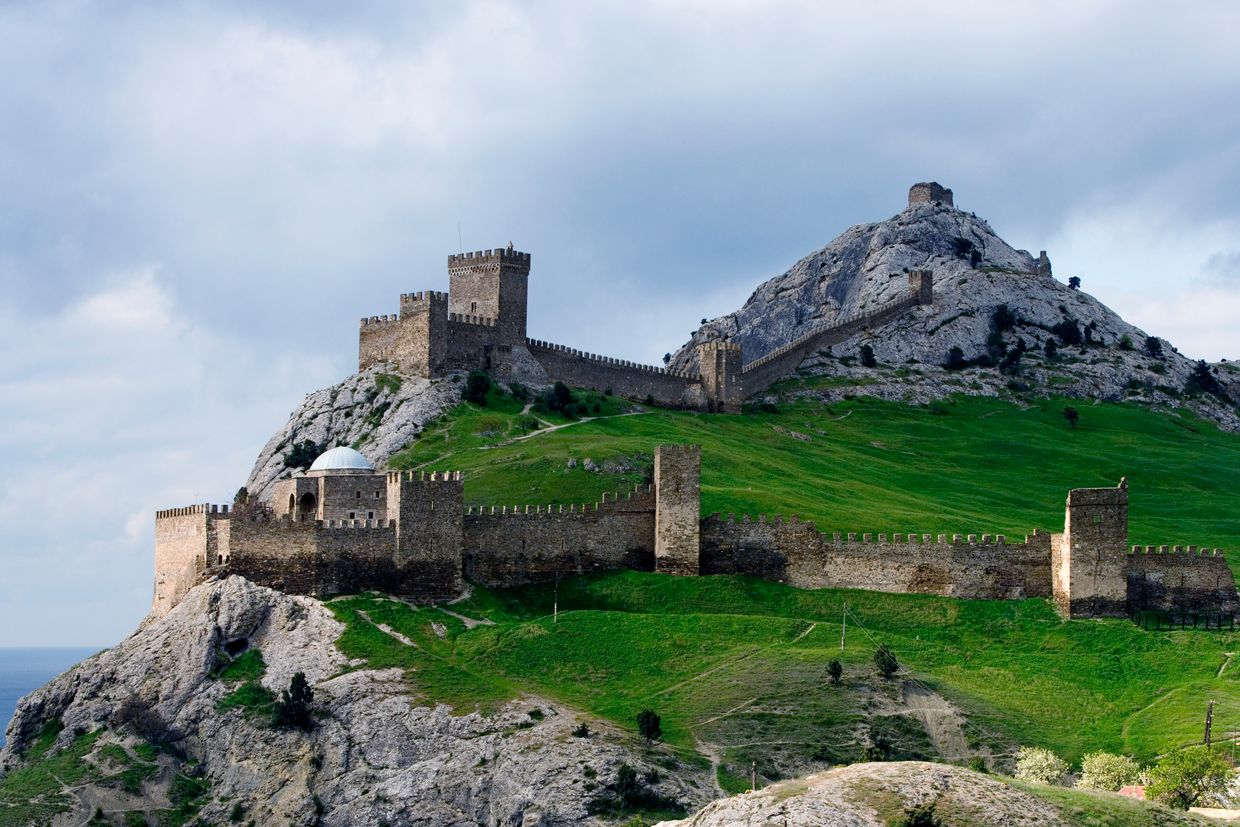
The Genoese fortress in occupied Sudak, Crimea, like the Khan's Palace, has been under Russian occupation since 2014.
The construction of the Genoese fortress, which is on the UNESCO Tentative World Heritage List and is part of the National Reserve "Sophia of Kyiv," lasted about a hundred years, from 1371 to 1469. The fortress stands on a 157-meter-high mountain called Kyz-Kule-Burun, an ancient fossilized coral reef. Due to its location, the fortress is almost unassailable.
In November 2015, a part of the ancient tower of the Genoese fortress collapsed, a local media QHA reported, citing its undisclosed source close to the committee for the protection of the cultural heritage of the Russian-occupied Crimea.
The alleged reason for the destruction is that Russian occupation authorities were building hotels and toilets on the territory of the site. Nelia Kukovalska, director general of the National Reserve "Sophia of Kyiv," told Crimea.Realities, a project of Radio Free Europe/Radio Liberty, in May 2019 that the Genoese fortress was also at risk of landslides. "Since the annexation of the peninsula, illegal and unprofessional work has been carried out at the site, and no one is monitoring the landslide situation… We observe an increase in seismic activity there, and there is a danger," Kukovalska said.
The Genoese fortress (14th-15th century) in Sudak, Crimea, Ukraine in Dec. 24, 2013. (DeAgostini/Getty Images)
Introducing official merch from the Kyiv Independent Shop now
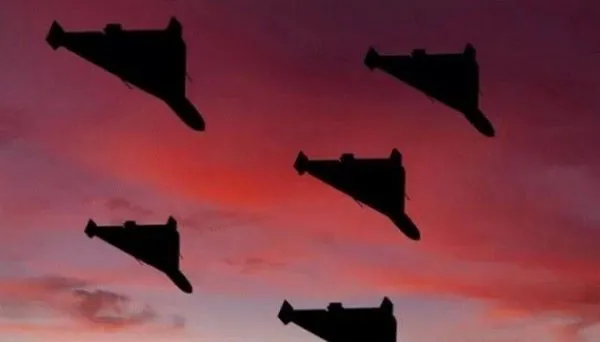
Hostile drones have been spotted in the airspace of Kyiv region, and air defense forces are operating. Residents are urged to stay in shelters until the end of the air alert.
Enemy drones have been spotted in the sky over Kyiv region, air defense forces are operating, UNN reports, citing the Kyiv RMA.
"Kyiv region. A UAV was spotted in the airspace. Air defense forces are working on targets," the statement said.
The RMA urged residents of the Kyiv region to stay in shelters until the end of the air raid.
"Take care of your own safety. Observe information silence – do not record or post the work of our defenders online," the statement reads.
Add
An air alert has been declared in a number of regions.
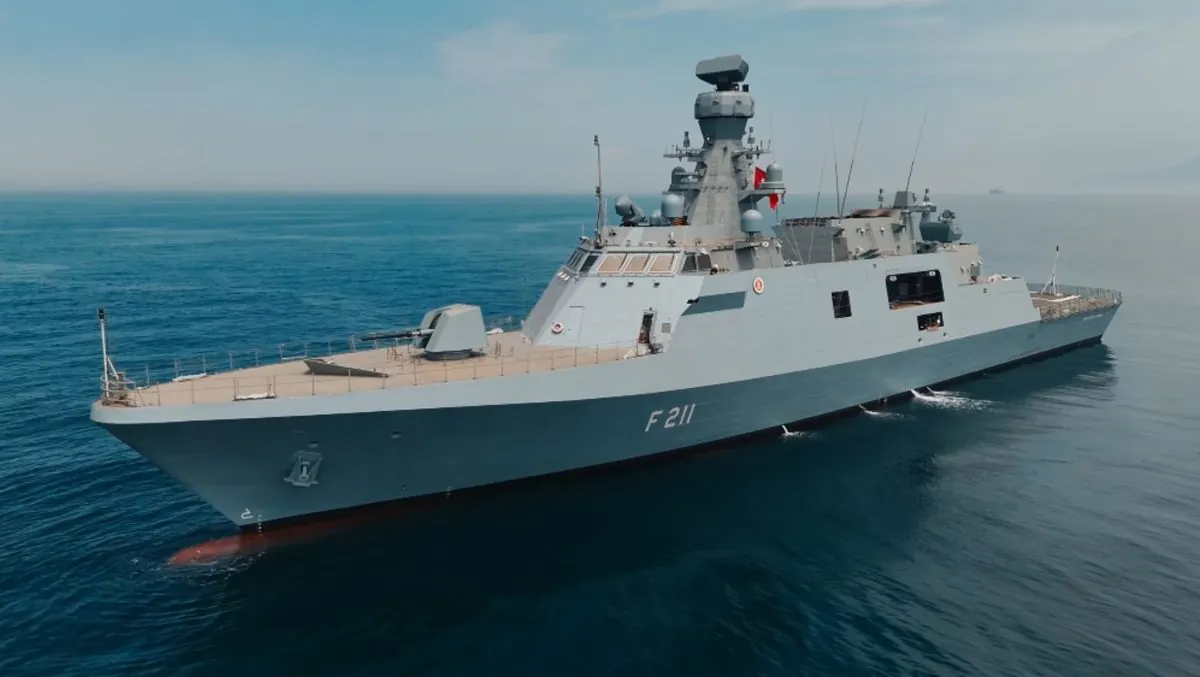
The Ivan Mazepa corvette being built by Turkey for Ukraine has successfully passed artillery tests. The ship is equipped with modern weapons systems and enhanced air defense.
The Ukrainian Navy has tested the future flagship of the Ukrainian Navy, the Ivan Mazepa corvette. UNN reports with reference to the Navy Commander.
The Corvette continues to successfully pass state tests. During artillery firing, it demonstrated excellent results, accurately hitting air, sea and ground targets
– the statement said.
The ship is reportedly equipped with modern weapons systems that significantly increase its combat capabilities. All previous technical comments have been taken into account, and the modernization is focused on ensuring maximum efficiency and protection in combat. In particular, air defense capabilities have been strengthened.
Recall
The Hetman Ivan Mazepa , a multi-purpose corvette-class ship, is being built by Turkey for the Ukrainian Navy. This ship is to become the flagship of the Ukrainian Navy. The corvette is a type of anti-submarine corvette in the coastal zone. Such ships are part of the MILGEM project, designed primarily for the Turkish Navy.
Second Ukrainian corvette Hetman Vyhovsky launched in TurkeyAugust 1 2024, 07:43 PM • 88552 views
Ukraine has repatriated the bodies of 563 soldiers who died fighting against Russia, the Coordination Headquarters for the Treatment of the Prisoners of War reported on Nov. 8.
The Geneva Conventions stipulate that those who lose their lives during war are entitled to a dignified burial. As of early March, Ukraine has identified more than 2,800 bodies and body fragments offallen soldiers, according to Ombudsman Dmytro Lubinets.
The bodies of 320 soldiers were recovered from Donetsk Oblast, while 89 were brought back from Zaporizhzhia Oblast. Another 154 bodies were repatriated from morgues in Russia.
“Law enforcement officials and forensic experts will identify the killed,” the headquarters wrote in a post on Telegram.
The operation to recover the fallen soldiers involved several government and military agencies, including the Security Service of Ukraine (SBU), the Interior Ministry, the State Emergency Service, and the Armed Forces.
The headquarters also thanked the International Committee of the Red Cross for its assistance.
In late February, President Volodymyr Zelensky said that about 31,000 Ukrainian soldiers had been killed during the full-scale invasion.
The North Atlantic Council issued a statement condemning military cooperation between Russia and the DPRK. NATO member states called on Russia to comply with international obligations and UN resolutions.
NATO Allies strongly condemn the decision of the leaders of Russia and the DPRK to dangerously expand Russia’s unprovoked aggressive war against Ukraine. The Kremlin was called upon to comply with its international obligations. This is stated in the statement of the North Atlantic Council on the DPRK, UNN reports.
Australia, Japan, New Zealand, the Republic of Korea, and Ukraine align themselves with this statement.
“NATO Allies strongly condemn the decision of the leaders of the Russian Federation and the Democratic People’s Republic of Korea (DPRK) to dangerously expand Russia’s unprovoked aggressive war against Ukraine. In addition to the DPRK’s already substantial support for Russia’s military efforts through the provision of millions of rounds of ammunition and ballistic missiles, the thousands of combat troops deployed by the DPRK are a dangerous expansion of its ongoing support for Russia’s illegal aggressive war against Ukraine,” the statement reads.
It is noted that the deepening of military cooperation between Russia and the DPRK has a profound impact on Euro-Atlantic security with consequences for the Indo-Pacific region.
NATO also notes that the expansion of military cooperation between Russia and the DPRK is a violation of a number of UN Security Council resolutions, including 2270 (2016), 1718 (2006) and 1874 (2009). This is especially egregious given Russia’s status as a permanent member of the UN Security Council.
“We call on Russia to return to the implementation of these resolutions and to comply with its international obligations,” the statement reads.
It is also noted that Russia’s statement of September 26 that the denuclearization of the DPRK is “not under consideration” is unacceptable, as it undermines the global non-proliferation regime, directly contradicts the relevant UN Security Council resolutions and further exacerbates regional tensions.
“Russia’s announcement is part of its broader efforts to undermine the global non-proliferation regime and the lifting of UN sanctions. We call on all countries not to provide any assistance to Russia’s aggression and condemn all those who facilitate and thereby prolong Russia’s illegal war against Ukraine,” the statement reads.
Rutte wants to discuss with Trump countering threats against the backdrop of Russia’s cooperation with China, North Korea and IranNovember 7 2024, 11:39 AM • 15828 views
In addition, it is noted that NATO will continue to work with its partners, particularly in the Indo-Pacific region, to promote peace and stability and prevent Russia and those who contribute to its military efforts from undermining regional and global stability.
Allies continue to strengthen NATO’s deterrence and defenses against all threats and challenges in all domains and across multiple strategic domains in the Euro-Atlantic area.
“Allies remain as determined as ever to stand by Ukraine for as long as it takes for Ukraine to win. Allies and partners continue to step up critical political, military, financial, economic and humanitarian assistance as Ukraine exercises its inherent right to self-defense, enshrined in Article 51 of the UN Charter,” the statement said.
It is emphasized that the allies are determined to support Ukraine in building forces capable of defeating Russian aggression, in line with the promise of long-term security assistance to Ukraine.
An explosion was recorded in Mykolaiv, as reported by the mayor Oleksandr Senkevych. The Air Force has previously warned of the possibility of ballistic missile attacks from Crimea.
The explosion occurred in Mykolaiv amid a ballistic threat. This was reported by Mykolaiv Mayor Oleksandr Senkevych, UNN informs.
"An explosion was heard in Mykolaiv! More details later," Senkevych said.
Earlier, the Air Force warned of the threat of ballistic missile attacks from Crimea.
The Presidents of Ukraine and Finland had a phone conversation on defense cooperation and international efforts for peace. They discussed the situation on the frontline and the threats posed by North Korea's involvement in the war.
President of Ukraine Volodymyr Zelenskyy discussed with President of Finland Alexander Stubb the strengthening of Ukrainian air defense, the situation at the front, the threats posed by North Korea's involvement in the Russian war against Ukraine, and the continuation of defense cooperation. Zelenskyy announced this on his Telegram channel, UNN reports.
"I had a phone conversation with President of Finland Alexander Stubb. We discussed the successful holding of a thematic conference in Helsinki on item eight, "Environmental Security," as well as further international efforts to restore a just peace for Ukraine," Zelenskyy said.
He noted that he expressed his gratitude to Alexander Stubb for his active position in promoting peace based on the principles of the UN Charter when communicating with the countries of the Global South.
The two sides also discussed the situation on the battlefield, as well as the threats posed to regional and global security by North Korea's involvement in Russia's war against Ukraine, and the continuation of defense cooperation between Ukraine and Finland.
"I conveyed the current defense needs of Ukraine to strengthen air defense and supply additional air defense equipment," Zelensky added.
Recall
The President of Ukraine held talks with the Prime Minister of Hungary at the summit of the European Political Community. Zelenskyy emphasized the importance of equal relations and discussed the issue of national minorities.
A representative of the GUR denied that MP Shevchenko was an intelligence officer. The MP had previously called on Zelenskyy to negotiate with Putin and showed his GUR ID.
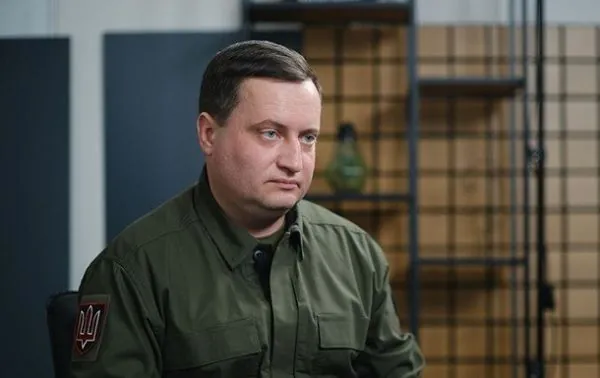
People's Deputy Yevhen Shevchenko, who called on President of Ukraine Volodymyr Zelenskyy to start a dialogue with Russia, is not an employee of the Main Intelligence Directorate. This was reported to UNN by a representative of the GUR, Andriy Yusov.
"Of course, I am not an employee. Those statements that are anti-state should be checked by state authorities and law enforcement agencies," Yusov said.
Addendum
Yesterday, on November 7, MP Shevchenko called on the President of Ukraine to negotiate with Russian dictator Vladimir Putin on his Telegram channel.
Shevchenko also called for the return of MPs suspected of treason to the session hall.
In 2022, Shevchenko presented a certificate from the Defense Intelligence of Ukraine as proof that he was indeed serving in the intelligence service.
The head of the President's Office, Andriy Yermak, responded to the MP, noting that "some MPs seem to be confused about national security, national interests and the future of the country.
"If in their minds national interests = Ukraine's defeat, then they are making a big mistake in the interests of Russia. The plan for Ukraine's victory, the peace formula, is the path to justice," said Yermak.


 The Kyiv IndependentThe Kyiv Independent news desk




 sign up