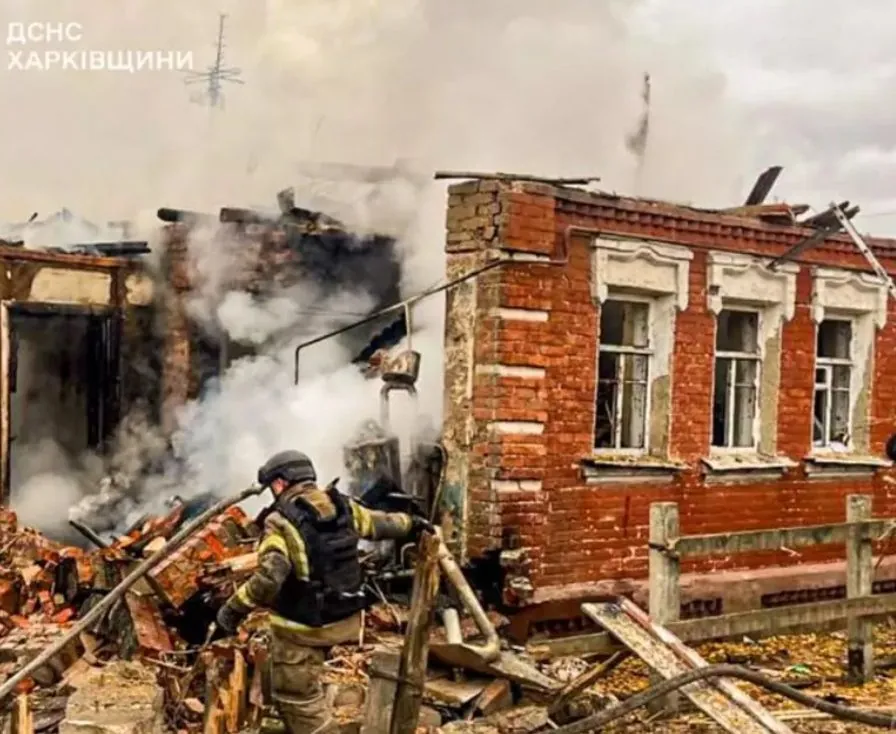
The shelling in Kharkiv region damaged residential buildings, shops and cars. Two people were killed, several people were wounded, and 53 people were evacuated.
Residential buildings, shops, cars and civilians were damaged in the Kharkiv region as a result of shelling. Two people were killed and several people of different ages were wounded.
This was reported by the head of the Kharkiv RMA, Oleh Syniehubov, according to UNN.
Details
Kharkiv.
As a result of the shelling (22:17), the windows of a shop and two apartment buildings were damaged, a woman of 64 years old was wounded.
Chuhuiv district, Chuhuiv TG.
During the repeated shelling, on November 10, two apartments caught fire and a 4-storey residential building was damaged. A 36-year-old man and a 40-year-old woman were injured.
The fragments of the downed drone hit the roof of the entrance of a 4-storey residential building, damaging the windows and 5 cars.
Izyum district, Borivska TG, Borova village – a hit to a vehicle damaged the store.
Kupiansk district, Kupiansk TG, Kupiansk.
The shelling damaged two multi-storey buildings and two private houses, wounding three men aged 35, 49 and 61.
Private households, apartment buildings, and outbuildings were also damaged; 40 garages were destroyed. A man and a woman were killed.
Kharkiv district, Dergachivska TG, Prudyanka village. The shelling damaged 5 private houses and a car, a 60-year-old man was injured.
In the Kharkiv sector, the enemy attacked twice near Vovchansk.
Nine combat engagements were registered in the Kupyansk sector over the last day.
Defense forces repelled enemy attacks in the areas of Kucherivka, Kruhlyakivka and Lozove. 53 people were evacuated from the Kupyansk and Borivske directions over the day.
Recall
Russian military attacked Sloboda district of Kharkiv with a Grom-E1 missile and bomb hybrid.
Editor's note: This article has been updated to include additional details about the reported execution.
A video circulating online shows the latest instance of Russian forces executing a Ukrainian soldier, Ukraine's Ombudsman Dmytro Lubinets said on Nov. 9.
"The occupiers have no limit to cynicism and cruelty," he said in a post on Telegram.
"The Russians shot an apparently wounded, unarmed Ukrainian soldier. They captured it on a video that is spreading online."
The video appears to show an unarmed Ukrainian soldiers being executed at close range with an automatic weapons while lying on the ground, the Prosecutor General's Office said. The soldier was captured immediately prior to his execution.
The Prosecutor General's Office sad it was opening an investigation into the suspected war crime under the country's criminal code.
Lubinets said he would be writing a letter to the International Committee of the Red Cross (ICRC) and the U.N.
"This is a violation of the Geneva Conventions, international humanitarian law, laws and customs of war," he added.
Lubinets did not specify when or where the video was taken.
Earlier this week, a senior representative of the Prosecutor General's Office said Kyiv knows of 124 Ukrainian prisoners of war (POWs) who were executed by Russian forces on the battlefield throughout the full-scale war.
Reports of murders, torture, and ill-treatment of Ukrainian prisoners of war are received regularly by Ukrainian authorities and have spiked in recent months. Most cases were recorded in embattled Donetsk Oblast.
Speaking on national television, Denys Lysenko, the head of the department focused on war-related crimes, said that 49 criminal investigations were underway regarding the execution of Ukrainian POWs.
The most recent cases include the killing of six captured Ukrainian soldiers near Pokrovsk in Donetsk Oblast, prosecutors reported on Nov. 5.
"We are now analyzing all these cases, looking for patterns… We are considering all these cases comprehensively and the involvement of a particular armed unit is, of course, analyzed in each case," Lysenko said.
According to him, prosecutors are building cases against representatives of the Russian military leadership who may be involved in organizing such executions or in failing to take measures to prevent them.
Former Prosecutor General Andriy Kostin called the killing of Ukrainian servicemen in captivity a "deliberate policy" of Russia.
Some 80% of the cases of executions of Ukrainian POWs were recorded in 2024, but the trend began to appear in November 2023, when "there were changes in the attitude of Russian military personnel towards our prisoners of war for the worse," said Yurii Belousov, a senior representative of the Prosecutor General's Office.
In the occupied Luhansk region, student participation in the Kremlin's “movement of the first” has become mandatory. Previously, students outside the movement were restricted in their activities, but now everyone will be automatically included in the organization.
In the temporarily occupied Luhansk region, Russians have made it mandatory for students of fake universities to participate in the "movement of the first". This was reported by the Center for National Resistance, UNN reports.
Details
It is noted that previously joining the Kremlin's youth control movement was not mandatory, although it was imposed in various ways.
In particular, students outside the movement were deprived of participation in entertainment events and were hindered in their studies. However, even this failed to attract a large number of participants.
From now on, all students will automatically become members of the movement, an organization responsible for providing crowd support during propaganda events,
– the statement said.
In TOT, occupants force children to swear allegiance to Russia – ResistanceOctober 29 2024, 11:20 PM • 100741 view
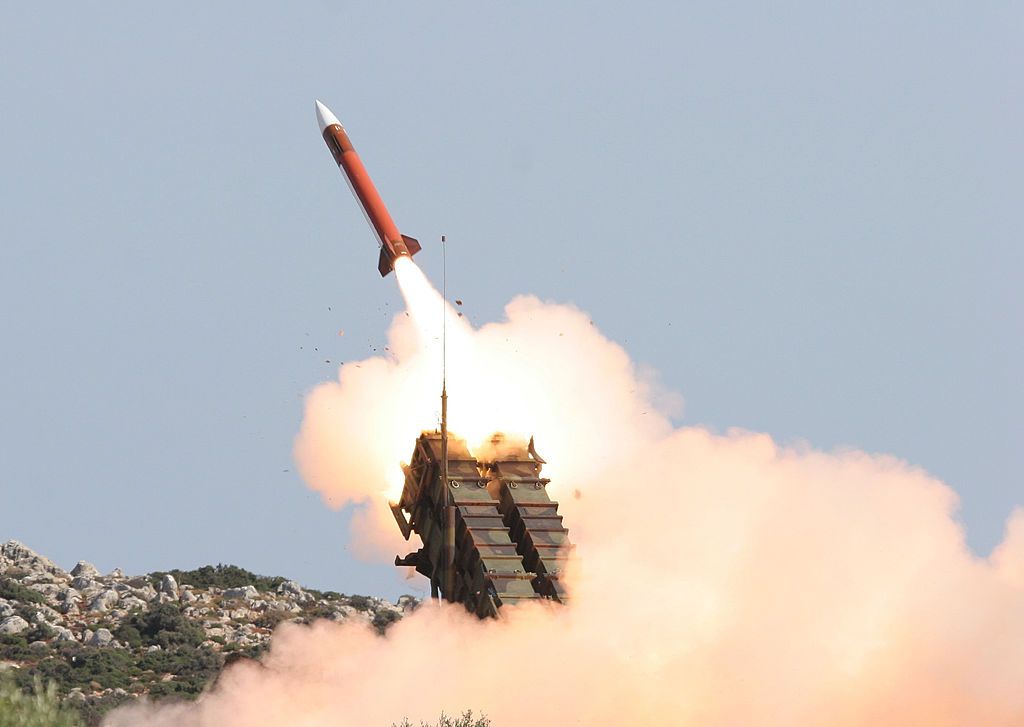
The Biden administration will rush the delivery of over 500 interceptor missiles for the Patriot and National Advanced Surface-to-Air Missile (NASAMS) systems to Kyiv, the Wall Street Journal (WSJ) reported on Nov. 9, citing a senior administration official.
The deliveries come as the Biden administration is planning to rush the delivery of the remaining approximately $7 billion in military aid to Ukraine ahead of the inauguration of President-elect Donald Trump in January 2025.
The weapons, which are expected to arrive in the coming weeks, should meet the demand for Ukraine air defense needs for the remainder of 2024, the official said.
No details were provided as to how many of each interceptor missile would be provided.
Two administration officials told Politicoon Nov. 7 that the White House plans to expedite the weapons delivery amid concerns that a future Trump administration would halt weapons shipments before they reach Kyiv.
Trump has repeatedly said that he would end the war within "24 hours" and get the U.S. "out" of Ukraine — a plan that may involve ceding Ukrainian territory and creating autonomous regions in the east, according to reporting in October.
Despite President Biden's ability to deliver existing weapons stocks through presidential drawdown authority, White House officials are concerned that the delivery of the large amount of weaponry may take months to reach Ukraine — well past Trump's inauguration into office.
In addition to the interceptors, a Pentagon official said on Nov. 8 that the White House was preparing to send "a small number of contractors" to maintain F-16 fighter jets as well as other air defense systems. The White House previously rejected the plan as late as August but has changed course amid an increase in inoperable and unserviceable weaponry.
"Ensuring these weapon systems remain mission capable is critical for Ukraine’s defense against Russian aggression," a statement by the Pentagon read.
Mont recently on Oct. 16, U.S. President Joe Biden announced the latest $425 million in new security assistance for Ukraine during a phone call with Zelensky.
A construction crisis is unfolding in Russia due to the suspension of preferential mortgages and the removal of interest control. The construction of residential facilities has been halted in the temporarily occupied territories of Crimea and eastern Ukraine.
A crisis in the construction industry is unfolding in Russia, which is already being felt in the temporarily occupied territories. This is reported by the Center for National Resistance, UNN reports.
Due to the crisis in Russia, the government stopped preferential mortgages and removed control over interest rates. As a result, developers began to stop building projects,
– the statement said.
Details
It is noted that the construction of residential buildings in the TOT of Crimea and eastern Ukraine has already been stopped. At the same time, construction workers brought to the east from other regions are not allowed to leave their resettlement areas (dormitories).
Recall
In 2024, Russia "nationalized" at least 1,200 properties in occupied Crimea. Most of the seized property is resort complexes and commercial real estate owned by Ukrainian businessmen.
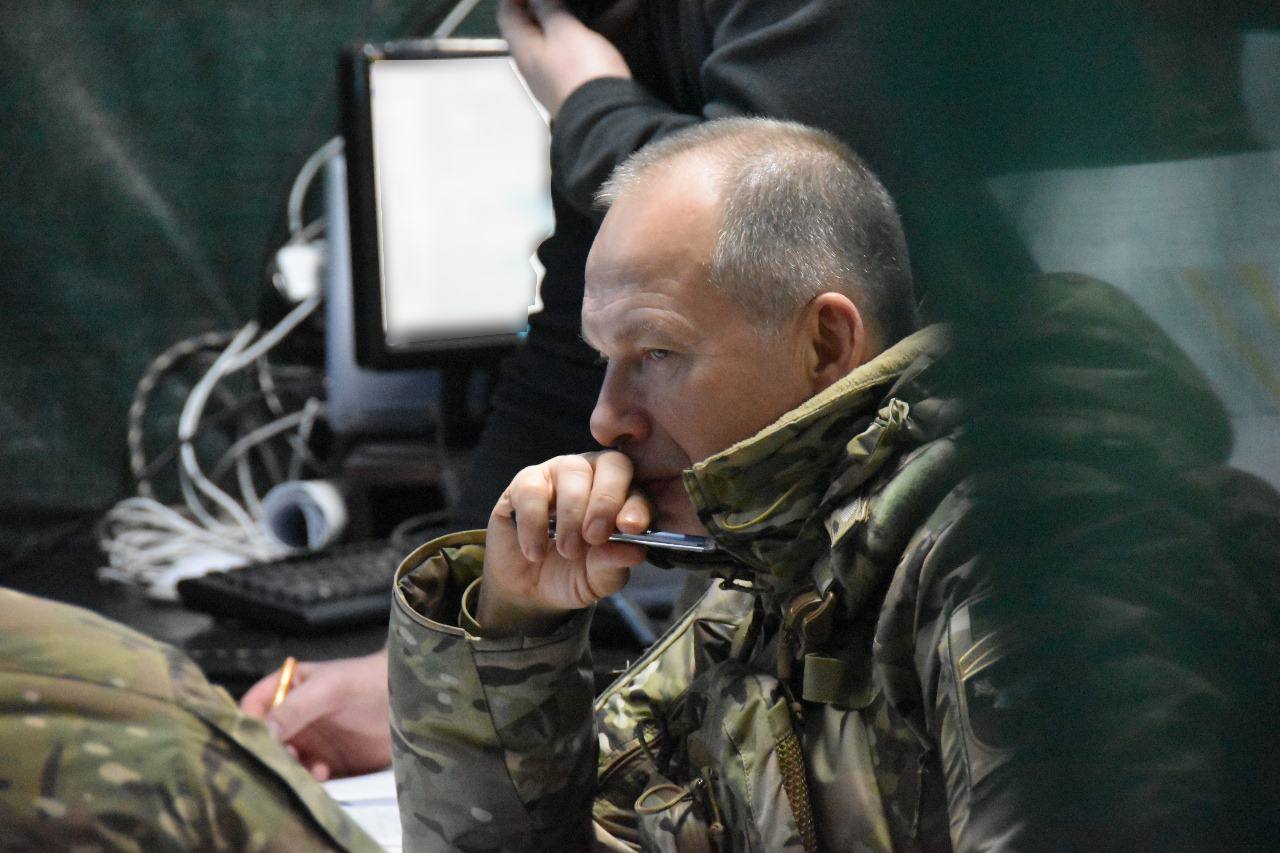
The situation on the front lines in Ukraine is "challenging" and "trending towards escalation," Ukraine's Commander-in-Chief Oleksandr Syrskyi said on Nov. 9.
"The situation remains challenging and is trending towards escalation. The enemy, leveraging its numerical advantage, continues offensive operations, concentrating its efforts primarily in the Pokrovsk and Kurakhove directions," Syrskyi said in a post on Facebook.
"We have numerous reports about the preparation of North Korean soldiers to participate in combat operations alongside Russian forces," he added without providing further details.
Syrskyi was reporting what he had told General Christopher Cavoli, NATO's top commander in Europe, in a phone call earlier in the day.
According to a Bloomberg analysis published on Nov. 1, Ukraine has lost 1,146 square kilometers of its own territory since the launch of the Kursk Oblast incursion in early August, with the week up until Nov. 1 reported as the worst in terms of lost territory in all of 2024.
On Nov. 2, Commander-in-Chief Oleksandr Syrskyi said that Ukraine was facing “one of the most powerful” Russian offensives since the start of the all out war.
Over autumn, large chunks of Ukrainian territory, sometimes including entire cities, have been lost on a near-daily basis in southern Donetsk Oblast, while Russian forces have also made operationally significant gains near Toretsk, Chasiv Yar, Kupiansk, as well as on their own soil in Kursk Oblast.
Russians fired 74 times at the border areas of Sumy region, 131 explosions were recorded. The attacks damaged an educational institution, a house of culture and private homes, and injured two civilians.
During the day, Russians fired 74 times at the border areas and settlements of Sumy region. 131 explosions were recorded. This was reported by the Sumy RMA, according to UNN.
Myropilska community: the launch of the CABs was carried out (3 explosions). The air strike destroyed the premises of an educational institution, damaged more than 10 private houses and a house of culture. There was also an attack by FPV drones (8 explosions). One civilian was wounded as a result of the strike.
Bilopilska community: there were drops of explosives from UAVs (14 explosions), mortar shelling (13 explosions).
Velykopysarivska community: the enemy attacked with mortars (5 explosions), FPV drone (1 explosion).
Khotyn community: a CAB was launched (1 explosion), and an explosive ordnance was dropped from a UAV (11 explosions). Two civilians were injured as a result of the drop from an enemy UAV. There was also an attack by an FPV drone (1 explosion). As a result of the strike, 1 civilian was injured.
Krasnopilska community: Russians attacked with artillery (3 explosions), grenade launchers (15 explosions), an FPV drone (1 explosion) and dropped an explosive from a UAV (1 explosion).
Junakivka community: launches of the UXOs (6 explosions) and artillery shelling (5 explosions) were recorded.
Druzhbivka community: 3 mines were dropped by the enemy on the territory of the community.
Esman community: there were mortar attacks (14 explosions), FPV drone strikes (6 explosions), and artillery shelling (12 explosions).
Shalyhyne community: an FPV drone struck (1 explosion). There was also a drop of explosives from a UAV (3 explosions).
Novoslobidska community: 3 mines were dropped by Russians on the territory of the community.
Hlukhiv community: an FPV drone strike was recorded (1 explosion).
Shostka community: a rocket attack (1 explosion) was carried out on the community's infrastructure.
Sumy community: the enemy conducted an air strike on the Sumy community, using KABs.
Emergency services are working at the site. The consequences of the Russian attack are being clarified.
6 people injured in Russian “Shahed” attack on Sumy: consequences shownNovember 2 2024, 08:53 AM • 18935 views
A senior advisor to President-elect Donald Trump has said Ukraine needs to be "realistic" in its aims for the war, adding the Russian-occupied peninsula of Crimea was "gone."
Speaking to the BBC on Nov. 9, Republican party strategist Bryan Lanza said the Trump administration would ask President Volodymyr Zelensky to present a "realistic vision for peace."
"When Zelensky says we will only stop this fighting, there will only be peace once Crimea is returned, we've got news for President Zelensky: Crimea is gone," he said.
Russia invaded and then illegally annexed the Crimea peninsula in 2014.
Ukraine's leadership has said publicly that it plans to restore the country's 1991 borders, which includes the liberation of Crimea and parts of the Donbas occupied by Russia since 2014.
Lanza did not reference the Donbas during the interview, but said the return of Crimea was "not the goal of the United States."
Despite U.S. troops never being deployed in Ukraine, nor Kyiv ever requesting as much, Lanza added Ukraine would be "on your own" if the goal was "having American soldiers fight to get Crimea back."
Trump defeated Democratic candidate and Vice President Kamala Harris in the Nov. 5 presidential election, adding further uncertainty for Ukraine as it struggles to envision its future.
"If we have a win, long before Jan. 20, before I would take the presidency, long before that, I think we could work out something that is good for both sides," Trump said, standing alongside Zelensky in New York in September.
It remains unclear why Russia would want to pause at the current phase since Moscow's forces are currently at the height of their offensive in 2024 and reportedly still have the resources to keep pushing further.
On Nov. 9, Russian Deputy Foreign Minister Sergei Ryabkov said that Russia was "ready to listen" to Trump's proposals but added that there would be no "simple solution."
Zelenskiy announces the production of the first 100 missile weapons in Ukraine this year. More than 800 companies are working on weapons production, with Denmark and France helping with investments.
President of Ukraine Volodymyr Zelenskyy said that Ukraine has crossed the mark of the first hundred missile weapons this year and plans to increase this area, UNN reports.
Today I have already held several meetings on defense issues… our special production, our strategic industries, our weapons. There was a report by Oleksandr Kamyshyn. This year we were able to achieve significant results in several areas. This includes our Ukrainian artillery – our shells, our guns. This includes drones of different types for different tasks, which not only help the frontline to defend its positions and destroy the occupier, but also strike at Russia at greater and greater depths. We are going to increase this. We have crossed the mark of the first hundred missile weapons this year. There are no details here, but I want to thank each and every person involved in this production, who organizes the relevant processes. We will continue to develop this area
– Zelensky said during a video address.
Denmark plans to create a fund to develop Ukraine's defense industryOctober 11 2024, 05:13 PM • 34605 views
According to him, more than 800 companies are currently working on the production of weapons for the Ukrainian Defense and Security Forces.
"Now, for the first time in more than 30 years of independence, we have not just individual investment steps by our partners in Ukraine, but systemic models for investment. In particular, this is the Danish model, the Danish model that invests and attracts investments in production. We have also agreed with France on a slightly different model involving technology and the construction of relevant production facilities. We also have preliminary agreements with our other partners to localize weapons production in Ukraine. And this is what will constantly strengthen us," the Head of State summarized.
Ukraine to receive Frankenburg Technologies air defense missiles for testingNovember 8 2024, 10:13 AM • 32478 views
Since the beginning of the full-scale invasion, Russia has destroyed over 1,000 cultural heritage sites in Ukraine, including those under the protection of UNESCO, according to the Culture Ministry.
Moscow destroys cultural monuments not only with missile or drone strikes. Several historical monuments are under occupation, where Russian occupation authorties carry out so-called restorations, changing the authentic appearance of sites or destroying them completely, erasing all possible references to Ukrainian or Crimean Tatar culture.
As of Oct. 16, UNESCO confirmed the damage to 457 sites, including 143 religious sites, 231 buildings of historical or artistic interest, 32 museums, 33 monuments, 17 libraries, and one archive.
"It's not only the killing of children, elderly people, or soldiers, not only the occupation of our land and expropriation of our assets, but the destruction of our cultural heritage and built environment and immovable heritage," Jenia Gubkina, a Ukrainian architect and architectural historian from Kharkiv, told the Kyiv Independent.
Lviv, a city in Ukraine's west known for its splendid architecture, lies just about 70 kilometers (approximately 43 miles) east of the Polish border and has become a relative safe haven for internally displaced Ukrainians.
Yet, Lviv saw a number of Russian drone and missile attacks, with at least two strikes damaging buildings located in the city’s historic area and the UNESCO buffer zone.
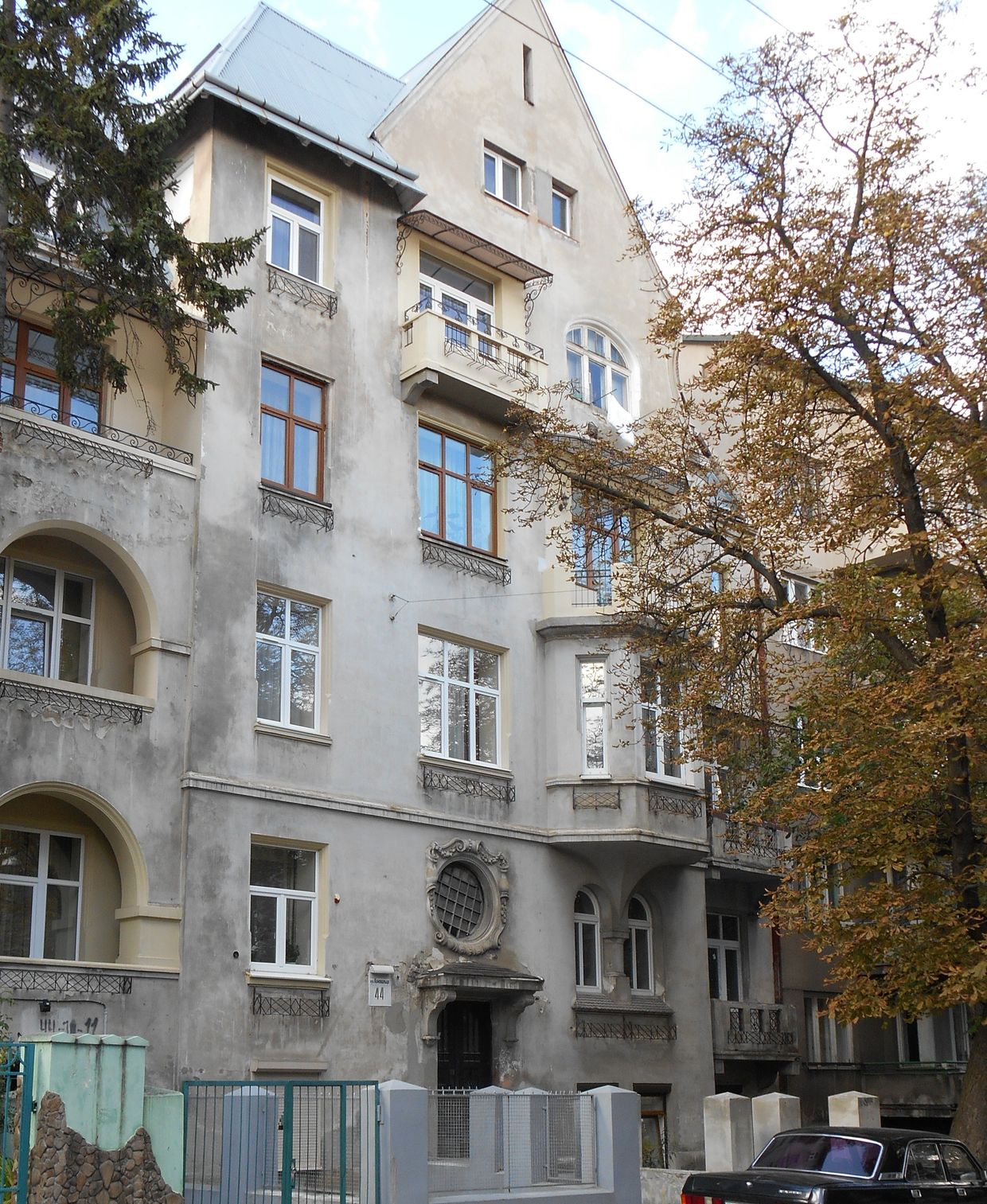
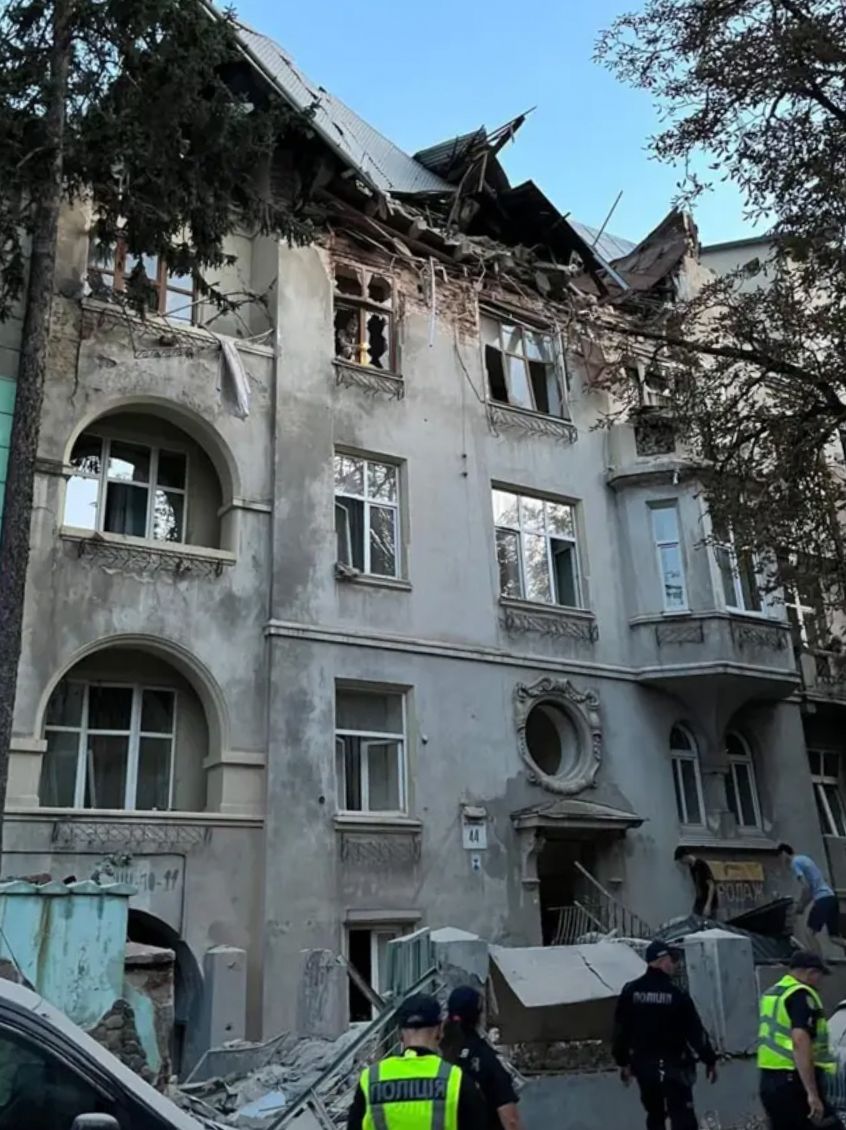
L: The building in a historic part of Lviv, Ukraine, before the attack. (Telegram) R: The aftermath of a Russian attack against Lviv, Ukraine, on Sept. 4, 2024. (Mayor Andrii Sadovyi/Telegram)
In early September, Russia struck Konovaltsia Street, which hosts buildings dating back to the late XIX-early XX century.
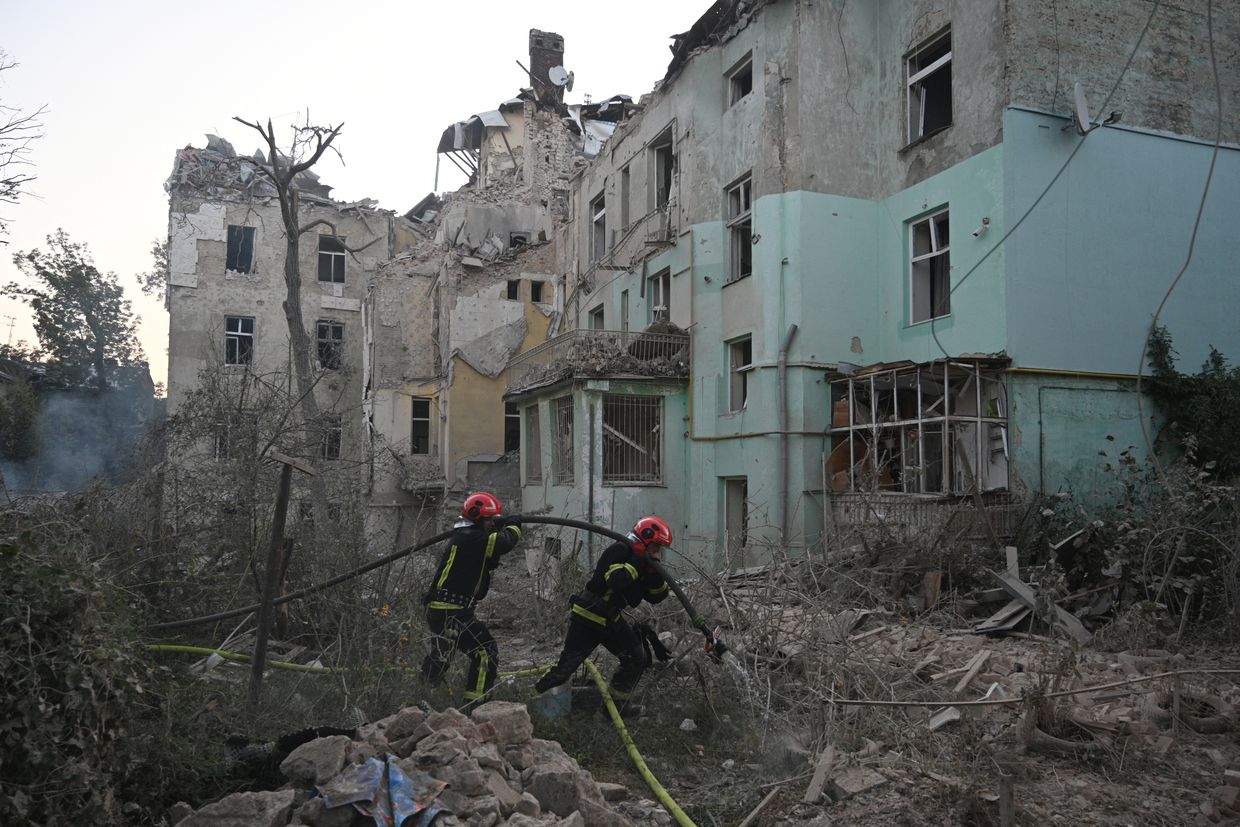
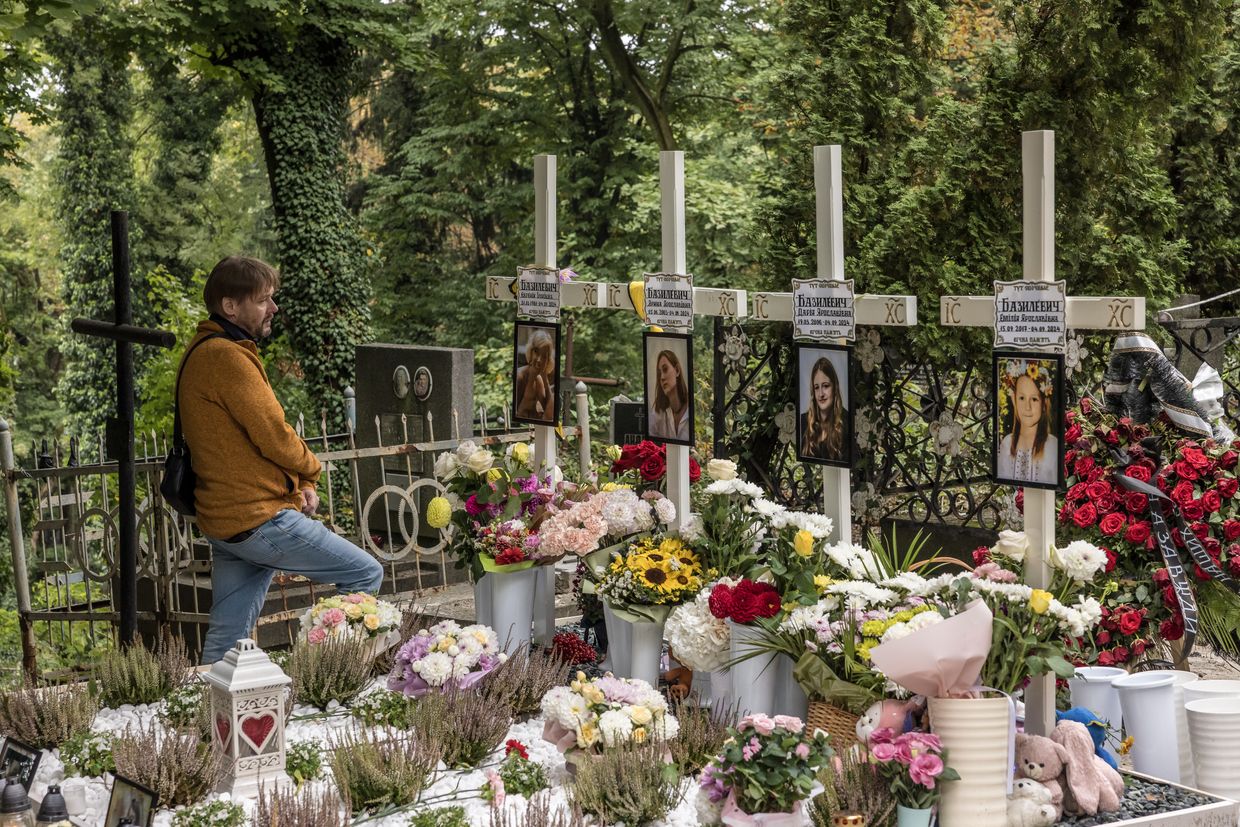
One of the residential buildings hit by a Russian Kinzhal ballistic missile was home to the Bazylevych family, a husband and wife and their three daughters.
The attack killed six people, including six-year-old Emilia Bazylevych along with her 43-year-old mother, Yevhenia, and two sisters, 21-year-old Daria and Yaryna, aged 18 and 21. Only their father, Yaroslav, survived.
Ukrainian rescuers work at the site of a missile attack in Lviv, Ukraine on Sep. 4, 2024. (Yuriy Dyachyshyn/AFP via Getty Images)Yaroslav Bazylevch visits the graves of his wife and their three daughters, who were killed in a Russian missile attack on Sept. 4, 2024, that hit their home, at a cemetery in Lviv, Ukraine, on Sept. 15, 2024. (Oksana Parafeniuk/For The Washington Post via Getty Images)
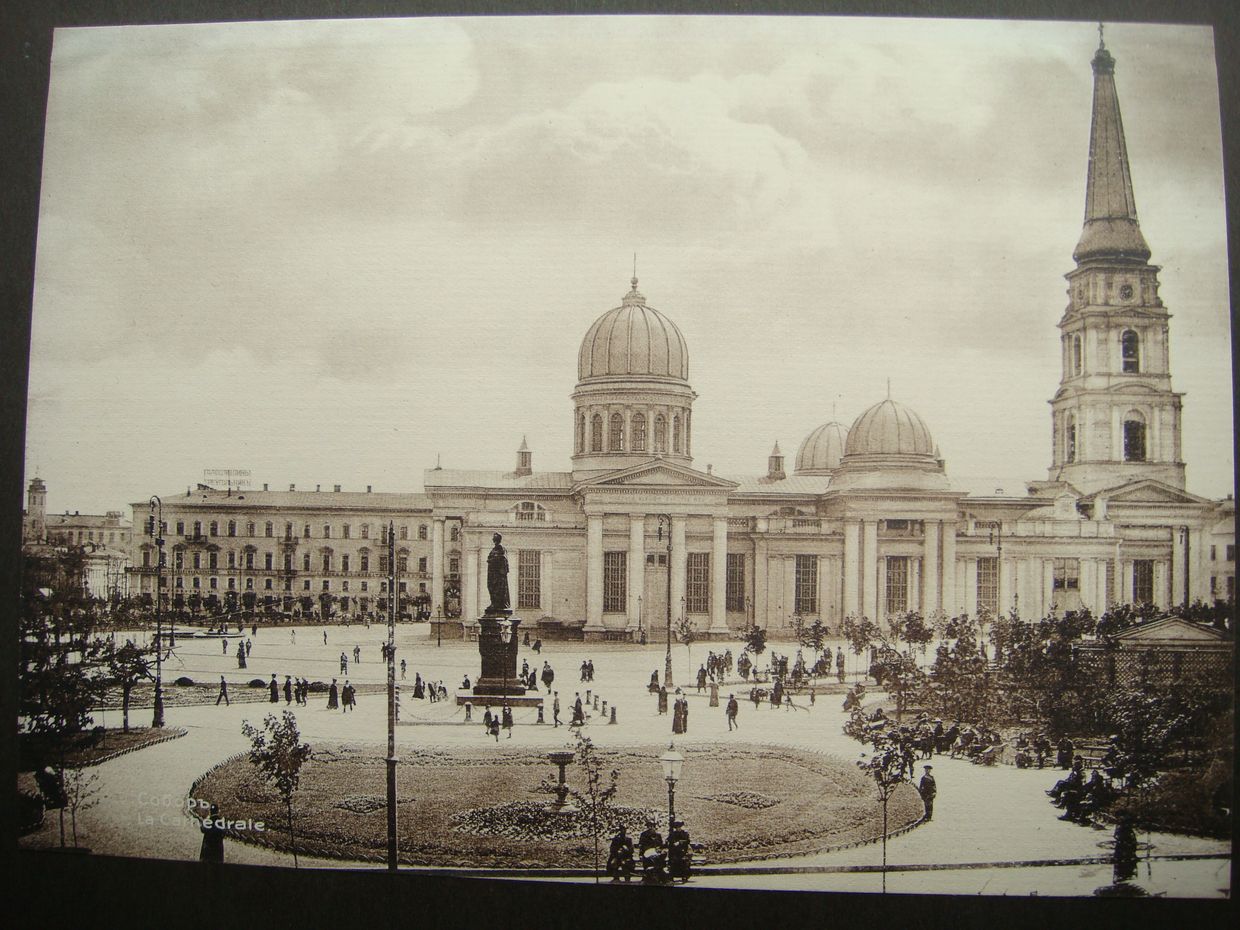
Transfiguration Cathedral in Odesa
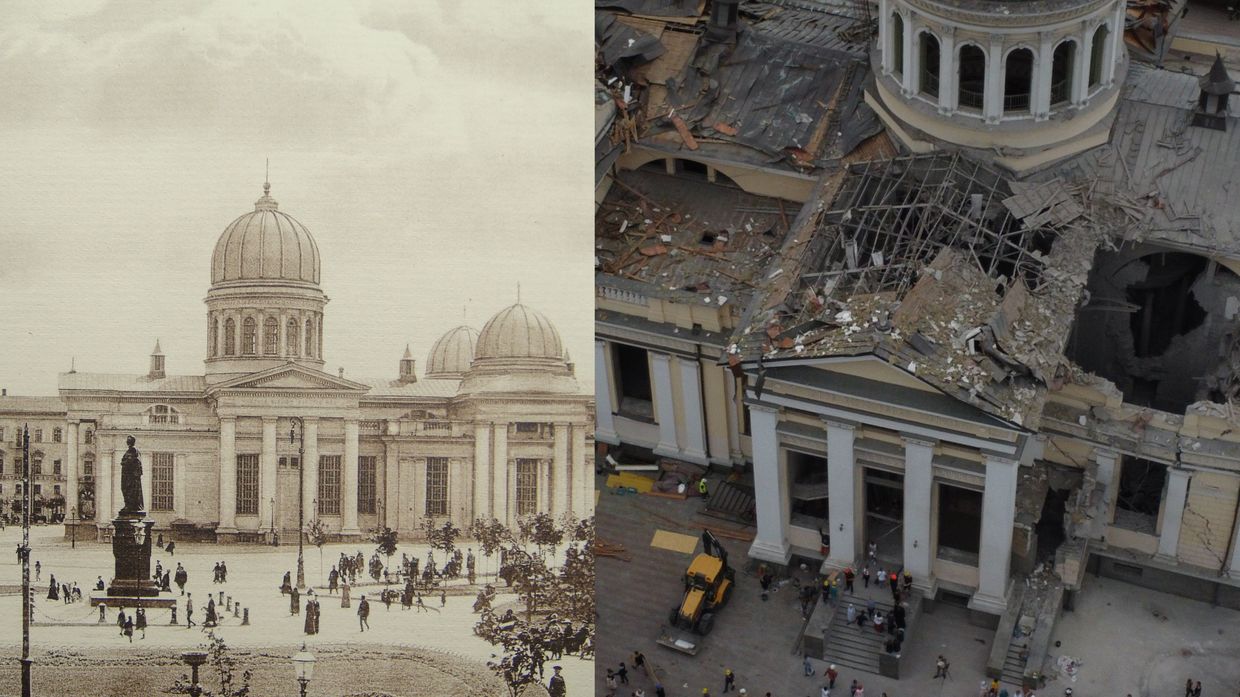
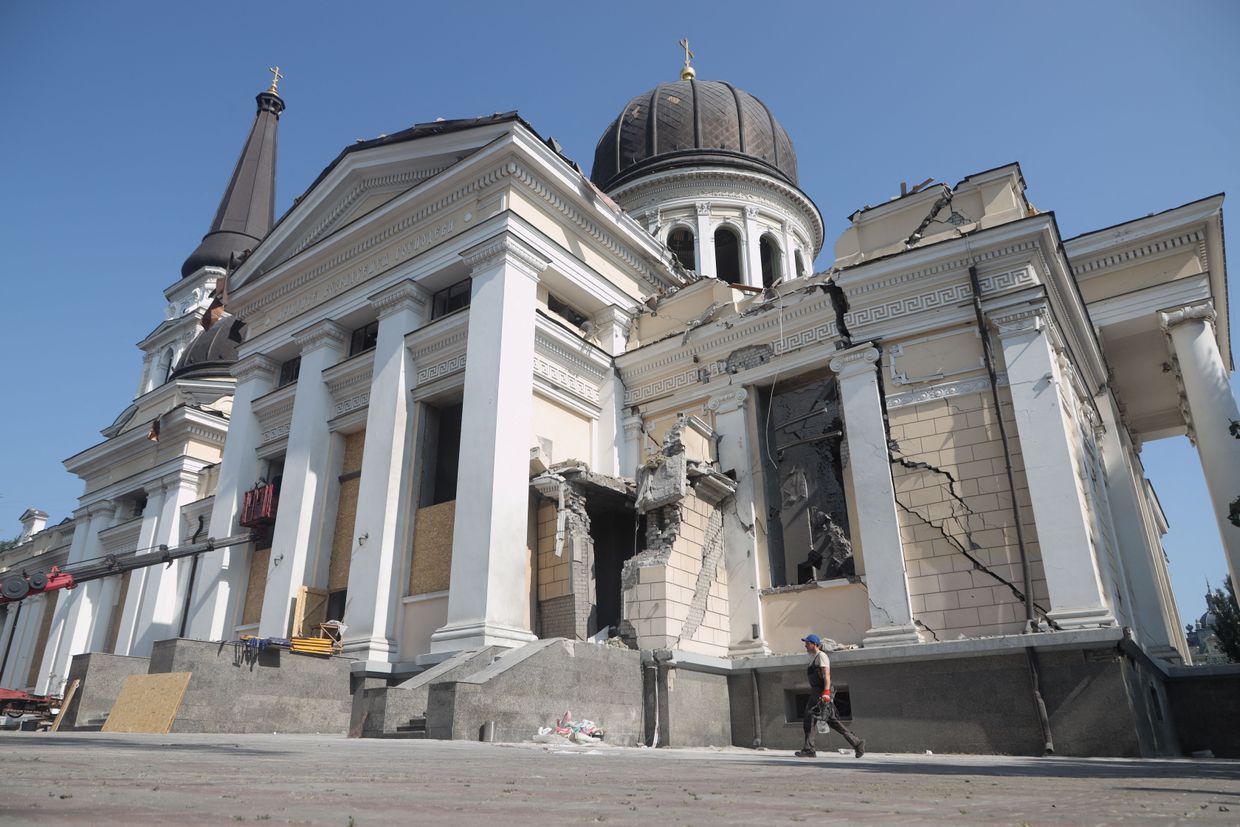
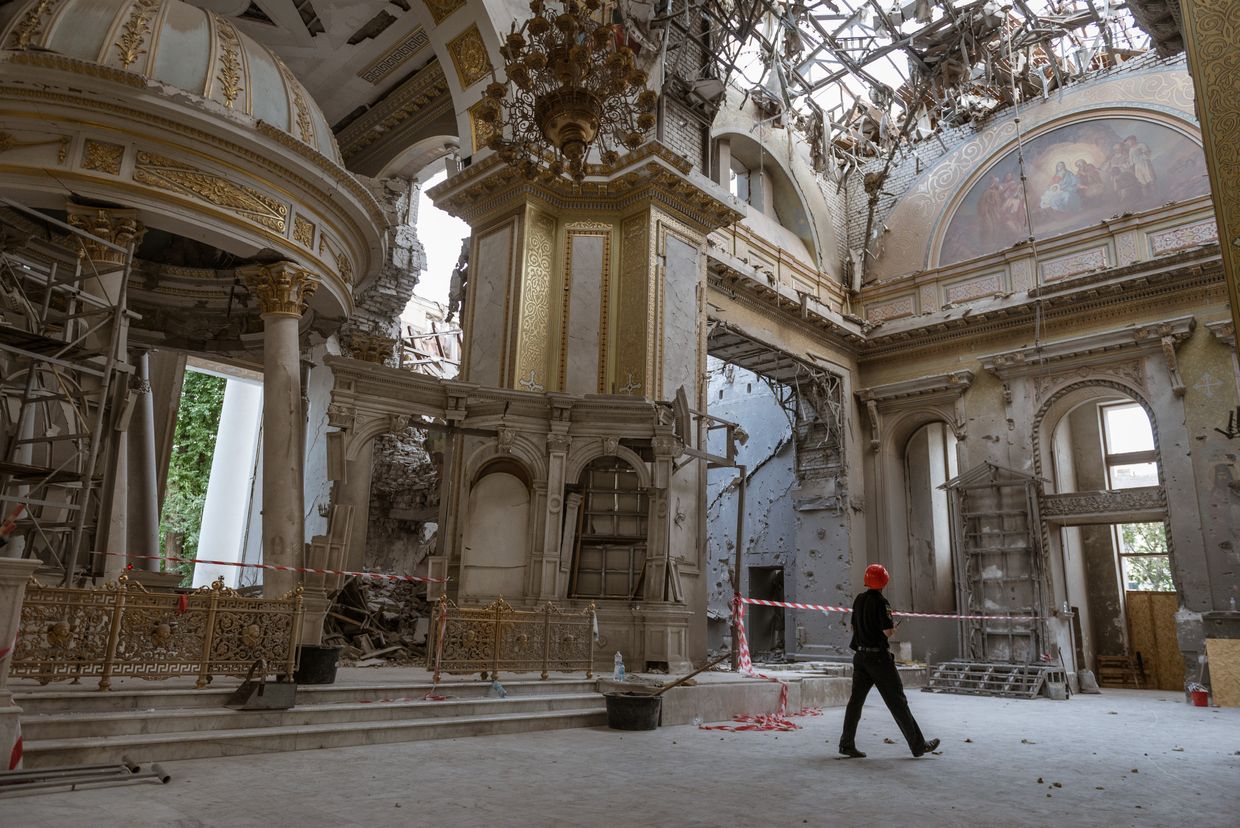
The historical center of the southern city of Odesa was named a UNESCO World Heritage Site in January 2023. In July of that year, a Russian missile strike damaged more than 20 architectural monuments in this part of the city and heavily damaged the Transfiguration Cathedral.
One person was killed and at least 22 injured, according to local authorities.
The Transfiguration Cathedral, Odesa's foremost Orthodox church, was built in 1794. The Soviet regime destroyed the original building in 1936, and the new cathedral was built in the early 2000s.
Italy and UNESCO signed an agreement under which Rome allocated 500,000 euros (about $542,000) for the restoration of the cathedral in Odesa.
Transfiguration Cathedral in Odesa, Ukraine in early XX century. (Wikimedia)A worker walks outside the Transfiguration Cathedral, damaged as a result of a Russian missile strike in Odesa, Ukraine on July 24, 2023, amid the Russian invasion of Ukraine. (Oleksandr Gimanov / via Getty Images)ODESA, UKRAINE – JULY 23: Workers in action on the construction of the damaged Historical Transfiguration Cathedral after Russian missile strike as Russia-Ukraine war continues in Odesa, Ukraine on July 23, 2023. Historical Transfiguration Cathedral (Spaso-Preobrazhensky Cathedral) the largest in Odesa and second largest in Ukraine was strike in the dawn by Russian forces. (Photo by Andre Alves/Anadolu Agency via Getty Images)
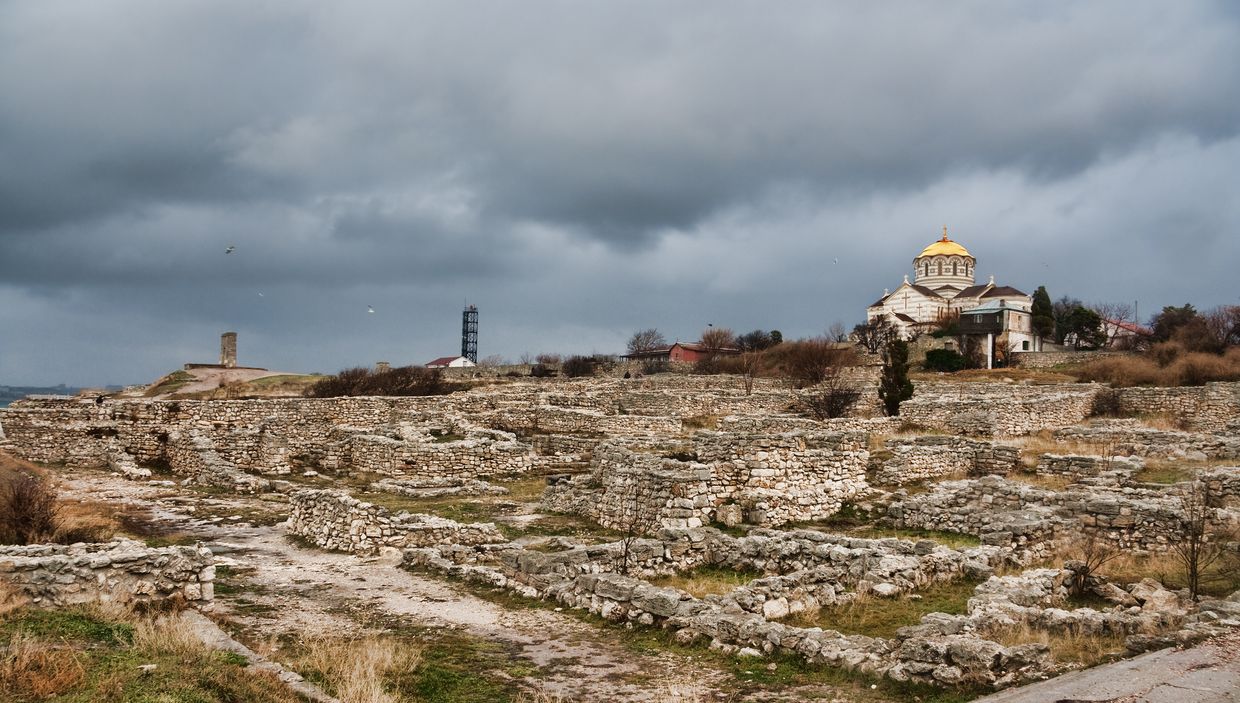
The ancient city of Chersonesus
A number of Ukrainian cultural heritage sites have been in peril since Russia’s invasion in 2014.
Over the years, Russia has excavated huge areas in occupied Crimea and appropriated the found artifacts. It also demolished several cultural heritage sites that have been around.
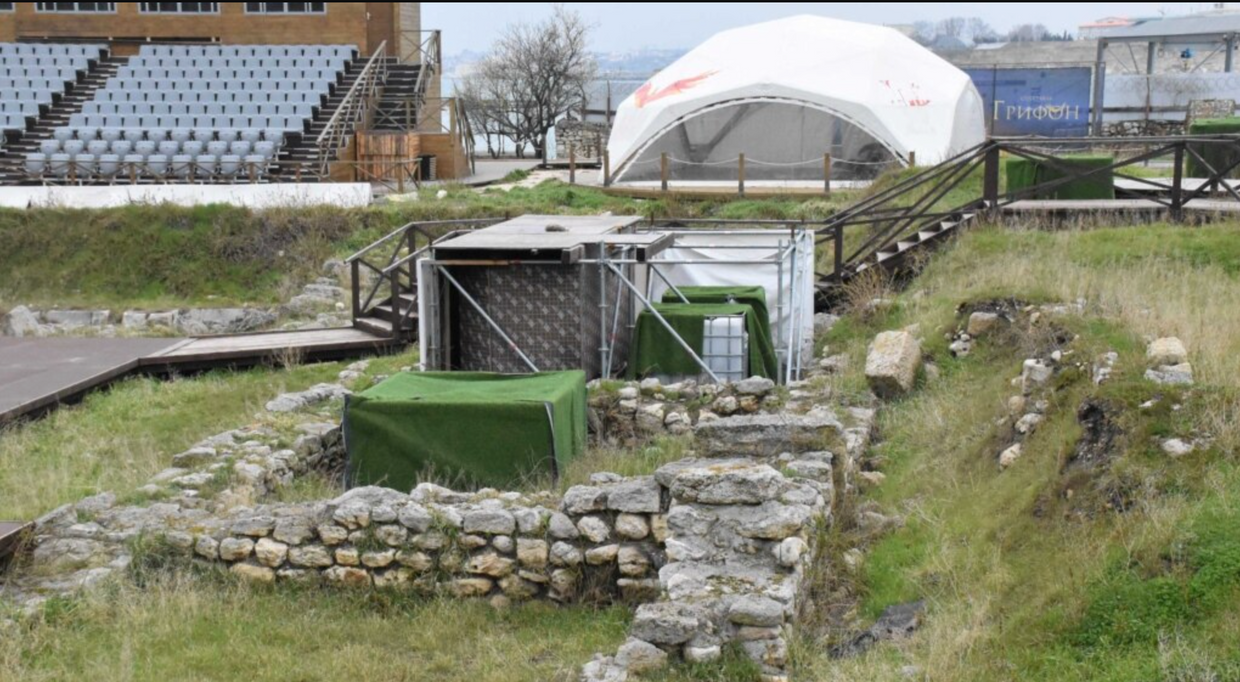
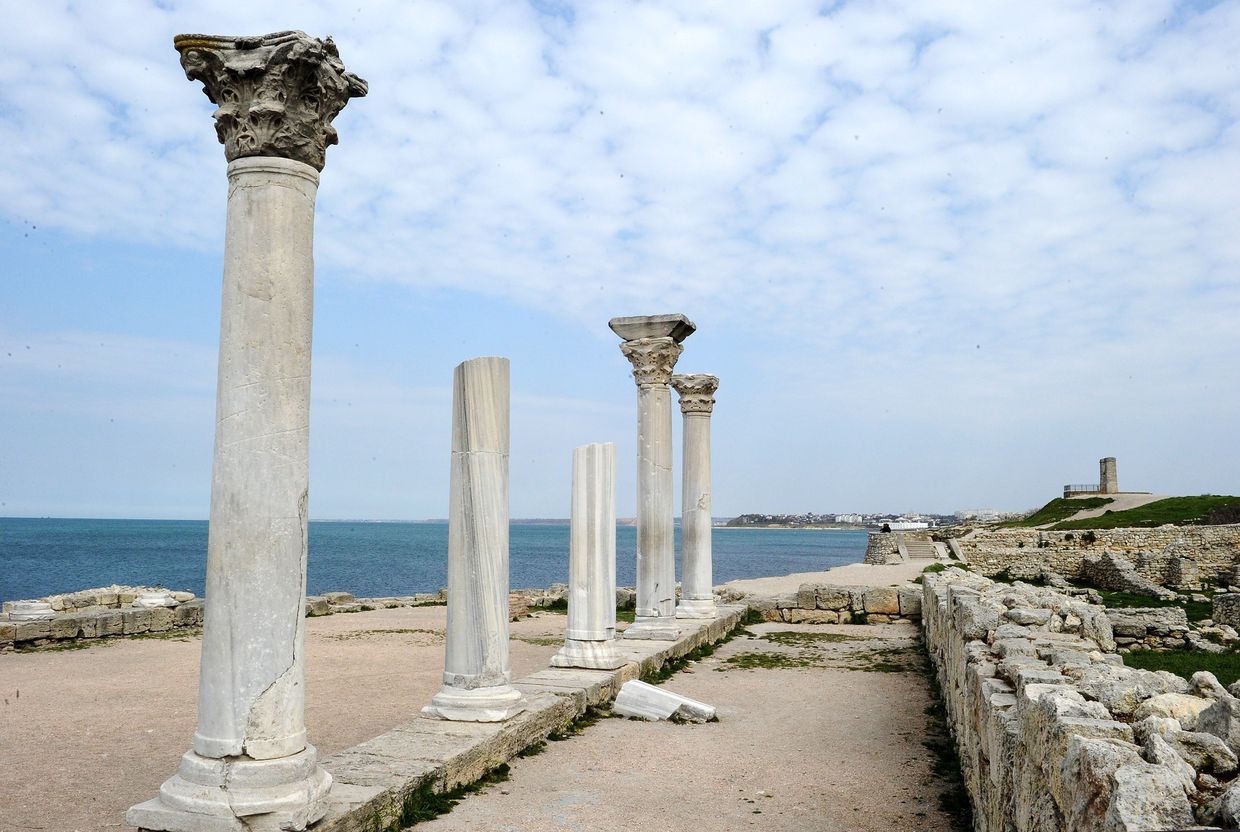
R: The ancient city of Chersonesus in in Sevastopol, Crimea, Ukraine in an undated photo. (Wikimedia) L: The photo shows the foundation on the original site of the ancient city in an undated photo. (X)
Russia has partially destroyed the city of Chersonesus, an ancient Greek colony founded over 2,500 years ago, located within the city limits of occupied Sevastopol. The ancient city of Tauric Chersonesus were added to the UNESCO World Heritage list in 2013.
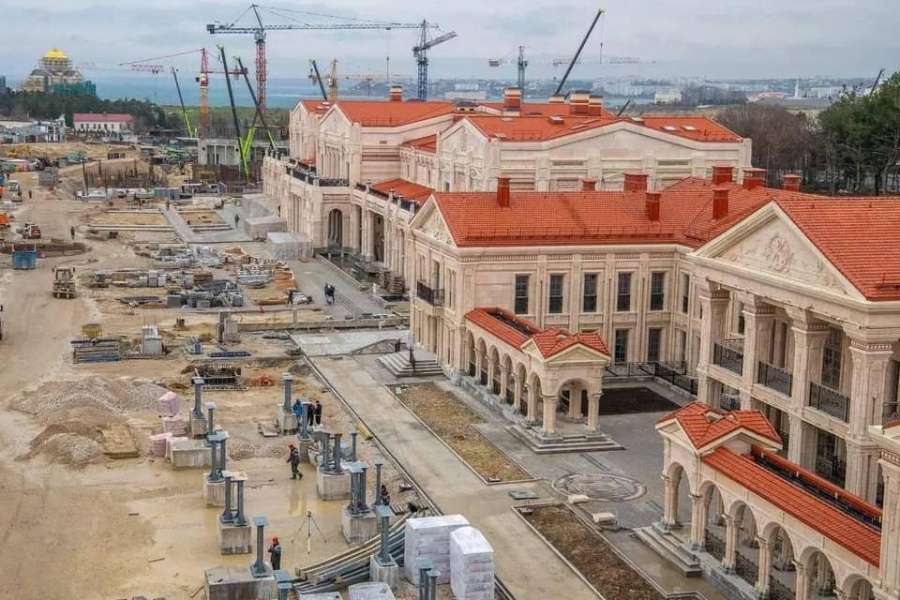
Throughout Russia's occupation, the original sights were replaced with new buildings.
L: A view of Chersonesus, an ancient Greek city and UNESCO heritage site in Sevastopol, Crimea, Ukraine on April 1, 2014. (Olga Maltseva /AFP via Getty Images) R: The photo shows construction on the original site of the ancient city in an undated photo. (Rada.gov)
Derzhprom in Kharkiv
Derzhprom, or the State Industry House, is the latest cultural site attacked by Russia.
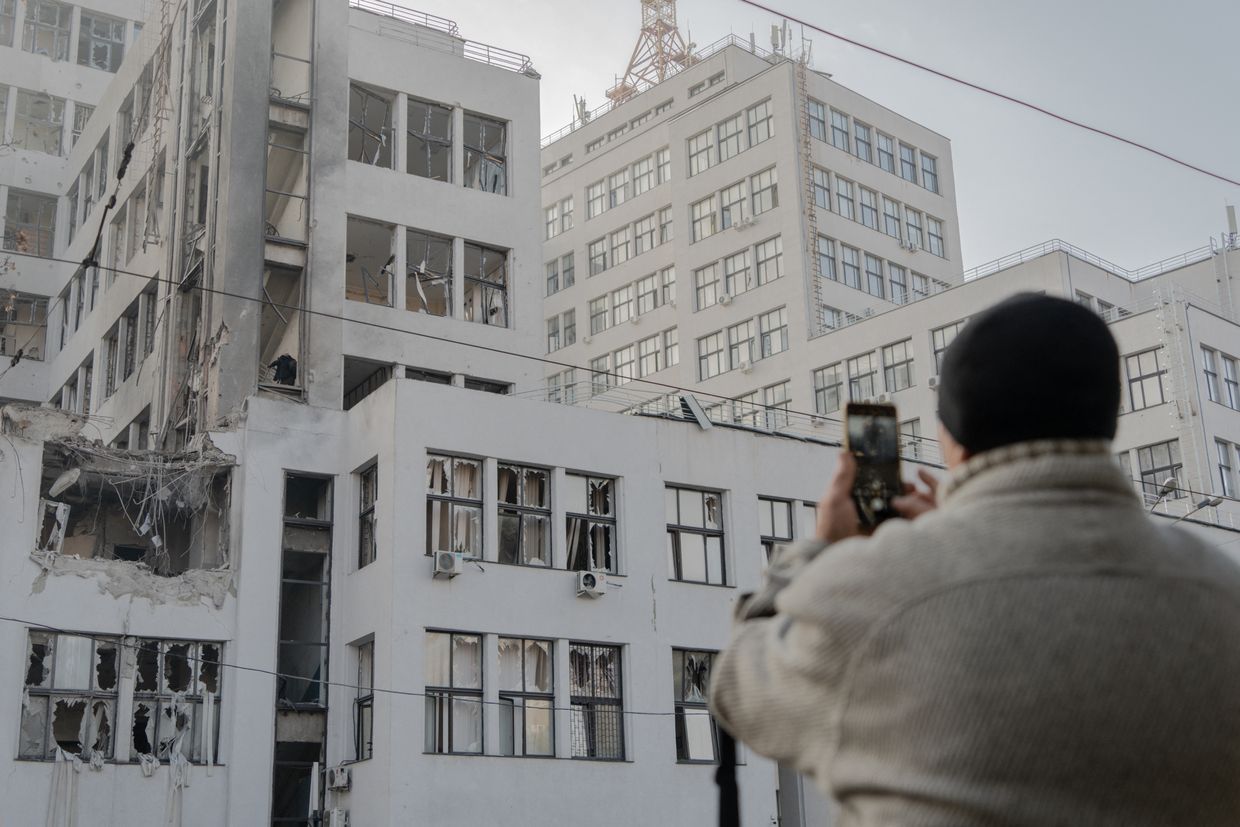
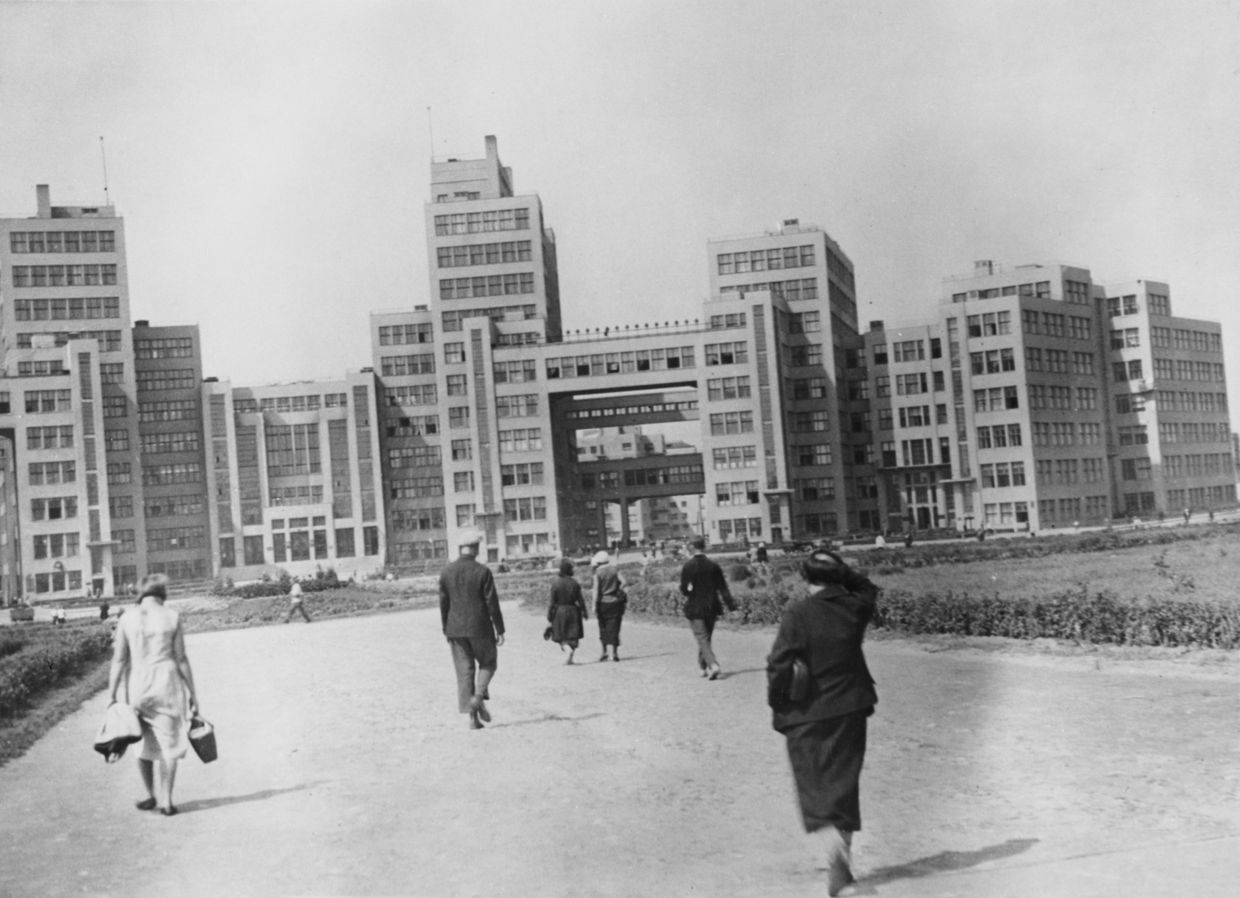
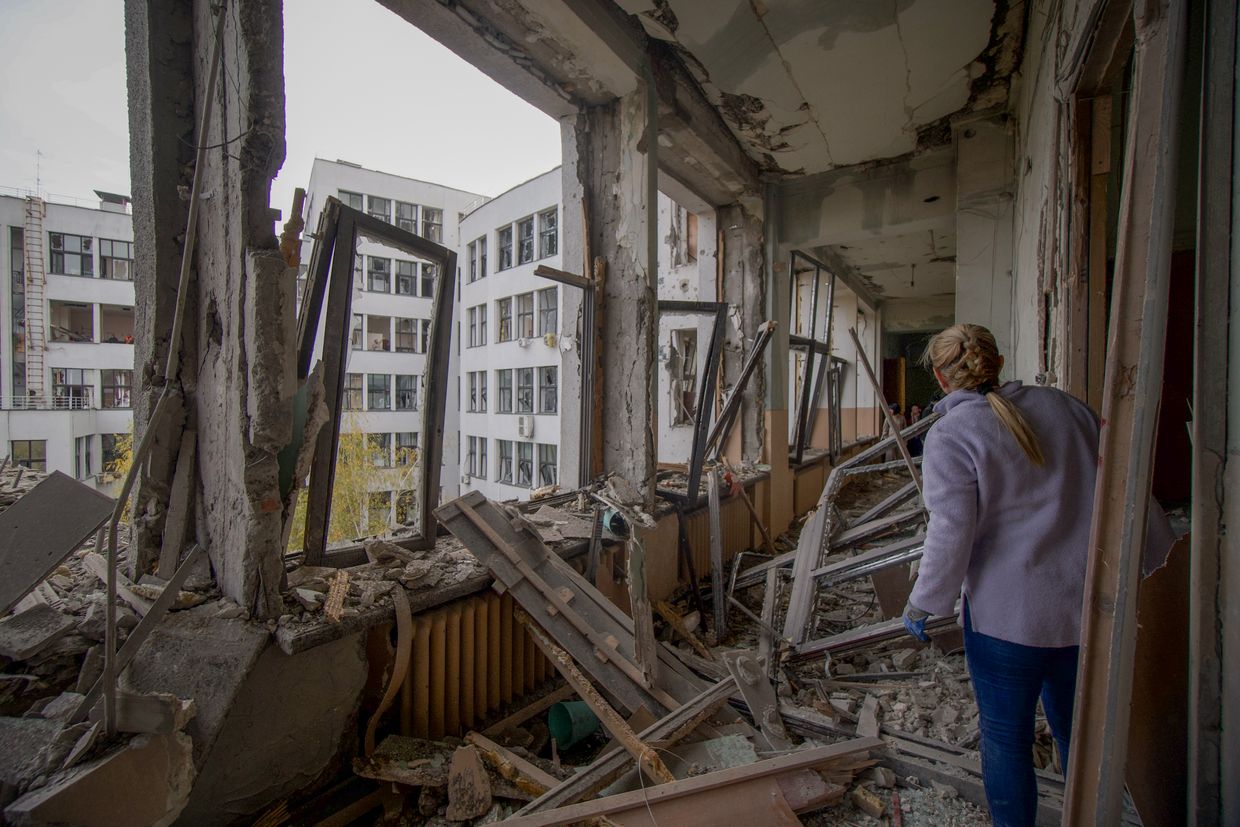
An iconic 13-story building is located in the very heart of Kharkiv, Ukraine's second-largest city, and was hit by a guided aerial bomb on the evening of Oct. 28. The site was first damaged during a Russian attack in early January.
Completed in 1928, Derzhprom was one of the first skyscrapers built in Eastern Europe and is internationally renowned for its constructivist design using reinforced concrete and glass.
In 2017, Derzhprom was added to UNESCO's preliminary list, and after Russia's full-scale invasion, was placed under provisional enhanced UNESCO protection.
"It is the city's hallmark, so we will officially apply to UNESCO (to help recover the building). Our international department is working to get this process started," Kharkiv Mayor Ihor Terekhov said.
The Derzhprom building (also known as the State Industry Building or the Palace of Industry), an example of constructivist architecture, in Freedom Square, Kharkiv, Ukraine, Soviet Union, circa 1935. Completed in 1928 and designed by architects Sergei Serafimov, Samuil Kravets, and Mark Felger, the building's name is a shortening of two words meaning 'State Industry.' (Hulton Archive/Getty Images)A person takes a photo of the damaged Derzhprom building, a historic Soviet skyscraper, following a missile attack in Kharkiv on Oct. 29, 2024. (Ivan Samoilov / AFP via Getty Images)People clean up inside the damaged Derzhprom building after the Russian aerial bomb attack on the city center in Kharkiv, Ukraine, on Oct. 29, 2024. (Ivan Samoilov/Gwara Media/Global Images Ukraine via Getty Images)
Biosphere reserve Askania-Nova
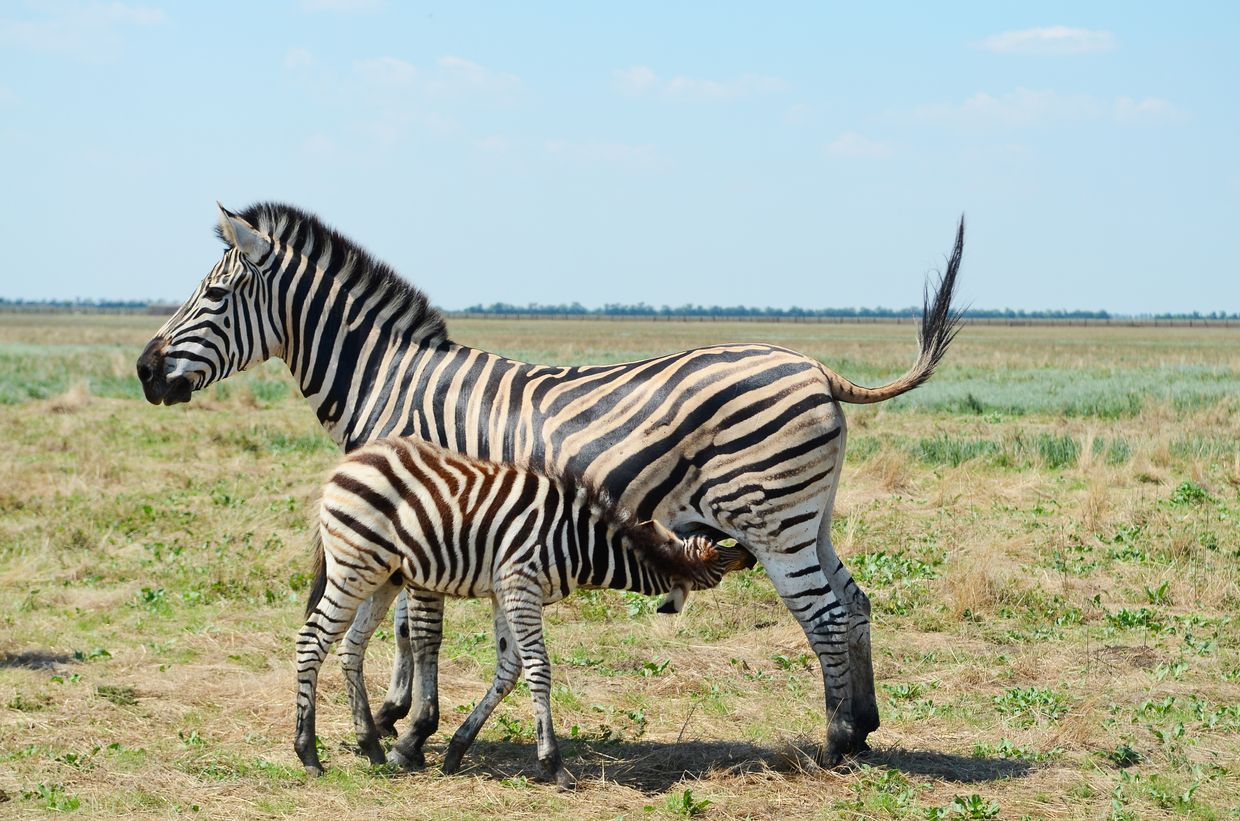
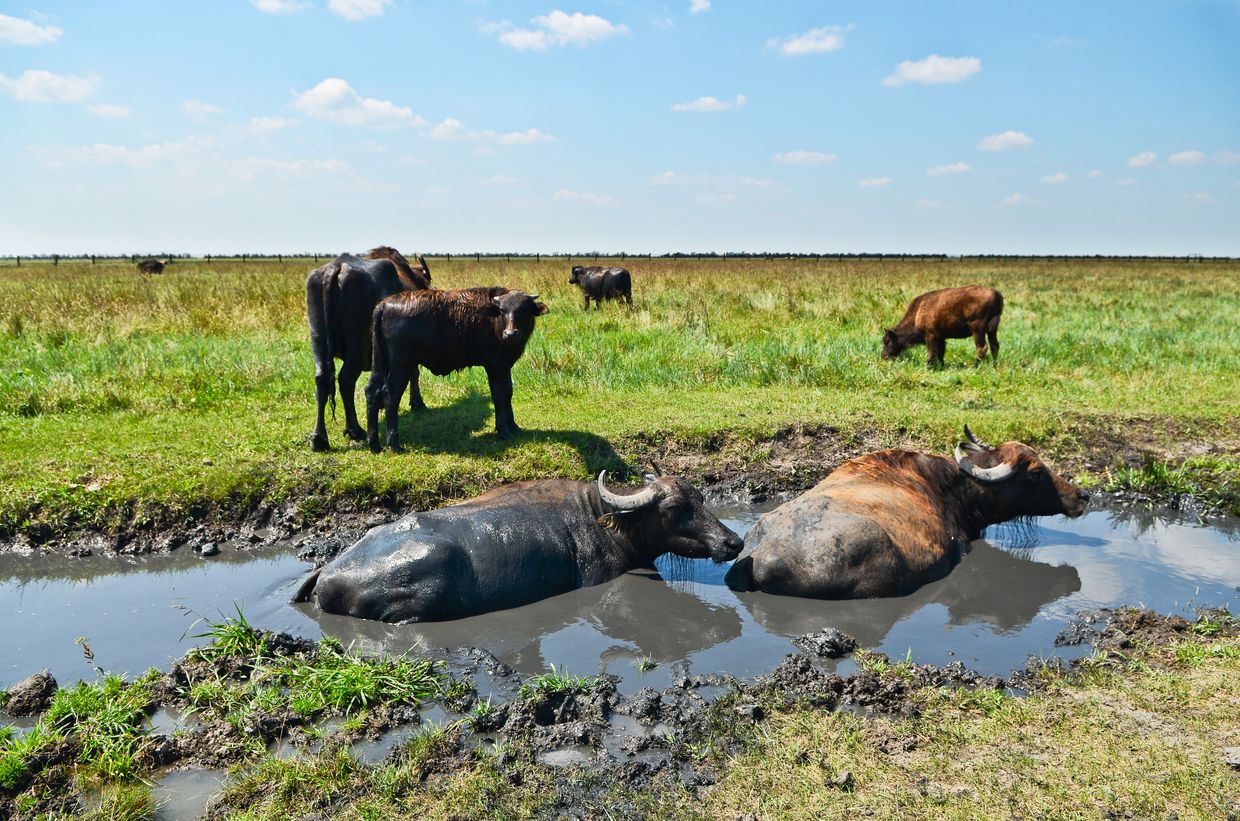
The nature reserve was founded in 1898 and has been under Russian occupation since the beginning of the full-scale invasion. Askania-Nova in the Kakhovka district of Kherson Oblast is a member of the UNESCO Man and the Biosphere Program, and its area is 333.08 square kilometers (128.6 square miles).
The reserve was home to 3,500 animal species before the start of the all-out war. Before the all-out war, Askania-Nova was visited by about 150,000 tourists a year.
Ukraine is currently unable to monitor the territory of the facility and take care of the animals, some of which have already been illegally transported to Russia and the Russian-occupied Crimea. The Russian military also hunts rare species, according to reserve's director, Viktor Shapoval.
"Firstly, some species are kept in small enclosures and require daily care. Secondly, there are heat-loving animals that are moved to winter quarters for the winter. It is clear that without proper support, these animals are simply doomed to die," Shapoval said.
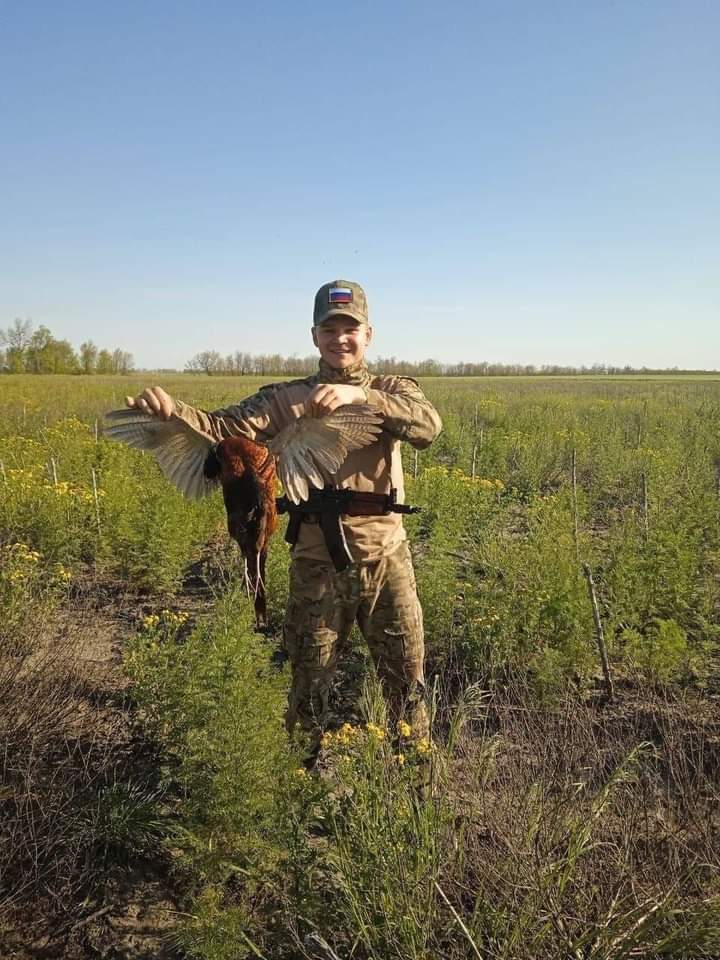
A zebra calf drinks milk from his mother at the Friedrich-Jacob Falz-Fein Askania-Nova Biosphere Reserve, Kherson Oblast, Ukraine on Aug. 1, 2021. (Oleksandra Butova/ Ukrinform/Future Publishing via Getty Images)Buffaloes lie in the mud at the Friedrich-Jacob Falz-Fein Askania-Nova Biosphere Reserve, Kherson Oblast, southern Ukraine. (Oleksandra Butova/ Ukrinform/Future Publishing via Getty Images)Russian soldiers pose with killed animals and birds in Askania-Nova. (X)0:00/1×A video allegedly showing zebras from biosphere reserve Askania-Nova being transported to a zoo in an unknown location. (X)
Bakhchysarai Palace
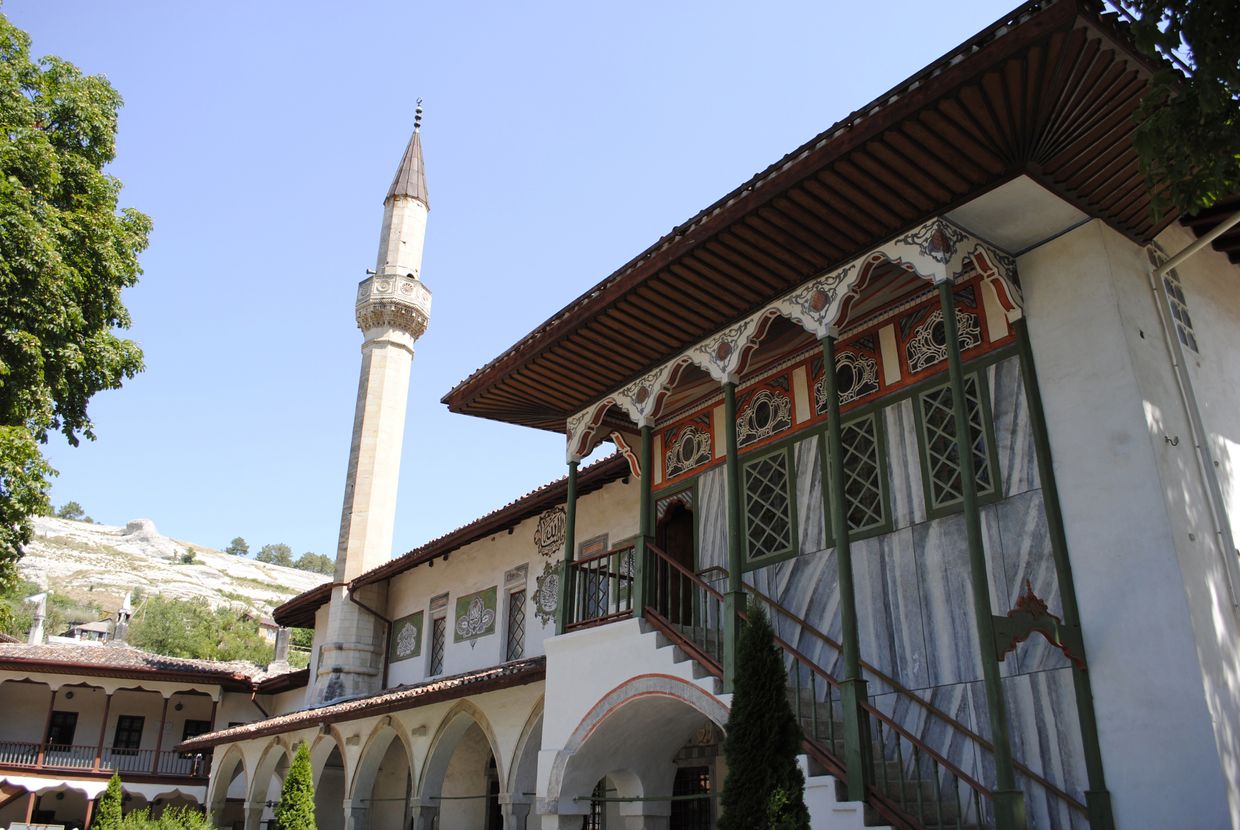
The Bakhchysarai Palace or Khan's Palace, listed on the UNESCO Tentative World Heritage List, is the only preserved example of Crimean Tatar palace architecture worldwide. It was the main residence of Crimean khans, the leaders of the Crimean Khanate (1441–1783), and the state's administrative and political center from the the mid 16th century.
The palace in Bakhchysarai is a unique Crimean Tatar architectural monument.
Sign up for our newsletter
sign up
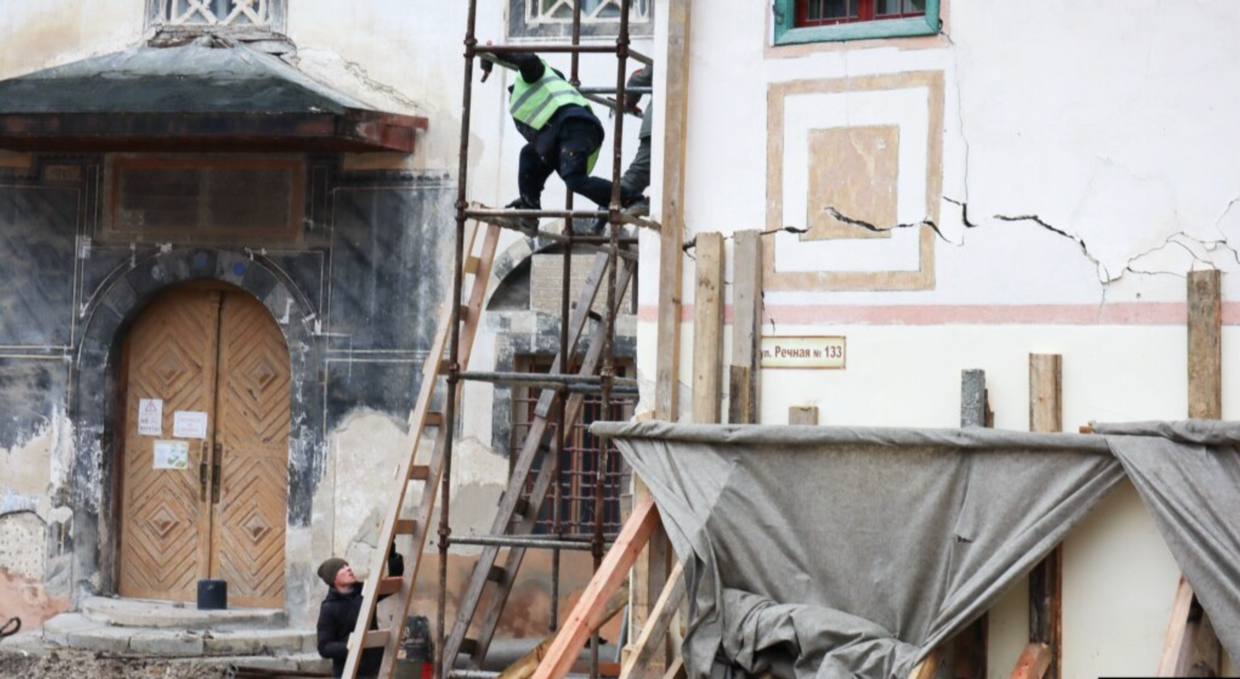
Russian forces had been destroying the Khan's palace in Bakhchysarai, calling it "repair and restoration work," former director of the Bakhchysarai Historical and Cultural Reserve Elmira Ablialimova told Ukrinform in January 2023.
The monument had undergone "irreversible changes," and Russians were carrying out repair and restoration work even where there was no need, Ablialimova said.
As a result of the actions of the Russian proxies, the roof of the Khan's Mosque was dismantled, causing severe damage to the building and destroying its authentic appearance. The frescoed walls and stained glass windows were also damaged, and a huge crack appeared on the wall of the Secular Building of the Khan's Palace due to violations of restoration requirements, according to the Ukrainian Institute.
For years, Russia has blocked all appeals and attempts by Ukrainian authorities and activists to allow specialists and the UNESCO monitoring mission to participate in the restoration.
Exterior of the Khan's Palace in Bakhchysarai, Crimea, Ukraine.(Prisma/Universal Images Group via Getty Images)Damage on the exterior of the Khan's Palace in Bakhchysarai, Crimea, Ukraine. (X)
The Genoese fortress
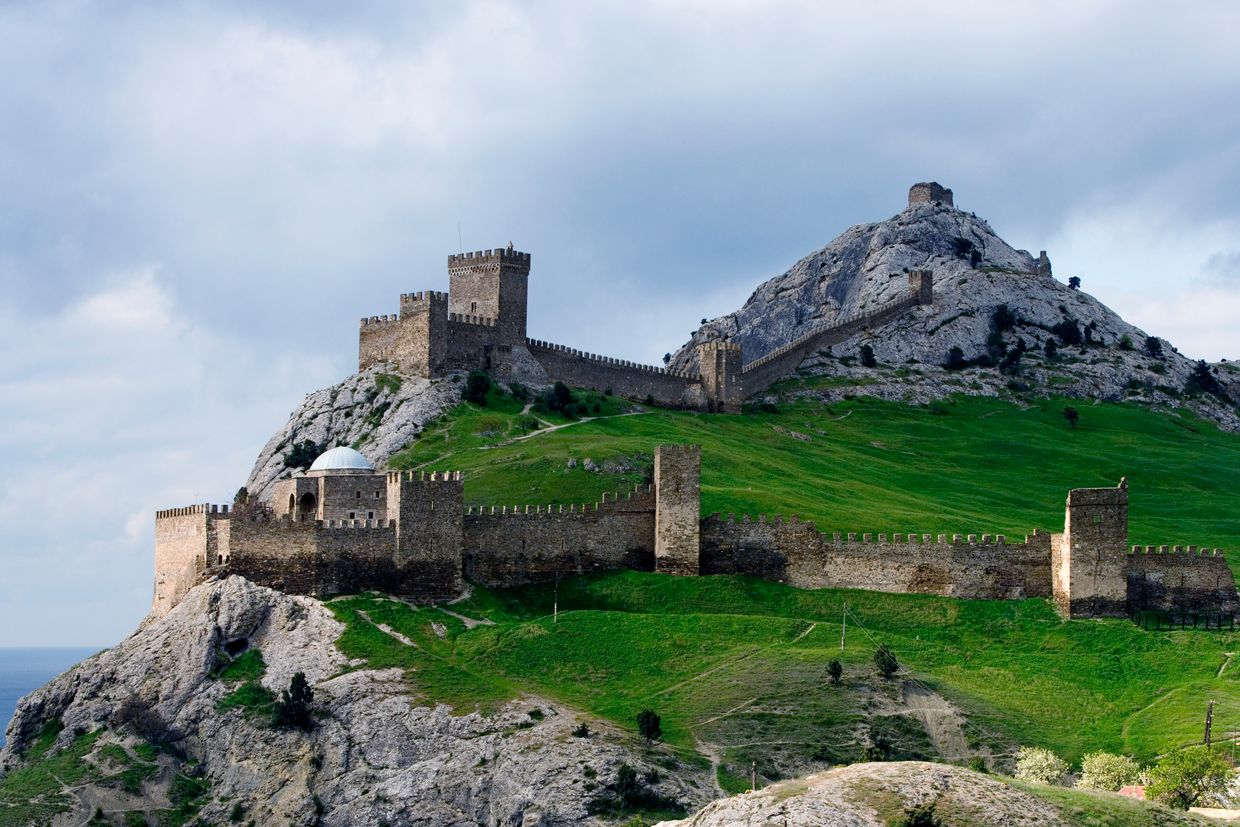
The Genoese fortress in occupied Sudak, Crimea, like the Khan's Palace, has been under Russian occupation since 2014.
The construction of the Genoese fortress, which is on the UNESCO Tentative World Heritage List and is part of the National Reserve "Sophia of Kyiv," lasted about a hundred years, from 1371 to 1469. The fortress stands on a 157-meter-high mountain called Kyz-Kule-Burun, an ancient fossilized coral reef. Due to its location, the fortress is almost unassailable.
In November 2015, a part of the ancient tower of the Genoese fortress collapsed, a local media QHA reported, citing its undisclosed source close to the committee for the protection of the cultural heritage of the Russian-occupied Crimea.
The alleged reason for the destruction is that Russian occupation authorities were building hotels and toilets on the territory of the site. Nelia Kukovalska, director general of the National Reserve "Sophia of Kyiv," told Crimea.Realities, a project of Radio Free Europe/Radio Liberty, in May 2019 that the Genoese fortress was also at risk of landslides. "Since the annexation of the peninsula, illegal and unprofessional work has been carried out at the site, and no one is monitoring the landslide situation… We observe an increase in seismic activity there, and there is a danger," Kukovalska said.
The Genoese fortress (14th-15th century) in Sudak, Crimea, Ukraine in Dec. 24, 2013. (DeAgostini/Getty Images)
Introducing official merch from the Kyiv Independent Shop now


 The Kyiv IndependentKamila Hrabchuk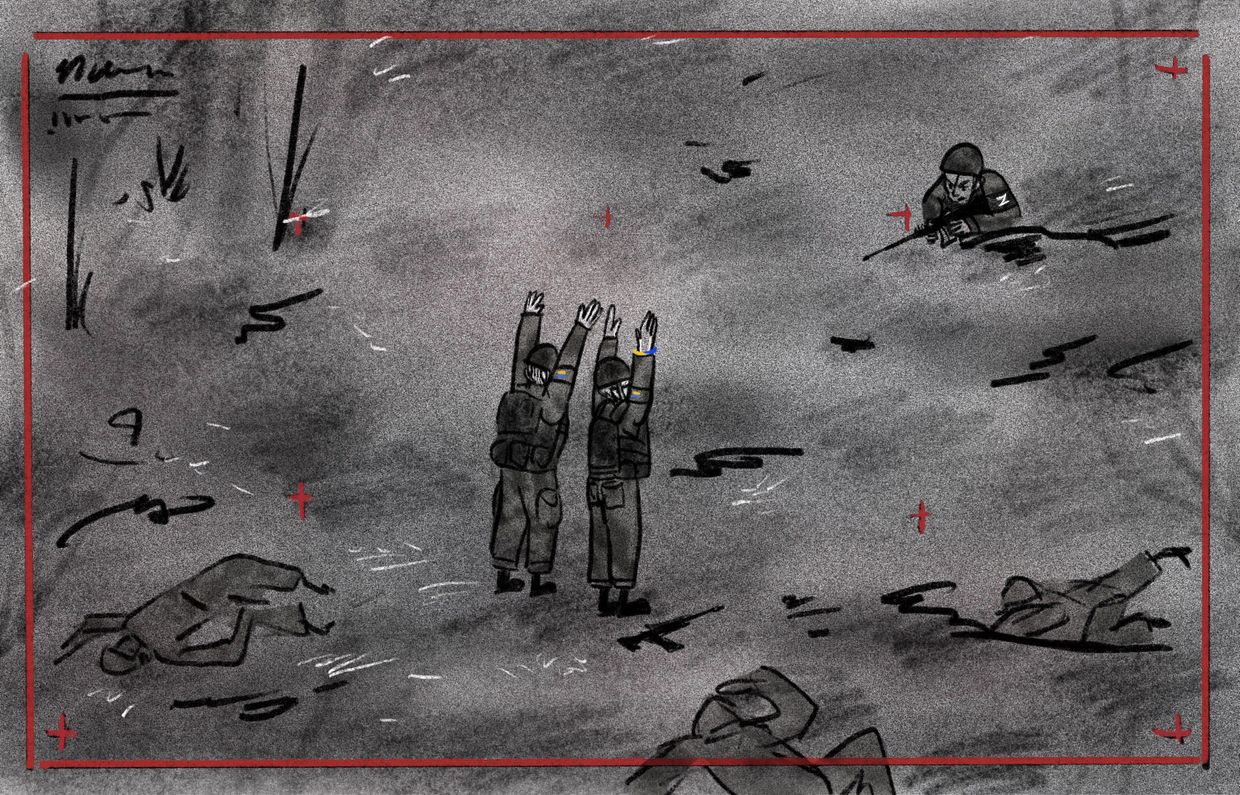















 sign up