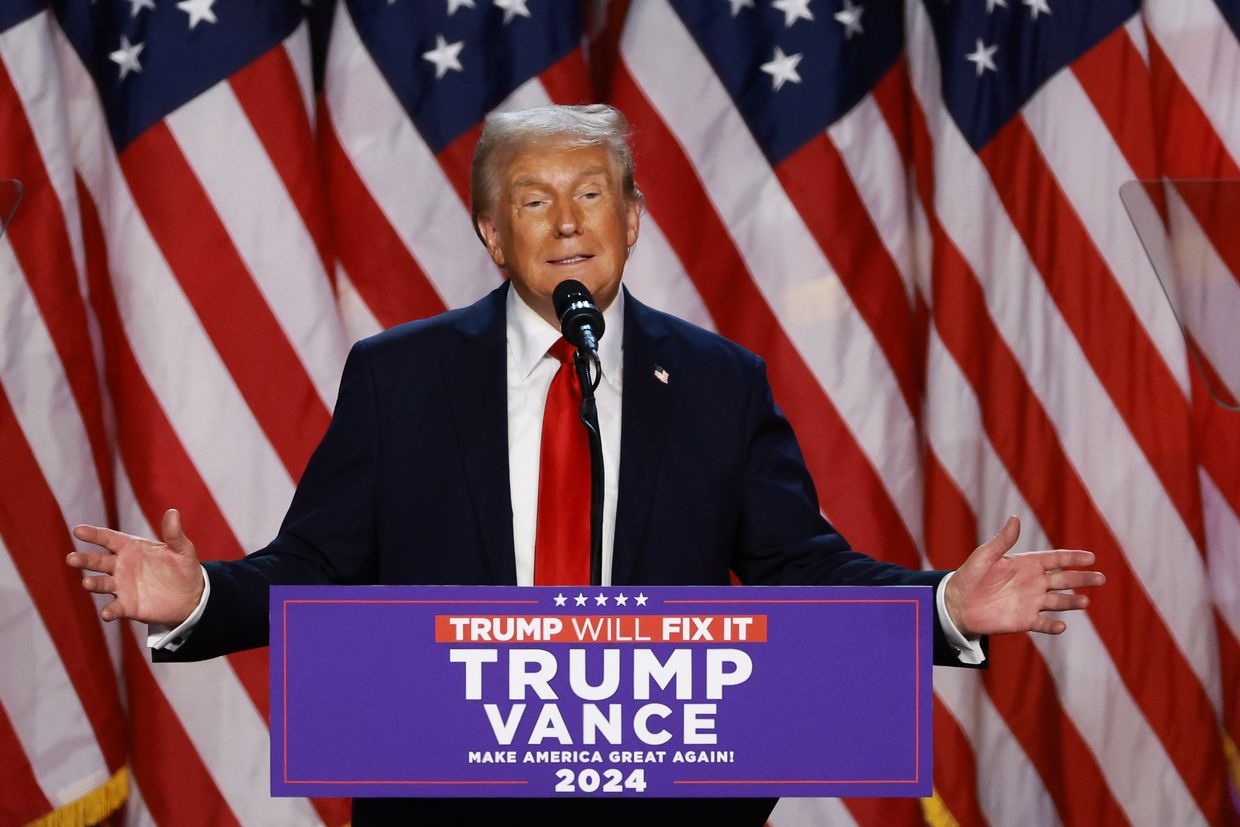
Ukraine’s sovereign bonds rose in price after Donald Trump’s win in the U.S. presidential elections as investors expect a quicker end to the war, the Financial Times reported on Nov. 14.
Over the past month, the country's dollar-dominated bonds have risen 12%, FT reported, as investors anticipate Trump will push for a ceasefire that could jumpstart Ukraine's recovery and ability to repay its creditors.
The outlet pointed out that the jump in Ukrainian bonds began in mid-October when markets began to believe in a Trump victory.
Trump has pledged to end the war within "24 hours," sparking fears he might push Ukraine toward painful territorial concessions to achieve a quick peace deal.
The rise in price follows an agreement reached in September between Ukraine and its creditors to restructure more than $20 billion in international debt. The deal shrank Ukraine's state debt by $9 billion, allowing it to avert default and helped its economy stay afloat amid Russia's full-scale war.
The country's bond maturing in 2036 rose from 44 to 49 cents on the dollar in the past month, FT reported. GDP-warrants, a growth-related fixed-income instrument, also jumped to a record high following Trump’s election since Russia’s full-scale invasion began in February 2022.
The FT also reported that a bond owned by Ukraine's state-owned grid operator Ukrenergo rallied more than 160% to 67 cents on the dollar. Bloomberg reported last week that Ukrenergo announced it would suspend bond payments on its dollar-denominated notes that mature in 2028 and would seek a restructuring agreement with creditors.
Not all investors are so bullish about Ukraine's recovery prospects. Portfolio Manager at Federated Hermes Mohammed Elmi told the FT that "There is still a significant amount of unanswered questions” about the country's future after any potential negotiated settlement.
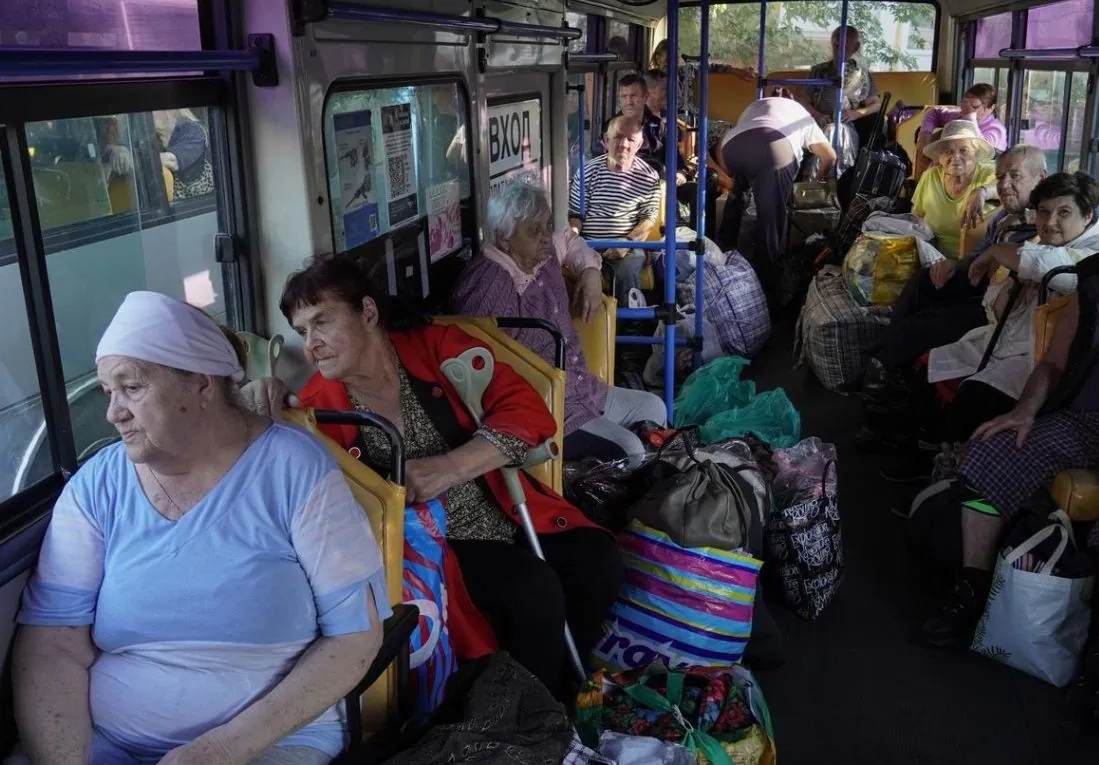
More than 40 residents of the village of Olgovka, Kursk region, recorded a video message to Putin calling for an end to the war. The refugees lost their homes due to the Ukrainian army offensive and complain about insufficient payments to rent a new place.
Refugees from the village of olgovka in the Kursk region have appealed to Russian dictator Vladimir Putin to “end this damn war.” Residents of the village complain that the war has left them homeless, and that they have been evacuated and do not have enough money from the authorities to rent a house.
This was reported by the Russian media, UNNreported.
Details
We have been in hell for three months, where do we turn, where do we find salvation? We are asking you to end this damn war that has claimed many innocent lives. We want our children to see a peaceful sky, not to listen to the missile warning. Please understand this situation and listen to the residents of the border area. We do not tolerate all this by choice
– the residents asked.
More than 40 people took part in the video message. In the video, residents of Olgovka also say that they lost everything and were left homeless when the Ukrainian army began its offensive. In the evacuation, they do not have enough payments from the authorities to rent housing, and many are not ready to hire refugees.
The IDPs also said that some of their fellow villagers who did not evacuate were killed or went missing.
Addendum Addendum
On August 6, the Ukrainian Armed Forces launched an offensive in the Kursk region, including the Defense Forces entering the village of Olgovka, but later the Russian military regained control of it.
Recall
South Korea's intelligence agency confirms that North Korean soldiers are already participating in combat operations against the Ukrainian Armed Forces in the Kursk region alongside Russian soldiers.
Before the election, Speaker of the House Mike Johnson said he had "little appetite" for further military aid to Ukraine. While the sentiment is somewhat understandable, it misses a critical point: the nature of warfare has fundamentally changed over the past year, and Ukraine’s aid no longer needs to be a one-way street. Ukraine can now offer its expertise and technology to the U.S. in return.
Ukraine possesses the world’s most advanced tactical unmanned and autonomous weaponry, along with the hard-won experience to deploy it in the world’s most sophisticated battle space. The technology and training Ukraine can offer far outweigh the value of the aid Johnson is hesitant to provide. He may be missing the deal of the century.
"The technology and training Ukraine can offer far outweigh the value of the aid Johnson is hesitant to provide. He may be missing the deal of the century."
It is becoming increasingly clear to the American defense establishment just how dramatically unmanned and autonomous systems (UAS) warfare has shifted the battlefield — and how precarious the U.S. security posture is as a result.
Former U.S. General David Petraeus and former U.S. Army special-operations commander Andy Yakulis note that the pace of drone operations in Ukraine "highlights the urgency with which the U.S. must overhaul its defense system, from operational concepts, structures, and training to weapons systems, procurement, and manufacturing." Recognition of the problem is widespread, but systematic solutions to address the problem are slow in coming.
Matthew Rose and Kathryn Levantovscaia of the Atlantic Council say that "Despite the rapid evolution of drone technology over the last two decades, the United States military did not release its first Counter-Small Unmanned Aircraft Systems Strategy until 2021, and it’s vastly insufficient to address the new security challenges afoot."
Opinion on Capitol Hill is much the same — staffers warn that the U.S. has a serious problem on its hands and is “way behind the curve” in addressing the unmanned threat.
Meanwhile, Ukraine is leading the charge. By necessity, it has become the world’s preeminent developer in this new battle space, only whiskers ahead in a breakneck race with Russia. Both sides have adapted unmanned systems in ways thought inconceivable just a few short years ago.
Ukraine is on track to produce 1.2 million drones this year, with plans to grow toward 4 million annually. Although security restrictions make it difficult to say for certain, this likely surpasses U.S. Defense Department acquisitions by orders of magnitude. The number of drone manufacturers in Ukraine has increased from seven in 2022 to over 100 in 2024.
Ukraine’s rapid research and development cycle, built upon a decentralized “levée en masse” production system, allows it to lead the global UAS market and deliver innovative solutions to the battlefield at an astonishing rate.
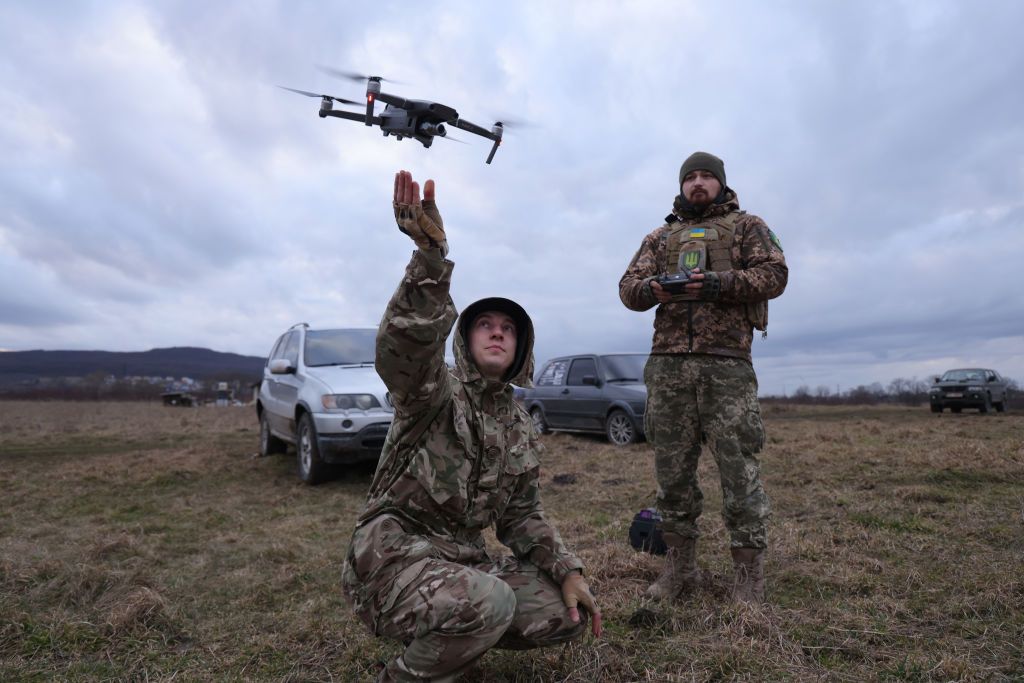
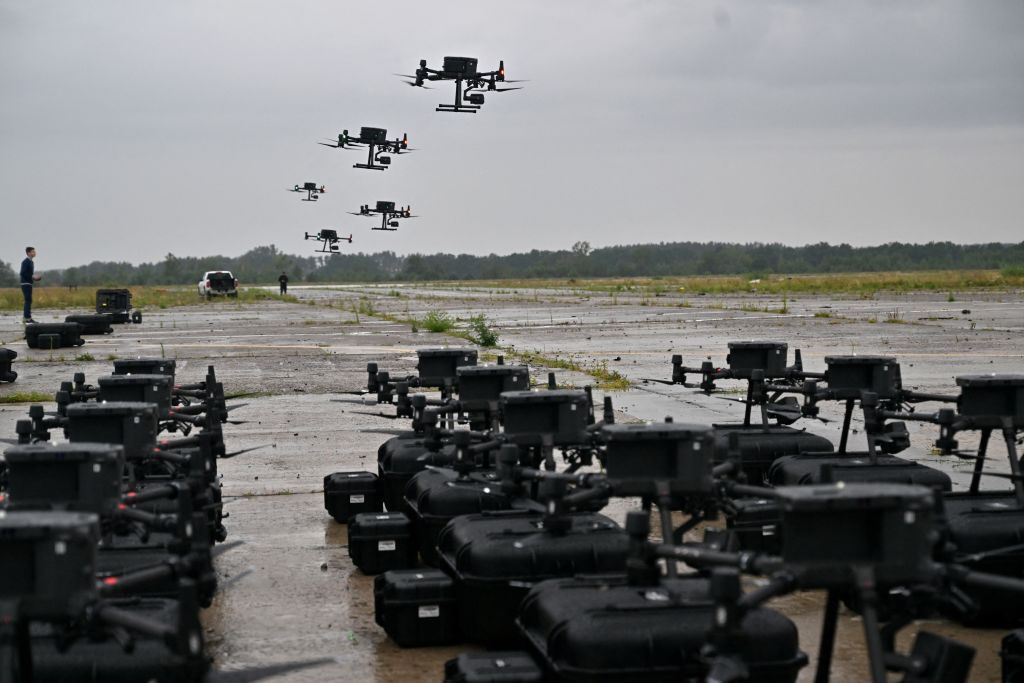
Ukrainian reconnaissance drones are seen during test flights prior to being sent to the front line in Kyiv Oblast, Ukraine, on Aug. 2, 2022, amid Russia's war against Ukraine. (Sergei Supinsky/AFP via Getty Images)
The pace of this development is only accelerating. Ukraine is rapidly advancing artificial intelligence (AI), machine learning (ML), and sensor technologies, swarm technology, and the integration of computer vision and real-time data processing, as well as diversifying its UAS portfolio with specialized developments drones for carriers, targets, electronic warfare, and kamikaze attacks.
In short, Ukraine has earned its fearsome reputation for multi-domain drone operations, and it’s time for the U.S. to fully embrace this fact. Ukrainian technical creativity has reshaped modern warfare, and the U.S. defense establishment should be eager to exchange some of its war materiel for the tactical lessons Ukraine has learned.
Other global actors have already recognized the strategic potential of partnering with Ukraine’s defense sector. Prominent players like U.S.-based Skydio, Germany’s Quantum-Systems, and Turkey’s Baykar have quickly set up offices or drone manufacturing plants in Ukraine. They understand, as American politicians do not, that Ukraine is the new global center for technical innovation.
Vast, well-funded military-industrial complexes like in the U.S. are predictably slow to adapt to new realities. Russia, China, and the U.S. must now reckon with the fact that their expensive, high-tech weapons systems — the result of decades of acquisition — are vulnerable to relatively inexpensive systems.
Ukraine’s naval drones, which cost just $200,000 each, have already destroyed two dozen Russian warships in the Black Sea, forcing Russia to retreat from the Crimean coast. Estimates suggest the Russian Army has lost approximately 9,000 tanks, 18,000 armored vehicles, 20,000 artillery systems, 369 aircraft, 329 helicopters, and over 700,000 personnel — many of these losses due to drone attacks. In October alone, Ukraine’s UAS "destroyed or damaged" over 52,000 Russian targets, including 129 artillery systems, 221 pieces of radio equipment, and more than 4,000 Russian troops.
Ukrainian drone strikes have also targeted over 30 oil refineries, reducing Russian crude processing capacity by as much as 14.5%. Ukrainian drone swarms have played key roles not only in standoff attacks on oil refineries and military bases but also in Ukraine’s successful incursion into the Kursk oblast. It has become a joke among Ukrainians that while Russia “shoots down all incoming drones,” the "falling debris" is bleeding its war machine dry.
But if U.S. defense planners believe Russia will remain passive or static in its response, they are in for a rude awakening. Russia has been investing in domestic drone production since 2008 and announced plans this year to ramp up production by nearly tenfold to 1.4 million units.
While Russia’s reliance on foreign components and its failure to implement decentralized production models give Ukraine an advantage, it remains a formidable competitor in the drone space. Its partnerships with Iran, North Korea, and possibly China mean there’s no time to waste for the U.S.
"While Russia’s reliance on foreign components and its failure to implement decentralized production models give Ukraine an advantage, it remains a formidable competitor in the drone space."
The pace of technological development on the Ukrainian battlefield is pushing both sides to innovate rapidly. Russians continue to try to replicate Ukraine’s drone technologies and tactics, motivating Ukrainians to develop even more sophisticated innovations. This accelerated arms race demands that the U.S. stay updated on developments such as "dragon drones" that release molten thermite on enemy positions and the Palianytsia, a hybrid rocket-drone with a long-range strike capability of 435 miles (700 km).
Ukraine still desperately needs key investments in its defense sector and continued military aid, while the U.S. must learn to operate effectively in the newest battle domain. As Ukraine seeks foreign capital for its military-defense complex, Russia’s attacks persist, fueled by fresh transfers from North Korea and Iran. As these autocratic nations push the world toward potential conflict, it’s vital for the U.S. and Ukraine to work out bilateral defense arrangements that serve both countries' vital interests.
This two-way partnership would be relatively simple to establish: Ukraine can already supply tens of thousands of the most advanced First-Person-View (FPV) attack drones to the U.S. Defense Department, along with training from some of the world’s most skilled drone pilots. Many of these courses can be taught virtually, allowing Ukrainian instructors to continue fighting while sharing tactical and technical updates with their American counterparts.
The initiative has strong political backing. Deputy Defense Secretary Kathleen Hicks’ Replicator Initiative aims to equip operational units with "tens of thousands" of drones by next year. Outsourcing this monumental acquisition to Ukraine would be a straightforward proposition, provided red tape is eliminated in the national interest. After all, Ukraine is the best place to buy drones right now — not only are they the most advanced, but they’re also comparatively cheap.
Allied weapons have given Ukraine the time to build its defense frameworks, and it is now developing new technologies and tactics at a rapid pace. Ukraine can now offer the U.S. a tremendous asset in exchange for the aid it has received: deep, relevant experience in the world’s most advanced battle space. Now that the election is over, sending Ukraine the weapons and funds it needs in exchange for cutting-edge technology, tactics, and training is a bargain Speaker Johnson would be foolish to ignore.
Editor’s Note: The opinions expressed in the op-ed section are those of the authors and do not necessarily reflect the views of the Kyiv Independent.
Submit an Opinion Introducing official merch from the Kyiv Independent Shop now
The advisor to the head of the OP criticizes the Western media for publications about forcing Ukraine to unfavorable negotiations with russia. Podolyak believes this is an incentive for the aggressor and a humiliation of international law.
Mykhailo Podolyak, advisor to the head of the Presidential Office, noted that Western media often publish stories about scenarios where the Ukrainian side is forced to negotiate peace with russia on terms unfavorable to Ukraine. He called it an incentive for russia to continue its aggression. UNN writes about this with a link to the advisor's post on the X network.
Forcing Ukraine to negotiate on any unfavorable terms (as the Western media constantly report) looks extremely strange
– the post says.
In his opinion, in this way they are trying to force Ukraine to give up resistance and do not discuss real scenarios for forcing russia, which is the aggressor, to stop this aggression and pay the maximum financial and legal price for the aggression.
What kind of absurd "moral imperative" is this – peace only at the expense of the victim, the country that was attacked. And at the expense of openly encouraging the aggressor to continue aggression, because there will be no cost for aggression? Where does this come from? And why should this strange construction lead to peace, and not to increased aggression and the ultimate humiliation of international law?
– He added.
Recall
President Zelenskyy stated that Ukraine is ready to consider real peace proposals from other countries. He called on Western officials to openly discuss the idea of exchanging territory for NATO membership.
As reported by The Telegraph, Donald Trump may call on European and British troops to provide an 800-mile (1,200-kilometer) buffer zone between the russian and Ukrainian armies as part of a plan to freeze the war between the two countries.
Ukraine expects further US leadership in achieving a just peace – SibigaNov 9 2024, 04:15 PM • 21401 view
Russia has lost 716,070 troops in Ukraine since the beginning of its full-scale invasion on Feb. 24, 2022, the General Staff of Ukraine's Armed Forces reported on Nov. 14.
This number includes 1,690 casualties Russian forces suffered just over the past day.
According to the report, Russia has also lost 9,319 tanks, 18,947 armored fighting vehicles, 29,090 vehicles and fuel tanks, 20,472 artillery systems, 1,252 multiple launch rocket systems, 997 air defense systems, 369 airplanes, 329 helicopters, 18,852 drones, 28 ships and boats, and one submarine.
Enemy forces shelled 19 settlements in Kherson region, including the regional center. As a result of the attacks, residential buildings and cars were damaged, and 15 people were injured.
Yesterday, a number of settlements in the Kherson region came under fire as a result of enemy air strikes and shelling. This was reported by the head of the Kherson RMA Oleksandr Prokudin, according to UNN.
Details
According to the information, Beryslav, Poniativka, Stanislav, Tyahyntsi, Odradokamyanka, Antonivka, Vesele, Kozatske, Mylove, Kachkarivka, Komyshany, Sadove, Tomyna Balka, Novovorontsovka, Tomaryne, Bilozerka, Zelenivka, Inzhenerne and the city of Kherson were hit.
Terrorists struck residential areas, utility companies and the local fire department.
The shelling damaged a multi-storey building, seven private houses, outbuildings and vehicles, including an ambulance and private cars. As a result of the aggression, 15 people sustained injuries of varying severity.
Russians attack ambulance with drone during evacuation of wounded in Kherson regionNov 13 2024, 01:39 PM • 13657 views
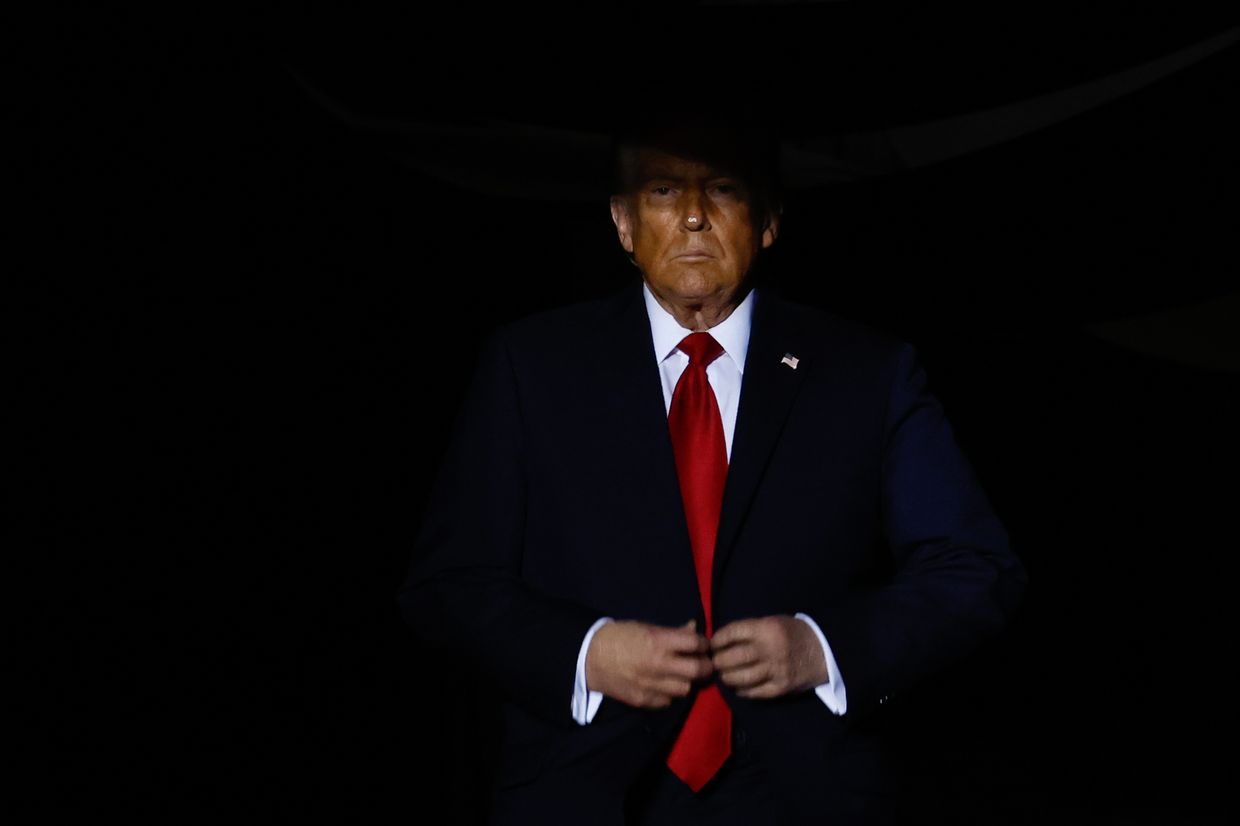
U.S. President-elect Donald Trump's first team picks have both positive and negative implications for Ukraine, with Kyiv left guessing what kind of policy they will pursue, according to Ukrainian and Western analysts.
Some appointments seem to lean in Kyiv’s favor, while others hint at a more Moscow-friendly stance.
Analysts say that Trump has assembled a team of China hawks focused primarily on countering Beijing, which they see as the main economic and military threat to the U.S. They are less concerned with opposing Russia and view its war against Ukraine as a distraction from China.
"These are not the best choices (for Ukraine) but not the worst either," Ukrainian political analyst Volodymyr Fesenko told the Kyiv Independent.
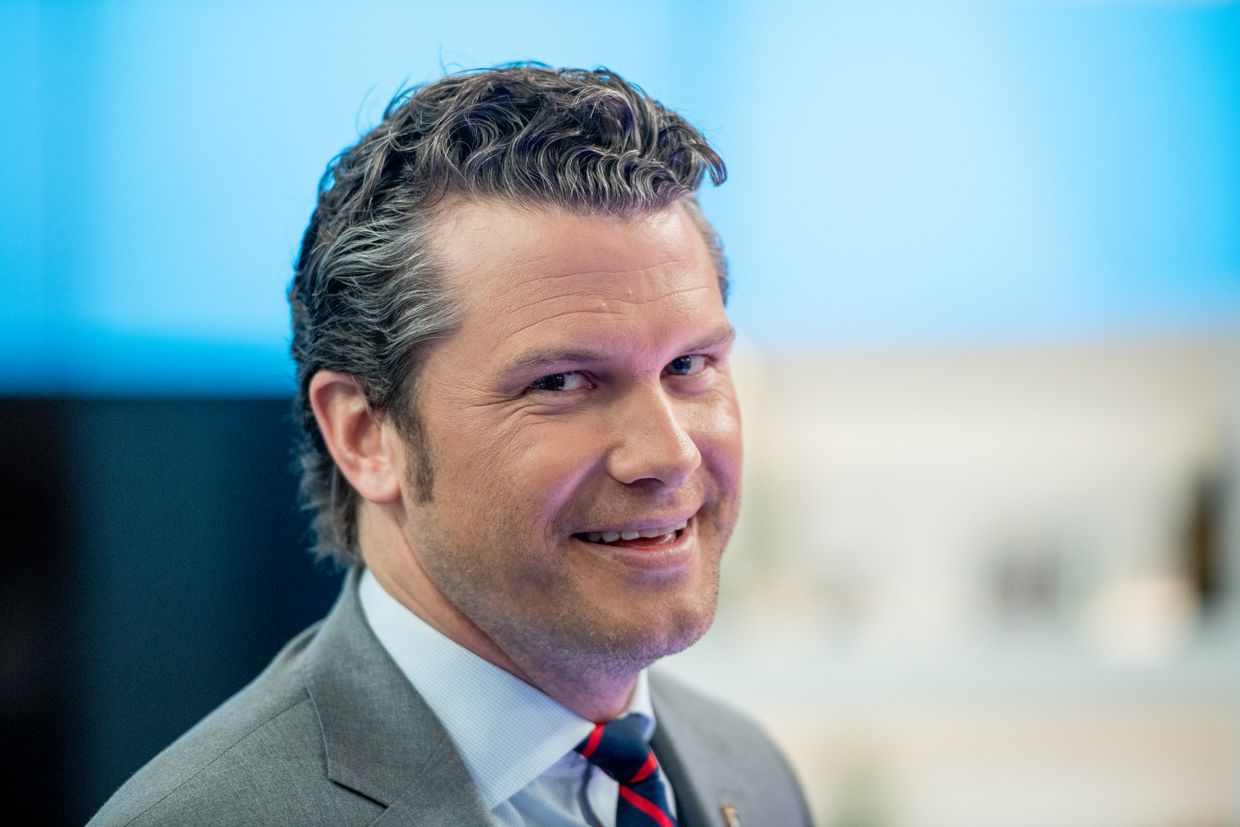
On Nov. 12, Trump chose Peter Hegseth, a conservative talk show host on Fox News, as his defense secretary. The move prompted concerns in Kyiv because Hegseth is an isolationist who has called for reducing the U.S. commitment to the NATO military alliance.
On the same day, Trump also picked billionaire Elon Musk and businessman Vivek Ramaswamy to run a new Department of Government Efficiency. The department, which is supposed to cut bureaucracy and reduce regulation, will “provide advice and guidance from outside of government,” Trump said.
Ramaswamy has made statements highly critical of Ukraine. Musk has prompted controversy by suggesting that Ukraine cede the Russian-occupied Crimean Peninsula to Russia and agree to a vote on the status of other occupied territories accounting for some 20% of state territory. However, it is not clear if Ramaswamy and Musk will have any influence on Trump’s foreign policy.
The decisions on Hegseth, Ramaswamy, and Musk were preceded by Trump's announcement on Nov. 9 that ex-Secretary of State Mike Pompeo and former Republican presidential candidate Nikki Haley would not join his team.
Pompeo and Haley are among the most pro-Ukrainian Republicans, and analysts say that Trump's decision not to hire them may point in the direction of a more Kremlin-friendly policy and a peace deal on Russia's terms.
Trump’s other decisions are seen as less negative for Ukraine.
He said on Nov. 12 that Michael Waltz would be appointed as his national security advisor. Reuters and other media also reported on Nov. 12 that Trump was expected to appoint Marco Rubio as secretary of state but this decision has not been officially announced yet.
Some commentators described Rubio and Waltz as more pro-Ukrainian and hawkish on Russia than other Trumpists. Others warned, however, that their record on Ukraine has been ambiguous, and it has yet to be seen to what extent they will back Kyiv.
"(Rubio and Waltz understand) that the U.S.' global position depends in part on its network of allies and partners, and on collaborating with them, which is good news for Ukraine," Charly Salonius-Pasternak, lead researcher at the Center on U.S. Politics and Power at the Finnish Institute of International Affairs, told the Kyiv Independent.
"Both (Waltz and Rubio) do think Europe should spend more on its own defense and have become more skeptical of unlimited assistance to Ukraine… so both Waltz and Rubio have aligned themselves more with Trump’s policy ideas during the recent past. I think it’s reasonable news for Ukraine, but doesn’t change the overall picture," Salonius-Pasternak said.
Trump's pick for defense secretary, Hegseth, is a co-host of Fox & Friends Weekend, a talk show on the conservative TV channel Fox News.
Hegseth previously served as an infantry captain in the Army National Guard and as the executive director of two veteran organizations, Vets for Freedom and Concerned Veterans for America.
Hegseth's views on foreign policy and Ukraine in particular are controversial.
He has defended Trump's statement made during the invasion of Ukraine that Russian President Vladimir Putin was "savvy" and a "genius." Hegseth argued that Trump was solely trying to "troll" the media amid the coverage of the war.
Hegseth has also stirred controversy by suggesting that Russia's full-scale invasion "pales in comparison" to "wokeness" — a conservative pejorative term for left-wing ideology in the U.S.
Pete Hegseth as Nick Lachey Visits "Fox & Friends" to discuss the "American Kennel Club" show at Fox News Channel Studios on Feb. 5, 2019, in New York City, U.S. (Roy Rochlin/Getty Images)
He is also skeptical about the NATO military alliance.
"Why should America, the European 'emergency contact number' for the past century, listen to self-righteous and impotent nations asking us to honor outdated and one-sided defense arrangements they no longer live up to?" Hegseth wrote in his 2024 book titled "The War on Warriors: Behind the Betrayal of the Men Who Keep Us Free."
Unlike Rubio and Waltz, Hegseth is an outsider without any prior background in government. Fesenko, the Ukrainian political analyst, said that Trump’s decision on Hegseth was “surprising,” adding that it’s not clear what to expect from him.
Musk, who will co-run the Department of Government Efficiency, also has controversial views on Ukraine.
Musk helped Ukraine in 2022 by providing Starlink satellite Internet terminals. But he prompted a scandal the same year by suggesting a peace plan that included Ukraine's neutral status, recognizing occupied Crimea as Russian, and holding a UN-supervised vote on the status of other occupied territories.
Musk’s portfolio will be focused on domestic policy. But Volodymyr Dubovyk, an expert on U.S.-Ukrainian relations and head of Odesa National University's Center for International Studies, argued that he could have considerable influence on foreign policy as well.
Musk joined Trump's call with Zelensky on Nov. 6, CNN and the New York Times reported, citing their sources.
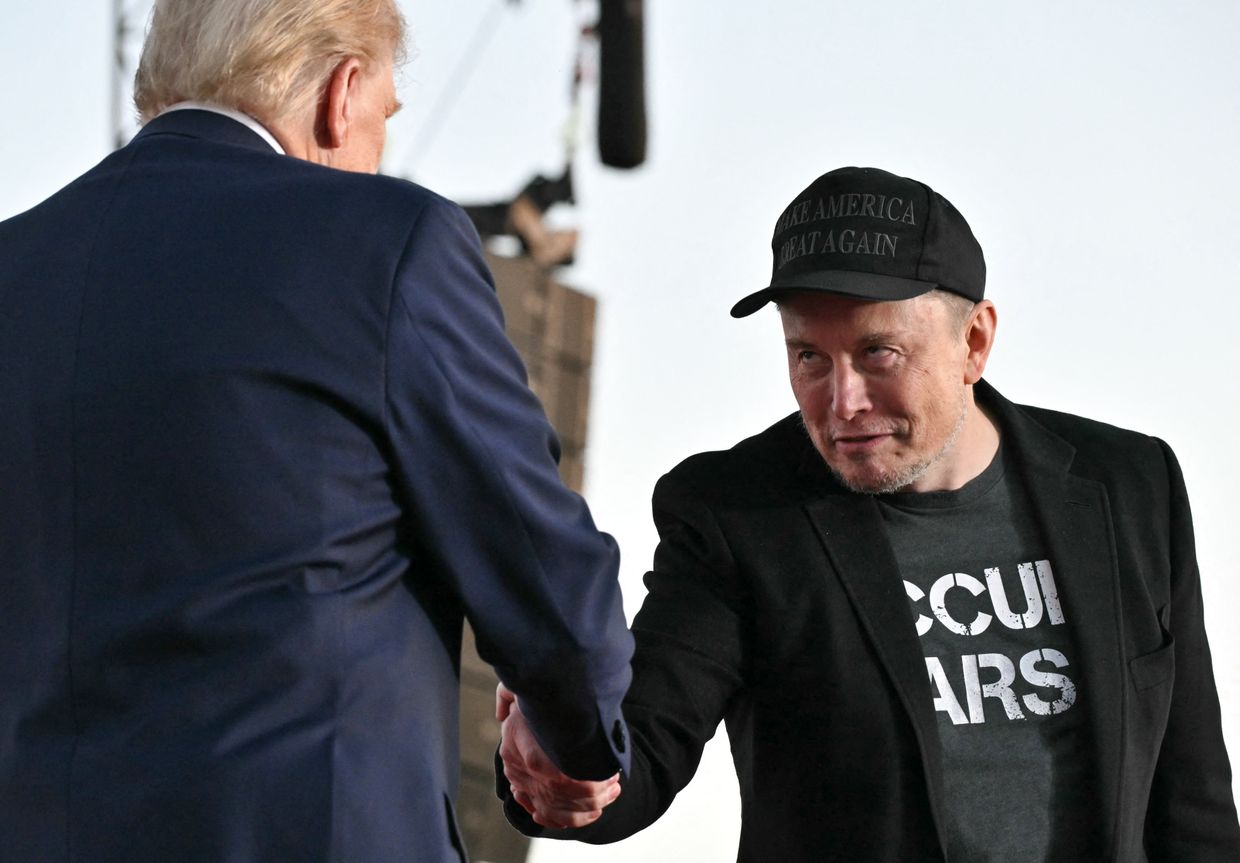
Tesla CEO Elon Musk (R) joins former US President and Republican presidential candidate Donald Trump during a campaign rally at the site of his first assassination attempt in Butler, Pennsylvania, on Oct. 5, 2024. (Jim Watson/AFP via Getty Images)
Ramaswamy, Musk’s future colleague at the Department of Government Efficiency, was a candidate in the Republican primaries for the 2024 presidential election. He has made a number of virulently anti-Ukrainian statements.
"Joe Biden needs to man up to his bully-friend (Ukrainian President Volodymyr) Zelensky and clearly state that we are dead-set opposed to the Ukrainian admission to NATO,” Ramaswamy wrote on X in 2023. “This should be a hard red line.”
In another attack on Zelensky, he said that, if elected president, he would “refuse to be bullied by an anti-democratic comedian-turned-leader and it’s truly mystifying to me that the rest of the West is eating out of this Pied Piper’s hand every day.”
Trump's decisions on Ramaswamy, Musk, and Hegseth mean that "all policy will be under the White House's direct control," Dubovyk said.
"All of them are loyal to Trump," he added.
Trump's Nov. 11 decision to nominate U.S. Representative Elise Stefanik as ambassador to the UN has also triggered concerns because she voted against a $61 billion aid package for Ukraine in April. A group of Republicans blocked U.S. military aid for Ukraine for half a year from late 2023 to early 2024, hampering Ukraine’s defense.
Trump’s other personnel decisions are seen in a more positive light.
Tymofiy Mylovanov, president of the Kyiv School of Economics and former advisor to Zelensky’s office, wrote on X on Nov. 12 that both Rubio and Waltz were "good for Ukraine,” adding that Waltz had called for stepping up support for Kyiv.
Peter Rough, director of the Center on Europe and Eurasia at the conservative Hudson Institute, told the Kyiv Independent that Rubio and Waltz were "foreign policy professionals of the highest order" who "will defend U.S. interests vigorously, which requires a clear-eyed understanding of the threat posed by Russia."
Daniel Kochis, a senior fellow in the Center on Europe and Eurasia at the Hudson Institute, told the Kyiv Independent that he “wouldn’t read the expected appointments of Rubio and Waltz as necessarily a bad sign for Ukraine.”
"The appointment of Rubio in particular may bode well" for Ukraine, he said.
Others were more skeptical about Trump's first picks.
"I would not read too much into Trump’s picks for specific posts," Charles Kupchan, a senior fellow at the Council on Foreign Relations, told the Kyiv Independent.
"Unlike during his first term, when he to some extent followed the advice of his more experienced advisers, in his second term, I expect Trump to call the shots. He is picking people that he believes will be loyal and follow the leader."
Waltz, Trump's pick for national security advisor, is a congressman from Florida and a retired Army Green Beret.
His views on Ukraine have changed since 2022.
In 2022, he called on Biden's administration to provide more weapons to Kyiv and argued that the majority of the Republican caucus supported U.S. assistance to Ukraine amid concerns that they could block aid.
“I think the vast majority of the conference realizes that we either pay now or pay later, that Russian President Vladimir Putin fully intends, if he takes Ukraine, to move on to NATO-allied countries like the Baltics, Poland, and Finland,” he said.
In this July 15th photo Rep. Mike Waltz speaks on the first day of the Republican National Convention at the Fiserv Forum on July 15, 2024 in Milwaukee, (Leon Neal/Getty Images)
However, in October 2024, Waltz said that there must be a reassessment of the United States’ aims in Ukraine.
“Is (involvement in Ukraine) in America’s interest, are we going to put in the time, the treasure, the resources that we need in the Pacific right now badly?” Waltz asked.
Waltz is one of the leading U.S. critics of China, with Trump and his allies focusing more on opposing China than the Kremlin.
"The Trump-aligned foreign policy world has been hyper-focused on China and defense policy, as well as reducing U.S. commitments to NATO," Max Bergmann, director of the Europe, Russia, and Eurasia Program at the Center for Strategic and International Studies, told the Kyiv Independent.
"There is not a prominent Russia hand that I can think of in his orbit. Russia policy has not been a focus at all. As for Ukraine, there is some sympathy but it is also seen as a distraction from the China focus and there is a general desire to shift responsibility for supporting Ukraine to Europe."
Dubovyk said that Waltz "has both expressed support for Ukraine and voiced doubts about continuing it.”
"I think we’ll also need to wait and see which sentiments prevail overall in the White House, as Waltz could go either way regarding Ukraine," he told the Kyiv Independent.
Oleksandr Kraiev, head of the North America program at the Ukrainian Prism think-tank, also said that it was difficult to say to what extent Waltz would support Ukraine. He told the Kyiv Independent that Waltz was seen as a staunch Trump loyalist.
Rubio, a senator from Florida and a Republican candidate in the 2016 presidential election, initially condemned Russia's invasion of Ukraine and supported its efforts to push back Russian troops.
However, in April, he voted against the $61 billion aid package for Ukraine passed by Congress.
Kochis emphasized that, according to Rubio, he voted against the bill due to a lack of compromise with Biden on immigration, not due to his opposition to support for Ukraine.
In September, Rubio also called for achieving a peaceful settlement instead of helping Ukraine regain Russian-occupied territories.
“I’m not on Russia’s side — but, unfortunately, the reality of it is that the way the war in Ukraine is going to end is with a negotiated settlement,” Rubio told NBC.
Dubovyk and Kraiev said that Rubio is considered to be more pro-Ukrainian, compared to other Trump supporters.
"For us, it's a positive signal," Kraiev said. "He has made statements supportive of Ukraine."
Kraiev argued that Rubio, who criticized Trump in the Republican primaries, is seen as independent and is not a Trumpist "fanatic."
However, according to Dubovyk, he will likely coordinate his actions with Trump’s close allies.
"So he (Rubio) may not be one of those making key decisions," Dubovyk said.
Ruth Deyermond, senior lecturer in post-Soviet security at King's College London, argued that, regardless of Rubio's possible appointment, Trump's administration "seems likely to be dominated by individuals – including the president and vice president – who maintain positions so strongly favorable to the Kremlin."
"Even some of those individuals mentioned as possible picks who used to be very hawkish on Russia, such as Rubio, have changed their positions in recent years, aligning themselves much more with Trump," she told the Kyiv Independent.
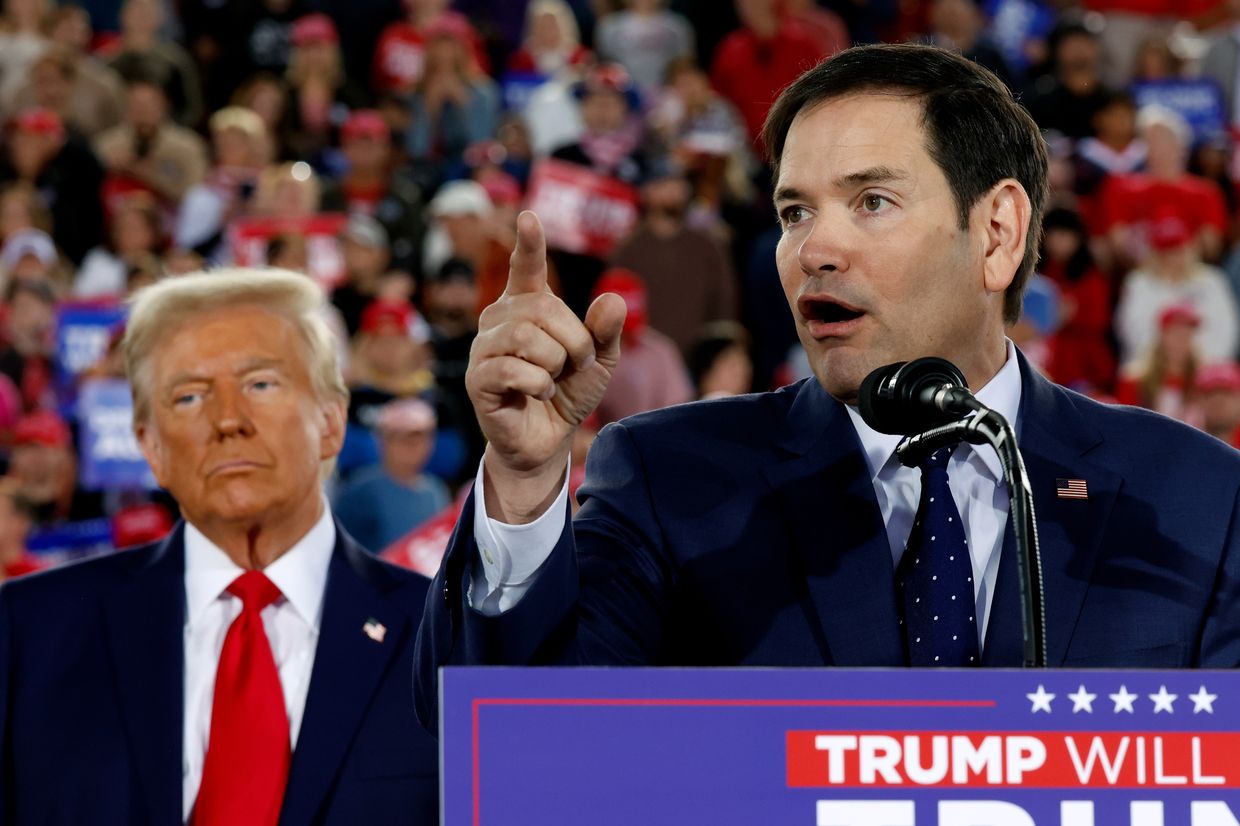
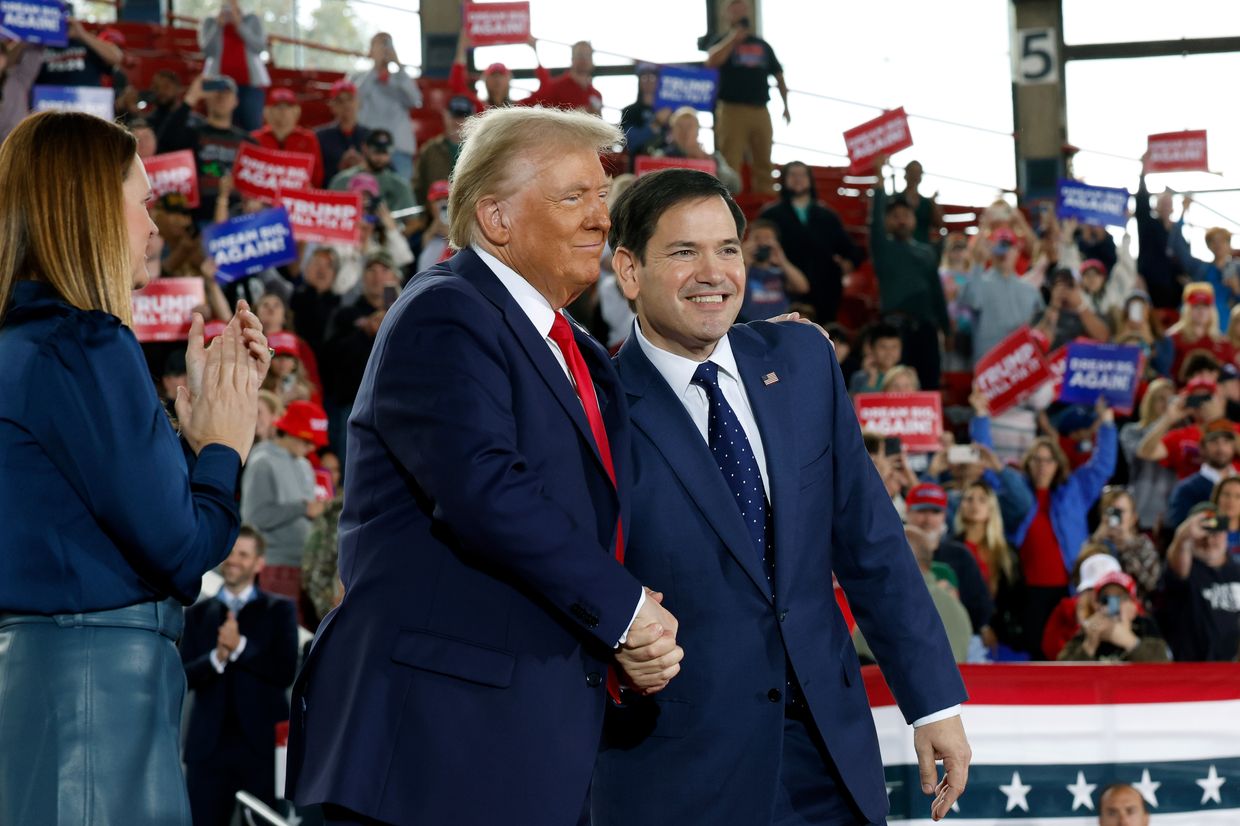
Donald Trump watches as U.S. Sen. Marco Rubio (R-FL) speaks during a campaign rally at the J.S. Dorton Arena on November 04, 2024 in Raleigh, North Carolina (Chip Somodevilla/Getty Images)
Another Trump pick, John Ratcliffe, also has a mixed record.
Ratcliffe, who is expected to become director of the CIA, was a Congressman from 2015 to 2020 and Trump's director of national intelligence from 2020 to 2021. Like Waltz, he is known as a China hawk.
In 2020, Ratcliffe sparked controversy by declassifying Russian disinformation that Hillary Clinton had personally approved a scheme to associate Trump with Putin and the Russian hacking of the Democratic National Committee.
In 2022, however, Ratcliffe was supportive of Ukraine and criticized the Biden administration for what he saw as its weak response to Russia's full-scale invasion.
Dubovyk described Ratcliffe as a Trump loyalist who has “no independent political weight.”
Both Waltz and Rubio are seen as more ambiguous on Ukraine than Pompeo and Haley, who are among the most pro-Ukrainian Republicans, according to analysts. As a result, Trump's decision not to hire them has prompted concerns in Kyiv.
Pompeo was a member of Trump's team during his first term: as head of the Central Intelligence Agency from 2017 to 2018 and as secretary of state from 2018 to 2021.
In July, Pompeo published an op-ed claiming that Trump would support Ukraine if elected. He suggested driving down energy prices to shrink "Putin’s war-crimes budget," imposing “real” sanctions on Russia, revitalizing NATO, creating "a $500 billion lend-lease program for Ukraine," and lifting "all restrictions on the type of weapons Ukraine can obtain and use."
"(Trump's) early disclosure that he does not intend to tap Haley or Pompeo suggests he will stay away from more hawkish Republicans," Kupchan, a senior fellow at the Council on Foreign Relations, said.
"That news is hardly surprising given Trump’s apparent determination to steer clear of the 'adults in the room' that tried to tame his isolationist and unilateralist impulses during his first term."
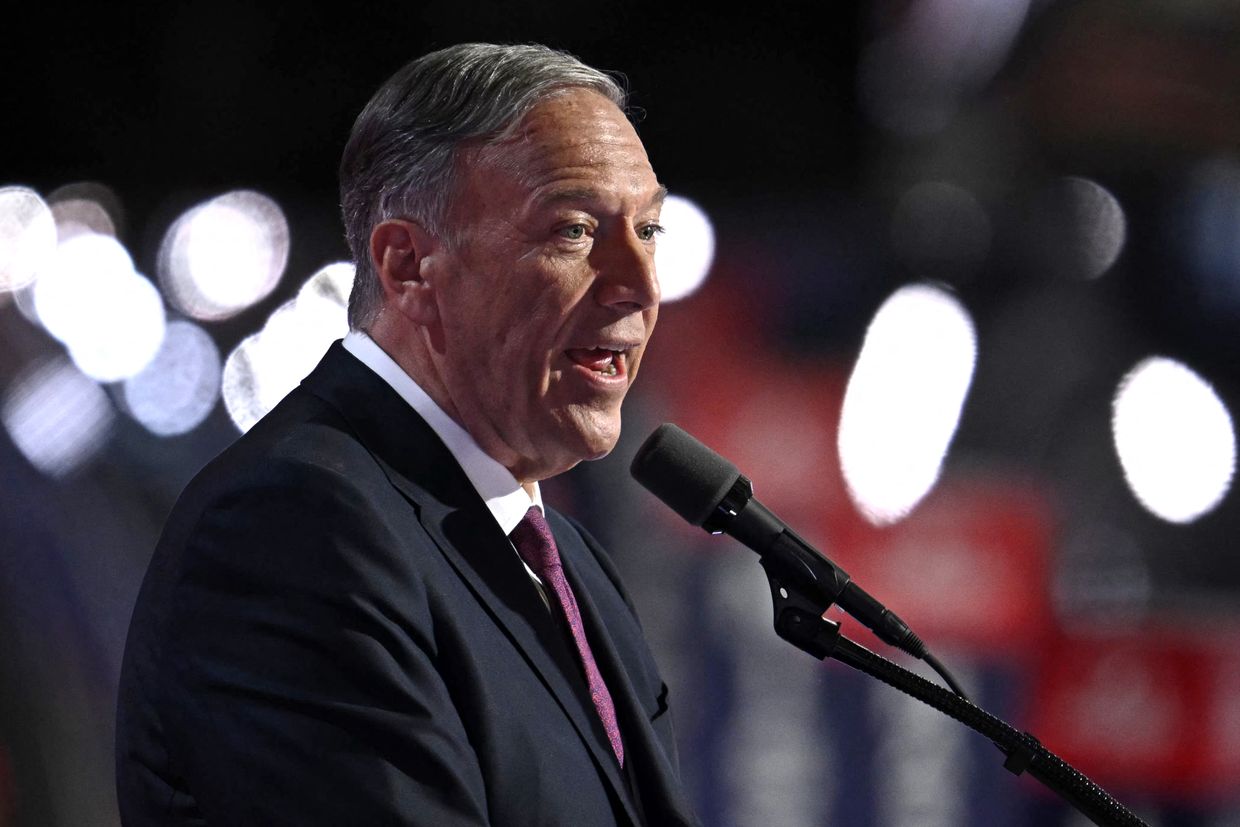
Former US Secretary of State Mike Pompeo speaks during the last day of the 2024 Republican National Convention at the Fiserv Forum in Milwaukee, Wisconsin, on July 18, 2024. Donald Trump will get a hero's welcome Thursday as he accepts the Republican Party's nomination to run for US president in a speech capping a convention dominated by the recent attempt on his life. (Angela Weiss/AFP via Getty Images) #forowen
Deyermond agreed with this assessment.
"The announcement that Trump won't be appointing either Pompeo or Haley (together with H.R. McMaster, the strongest critics of Russia in the first Trump administration) is a confirmation of what was already obvious,” he said.
“The new Trump administration is likely to align much more with Russia than with the U.S. allies on Ukraine," he added.
Commenting on Trump's decision not to appoint Pompeo and Haley, Bergmann said that "few in his administration will want to prioritize or focus on Ukraine because of where Trump is on Russia."
"Any committed Russia hawks in the administration – if there are any – are unlikely to have much influence," he added. "The challenge will be convincing Trump to ask Congress for more military aid to Ukraine."
Meanwhile, Mykhailo Minakov, head of the Ukrainian Research Program at the Kennan Institute, said that he "would have been surprised if (Pompeo and Haley) had been invited (to join Trump's team)" because they "strongly criticized Donald Trump and did not actively support him during his campaign."
"I think it's more personal than ideological," he told the Kyiv Independent.
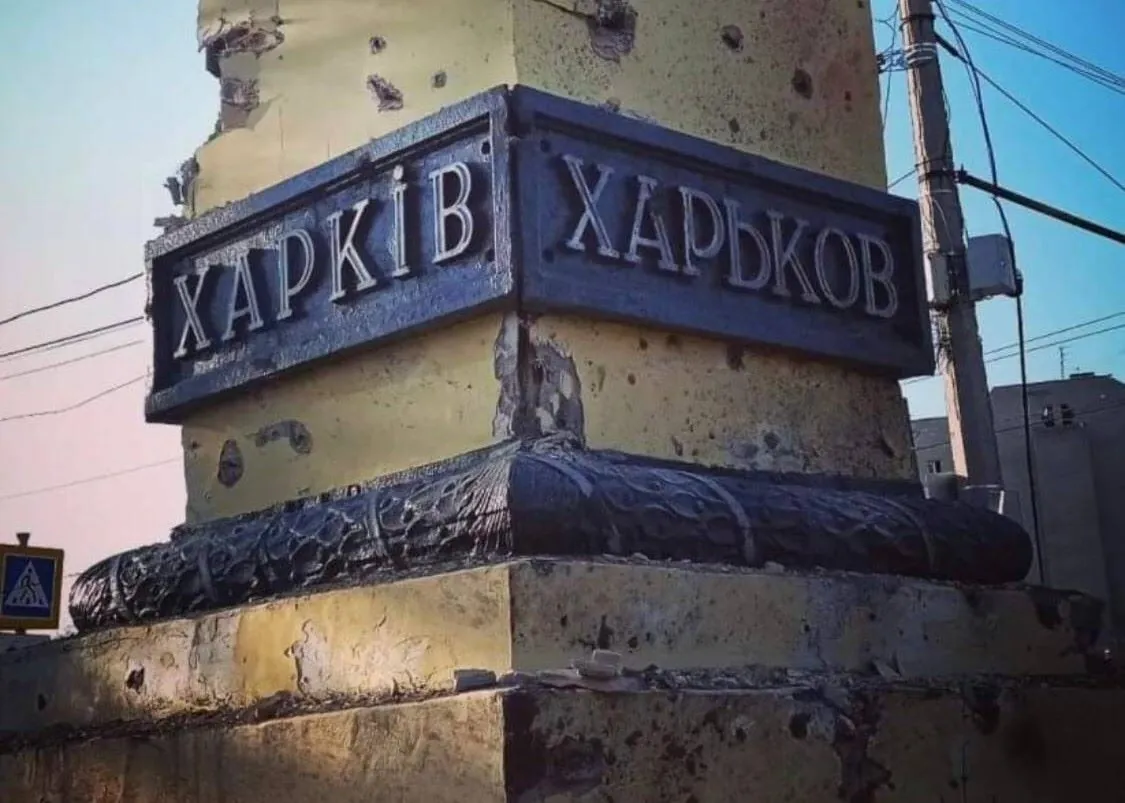
On the night of November 14, Russian occupants attacked Kharkiv and the surrounding area with guided aerial bombs. Local authorities are urging residents to stay in shelters because of the possibility of repeated attacks.
On the night of November 14, Kharkiv again came under enemy attack. This was reported by Kharkiv Mayor Ihor Terekhov, UNN reports.
Details
According to the mayor, the occupiers fired guided aerial bombs at Kharkiv and its outskirts.
The local authorities urged residents to be careful and stay in shelters, as the shelling may recur.
Information on the extent of the destruction and possible casualties is currently being clarified.
Ukrainian Air Force detects groups of enemy drones over eastern UkraineNov 14 2024, 02:34 AM • 3781 view
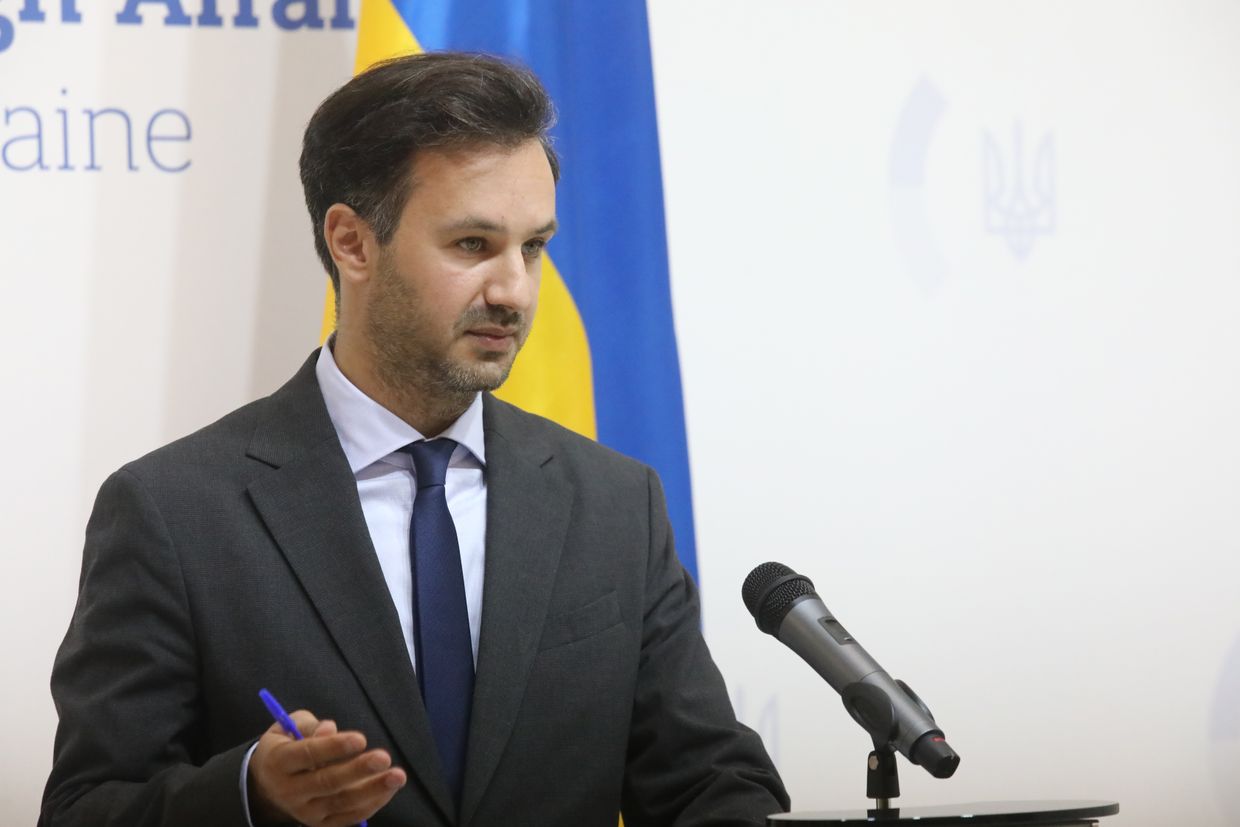
Ukraine's Foreign Ministry on Nov. 13 denied media reports suggesting that Kyiv was planning to develop weapons of mass destruction.
"Ukraine is committed to the NPT (the Treaty on the Non-Proliferation of Nuclear Weapons); we do not possess, develop, or intend to acquire nuclear weapons," Foreign Ministry spokesperson Heorhii Tykhyi said via X.
"Ukraine works closely with the IAEA (International Atomic Energy Agency) and is fully transparent to its monitoring, which rules out the use of nuclear materials for military purposes."
The Times reported on Nov. 13 that Ukraine could develop a rudimentary nuclear bomb "within months" if U.S. military assistance under President-elect Donald Trump were to cease, according to a briefing paper prepared for the Ukrainian Defense Ministry seen by the outlet.
The report suggests that Ukraine could swiftly build a basic device using plutonium and technology similar to that of the atomic bomb the U.S. dropped on Nagasaki in 1945.
"Creating a simple atomic bomb, as the United States did during the Manhattan Project, would not be a difficult task 80 years later," the document reads.
The Foreign Ministry has previously denied media reports that Ukraine plans to develop its own weapons of mass destruction. Speculation about Ukraine's nuclear options increased after President Volodymyr Zelensky on Oct. 17 said that he told Trump in September that Ukraine must either join NATO or pursue nuclear capabilities for the country's protection.
Zelensky later walked back the comments, saying that Kyiv is not pursuing nuclear weapons and the remarks were made to emphasize the failures of the Budapest Memorandum.
Under the 1994 agreement, Ukraine willingly surrendered its nuclear arsenal in exchange for receiving security guarantees from the U.S., the U.K., and Russia.
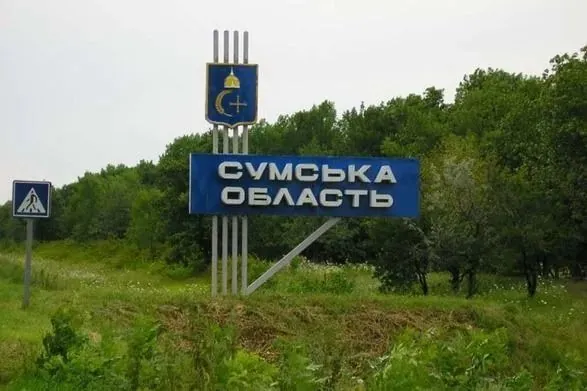
Enemy forces fired 68 times at the border areas of Sumy region, 175 explosions were recorded. As a result of the attacks, two civilians were wounded, cars and residential buildings were damaged.
During the day, enemy troops fired 68 times at the border areas and settlements of Sumy region. 175 explosions were recorded. This was reported by the Sumy Regional Military Administration, UNN reports.
Details
The communities of Khotyn, Yunakivka, Miropil, Bilopil, Krasnopil, Velykopysarivsk, Putivl, Shalyhyne, Esman, Seredyno-Budsk and Znob-Novhorosk were shelled.
The enemy attacks were carried out using various types of weapons, including mortars, artillery, multiple launch rocket systems and FPV drones. In particular, the largest number of attacks was recorded in Khotyn community, where the enemy carried out 40 artillery strikes, 5 mortar attacks and several attacks from UAVs. As a result of these attacks, a car was damaged. In Myropilska community, two civilians were injured and a car was damaged.
The shelling also affected other communities in the region, including Krasnopilska, Yunakivska and Seredyna Budska communities. Civilian infrastructure, including shops and residential buildings, was damaged by enemy attacks. In the Esman community, a private residential building was damaged by mortar fire.
russia fired 67 times at Sumy region: which communities suffered the mostNov 13 2024, 03:47 AM • 72212 views

 The Kyiv IndependentMartin Fornusek