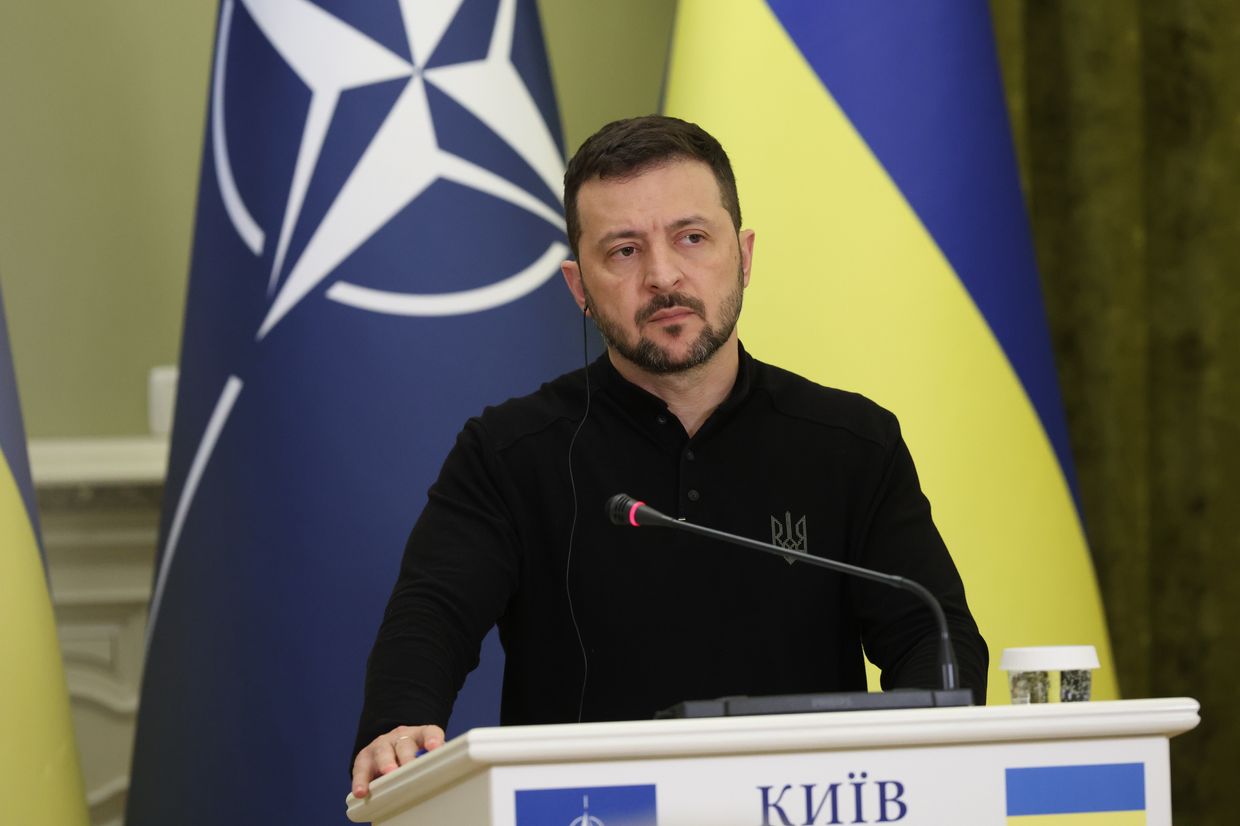
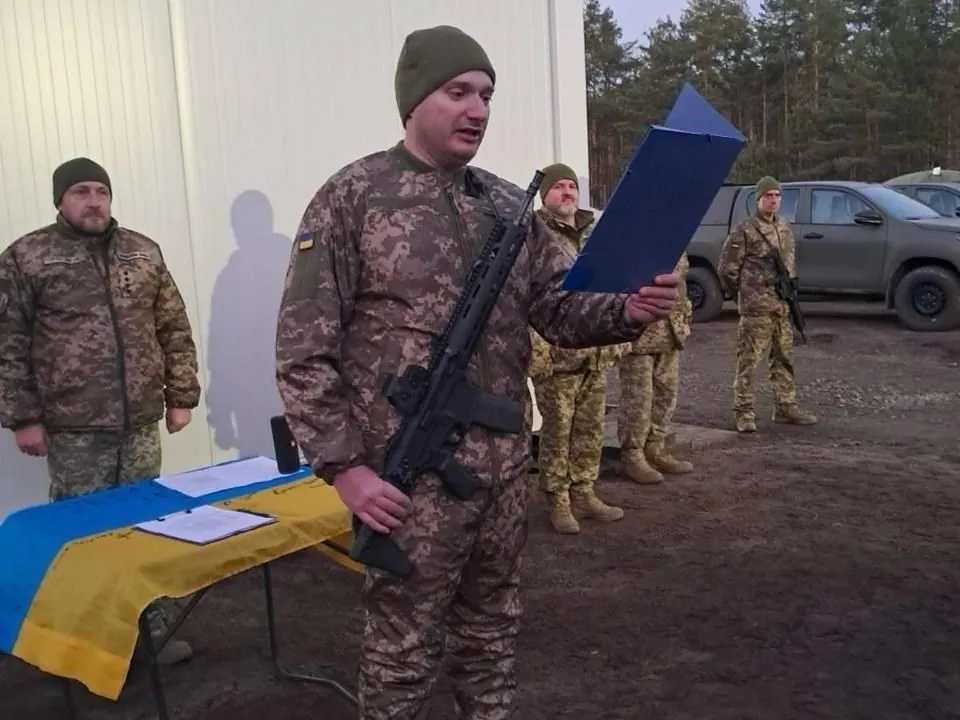
At a Polish training center, Ukrainian Legion volunteers swore allegiance to Ukraine. The soldiers began intensive training under the guidance of Polish instructors.
On Saturday, November 16, the first group of volunteers of the Ukrainian Legion took the oath of allegiance to the Ukrainian people at one of the training centers of the Armed Forces of the Republic of Poland. This was reported by the Ministry of Defense of Ukraine, according to UNN.
Taking the oath is one of the most important and solemn events in a serviceman's life. For the Legion volunteers, this moment is special, as their decision to stand up for Ukraine is conscious and decisive. The unit is formed of highly motivated soldiers for whom defending their homeland from the aggressor is a matter of honor,
– emphasized Petro Gorkusha, a representative of the Legion command.
Details
It is noted that the soldiers have now begun an intensive training course, which includes firearms training (including elements of CQB – Close-quarters battle), tactical medicine, mine safety, topography and other necessary disciplines. The training is conducted by experienced Polish instructors.
Recall
The first group of volunteers of the Ukrainian Legion signed contracts in Lublin and began 35 days of basic training. The recruiting center received about 700 applications from Ukrainians from all over Europe.
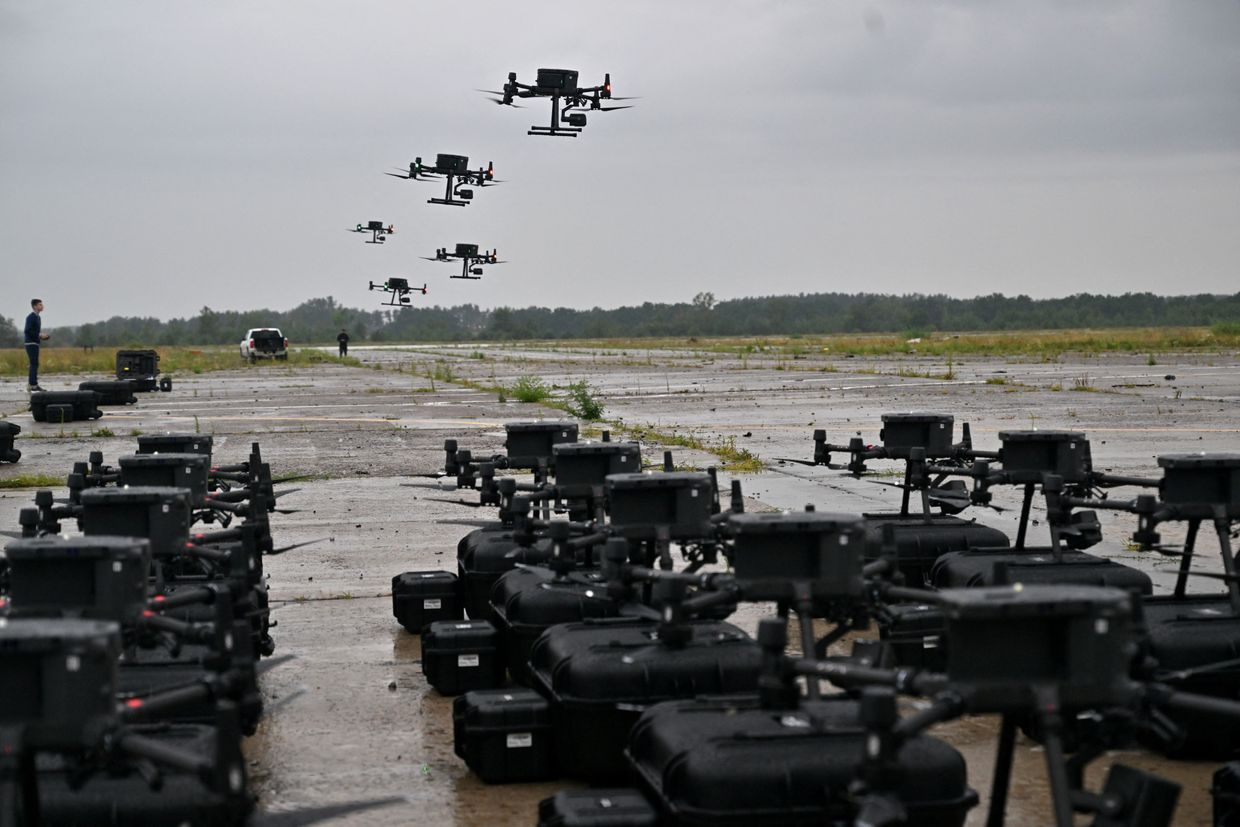
Russia recently began producing thermobaric drones to be used alongside decoy drones in Ukraine, which are capable of causing severe damage to civilians, an investigation by the Associated Press (AP) revealed on Nov. 16.
While thermobaric warheads have reportedly been previously used by Russia in Ukraine on missiles, their use on attack drones would mark an escalation of the warhead's use.
Thermobaric warheads create a wave of high pressure and heat that is capable of penetrating thick walls, AP reported. The damage caused by thermobaric attack drones would cause damage that would be "simply terrifying" for civilian populations to endure, including collapsed lungs, crushed eyeballs, and brain damage, according to a source familiar with Russian drone production.
While controversial, thermobaric munitions are not prohibited under international law.
According to the AP investigation, the thermobaric weapons would be deployed alongside decoy drones meant to overwhelm Ukrainian air defenses. Decoy drones have been regularly used in recent months as Russia has increased its drone attack on Ukrainian cities since the beginning of September.
The Ukrainian Air Force previously said that Russia launched at least 4,300 Shahed-type attack drones and similar UAVs imitating Shaheds against Ukraine between August and October 2024.
The Russian production of thermobaric drones, codenamed Operation False Target, is currently in production in Russia’s Alabuga Special Economic Zone in the country's Tatarstan Republic.
Russia continues to use drones to overwhelm Ukrainian cities ahead of expected attacks on Ukrainian energy facilities ahead of the winter months. The use of thermobaric drones would likely be used primarily to penetrate thick walls and underground energy substation, ideal for targeting energy facilities.
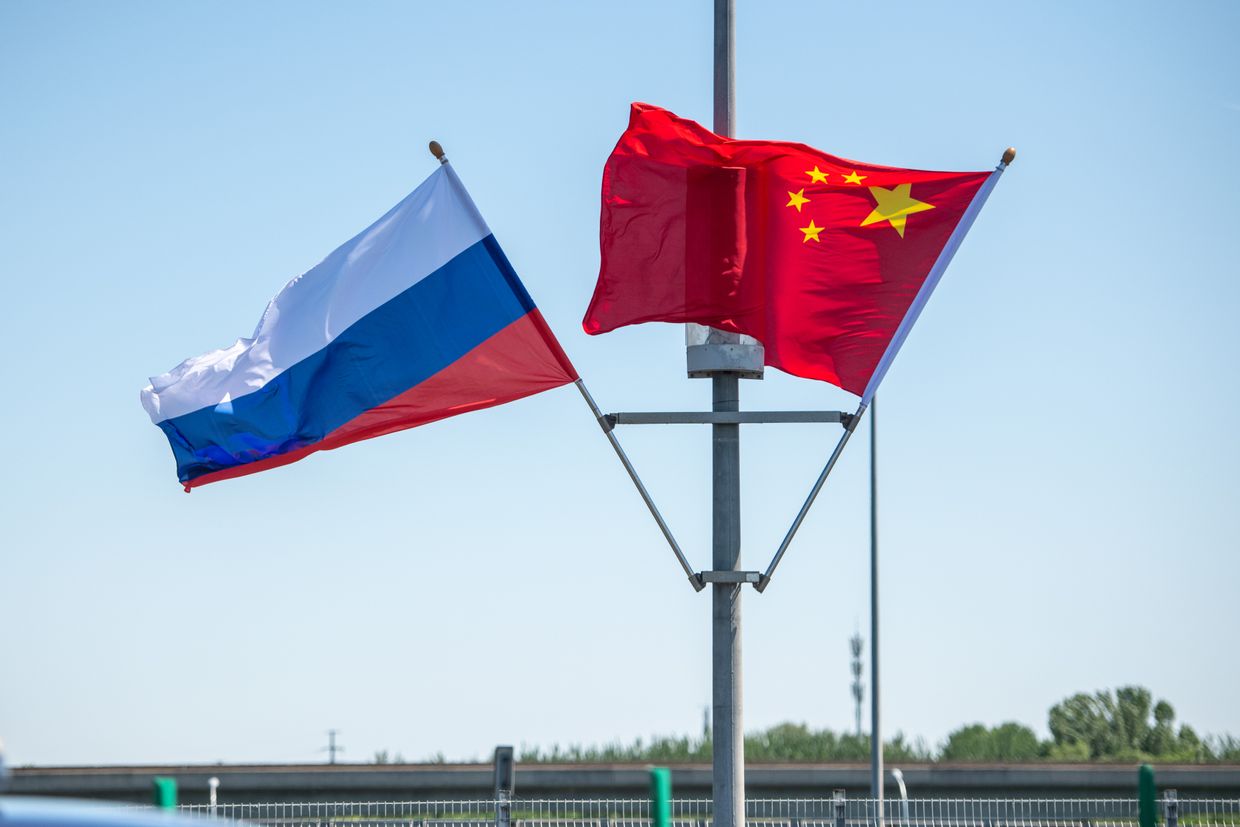
In recent months, Iran and China have continue to supply components for Russian attack drones.
Reuters reported on Sept. 25 citing European intelligence sources that Russia has secretly established a development and production program in China for attack drones to be used in the war in Ukraine. While Iran has continuously produced Shahed-type drones for Russia's use in Ukraine since the start of the full-scale war.
The EU's top diplomat Josep Borrell reportedly informed European nations of "convincing" evidence of Chinese production "of lethal aid" to Russia, ahead of an upcoming meeting of EU foreign ministers on Nov. 18, the German media outlet Frankfurter Allgemeine Zeitung (FAZ) reported, citing three EU officials.
China has positioned itself as neutral in the Russia-Ukraine war but has simultaneously deepened economic ties with Moscow and backed the country against Western sanctions.
Beijing has also emerged as one of Russia's leading sources of dual-use goods that feed the Russian defense industry.
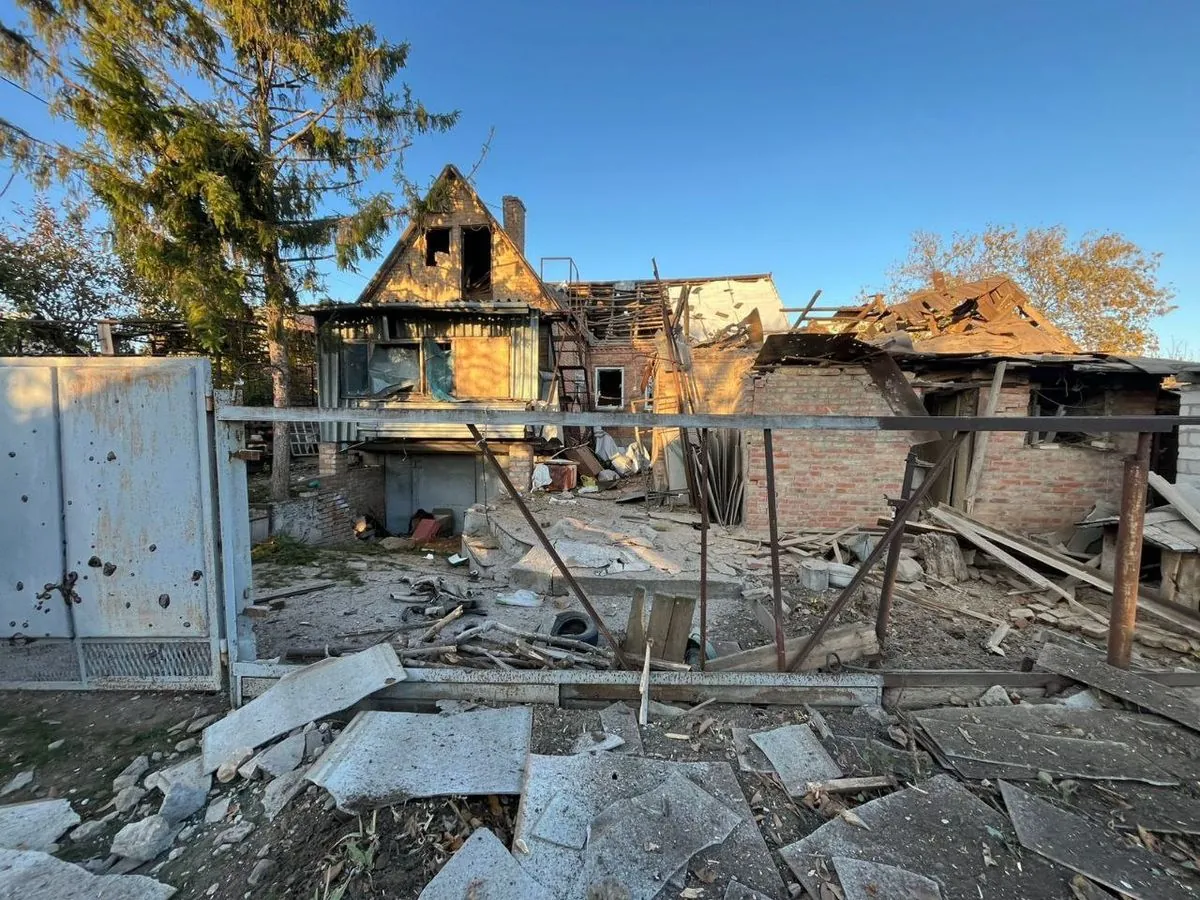
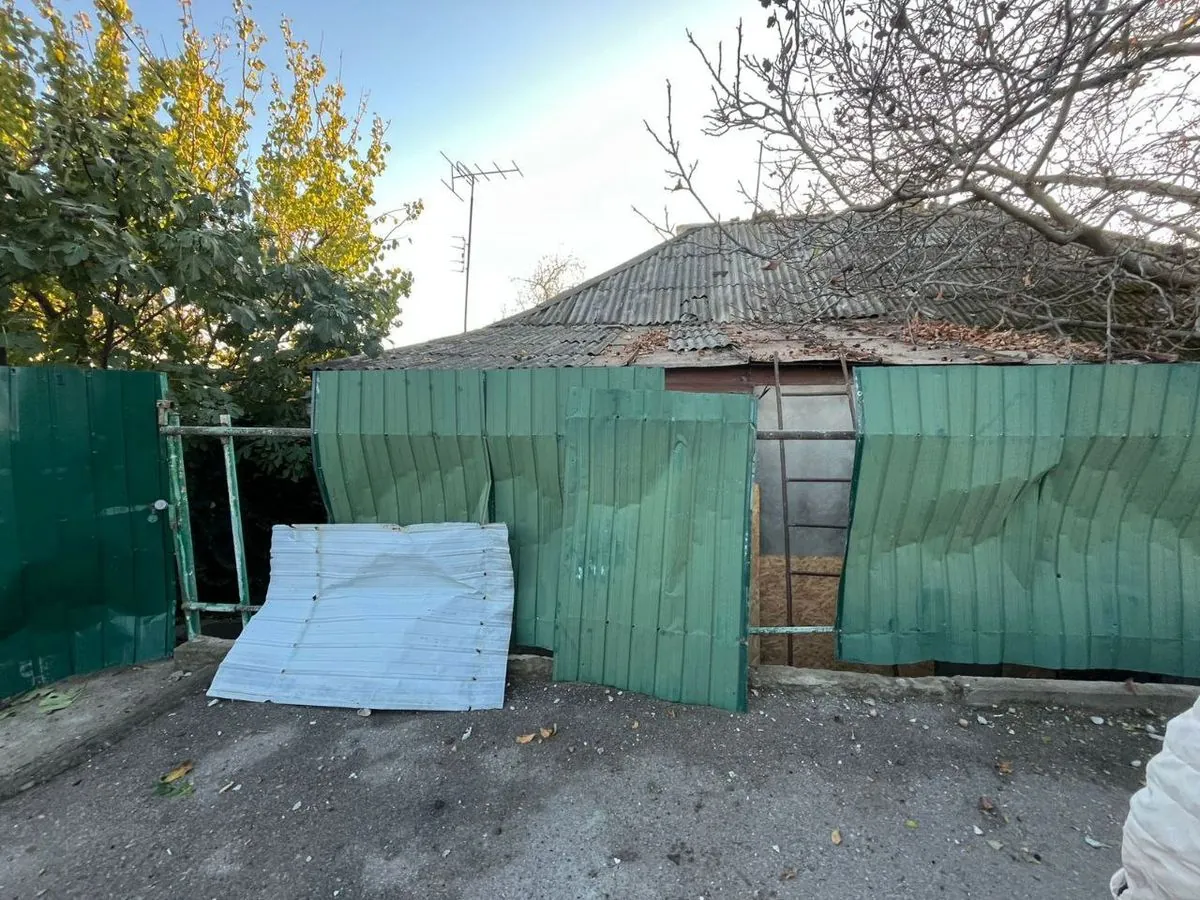
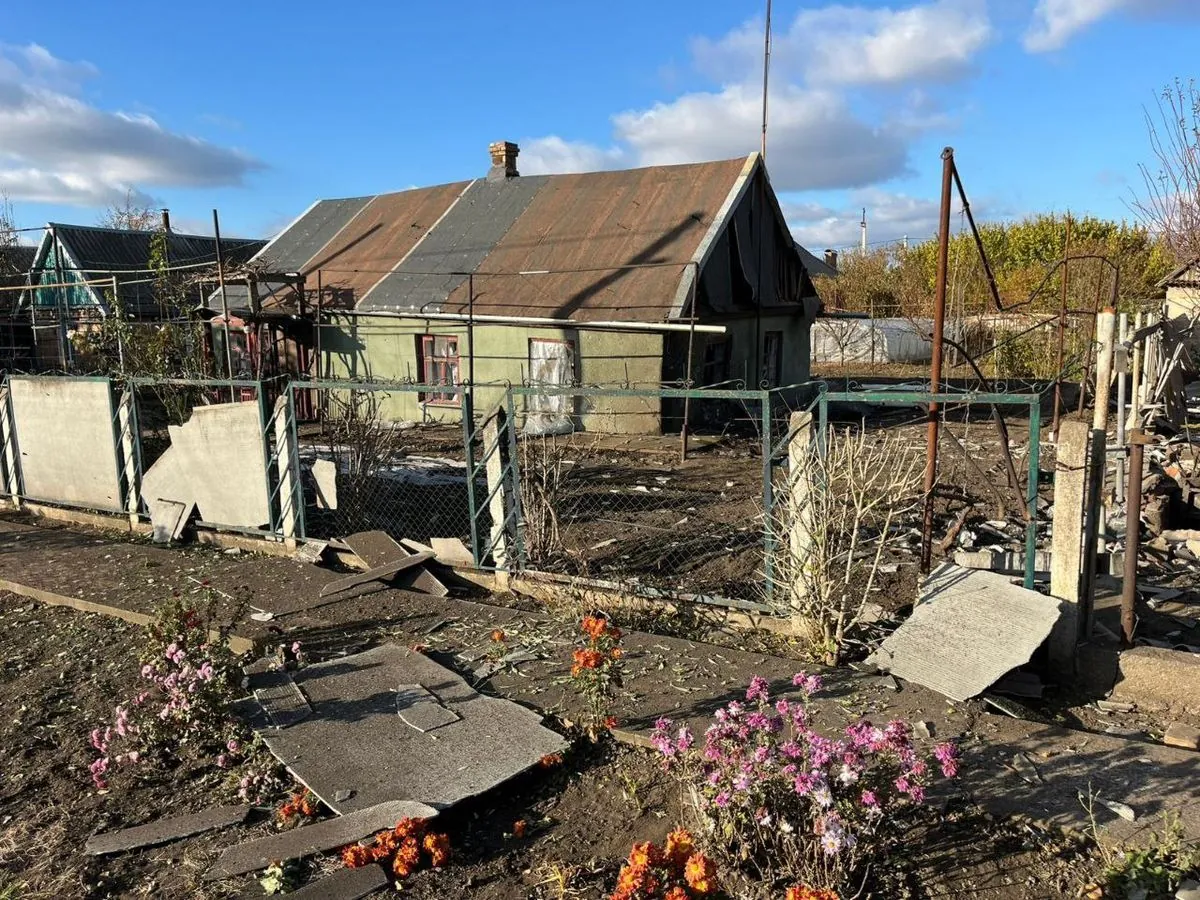
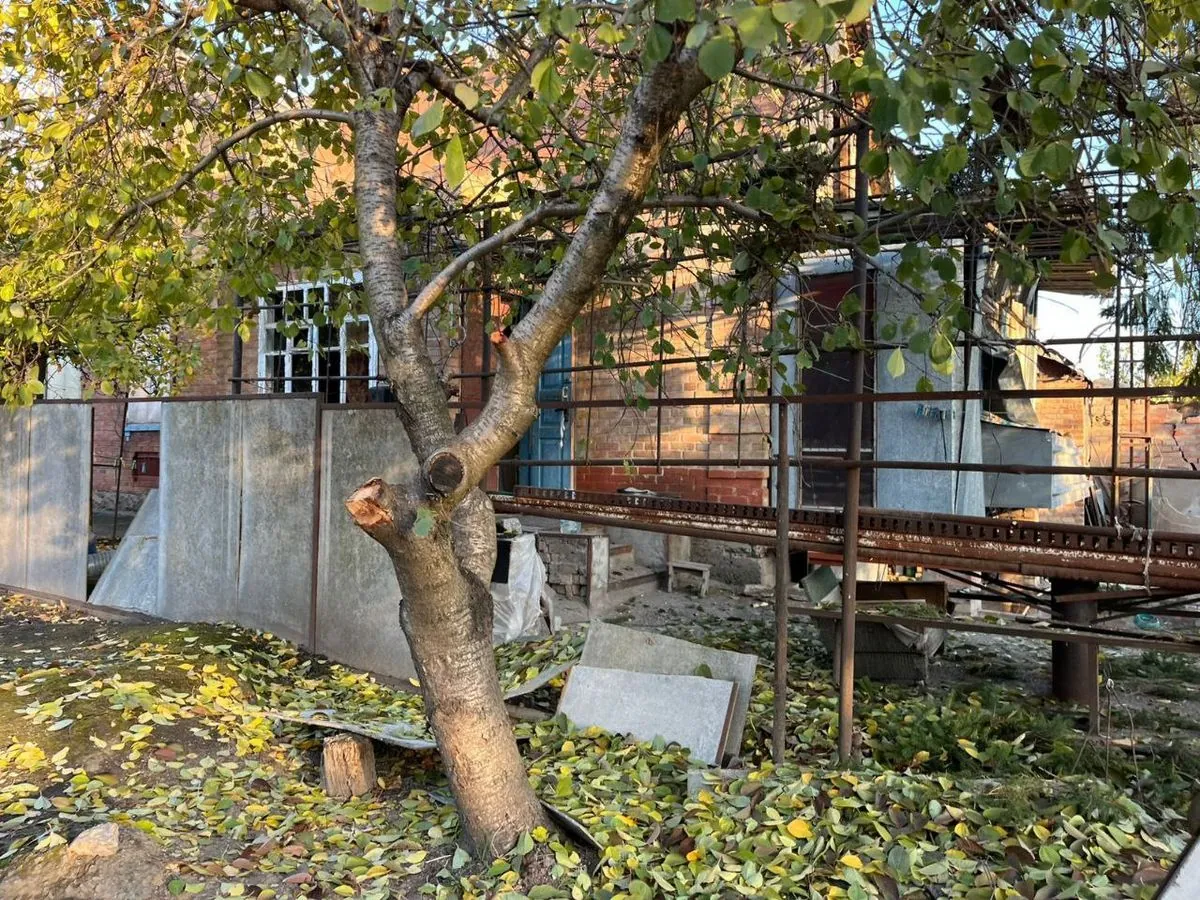
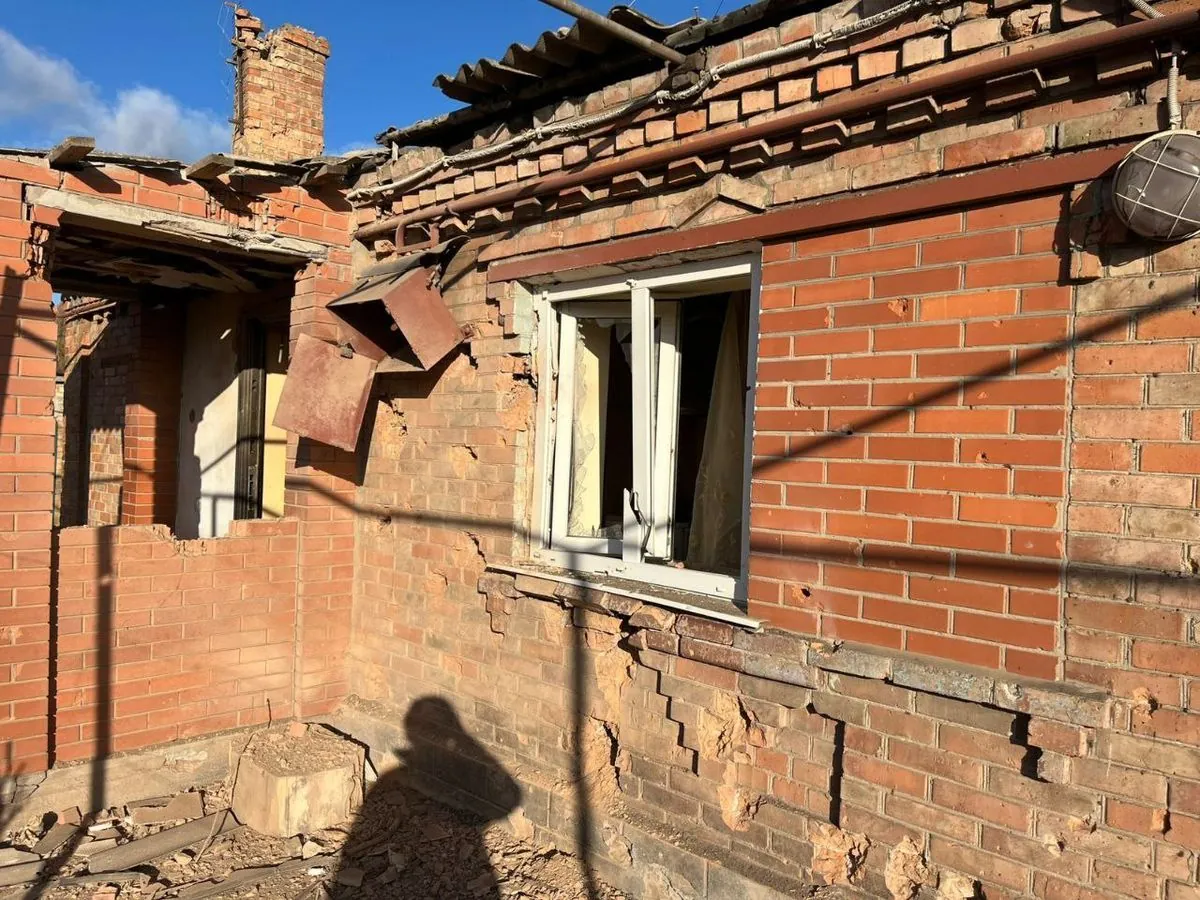
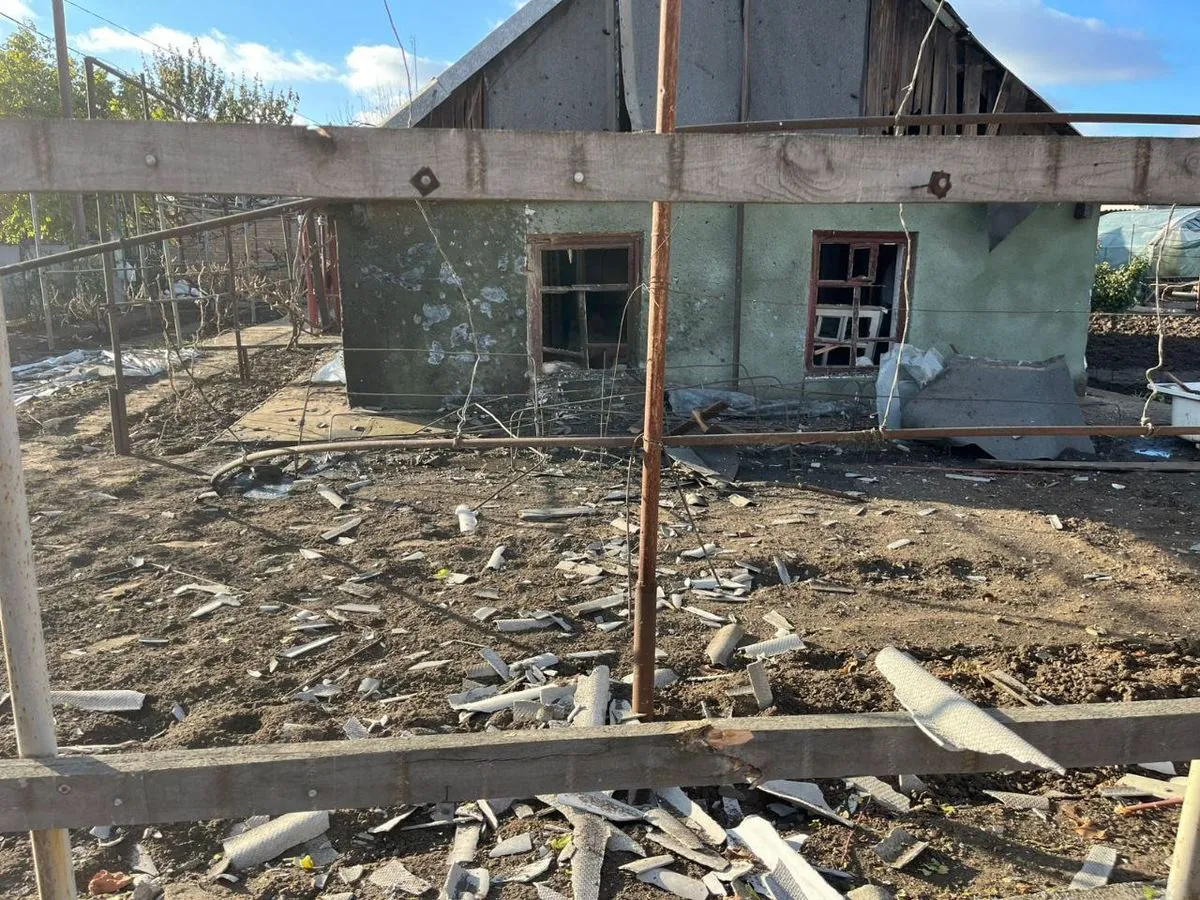
Russian troops launched about 15 attacks on Nikopol district using Grad rocket launchers, artillery and drones. A 75-year-old woman was injured, and residential buildings and critical infrastructure were damaged.
In Nikopol district of Dnipropetrovs'k region, a woman was injured in the shelling on November 16, and houses, a transport company, power lines and a gas pipeline were damaged. This was reported by the head of the Dnipropetrovs'k RMA Serhiy Lysak, UNN reports.
Shelling from Grad rocket launchers and artillery. Attacks by drones. During the day, Nikopol district was under enemy attack almost fifteen times. The aggressor targeted Nikopol, Marhanetska and Myrivska communities,
– the statement said.
Details
It is noted that a 75-year-old woman was injured. She was provided with medical care. She will be treated on an outpatient basis.
Lysak also said that a transport company, a five-story building, 10 private houses and 10 outbuildings, 3 garages, solar panels, a greenhouse, a power line and a gas pipeline were damaged.
Russian troops carried out 464 strikes in Zaporizhzhia region – RMANov 16 2024, 05:41 AM • 32926 views
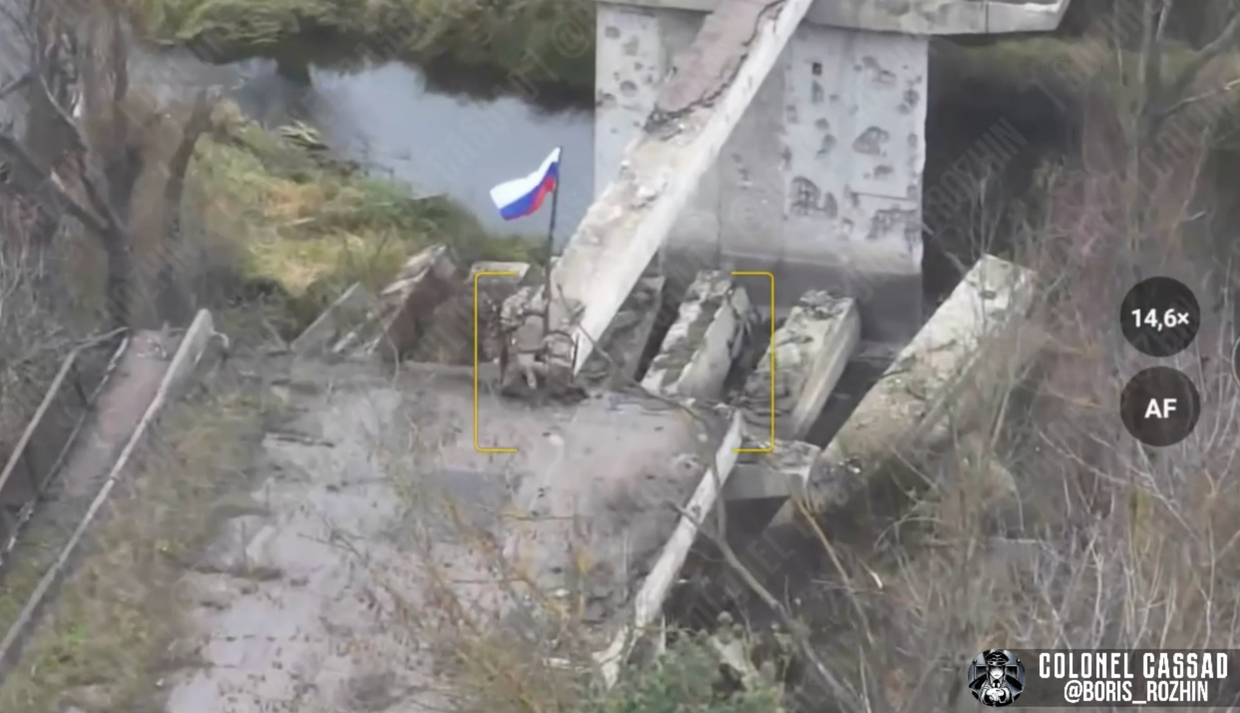
A day after videos showed Russian troops planting a Russian flag in a grey zone near the border in Ukraine's Chernihiv Oblast, Ukraine's State Border Guard Service released a video showing a drone destroying the flag on Nov. 16.
"Intelligence indicated that the Russian sabotage and reconnaissance group left the area even before the elimination of the established flags, not daring to take further action," the service wrote in a statement accompanying the video.
"This is another unsuccessful attempt by the enemy to impose its 'victories,' and nothing more than a psychological trick that has no military meaning," the statement continued.
Russian military bloggers a day earlier posted videos appearing to show Russian troops planting a flag on the bridge over the Sudost River near the border settlement of Hremiach and claimed they entered Hremiach and Muravi.
A spokesperson for the Border Service denied that Russian forces entered the settlements and said that they did not cross the bridge.
The spokesperson, Andrii Demchenko, added that no major defensive was detected and Ukraine has deployed additional forces in the area to fend off acts of sabotage from Russia.
Chernihiv Oblast is located on Ukraine’s northern border with Russia and Belarus. It was partially occupied during Russia's initial offensive in February 2022, but the invading force retreated in April after the Kremlin failed to take Kyiv.
According to Ukrainian intelligence, North Korea is seeking access to Russian nuclear and missile technologies in exchange for military support from Russia in its war against Ukraine.
Pyongyang is seeking to exchange its participation in the aggression against Ukraine for access to Russian technologies in missile, nuclear and other military programs. This was emphasized by Ukrainian Foreign Minister Andriy Sybiga, referring to Ukrainian intelligence data, UNN reports.
Details
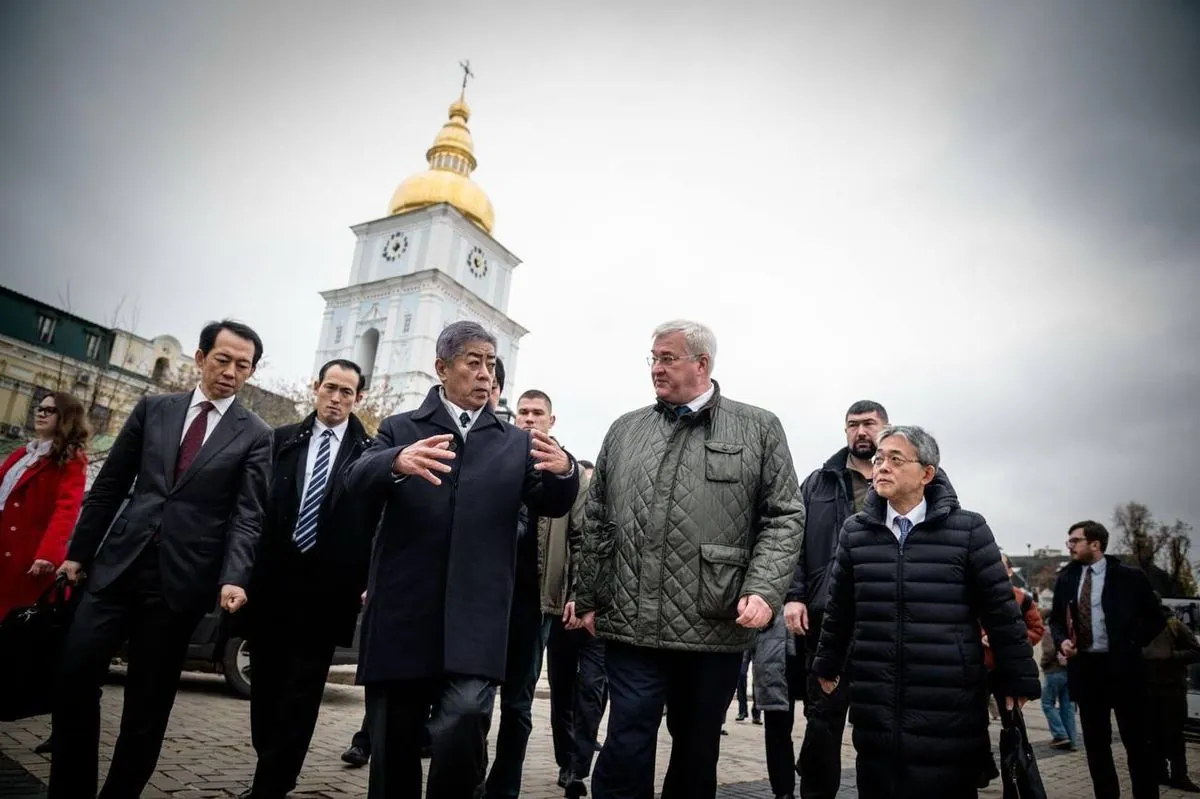
Today, Ukraine's Foreign Minister Andriy Sybiga welcomed his Japanese counterpart Iwai Takeshi to Kyiv and held talks with him on a wide range of issues of Ukrainian-Japanese cooperation, as well as global security challenges.
The heads of Ukrainian and Japanese diplomacy discussed the security situation in Ukraine and the world, including the actual entry of North Korea into the Russian war. According to Andriy Sybiga, this is evidence that the future of not only the European but also the global security architecture is being decided in Ukraine.
"Russia's deepening military-technical cooperation with North Korea and Iran poses a direct threat not only to Europe, but also to Southeast Asia and the Middle East. It is not only Russia that receives drones, missiles, and soldiers. Moscow is strengthening Tehran and Pyongyang in return," he emphasized.
DPRK ratifies mutual defense treaty with RussiaNov 12 2024, 01:52 AM • 21805 views
The minister also said that according to Ukrainian intelligence, Pyongyang is seeking to exchange its participation in the aggression against Ukraine for access to Russian technology in missile, nuclear and other military programs.
"This is extremely threatening. All this cannot but worry our partners. That is why we have to counter such global threats together," the Foreign Minister said.
In this context, Andriy Sybiga emphasized that only strong and systematic support for Ukraine can stop Russia and bring a comprehensive, just and sustainable peace. According to him, Russia's defeat in Ukraine will stop other aggressors from pursuing their aggressive plans.
North Korean soldiers completely change the political scenario and the meaning of war – YermakOct 27 2024, 11:39 AM • 20633 views
The United States will partner with Ukraine to transition Ukraine's coal-fired plants to small modular nuclear reactors, and to use them to help decarbonize its steel industry, the countries announced on Nov. 16 at the U.N. Climate Change Conference in Baku, Azerbaijan.
Small modular reactors (SMR) are an emerging technology that allow for reactors to be transported and assembled on site.
The partnership will build a roadmap and provide technical support to "rebuild, modernize, and decarbonize Ukraine's steel industry with SMRs," according to a statement from the U.S. State Department.
It will also "facilitate the transition of Ukraine’s coal-fired power plants to secure and safe SMR nuclear power plants utilizing existing infrastructure and retraining the workforce," the statement read.
Another project announced at the conference, known as COP29, will build a pilot plant in Ukraine to demonstrate production of clean hydrogen and ammonia using simulated SMR technology.
Ukraine is expected to face a brutal energy crisis through its toughest winter since the start of the full-scale invasion after Russia took out capacity from half of its electricity generation sector in large-scale air strikes.
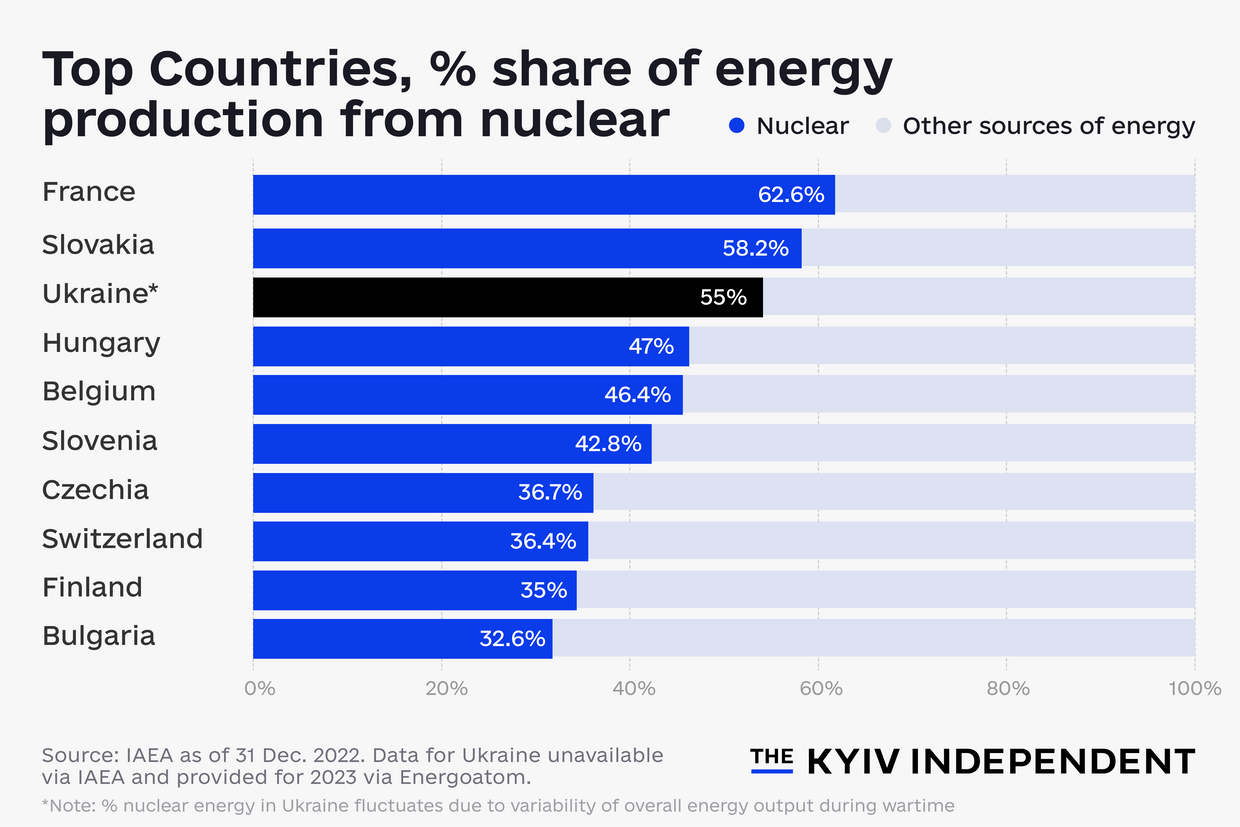
The infographic showcases the countries with the top percentage share of nuclear energy production. (Lisa Kukharska / The Kyiv Independent)
As Ukraine hurries to rebuild its devastated energy structure, many foreign partners are looking for ways to encourage greener and more sustainable energy solutions. Wind and solar projects are in high demand, although many of Ukraine's infrastructure projects are emergency solutions rather than part of a broader green strategy.
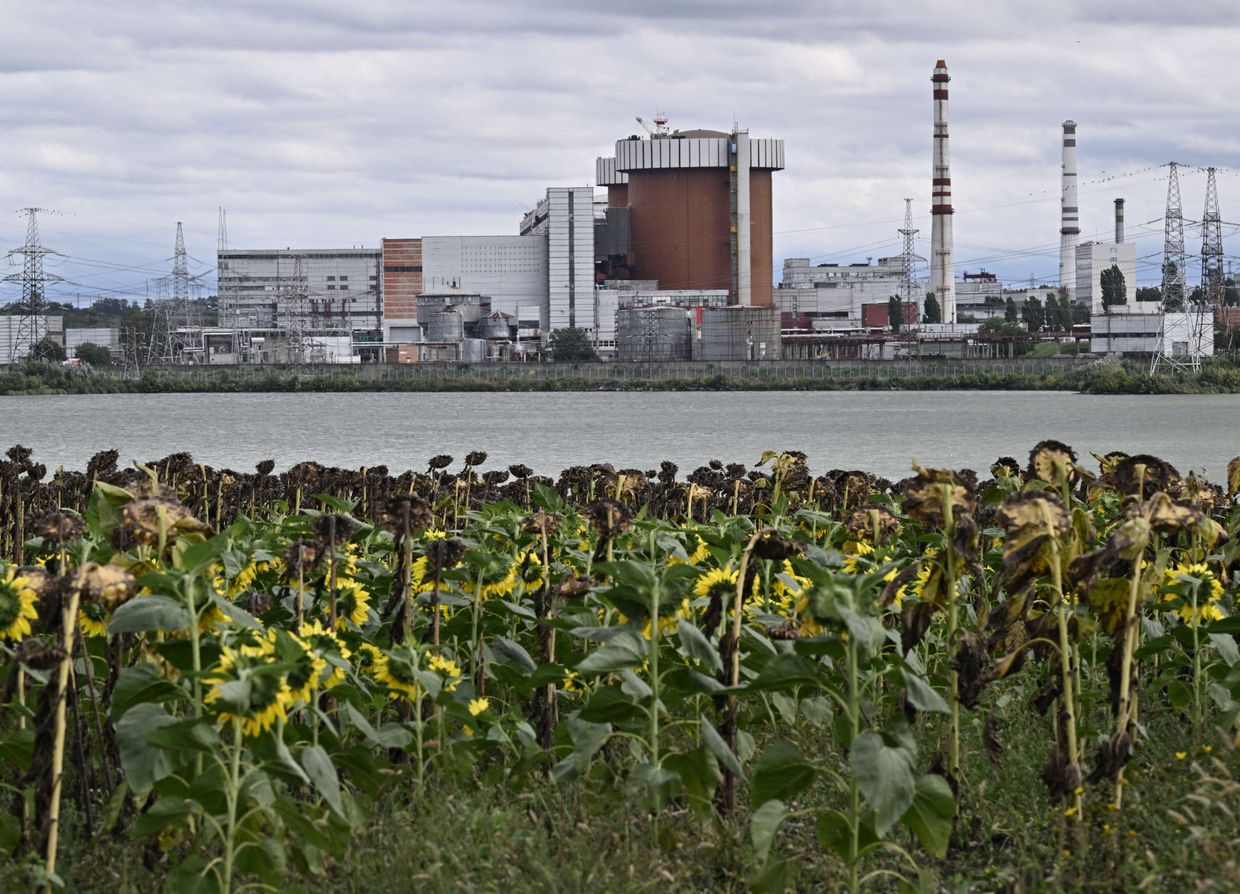
Following the occupation of the Zaporizhzhia nuclear power plant in 2022, the three nuclear plants remaining under government control provide around 60% of its power. However, Russia is eyeing attacks on Ukraine’s nuclear infrastructure, the Energy Ministry's press office told the Kyiv Independent last month.
The energy-intensive steel industry produced a tenth of Ukraine's pre-war GDP, but last year's production was less than a third of Ukraine's total 2021 steel production.
Energy blackouts are a major factor in the drop in production, alongside worker shortages, high electricity prices, and disrupted supply chains as a result of the full-scale invasion.
The President of Ukraine met with the newly appointed Minister of Foreign Affairs of Japan, Iwai Takeshi. They discussed a new support package, threats from the DPRK's cooperation with Russia, and further economic cooperation.
Ukrainian President Volodymyr Zelenskyy met with Japanese Foreign Minister Iwai Takeshi. They talked about support for Ukraine, North Korea's involvement in the war against Ukraine, and a new support package, UNN reports.
"…I met with the Minister of Foreign Affairs of Japan: he is on a visit to Ukraine. And it is important that this is his first visit to another country immediately after the appointment of the new Japanese government – a visit to Ukraine. This is both symbolic of our relations, Ukraine and Japan, and very practical: this war in Europe is now deciding a lot for the whole world," Zelensky said.
The Head of State thanked the Minister and the entire Japan for the support provided to Ukraine. Since the beginning of the full-scale war, it has amounted to $12 billion.
"Japan is a true leader in Asia in defending the rules-based international order and simply human life. We also discussed the fact that North Korea has now become an ally of Russia and is helping Putin in this criminal war. I informed him about the activity of the North Korean military in Kursk region, about all the threats from the cooperation between Pyongyang and Moscow. russia is teaching North Korea modern warfare, and this could cause much wider destabilization. We must counteract this together and with all our other partners," Zelenskyy added.
According to him, there is a new support package from Japan.
"Of course, we spoke with the Japanese Foreign Minister about strengthening sanctions against Russia, about our economic cooperation with Japan, about reconstruction, and about how to bring a just peace closer. We are also preparing for a conversation with the new Prime Minister of Japan," Zelenskyy summarized.
Ukraine and Japan are preparing to sign an agreement on investment protection – ShmyhalSep 25 2024, 02:58 PM • 18998 views
Two of Alexander Lukashenko’s “challengers” in upcoming 2025 presidential elections drop out before race even starts, pledge support for Belarusian dictator.
Lukashenko pardons 31 political prisoners as pre-election police raids intensify.
Lukashenko allows the family to visit Maria Kalesnikava in jail, ending over 600 days of holding the prominent opposition leader incommunicado.
Ukraine, Russia ombudsmen meet in Belarus to exchange fallen soldiers’ bodies, discuss PoW humanitarian issues.
Rights groups push for international backing of Lithuania’s ICC referral over the Lukashenko regime’s abuses.
Subscribe to the Newsletter Belarus Weekly Join us
Two of Lukashenko’s sham election rivals drop out of 2025 presidential election race
Two sham candidates in the 2025 Belarusian presidential elections — Siarhei Bobrykau, Belarusian Union of Officers chair, and former spokeswoman of the Interior Ministry, Olga Chemodanova — said on Nov. 12 that they were dropping out of the race and endorsing incumbent Belarusian dictator Alexander Lukashenko.
The first presidential election in Belarus since the contested 2020 elections, which sent the country into an unresolved political crisis, is scheduled for Jan. 26, 2025. The regime-controlled Central Elections Committee allowed six token candidates to challenge Lukashenko.
Bobrykau justified his decision by saying he wanted to “ensure the cohesion of the officer corps, and to prevent the military ‘being in two minds’ about supporting the current head of state and our leader.”
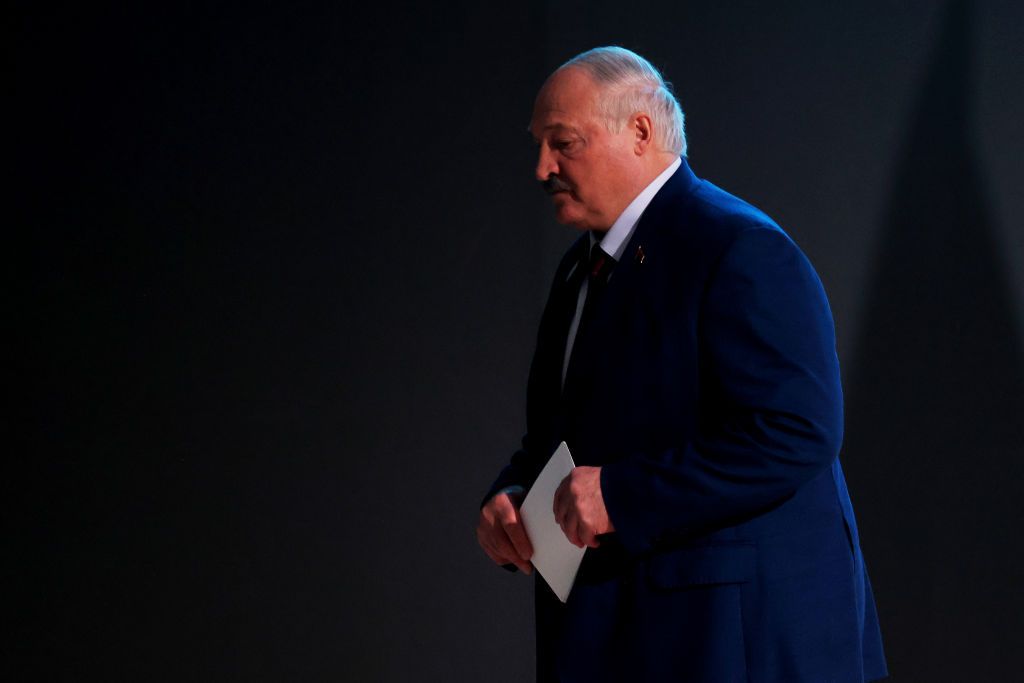
Belarusian dictator Aleksander Lukashenko walks off the stage after delivering a national statement during the high level segment on day two of the UNFCCC COP29 Climate Conference at Baku Stadium on Nov. 12, 2024 in Baku, Azerbaijan. (Sean Gallup/Getty Images)
Chemodanova withdrew and similarly endorsed Lukashenko, saying that she, like other candidates, would form a “reliable rear” for him.
The monitoring campaign organized by the Belarusian Helsinki Committee and Viasna Human Rights Center said in a statement that “such statements by fake presidential candidates are only to be expected, since they cannot exercise their right to participate in the country’s governance.”
The candidates dropped out without even starting to collect the signatures in their support, roughly a week after the Central Elections Committee registered initiative groups to support their candidacies.
The remaining registered candidates, Lukashenko himself and four loyalists — Anna Kanapatskaya, a sham candidate who took part in the 2020 presidential campaign; Siarhei Syrankou, the leader of the Communist Party of Belarus; Aleh Haidukevich, the leader of the pro-Lukashenko Liberal Democratic Party; and Alexander Hizhnyak, the leader of the Republican Party — have until Dec. 6 to gather over 100,000 signatures for their candidates in order to get on the ballot.
Lukashenko is seeking a seventh consecutive term in office after over four years of brutal crackdowns on civil society that have eliminated 1,700 non-profit organizations, outlawed all but four loyal political parties, and jailed Lukashenko’s main political opponents along with around 1,300 people who are now considered to be political prisoners.
The new electoral cycle unfolds while repression continues to haunt those who signed for alternative candidates in the 2020 elections, along with police raids, searches and arrests of people who took part in public protests.
31 political prisoners pardoned in Belarus amid sweeping police raids
Belarusian dictator Alexander Lukashenko has pardoned 31 political prisoners convicted on charges of “extremist activities” — even as police raids sweep the country ahead of presidential elections scheduled for Jan. 26, 2025.
Two women and 29 men were released, although their criminal records were not expunged, leaving them under strict control of the Internal Affairs Ministry, Lukashenko’s press office said on Nov. 7, without disclosing the names of those pardoned.
Three of the pardoned prisoners reportedly have disabilities, and 17 have chronic diseases.
Human Rights activists in Belarus report that prisoners had been deprived of timely and adequate medical help and suffered harsh detention conditions while in prison.
This is the fifth round of pardons since July 2024, bringing the total number of pardoned individuals to 146. Even so, nearly 1,300 political prisoners remain behind bars, and over the same period, Human Rights Group Viasna recognized 205 more individuals as having been jailed on politically motivated charges.
The release also coincided with nationwide police raids. Viasna reports that over 100 people, including 2020 protest participants, have been targeted since Oct. 31, which activists see as an intimidation effort ahead of Jan. 26, 2025 presidential elections. This will be the first presidential election since the 2020 mass public protests over the last poll, which was deemed not free or fair by the international community.
The contested presidential elections in Belarus in 2020 and subsequent nationwide protests sparked an unprecedented crackdown on civil society. Independent media and all but four regime-loyal political parties were eliminated, and Lukashenko regime opponents were jailed or forced into exile.
Seven political prisoners have died in custody.
Lukashenko allows family to visit opposition leader Maria Kalesnikava for the first time since her hospitalization in 2022
The father of prominent opposition figure Maria Kalesnikava has been allowed to visit her in a penal facility, breaking over 600 days of her being held in an incommunicado regime.
Photos of the meeting were posted on Nov. 12 by former opposition blogger Raman Pratasievich, who was captured by Minsk in the forced landing of a commercial flight in 2021.
He has since become a propagandist for the Lukashenko regime.
Former political prisoners recognized the location in which the pictures were taken as the prison hospital, the independent news outlet Nasha Niva.
It remains unknown whether Kalesnikava is undergoing treatment or was delivered to the facility from solitary confinement where she is reportedly held. Nasha Niva also claims video footage of Kalesnikava is to be aired on Friday, Nov. 15.
Kalesnikava, who led presidential candidate Viktar Babaryka’s campaign in 2020, was sentenced to 11 years in prison. In November 2022, she was taken to a prison hospital intensive care unit with a severe medical condition that had developed while she was in detention.
Following a brief visit by her father after that hospitalization, Kalesnikava’s family was unable to contact her for over 600 days. Incommunicado regimes were imposed on Kalesnikava as well as several other high-profile political prisoners, such as former presidential candidates Viktar Babaryka and Siarhei Tsikhanouskiy, veteran politician Mikalai Statkevich, and RFE/RL correspondent Ihar Losik.
Members of Kalesnikava’s family, who are actively seeking her release, say they were concerned for her life, and that prison food was unsuitable for her condition.
The family visit comes after BBC correspondent Steven Rosenberg questioned Lukashenko on Oct. 23 about Kalesnikava’s condition. In response, Lukashenko declared he was ready to consider Kalesnikava’s plea for a pardon. He claimed her family hadn’t been granted visits because “they didn’t want to visit her.”
Ukraine, Russia ombudsmen meet in Belarus to discuss humanitarian issues of war
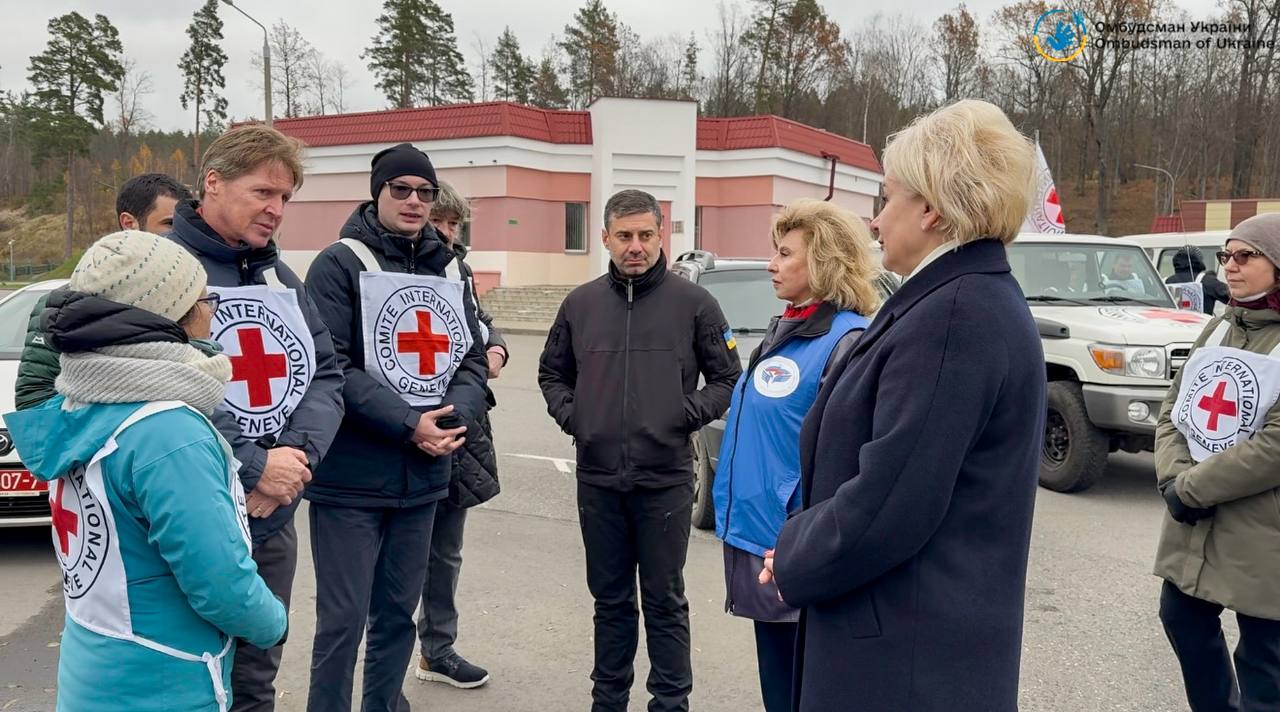
Ukrainian Human Rights Ombudsman Dmytro Lubinets and his Russian counterpart, Tatyana Moskalkova, met in Minsk on Nov. 8, to exchange lists of prisoners and letters from Ukrainian relatives to Ukrainian prisoners of war, and to discuss humanitarian issues amid Russia’s full-scale war against Ukraine.
The meeting in Belarus, a co-aggressor state in Russia’s war against Ukraine, is thought to be the first since March 2022. While Belarus provided its territory for Russia’s offensive in February 2022, it has also been part of several Ukraine-Russia POW swaps.
During the meeting on Nov. 8, the parties also mutually repatriated the bodies of fallen soldiers. Kyiv received 563 bodies, while Russia received 37. One family was also reunited as a result of the meeting.
“I emphasize that I interacted with the Russian ombudsman to resolve humanitarian issues, return Ukrainians home, and obtain information about our citizens in Russia,” Lubinets said after the meeting.
The International Committee of the Red Cross also participated in the talks.
After supporting the Russian war against Ukraine, Belarus took part in exchanging 103 Russian prisoners of war from Ukraine in September, and another 95 in October.
Earlier, in July, the Lukashenko regime also released five Ukrainian citizens imprisoned in Belarus on politically motivated grounds as part of a Russia-Ukraine prisoner swap. Lukashenko claimed he had released a prisoner accused of a sabotage attack on a Russian radar and control aircraft in Belarus at the request of Russian President Vladimir Putin. The Ukrainian prisoner was exchanged for Metropolitan Jonathan of the Ukrainian Orthodox Church of the Moscow Patriarchate, who had been sentenced to five years in prison for justifying, recognizing as legitimate Russia’s war against Ukraine.
Aiding Russia’s efforts to gain the release of a convicted Russian assassin, Vadim Krasikov, Belarusian dictator Lukashenko pardoned German citizen Rico Krieger, who had been sentenced in Belarus to capital punishment for espionage, and returned him as part of a historic East-West prisoner swap in early August 2024.
12 human rights organizations urge states to support Lithuania’s ICC referral against Lukashenko
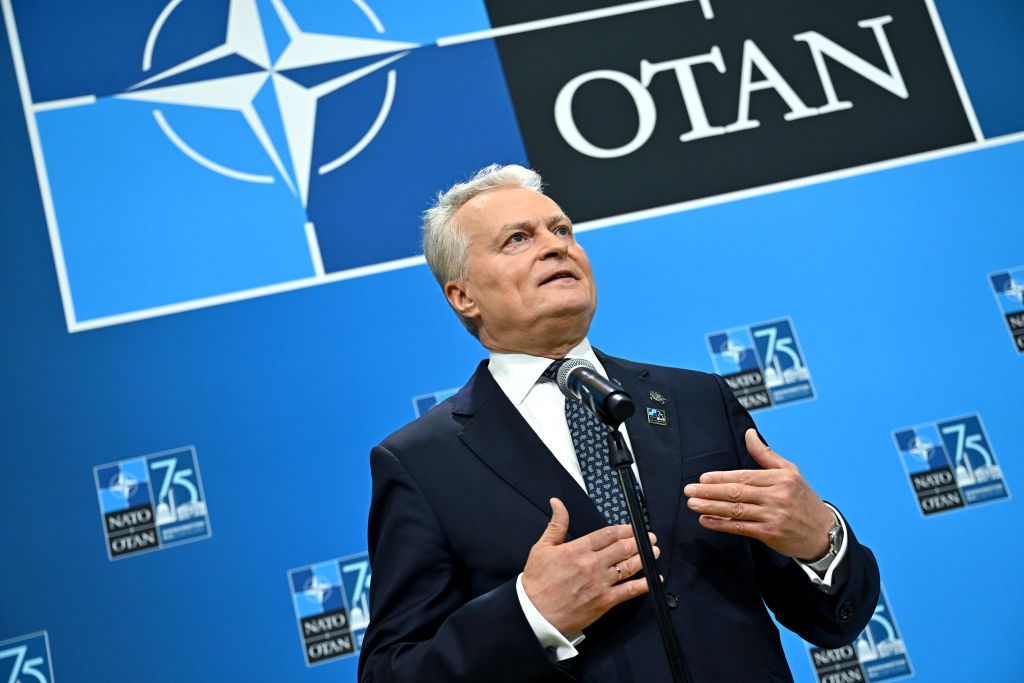
Lithuanian President Gitanas Nauseda speaks to members of the media during the NATO Summit in Washington, DC, U.S., on Wednesday, July 10, 2024. (Graeme Sloan/Bloomberg via Getty Images)
The International Federation for Human Rights (FIDH), the Norwegian Helsinki Committee, the Viasna Human Rights Center of Belarus, and nine other human rights organizations have called on state parties to the Rome Statute to endorse Lithuania’s request to the International Criminal Court (ICC) to investigate the Belarusian authorities’ alleged crimes against humanity.
In the open letter published on Nov. 4, the civil society organizations urged ICC state parties to “strengthen” Lithuania’s referral and “send a united message” to the Belarusian regime that “the international community will not tolerate impunity for such crimes.”
The International Accountability Platform for Belarus (IAPB), one of the organizations that signed the letter, reports that residents of Belarus have now sought exile in over 25 ICC State Parties, as well as at least 10 other States that have not ratified the Rome Statute.
Lithuania, which became home to Belarus’s exiled opposition and 60,000 of the Belarusian diaspora in the aftermath of Lukashenko’s brutal crackdown on dissent in 2020, on Sept. 30 formally requested that the ICC investigate the Belarusian regime for its alleged crimes against humanity.
The Lithuanian authorities maintain that by carrying out mass repression, Lukashenko’s regime has forced hundreds of thousands of Belarusians to flee the country and settle in neighboring states — which may constitute the crime of mass deportation.
According to a UN special rapporteur’s March 2024 report, around 300,000 Belarusian citizens have fled the country of under 10 million for fear of persecution.
Despite Belarus not being a party to the Rome Statute, the ICC has jurisdiction due to the alleged crimes being committed on participating nations’ territories. The ICC prosecutor general confirmed the receipt of the referral, claiming that a preliminary examination of the request is due, and its results will determine whether an investigation will be opened.
The head of the Kyiv RMA met with representatives of Poland to discuss support for Ukraine's Victory Plan. Security, energy issues and the restoration of Kyiv region's infrastructure were discussed.
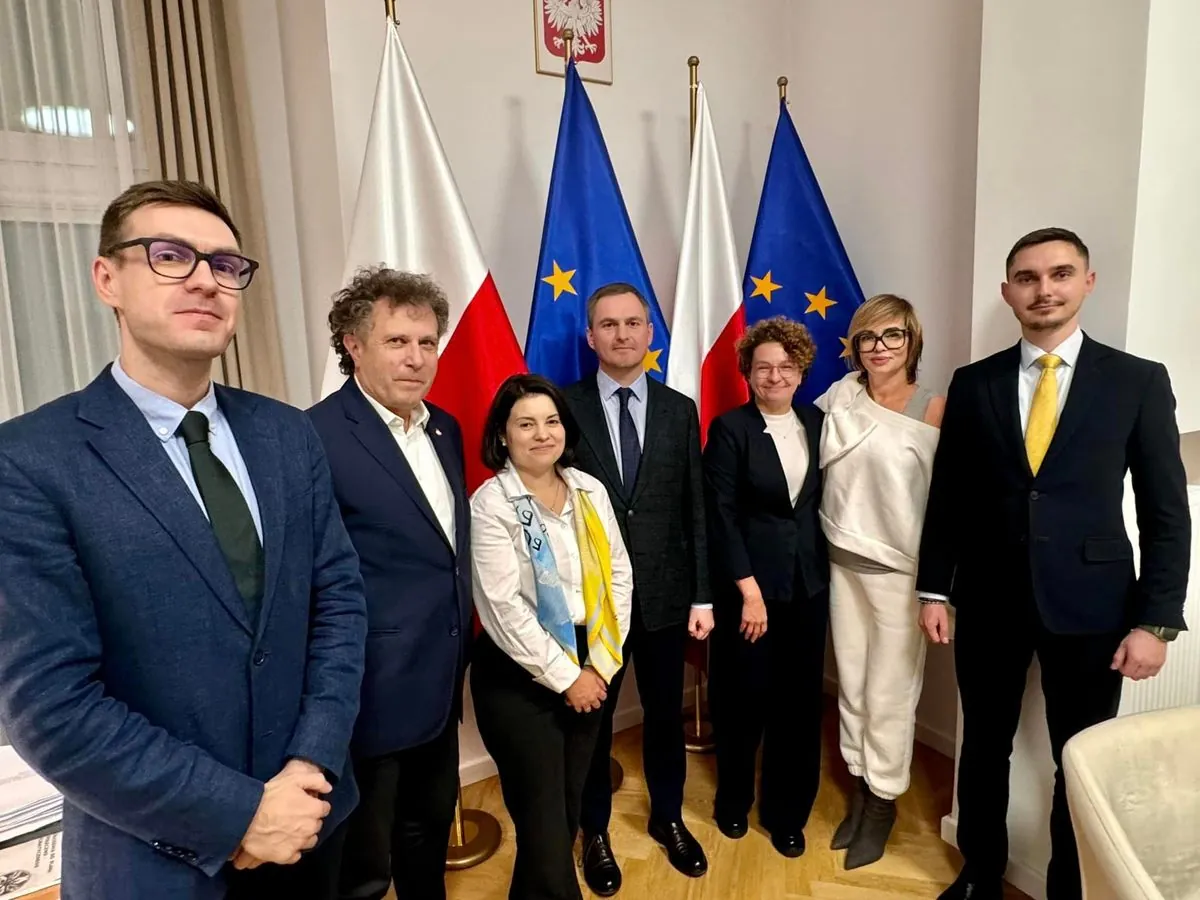
The head of the Kyiv RMA discussed the importance of supporting Ukraine's Victory Plan during bilateral meetings with Polish officials. He met with Jacek Karnowski, State Secretary of the Ministry of Development Funds and Regional Policy of Poland, and Adam Struzik, Marshal of the Mazovian Voivodeship, UNN reports.
"Achieving a just peace is a goal that unites not only Ukrainians but also our allies around the world. A set of decisive actions can stop the Russian aggressor. They are spelled out in the Victory Plan presented by President of Ukraine Volodymyr Zelenskyy. Ukraine is facing significant challenges. But we are fighting not only for our independence, but also for security in Europe," Ruslan Kravchenko said.
He added that such meetings are always a meaningful dialog and an opportunity to develop concrete solutions in the future. And also to convey to ordinary residents of these regions the key need of Ukrainians – a just peace based on the Victory Plan of our President.
The parties also discussed security and energy issues, involvement of Polish colleagues in the restoration of Kyiv region's infrastructure, and European integration processes.
"By the way, the Mazovian Voivodeship is a twin region of Kyiv region. Therefore, deepening interregional cooperation is a separate issue of the meeting. I am grateful to our Polish friends for their help! Only together can we ensure peace and development of Ukraine and the whole of Europe," said the head of the Kyiv RMA.
Ukraine must do everything possible to end the war through diplomatic means, President Volodymyr Zelensky said in a wide-ranging interview with Suspilne broadcast on Nov. 16.
During the interview, he told the broadcaster that he does not believe Russian President Vladimir Putin wants peace but will instead use negotiations to reintegrate himself among Western countries that have isolated him since the start of the full-scale invasion.
"I don't think Putin wants peace at all. But this does not mean that he does not want to sit down with one of the leaders" to negotiate, Zelensky said.
"For him it destroys the political isolation that has been built since the beginning of the war. And it benefits him to sit down, talk, and not reach an agreement."
The previous day, Zelensky had warned that a phone call that day between Putin and German Chancellor Olaf Scholz – their first in nearly two years – risked opening a "Pandora's Box."
In the interview with Suspilne, Zelensky said that as president, he would only be able to negotiate seriously with the President of the United States, which Donald Trump does not become until he is inaugurated in January.
A necessary condition for negotiations, he added, is that Ukraine would not be "alone" with Russia, as just speaking with Putin was a "losing position."
He also said that the United States could not take a neutral position as a mediator: "America must maintain the position that Russia is an aggressor, that it has violated our territorial integrity and international law."
Regardless, the war in Ukraine will "end faster" under a Trump administration, Zelensky believes.
Zelensky also said that the country was "grateful" for the aid received, but still has not received half of the weapons allocated by the U.S.
Among its own domestically-produced weapons, the country is currently testing four types of missiles, he said.
When asked about the challenging situation on the frontlines, Zelensky acknowledged "slow, but nevertheless advancements" by the Russians. He cited fatigue among fighters, the slow pace of filling and equipping brigades, as well as delays on weapons deliveries from abroad.
Regarding mobilization, Zelensky said that in general, some things need to be adjusted but some things are going as planned, though there still is a need for more mobilization as the current figures are not enough.
Zelensky also said that the country expects combined strikes throughout the winter, but considers Ukraine is "a very good position" regarding its air defense systems.


 The Kyiv IndependentDmytro Basmat